Hawaii State Park Reservations: How to Book Every Park

Hawaii’s state parks hold some of the islands’ greatest hits: Diamond Head’s crater summit, the black sand of Waiʻānapanapa, the cliffs of the Nāpali Coast. But the days of showing up on a whim are over at the most popular parks. Hawaii now runs reservation and permit systems for day visits, camping, and cabins across its state parks, and visitors who do not book ahead get turned away at the gate. This guide explains exactly how Hawaii state park reservations work: which parks require them, where to book, what visitors pay, and how far ahead to plan.
The key thing to know is that Hawaii runs a two-tier system. Residents with a Hawaii state ID generally enter free and need no reservations, while out-of-state visitors pay entry and parking fees and must reserve at the busiest parks. As a visitor, always assume you are in the second tier.
Which State Parks Need Reservations
Not every state park requires a reservation, but the famous ones do. The table below covers the parks where you must book ahead; for everything else, you can generally walk in, though checking the DLNR state parks site before you go is always smart.
| Park | Book at | How far ahead | What you pay | Do not get tripped up |
|---|---|---|---|---|
| Diamond Head (Oʻahu) | gostateparks.hawaii.gov | 30 days ahead | $5 entry + $10 parking | Entry and parking are separate bookings; you need both |
| Hāʻena (Kauaʻi) | Go Haena | 30 days ahead | Entry/shuttle/parking tiers | Pick your tier carefully before you book |
| Waiʻānapanapa (Maui) | Hawaii State Parks (gostateparks.hawaii.gov) | 30 days ahead | $5 entry + $10 parking | No same-day bookings; plan ahead |
| ʻĪao Valley (Maui) | Go State Parks Hawaii | 30 days ahead | $5 entry + $10 parking | Timed entry; arrive inside your window |
| Kalalau camping (Kauaʻi) | camping.ehawaii.gov (DLNR Wiki Permits) | As early as allowed | Wilderness permit fees | Among the most competitive reservations in Hawaiʻi; have backup dates |
Diamond Head: Timed Entry Reservations
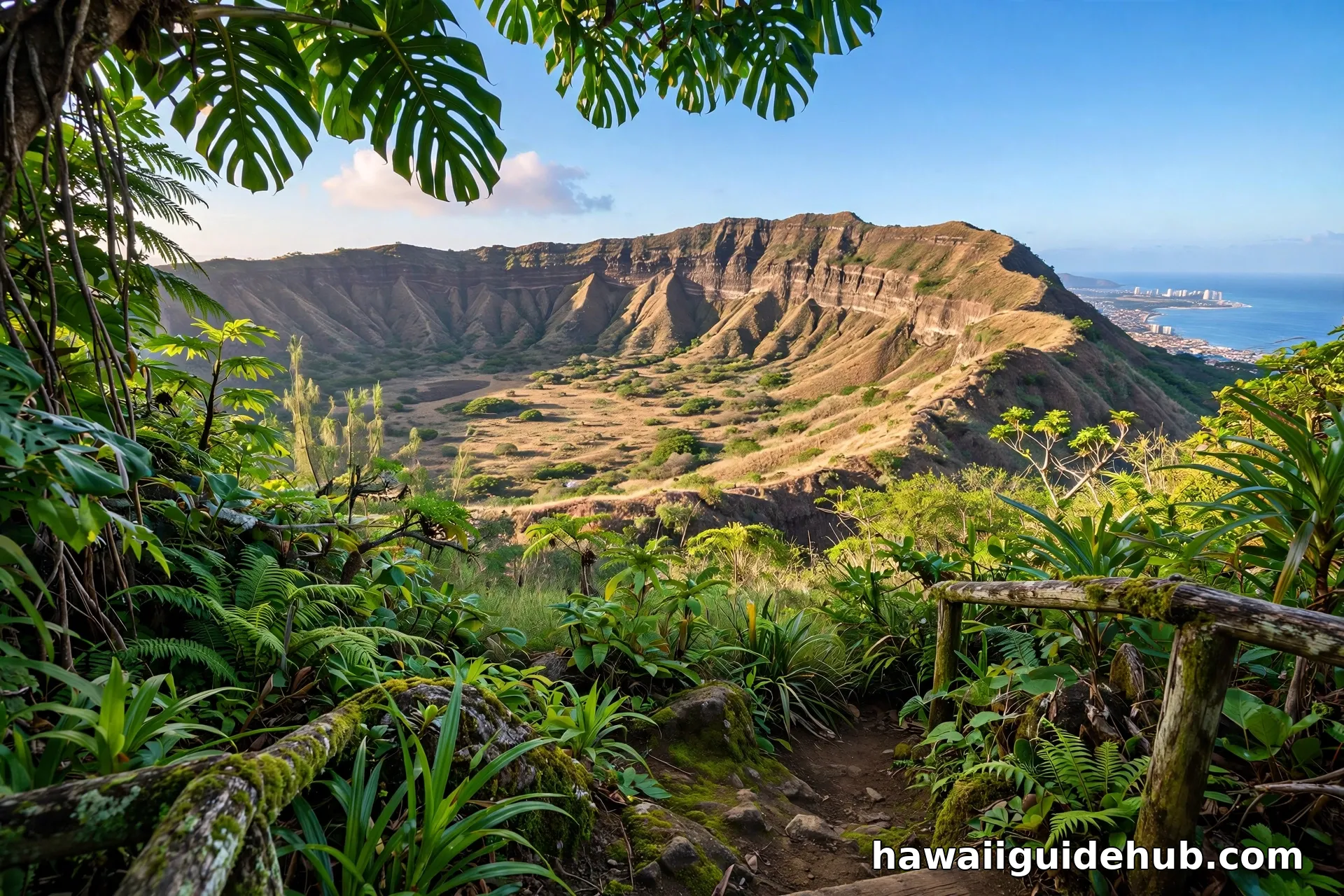
Diamond Head State Monument is Hawaii’s most visited state park, and since 2022 it has required advance reservations for all non-resident visitors. You book a timed entry window at gostateparks.hawaii.gov/diamondhead, up to 30 days ahead, and you need a separate reservation for parking if you are driving. Entry is $5 per person and parking inside the crater is $10 per vehicle, payable by credit card when you book. Arrive within the first 30 minutes of your window or you risk losing your spot, and note that there are no walk-ins: visitors without a reservation are turned away at the gate.
Plan for heat and crowds. The hike is 0.8 miles each way with 560 feet of climbing, the last stretch is all stairs, and there is no shade or water on the trail. Start early in the day: by mid-morning the trail becomes a slow line of people and the volcanic tuff radiates heat. Bring water, a hat, and real shoes, and give yourself 1.5 to 2 hours for the round trip.
Hāʻena, Waiʻānapanapa, and ʻĪao Valley
On Kauaʻi, Hāʻena State Park, the gateway to the Kalalau Trail and Keʻe Beach, requires day-use reservations for non-residents, with options for shuttle, parking, or walk-in entry booked up to 30 days ahead. This is also one of Hawaii’s most storm-vulnerable parks: it has closed for extended periods after hurricanes and floods, so always check the current status on the DLNR site before building your itinerary around it. Our Hanalei Bay guide covers the nearby north shore base for a Hāʻena day trip.
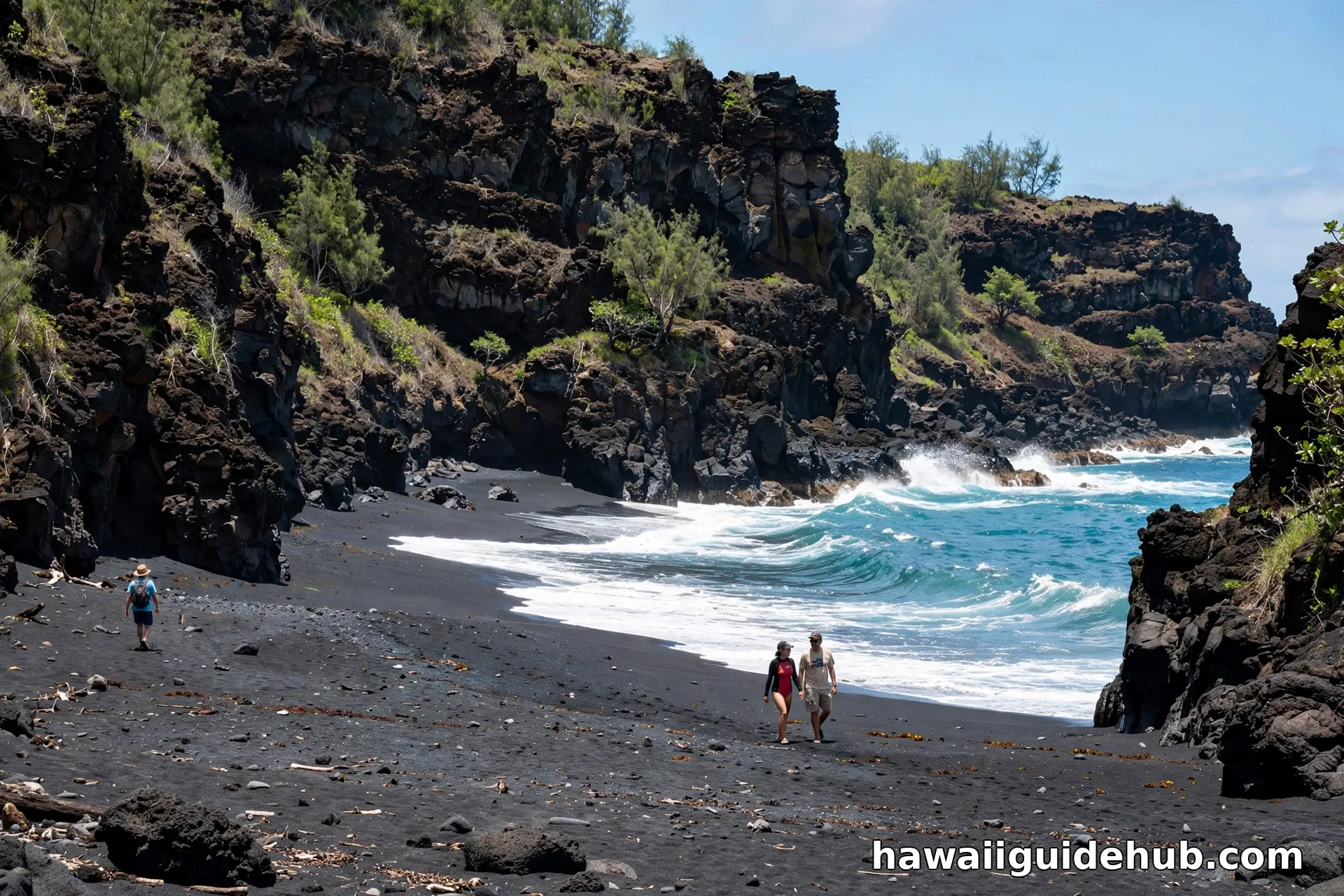
On Maui, Waiʻānapanapa State Park’s famous black sand beach has used a timed entry reservation system since 2022, which cut daily visitation from over 2,000 to a more manageable 1,200 to 1,500 visitors. Note that the park has also been undergoing facility improvements, with construction affecting parking areas, so check for current alerts before you drive the Road to Hāna. ʻĪao Valley State Monument likewise requires reservations for out-of-state visitors, bookable up to 30 days ahead.
Camping and Cabin Reservations
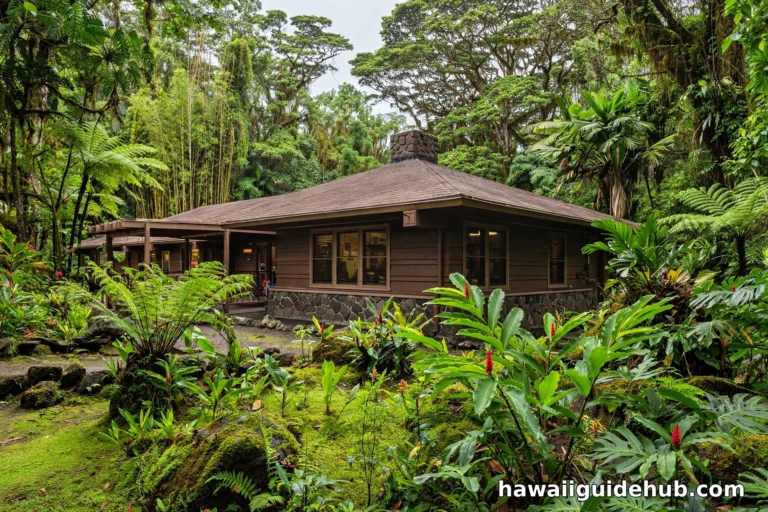
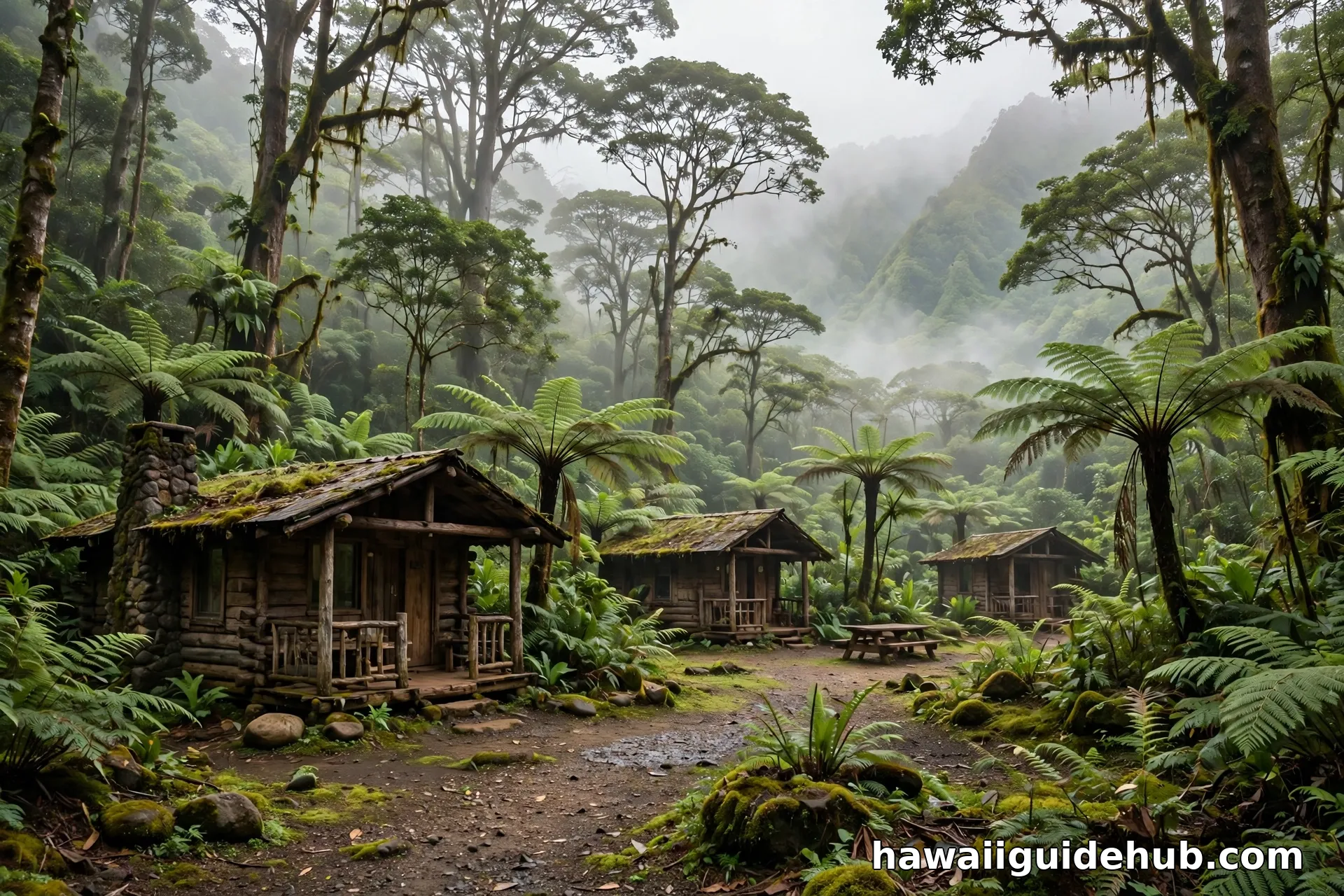
Overnight stays in state parks run through a different system: the DLNR’s Wiki Permits site at camping.ehawaii.gov, where you check availability, reserve, and pay by credit card. The DLNR no longer accepts mail-in applications, but you can still buy permits in person at a district office. This is the system for campgrounds at parks like Mākena on Maui and Polihale and Kōkeʻe on Kauaʻi, as well as the rustic cabins at Kōkeʻe and in Waimea Canyon, which are some of the best-value roofs in Hawaii.
The crown jewel of state park camping is the Nāpali Coast’s Kalalau Trail, where wilderness camping permits are among the most competitive reservations in Hawaii. Book the moment your window opens, and have backup dates ready. And remember that state and county campgrounds are entirely separate systems: a state permit never covers a county park, so always confirm which agency manages your chosen campground before you book.
What Visitors Pay at State Parks
Hawaii’s two-tier fee system is straightforward. At fee-based state parks, non-residents typically pay $5 per person for entry and $10 per vehicle for parking, while residents with a valid Hawaii ID enter and park free. Commercial vehicles follow a separate schedule. For a family of four with a rental car, a single park visit runs about $30 before you have even left the parking lot, so budget for it. These fees go to the State Parks Special Fund that maintains the trails, facilities, and enforcement you are using.
A few parks layer extra costs on top. Hāʻena’s shuttle option, for example, bundles transport with entry for visitors who do not want to fight for the small parking lot. Camping permits carry per-person nightly fees rather than flat entry rates, and cabins at Kōkeʻe price by the unit. None of these fees are payable in cash at the gate in most cases: the systems are credit-card based, which is another reason to book online before you arrive. Keep every receipt until your trip is over; if a storm closure triggers a refund, the credit goes back to the card you paid with.
How Far Ahead to Book
Booking windows are the part that ruins trips. Diamond Head, Waiʻānapanapa, ʻĪao Valley, and Hāʻena reservations open up to 30 days ahead, and the best time slots at Diamond Head go within hours of release. Kalalau wilderness permits are similarly competitive. Set a calendar reminder for the day your window opens, have your party size and vehicle information ready, and book the moment the system allows. If your dates are inflexible, build your itinerary around the reservations you actually secure rather than the ones you hope for.
One more timing tip: book your park reservations before you book anything else that depends on them. There is no point reserving a Hāna tour for the day you planned to see Waiʻānapanapa on your own if the park’s timed entry is already sold out. Lock the parks first, then arrange tours, dinners, and driving routes around those confirmed windows. Visitors who plan in this order rarely get surprised.
Finally, treat every reservation as the start of your research, not the end of it. Read the park’s official page for the current alerts, trail conditions, and facility notes before you go. A two-minute check the night before has saved countless visitors from driving an hour to a closed gate, and it is the cheapest insurance your Hawaii itinerary can buy.
Storm season adds another wrinkle. When tropical systems threaten, the DLNR closes state parks, suspends camping permits, and stops issuing new ones until damage assessments are complete; refunds are credited for missed camping nights. This happened as recently as September 2026, when Tropical Storm Nolo closed parks across three islands. If you are visiting between June and November, watch the forecasts, check the DLNR’s OuterSpatial app for real-time closure information, and keep a backup plan for every park day.
National Parks Run on a Different System
Hawaii’s two national parks do not use the state systems at all, which confuses plenty of visitors. Hawaiʻi Volcanoes National Park on the Big Island requires no entry reservation; you simply pay the federal entrance fee at the gate. Haleakalā National Park on Maui is the tricky one: watching sunrise from the summit requires a reservation for vehicles entering between 3 a.m. and 7 a.m., bookable on Recreation.gov 60 days ahead and again 2 days ahead, both releases at 7 a.m. Hawaii time. The sunrise slots vanish fast, so treat them like concert tickets. Similarly, the USS Arizona Memorial program at Pearl Harbor releases boat tickets on Recreation.gov 8 weeks ahead and again 24 hours ahead, both at 3 p.m. Hawaii time.
Reservation Mistakes That Ruin Park Days
The most common mistake is booking the wrong thing: entry without parking, or parking without entry. At Diamond Head these are separate reservations, and one does not imply the other. The second mistake is assuming the booking window opens at midnight; release times vary by park and system, so confirm the exact hour. The third is booking for the wrong date because of the time zone: Hawaii is 5 to 6 hours behind the US mainland, and a “tomorrow” booked from the East Coast can land on the wrong day. Fourth, visitors forget that reservations are tied to the person or vehicle named; you generally cannot transfer a timed entry to a travel companion who arrives separately. Finally, people skip the confirmation screenshot. Cell service is unreliable at several park gates, and a ranger cannot look up a booking you cannot display.
Bring your reservation confirmation on your phone, plus the credit card you booked with. Arrive early in your window, not at the end of it. Screen-shot your confirmation in case cell service drops at the gate, which it does at several parks. Pack more water than you think you need, reef-safe sunscreen, and snacks, because most state parks have no concessions. And respect the closures: a park closed for cultural reasons, nesting wildlife, or storm damage is closed, and entering anyway can bring real fines.
If you are combining state parks with the island’s other highlights, our Hawaiʻi Volcanoes guide covers the Big Island’s national park, which runs on an entirely separate federal system with its own rules, and the North Shore guide pairs well with a Diamond Head morning on Oʻahu.
State Park Reservation FAQs
Do Hawaii residents need state park reservations?
Generally no. Residents with a valid Hawaii state ID enter free and do not need reservations at parks like Diamond Head, though parking space is limited.
Can I get a refund if my park day is rained out?
For official storm closures, the DLNR credits refunds for missed camping nights. Day-use reservation refunds depend on the park’s terms, so check at booking.
What happens if I show up without a reservation?
At parks that require them, you will be turned away. Rangers check reservations at the gate at Diamond Head, Hāʻena, and Waiʻānapanapa.
Can I book same-day reservations?
Usually not at the popular parks. Waiʻānapanapa does not allow same-day bookings, and Diamond Head’s best slots go within hours of the 30-day release.
Is camping.ehawaii.gov the same as the county systems?
No. State park camping goes through camping.ehawaii.gov, while county campgrounds use separate county systems. A permit from one never covers the other.
Do I need reservations for Haleakalā sunset?
No. Only the sunrise window (3 a.m. to 7 a.m.) requires a reservation. Sunset visits need no booking, though the parking lot still fills.
Are state park reservations refundable?
It depends on the park and the system. Changes are generally allowed up to the day before, subject to availability. Storm closures trigger credits or refunds.
Watch: Diamond Head Reservations Explained
This walkthrough of the Diamond Head hike covers the reservation system for out-of-state visitors: the $5 entry fee, $10 parking, and the 30-day booking window.
Hawaii’s state park reservation systems exist because the alternative, unlimited crowds loving these places to death, was worse. Book the moment your window opens, arrive prepared for sun and heat, and you will experience these parks the way they are meant to be experienced: spectacular, uncrowded, and yours for the day.