
Big Island Towns
The Island of Hawaiʻi, commonly called the Big Island, is larger than all the other Hawaiian islands combined, and its towns reflect that scale. There is no single urban center that dominates the island the way Honolulu dominates Oʻahu. Instead, the Big Island is a patchwork of small towns, each shaped by its side of the island: sunny resort communities on the Kona coast, ranch towns in the cool uplands of Kohala, a rainy historic port city on the east side, and tiny rural settlements scattered across Kaʻū and Puna. This guide walks through every town that matters to a visitor, explains what each one is like, and helps you decide where to base your stay.
On This Page
Big Island Towns at a Glance
The first thing to understand about the Island of Hawaiʻi is that its towns are spread far apart, and driving between them takes real time. The island covers just over 4,000 square miles, roughly twice the size of all the other main Hawaiian islands put together. Hilo on the east side and Kailua-Kona on the west side are about 75 miles apart by the fastest route, the Saddle Road (Daniel K. Inouye Highway), and the drive takes around an hour and a half in good conditions. The long way around the southern route through Kaʻū can take three hours or more. This geography means your choice of town genuinely shapes your trip: stay on the Kona side and the east side’s waterfalls are a full day excursion, and vice versa.
Hilo is the island’s largest town and the seat of Hawaiʻi County government, with a population of roughly 44,000 in the greater urban area. It is the closest thing the Big Island has to a city, with a working harbor, a university campus (University of Hawaiʻi at Hilo), a historic downtown, and the island’s main east-side airport. Every other town on the island is much smaller. Kailua-Kona, the tourism hub of the west side, has around 12,000 residents in the town itself, though the greater Kona urban area holds several times that. Most other towns number in the low thousands or even hundreds.
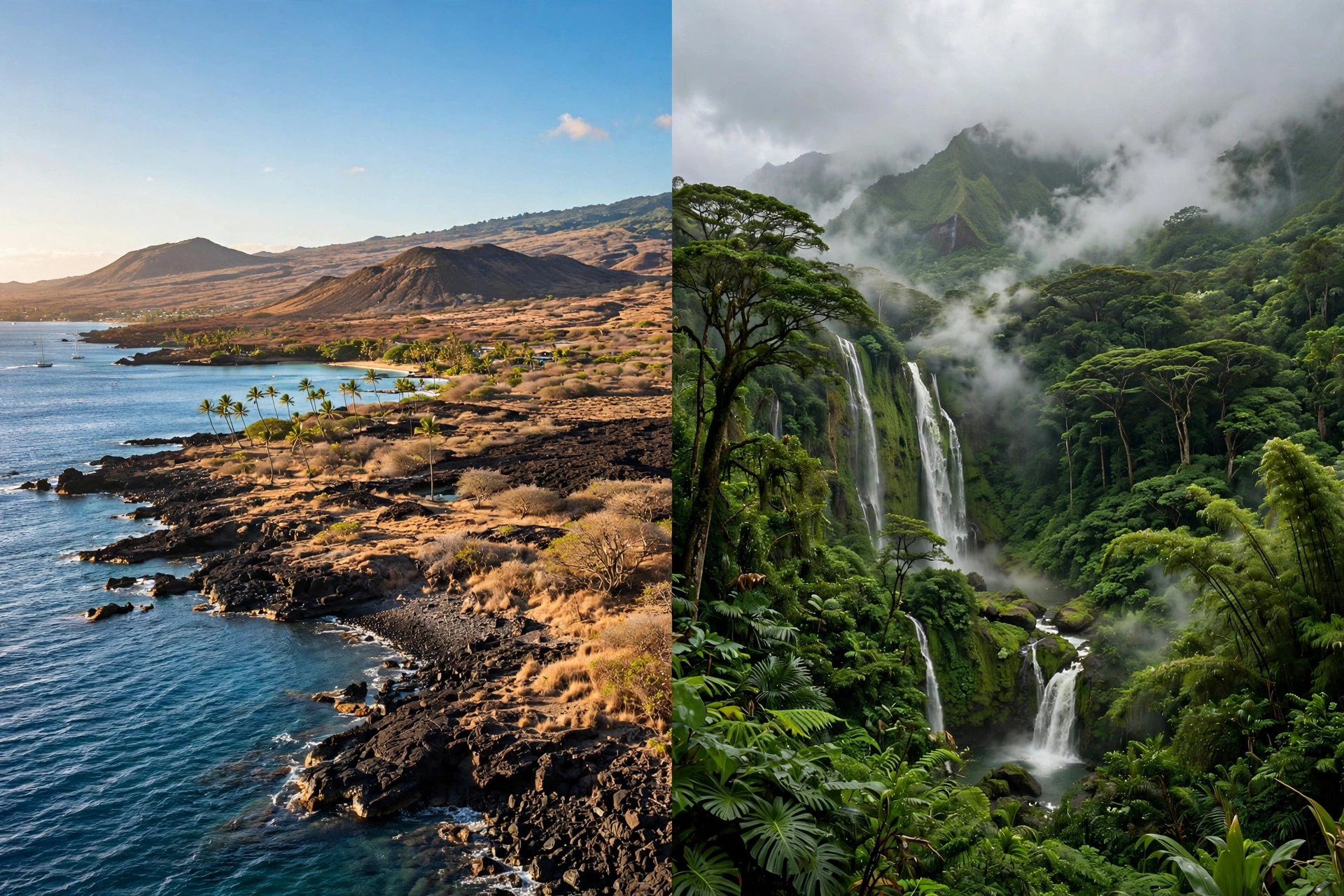
The island’s towns fall naturally into regions defined by climate and history. The Kona side, from Kailua-Kona south through Kealakekua and Captain Cook, sits in the rain shadow of Hualālai and Mauna Loa, so it is dry and sunny, and it grew up around coffee farming, fishing, and later tourism. Kohala in the north is ranch country, centered on Waimea (also known by its post office name, Kamuela), with the small historic towns of Hawi, Kapaʻau, and Honokaʻa nearby. The east side is anchored by Hilo, a lush, rainy former sugar town with deep historic roots, and extends south into the Puna district with Pāhoa as its main settlement. Kaʻū in the south is the island’s most rural district, with tiny towns like Nāʻālehu, Pāhala, and Ocean View. And Volcano Village, up at around 4,000 feet elevation near Hawaiʻi Volcanoes National Park, is in a category of its own: cool, misty, and built entirely around the volcano.
One practical note before the town-by-town tour: many Big Island towns are unincorporated, meaning they have no formal municipal government and their boundaries are informal. Locals use the names the way they have always been used, and a “town” might be a cluster of shops at a crossroads or a spread-out community along several miles of highway. The descriptions below follow local usage, which is what you will encounter on road signs and in conversation.
The Kona Side
Kailua-Kona
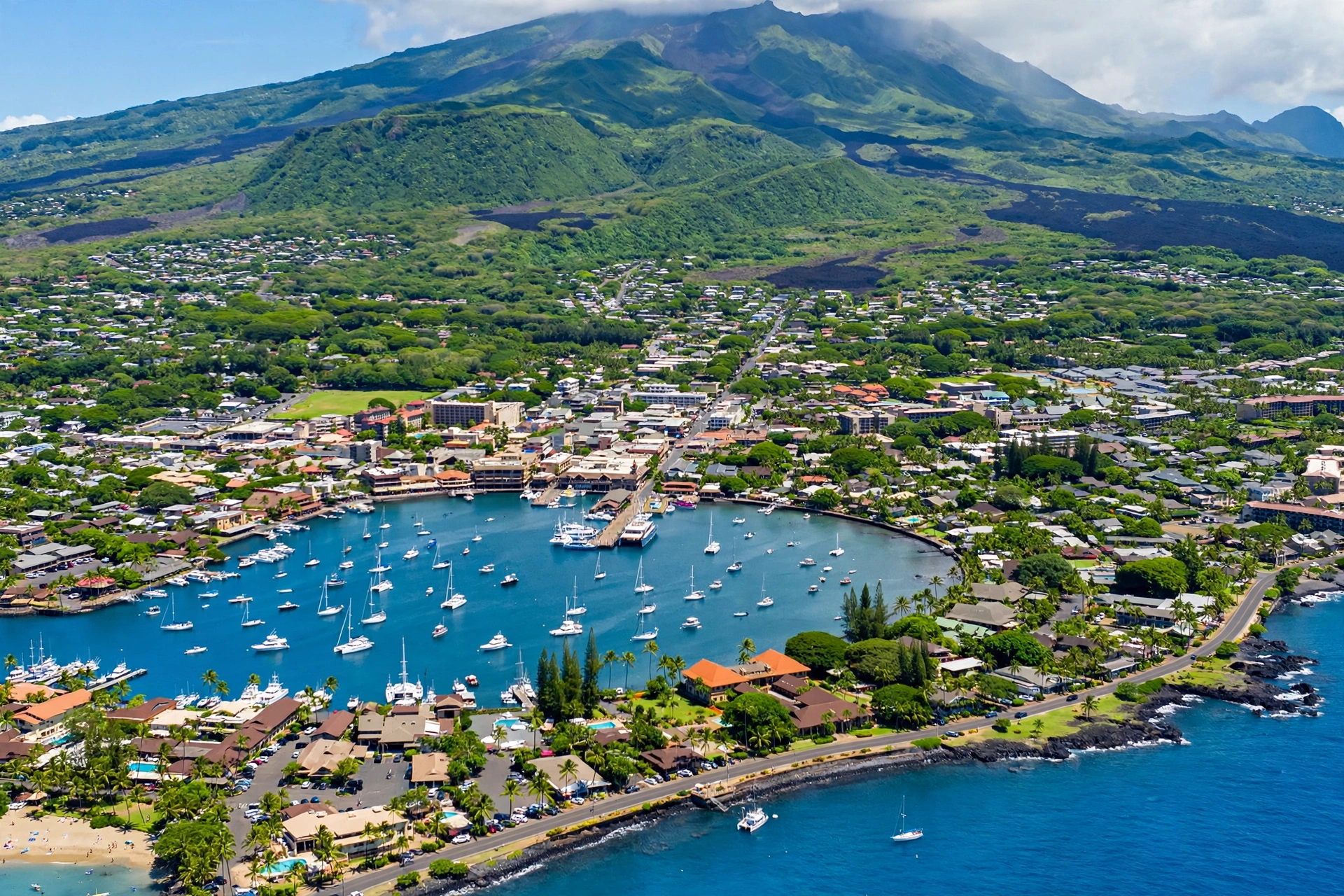
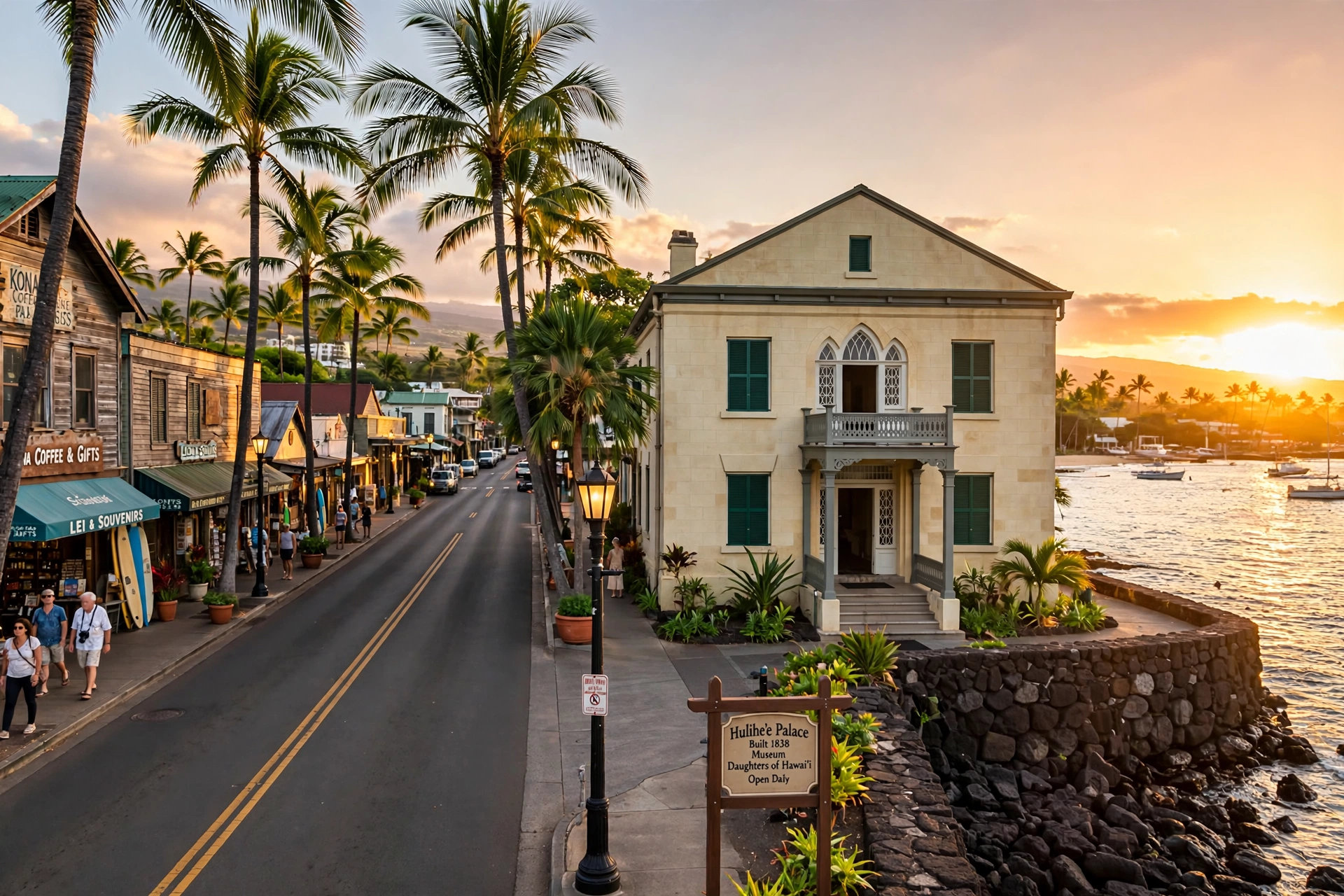
Kailua-Kona, usually shortened to Kona by visitors (though locals use “Kona” for the whole district), is the Big Island’s tourism capital and the town most first-time visitors will know best. It sits on the sheltered west coast at Kailua Bay, roughly 7 miles south of Kona International Airport at Keāhole. The town’s main street, Aliʻi Drive, runs along the waterfront past historic sites, shops, and restaurants, and the whole downtown is easily walkable. Kailua-Kona began as a royal center: Kamehameha the Great spent his final years here, and Huliheʻe Palace, the former vacation residence of Hawaiian royalty, still stands on Aliʻi Drive as a museum. Mokuaikaua Church, built in 1820, is the oldest Christian church in the Hawaiian Islands and sits just off the main street.
Today Kailua-Kona is a busy, visitor-oriented town with the island’s largest concentration of hotels, restaurants, and tour operators. The waterfront at Kailua Bay is the departure point for many ocean activities, including snorkeling trips, manta ray night snorkels, and sportfishing charters. The town hosts the Ironman World Championship triathlon each October, when the population swells and Aliʻi Drive becomes the finish line for one of the world’s most famous endurance races. Parking in downtown Kailua-Kona can be tight, especially on weekends and during events, and the town is at its liveliest in the evenings when the waterfront restaurants fill up. If you want to be in the middle of the action with the most dining and shopping choices, Kailua-Kona is the natural base, though it is also the most tourist-heavy town on the island.
Kealakekua, Captain Cook, and Hōnaunau
South of Kailua-Kona, the coastal highway climbs into the uplands of South Kona, where a string of small communities sits among coffee farms. Kealakekua is best known as the gateway to Kealakekua Bay, the marine life conservation district whose clear waters and coral reefs make it one of the best snorkeling spots in Hawaiʻi. The bay is also the site of the Captain Cook monument, marking the place where Captain James Cook died in 1779. The town of Kealakekua itself is small, essentially a junction with shops and services, but its name is the one visitors encounter when heading to the bay.
Captain Cook, the unincorporated town just south, is the heart of Kona coffee country. The slopes of Mauna Loa here, between about 800 and 2,500 feet elevation, have the ideal combination of morning sun, afternoon cloud cover, and well-drained volcanic soil for growing coffee, and the area is dotted with coffee farms, many of which welcome visitors for tastings and tours. The town is little more than a scattering of businesses along the highway, but it is a useful landmark and a good place to start a coffee farm visit. Hōnaunau, further south near the coast, is home to Puʻuhonua o Hōnaunau National Historical Park, the Place of Refuge, one of the most significant cultural sites on the island. The adjacent Hōnaunau Bay, known to snorkelers as Two Step for its natural rock entry steps, offers excellent shore snorkeling. These South Kona communities are quiet and rural, appealing to travelers who want a slower pace within easy reach of both Kailua-Kona and the south.
Holualoa
Perched on the slopes of Hualālai above Kailua-Kona at around 1,400 feet elevation, Holualoa is a small village with an outsized reputation as the island’s art town. Its main street is lined with galleries, studios, and coffee shops in plantation-era buildings, and the village hosts regular art events. The elevation gives Holualoa cooler temperatures and sweeping views down to the Kona coast, and the surrounding area is filled with coffee farms. It makes a pleasant half-day stop from Kailua-Kona, especially for travelers interested in art and coffee, and a few bed-and-breakfasts in the area offer a quieter alternative to staying in town.
Keauhou
Just south of Kailua-Kona along Aliʻi Drive, Keauhou is a quieter coastal community built around Keauhou Bay, a historic royal center that was the birthplace of Kamehameha III. The bay is one of the two main departure points for manta ray night snorkeling, and the surrounding area holds significant cultural sites, including the Keauhou Holua Slide, a massive stone ramp once used for traditional sled riding by Hawaiian chiefs. With resort condominiums, a shopping center, and calm waters, Keauhou appeals to travelers who want to stay near Kona’s attractions without staying in the middle of town.
Waikōloa
About 18 miles north of Kona International Airport, Waikōloa is a planned resort community rather than a historic town. Built around the Waikōloa Beach Resort area, it centers on resort hotels, golf courses, and the Kings’ Shops and Queens’ Marketplace shopping centers. The adjacent residential community of Waikōloa Village, a few miles inland, is where many resort workers and local families live. For visitors, Waikōloa functions as a self-contained resort base: the beaches at ʻAnaehoʻomalu Bay (A-Bay) are calm and family friendly, and the area is convenient to the Kohala coast’s best beaches, including Hapuna and Mauna Kea. It lacks the historic character of Kailua-Kona, but travelers who want a resort-focused stay with easy beach access often prefer it.
Kohala: Ranch Country and the North
Waimea (Kamuela)
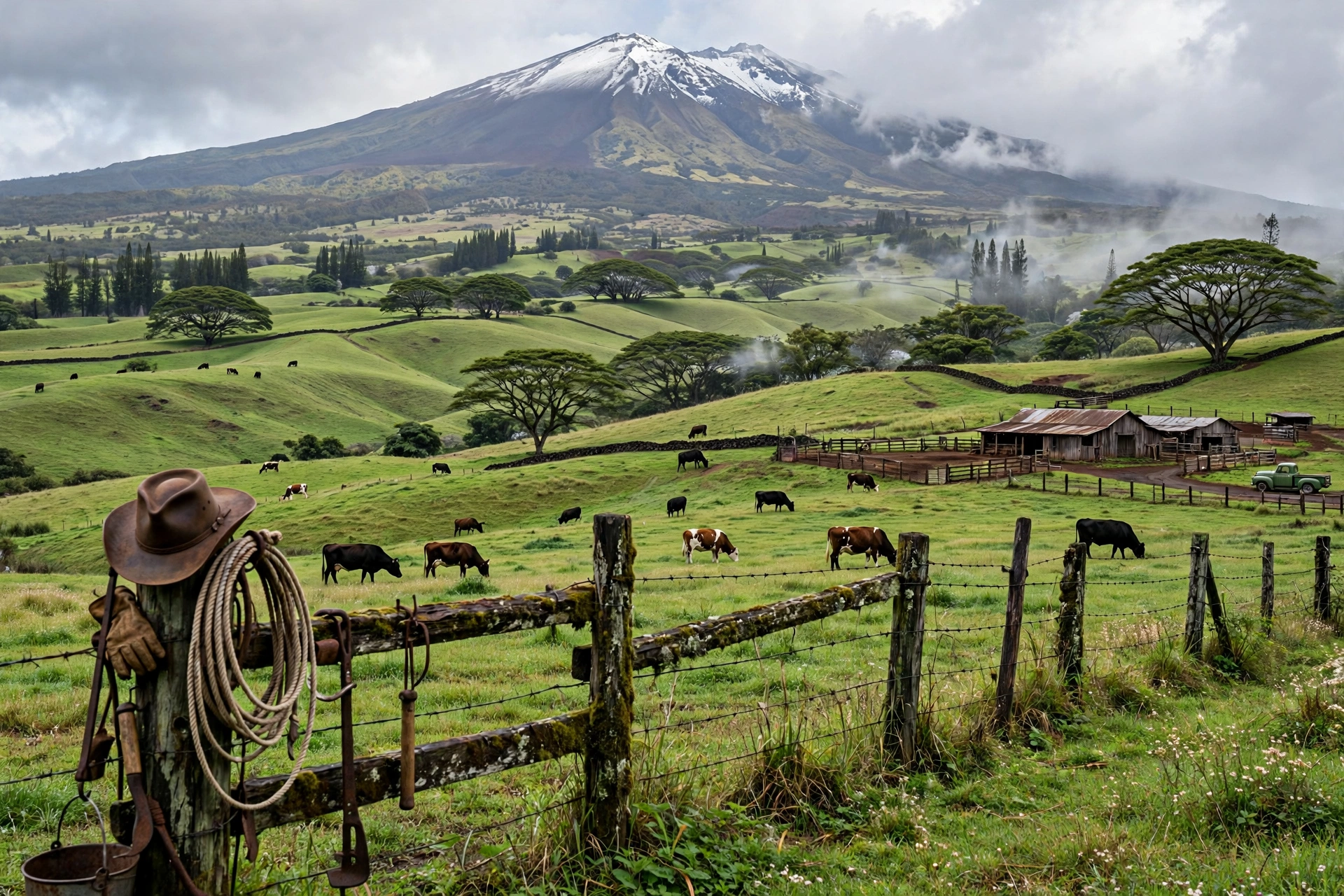
Waimea, known by its post office name Kamuela, sits at about 2,700 feet elevation in the saddle between the Kohala Mountains and Mauna Kea, and it feels like a different world from the beach towns an hour away. This is paniolo country: Waimea is the headquarters of Parker Ranch, one of the largest cattle ranches in the United States, and Hawaiian cowboy culture runs deep here, dating back to the vaqueros brought from California in the 1830s. The town has a cool, misty climate, rolling green pastures, and a distinctly upcountry character, with a growing food scene that leans into local ranch products. Waimea is also a practical base for exploring the north: it sits at the junction of the highways to the Kohala coast beaches, Honokaʻa and Waipiʻo Valley to the east, and Hawi to the north. Travelers who want cooler weather, a non-touristy atmosphere, and a central location for day trips find Waimea appealing, though it is about 45 minutes from the nearest good swimming beaches.
Hawi and Kapaʻau
At the northern tip of the island, the twin towns of Hawi and Kapaʻau anchor North Kohala, the birthplace of Kamehameha the Great. Hawi is a charming small town whose main street is lined with colorful historic buildings housing galleries, boutiques, and restaurants. It was once a bustling sugar plantation town, and its buildings retain that era’s character. Just east of Hawi, Kapaʻau is home to the original King Kamehameha statue, the iconic gilded figure that stands in front of the North Kohala courthouse area. (A replica stands in Honolulu, and another in the US Capitol.) The statue is one of the most photographed historic landmarks on the island. Beyond Kapaʻau, the road continues to the Pololū Valley lookout, where a steep trail descends to a black sand beach at the head of the valley. Hawi and Kapaʻau are quiet, scenic, and rich in history, best suited to travelers exploring the north or seeking a peaceful rural stay.
Honokaʻa
On the Hāmākua Coast east of Waimea, Honokaʻa was once a thriving sugar plantation town and retains much of its historic main street, including the Honokaʻa People’s Theatre, a restored 1930s movie house that still hosts performances. The town sits above the dramatic sea cliffs of the Hāmākua Coast, and it is the gateway to Waipiʻo Valley: the road to the Waipiʻo Valley lookout begins just east of town. Honokaʻa has a relaxed, local feel with a few good restaurants and shops, and it works well as a base for travelers focused on the Hāmākua Coast, Waipiʻo Valley, and the drive to Hilo. Like much of the east side, it sees more rain than the west, and its lush surroundings reflect that.
The Hilo Side: East Hawaiʻi
Hilo
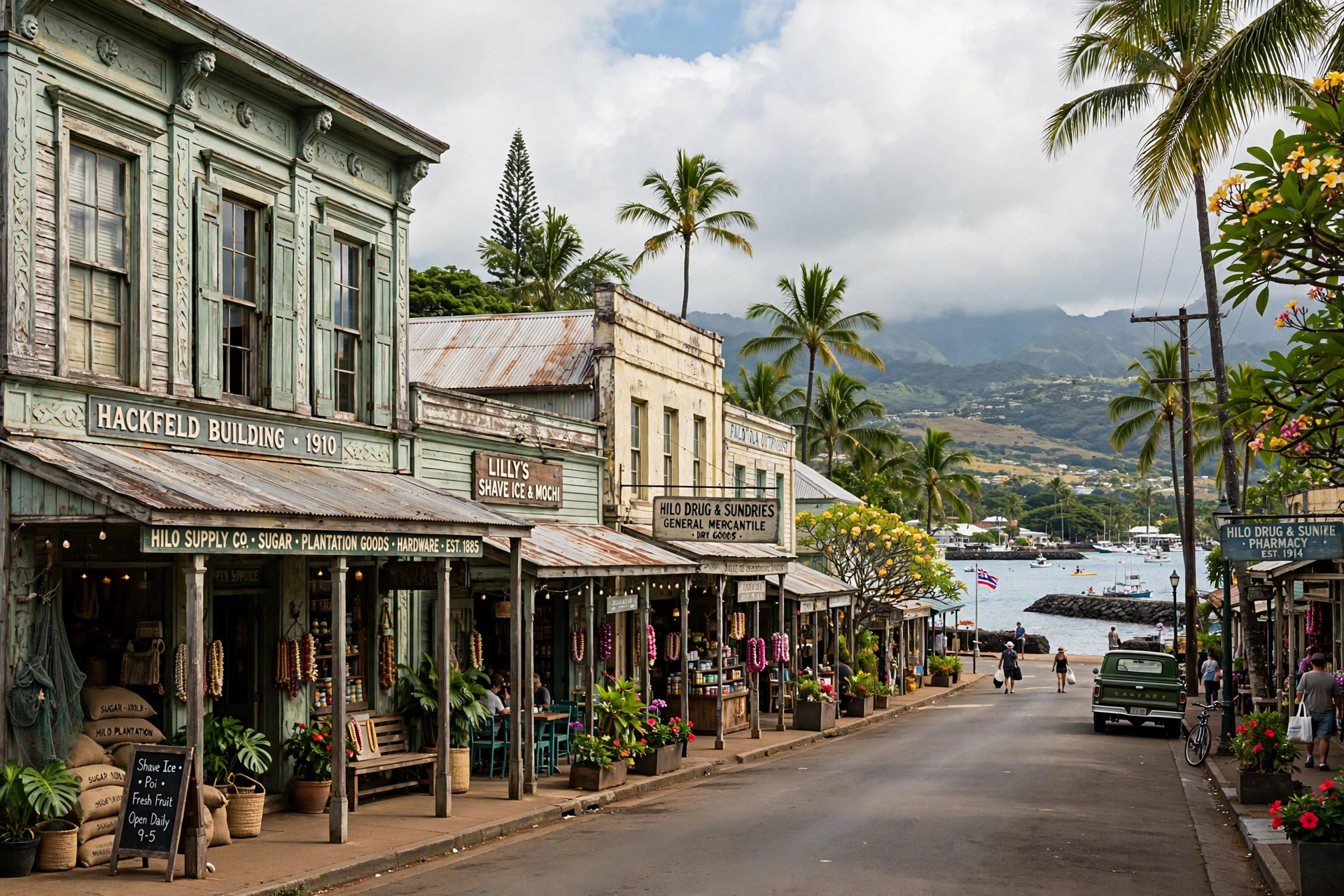
Hilo is the Big Island’s largest town, the county seat, and the commercial and cultural center of the east side. With about 44,000 residents in the greater area, it is the only town on the island that feels like a small city, with a real downtown, a university, a working harbor, and neighborhoods that sprawl along the coast. Hilo’s character is defined by rain: it receives around 130 inches a year, making it one of the wettest cities in the United States, and that rain feeds the lush gardens, waterfalls, and tropical vegetation that surround the town. Locals embrace it, and visitors who come prepared with rain gear find a town with genuine local life rather than a tourist facade.
Downtown Hilo has a well-preserved historic core with buildings dating to the sugar plantation era, now filled with local shops, restaurants, bookstores, and galleries. The town’s cultural institutions are among the island’s best: the Lyman Museum covers natural and cultural history, the Pacific Tsunami Museum documents the devastating tsunamis of 1946 and 1960 that reshaped the town’s waterfront, and the East Hawaiʻi Cultural Center hosts rotating art exhibits. Just outside downtown, Rainbow Falls and the Boiling Pots are an easy stop, Liliʻuokalani Gardens is a beautiful Japanese garden on the bay, and the Hilo Farmers Market, operating daily downtown, is one of the best places on the island to buy tropical fruit and local products. Each spring, Hilo hosts the Merrie Monarch Festival, the world’s most prestigious hula competition, which fills the town for a week.
Hilo is also the practical base for the east side’s natural attractions: Hawaiʻi Volcanoes National Park is about 45 minutes south, Akaka Falls State Park is a short drive north along the Hāmākua Coast, and the town’s own airport (Hilo International Airport) offers interisland flights. Accommodations in Hilo are fewer and less resort-like than on the Kona side, but the town suits travelers who want local culture, lower prices, and easy access to the volcano and the island’s waterfalls. Note that swimming beaches near Hilo are limited; the east coast’s rough waters mean most visitors head to the parks and gardens rather than the ocean.
Pāhoa and Puna
South of Hilo, the Puna district is the island’s fastest-growing and most eclectic region, and Pāhoa is its main town. Pāhoa’s downtown is a strip of historic wooden storefronts with a distinctly bohemian character, home to natural food stores, galleries, and a famously laid-back vibe. The surrounding area drew attention worldwide during the 2018 lower East Rift Zone eruption of Kīlauea, when lava flows destroyed more than 700 homes in the Leilani Estates subdivision and the community of Kapoho. The eruption reshaped parts of Puna permanently, and while life has moved on, the landscape still shows fresh lava fields. Puna’s attractions include Lava Tree State Monument, where a forest of lava-coated tree molds stands in a kipuka, and the area’s natural hot ponds. Pāhoa suits adventurous, independent travelers, though visitors should be aware that parts of Puna remain volcanically active and that the district’s infrastructure is more rural than elsewhere on the island.
Between Hilo and Pāhoa, the small communities of Keaʻau and Mountain View line the highway toward Volcano. Keaʻau is a growing residential and commercial hub, while Mountain View, at around 1,600 feet elevation, is cooler and wetter, known for its giant ferns and as a stop for travelers heading to the national park. Neither is a visitor destination in itself, but both are useful landmarks on the east-side driving routes.
Kaʻū and the South
Kaʻū, the island’s southernmost district, is the Big Island’s least developed and most rural region, a place of sweeping ranch lands, black sand beaches, and tiny towns strung along the highway between Kona and Volcano. Travelers cross Kaʻū on the southern route between the west and east sides, and the district rewards those who stop rather than drive straight through.
Nāʻālehu
Nāʻālehu holds the distinction of being the southernmost town in the United States, a fact its bakery and small shops advertise with pride. It is a tiny community, essentially a few blocks of businesses serving the surrounding rural area, but it makes a natural rest stop on the southern drive. The town’s bakery is a well-known landmark among road-trippers. Just south of Nāʻālehu, the road leads to Ka Lae, also known as South Point, the southernmost point in the United States, where dramatic cliffs drop to the ocean and Papakōlea, one of only a handful of green sand beaches in the world, lies at the end of a rugged hike.
Pāhala and Ocean View
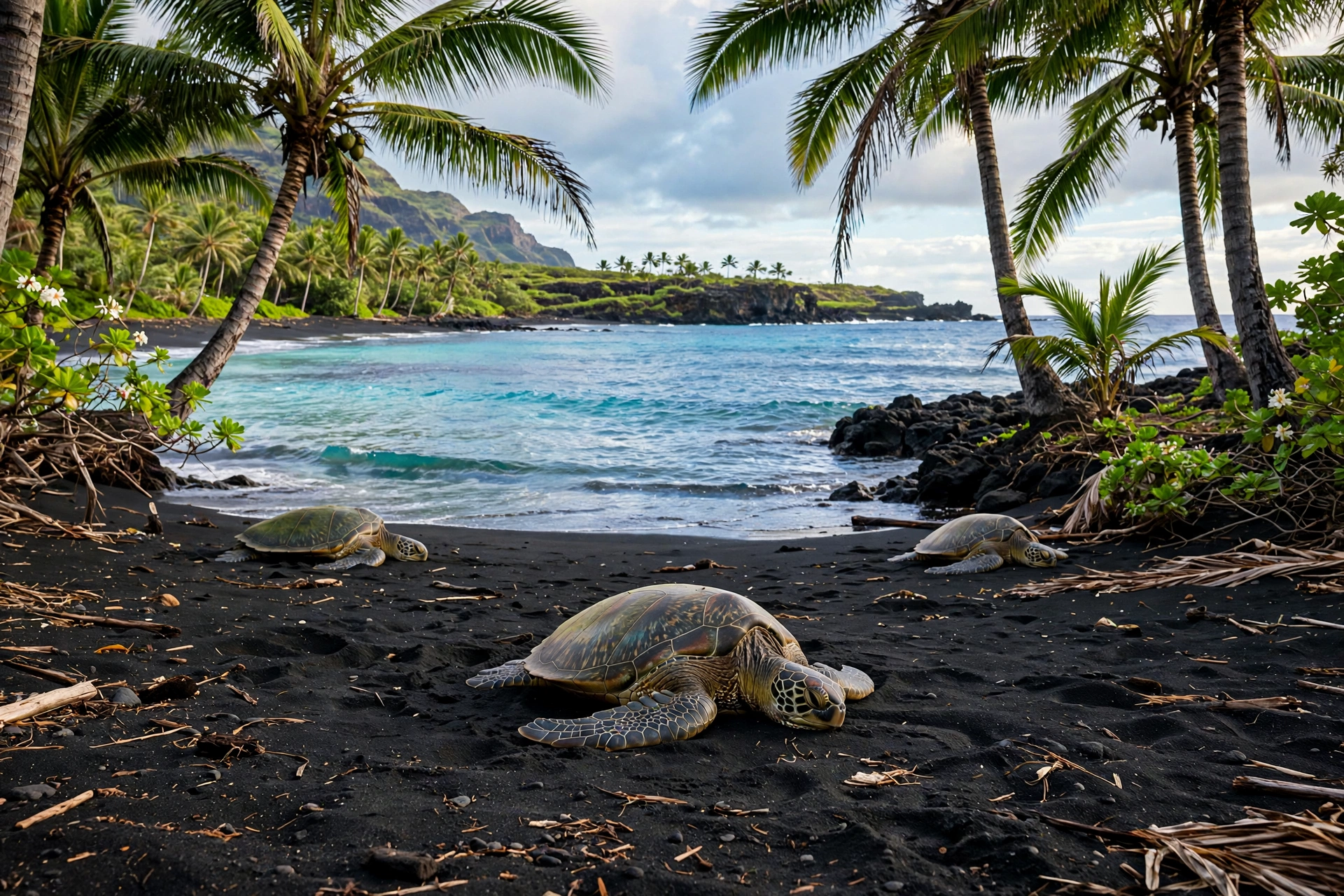
Pāhala is a former sugar plantation town in the uplands of Kaʻū, quiet and surrounded by macadamia nut orchards and ranch land. It sits at the junction of the road up to Hawaiʻi Volcanoes National Park’s Kaʻū entrance area and the highway continuing south. Ocean View, more formally Hawaiian Ocean View, is a sprawling residential subdivision on the flanks of Mauna Loa above the coast, developed in large lots that attract residents seeking affordable land and off-grid living. It is not a visitor town in the conventional sense, with few services, but its location offers striking views and a glimpse of the island’s alternative-lifestyle communities. Punaluʻu Black Sand Beach, one of the island’s most famous beaches and a reliable spot to see basking green sea turtles, lies on the Kaʻū coast between Pāhala and Nāʻālehu and is the district’s main visitor draw.
Volcano Village
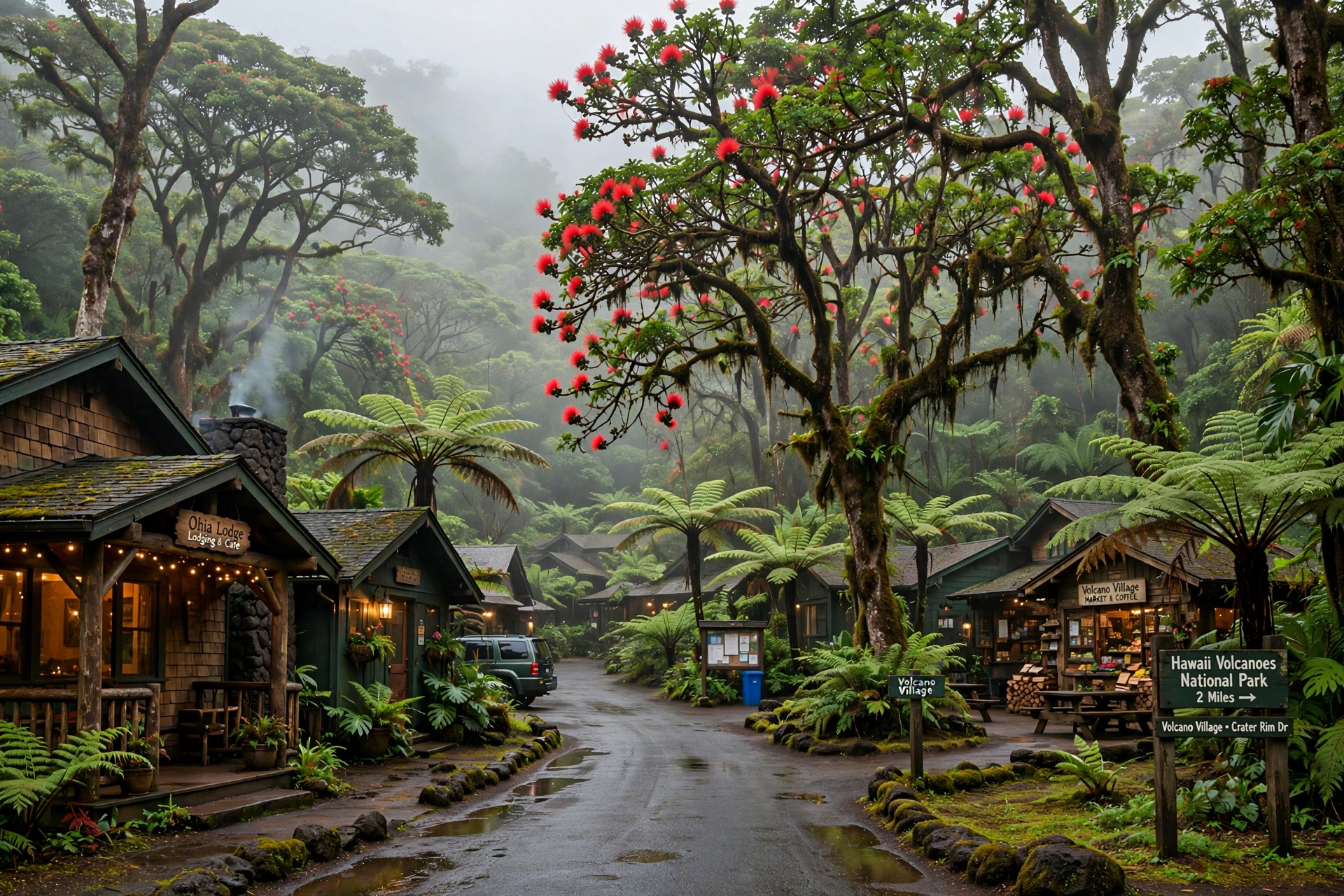
Volcano Village sits at about 4,000 feet elevation just outside the entrance to Hawaiʻi Volcanoes National Park, and it exists almost entirely to serve park visitors. The village is cool, misty, and fragrant with eucalyptus and ʻōhiʻa blossoms, a startling contrast to the beaches an hour away; nighttime temperatures can drop into the 40s Fahrenheit, so warm layers are essential. Its main street holds a cluster of restaurants, galleries, a general store, and a winery, plus a concentration of bed-and-breakfasts and vacation rentals that make it the obvious overnight base for the national park. Staying in Volcano Village lets you visit the park’s summit area for sunrise or after dark, when the glow of the crater is most visible during eruptive periods, without the long drive back to Kona or Hilo. The village also hosts the Volcano Art Center and a farmers market, and the surrounding rainforest offers short walks and birdwatching. For any traveler spending more than a day at the volcano, Volcano Village is the most practical and atmospheric place to stay.
Where to Base Yourself
Choosing where to stay on the Big Island is the single most consequential planning decision for your trip, because the island’s size punishes a bad choice with hours of extra driving. The right base depends on what you want to do most.
Choose Kailua-Kona if you want the most dining, shopping, and tour options, easy access to the Kona coast’s beaches and snorkeling, and a lively town atmosphere. It is the best all-around base for first-time visitors and the most convenient to the airport. The trade-off is that it is the most tourist-heavy part of the island, and day trips to the volcano or Hilo are long.
Choose Waikōloa if you want a resort-focused stay with calm beaches at your doorstep and easy access to the Kohala coast’s top beaches. It is quieter than Kailua-Kona but less rich in local character, and dining is concentrated in the resort shopping centers.
Choose Hilo if you want local culture, lower prices, and the shortest drive to Hawaiʻi Volcanoes National Park, Akaka Falls, and the Hāmākua Coast. Hilo suits travelers who prioritize the island’s natural and cultural attractions over beach time. The trade-off is the rain and the limited swimming beaches nearby.
Choose Volcano Village if the national park is the centerpiece of your trip. Even one night here transforms a rushed day trip into a relaxed multi-visit experience, letting you see the summit at different times of day. It pairs well with a split stay: a few nights on the Kona side plus a night or two at the volcano.
Choose Waimea if you want cooler weather, ranch-country scenery, and a central location for exploring the north, including Hawi, Honokaʻa, Waipiʻo Valley, and the Kohala beaches. It is a favorite of repeat visitors who have already done the resort areas and want a more local experience.
The split stay is worth serious consideration on the Big Island. Because the Kona and Hilo sides are so far apart, many experienced visitors divide their trip: several nights on the west side for beaches and ocean activities, then a night or two in Volcano Village or Hilo for the volcano and east-side sights. This avoids the exhausting full-day round trips across the island and lets each region get the unhurried time it deserves.
Frequently Asked Questions
What is the main town on the Big Island?
Hilo is the largest town and the county seat, with around 44,000 residents in the greater area. Kailua-Kona is the main tourism hub on the west side. Neither dominates the island the way Honolulu dominates Oʻahu, and most visitors will spend time in both regions.
Should I stay in Kona or Hilo?
Stay on the Kona side (Kailua-Kona or Waikōloa) if beaches, snorkeling, sunshine, and dining options are your priorities. Stay in Hilo or Volcano Village if the volcano, waterfalls, and local culture matter most. Many visitors split their stay between both sides to avoid long daily drives across the island.
What is the southernmost town in the United States?
Nāʻālehu, on the Big Island’s Kaʻū coast, is the southernmost town in the United States. Nearby Ka Lae (South Point) is the southernmost point of land in the country.
Is Waimea the same as Kamuela?
Yes. Waimea is the town’s traditional Hawaiian name, and Kamuela is its post office name, adopted to distinguish it from other places named Waimea. Locals use both names interchangeably, and you will see both on signs and addresses.
Where is the original King Kamehameha statue?
The original King Kamehameha statue stands in Kapaʻau in North Kohala, near the great king’s birthplace. Replicas stand in Honolulu and in the United States Capitol. The Kapaʻau statue is one of the Big Island’s most significant historic landmarks.
Can I visit Pāhoa and Puna after the 2018 eruption?
Yes. Pāhoa and the surrounding Puna district are open and welcoming to visitors. The 2018 eruption destroyed homes in Leilani Estates and Kapoho and reshaped parts of the landscape, but the town itself was not damaged. Visitors should respect private property near lava-affected areas and check current conditions, as parts of the district remain volcanically active.
How far apart are the Big Island’s towns?
Distances are significant. Kailua-Kona to Hilo takes about 1.5 hours via the Saddle Road. Kailua-Kona to Volcano Village takes about 2 hours. Waimea to Hilo takes about 1 hour. The southern route between Kona and Volcano through Kaʻū can take 2.5 to 3 hours. Plan your base around these drive times.
What is Volcano Village like?
Volcano Village is a small, cool, misty community at about 4,000 feet elevation just outside Hawaiʻi Volcanoes National Park. It has restaurants, galleries, shops, and many bed-and-breakfasts, and it is the best overnight base for visiting the park, especially for sunrise or nighttime crater viewing. Bring warm layers, as temperatures can drop into the 40s Fahrenheit at night.
Related Guides
- Big Island Map
- Big Island Hawaiʻi Beaches
- Big Island Hawaiʻi Snorkeling
- Maui Towns
- Oʻahu Towns
- Kauaʻi Towns
- Hawaii Beaches
- Hawaii Map
A Final Note
The Big Island’s towns reward travelers who slow down enough to notice them. It is tempting to treat the island as a checklist of natural wonders, the volcano, the black sand beaches, the waterfalls, and to sleep wherever is convenient. But the towns are where the island’s human story lives: the paniolo heritage of Waimea, the plantation history written into Honokaʻa’s main street, the royal past still visible along Aliʻi Drive in Kailua-Kona, and the resilience of Puna after the 2018 eruption. Each region’s climate, history, and daily rhythm are different enough that moving between them feels like visiting several islands in one. Choose your base with care, give at least one small town an unhurried afternoon, and the Big Island will feel less like a destination and more like a place you have actually been.