Sperm Whales in Hawaii: The Deepest Hunters on Earth

Somewhere in the dark water a mile beneath the Kona coast, the largest predator with teeth on Earth is listening. A sperm whale hangs motionless in the black, sending out the loudest clicks in the animal kingdom and reading the echoes for squid. When it finds them, it descends into a world of crushing pressure for an hour at a time. Hawaii’s waters hold an estimated 3,354 of these giants, and while you will probably never see one from shore, they are out there right now, hunting in the deep, part of an island ecosystem that extends a mile straight down, unseen and unbothered.
This is the single complete guide to sperm whales in Hawaii. It covers what these animals are, how to tell them from their confusingly named smaller cousins, their life in Hawaiian waters, their record-setting dives, their complex social lives, the whaling history that made them endangered, and what visitors should realistically expect. If you have been searching for anything about sperm whales in Hawaii, the answers are all here on this one page.
What Sperm Whales Are
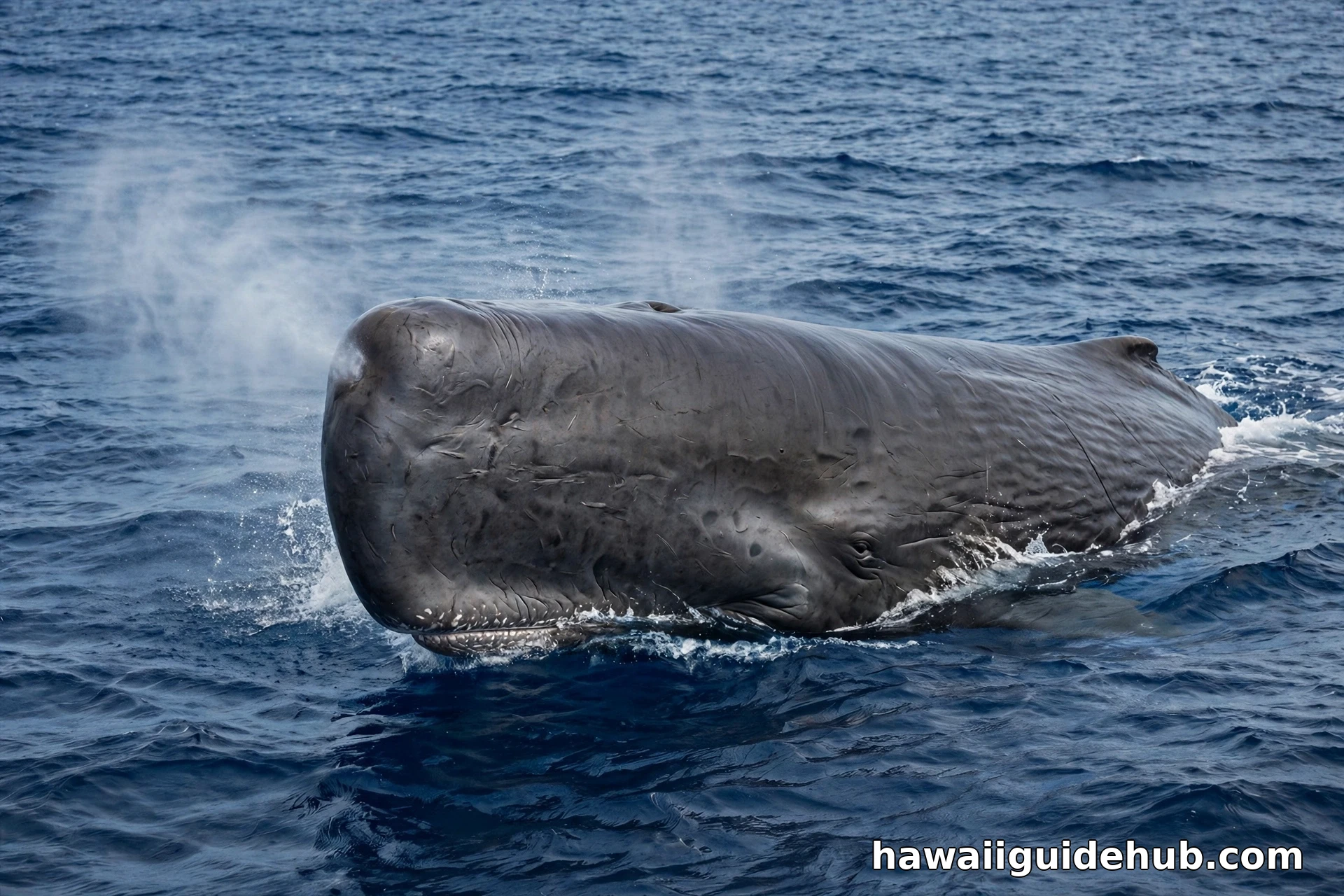
The sperm whale is the largest toothed whale alive: males reach 52 to 59 feet and 35 to 45 tons, with females around 36 feet and 15 tons. A full third of the animal is head, a great blunt box that houses the largest brain of any creature known to have lived, averaging about 17 pounds, and the mysterious spermaceti organ, a vast chamber of waxy oil. Whalers named the whale for that oil, mistaking it for sperm; scientists still debate its exact function, though the leading theory is that it helps the whale fine-tune its buoyancy for extreme dives and focuses its echolocation clicks like an acoustic lens.
Those clicks deserve their own billing. Sperm whale echolocation clicks can reach 230 decibels, making them the loudest biological sounds ever recorded, powerful enough to travel for miles through the deep ocean. The whale hunts entirely by sound in water where no sunlight reaches, building a picture of squid, fish, and seafloor from echoes. An adult eats roughly a ton of food a day, mostly squid, including the giant and colossal squid of legend, whose sucker scars are often found etched into the whales’ skin.
Don’t Confuse Them: Sperm Whale vs. the Kogia Whales
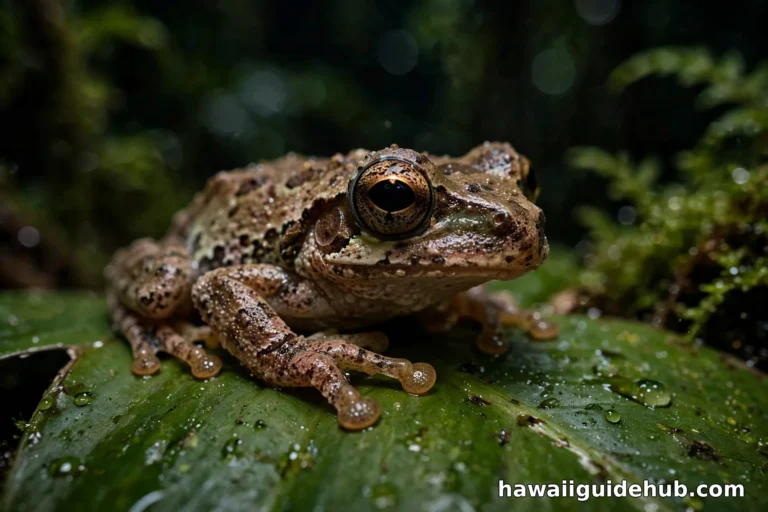
Hawaii is home to three whales with “sperm whale” in the name, and they could hardly be more different. The dwarf and pygmy sperm whales, genus Kogia, are small, shy, deep-water animals that even researchers struggle to tell apart at sea. Visitors who hear about a “sperm whale” sighting off Kona are often hearing about a Kogia. This table sorts them out.
| Sperm whale | Dwarf sperm whale | Pygmy sperm whale | |
| Scientific name | Physeter macrocephalus | Kogia sima (per NOAA Fisheries) | Kogia breviceps (per NOAA Fisheries) |
| Adult size | Males to 59 ft; females to 36 ft (per Nat. Geographic) | To about 8.5 ft (per NOAA) | To about 11 ft (per NOAA) |
| ESA status | Endangered (global listing) | Not listed; data limited | Not listed; data limited |
| Hawaii abundance | 3,354 in HI EEZ (per DLNR SWAP) | No current estimate (per DLNR SWAP) | No current estimate (per DLNR SWAP) |
| Signature behavior | Long fluke-up dives; loud clicks | Floats motionless (“logging”); releases ink-like cloud when threatened (per NOAA); sinks without fluking | |
| How studied here | Aerial and vessel surveys | 182-animal photo-ID catalog off Kona; drone footage; eDNA (per Cascadia Research) | |
Life in Hawaiian Waters
Per Hawaii DLNR’s wildlife action plan, sperm whales occur throughout the main Hawaiian Islands and the Northwestern Hawaiian Islands, living in deep oceanic water but venturing into state waters where the island slopes drop steeply, especially off the Kona coast and southwest Maui County. The abundance estimate of 3,354 for the Hawaiian EEZ makes them one of the better-counted large whales in the region, though DLNR notes there are no data on population trends in Hawaiian waters.
Hawaiian sperm whales have their own foraging quirks. Research on their echolocation behavior found that, unlike sperm whales in some other regions that target dense layers of prey, Hawaii’s animals seem to forage where prey density decreases but prey size increases with depth, essentially choosing fewer, bigger meals. Males adjust their clicking at the start of each dive, tuning their sonar to the expected prey field. It is a reminder that even a globally distributed species behaves like a local when it comes to dinner.
The Deepest Hunters on Earth
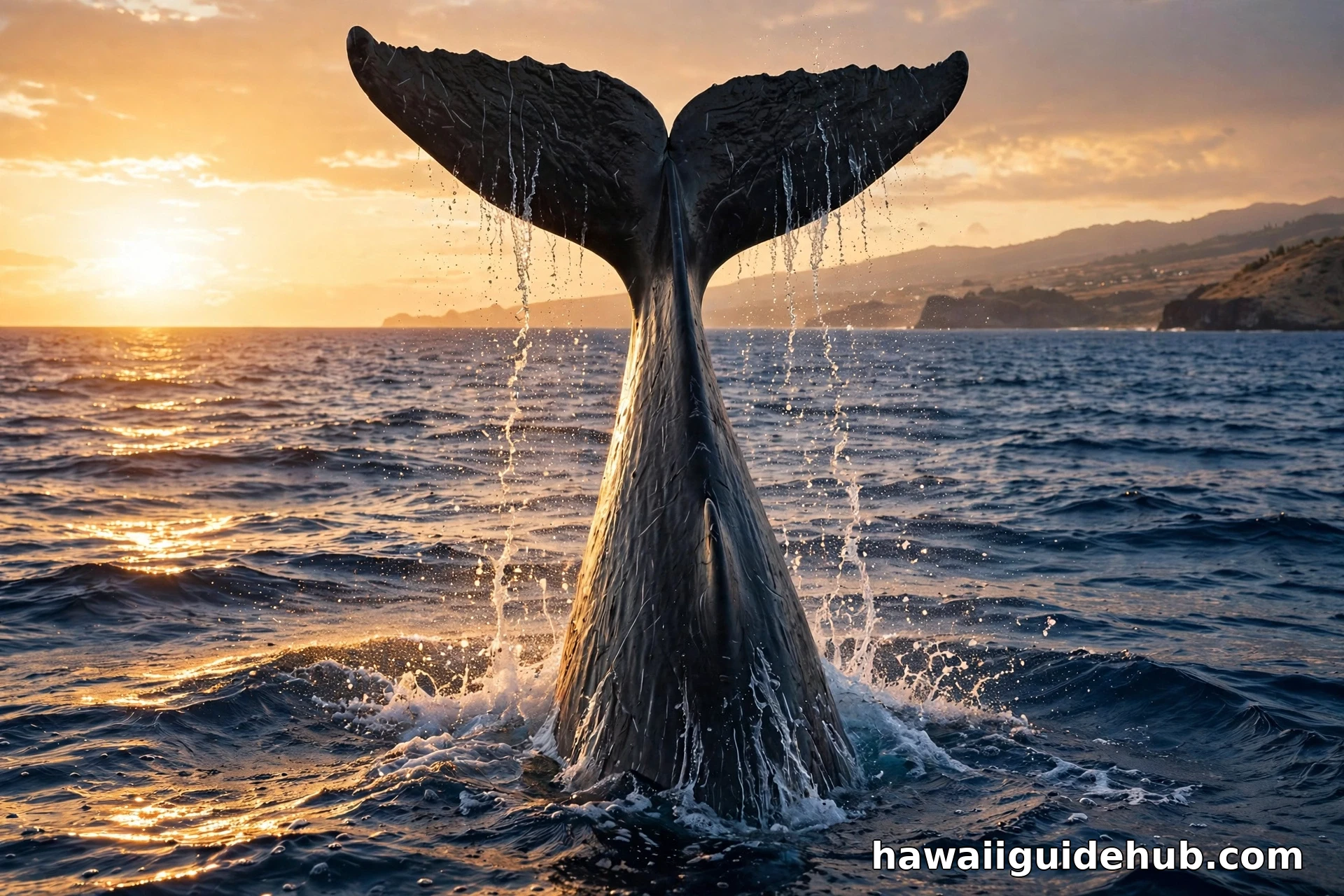
Sperm whales routinely dive beyond 3,280 feet and can stay down for up to 90 minutes, collapsing their lungs, slowing their hearts, and flooding their muscles with oxygen-storing myoglobin. They hunt in complete darkness between 300 and 1,200 meters, where their clicks do the seeing. A foraging dive is a full-body commitment: the whale may travel a mile down and a mile back horizontally before surfacing to breathe for just a few minutes. Females and young do most of their feeding in the warm waters of the tropics, which is why Hawaiian sightings skew toward nursery groups.
The prey list reads like a deep-sea field guide: giant squid, jumbo squid, octopus, and deep-water fish. The whales’ stomachs have yielded beaks from squid species never seen alive by science, making sperm whales inadvertent deep-sea explorers whose dives occasionally deliver new species to researchers. Their one-ton-a-day appetite makes them a major force in the ocean’s vertical food web, carrying deep-ocean nutrients toward the surface with every dive cycle.
Social Lives: Nurseries and Wanderers
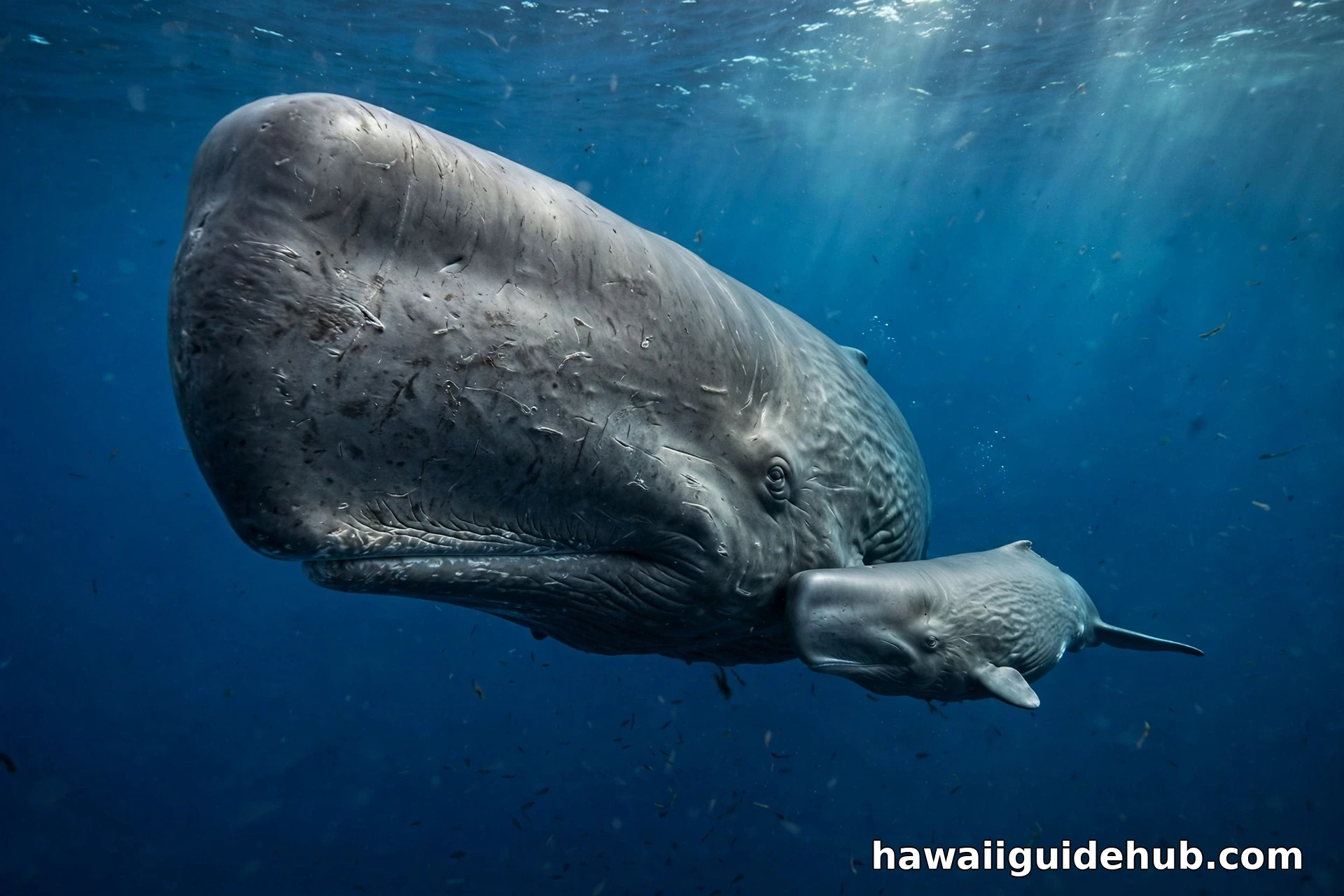
Sperm whale society is matrilineal. Females and their calves live in pods of 15 to 20 in tropical and subtropical waters year-round, practicing communal childcare in which calves are guarded at the surface by babysitting adults while their mothers dive. These family units can stay together for decades and even develop distinct vocal dialects, clan-specific patterns of clicks that researchers compare to human accents. Males leave the nursery pods as they mature, migrating to colder, higher-latitude feeding grounds alone or in bachelor groups, and return to the tropics to breed only when fully grown, often not until their late twenties.
This split life history shapes what visitors might see. A group of sperm whales off Hawaii in winter is most likely a nursery pod: females, juveniles, and calves, logging at the surface between dives. A lone, enormous animal is probably a mature male, and at up to 59 feet, it is an unforgettable sight. The famous white whale of Melville’s novel was a sperm whale, and the real 1820 sinking of the whaleship Essex by a sperm whale remains one of history’s most dramatic reminders that these are powerful, intelligent animals, not scenery.
From Whaling to Protection
No whale was hunted harder. Whalers killed approximately one million sperm whales for oil, with the Pacific grounds, including waters around Hawaii, among the most intensively worked. The species is listed as endangered under the U.S. Endangered Species Act and vulnerable on the IUCN Red List, with a global population that may number only in the low hundreds of thousands and a trend that remains unknown. Recovery is slow because the life history is slow: females mature at nine, males often do not breed until their late twenties.
Today’s threats are modern. Ship strikes kill whales in busy shipping lanes. Entanglement in fishing gear injures and drowns them. Ocean noise from shipping and seismic surveys can mask the clicks they depend on. Contaminants accumulate in their blubber. And plastic is a documented killer: a sperm whale that washed ashore in Hawaii in February 2023 was found with nets and plastic debris in its stomach, a case widely reported as an emblem of ocean pollution. The cultural significance of whales in Hawaiian tradition adds a local dimension to their protection: these are animals woven into chant and story, not just statistics.
Eavesdropping on Giants: How Hawaii Studies Its Sperm Whales
You cannot follow a sperm whale down a mile, so researchers listen instead. Towed hydrophone arrays pick up the whales’ distinctive echolocation clicks, and because each animal’s click pattern carries individual quirks, acoustic monitoring can estimate how many whales are in an area without anyone seeing a fluke. Aerial surveys flown for the Hawaiian EEZ abundance estimates photograph surfacing groups, while vessel surveys collect the biopsy samples that reveal diet, contaminants, and genetics. Satellite tags, though difficult to attach to such powerful animals, have traced movements between island groups.
The listening has produced surprises. Long-term acoustic recorders moored off the islands have detected sperm whale clicks year-round, confirming that Hawaii is not just a seasonal stopover but a permanent neighborhood for at least part of the population. And the foraging study that found Hawaiian whales targeting larger, sparser prey came from analyzing exactly when and where the clicks changed pattern during dives, a kind of remote dining observation conducted entirely by ear. For a species that spends perhaps 90 percent of its life out of sight, sound is the only window, and Hawaii’s researchers have learned to read it fluently.
Can You See Sperm Whales in Hawaii?
Set expectations honestly: sperm whales are a rare sighting for visitors. They live far offshore in deep water and spend most of their time below the surface, surfacing briefly between hour-long dives. Your best chance is a dedicated pelagic wildlife tour out of Kona that ventures miles offshore, and even then it is a matter of luck, patience, and a good captain reading the water. Winter does not concentrate them the way it does humpbacks; they are present year-round but always distant.
If you are lucky enough to encounter one, the rules are the same as for every whale in Hawaii: keep your distance, never chase or position the boat in its path, and cut the engine to neutral if it approaches. The responsible whale watching guide covers the federal approach guidelines. For a far more reliable whale experience, the humpback whale migration brings thousands of animals close to shore every winter, and no luck is required.
Watch: Giants of the Deep (National Geographic)
Frequently Asked Questions
Are sperm whales endangered?
Yes. Sperm whales are listed as endangered under the U.S. Endangered Species Act and vulnerable on the IUCN Red List, largely because of historical whaling that killed about a million animals.
How deep can sperm whales dive?
Routine foraging dives exceed 3,280 feet (1,000 meters), and dives can last up to 90 minutes. They are among the deepest-diving mammals on Earth.
What is the difference between a sperm whale and a pygmy sperm whale?
True sperm whales reach 59 feet and are endangered; pygmy and dwarf sperm whales (Kogia) are 8 to 11 feet, shy deep-water dolphins that can release an ink-like cloud when threatened.
Do sperm whales attack people?
Essentially never in modern times. The Essex sinking of 1820 remains the famous exception, and it happened after the ship’s crew had been hunting the whale’s pod. Sperm whales are generally indifferent to boats and divers, though their size means any close encounter should be treated with serious respect and distance.
How many sperm whales are in Hawaii?
About 3,354 in the Hawaiian Exclusive Economic Zone, per Hawaii DLNR’s wildlife action plan. There are no trend data for Hawaiian waters.
What do sperm whales eat?
Mostly squid, including giant squid, plus octopus and deep-water fish, about a ton per day for an adult.
The sperm whale is the ocean’s heavyweight thinker: the biggest brain, the loudest voice, the deepest commute, all in service of hunting squid in the dark a mile down. Hawaii’s 3,354 are a small, distant, and resilient remnant of a species humans nearly erased, protected now by the Endangered Species Act and by the sheer remoteness of the water they inhabit. You may never see one, but on a quiet night off Kona, their clicks are moving through the deep beneath you, as they have for millennia.