Honolulu Food: A Local Guide to Eating in the Capital

Honolulu feeds you the way it does everything else: in layers. One meal can carry Native Hawaiian tradition, a plantation lunch pail, a Japanese bento, a Portuguese bakery, and a Korean barbecue all at the same table, and nobody in the city finds that surprising. Food in Honolulu, Hawaiʻi is not a side activity between beach sessions. For many residents it is the main event of the day, planned with the seriousness other cities reserve for sports.
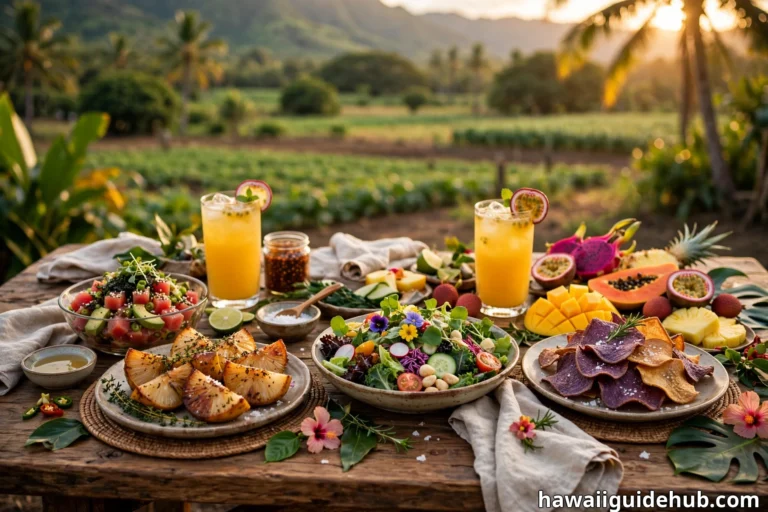
This is the complete guide to Honolulu Hawaiʻi food for visitors. It explains where the city’s food culture came from, then walks through the dishes you will actually encounter: the plate lunch, poke, traditional Hawaiian food, loco moco, Spam musubi, manapua, shave ice, and malasadas. For each one you get its origin, what it tastes like, and how locals order it, so a Honolulu menu reads like a story instead of a vocabulary test.
How Honolulu Learned to Eat This Way
The foundation is Native Hawaiian. Long before contact, Hawaiians built a cuisine around taro pounded into poi, fish from managed ponds and reefs, pig cooked in earth ovens called imu, breadfruit, sweet potato, and coconut. After 1778, and especially as sugar and pineapple plantations grew from the 1850s onward, Honolulu became a port city fed by the world. Laborers arrived from China, Japan, Korea, the Philippines, Portugal, and Puerto Rico, each group carrying recipes, and the plantation lunch break forced those recipes into daily contact.
Workers shared food from their lunch pails and tins, and a new shared cuisine, called local food, grew out of the exchange. Chinese char siu bao became the manapua. Japanese bento habits shaped the mixed plate. Portuguese malasadas and sweet bread took root. Korean kalbi, Filipino adobo, and American diner food all joined the rotation. After World War II this local food spread through drive ins, lunch wagons, and okazuya delicatessens, and in 1991 a group of chefs formalized a fine dining branch called Hawaiʻi Regional Cuisine, built on local ingredients. Honolulu is where all of those threads meet at full strength, which is why eating here teaches you the city’s history faster than any museum label.
The Plate Lunch: Honolulu’s Defining Meal
If you eat one thing in Honolulu, make it a plate lunch. The classic formula is fixed: two scoops of white rice, one scoop of macaroni salad, and a generous serving of a hot entrée, all on one plate or in one takeout container, usually with gravy available for the asking. Entrées rotate through the whole local canon: chicken katsu, teriyaki beef, kalbi short ribs, hamburger steak, chicken long rice, mahimahi, and kalua pork with cabbage. Portions are famously large, prices at old school spots stay comparatively modest for Hawaiʻi, and the meal descends directly from those plantation lunch pails, filling, portable, and built from what the multicultural workforce actually ate.
Honolulu keeps the plate lunch honest. Rainbow Drive In, open since 1961 near Waikīkī, is the city’s best known plate lunch institution, and generations of neighborhood spots in Kalihi, Kapahulu, and Mōʻiliʻili hold their own loyal followings. Ordering tips are simple: a mixed plate lets you sample two entrées, a mini plate exists for normal human appetites, and mac salad quality is the quiet test locals apply to any new spot. For the pork entrée done in full, our guide to kalua pork and cabbage explains how the imu tradition became a weeknight staple.
Poke: The Dish Honolulu Gave the World
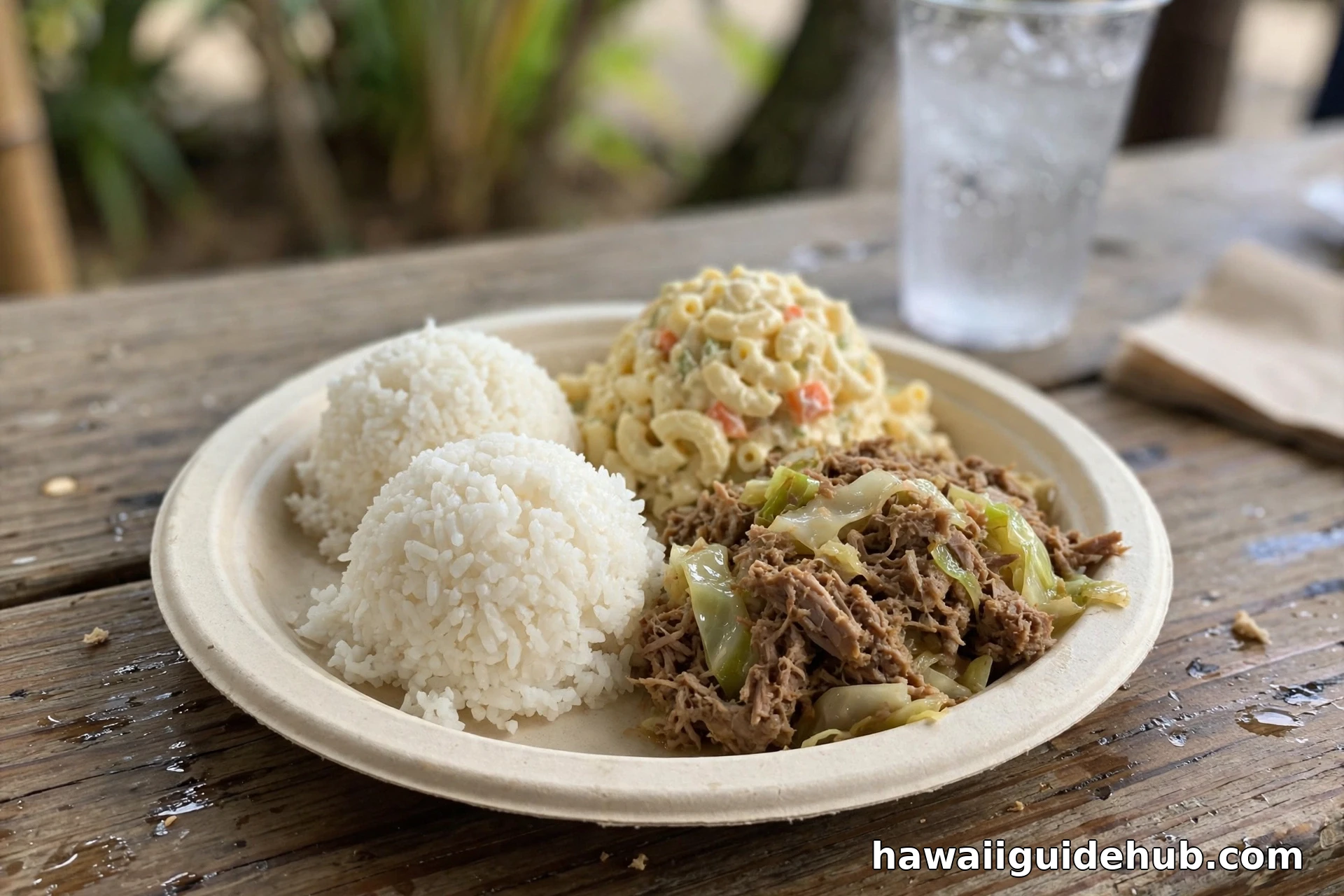
Poke, pronounced poh-keh, means to cut crosswise in Hawaiian, and the dish began as seasoned pieces of reef fish eaten by Native Hawaiian fishermen. The modern Honolulu version centers on cubed raw ʻahi tuna dressed with shoyu, sesame oil, limu seaweed, sweet onion, and green onion, with variations running from spicy mayonnaise to Hawaiian salt and ʻinamona, roasted kukui nut. In Honolulu, poke is bought by weight at seafood markets and grocery counters, eaten plain as a pupu, or served over warm rice as a poke bowl. Tamashiro Market and Alicia’s Market in Kalihi are the names locals give first when visitors ask where poke is serious business.
Two ordering notes separate a good poke experience from a mediocre one. First, freshness rules everything, and the best counters sell out of popular varieties by early afternoon. Second, traditional Honolulu poke is a seasoned fish preparation, not a salad construction project. The mainland style bowl loaded with corn, edamame, and fruit is a later export invention. Try at least one classic shoyu ʻahi poke in Honolulu so you know what the original tastes like before the variations start.
Traditional Hawaiian Food: Poi, Lau Lau, and Lomi Salmon
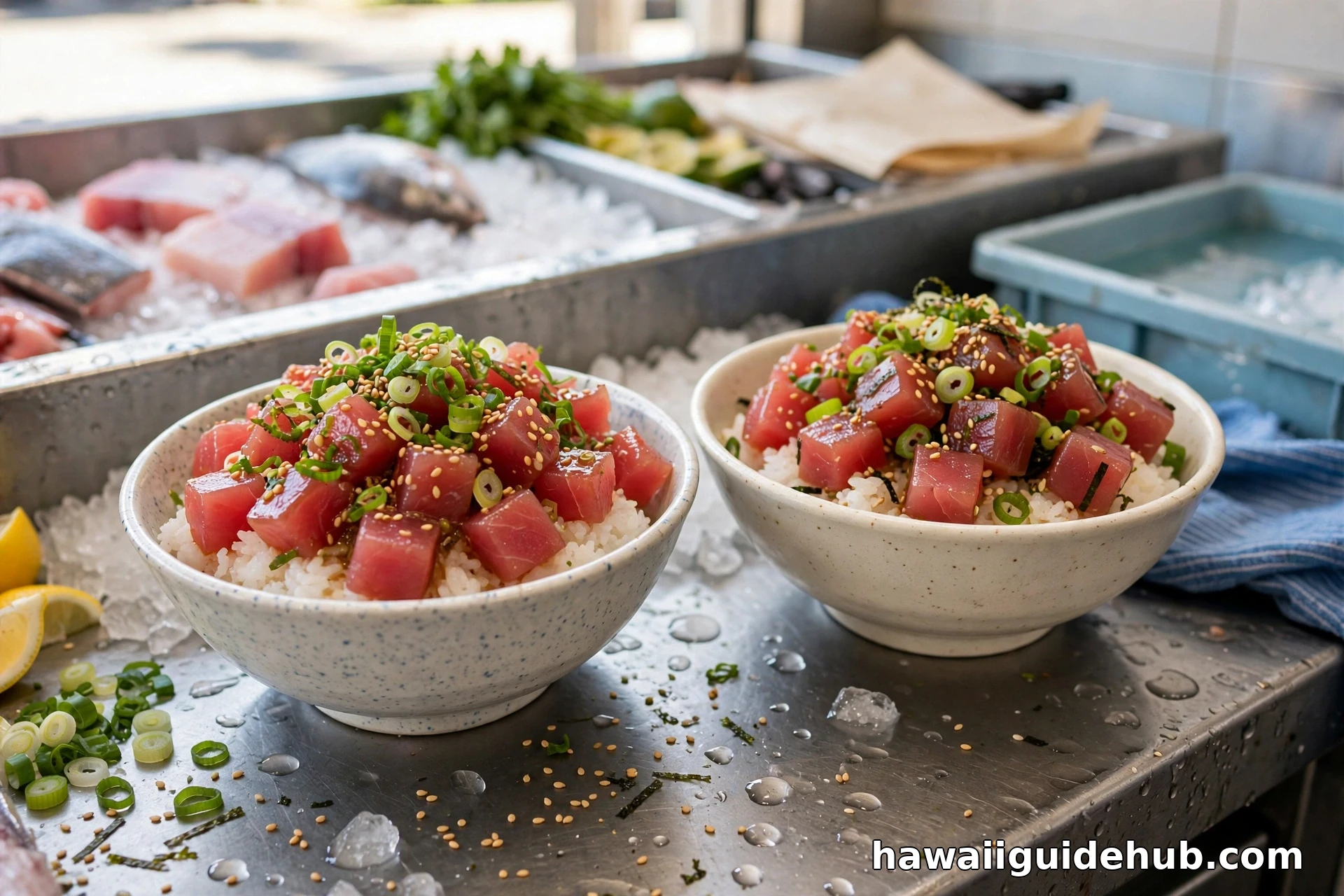
A Hawaiian food plate in Honolulu is a different meal from a plate lunch, and visitors should try both. The centerpiece is kalua pig, slow cooked until it shreds, traditionally in an imu with banana leaves and hot stones. Around it come lau lau, pork and fish steamed inside taro leaves; poi, the pounded taro staple whose mild, slightly tangy flavor is an acquired taste that rewards patience; lomi lomi salmon, salted salmon worked by hand with tomato and onion, a dish born when whalers and traders introduced salted fish and tomatoes met local technique; chicken long rice, a ginger scented soup with clear noodles that shows the Chinese influence inside even the most traditional menu; and haupia, the firm coconut pudding that ends the meal.
Honolulu institutions such as Helena’s Hawaiian Food, serving since 1946 and honored with a James Beard America’s Classics award, keep this menu at a high standard, and spots like the Waiāhole Poi Factory on the windward side mill poi the traditional way. Our guide to lau lau explains that steamed leaf bundle in full, from leaf to table.
Loco Moco, Musubi, and Manapua: The Snack Tier
Below the full meals sits the snack tier, and Honolulu runs on it. The loco moco stacks white rice, a hamburger patty, a fried egg, and brown gravy into a bowl of pure comfort; it was created in Hilo in 1949 for hungry teenage athletes and conquered every drive in menu in the state, Honolulu included. Spam musubi wraps a grilled slice of Spam on a block of rice with nori, a portable brick sold at every convenience store counter in the city. Spam’s deep local roots trace to World War II, when the shelf stable meat fed a wartime islands population and never left the pantry. Manapua, the local descendant of Cantonese char siu bao, is a soft steamed or baked bun filled most classically with sweet char siu pork, sold at bakeries and from the manapua trucks that still work Honolulu neighborhoods.
Saimin deserves its own sentence in this tier. Honolulu’s noodle soup, a Chinese Japanese Filipino plantation era hybrid served in a dashi based broth with char siu, green onion, and often Spam or fish cake, is the city’s late night and rainy day bowl, found at dedicated saimin stands and old diners across town. Together these items explain a local truth: in Honolulu, the distance between snacks and meals is mostly a matter of portion size.
Shave Ice and Malasadas: The Sweet Finish
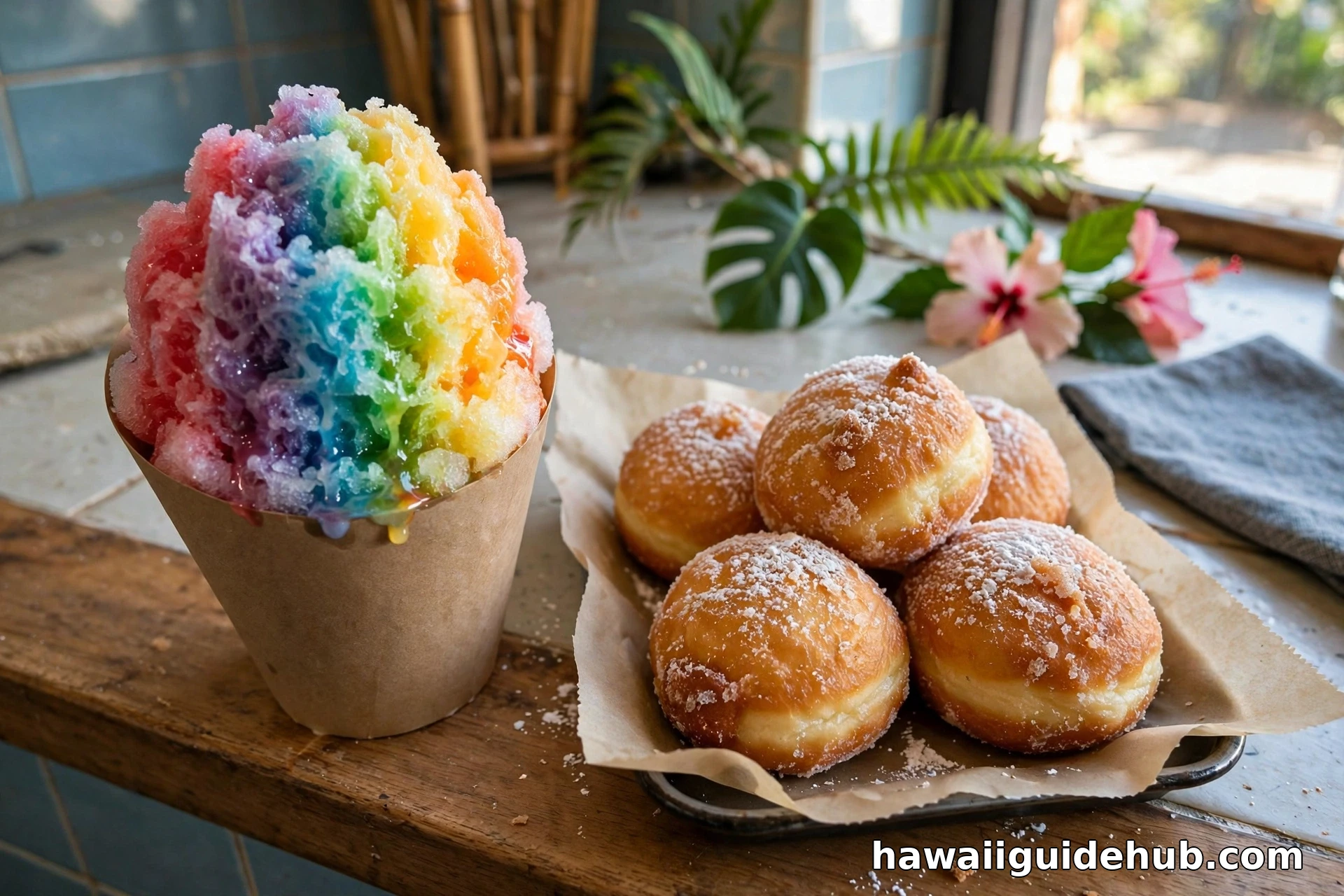
Shave ice, never shaved ice in local usage, descends from Japanese kakigōri carried by plantation workers. A block of ice is shaved into snow fine flakes that absorb syrup instead of pooling under it, and a proper Honolulu shave ice can hide vanilla ice cream at the bottom and a snow cap of sweetened condensed milk on top. Waiola Shave Ice, with roots in Honolulu going back decades, is the name most often attached to the city’s softest ice. Order three flavors, accept the holder and the spoon straw, and eat fast in the trade wind heat.
Malasadas are the Portuguese contribution: egg rich dough fried into pillowy, hole free doughnuts and rolled in sugar, eaten hot. Leonard’s Bakery on Kapahulu Avenue, frying them since 1952, is a Honolulu landmark where the pink box is a souvenir in itself, and filled versions with haupia or custard sell beside the original sugar coating. Between shave ice and malasadas, Honolulu dessert culture stays proudly unpretentious: both are cheap, both are best eaten within minutes, and both have lines of locals, not only visitors, on any warm afternoon. If you want one more old fashioned local sweet for comparison, the sorbet like guri guri from Maui is the cousin worth knowing.
How to Eat Your Way Through Honolulu
A practical rhythm works better than a checklist. Start one morning with a loco moco or a manapua and coffee. Make lunch a plate lunch at a neighborhood spot away from the resort core, because that is where the format lives its real life. Buy poke by the quarter pound in the late afternoon from a market counter and eat it at a beach park before sunset. Save the Hawaiian food plate for a sit down meal when you can give poi and lau lau your full attention, and finish any hot day with shave ice. Sprinkle in Honolulu’s other strength, its Asian restaurant depth, from ramen on Kapahulu to dim sum in Chinatown, one of the oldest Chinatowns in the United States.
Budget honestly. Honolulu food spans every price level, but local food is one of the city’s remaining bargains: a filling plate lunch at an old school spot typically costs noticeably less than a resort restaurant entrée, and market poke by weight lets you control the spend. Waikīkī convenience and quality both rise if you walk a few blocks inland. Our Oʻahu travel guide places these food stops inside a full island plan, and the Waikīkī Beach guide covers the neighborhood most visitors use as a base.
Video: A Honolulu Food Tour in One Day
Watch a full day of Honolulu eating, from loco moco breakfast to market poke and shave ice.
Frequently Asked Questions
What food is Honolulu most famous for?
The plate lunch is the city’s defining everyday meal, and poke is its most famous contribution to global food culture. Traditional Hawaiian food, kalua pig, poi, and lau lau, is the essential third leg. A visitor who eats all three understands Honolulu.
What is in a classic Honolulu plate lunch?
Two scoops of white rice, one scoop of macaroni salad, and a hot entrée such as chicken katsu, teriyaki beef, kalbi, hamburger steak, or kalua pork and cabbage. Gravy over the entrée and rice is a common local upgrade. The format descends from plantation era lunch sharing among Honolulu’s multicultural workforce.
Where do locals eat in Honolulu?
Neighborhood plate lunch spots, market poke counters in Kalihi, okazuya delis, saimin stands, and bakeries across the city, rather than resort restaurants. Streets like Kapahulu Avenue and neighborhoods like Kalihi and Mōʻiliʻili concentrate the old school names. If the parking lot is full of work trucks at noon, you are in the right place.
Is Honolulu food expensive?
It can be at resorts and fine dining rooms, but local food remains one of the city’s best values. Plate lunches, market poke by weight, musubi, and shave ice all deliver a full taste of Honolulu for modest money, especially a few blocks outside the Waikīkī core.
What should a first time visitor order first?
A mixed plate lunch for range, shoyu ʻahi poke for the classic, and a Hawaiian plate with kalua pig, lau lau, and poi for the tradition. Finish with shave ice over ice cream. That sequence covers plantation, market, and Native Hawaiian Honolulu in four stops.
Honolulu’s food is the city’s history served warm. Every plate lunch carries the plantation lunch break inside it, every poke counter carries the reef and the fishermen who first seasoned its catch, and every malasada carries a Portuguese bakery tradition that crossed an ocean and decided to stay. Eat widely here, order what the room full of locals is ordering, and the city will explain itself to you one meal at a time.