Tako Fish: Hawaii’s Octopus, From Reef to Poke Bowl

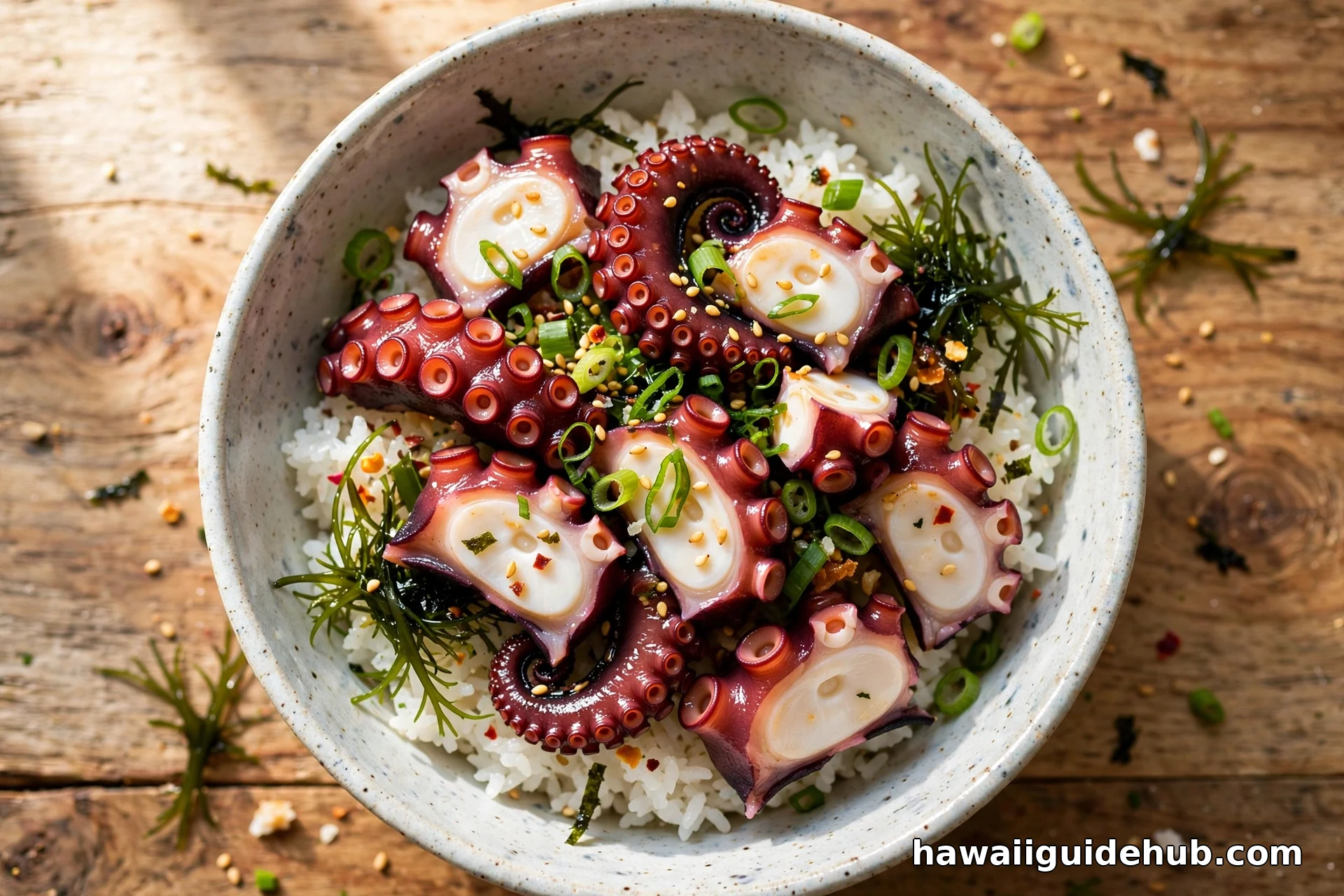
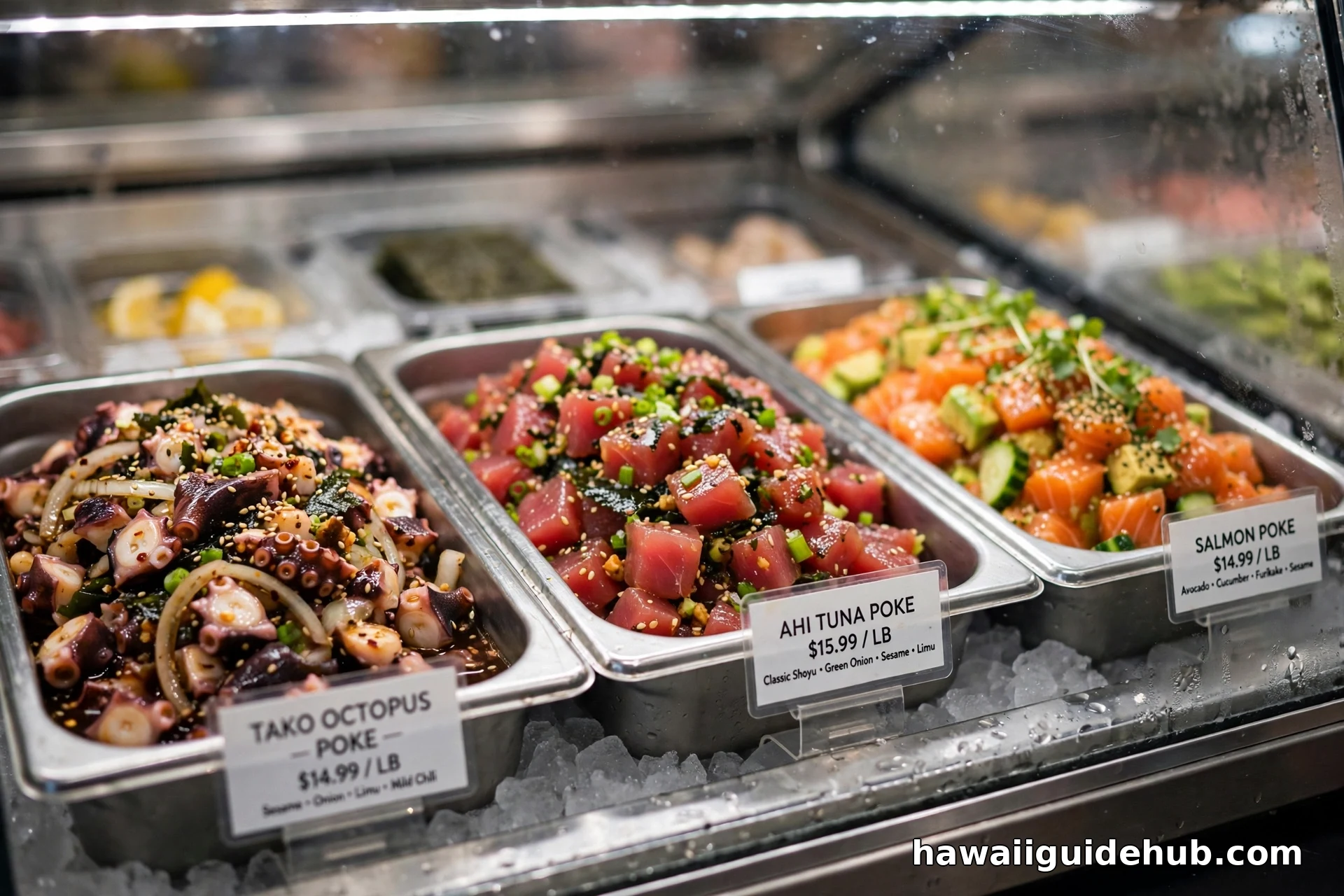
If you have spent any time browsing a poke counter in Hawaii, you have seen it sitting next to the ahi and salmon: glossy, deep red-purple tentacle slices with white centers, labeled simply “tako.” First-time visitors often pause at this one. It looks nothing like the raw fish cubes around it, and the name gives little away. Tako is octopus, and in Hawaii it is one of the most beloved poke ingredients, with roots that run through both Native Hawaiian tradition and Japanese immigrant food culture.
This guide covers everything about tako fish in Hawaii: what it is, what it tastes like, how tako poke is traditionally made, the cultural story behind the Hawaiian he’e, and exactly where visitors can try it.
Tako at a Glance
| If you know ahi poke | Tako is its cooked cousin: octopus, served cooked and sliced, where ahi poke is raw tuna |
| The two names | He’e is the Hawaiian name (the day octopus, he’e mauli, is the traditional eating species); tako is the Japanese name you will see on menus |
| The classic order | Tako poke: sliced octopus with sea salt, limu, chili, and inamona |
| The taste | Mild, slightly sweet, firm and pleasantly chewy |
| Where to find it | Poke shops, fish markets, grocery seafood counters, and local restaurants statewide |
What Is Tako Fish?
Despite the name, tako is not a fish at all. Tako is the Japanese word for octopus, and in Hawaii the term refers to cooked octopus prepared as food, most famously as tako poke. The name stuck because Japanese immigrants, who arrived in large numbers to work on sugar plantations starting in the late 1800s, brought their word for octopus with them, and it became the standard menu term across the islands.
Native Hawaiians have their own word: he’e. The species most associated with Hawaiian waters is the day octopus, known as he’e mauli, a reef octopus that hunts in daylight and can span about three feet across with its arms spread. According to traditional knowledge, only the day octopus was typically eaten; the night octopus, or he’e puloa, has tougher, bitter-tasting flesh and was rarely eaten except for medicinal purposes.
So when a poke shop label says “tako,” it is using the Japanese-derived market name for what Hawaiians call he’e. Both words describe the same animal on your plate.
What Does Tako Taste Like?
Properly prepared tako is mild and slightly sweet, with a clean ocean flavor that is far less “fishy” than many people expect. The defining characteristic is texture: firm, dense, and pleasantly chewy, with a satisfying bite that raw fish poke does not offer. The tentacle tips are the most tender part, while the thicker upper sections have more chew.
Because the flavor is mild, tako takes seasoning beautifully. It holds up to bold flavors like chili, garlic, and sesame oil without falling apart, which is why it works so well in poke. If you enjoy calamari but want something meatier, or you like the chew of well-made sushi tako (the sliced octopus on nigiri), Hawaiian tako poke will feel familiar.
Traditional Tako Poke: The Classic Preparation
Poke means “to slice or cut crosswise into pieces” in Hawaiian, and the dish predates foreign contact. The earliest versions were simple: fishermen sliced reef fish and seasoned them with what was on hand, typically sea salt (pa’akai), seaweed (limu), and roasted kukui nut paste (inamona).
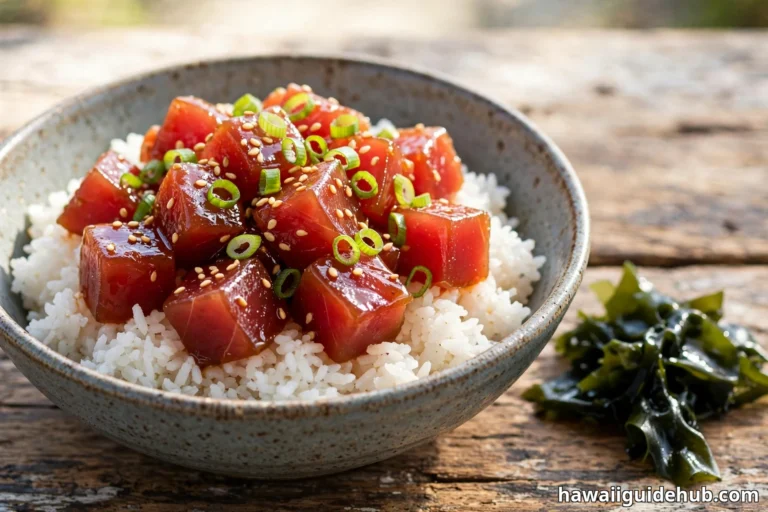
Traditional tako poke follows this same old pattern. Cooked octopus is sliced thin, then tossed with Hawaiian sea salt, limu seaweed, chili peppers, and inamona. That is the classic quartet. Over the past century, plantation-era influences added shoyu (soy sauce), sesame oil, onions, and green onions to the mix, creating the version most visitors encounter today: sliced tako with shoyu, sesame oil, green onions, sesame seeds, limu, and a touch of chili.
One key difference from ahi poke: tako poke is made with cooked octopus, not raw. Octopus is always boiled or steamed before it becomes poke, which makes tako poke a great entry point if you are hesitant about raw fish.
How Tako Is Cooked: The Secret Is Tenderness
Ask anyone who has made tako poke at home and they will tell you the same thing: the cooking makes or breaks it. Octopus turns rubbery fast if handled wrong, so Hawaiian cooks have developed reliable methods for getting it tender.
The most common approach is simmering. A cleaned octopus goes into a large pot of salted water, often dipped in and out of the boiling water a few times first to help the skin set, then simmered for 45 minutes to an hour until a knife slides through the thickest part easily. It then cools in its own liquid before slicing.
Tenderizing starts before the pot. Local divers and home cooks use several traditional tricks: freezing the octopus (ice crystals break down tough fibers), lomilomi or massaging it with Hawaiian salt, or pounding it with a wooden dowel. One longtime local method calls for boiling the tako with half a potato, on the theory that it helps the meat turn even more tender. Slicing thinly and against the grain also makes each bite more tender.
For visitors, the practical takeaway is simple: you do not need to cook octopus yourself. Every poke shop and most grocery seafood counters in Hawaii sell ready-to-eat tako poke, and many sell plain cooked tako by the pound if you want to season it your own way.
Popular Tako Poke Variations
Once you know the classic, you will start noticing variations at poke counters across the islands. Each reflects a different thread of Hawaii’s food culture:
- Shoyu tako: The standard. Shoyu, sesame oil, green onions, sesame seeds, and limu. Balanced and savory.
- Spicy tako: Chili flakes, togarashi, or fresh chilies added to the shoyu base. The chew of octopus stands up well to heat.
- Kimchi tako: Chopped kimchi folded in, a Korean-Hawaiian fusion found at many local shops.
- Garlic tako: Extra minced garlic and chili for a punchier, bolder bowl.
- Limu kohu tako: Made with limu kohu, a prized native seaweed with a distinctive flavor, for the most traditional taste.
- Wasabi tako: A dab of wasabi in the seasoning mix, popular at Japanese-influenced counters.
If a shop offers samples, try the classic shoyu tako first to learn the baseline, then branch out. For more on the wider poke world, see our guide to must-try local dishes in Hawaii.
Tako in Hawaiian Culture: The Story of He’e
Long before poke shops existed, the octopus was already woven into Hawaiian life. He’e was a traditional subsistence food, caught on reef flats and in tide pools. Old methods included luring octopus with a cowrie shell, a technique passed down through generations of fishermen. There is even an old Hawaiian saying, “Pu ke ko, ku mai ka he’e,” meaning “when the sugarcane flowers, the octopus appears,” marking the prime season for hunting he’e.
The octopus also carries spiritual weight. It is associated with Kanaloa, the god of the ocean, one of the four major gods in Hawaiian tradition. Ancient Hawaiians prayed to Kanaloa when sailing, and the octopus appears in legends as a shape-shifting creature and reef guardian. This cultural depth is part of why he’e remains respected as food, not just eaten but understood.
Snorkelers in Hawaii may spot the day octopus itself. It is a master of camouflage, shifting color and texture to match rock and coral in seconds, and it hunts most actively at dawn and dusk. Seeing one on the reef gives you a direct connection to the animal behind the poke. If you want to learn reef etiquette before you go, read our guide to Hawaii’s marine life and snorkeling etiquette.

Where Visitors Encounter Tako in Hawaii
You do not have to look hard. Tako is everywhere that local food is sold:
- Poke shops: Dedicated poke counters almost always carry at least one tako poke, often two or three variations. This is the best place to try it fresh.
- Grocery seafood counters: Major supermarkets across the islands sell tako poke by the pound, and some sell plain cooked tako tentacles. It is a standard local staple, not a specialty item.
- Fish markets: Local fish markets often have the freshest selection, sometimes with limu kohu varieties you will not find elsewhere.
- Plate lunch spots and casual restaurants: Tako appears in pupu platters, and some restaurants serve grilled tako as an appetizer.
- Japanese restaurants: Sushi counters serve tako nigiri and sashimi-style sliced octopus, prepared in the Japanese tradition.
Expect to pay roughly the same per pound as mid-range ahi poke. Tako is not the cheapest poke on the counter, but it is far from the priciest, and a half pound with rice makes a satisfying meal.
Buying and Making Tako Poke Yourself
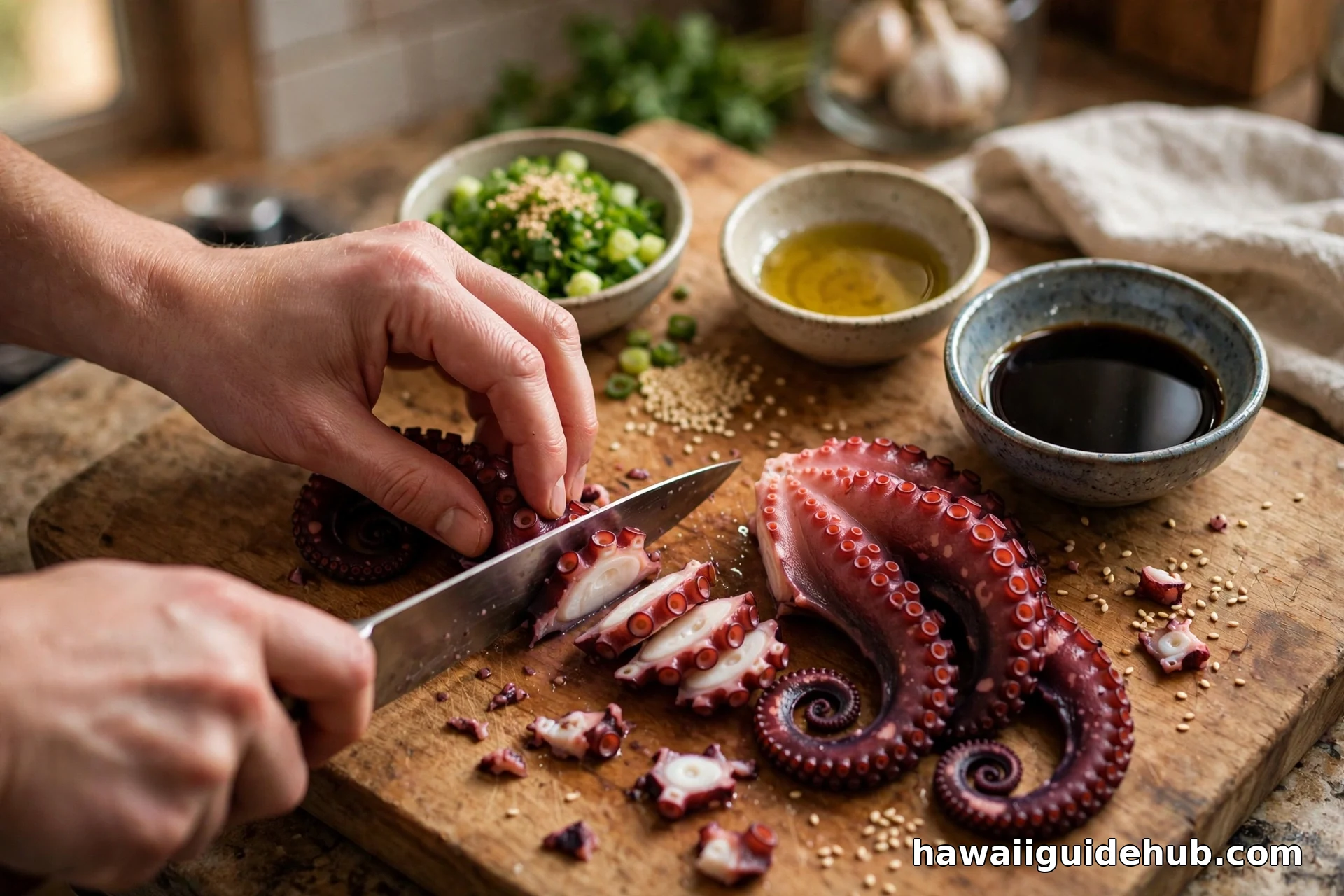
If your rental has a kitchen, making tako poke is one of the easiest local dishes to attempt, because the octopus is already cooked. Buy plain boiled tako from a seafood counter, slice it thin, and toss with shoyu, sesame oil, sliced green onions, sesame seeds, and whatever else you like. Serve chilled over rice.
A few tips from local practice: slice the tentacles as thin as you can, since thin slices absorb seasoning better. The tentacle tips are the most tender bites, so distribute them through the bowl. If your tako seems a little firm, let it marinate in the seasoning for 30 minutes before eating. And keep it refrigerated, eating it within a day or two for the best texture.
For visitors who enjoy cooking with island ingredients, our guides to malasadas and native Hawaiian fruits cover more local flavors worth trying in your own kitchen.
Tako Beyond Poke: Other Ways Hawaii Eats Octopus
Poke is the star, but it is not the only way octopus shows up on Hawaii menus. Grilled tako, sliced and served with a squeeze of lemon or a light shoyu-based sauce, appears as a pupu (appetizer) at many local restaurants. The grilling adds a smoky char to the edges while keeping the center tender, and it pairs well with a cold drink at sunset.
Japanese influence brings two more favorites. Takoyaki, the battered octopus balls cooked in special molded pans, is a popular festival and food-truck snack, especially at events with Japanese roots like the Honolulu Festival. You will also find tako sunomono, a light vinegared octopus salad with cucumber, at Japanese delis and as a side dish in bento.
Some local chefs have started featuring Hawaiian-caught he’e on upscale menus, prepared with techniques borrowed from both traditions: slow-braised tentacle over risotto, or charred octopus with lilikoi beurre blanc. These dishes cost more than poke-counter tako, but they show how versatile the ingredient is when a kitchen treats it seriously.
Watch: Tako Diving and Tako Poke in Hawaii
Tako Fish FAQs
Is tako fish actually a fish?
No. Tako is octopus, a cephalopod mollusk, not a fish. The name comes from the Japanese word for octopus and is used on menus across Hawaii.
Is tako poke raw?
No. Unlike ahi poke, which uses raw tuna, tako poke is made with octopus that has been boiled or steamed until tender, then sliced and seasoned. It is a good choice if you prefer cooked seafood.
What is the difference between tako and he’e?
They are the same animal. Tako is the Japanese word for octopus and he’e is the Hawaiian word. Menus and poke counters in Hawaii use “tako,” while “he’e” appears in cultural and traditional contexts.
What does tako taste like?
Mild, slightly sweet, and clean, with a firm, pleasantly chewy texture. It absorbs seasoning well, so the flavor of tako poke depends largely on the shoyu, sesame, chili, and limu it is tossed with.
Where can I buy tako poke in Hawaii?
Poke shops, grocery store seafood counters, and local fish markets all sell tako poke by the pound. Most dedicated poke counters carry at least one variety, and many carry several.
Is octopus sustainable to eat in Hawaii?
Octopus sold commercially in Hawaii is generally considered a reasonable seafood choice, and much of what is sold as tako is imported cooked octopus. Traditional local harvest of he’e follows seasonal patterns described in Hawaiian sayings. As with any seafood, buying from reputable local sellers supports responsible sourcing.
Tako sits at a delicious crossroads of Hawaii’s food story: a Native Hawaiian reef harvest, a Japanese immigrant staple, and a modern poke-counter favorite all at once. Whether you try it as classic shoyu poke from a neighborhood shop or spot a he’e mauli camouflaged on the reef, you are tasting one of the islands’ oldest and most enduring foods.