Which Hawaii Island Is the Most Beautiful?

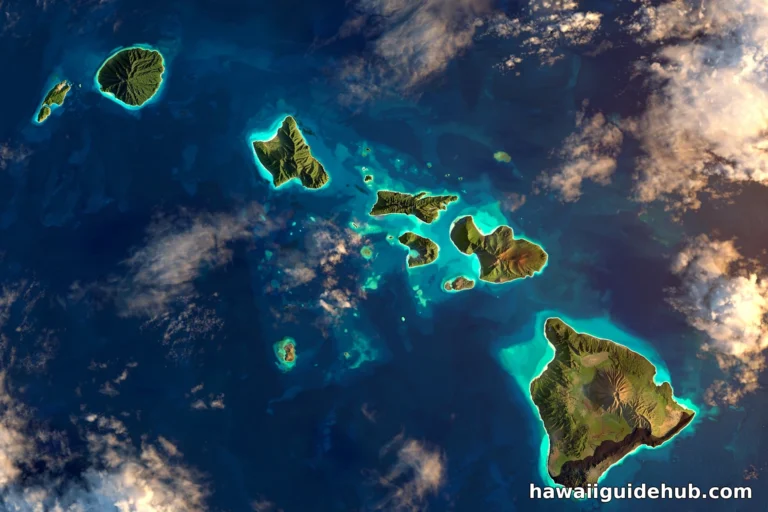
Ask ten travelers to name the most beautiful Hawaii island and you will get ten confident answers, each one defended like a family recipe. The honest truth is that every main island is beautiful, but they are beautiful in completely different ways. Kauaʻi is green drama. Maui is golden balance. Hawaiʻi Island is raw volcanic power. Oʻahu mixes famous icons with a wilder side that many visitors never leave Waikīkī to see.
This guide settles the question the useful way. Instead of one vague winner, it compares the islands category by category: cliffs and valleys, beaches, waterfalls, volcanoes, sunsets, and the small quieter islands that rarely make the brochures. By the end you will know which island matches the beauty you personally picture when you close your eyes, and that is the only ranking that matters for your trip.
The Short Answer: It Depends on Your Kind of Beautiful
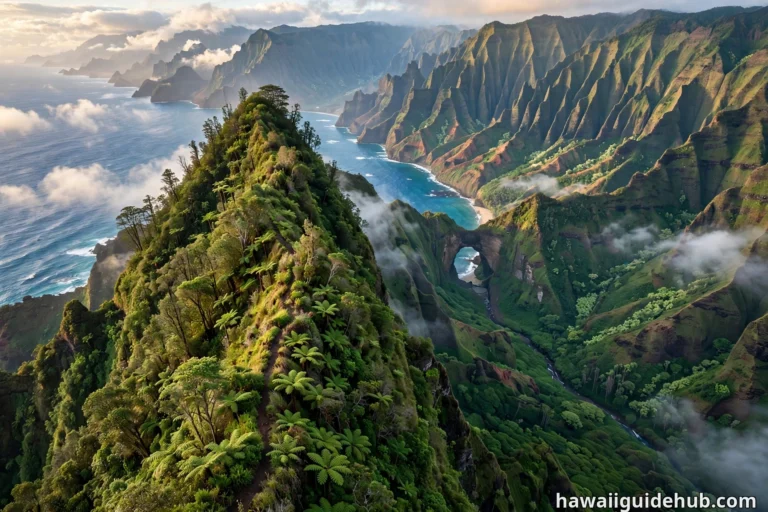
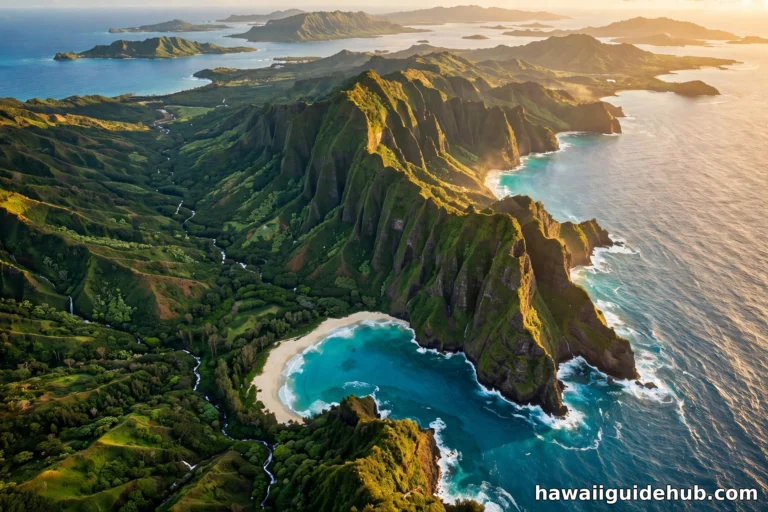
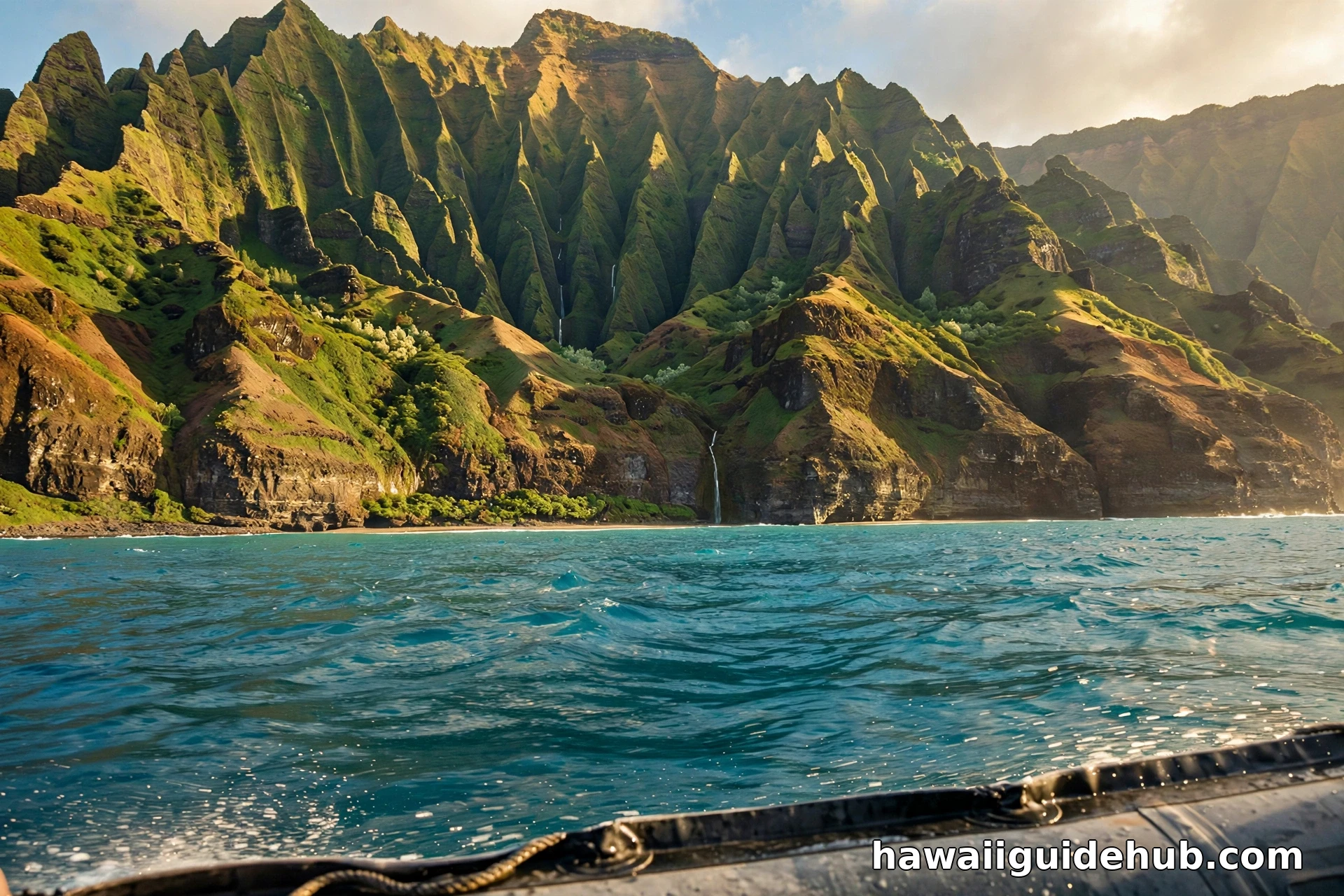
If forced to pick one island for sheer natural scenery, most longtime residents and repeat visitors point to Kauaʻi. It is the oldest of the main islands, shaped by roughly five million years of rain and erosion into fluted cliffs, deep valleys, and waterfalls that seem to appear around every bend. The Nā Pali Coast alone, where emerald cliffs rise as much as 4,000 feet above the Pacific, wins the argument for many people.
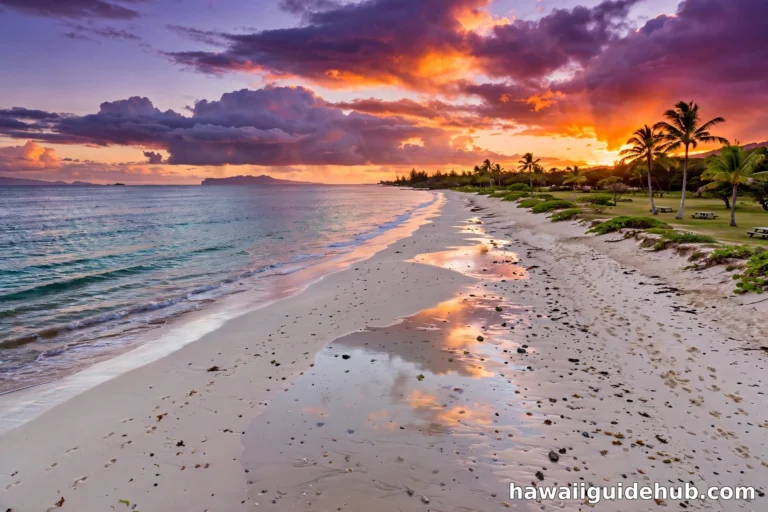
But Kauaʻi is not the whole story. If your idea of beauty is a golden beach at sunset with a volcano behind you, Maui may beat it. If beauty means watching the Earth being built, with lava fields, black sand, and the tallest mountain on the planet measured from its base, Hawaiʻi Island has no rival. And if you want beauty you can reach by city bus, with history layered into the landscape, Oʻahu delivers more than its reputation suggests. Beauty in Hawaiʻi is a menu, not a contest.
| Island | Beauty style | Signature sight |
| Kauaʻi | Lush, dramatic, ancient | Nā Pali Coast and Waimea Canyon |
| Maui | Golden, varied, romantic | Haleakalā sunrise and the Hāna coast |
| Hawaiʻi Island | Raw, vast, volcanic | Kīlauea, Mauna Kea and black sand beaches |
| Oʻahu | Iconic, accessible, layered | Diamond Head, Lanikai and the North Shore |
| Molokaʻi | Quiet, untouched, towering | North shore sea cliffs and Kalaupapa |
| Lānaʻi | Dry, sculpted, serene | Keahiakawelo and Hulopoʻe Bay |
Kauaʻi: The Case for the Garden Island
Kauaʻi earns its nickname honestly. Rain falls on its mountainous center so generously that Mount Waiʻaleʻale, near the island middle, is counted among the wettest spots on Earth. All that water carves the island into deep green valleys, feeds hundreds of waterfalls, and keeps the whole landscape in a state of permanent spring. There is a softness to Kauaʻi beauty, mist hanging in the valleys at dawn, rainbows after brief showers, and rivers running red with iron rich soil.
The Nā Pali Coast
The Nā Pali Coast State Wilderness Park protects more than 6,000 acres of coastline that no road has ever crossed. Its cliffs, valleys, and sea caves are seen only from the water, from the air, or on foot along the Kalalau Trail, which runs 11 miles along the coast. Standing on a boat looking up at those ridged green walls, most people run out of adjectives quickly. It is the single most photographed landscape in Hawaiʻi for a reason, and it anchors Kauaʻi claim to the beauty title.
Waimea Canyon and the North Shore
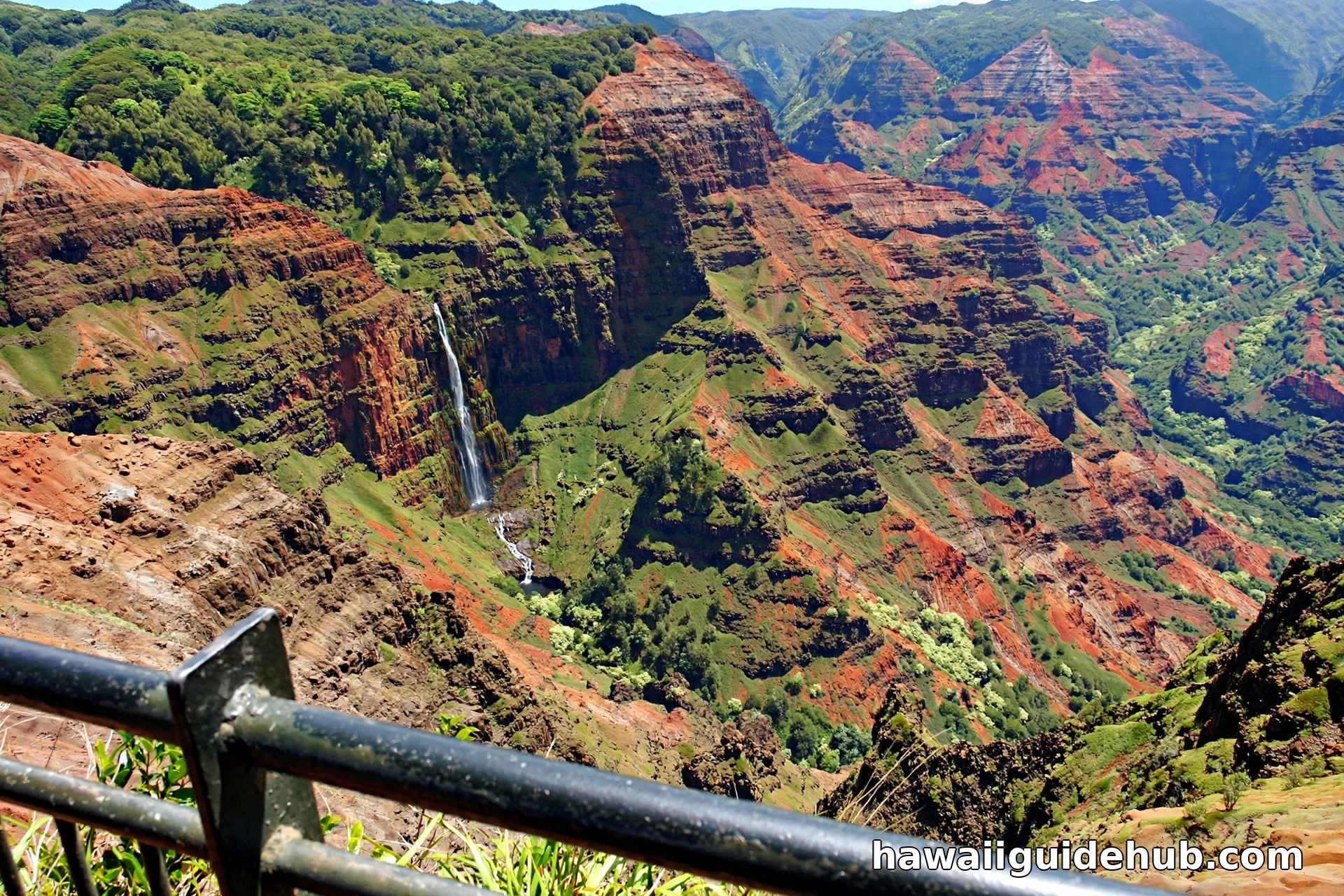
Inland, Waimea Canyon stretches about 14 miles long and up to 3,600 feet deep, its walls striped red, rust, and green. Mark Twain is often quoted calling it the Grand Canyon of the Pacific, and standing at the lookouts you understand why the name stuck. On the north shore, Hanalei Bay curves in a near perfect crescent beneath waterfalls that pour down the mountains after rain, while the road beyond town ends at Hāʻena, where the mountains simply run out of land. For readers planning around the island landscapes, our guide to hiking in Kauaʻi shows how much of this beauty is reachable on foot.
Maui: Beauty With Balance
Maui rarely wins any single category outright, yet it places near the top in all of them, which is its own kind of beauty. Golden beaches line the south and west shores. The West Maui Mountains rise green and deeply grooved behind them. Upcountry slopes roll away in pasture and flowering trees. And above everything stands Haleakalā, a massive shield volcano whose summit reaches 10,023 feet above sea level.
Haleakalā and the Road to Hāna
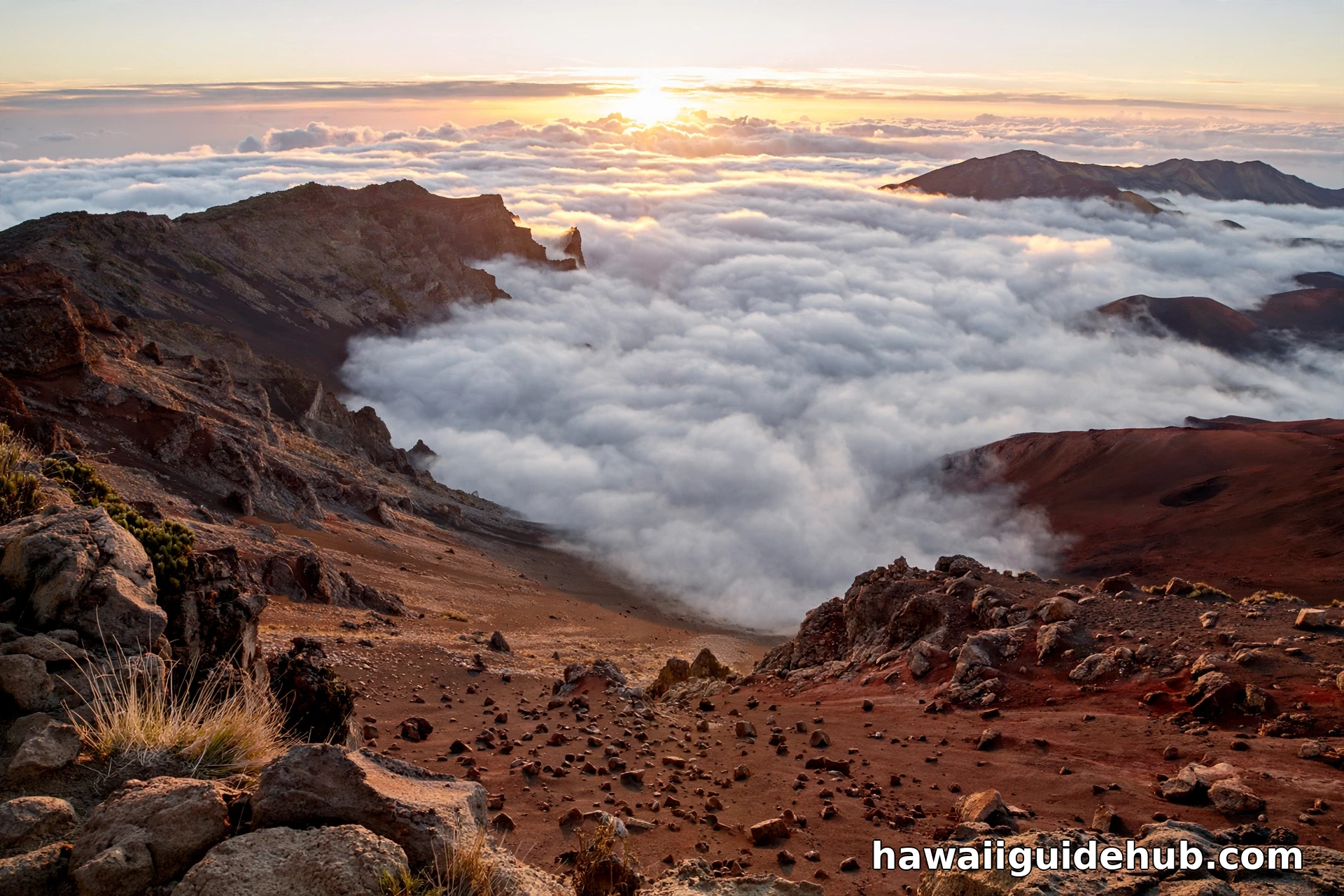
Watching sunrise from the Haleakalā summit is one of the great spectacles in the national park system. The crater like basin below fills with cloud, the light turns the cinder cones rust red and gold, and on clear mornings you can see neighboring islands floating on the horizon. The National Park Service requires a reservation for sunrise entry between 3:00 AM and 7:00 AM, a small planning step that keeps the summit from overwhelming crowds. On the opposite side of the island, the Hāna Highway winds along the wet east coast through bamboo forest, waterfall pools, and one lane bridges to the quiet town of Hāna, a drive where the journey genuinely outshines the destination.
Maui beaches deserve their share of the credit too. Kāʻanapali, Wailea, and Mākena each offer long arcs of pale sand, and the island west side sunsets are reliably theatrical. A beach like the one in our guide to Maui black sand beach stops at Waiʻānapanapa shows the moodier side of the same coastline.
Hawaiʻi Island: Beauty at Full Power
The island of Hawaiʻi, usually called the Big Island, is beautiful the way weather is beautiful: powerful, changeable, and impossible to ignore. It is the youngest island, still growing at Kīlauea inside Hawaiʻi Volcanoes National Park, where visitors may see steam, vast lava fields, and, during eruptions, glowing lava from designated viewpoints when conditions allow. No other island lets you stand this close to land being created.
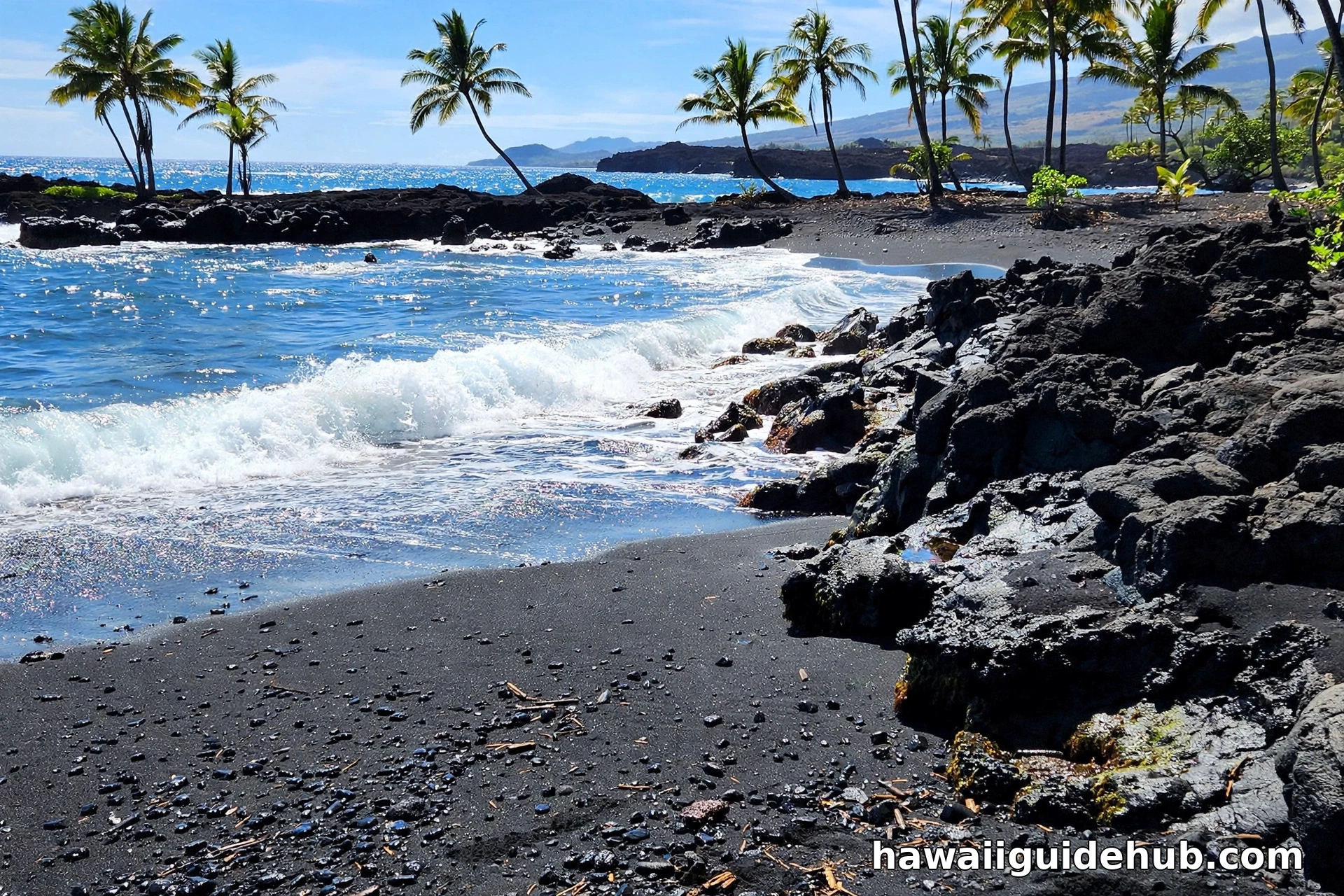
Scale is the other half of the Big Island story. Mauna Kea rises 13,803 feet above sea level, and measured from its base on the ocean floor it is the tallest mountain on Earth. Snow sometimes dusts its summit while swimmers float in 80 degree Fahrenheit water an hour drive below. The island holds most of the world climate zones in miniature, from the rainy jungles of the Hāmākua Coast and ʻAkaka Falls to the dry lava plains of the Kohala Coast. Its beaches trade softness for drama: the black sand of Punaluʻu, often visited by resting sea turtles, and the rare green sand near South Point, colored by olivine crystals in the eroding cinder cone.
Oʻahu: The Beauty People Underestimate
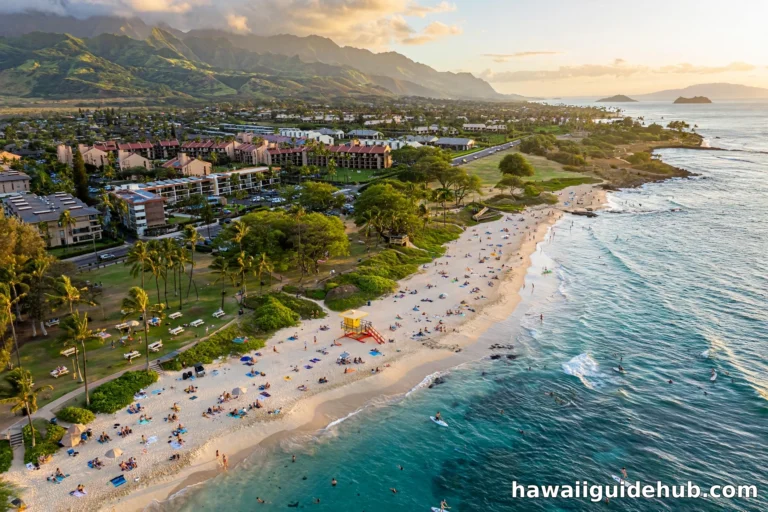
Oʻahu suffers a strange prejudice. Because it holds Honolulu and Waikīkī, visitors assume the beauty is all built up. Then they drive twenty minutes and find the Koʻolau mountains, a wall of green cliffs so steep and fluted they look carved, running the length of the windward side. They find Lanikai Beach, where soft white sand faces two small offshore islands in water that turns impossible shades of blue. They find the North Shore in winter, where waves of genuine consequence roll into Waimea Bay and the Banzai Pipeline, and beauty takes on an edge of respect.
Diamond Head, the tuff crater called Lēʻahi, gives Honolulu one of the most recognizable skylines on Earth, and Hanauma Bay protects a flooded volcanic crater as a nature preserve where entry is managed by the City and County of Honolulu through reservations. Oʻahu also layers human history into its scenery more than any other island, from Pearl Harbor to ʻIolani Palace, the only royal palace on United States soil. If you are choosing where to start, our guide to the best island in Hawaii for first time visitors weighs this mix of scenery, history, and ease in detail.
Molokaʻi and Lānaʻi: Beauty Without an Audience
The two smaller islands ask a different question: how much of beauty is the place itself, and how much is having it to yourself? Molokaʻi north shore sea cliffs are among the tallest on Earth, dropping more than 3,000 feet in places to a narrow coastal plain that includes the Kalaupapa Peninsula, now a national historical park preserving the history of the Hansen disease settlement. There are no traffic lights on Molokaʻi, and the east end road winds through fishponds and taro patches beneath green mountains that feel barely touched.
Lānaʻi is drier and more sculpted, all red earth, pine lined uplands, and the strange wind carved boulders of Keahiakawelo, often called the Garden of the Gods. Hulopoʻe Bay, a marine life conservation district, pairs a crescent of pale sand with tide pools and some of the clearest snorkeling water in the state. Neither island tries to compete with Kauaʻi drama, and that restraint is precisely their charm.
How to Choose Your Island
Match the island to the images already in your head. Choose Kauaʻi if you dream in waterfalls, jungle, and cliffs, and do not mind rain as the price of green. Choose Maui if you want the full range in one manageable island, beaches, volcano, rainforest road, and resort comfort in balance. Choose Hawaiʻi Island if volcanoes, stargazing, and big empty landscapes move you most. Choose Oʻahu if you want icons, history, food, and scenery in the same day. Choose Molokaʻi or Lānaʻi as a second island, or a deliberate deep breath, when quiet itself is the luxury. Many travelers split a trip, and our Hawaii itinerary guide shows a two island pairing that works without rushing.
Beauty Changes With the Season
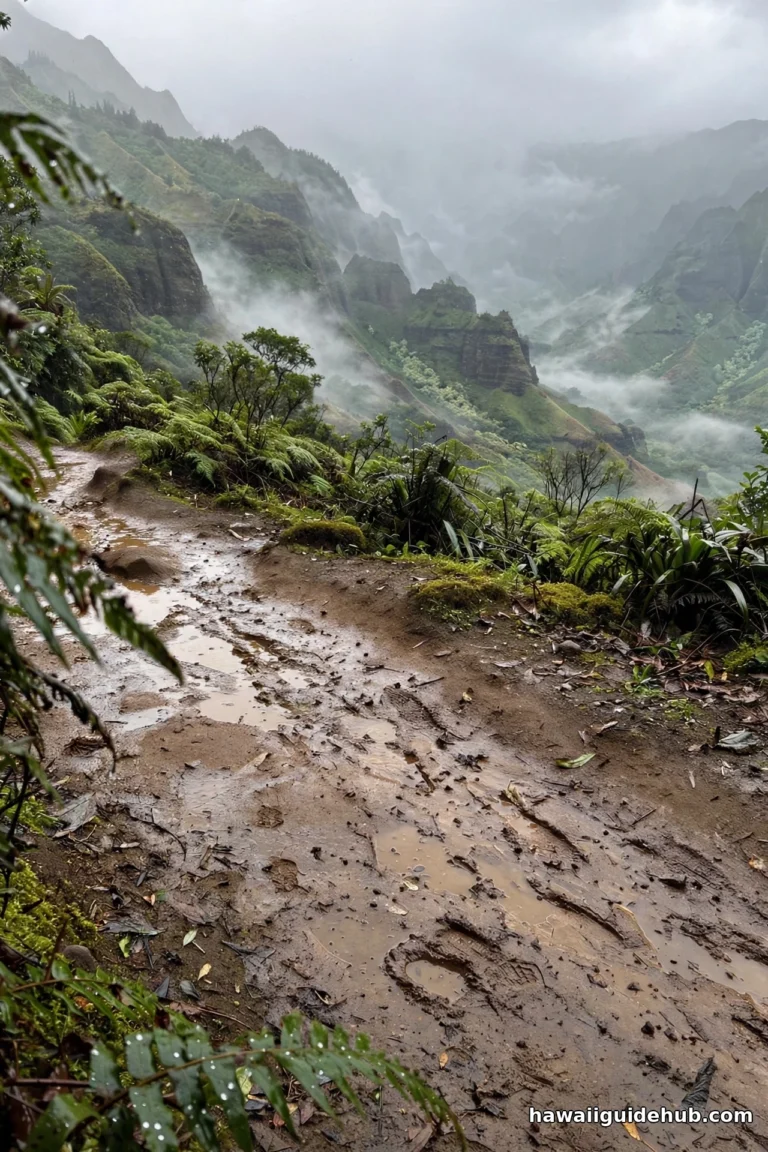
The rankings shift a little with the calendar. Winter brings the great north shore surf to Oʻahu and Kauaʻi, turning famous beaches into natural amphitheaters, and it brings humpback whales to the channels around Maui, where mothers and calves rest in sheltered water from roughly December through April. Winter rain also means waterfalls run at full voice, especially on Kauaʻi and along Maui Hāna coast, though the same rain can close trails and cloud the lookouts.
Summer answers with calmer northern oceans, clearer snorkeling, and longer evenings. Spring is the quiet overachiever: jacaranda trees paint the upcountry Maui slopes purple, waterfalls still run strong from winter rain, and the summer crowds have not yet arrived. There is no wrong season for beauty here, only different emphases, which is one more reason a single winner makes so little sense.
A Fair Way to Judge: Five Questions
When friends ask for a verdict, five questions cut through the debate. Do you want the scenery wild or comfortable? Kauaʻi and Hawaiʻi Island lean wild, Maui and Oʻahu lean comfortable. Do you care more about beaches or mountains? Maui and Oʻahu win beaches, Kauaʻi wins mountains, Hawaiʻi Island wins both on its own volcanic terms. How do you feel about rain? Green islands are wet islands. How much driving do you enjoy? The Big Island rewards drivers, while Lānaʻi barely asks you to drive at all. And finally, do you want company in your beauty, or solitude? Answer those honestly and the right island usually names itself.
Fly over the Nā Pali cliffs, Lanikai, Hanauma Bay, and the volcanic coasts in this aerial tour of the islands.
Frequently Asked Questions
Which Hawaii island has the best scenery?
For concentrated natural scenery, Kauaʻi usually leads: the Nā Pali Coast, Waimea Canyon, and a wet, waterfall filled interior in a compact island. Maui is the closest all around challenger, and Hawaiʻi Island wins on volcanic drama and scale.
Which island has the most beautiful beaches?
Maui and Oʻahu compete here. Maui offers long golden resort beaches like Kāʻanapali and Wailea, while Oʻahu has Lanikai and Kailua on the windward side plus the famous Waikīkī. Kauaʻi Hanalei Bay is the most scenic single beach setting, backed by mountains and waterfalls.
What is the least crowded beautiful island?
Molokaʻi is the least visited of the accessible islands and feels it, with empty roads and quiet beaches. Lānaʻi is also calm outside its resorts. Among the four main islands, Kauaʻi and Hawaiʻi Island spread visitors out the most.
Can I see two islands in one trip?
Yes. Interisland flights take roughly 30 to 60 minutes, and a split of four or more nights per island keeps the trip relaxed. With a week, two islands is the practical maximum if you want to actually experience both rather than collect airports.
The most beautiful Hawaii island is, in the end, the one whose landscape keeps rearranging your plans: the cliff that makes you pull over, the beach that steals your afternoon, the summit that gets you out of bed in the dark. Every island here can do that. The only real mistake is assuming one ranking fits everyone, when the whole pleasure of Hawaiʻi is how differently each island answers the same ocean and the same sun.