The Complete Guide to Hiking in Kauai: Trails, Permits, and Safety

Kauai does not do flat. The Garden Island is a jumble of razor ridges, plunging valleys, and sea cliffs that drop a thousand feet straight into the Pacific, and the only honest way to see the best of it is on foot. Where Oahu has city-adjacent hikes you can knock out before lunch, Kauai demands more: more planning, more sweat, more respect for the weather. The payoff is a kind of beauty that does not exist anywhere else on the planet. This guide covers the island’s essential trails, the permit systems that trip people up, and what you actually need to know before lacing up.
Why Hiking in Kauai Is Different
Kauai is the oldest of the main Hawaiian islands, roughly five million years old, and erosion has had a long time to carve it into something dramatic. The island’s interior is a maze of knife-edge ridges and deep amphitheater valleys. If you are still deciding what to do beyond hiking, our ultimate Kauai things to do guide covers the full island. Trails here are often muddy, sometimes genuinely dangerous, and almost always worth it.
Two things set Kauai hiking apart from the other islands. First, the weather. Kauai’s north shore and interior mountains are among the wettest places on earth, and trails can turn from firm dirt to ankle-deep mud in a single afternoon shower. The red clay that makes the island so photogenic becomes slick as ice when wet. Second, the permitting. The island’s most famous trail sits inside a managed state park system that requires advance reservations, and the overnight permits for the backcountry sell out in minutes. Show up unprepared and you will be turned around at the trailhead.
The Kalalau Trail: The Island’s Legendary Trek
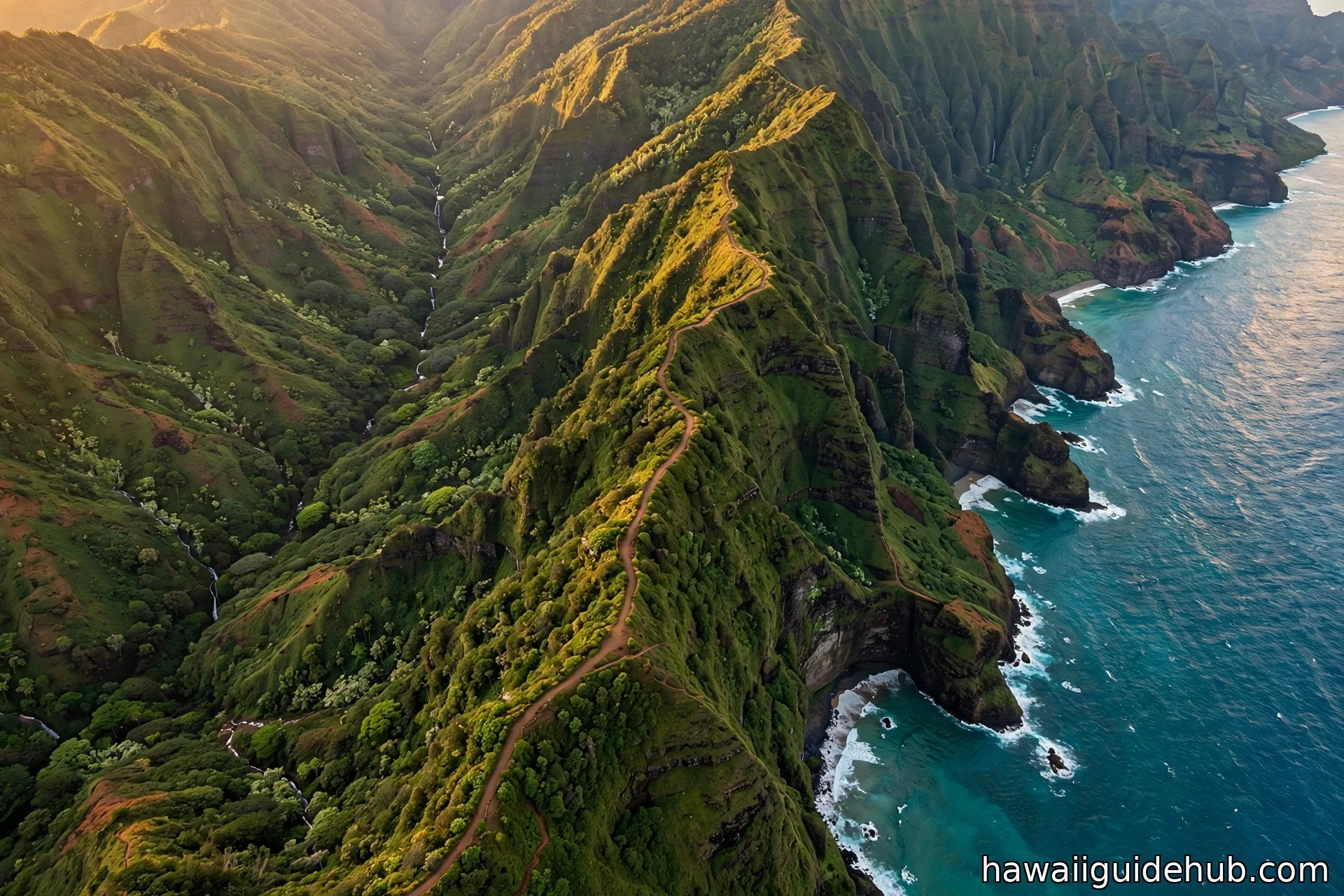
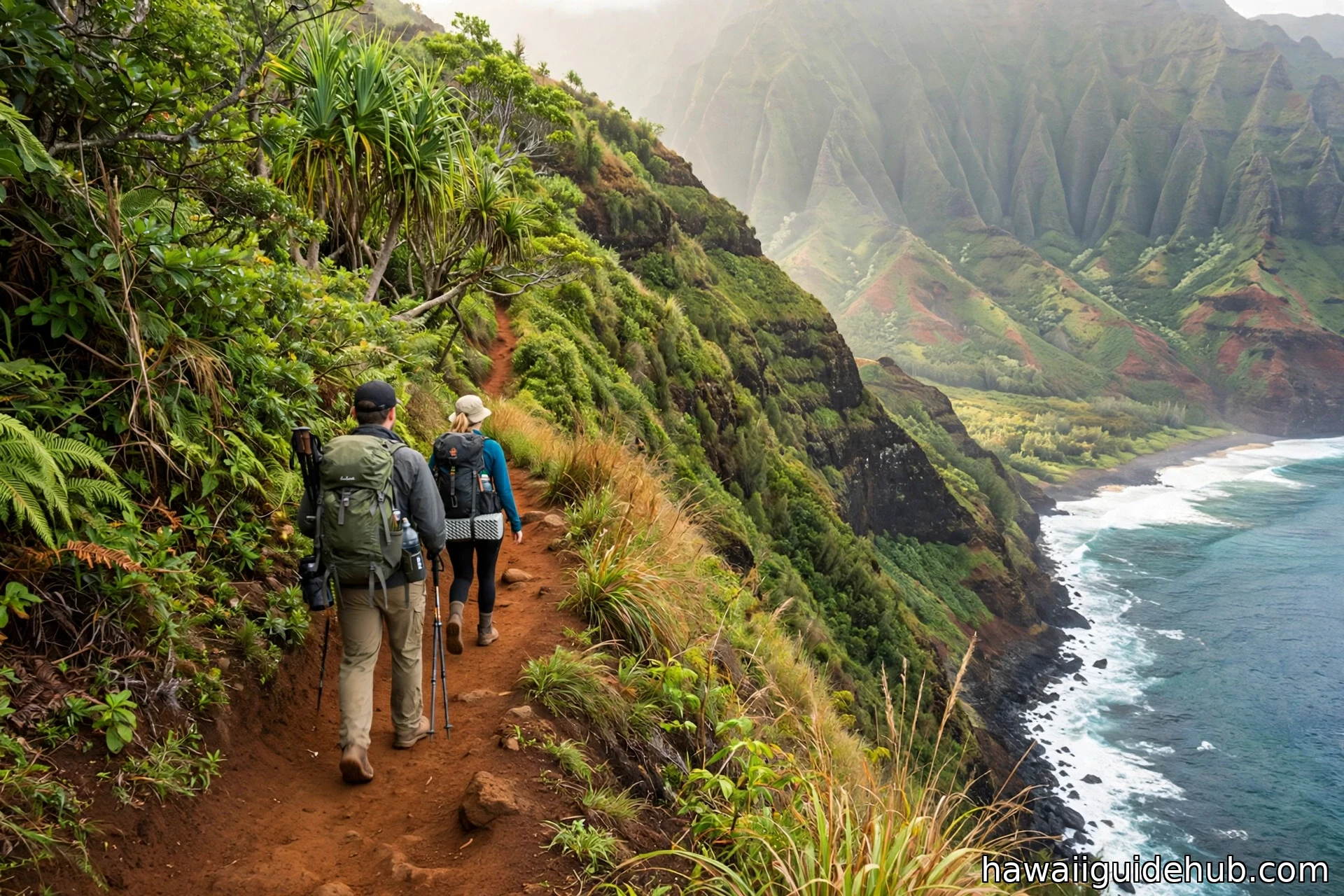
The Kalalau Trail is the hike that defines Kauai. It runs 11 miles one way along the Nā Pali Coast, from Kēʻe Beach at the end of the road to the remote Kalalau Beach, crossing five major valleys and climbing and dropping thousands of feet along the way. Most people spend two to three days on the full trail. The first two miles, to Hanakāpīʻai Beach, are the part most visitors see.
This is a serious backcountry route. The trail includes narrow exposed sections, three stream crossings that can become impassable in rain, and the infamous Crawler’s Ledge around mile 7, a narrow crumbling path along a sheer cliff face. The Sierra Club has rated it among the most challenging maintained trails in the United States. Do not underestimate it because the Instagram photos look dreamy.
Permits and Reservations: Read This Twice
The permit system is where most people get confused, so here is the plain version. Anyone hiking only the first two miles to Hanakāpīʻai Beach needs a Hāʻena State Park day-use reservation, booked through the Go Hāʻena system, and that is all. No camping permit is required for the day hike.
Anyone going past Hanakāpīʻai Valley, even for a day hike with no camping, needs a Nā Pali Coast State Wilderness Park camping permit. Only 60 are issued per day, they go on sale 90 days in advance at 12:01 a.m. Hawaii time, and they routinely sell out within minutes during peak season. The maximum stay is five consecutive nights. Camping is allowed only at Hanakoa and Kalalau Beach.
You also need to sort out parking or the shuttle separately. Overnight parking at Hāʻena requires its own reservation, and many hikers use the shuttle from Princeville or Waipa instead. Book the shuttle at least 30 days ahead in summer.
The Hanakāpīʻai Falls Extension
From Hanakāpīʻai Beach, an inland trail branches two miles up the valley to 300-foot Hanakāpīʻai Falls. Combined with the coastal section, this makes an 8-mile round trip and is the best single day hike on Kauai. The inland section is muddy, involves stream crossings, and the falls pool is for looking, not swimming, after rain. Bring at least two liters of water per person and start early.
Waimea Canyon and Kōkeʻe: Hiking the Grand Canyon of the Pacific
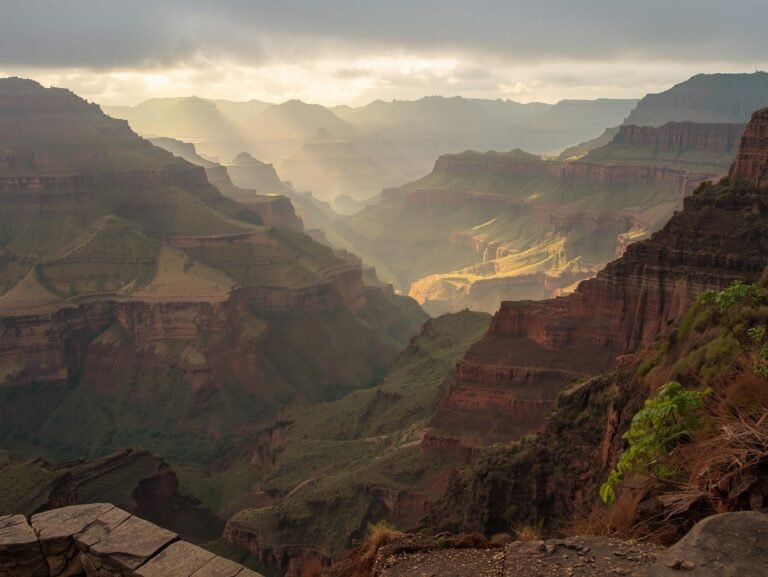
On the island’s west side, Waimea Canyon drops 3,000 feet deep and stretches ten miles long, and the trails around it offer a completely different flavor of Kauai hiking: red dirt, dry ridgelines, and views straight down into one of the great canyon systems of the world. The adjacent Kōkeʻe State Park adds misty native forest and the famous Alakaʻi Swamp boardwalk.
Canyon Trail to Waipoʻo Falls
The 3.4-mile round trip Canyon Trail is the single best hike for most visitors in this area. It descends along the canyon rim to an overlook of 800-foot Waipoʻo Falls, with the red-walled amphitheater of the canyon spread out below. It takes two to three hours, it is moderately challenging, and the red dirt gets treacherously slippery after rain, so wear shoes with real traction and carry a full liter of water per person.
Awaʻawapuhi Trail
The 6.2-mile round trip Awaʻawapuhi Trail follows a narrow ridge out to a point overlooking the Awaʻawapuhi and Nuʻalolo valleys and the Nā Pali Coast beyond. The return climb gains about 1,600 feet and this is a hard hike, but the endpoint view is one of the great panoramas in Hawaii. Start before 9 a.m., because clouds and mist frequently swallow the canyon viewpoints by early afternoon.
Alakaʻi Swamp Trail
The 7-mile round trip Alakaʻi Swamp Trail crosses the highest-elevation swamp in the world on a plank boardwalk, through native wet forest full of endangered Hawaiian honeycreepers. It ends at the rim of Wainiha Pali with a sweeping view of the north shore. This trail is almost always wet and muddy, which is the entire point, but bring rain gear and expect slow going.
Pihea Trail
The 3.8-mile round trip Pihea Trail runs along the rim of Kalalau Valley and connects to the Alakaʻi Swamp boardwalk. It is rated difficult, the trail is slippery and muddy, and the Kalalau Valley overlooks at the start are worth the trip even if you turn around early. Good birdwatching along the way.
Sleeping Giant: The East Side Classic
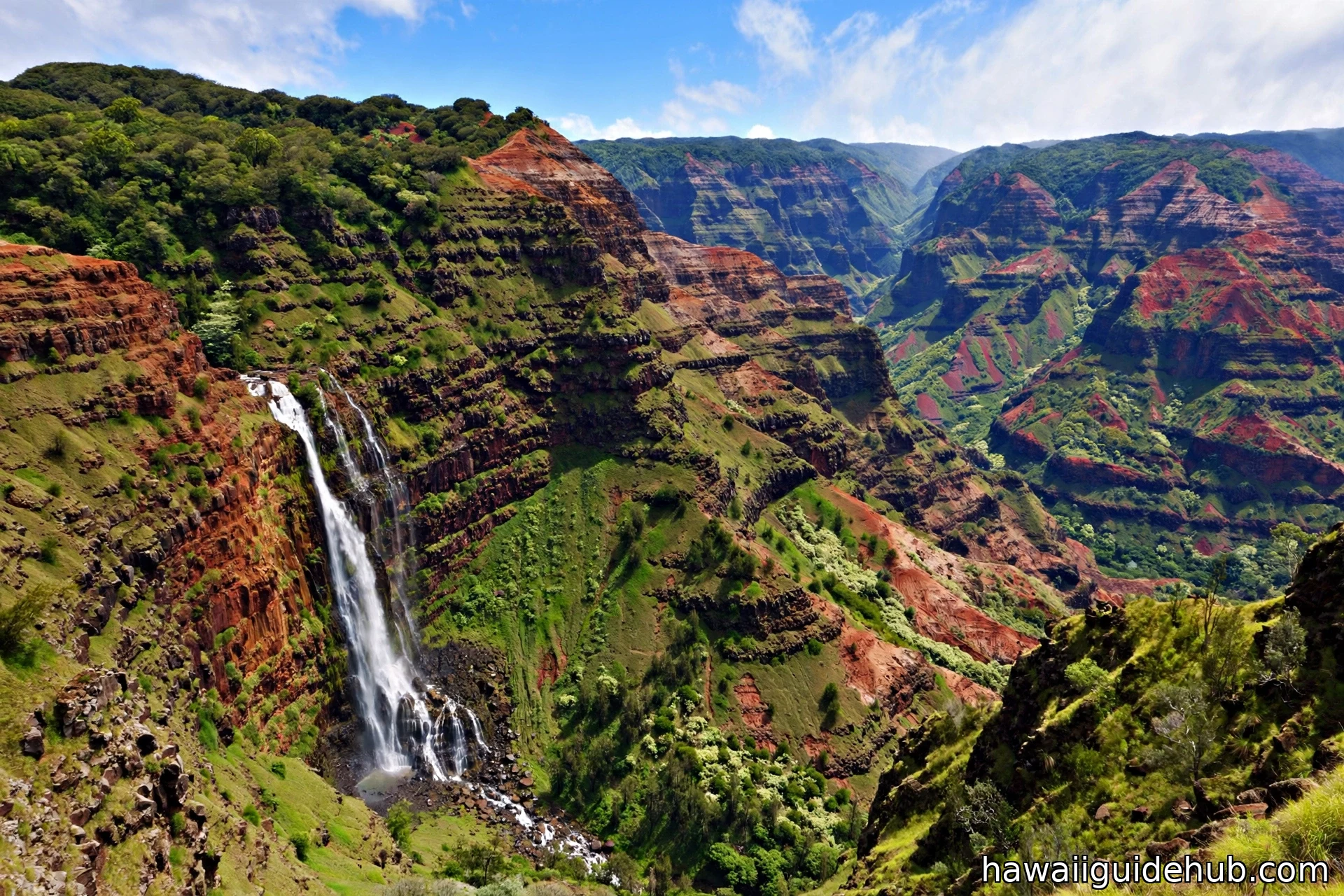
Nounou Mountain, better known as Sleeping Giant, rises behind Kapaʻa on the east side, and its profile really does look like a giant lying on his back. The east trail is a 3.5-mile round trip that climbs about 1,000 feet through guava groves to a picnic shelter on the giant’s chest, with views over Kapaʻa, the coastline, and inland toward Mount Waiʻaleʻale. It is moderately strenuous, the volcanic rock can be steep and muddy, and it is a great half-day hike if you are staying on the east side. The Kuamoʻo Trail approach on the west side has been subject to closures, so check current status before planning around it.
Kauai Trails at a Glance
More Kauai Trails Worth Your Time
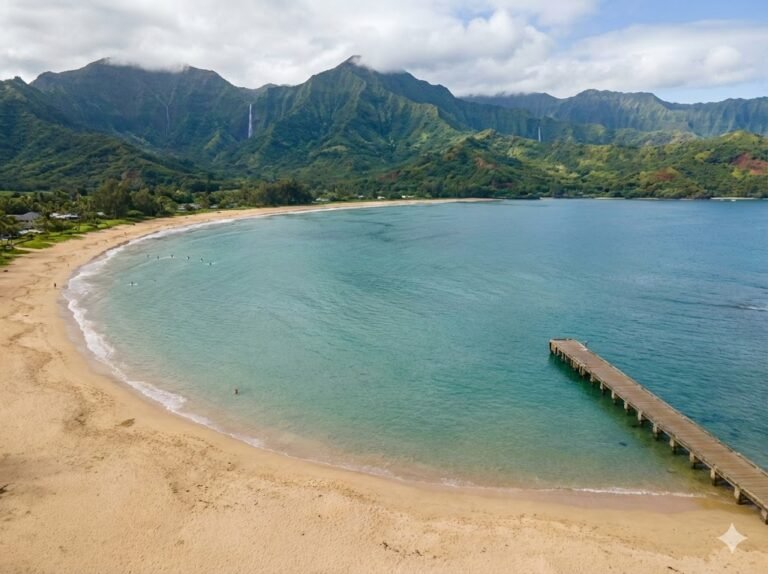
Beyond the headliners, Kauai has dozens of trails for every fitness level. The Kuilau Ridge Trail near Lihue is a gentle 3.6-mile round trip through forest with mountain views, a good choice for families or a recovery day. On the south shore, the Mahaʻulepu Heritage Trail follows the coastline past limestone cliffs, sinkholes, and ancient cultural sites for about 4 miles round trip, with swimming coves along the way.
For waterfall chasers, the trail to Uluwehi Falls, better known as Secret Falls, starts with a kayak paddle up the Wailua River followed by a muddy mile-long hike through the forest. It is only reachable by water, which keeps the crowds thin. On the north shore, the short Okolehao Trail above Hanalei climbs 1,250 feet in 2.5 miles round trip for a spectacular view over Hanalei Beach, best done at sunrise before the clouds roll in.
Getting to the Trailheads
Kauai’s trailheads are spread across the island and a rental car is essential. The Kalalau trailhead at Kēʻe Beach sits at the very end of Highway 56 on the north shore, about an hour from Lihue without traffic. The road past Hanalei is narrow and winding, and parking at Hāʻena is by reservation only, so many hikers take the shuttle.
Waimea Canyon and Kōkeʻe trailheads are reached via Highway 550, the winding mountain road that climbs from Waimea town. It takes about an hour from the west side beaches to the canyon lookouts, and the road is steep with limited guardrails in places. Fill up on gas and water in Waimea, because there are no services once you start climbing. The Sleeping Giant east trailhead is off Halelilio Road near Kapaʻa, easy to reach from the east side resorts.
What to Bring and How to Stay Safe
Kauai’s trails punish the unprepared. The essentials are non-negotiable: sturdy hiking shoes with aggressive tread, more water than you think you need, a water filter or purification tablets for multi-day trips, rain gear even on sunny mornings, reef-safe sunscreen, and a headlamp if there is any chance you will be out past afternoon. Trekking poles are worth their weight on the muddy descents.
Flash floods are the island’s signature danger. Streams that look trivial at noon can become deadly torrents by 2 p.m. after rain falls on the mountains above you. Never cross a flooded stream, never swim at Hanakāpīʻai Beach, where the surf and currents have killed strong swimmers, and check the weather before you go and the sky while you are out. If the water turns brown or starts rising, get to high ground immediately.
Respect the closures and the permit limits. They exist because the Nā Pali Coast is fragile and because rescues on the Kalalau Trail are expensive and dangerous for everyone involved. Pack out everything you pack in, stay on the trail, and give the native plants and birds the distance they deserve.
Status alert (October 2026): Hāʻena State Park, the Kalalau Trail, and the Nā Pali Coast State Wilderness Park are currently closed after Hurricane Lowell, and the Division of State Parks has not announced a reopening date. Waimea Canyon and Kōkeʻe State Parks are also closed until further notice. Check the DLNR park notices before building any plans around these trails, and have backup hikes ready.
Kalalau Trail Planning: Permits and Day Hikes
When to Hike in Kauai
The dry season, roughly May through October, offers the most stable trail conditions, with the summer months giving you the best shot at a dry Kalalau Trail. Winter brings powerful surf, swollen streams, and the highest chance of trail closures, but also fewer people and dramatic storm-sculpted scenery. The shoulder months of April and November can go either way. Whenever you go, start early: the canyon viewpoints cloud over by early afternoon, and the Nā Pali trails are far more pleasant before the midday heat builds.
See the Trails on Video
Kauai rewards hikers who plan carefully and respect the island’s moods. The Kalalau Trail will test you, the canyon trails will humble you, and the mud will get into everything you own. You will not mind. Few places on earth pack this much wild beauty into trails this accessible, and the Garden Island’s backcountry has a way of turning a well-planned hike into the story you tell for years.
Hiking with Kids on Kauai
Not every Kauai trail requires expedition-level fitness. Families do well on the Iliau Nature Loop in Waimea Canyon, a quarter-mile loop with labeled plants and canyon views that even toddlers can manage. The Kuilau Ridge Trail works for school-age kids who can handle a few miles, and the first half mile of the Sleeping Giant east trail gives a taste of the climb without the full commitment.
Skip the Kalalau Trail with young children. The exposure, stream crossings, and sheer length make it inappropriate for kids under about twelve even for the first two miles, and the permit system makes logistics harder with little ones. The canyon rim trails and the Mahaʻulepu coastal walk are far better family bets.
Guided Hikes vs Going Solo
If the permit systems and mud sound daunting, a guided hike can be worth the money. Local guides handle the logistics, know which trails are in good shape after rain, and share cultural and natural history you would miss on your own. This is especially valuable for the Alakaʻi Swamp, where a guide’s knowledge of the native birds transforms a soggy boardwalk into a naturalist’s dream.
Confident hikers can absolutely go solo on the day-hike trails. The Canyon Trail, Sleeping Giant, and the first two miles of Kalalau are well-marked and heavily traveled. For more on outdoor adventures across Hawaii, including snorkeling to pair with your hiking days, see our statewide guide. For the full Kalalau Trail or any multi-day backcountry trip, at minimum hike with a partner, leave your itinerary with someone reliable, and carry a satellite communicator. Cell service dies within the first mile of the Nā Pali Coast.
Leave No Trace on the Garden Island
Kauai’s ecosystems are fragile and many of its native species exist nowhere else on earth. Stay on marked trails, because cutting switchbacks accelerates erosion on the steep volcanic soil. Pack out everything, including food scraps and biodegradable waste, which decompose slowly in the tropical forest and attract invasive species.
Do not pick plants or disturb wildlife. The nēnē, Hawaii’s native goose, nests near some Kōkeʻe trails and will abandon nests if harassed. Clean your boots before and after hiking to avoid spreading rapid ʻōhiʻa death, the fungal disease devastating Hawaii’s native forests. It takes thirty seconds and it matters.