Why Hawaii Has So Many Endemic Species

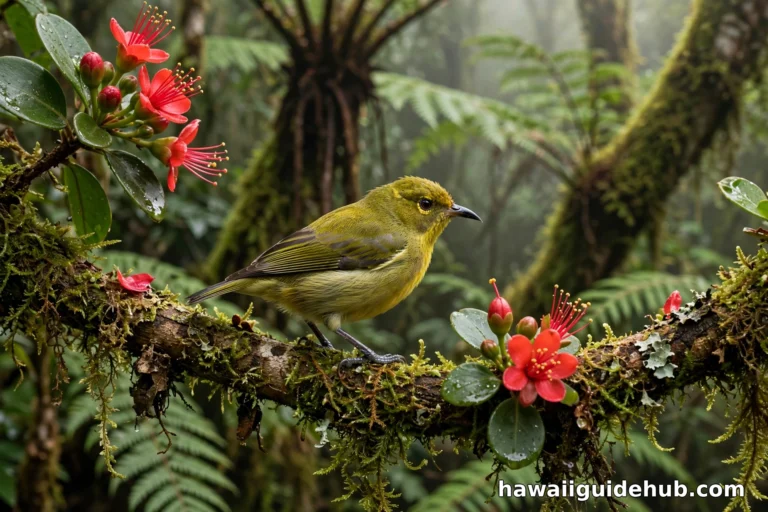
No other place in the United States holds as many species found nowhere else. Roughly 90 percent of Hawaiʻi’s native plants grow only in these islands, and its birds, insects, and snails tell the same story. A scarlet honeycreeper sipping nectar from an ʻōhiʻa blossom, a silversword blooming once in a lifetime on a volcanic summit, a tiny shrimp surviving in a lava-rock pool: each exists because Hawaiʻi is the most isolated island chain on Earth, and isolation is the greatest engine of evolution ever observed.
This is the complete guide to why Hawaiʻi has so many endemic species. It explains the isolation, the deep time, and the empty ecological tables that turned a few lucky arrivals into thousands of unique species. You will meet the most famous examples, learn how species reached the islands at all, understand why so many are endangered today, and find out how to see them responsibly on your visit.
Hawaiʻi’s Endemic Story at a Glance
| The isolation | About 2,500 miles to the nearest continent; the most isolated major archipelago on Earth |
| The plant explosion | About 90 percent of roughly 1,400 native plant species are endemic |
| The bird explosion | About 57 honeycreeper species evolved from a single flock of finches |
| The mammal that made it | One: the ʻōpeʻapeʻa, or Hawaiian hoary bat |
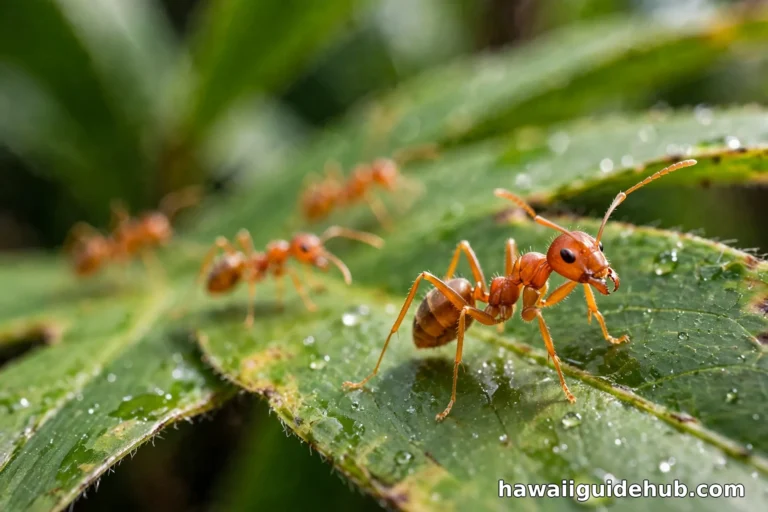
| The ones that never arrived | No native ants, reptiles, or amphibians reached Hawaiʻi naturally before people |
| The time it took | Kauaʻi, about 5 million years old (oldest main island) |
Extreme Isolation: The Most Remote Islands on Earth
Everything about Hawaiʻi’s wildlife begins with distance. The Hawaiian Islands sit about 2,500 miles from California and a similar span from Asia, making the archipelago the most isolated major island group on the planet. The University of Hawaiʻi notes that the islands are roughly 4,000 kilometers from the nearest continental source of species. For a plant seed or a small bird, crossing that much open ocean is nearly impossible, and that impossibility shaped everything that lives here.
Isolation works like a one-way filter with an extremely fine mesh. Over millions of years, only a tiny number of colonists ever made the crossing: a few seeds carried by wind, floating on ocean currents, or stuck to the feathers of storm-blown birds. Biologists estimate that the entire native land flora and fauna of Hawaiʻi descended from a surprisingly small number of successful arrivals. Each arrival then had the islands almost entirely to itself, with few competitors, few predators, and a buffet of unclaimed ecological jobs.
The islands also never touched a continent. Unlike islands that were once joined to a mainland, Hawaiʻi rose from the ocean floor as bare volcanic rock, built hotspot by hotspot over tens of millions of years. There was no ancient shared wildlife to start from. Every native species traces back to a colonist that crossed the Pacific and survived. That is why so many of them look like nothing else on Earth: their ancestors arrived, and then the ocean cut them off for millions of years.
Deep Time: Five Million Years to Experiment
Isolation alone does not create new species. Time does the sculpting. The main Hawaiian Islands range in age from Kauaʻi, at about five million years old, down to the Island of Hawaiʻi, which is still growing today. That age gradient acted like a slow-motion laboratory. As each new island rose from the sea, species from the older islands colonized it, then drifted apart from their relatives as the ocean gap between them widened and conditions shifted.
But the real story is far older. The Hawaiian-Emperor seamount chain stretches back some 80 million years, a conveyor belt of islands rising over a fixed volcanic hotspot and then eroding beneath the waves as the Pacific Plate moves northwest. Each island was a stepping stone for the next. The honeycreepers and lobeliads you see today likely began evolving on islands that no longer exist above the ocean, island-hopping to the younger volcanoes as their old homes sank. This deep timeline gave evolution tens of millions of years to work, far more than the five million years of the current islands alone.
Empty Tables: New Arrivals Found No Competition
When the first seeds and birds reached Hawaiʻi, they found something rare in nature: an archipelago with almost nothing living on it. There were no woodpeckers, no hummingbirds, no large grazing mammals, no native ants. Entire ecological professions were vacant. A single finch ancestor could therefore split into seed-crackers, nectar-sippers, and insect-probers, because nobody else was doing those jobs. Scientists call this ecological release, and it is the reason one arrival could become dozens of species.
The islands also offered a staggering variety of habitats packed into small areas. On a single island you can walk from a sun-baked coastal strand through dry forest, up into dripping cloud forest, and above the treeline into subalpine scrub, all within a few miles. Each habitat became a separate stage where the same ancestor could evolve into different specialists. The combination of empty niches and diverse habitats multiplied the opportunities for new species to form.
Adaptive Radiation: One Species Becomes Many
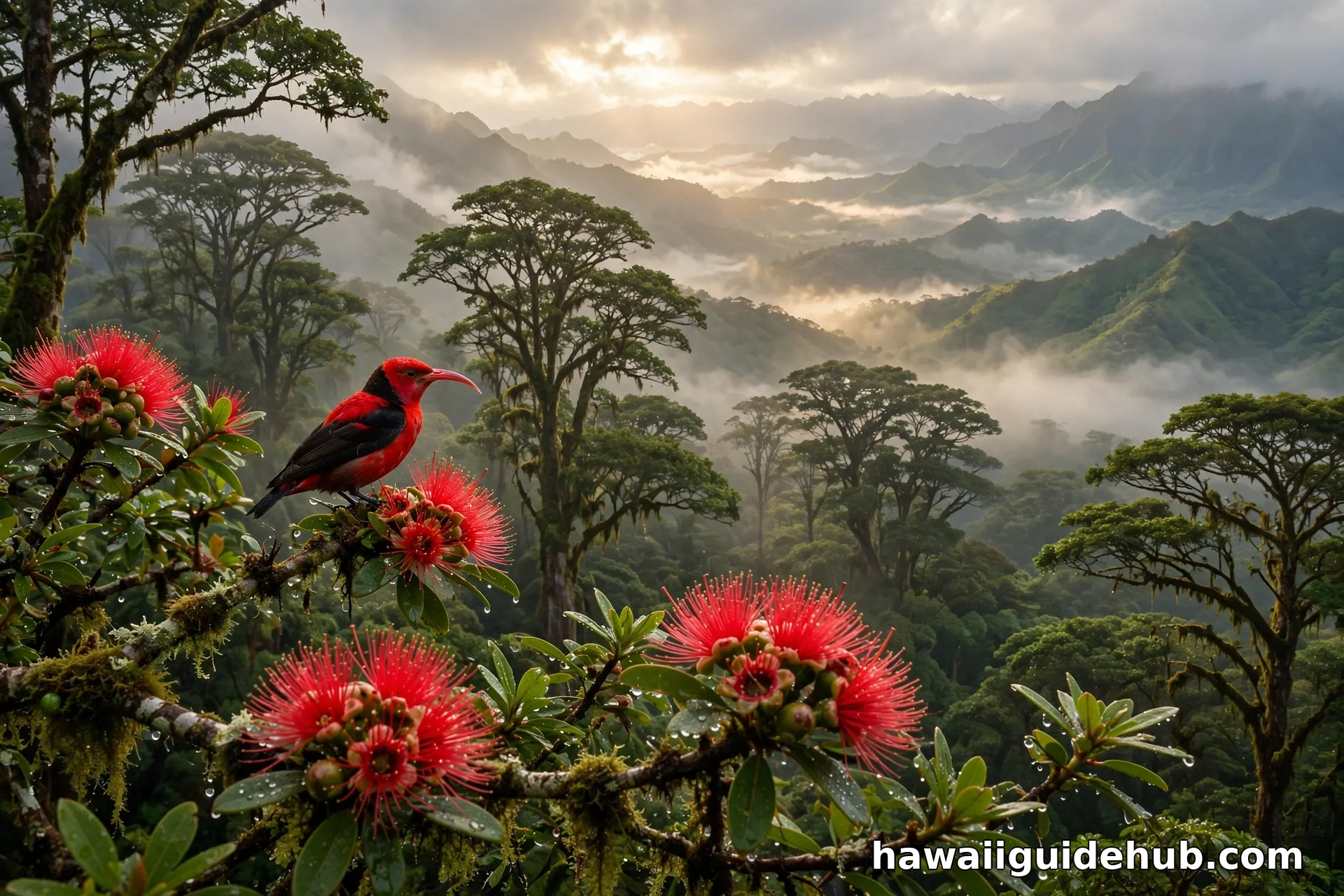
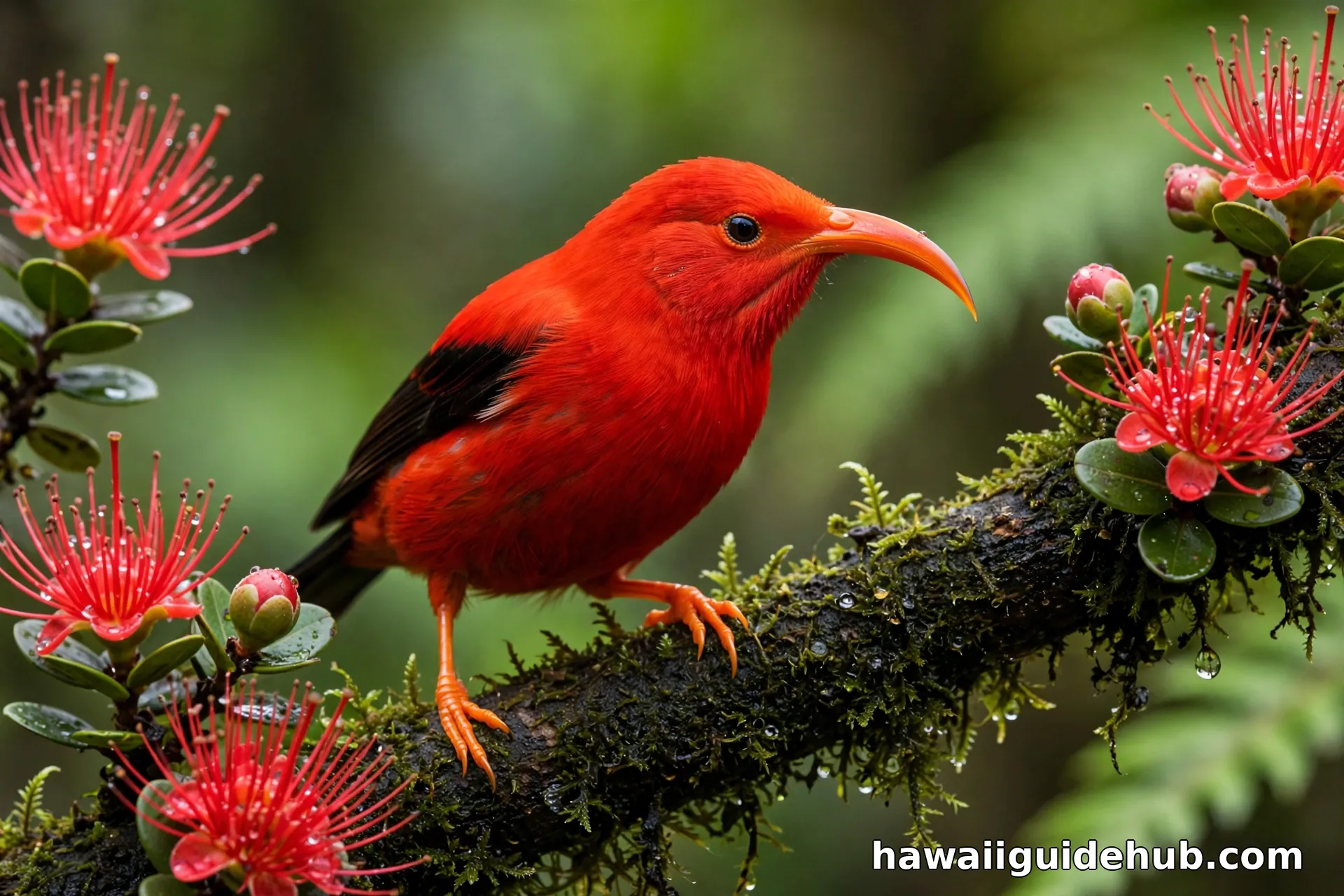
The textbook example of adaptive radiation is the Hawaiian honeycreeper. About five million years ago, a small flock of rosefinches, likely blown off course from Asia, reached the young islands. With few competitors and many unclaimed food sources, their descendants radiated into roughly 57 species and subspecies. Some developed thick bills for cracking seeds, others grew long curved bills for sipping nectar from tubular lobelia flowers, and a few even evolved woodpecker-like bills for prying insects from bark. The scarlet ʻiʻiwi and the crimson ʻapapane are among the survivors you can still see today.
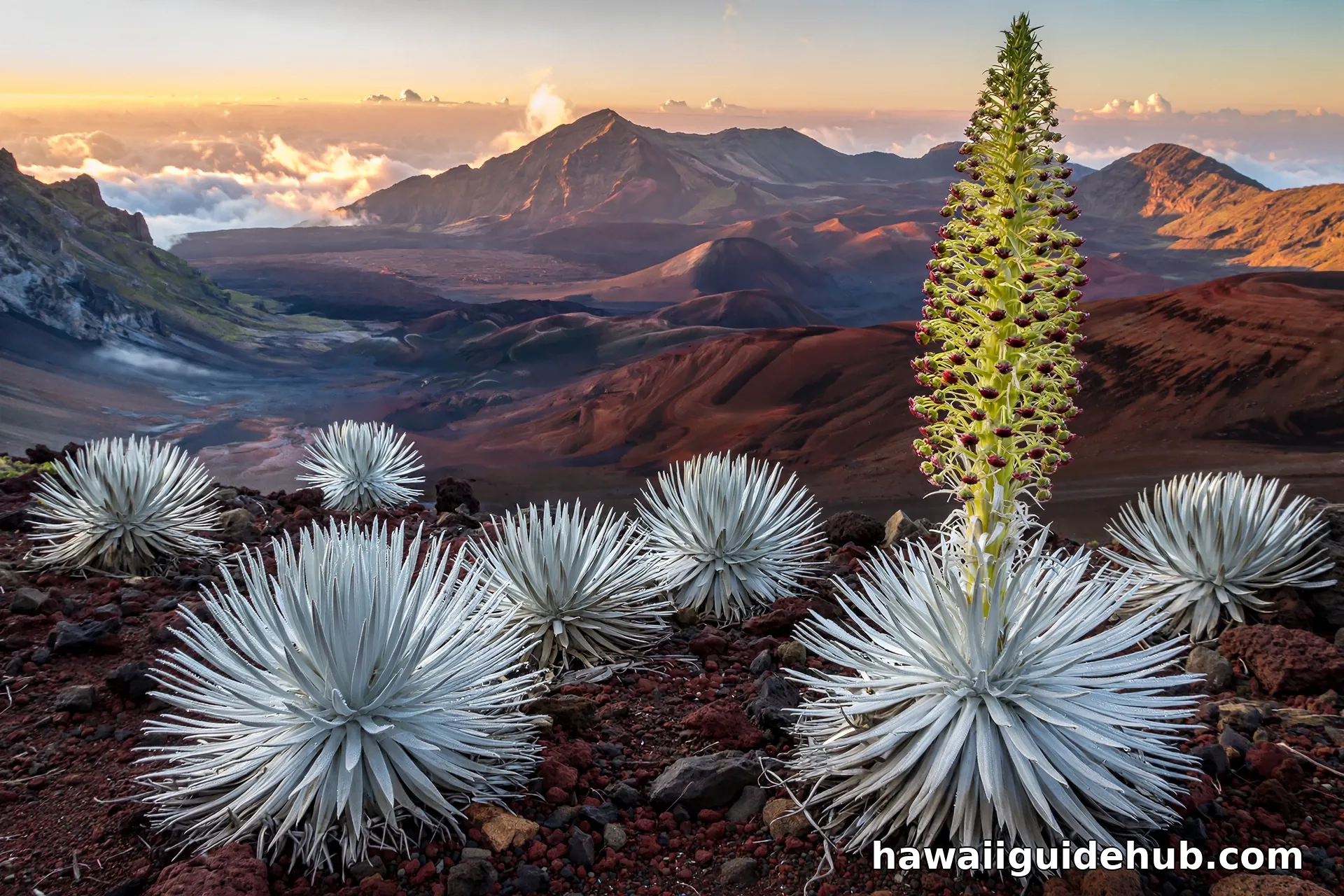
Plants performed the same trick. The silversword alliance, about 30 species of strikingly different plants, all descended from a single North American tarweed ancestor. On the dry summit of Haleakalā, the silversword grows as a glittering silver rosette for decades, then sends up a single spectacular flowering stalk and dies. Its cousins include sprawling vines and shrubs in wet forests, all from the same original seed. Hawaiian lobeliads, with more than 120 species, and the native mints, with over 60 species from one ancestor, tell the same story of explosive diversification.
Insects went even further. Hawaiʻi hosts around 800 to 1,000 species of endemic Drosophila fruit flies, one of the largest radiations of any insect group on Earth, all from a single colonist. Many look nothing like the familiar kitchen fruit fly: some are as large as houseflies, and males of the picture-wing group perform elaborate courtship dances. With few other insects around, they diversified into predators, leaf-miners, and fungus-feeders, filling roles that dozens of insect families share on continents.
How Life Got to Hawaiʻi: Wind, Waves, and Wings
Hawaiian educators summarize colonization with three words: wind, waves, and wings. Tiny seeds and fern spores rode the trade winds across the Pacific. Buoyant seeds, like those of the beach naupaka, floated on ocean currents for months before washing ashore. Birds carried seeds stuck to their feathers or in their droppings, and a few strong fliers, like the ancestors of the nēnē goose and the Hawaiian hoary bat, made the journey under their own power.
The nēnē, Hawaiʻi’s state bird, shows what happened after arrival. Descended from Canada geese that reached the islands long ago, the nēnē lost the heavy webbing on its feet, an adaptation for walking on rough lava instead of swimming, and shrank to a smaller, more terrestrial bird. The Hawaiian hoary bat, the islands’ only native land mammal, likely arrived on storm winds and now roosts alone in trees across the islands. Each successful crossing was a lottery win, and the winners inherited an archipelago.
What Never Made It Here
What is missing from Hawaiʻi is as telling as what is present. No ants are native to the islands, a fact the state Department of Land and Natural Resources repeats in its invasive-ant campaigns, because every ant you see arrived with people. No reptiles, no amphibians, and no freshwater fish with ocean-independent life cycles ever reached the islands naturally. There were no snakes, no frogs, no lizards, and no large land mammals except the bat.
This absence had consequences. Native birds evolved with no mammalian predators, so many nested on or near the ground and some, like the nēnē, became weak fliers. Native plants never developed thorns, poisons, or other defenses against grazing animals, because no grazers existed. When people later introduced rats, mongooses, cats, goats, and pigs, the native species had no defenses ready. The very isolation that created the endemics also left them vulnerable, which is why conservation in Hawaiʻi is so urgent.
Why So Many Endemics Are in Danger
Hawaiʻi is often called the endangered species capital of the world. The U.S. Fish and Wildlife Service notes that the islands hold about a quarter of all endangered species in the United States, even though the state covers a tiny fraction of the country’s land area. More than 5,000 invasive plants and animals now threaten native species and landscapes across the islands.
The threats read like a list of everything isolation kept out. Introduced mosquitoes brought avian malaria, a disease native birds had never met, and it has wiped out honeycreepers from the lowlands; most survivors cling to high-elevation forests above about 4,000 feet, where mosquitoes cannot thrive. Feral pigs and goats trample and eat native plants. Invasive grasses fuel wildfires in dry forests that never evolved with frequent fire. Rapid ʻŌhiʻa Death, a fungal disease, has killed more than a million ʻōhiʻa trees, the backbone of native forests. Climate change is pushing the mosquito line higher each year, shrinking the last refuges of the forest birds.
Conservation work is intense and creative. Fences exclude hoofed animals from the best remaining forests. The Birds, Not Mosquitoes project releases incompatible male mosquitoes to crash mosquito populations. Captive breeding and habitat restoration continue at places like Hakalau Forest on the Island of Hawaiʻi. Visitors support all of this simply by following biosecurity rules: cleaning boots and gear between hikes, never moving plants or soil between islands, and staying on marked trails.
Seeing Hawaiʻi’s Endemics Responsibly
You do not need to be a biologist to meet Hawaiʻi’s original wildlife. At dawn in the high forests of Kōkeʻe State Park on Kauaʻi or Hosmer Grove in Haleakalā National Park on Maui, ʻiʻiwi and ʻapapane flash red through the ʻōhiʻa canopy. The nēnē grazes roadside grasses on Kauaʻi and the Island of Hawaiʻi, often within sight of parking lots. Silverswords bloom at the Haleakalā summit, though their flowering season is unpredictable and worth checking before you go. At the coast, the Hawaiian monk seal, one of the world’s rarest seals, hauls out on beaches across the islands.
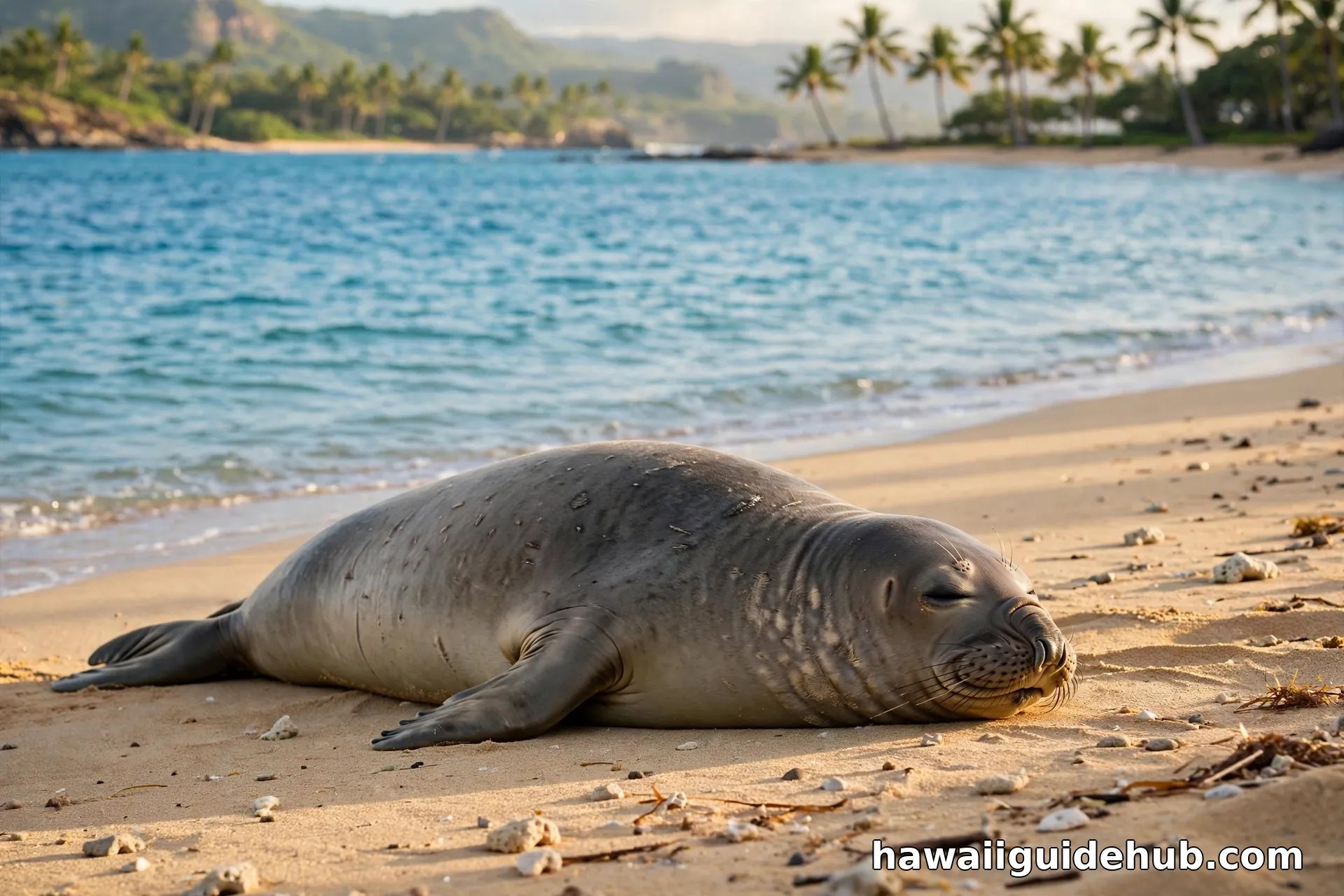
A few simple habits keep these encounters safe for the animals. Give monk seals and nesting seabirds plenty of space and never feed wildlife. Keep a respectful distance from nēnē, especially during nesting season. Do not approach or touch silverswords; the plants are fragile and protected. And if you hike in native forest, brush seeds and mud off your boots before and after, since a single boot can carry the fungus that kills ʻōhiʻa or the seeds of an invasive weed. The volcanoes that built these islands are still the best classroom for understanding them, and a sunrise or sunset at Haleakalā often includes nēnē sightings along the road.
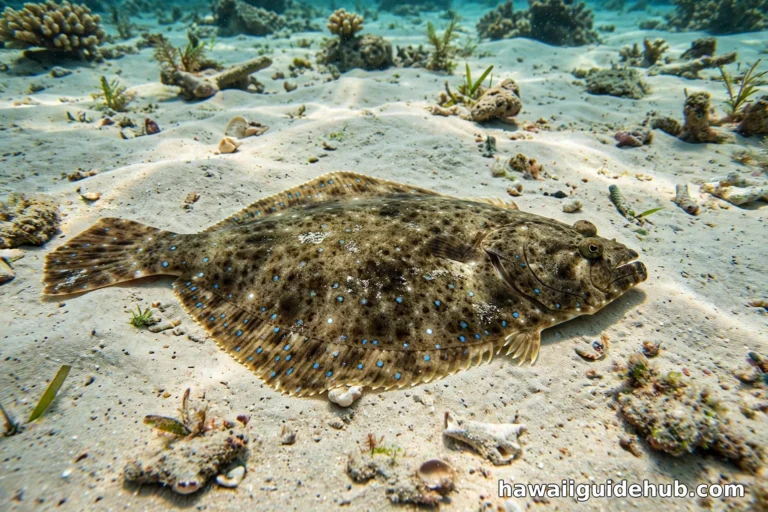
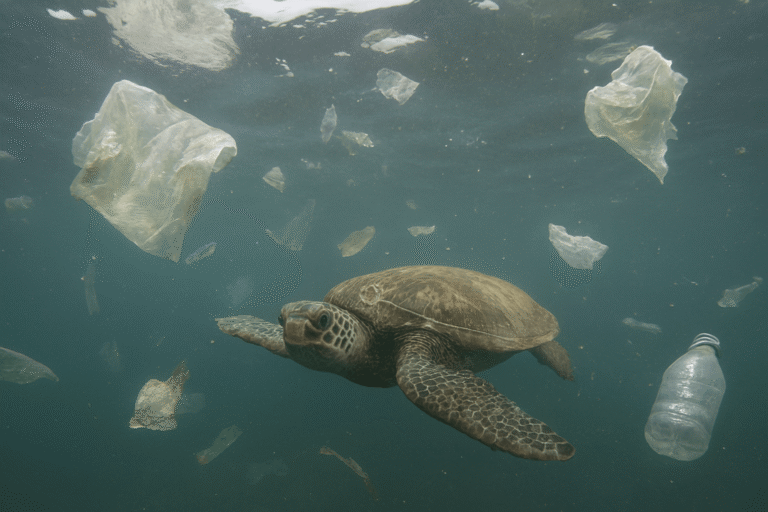
For the ocean side of endemism, Hawaiʻi’s reefs hold their own cast of originals, from endemic butterflyfish to the Hawaiian green sea turtle. If you plan to snorkel, read our guide to Hawaiʻi’s marine ecosystems and the conservation rules for honu encounters before you get in the water.
To see these forest birds in their misty mountain home, watch this short film from Kauaʻi’s Alakaʻi Swamp, where researchers introduce the surviving honeycreepers and the story of their evolution.
Frequently Asked Questions
What does endemic mean?
Endemic means a species occurs naturally in one place and nowhere else on Earth. Native is broader: a native species arrived without human help but may also live elsewhere. All endemic species are native, but not all native species are endemic. The beach naupaka, for example, is native to Hawaiʻi and also grows on tropical coasts worldwide, while the mountain naupaka species are endemic to Hawaiʻi alone.
How many endemic species does Hawaiʻi have?
No exact total exists because new invertebrates are still being described, but the scale is remarkable. About 90 percent of the roughly 1,400 native plant species are endemic, and total native species across all groups likely exceed 10,000, the vast majority found only in Hawaiʻi. That concentration is why the islands are called the endangered species capital of the world.
Why are there no native snakes or frogs in Hawaiʻi?
Reptiles and amphibians are poor ocean crossers. A snake or frog cannot survive weeks adrift on the open Pacific, and none ever made it before people arrived. The coqui frog and the brown tree snake are recent human introductions, which is exactly why the state works so hard to keep new ones out.
What is the most famous example of adaptive radiation in Hawaiʻi?
The Hawaiian honeycreepers are the classic case: about 57 species evolved from one flock of finches, with bills specialized for seeds, nectar, and insects. The silversword alliance in plants and the 800-plus species of Hawaiian Drosophila flies are equally spectacular examples that biologists study worldwide.
Can visitors help protect endemic species?
Yes, and the simplest actions matter most. Clean your hiking boots and gear between trails and islands, stay on marked paths, never move plants, fruit, or soil between islands, and give wildlife space. Report unusual pests to the 643-PEST hotline. Hawaiʻi’s biosecurity depends on everyone who visits.
Hawaiʻi’s endemic species are the product of the longest-running natural experiment on the planet: millions of years of isolation on islands that rose from an empty ocean. The same forces that made them, distance, time, and empty niches, now make them fragile in a connected world. Understanding that story is the first step toward keeping it going, and every careful visit helps write the next chapter.