Pineapple Farms in Hawaii: Dole Plantation, Maui Gold and a Sweet Island History

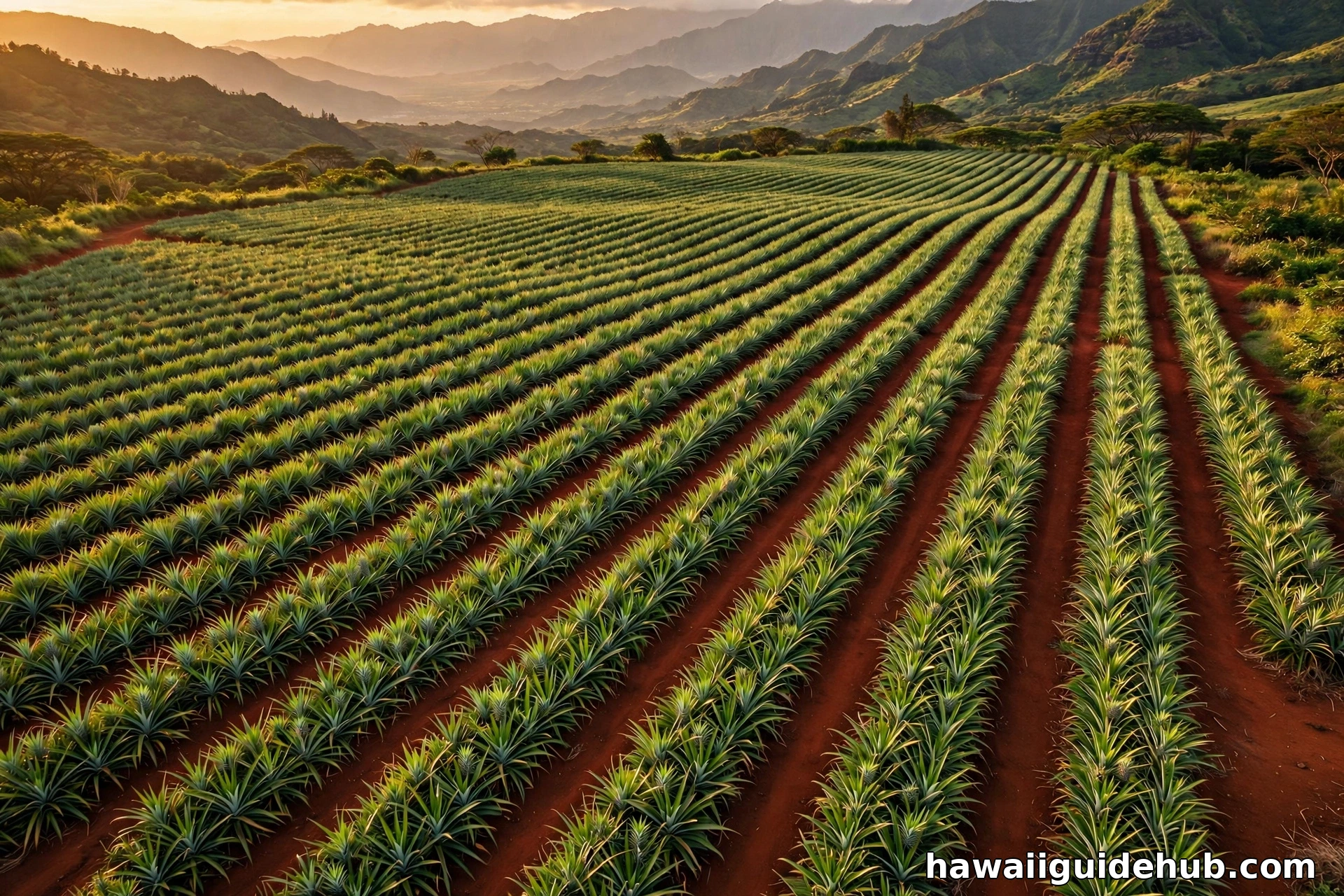
See a pineapple and you think of Hawaii. The spiky fruit shows up on hotel logos, license plate frames, and just about every souvenir shirt in Waikiki. But here is what most visitors never learn: the giant pineapple industry that built that image is almost entirely gone. The canneries closed, the vast fields shrank to a fraction of their old size, and today only a handful of farms still grow the fruit commercially.
That is exactly why the farms that remain are worth your time. Two places in particular, the Dole Plantation on Oahu and the Maui Gold farm on Maui, let you walk through real fields, taste pineapple picked that morning, and understand how a South American fruit came to define an island chain in the Pacific. This guide covers both farms, the honest history behind them, and how to plan a visit.
How Pineapple Came to Hawaii
The pineapple is not native to Hawaii. It comes from South America, from the region around present day Brazil and Paraguay, where indigenous peoples cultivated it long before Europeans arrived. Spanish and Portuguese explorers carried it around the world in the 1500s and 1600s because the fruit kept well on long sea voyages and sailors believed it fought scurvy.
Hawaii got its first pineapples in the 1790s. Records credit Don Francisco de Paula Marin, a Spanish advisor to King Kamehameha I, with planting some of the earliest pineapples on Oahu. For the next hundred years the fruit stayed small scale, grown in gardens and eaten fresh. Nobody yet imagined what it would become.
James Dole and the Pineapple Kingdom
That changed when a young man from Boston named James Dole arrived in Hawaii in 1899. Dole bought a 64 acre homestead in Wahiawa, in the high central valley of Oahu, and started experimenting with pineapple as a commercial crop. In 1901 he founded the Hawaiian Pineapple Company and began planting in earnest.
Dole bet everything on two ideas. First, that pineapples could be grown at plantation scale in Hawaii’s volcanic soil and steady climate. Second, that canning technology could ship the fruit to the mainland United States without it rotting on the voyage. Both bets paid off. Clever advertising taught mainland Americans to love canned pineapple, and the Hawaiian Pineapple Company grew into one of the great agricultural businesses of the twentieth century. Dole became known as the Pineapple King.
He was not alone for long. Other growers followed, and by the middle of the century Hawaii dominated the world’s pineapple trade. At the industry’s peak, pineapple plantations covered tens of thousands of acres across Oahu, Maui, Kauai, and Lanai. The harvest employed thousands of workers, many of them immigrants from Japan, China, the Philippines, Portugal, and Korea whose families still shape island culture today.
The Rise and Fall of an Empire
Industries rarely fall in a single moment, and pineapple was no exception. The decline came from simple economics. Growing and canning pineapple in Hawaii meant paying American wages, while competitors in Thailand, the Philippines, Costa Rica, and other countries could do the same work for far less. One by one, the economics stopped working.
Dole shut its Honolulu cannery in 1991. Del Monte, the other giant of the Hawaii industry, announced in early 2006 that it would end its century of pineapple growing in the islands, and closed its Oahu operations later that year. The Maui Pineapple Company, which had grown fruit on Maui since 1909, wound down its cannery work and eventually ended large scale production. Fields that had grown pineapples for generations went quiet or were replanted with other crops.
Today Hawaii grows only a tiny fraction of the world’s pineapples. But the fruit never lost its place in the islands’ identity, and a new chapter began: instead of canning pineapple for export, Hawaii’s remaining growers started welcoming visitors into the fields.
Dole Plantation: Oahu’s Pineapple Experience
The most famous pineapple stop in Hawaii sits in Wahiawa, right on the road between Honolulu and the North Shore. The Dole Plantation opened to the public in 1989 on land tied to James Dole’s original growing area, and it now draws over a million visitors a year. It is part working farm, part theme park, and entirely devoted to the pineapple.
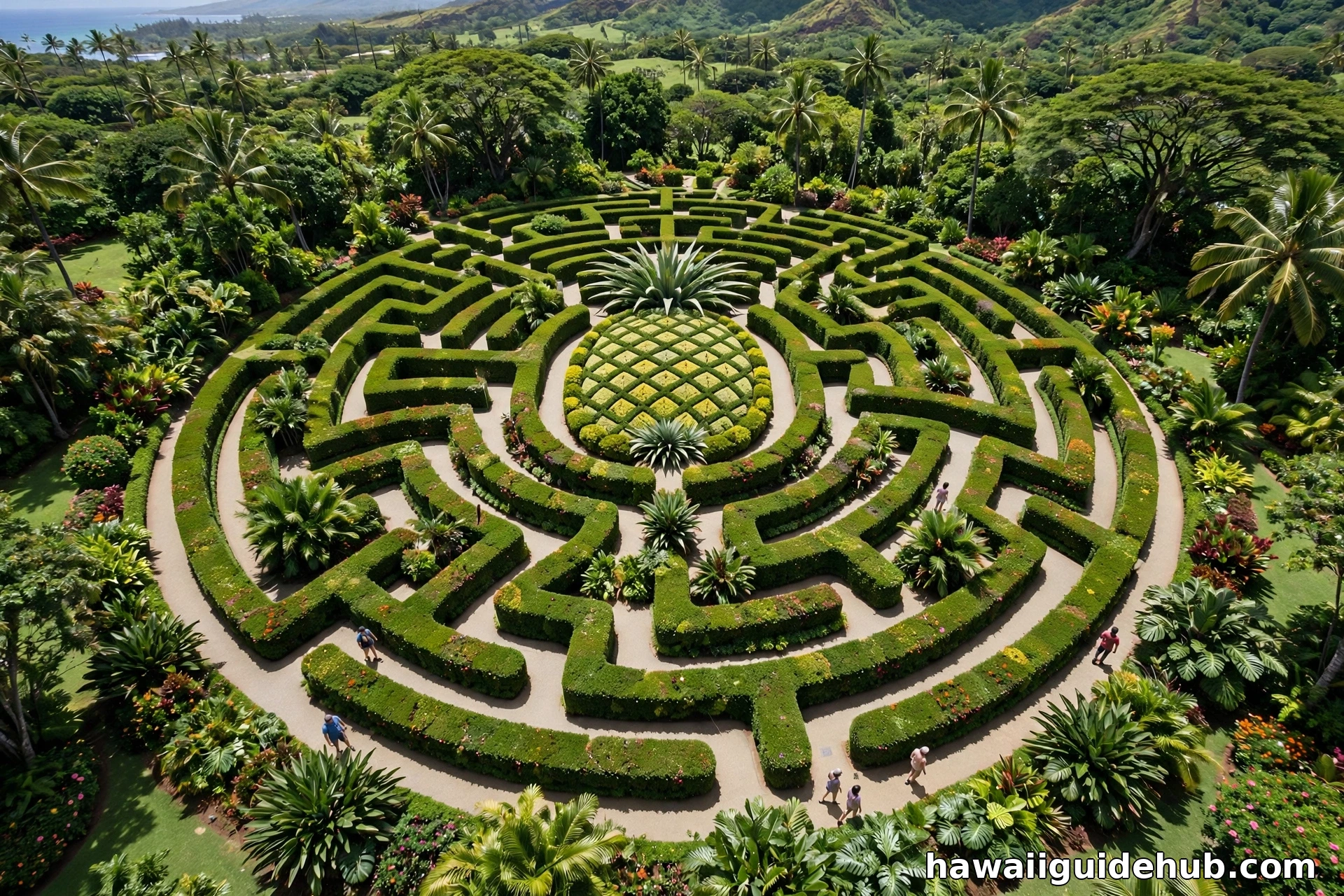
Three attractions anchor a visit. The Pineapple Garden Maze is the headliner: a living labyrinth of tropical plants that opened in 1998 and earned a Guinness World Record as the world’s largest maze. After an expansion in 2007 it was certified again in 2008. The maze covers about three acres with two and a half miles of paths woven from some 14,000 hibiscus, heliconia, croton, and pineapple plants. It is designed as a game with eight hidden stations to find, and the center holds a garden planted in the shape of a giant pineapple. Most visitors take around an hour; the record for a full run is about seven minutes.
The Pineapple Express is a vintage style train that rolls through the fields on a narrated 20 minute loop. It is the best introduction to how pineapples actually grow, and young kids love it. The Plantation Garden Tour is a self guided walk through eight themed gardens showing pineapple varieties from around the world alongside bananas, papayas, and other tropical crops.
Then there is the Dole Whip. The cool pineapple soft serve has a cult following, and trying one fresh at the plantation is a small rite of passage for Oahu visitors. Do not skip the country store either. Beyond the souvenirs, it carries fresh whole pineapples and displays about the immigrant workers who lived in the plantation villages. Those villages, where laborers from Japan, the Philippines, Portugal, China, and Korea raised families within walking distance of the fields, are a huge part of why island food and culture taste the way they do today. The plantation is open daily from 9:30am to 5:30pm at 64-1550 Kamehameha Highway in Wahiawa. Go early in the morning or after 2pm to dodge the midday tour bus crowds, and pair it with a North Shore beach afternoon since you will be driving right past it. Our Oahu island guide has more ideas for building that day.
Maui Gold: Hawaii’s Last Working Pineapple Farm
If Dole is the showpiece, Maui Gold is the real thing. In Haliimaile, on the cool green slopes of Haleakala, the Maui Pineapple Tour takes visitors behind the scenes of what it calls the last working commercial pineapple farm on Maui. This is not a replica or a museum. These are active fields where crews still plant, tend, and hand harvest fruit.
The guided tour runs about 90 minutes and walks you through the growing fields, the packing operation, and the full story of how Maui Gold pineapples go from plant to box. The tastings are the highlight: you sample pineapple at different stages and learn why the Maui Gold variety, a low acid type developed for fresh eating, tastes noticeably sweeter and less sharp than the pineapples most visitors know from grocery stores. Every guest leaves with a complimentary pineapple boxed and ready for the flight home, which solves the classic problem of how to get one through the airport.
Tours start from the Maui Pineapple Store at 870 Haliimaile Road in Makawao, run several times a day, and welcome ages three and up. The farm carries a long legacy: the Maui Pineapple Company began growing on the island back in 1909, and for most of the twentieth century Maui was the heart of Hawaii’s pineapple country. What you see today is the modern, smaller scale continuation of that story, focused on premium fresh fruit instead of cans. Wear shoes that can handle unpaved field paths and expect to get a little dusty. If you are building a Maui itinerary around it, our reasons to visit Maui guide pairs well with a farm morning.
More Pineapple Around the Islands
Dole and Maui Gold are the two big visitor experiences, but pineapple turns up in smaller ways across the islands. On Oahu, the KualoaGrown farm tour at Kualoa Ranch includes seasonal tastings from the ranch’s diversified farms, and fresh pineapple is often among the samples. It is a nice bonus if you are already visiting the ranch, though pineapple is not the focus there.
On Kauai, small farms grow the Kauai Sugarloaf, a white fleshed variety prized for its honey sweet flavor and low acidity. You will find it at farmers markets around the island when it is in season rather than at a single big attraction. Our things to do on Kauai guide points you toward the island’s best market days.
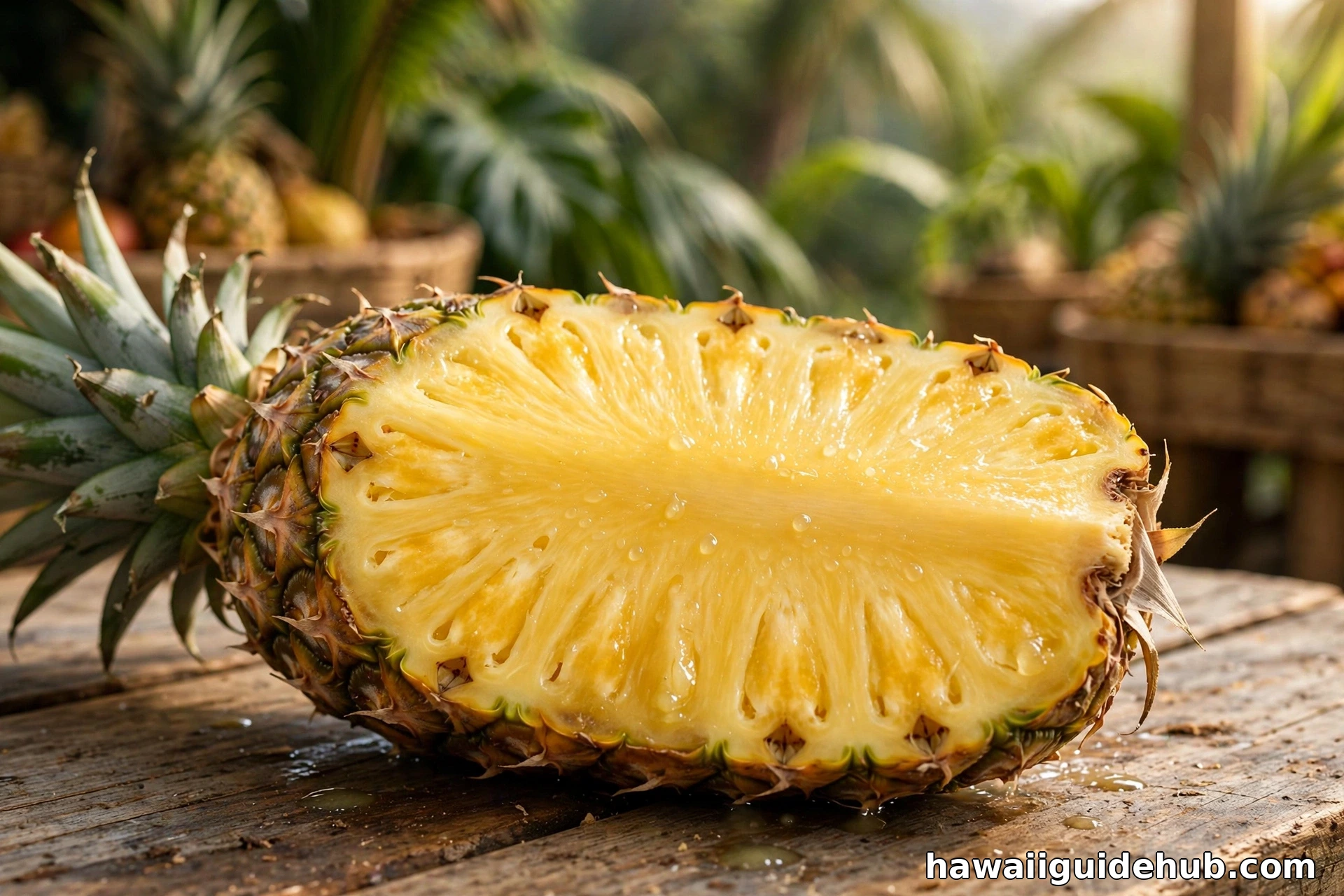
And honestly, some of the best pineapple tasting in Hawaii happens at any farmers market or roadside stand. Fruit picked ripe, meaning it was allowed to ripen on the plant instead of in a shipping container, tastes like a different species from the underripe pineapples most mainland stores sell.
How a Pineapple Actually Grows
One thing every farm tour teaches you is how strange and slow the pineapple plant is. Each plant produces exactly one fruit at a time. From planting to harvest takes 18 to 24 months, which means the pineapple you eat today started growing nearly two years ago.
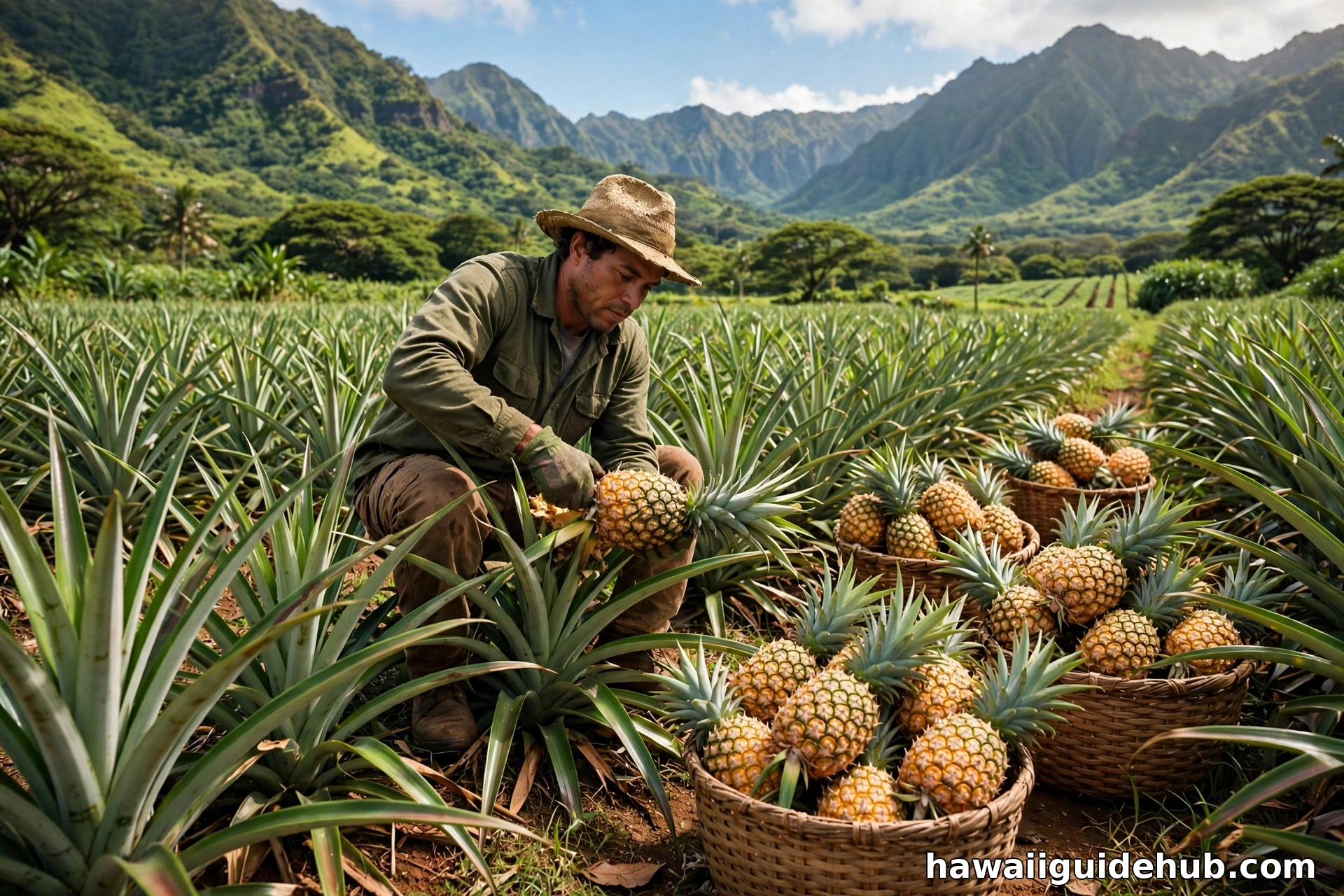
New plants are not grown from seeds. They are grown from the crowns, the spiky tops you twist off before cutting, or from small shoots called slips and suckers that sprout around the parent plant. Field crews plant these by hand in long rows, tend them for well over a year, and then harvest each ripe fruit by hand, judging ripeness by color, size, and feel. It is labor intensive work, which is part of why growing pineapples in Hawaii costs so much more than growing them in countries with cheaper labor.
Planning Your Pineapple Farm Visit
A few practical notes make the difference between a good farm visit and a great one. Mornings are the best time at both Dole and Maui Gold: the fields are cooler, the light is better for photos, and the crowds are thinner. Wear closed shoes you do not mind getting dusty, bring sunscreen and a hat since most of the experience is outdoors, and carry water.
At Dole, you can buy tickets for the maze, train, and garden tour individually or as a combination, so decide in advance how much time you want to spend. An hour or two covers the highlights; half a day lets you do everything at a relaxed pace. At Maui Gold, book the tour in advance because group sizes are limited and the popular morning slots fill up.
If you want to bring pineapple home, both farms make it easy. Maui Gold boxes your complimentary fruit for the flight, and Dole’s shop sells fruit packed for travel. Fresh whole pineapple is generally fine to carry through agricultural inspection when properly packed, but always declare it and let the inspectors check. One more tip: taste before you buy. The difference between a pineapple picked yesterday and one shipped green is so dramatic that most visitors end up eating half their souvenir fruit before they ever reach the airport.
See Dole Plantation on Video
The pineapple built modern Hawaii in ways that go far beyond dessert. It shaped immigration, land use, labor history, and the islands’ image around the world. The plantations are mostly gone, but standing in a field at Dole or tasting a just picked Maui Gold, you are touching the living end of that story. It is one of the few Hawaii attractions that is equal parts fun outing and history lesson, and it earns its place on just about any island itinerary. Book the earliest tour of the day; the fields are cooler, the guides are fresher, and the tasting samples are at their best.