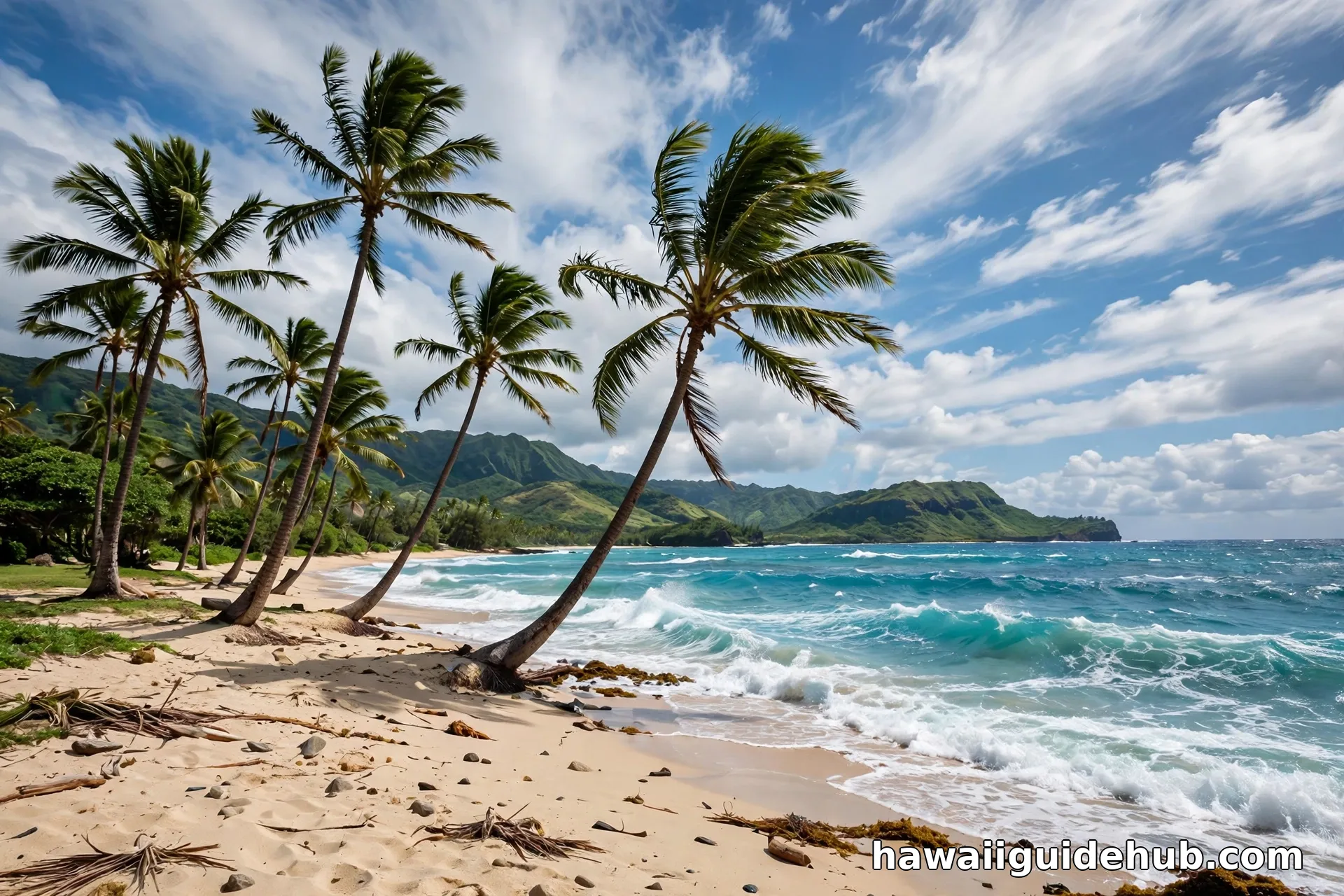
Hawaii’s Trade Winds Explained

Ask anyone who lives in Hawaiʻi about the weather and one word comes up before any other: the trades. The trade winds are the steady breezes from the northeast that shape almost everything about the islands, from which side of each island gets rain to how hot a summer afternoon feels. They are the reason Honolulu stays comfortable when other tropical cities swelter, and the reason one coast of an island can be lush rainforest while the other is sunny desert.
This is the single complete guide to Hawaiʻi’s trade winds. It explains what the trade winds are, the atmospheric machinery that creates them, when they blow strongest and when they fade, how they divide every island into a wet windward side and a dry leeward side, what happens during Kona wind spells, and what it all means for your trip. The science here follows the National Weather Service, NOAA, and University of Hawaiʻi research.
Hawaii’s Trade Winds at a Glance
| The factor | The detail |
|---|---|
| What they are | Steady prevailing winds from the northeast and east |
| Speed | About 10 to 20 knots (roughly 12 to 23 mph) |
| Reliability | About 90% of summer days, around 60% of winter days |
| The engine | The North Pacific High and Earth’s rotation |
| The effect | Wet windward coasts, dry leeward coasts |
| When they fail | Kona winds: humid southerly winds |
| Peak season | May through September |
| Why “trade” | From the sailing ships that traded across oceans on these reliable winds |
What the Trade Winds Actually Are
The trade winds are one of the largest and most consistent wind systems on Earth. They are easterly winds, meaning they blow from the east toward the west, found in a broad belt north and south of the equator. In Hawaiʻi, which sits at about 19 to 22 degrees north latitude, they arrive from the northeast, typically as a gentle to moderate breeze of 10 to 20 knots. On an average day the air temperature sits in the low 80s Fahrenheit, and the trades shave the edge off the tropical heat so effectively that air conditioning feels optional in the shade.
The name has nothing to do with commerce directly. Centuries ago, “trade” was used the way we might say “steady”: these winds blew reliably in the same direction, day after day, across vast stretches of ocean. European sailing ships depended on them to cross the Atlantic and Pacific on trading voyages, so the dependable easterlies became known as the trade winds. Long before European ships arrived, Polynesian voyagers read these same winds, along with swells, stars, and birds, to navigate thousands of miles of open ocean to reach Hawaiʻi.
How the Trade Winds Form
The engine behind the trades has two main parts. The first is the North Pacific High, a huge semi-permanent zone of high pressure that sits northeast of Hawaiʻi. Air sinks inside a high-pressure system and then flows outward along the surface, away from the high’s center. The second part is Earth’s rotation, which bends moving air to the right in the Northern Hemisphere through what scientists call the Coriolis effect. Air flowing outward from the Pacific High gets curved until it streams toward Hawaiʻi from the northeast. That curving, persistent flow is the trade wind.
This circulation is one half of a planet-scale loop called the Hadley cell. Warm air rises near the equator, travels northward high in the atmosphere, sinks back down in the subtropics around 30 degrees latitude, and returns toward the equator along the surface as the trades. It is the same machinery that creates deserts in the subtropics worldwide and keeps tropical weather patterns so regular.
The Pacific High is not fixed in place. In summer it strengthens and sits farther north, which aims the trades squarely at Hawaiʻi and makes them blow about 85 to 95 percent of the time, according to University of Hawaiʻi research. In winter the high weakens and shifts closer to the islands, so the trades blow only about 50 to 80 percent of the time and winter storms can interrupt them for days. The Hawaiʻi State Data Book puts the annual average at about 73 percent of days, with July the most reliable month at 95 percent and December the least at 57 percent.
Longer climate cycles nudge the pattern too. During El Niño years the Pacific High tends to weaken and shift, so Hawaiʻi often sees fewer trade wind days, drier windward slopes, and warmer temperatures. During La Niña years the opposite happens: the high strengthens, the trades blow more often, and windward areas get wetter than usual. Forecasters at the National Weather Service watch these cycles closely because they tilt the odds for an entire season.
Windward and Leeward: Why the Trades Split Every Island in Two
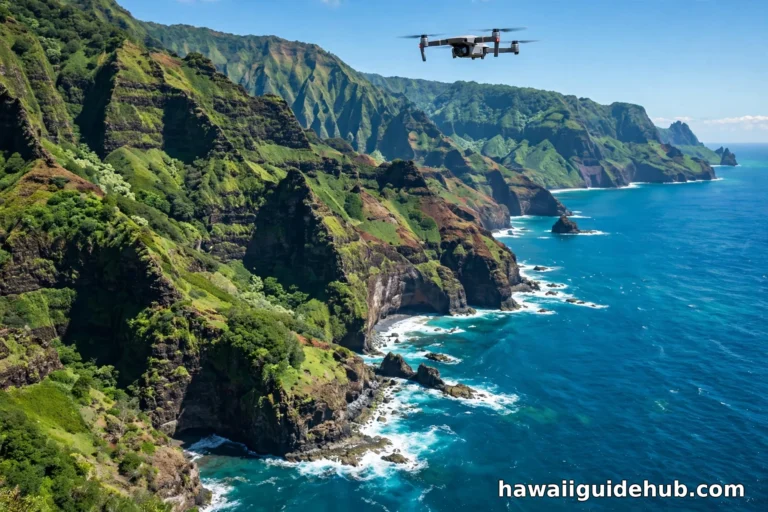
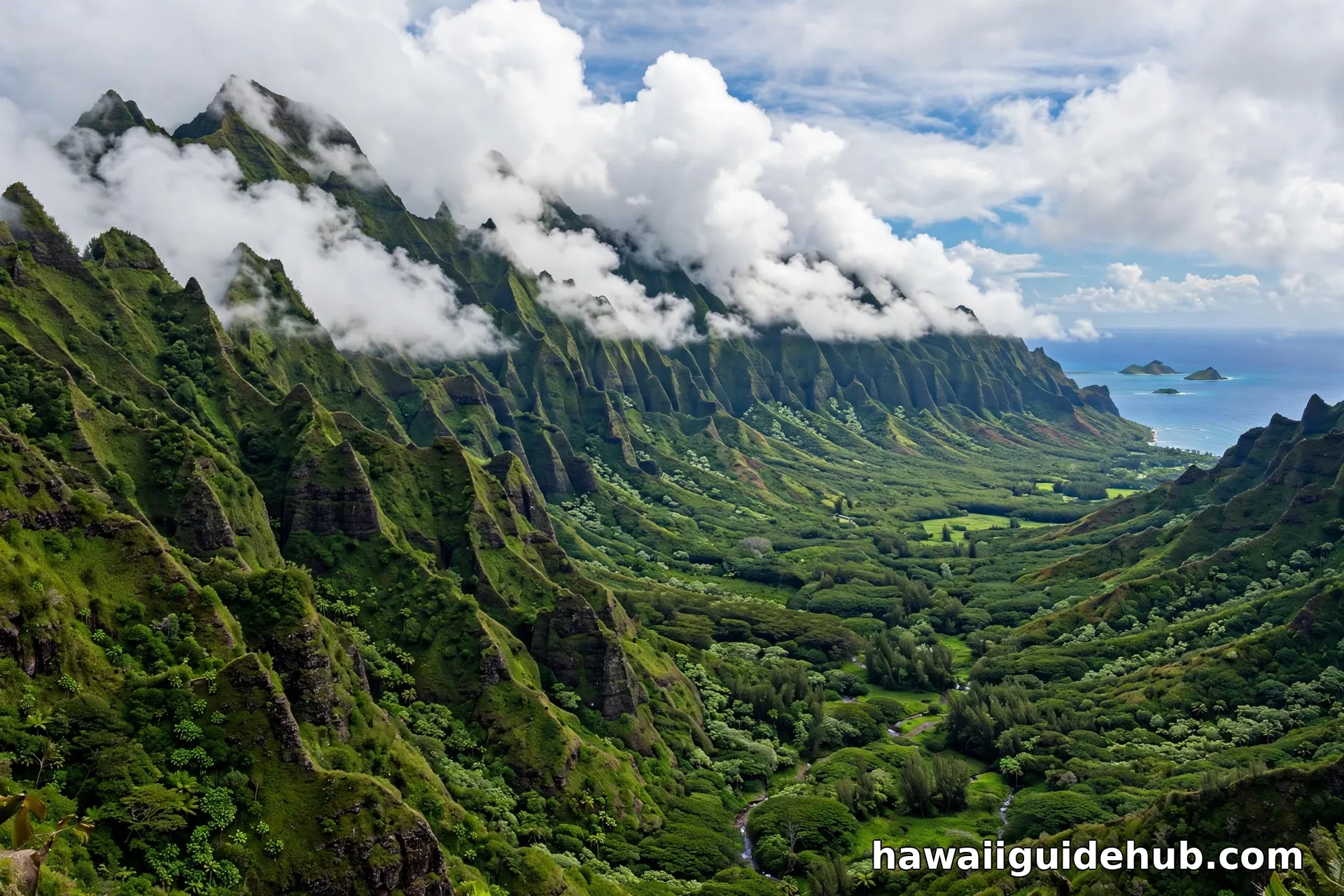
The trade winds do more than cool the air. They are the reason each Hawaiian island has two completely different climates. The moist ocean air they carry slams into the islands’ mountains and is forced upward. As it rises it cools, its moisture condenses, and clouds and rain form on the slopes facing the wind. This is the windward side: green, lush, and famously wet. Places like the Nā Pali Coast, the Hilo side of the Big Island, and Oʻahu’s Koʻolau mountains owe their rainforests to this process.
Once the air crosses the mountain crest, it has lost most of its moisture. It sinks back down on the far side, warming as it descends, which dissolves the remaining clouds. This is the leeward side: sunny, dry, and warm. Kona on the Big Island, Waikīkī and the south shore of Oʻahu, and Kīhei on Maui sit in the rain shadow of their island’s peaks. The contrast can be startling: Hilo averages well over 100 inches of rain a year, while parts of the Kona coast get barely a tenth of that.
A temperature inversion caps this whole process. A layer of warm air typically sits around 6,000 to 8,000 feet above the islands and acts like a lid, flattening the tops of trade wind clouds and keeping most showers on the mountain slopes rather than letting storms grow tall. On days when the inversion is strong, you will see a neat line of flat-bottomed clouds hugging the ridges while the coasts stay sunny.
Kona Winds: When the Trades Take a Break
Every so often the trades simply stop. When the Pacific High dips directly over the islands or a passing weather system flattens the pressure pattern, the pressure gradient that drives the trades collapses. Winds turn light, variable, or swing around to the south. These southerly spells are called Kona winds, and locals greet them with mixed feelings.
Without the trades, Hawaiʻi’s natural air conditioning switches off. Humidity climbs, afternoons feel sticky and still, and temperatures can push a few degrees above normal. Kona winds also reverse the usual rain pattern: showers that normally fall on the windward side can drift over to the normally dry leeward coasts. Vog, the volcanic haze from the Big Island’s volcanoes, is another casualty of calm trades. When the trades blow, they sweep vog away to the southwest; when they die, vog can pool over the island chain and haze the skies as far as Oʻahu.
They are most common in winter, when cold fronts sweeping down from the north disrupt the trade wind flow for a few days at a time. In summer they are rare and usually brief. Surfers actually welcome the change: light Kona winds groom the faces of south swells into clean, glassy waves on the south shores.
What the Trade Winds Mean for Your Trip
For most visitors, the trades are pure upside. They keep temperatures pleasant, clear the air, and dry the sweat off a hike in minutes. A few practical notes will help you plan around them. Pack a light windbreaker or rash guard even in summer: a 15-knot breeze on a boat or at a windy overlook feels much cooler than the thermometer suggests, and windward beaches can feel brisk by late afternoon. If you are sensitive to wind, choose leeward resorts in places like Wailea, Poʻipū, or the Kohala Coast, where the island’s bulk shelters you.
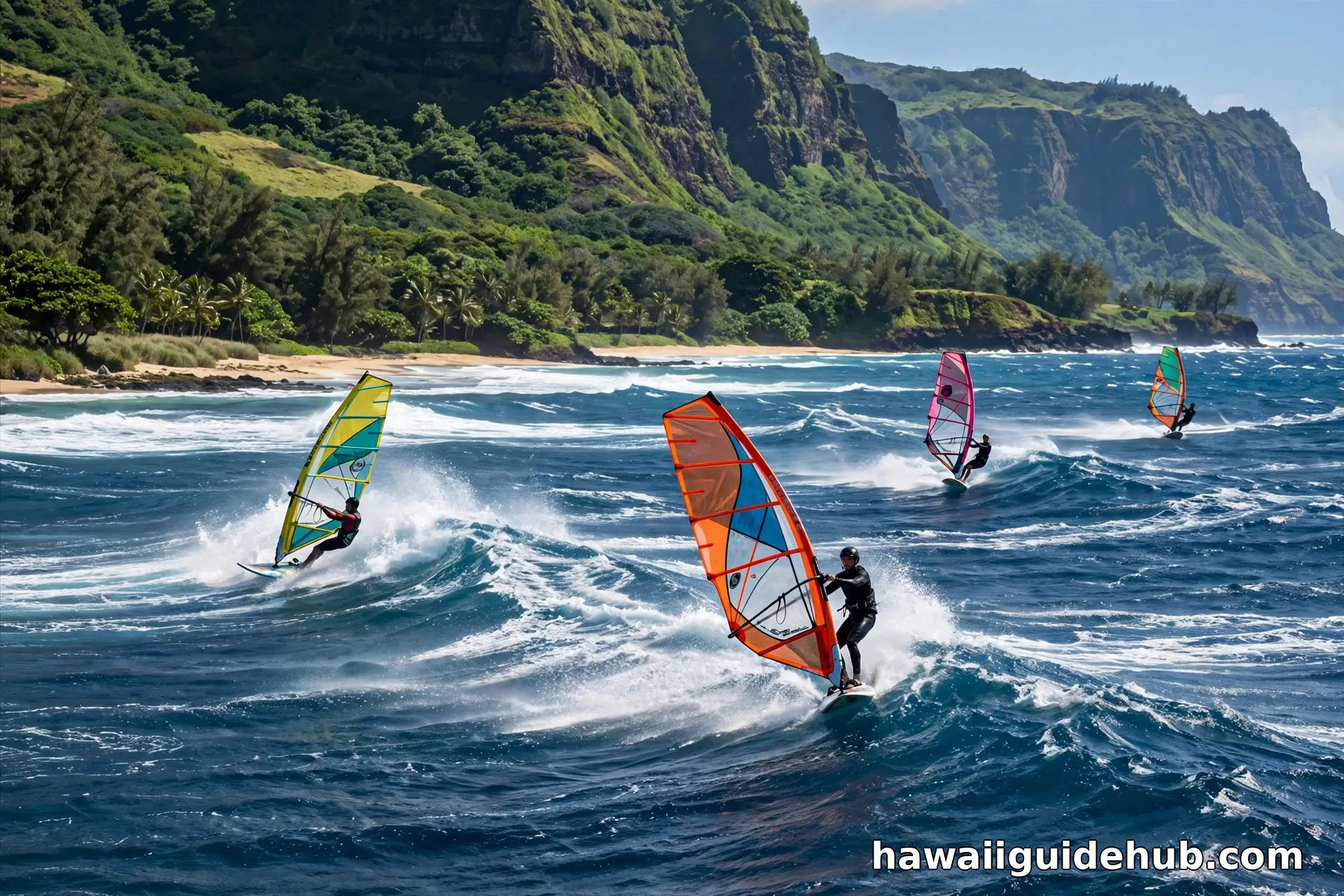
Time your activities with the wind in mind. Mornings are usually calmest, with the trades building through the afternoon, so schedule snorkeling and boat trips early for the smoothest water. Windward coasts get the passing showers, so if your beach day looks cloudy on the east side, drive 30 minutes to the leeward side and you will often find sunshine. Watersports lovers should head the other direction: the trades make places like Hoʻokipa on Maui and Kailua on Oʻahu world-class for windsurfing, kitesurfing, and sailing.
You can learn to read the trades yourself. In the morning, look at the mountain ridges: a clean line of small white clouds clinging to the peaks means classic trade wind weather and a fine day ahead. If the ridges are clear and the air feels still and heavy by midmorning, the trades are faltering and a Kona wind spell may be setting in. Either way, the islands reward flexibility: with two climates on every island, the right side of the mountain almost always has the weather you want.
Trade Wind Words Worth Knowing
A little vocabulary goes a long way in Hawaiʻi. Windward means the side of an island facing the trade winds, the wet, green side. Leeward means the sheltered side away from the wind, the sunny, dry side. Kona winds are southerly winds that replace the trades when the normal pattern breaks down, bringing humid, still weather. Vog is volcanic smog that the trades normally blow clear of the islands. And the trade wind inversion is the warm lid of air aloft that keeps trade wind clouds low and flat.
Frequently Asked Questions
Which direction do Hawaii’s trade winds blow from?
From the northeast. The North Pacific High sits northeast of the islands, and Earth’s rotation curves the outflowing air so it arrives from the northeast, typically at 10 to 20 knots. Buoys farther from the islands often record a more easterly direction.
What months have the strongest trade winds in Hawaii?
May through September. The Pacific High is strongest in summer, and the trades blow 85 to 95 percent of the time. July is the single most reliable month at about 95 percent of days, according to the Hawaiʻi State Data Book. Winter trades are weaker and more frequently interrupted by storms.
Why is one side of each Hawaiian island so much wetter?
The trade winds carry moist ocean air into the mountains, forcing it upward. Rising air cools and its moisture falls as rain on the windward side. The air then descends on the leeward side, warming and drying as it sinks. This orographic rainfall is why Hilo is drenched while Kona stays sunny.
What are Kona winds?
Kona winds are southerly winds that blow when the trade wind pattern breaks down, usually because the Pacific High has shifted or a front has passed. They bring humid, calm, hazy weather, reverse the normal rain pattern, and allow vog to linger. They are most common in winter and usually last a few days.
Do the trade winds affect ocean conditions?
Yes. The trades generate a constant choppy swell on northeast-facing shores and keep those waters rougher, while leeward coasts stay calmer. They also push surface water and can influence vog dispersal. Mornings are calmest everywhere; afternoons bring the strongest breeze and chop.
The trade winds are easy to take for granted, which is exactly what most visitors do until their first Kona wind day shows them the alternative. These steady northeasterlies are the quiet architects of the Hawaiʻi you came to see: the waterfalls on the windward cliffs, the dry sunny beach on the leeward coast, the comfortable evening on the lanai. Once you understand the pattern, you can read the islands the way sailors and forecasters do, and plan each day around whichever side of the mountain the wind favors.