Hawaii Invasive Species Guide

Hawaiʻi has no native ants, no native snakes, and no native frogs, yet today it battles some of the most aggressive invaders on the planet. Tiny orange ants that rain stings from trees, a fungus that has killed more than a million ʻōhiʻa trees, beetles that bore through coconut crowns, and frogs whose night chorus can drown out conversation: these are the newcomers reshaping the islands. The U.S. Fish and Wildlife Service calls Hawaiʻi the endangered species capital of the world, and more than 5,000 invasive plants and animals are a major reason why.
This guide is the complete reference to invasive species in Hawaiʻi. It covers the worst offenders on land, how they arrived, the damage they do, what the state is doing to fight back, and exactly how visitors can help instead of accidentally making things worse. Everything here is one page, so any question about Hawaiʻi’s invasive species problem is answered in one place.
Hawaiʻi’s Invasive Problem at a Glance
| The number | The story behind it |
| More than 5,000 | Invasive plant and animal species in Hawaiʻi |
| Zero | Native ant species; every ant arrived with people |
| 1/16 of an inch | The little fire ant: orange, tiny, and it stings |
| More than 1 million | ʻŌhiʻa killed by Rapid ʻŌhiʻa Death |
| 643-PEST (643-7378) | Statewide pest hotline; call it if you spot something |
| October, every year | Stop the Ant Month |
Why Hawaiʻi Is So Vulnerable
The same isolation that created Hawaiʻi’s unique wildlife left it defenseless. Native birds evolved with no mammalian predators, native plants never developed thorns or poisons to deter grazers, and with no native ants, the islands’ ecosystems never learned to cope with aggressive ant colonies. When a new species arrives, it often finds abundant food, no natural enemies, and native competitors that have never faced anything like it.
Geography multiplies the damage. On a continent, an invasive pest spreads across a vast landscape with room for native species to retreat. On an island, there is nowhere to retreat to. A pest that reaches Kauaʻi’s Alakaʻi Plateau or the dry forests of leeward Hawaiʻi Island can overrun the entire remaining habitat of a species that lives nowhere else. That is why a single ant species or a single fungus can threaten dozens of endemic species at once, and why Hawaiʻi’s agencies treat every new detection as an emergency.
The Worst Offenders
Little fire ants
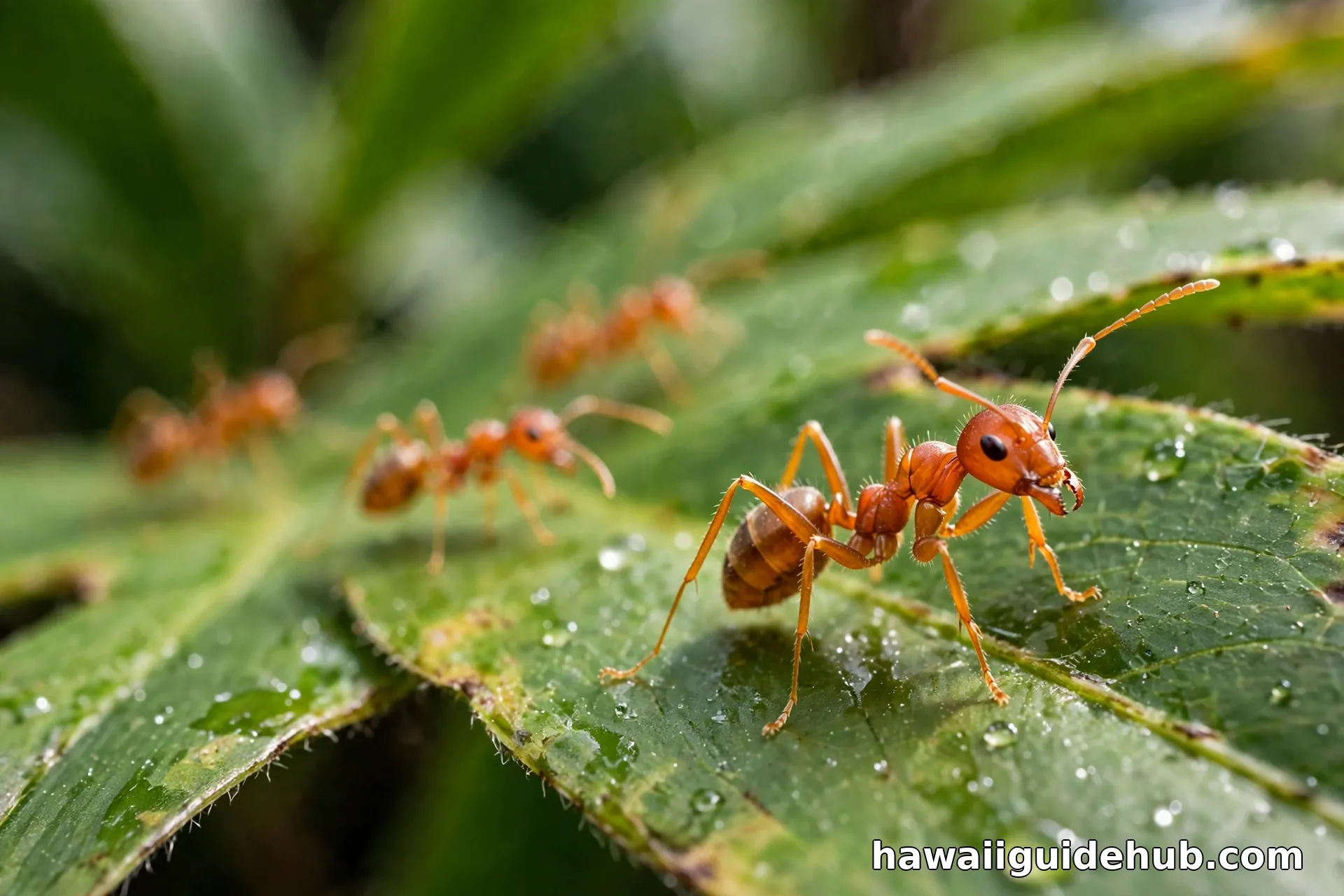
The little fire ant (Wasmannia auropunctata) is considered one of the world’s worst invasive species, and Hawaiʻi is living through its spread. These ants are tiny, orange, and just 1/16 of an inch long, but they form supercolonies of millions of stinging ants. Unlike the tropical fire ant, a ground-nester present since the 1800s, little fire ants climb trees and vegetation and drop onto people and animals below. Their stings cause painful, itchy welts that can last for weeks, and stings to pets’ eyes can cause injuries leading to blindness.
First introduced to Puna on the Island of Hawaiʻi in 1999, and soon after to Kauaʻi, little fire ants have since hitchhiked to Maui, Lānaʻi, and Oʻahu, where a January 2014 detection triggered a multi-agency response. There are no native ants in Hawaiʻi, so nothing in the ecosystem pushes back. The Hawaiʻi Ant Lab and the island Invasive Species Committees treat infestations property by property, and they depend on residents and visitors to report stinging ants. October is Stop the Ant Month statewide, when agencies urge everyone to collect and submit ants from their property for identification, with free collection kits available through stoptheant.org.
Rapid ʻŌhiʻa Death
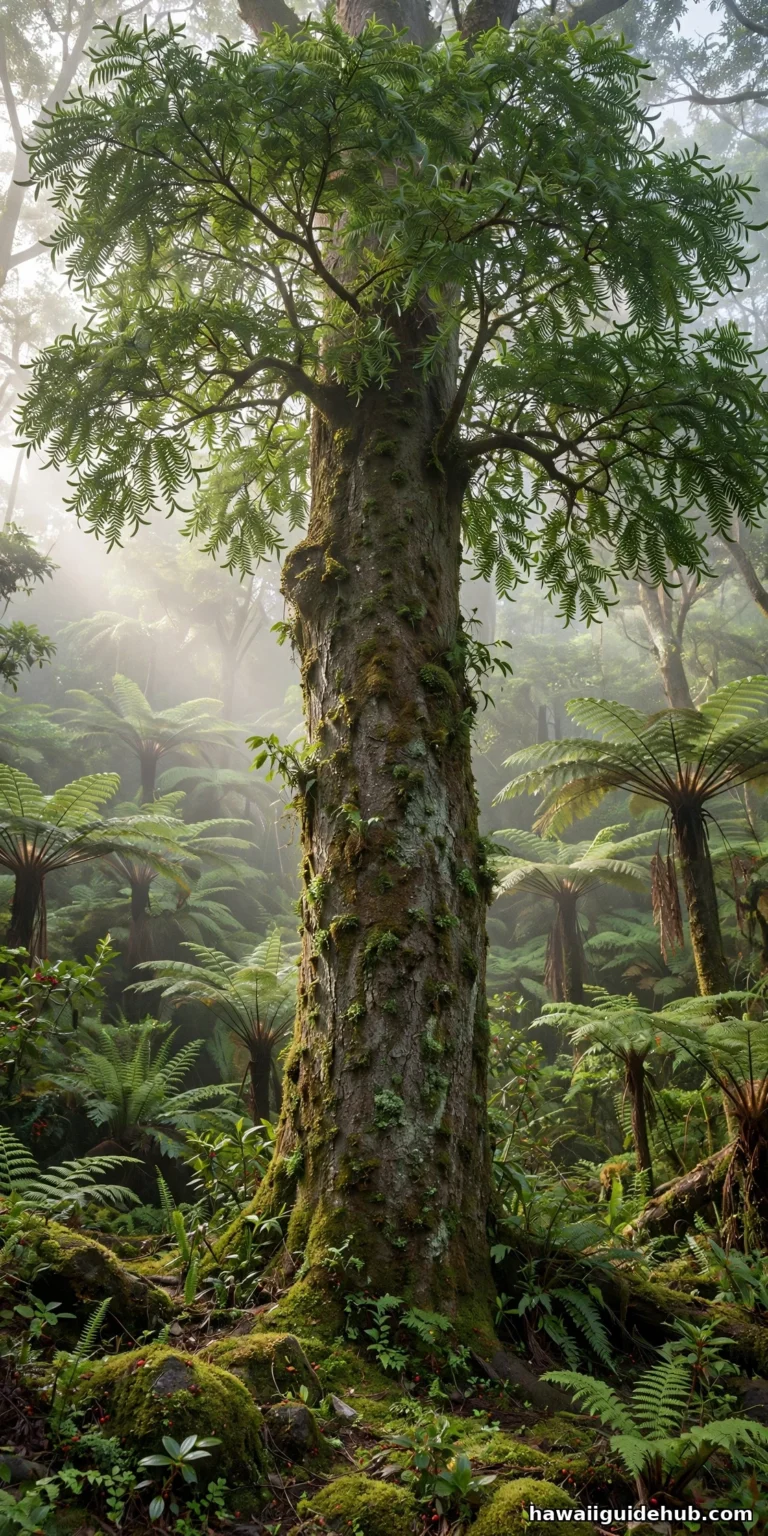
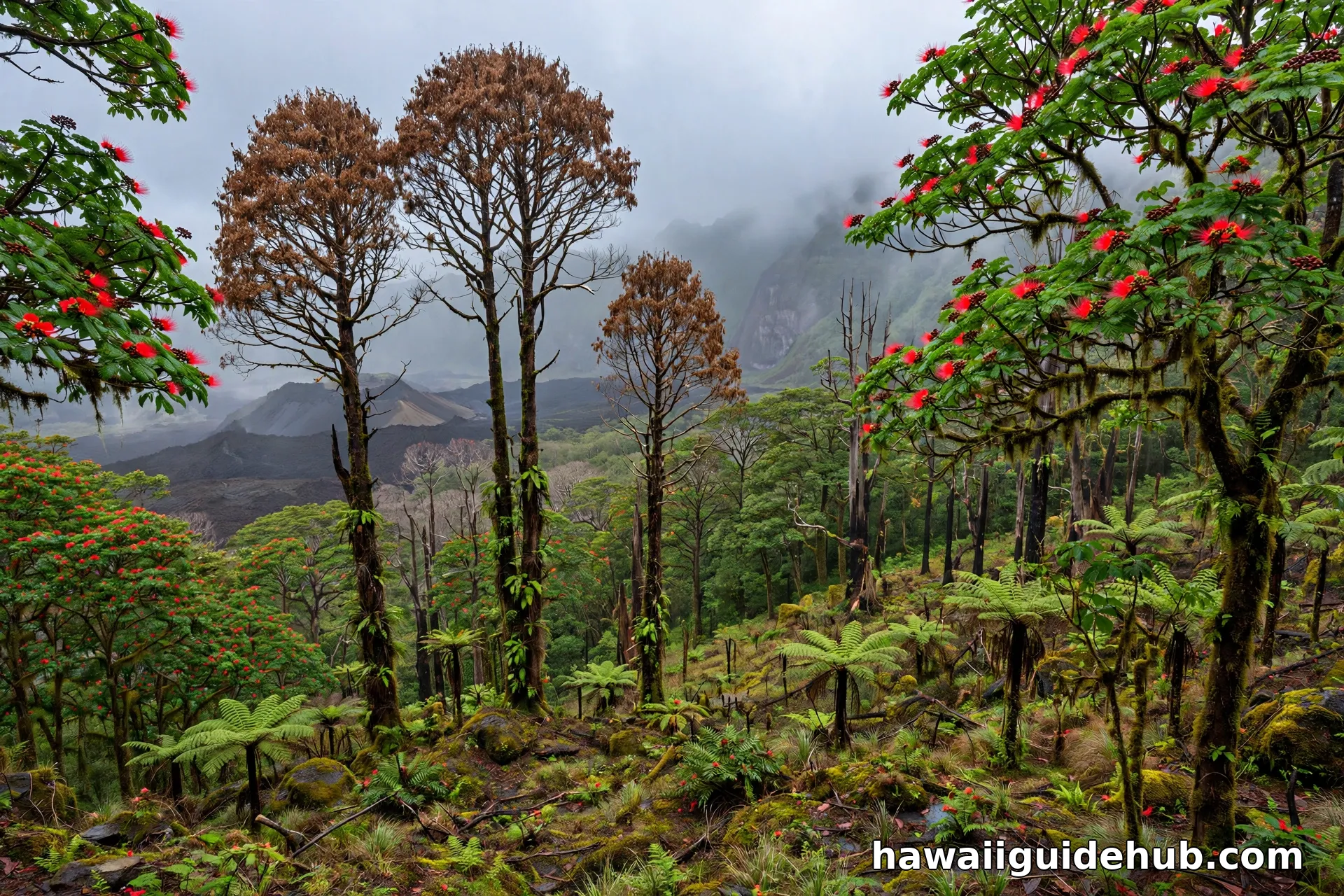
ʻŌhiʻa lehua is the backbone of Hawaiʻi’s native forests, covering nearly a million acres and sheltering the honeycreepers and other forest birds. Rapid ʻŌhiʻa Death, caused by two non-native Ceratocystis fungi, blocks the tree’s vascular system, and once symptoms appear, brown leaves, black staining in the wood, a fruity odor in cut wood, death often follows within months. The U.S. Forest Service reports the disease has killed more than a million ʻōhiʻa trees, mostly on the Island of Hawaiʻi, with detections on Maui, Oʻahu, and Kauaʻi. There is no known cure.
The fungi enter through wounds, so the single most important rule is to avoid injuring ʻōhiʻa: do not cut the trees, do not drive over roots, and clean tools, boots, and gear before entering native forest. Do not move ʻōhiʻa wood, plants, or soil between islands. Hikers who brush mud off their boots before and after a trail are directly protecting the forest, and Hawaiʻi Volcanoes National Park asks every visitor to follow decontamination steps at trailheads in ʻōhiʻa country.
Coconut rhinoceros beetle
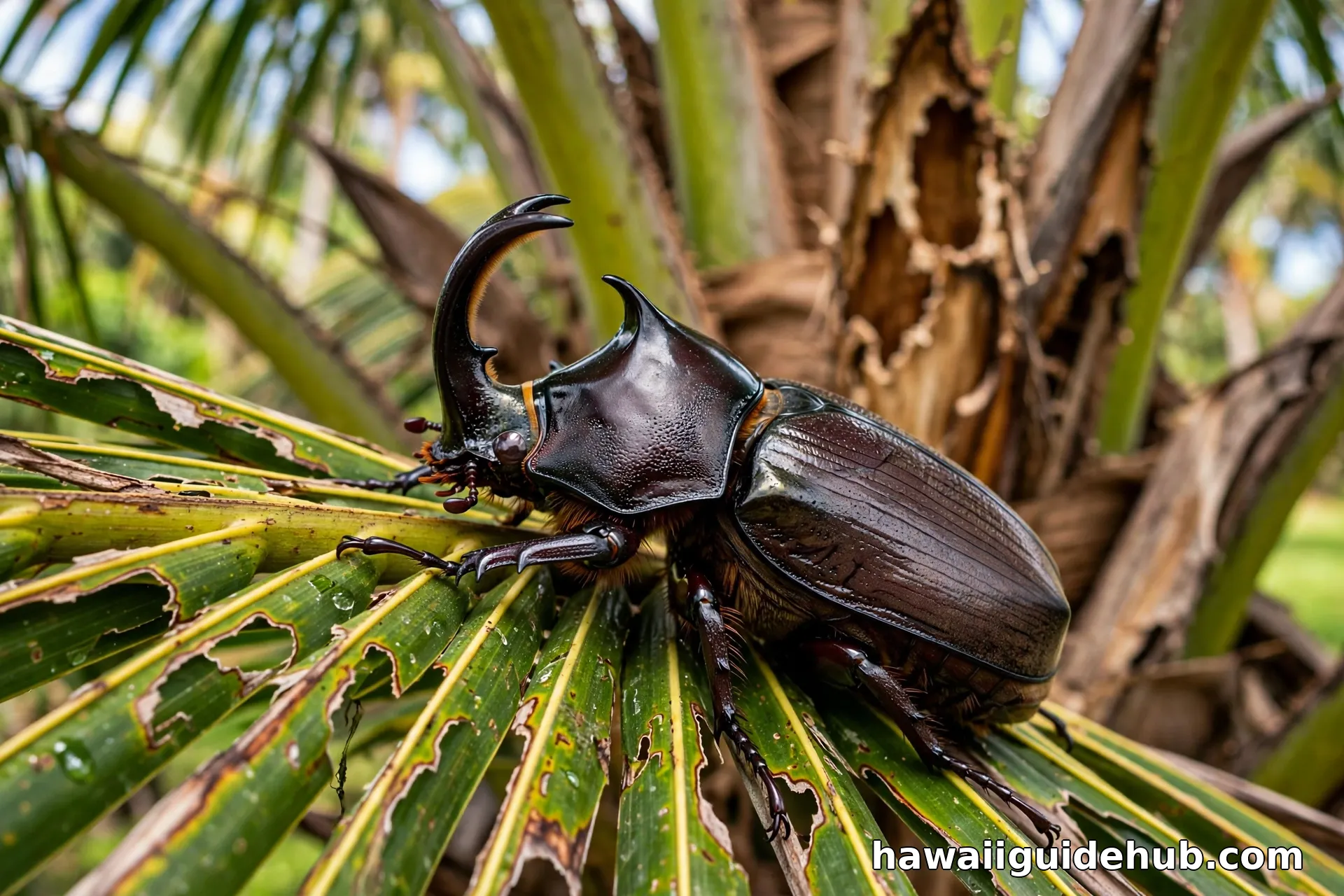
The coconut rhinoceros beetle bores into the crowns of coconut palms, killing the trees and threatening native palms and crops. The Hawaiʻi Invasive Species Council lists it alongside little fire ants and coqui frogs as a top threat to ecosystems, farms, and food security. The beetles breed in mulch, compost, and green waste, which means landscaping material and yard debris can move them to new areas. The state’s response includes trapping, breeding-site removal, and public reporting of damaged palms and beetle sightings.
Coqui frogs
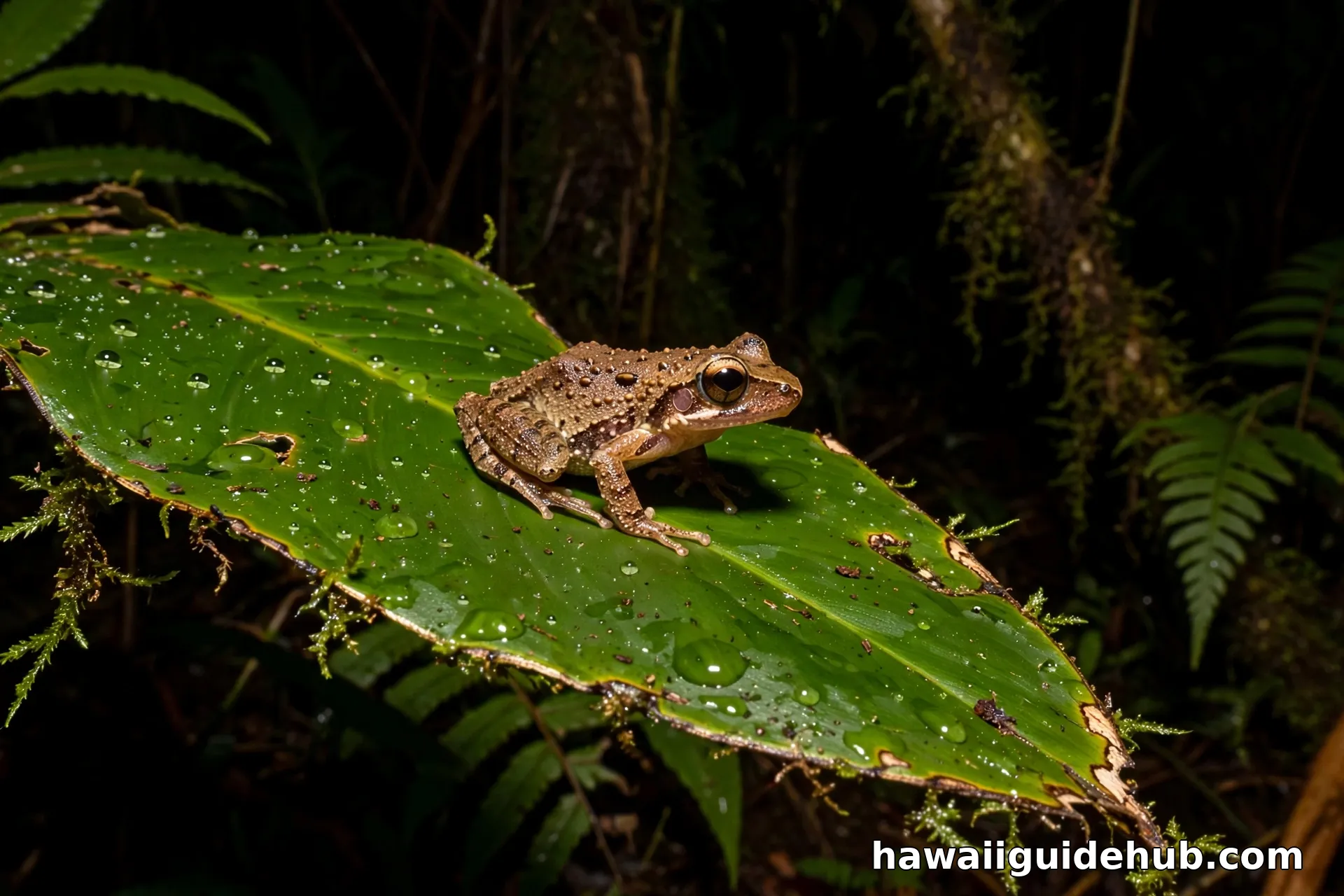
The coqui frog arrived from Puerto Rico hidden in nursery plants, and on quiet nights its two-note call, ko-kee, can reach noise levels that disturb sleep and depress property values in infested neighborhoods. Beyond the noise, coqui frogs devour huge numbers of native insects, competing directly with native birds and the insects that pollinate native plants. Control focuses on catching new populations early: a single calling male can reveal an infestation, and hotline reports of the distinctive call have led to successful eradications on several islands.
Invasive plants: miconia, strawberry guava, fountain grass
Plants can be just as destructive as animals. Miconia, called the green cancer, shades out everything beneath its giant leaves, and a single tree produces millions of seeds. Strawberry guava forms dense thickets that displace native forest and its fallen fruit feeds feral pigs, which then spread more weed seeds in their droppings. Fountain grass and other fire-adapted African grasses have transformed dry landscapes: native Hawaiian plants never evolved with frequent fire, so grass-fueled wildfires convert native dry forest into permanent grassland. Protecting native Hawaiian plants means keeping these invaders out of the remaining forests.
The ones being kept out: brown tree snake
The brown tree snake is not established in Hawaiʻi, and the state intends to keep it that way. On Guam, this nocturnal snake wiped out most of the island’s native forest birds, and a single breeding population in Hawaiʻi could do the same. Every cargo flight and ship from Guam is subject to snake inspections, with detector dogs working ports and airports. It is the clearest example of Hawaiʻi’s prevention-first strategy: stopping an invasion is enormously cheaper than fighting one after it arrives.
How Invaders Arrive
Nearly everything arrives with people and cargo. Nursery plants carry coqui frogs and little fire ants in their soil. Construction equipment, vehicles, and landscaping mulch move ants, beetles, and weed seeds between islands. Produce and cut flowers can harbor fruit flies and other pests. Pets released or escaped into the wild, from parrots to chameleons to aquarium fish, found new populations. Even hiking boots and camping gear carry fungal spores and weed seeds between islands.
Inter-island movement is the critical weak point. A pest established on one island can reach the others in a potted plant, a load of gravel, or a Christmas tree. That is why agricultural inspectors work at airports and harbors, why moving plants, fruit, and soil between islands is restricted, and why the state asks travelers to declare agricultural items. Hawaiʻi’s biosecurity only works if the ocean gaps between islands stay as effective as they were for millions of years.
The Fight Back
Hawaiʻi’s response is coordinated through the Hawaiʻi Invasive Species Council, a cabinet-level interagency body, with an Invasive Species Committee on each major island doing the fieldwork: surveying, treating infestations, and running public outreach. The Hawaiʻi Ant Lab researches and tests ant control methods. The Department of Agriculture runs pest quarantines and detector-dog programs. Community groups and watershed partnerships fence forests, remove weeds, and replant natives across hundreds of thousands of acres.
Early detection is the whole game, and most new detections come from ordinary people. The statewide pest hotline, 643-PEST, takes reports of anything suspicious, from a strange ant to an unfamiliar frog call to a damaged palm. Free ant collection kits from stoptheant.org let anyone submit ants for professional identification. October’s Stop the Ant Month and year-round volunteer weed pulls turn residents and visitors into the surveillance network the islands depend on.
How You Can Help as a Visitor
Visitors are part of Hawaiʻi’s biosecurity, and the asks are simple. Clean your hiking boots, gear, and camping equipment before and after every hike, and especially before flying between islands. Stay on marked trails to avoid carrying weed seeds and fungal spores into pristine areas. Never release pets, aquarium fish, or plants into the wild, and never move plants, fruit, flowers, or soil between islands. Buy local nursery plants only from reputable sources, and leave firewood and mulch where you found it.
If something seems wrong, report it. A frog calling where frogs should not be, ants raining stings from a tree, a palm crown chewed from the inside, or an unfamiliar snake: call 643-PEST. Take a photo if you can do so safely, note the location, and let the professionals handle it. On hikes and outdoor adventures across the islands, the boot brush at the trailhead is not decoration. Use it, and you are directly defending the forests you came to see. For the ocean side of the story, our guide to Hawaiʻi’s marine ecosystems covers the aquatic invaders too.
This 30-minute documentary from the Maui Invasive Species Committee and the Hawaiʻi Invasive Species Council follows the spread of the little fire ant and the people working to stop one of the most serious invasive species problems in the islands.
Frequently Asked Questions
What is the most dangerous invasive species in Hawaiʻi?
There is no single answer, because different pests threaten different things. Little fire ants are the most immediate threat to people, pets, and backyards. Rapid ʻŌhiʻa Death is the greatest threat to native forests. The coconut rhinoceros beetle threatens palms and agriculture. State agencies treat all of them as top priorities.
Are there any native ants in Hawaiʻi?
No. There are no native ants in Hawaiʻi. Every ant species in the islands arrived with people, which is why the state runs aggressive detection and control programs and why October is Stop the Ant Month.
Can tourists bring plants or fruit between the Hawaiian Islands?
Generally no, or only with inspection and permits. Moving plants, fruit, flowers, and soil between islands can spread little fire ants, coqui frogs, plant diseases, and weed seeds. Agricultural restrictions apply at inter-island airports and harbors, so declare agricultural items and buy plants locally from reputable nurseries.
What should I do if I get stung by little fire ants?
Leave the area, brush the ants off, and wash the skin. The stings cause painful, itchy welts that can last for weeks. Note the location and report it to 643-PEST or your island’s Invasive Species Committee so the infestation can be treated. Do not try to treat a large infestation yourself.
Is Rapid ʻŌhiʻa Death a threat to visitors?
The fungus does not infect people or animals. The threat is to the forests. Visitors help by not wounding ʻōhiʻa trees, cleaning boots and tools before entering native forest, and never moving ʻōhiʻa wood or soil between islands.
Invasive species are the single greatest threat to the Hawaiʻi that visitors fall in love with: the forests, the birdsong, the reefs, and the beaches. The islands’ isolation created a world of species found nowhere else, and that same isolation makes every new arrival potentially catastrophic. The good news is that Hawaiʻi’s fight is organized, science-driven, and open to everyone. Report what you see, clean what you carry, and leave the islands’ ecosystems a little safer than you found them, one careful choice at a time.