Waimea Bay Beach Park: Oʻahu’s North Shore Playground of Calm Summers and Giant Winter Surf

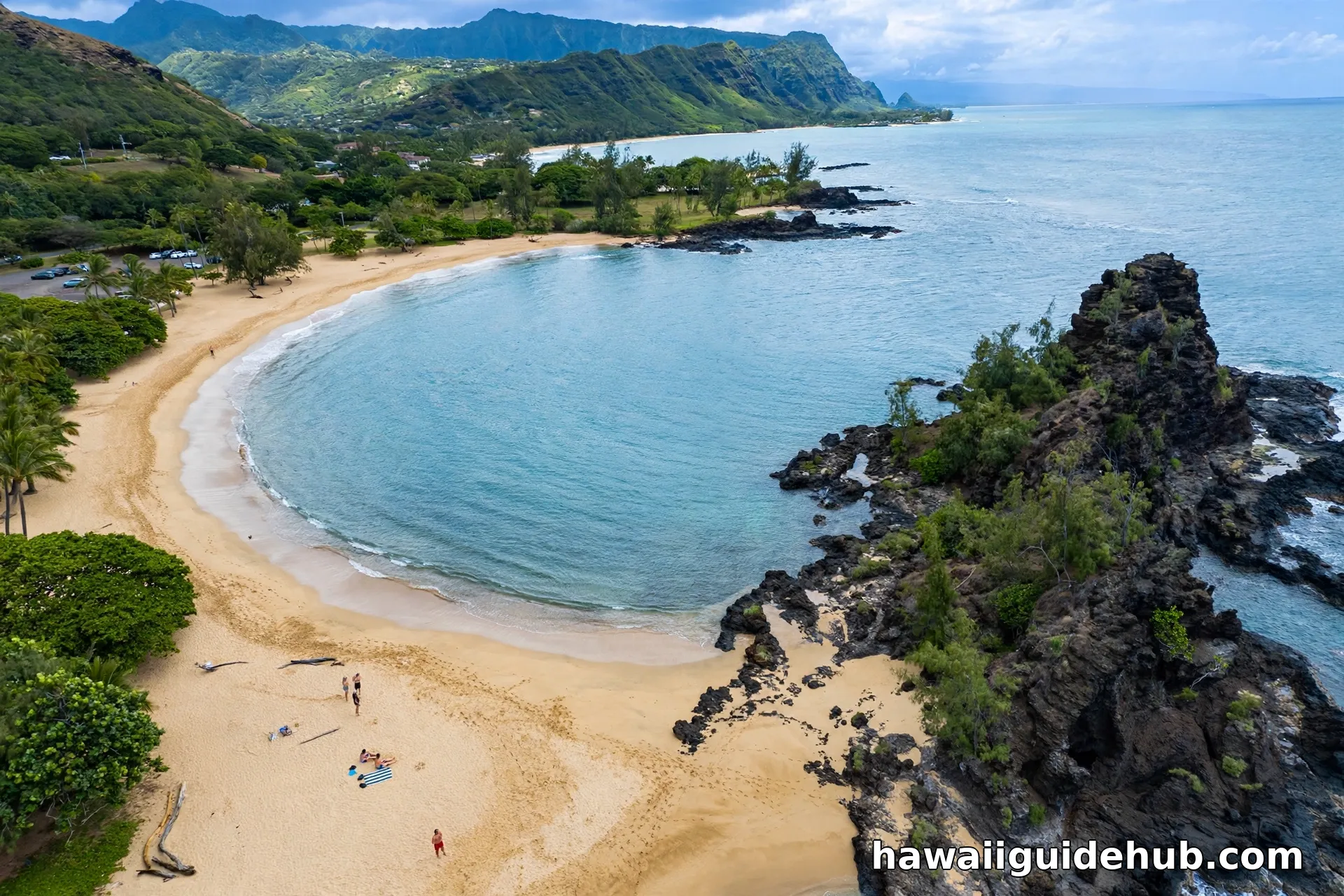
Few beaches in Hawaii show two personalities as dramatically as Waimea Bay. From roughly April through October, it is a postcard of calm: a wide crescent of golden sand, glassy turquoise water, and a lava rock in the middle of the bay that kids and grown-ups line up to jump off. Then winter arrives, the Pacific starts firing, and the same bay turns into one of the most powerful big wave stages on the planet, where 30-foot faces roll in and the best surfers in the world wait all season for one call: The Eddie.
Waimea Bay Beach Park sits on Oʻahu’s North Shore at the mouth of Waimea Valley, and it belongs on any North Shore day trip. This guide covers everything you need to plan a visit: directions and parking, what summer and winter each bring, the famous rock jump, snorkeling, lifeguard and safety details, park rules, and the nearby stops worth pairing with it.
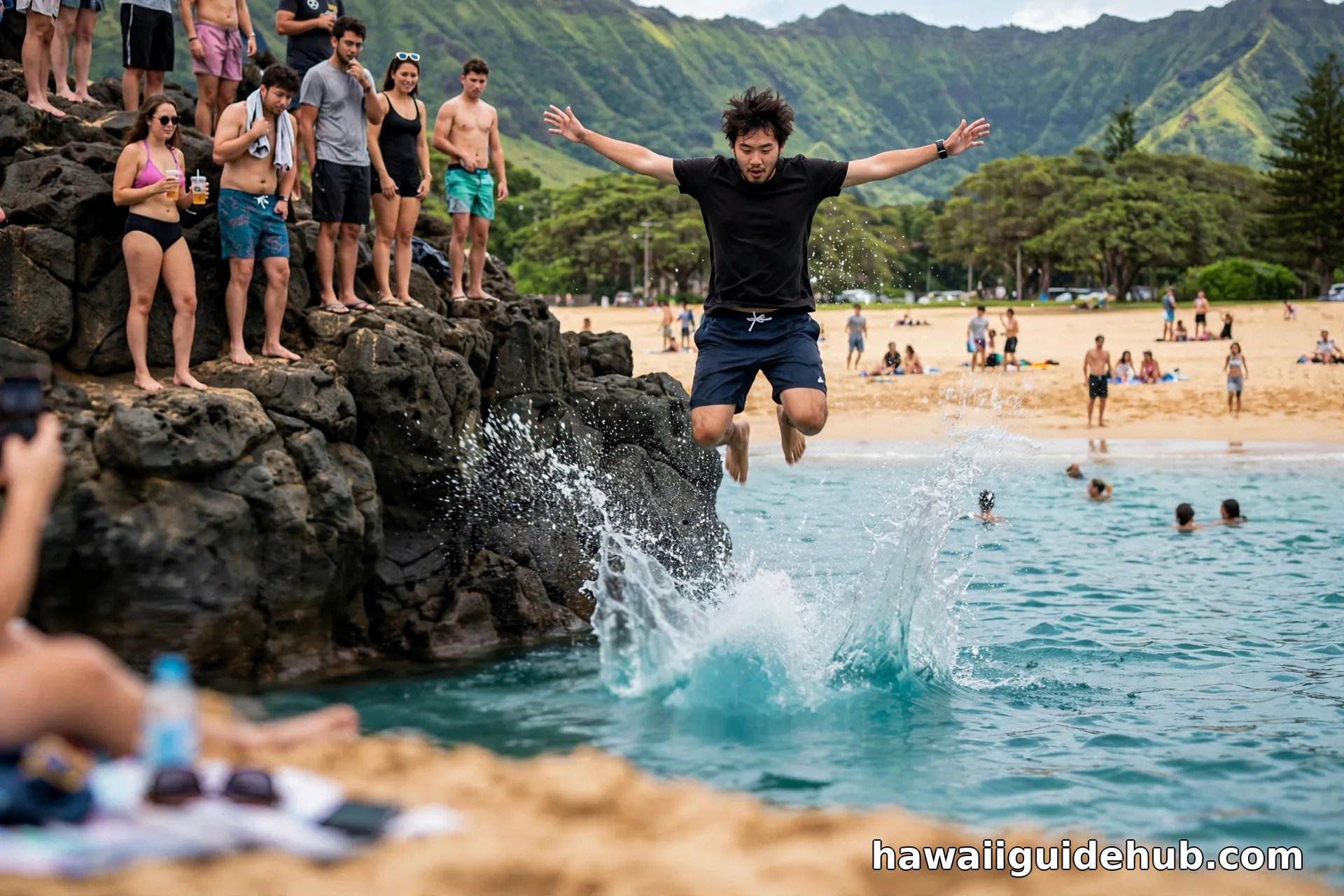
The Two Faces of Waimea Bay
To understand Waimea Bay, you have to think of it as two different beaches sharing one shoreline. The bay is deep, with no shallow reef out front and a bottom that drops off quickly a few steps from the sand. That shape is what makes the summer so good and the winter so serious.
In summer, with the north Pacific quiet, the bay lies flat and protected. Swimming is excellent, often the best on the entire North Shore, because the deep water stays clear and the waves roll in gently. Snorkelers fan out around the rocky edges, families claim spots near the middle of the sand, and the rock jump becomes the center of attention. On a calm summer morning, Waimea Bay is one of the most relaxing places on the island.
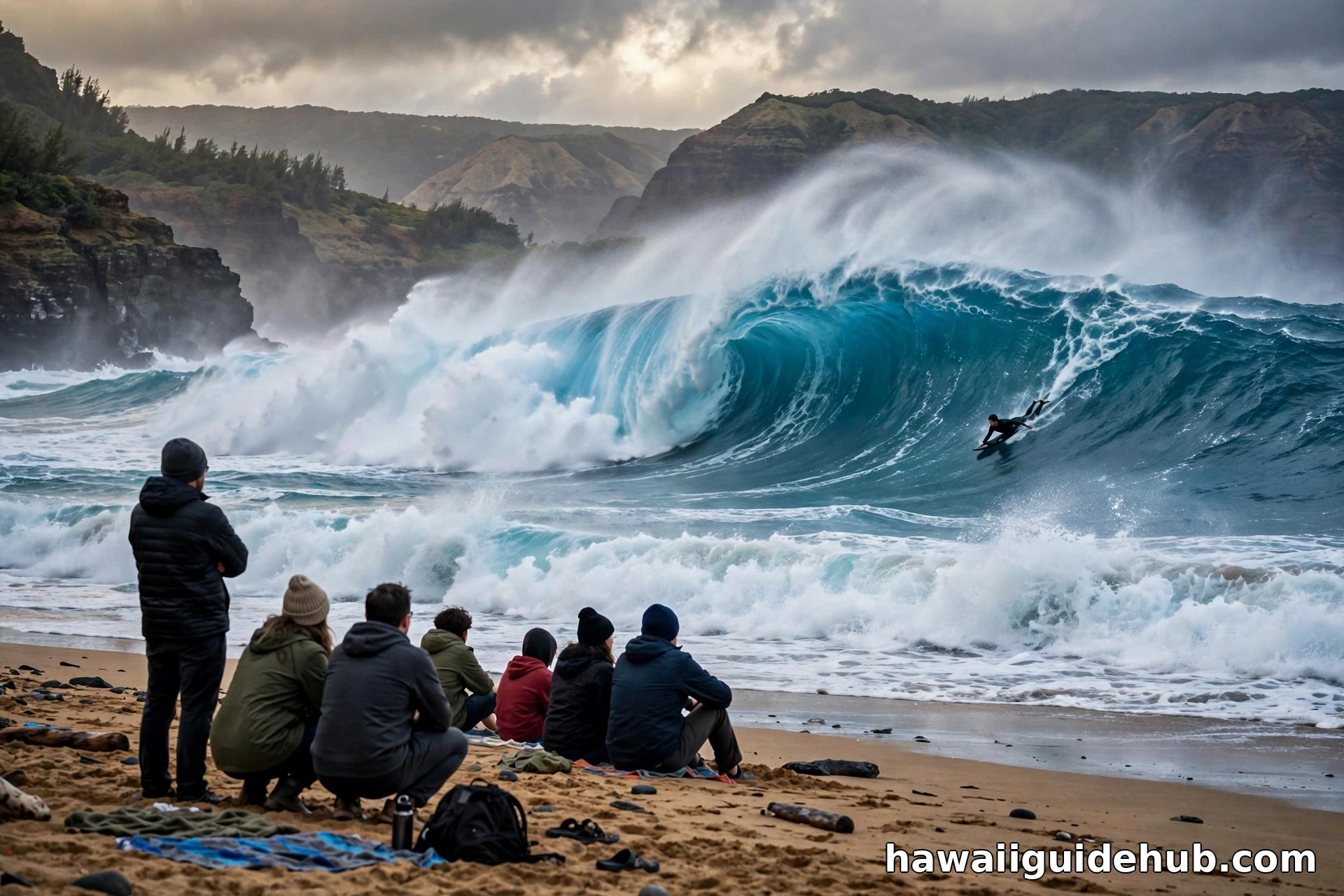
In winter, typically November through March, long-period swells generated by North Pacific storms march straight into the bay. Waves of 20 to 30 feet are normal during a solid swell, and on the biggest days the faces can reach 40 feet. The shorebreak turns brutal, currents rip along the beach, and the park becomes a spectator venue. Lifeguards post flags and warnings along the sand, and during the heaviest surf the beach can be closed to swimming entirely. This is when the crowds come to watch, not to swim.
The takeaway is simple: check the surf before you go, and let the season decide your plan. Summer means swimming and snorkeling. Winter means watching some of the heaviest waves on Earth from a safe distance.
Getting There: Directions and Parking
Waimea Bay Beach Park is at 61-031 Kamehameha Highway in Haleiwa, about a 45 to 60 minute drive from Waikiki depending on traffic. Type “Waimea Bay Beach Park” into your navigation and it will take you straight there.
From Waikiki, the fastest route is usually up the middle of the island: take the H-1 west to the H-2 north, then follow the signs toward the North Shore on Kamehameha Highway. If you prefer scenery, take the coastal route through Kāneʻohe and around the eastern point, which follows the ocean most of the way but adds time. Either way, the park entrance is on the ocean side of the highway, right where the road bends around the bay.
Parking is the part that catches visitors off guard. The main lot is free, but it is small, and on a good beach day it fills up by 9 or 10 in the morning. If the lot is full, do not park on the highway shoulder where it is posted no parking; you risk a ticket or a tow. Legal backups include roadside parking further up, Waimea Valley across the street for a fee, or Three Tables with a walk along the roadside path. The honest advice: arrive early. Before 9 AM on weekends is the safe move, and weekdays are noticeably easier.
Summer at the Bay: Swimming, Snorkeling and the Rock Jump
From late spring through early fall, Waimea Bay is one of the finest swimming beaches on Oʻahu. The water is deep and clear, the sand is soft, and the bay’s shape keeps the small summer swells gentle. Families spread out across more than 300 yards of sand, and there is room to find your own space even on a busy day.
Swimming here is straightforward on a calm day, but respect the ocean anyway. The bottom drops off quickly, so non-swimmers and small children should stay close to shore and never swim alone. The lifeguards are on duty every day, and their flags and announcements tell you the conditions of the moment. If the lifeguards say stay out, stay out. Conditions can change with a new swell even in summer.
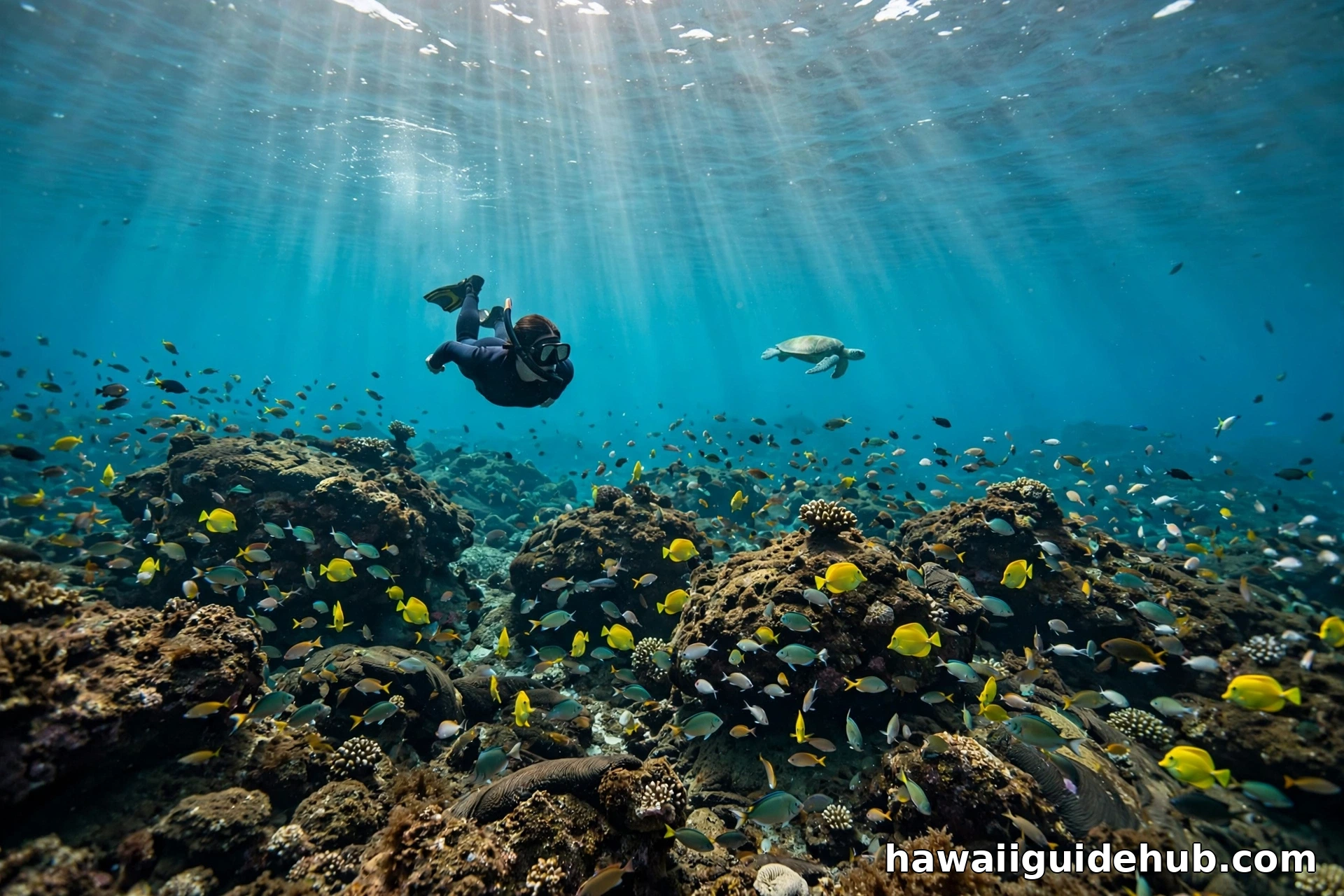
Snorkeling is excellent when the water is calm and clear. If you are new to reef etiquette, read our sea turtle and snorkeling etiquette guide before you go in. The best ground is along the rocky edges of the bay, where fish gather around the lava rock. You will commonly see schools of reef fish, and green sea turtles cruise the bay on many summer days. Bring your own gear, since there are no rental stands on the sand, and use reef-safe sunscreen to protect the marine life you came to see.
The Famous Rock Jump
The big lava rock sitting in the middle of the bay is one of the most jumped-off rocks in Hawaii. Locals call it Da Big Rock or Jump Rock, and on a calm summer afternoon there is often a line of people climbing it, pausing at the top, and leaping into the deep water below.
How High Is the Jump
The rock rises about 25 to 30 feet above the water, and the height shifts a bit with the tide. The water below is sandy and roughly 10 to 20 feet deep at the landing zone, which is why this jump is manageable for confident swimmers and a genuine thrill for everyone else. There are lower spots on the rock if the full height feels like too much, and plenty of people work their way up over a few visits.
Climbing Up and Jumping Smart
The climb starts from the shore side of the rock, and the lava can be slippery and sharp in spots. Go barefoot or in water shoes you do not mind losing, take your time, and watch how others climb before you go. Once on top, check where the jumpers ahead of you are landing and wait your turn. Jump feet first, keep your body straight, and plug your nose or cross your arms if you need to. Then swim clear of the landing zone right away so the next person can jump.
A few honest rules: only jump when the water is calm and the lifeguards are comfortable with it. Never jump in winter surf or when the lifeguards have posted warnings. Ask the lifeguards about the current conditions before you climb up. They watch this rock every day and will tell you straight whether it is a good jumping day.
Winter at the Bay: Big Wave Season and The Eddie
When the first big northwest swells of the season arrive, usually in November, Waimea Bay changes character completely. Waves that look like small hills from the parking lot rear up into 20 and 30 foot faces, and the shorebreak pounding the sand is powerful enough to injure. Swimming is off the table on big days, and even walking near the waterline demands attention. This is spectacle season, and the bay handles it beautifully as long as you watch from dry sand.
The bay’s fame as a big wave venue centers on the Eddie Aikau Big Wave Invitational, held in honor of Eddie Aikau, the legendary surfer and waterman who was the first lifeguard hired for Oʻahu’s North Shore. The contest only runs when Waimea Bay produces a full day of giant surf, with wave faces around 40 feet, so it has been held just 11 times in more than 40 years. The most recent running was on December 22, 2024, won by North Shore native Landon McNamara. Before that, local lifeguard Luke Shepardson won in January 2023, and John John Florence won in February 2016.
The 2025 to 2026 season did not run, because the required giant swell never arrived during the December to March holding period. That rarity is part of what makes The Eddie special: when the call finally comes, tens of thousands of people pack the beach and the hillsides, and the whole surf world watches one day of the heaviest waves ever surfed in competition.
If you visit during a winter swell, bring binoculars, keep a respectful distance from the water, and never turn your back on the ocean. The lifeguards will tell you where it is safe to stand.
Parking, Facilities and Park Rules
Waimea Bay Beach Park is a City and County of Honolulu park, open daily from 5 AM to 10 PM. Entry is free. The park has restrooms, outdoor showers, picnic tables, barbecue grills, and a sand volleyball court. There is some shade from the trees behind the sand, but the beach itself is mostly open, so bring an umbrella or canopy if you plan to stay through midday.
A few rules worth knowing before you go. Alcohol is not allowed in city beach parks, and that rule is enforced. Dogs are allowed on leash. Pack out everything you pack in, since the park’s beauty depends on visitors treating it well. Drones are a gray area best avoided on crowded beach days, and commercial activity requires permits.
One more practical note: across the highway sits Waimea Valley, a separate paid attraction with a botanical garden, cultural sites, and a waterfall swim. It is a natural pairing for a Waimea Bay day, but it has its own admission and its own rules. Plan it as a second stop, not part of the beach visit.
Safety: Reading the Ocean Before You Get In
Waimea Bay rewards visitors who read the ocean first. Start at the lifeguard tower: check the posted flags, read the warning signs, and ask the guards about the day’s conditions. Lifeguards are on duty daily, generally from 8 AM to 6:30 PM, and they would rather answer a question than make a rescue.
Know the seasonal hazards. In winter, the shorebreak and rip currents are the real dangers, and even strong swimmers stay out when the surf is up. In summer, the main cautions are the quick drop-off near shore and the river mouth on the right side of the beach. After heavy rain, the Waimea stream flows and the water near the river mouth turns brown and murky, with stronger currents. Swim away from the stream mouth on those days, and skip swimming entirely if the water looks dirty.
A few habits that keep every beach day safe: never swim alone, keep children within arm’s reach, and never turn your back on the ocean. If you are caught in a current, stay calm, swim parallel to shore until you are out of it, and signal for help. And when the lifeguards make an announcement, listen. They are watching the whole bay.
Best Time to Visit Waimea Bay
For swimming, snorkeling, and the rock jump, visit between May and September, when the ocean is at its calmest. Mornings are the sweet spot: the wind is light, the water is glassy, parking is easy, and the crowds have not arrived yet. By early afternoon the trade winds pick up and the beach fills in.
For big wave watching, visit between November and March and check the surf forecast before you drive out. The North Shore’s surf forecasts are reliable several days out, so you can time your visit for a real swell. Arrive early on big days, because the whole island seems to have the same idea.
Shoulder months like April and October can go either way. You might get a calm summer-style day or an early winter swell. Check the forecast the morning of your visit and have a backup plan, like Waimea Valley or the shops in Haleiwa town, in case the ocean has other ideas.
Things to Do Nearby
Waimea Bay anchors a stretch of the North Shore packed with stops. Directly across the highway, Waimea Valley offers a paved walk through a botanical garden to a waterfall you can swim under, plus cultural demonstrations. A few minutes west, Three Tables and Sharks Cove offer tide pools and snorkeling on calm days. Head east toward Haleiwa town for shave ice, shrimp trucks, and surf shops, or continue to Sunset Beach and Banzai Pipeline to watch the winter surf from the sand. Our Oʻahu island guide covers the full North Shore loop.
The Ke Ala Pūpūkea bike path runs along the ocean side of the highway from Sunset Beach to Waimea Bay, about 2.8 miles of paved, mostly flat path. It is a lovely summer morning ride or walk, with long ocean views the whole way. Bring water and a hat, because the shade is thin. It is one of the classic outdoor adventures in Hawaii you can do without spending a dime.
Frequently Asked Questions
Is Waimea Bay Beach Park free?
Yes. Entry to the park and the beach is free, and the main parking lot is free as well. Across the street, Waimea Valley is a separate paid attraction.
Can you swim at Waimea Bay in winter?
Sometimes, on calm days between swells, usually along the more sheltered parts of the bay. But when winter surf is running, swimming is dangerous and often prohibited by the lifeguards. Always check conditions and obey posted warnings.
What time should I arrive to get parking?
Aim for before 9 AM, especially on weekends and holidays; the small free lot fills fast.
See Waimea Bay on Video
Watch the bay in both its moods, from glassy summer mornings to the giants of winter, in this look at Waimea Bay Beach Park.
Waimea Bay is the rare beach that gives you two trips in one. Come in summer for the swim of your life and a leap off the rock. Come in winter to stand on the sand and feel the ground shake as the Pacific unloads. Either way, check the surf, respect the lifeguards’ calls, and you will understand why this bay has drawn people for generations.