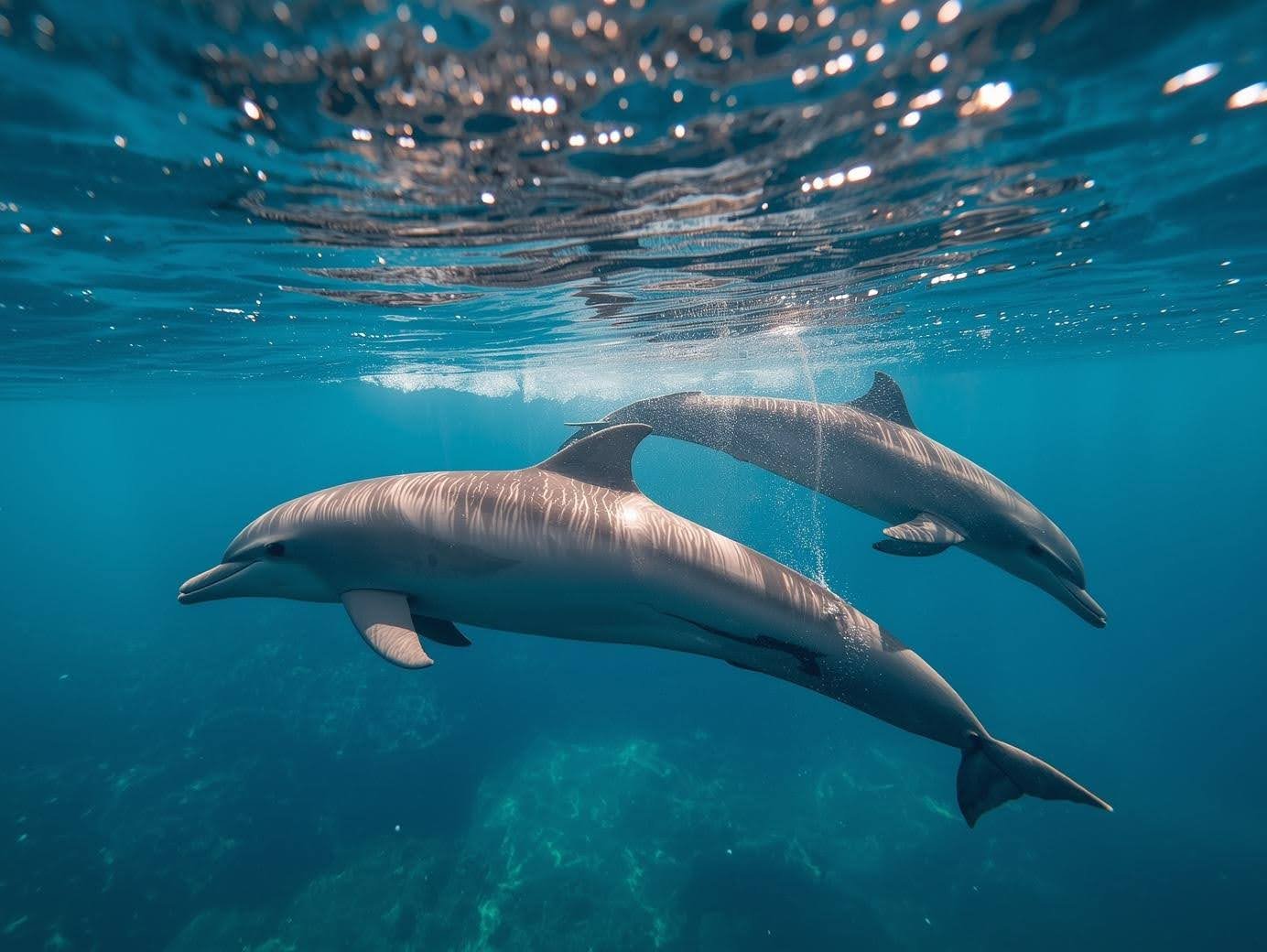
Dolphin Disturbance in Hawaii: Resting Habitat and Conservation

Human activity can change how wild dolphins use their habitat. Around Oahu, the practical conservation question is not how to arrange a closer encounter, but how to avoid interrupting animals that need coastal waters for essential activities. This article explains disturbance, the evidence behind that concern and how to interpret conservation claims.
For the visitor checklist and species-specific viewing requirements, use our responsible dolphin-viewing guide. Here, the focus is the environmental impact of repeated human presence, rather than prices, operators or reservations.
Why spinner dolphins are vulnerable during the day
Hawaiian spinner dolphins feed offshore at night and return to sheltered coastal habitat during the day. Their daily pattern leaves a limited opportunity for rest. People may see dolphins near shore and assume the animals are available for interaction, even when that period is important for recovery from nighttime feeding.
NOAA explains that close approaches can interrupt rest and make dolphins spend energy avoiding people or vessels. Leaving a preferred resting place may also carry costs. Read its explanation of the spinner dolphin protection rule for the management rationale.
A dolphin remaining in a bay does not prove that human activity has no effect. Nor does a jump prove that an animal welcomes an audience. Visible behavior needs context, and an individual visitor sees only a short part of the animal’s day.
What researchers have measured
A 2018 study of spinner dolphins off Hawaii Island recorded human activity within 100 metres during 82.7% of the observed daytime. The median gap between exposure events was ten minutes. These results describe that study population and observation period; they are not a measurement of every Oahu bay today.
The researchers did not detect a resting-behavior response in their analysis, but cautioned that the short gaps between encounters made a genuinely undisturbed comparison difficult. This distinction matters: exposure was documented, while the behavioral interpretation carried uncertainty. It would be misleading to turn that study into a precise claim about Oahu population decline or the effect of a single visit.
Another study of daily behavior off the Kona Coast examined how spinner dolphins divide their activities across time and space. It supports the importance of considering the whole daily routine when managing disturbance. Findings from Hawaii Island help explain a broader concern, but should retain their original geographic scope.
Repeated exposure is different from one encounter
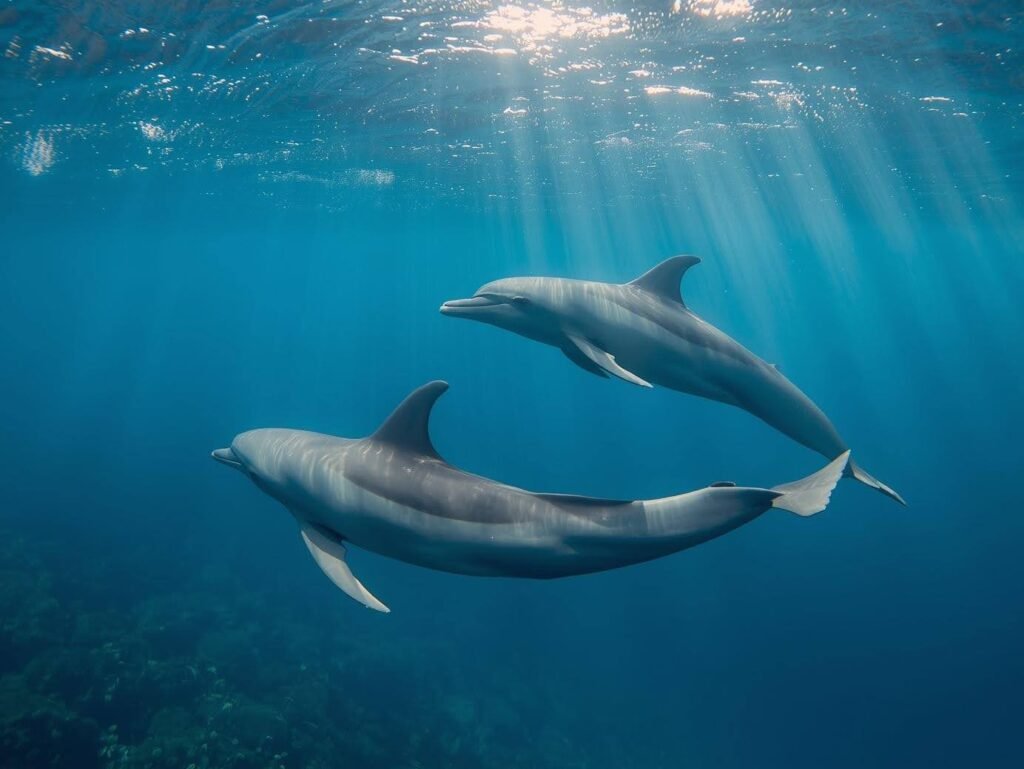
A visitor may watch for a few minutes and then leave, while other people arrive immediately afterward. For the dolphin, those separate visits can form a much longer period of exposure. The relevant question is therefore not only how one person behaves, but whether the animals have an opportunity to remain undisturbed.
Crowding, pursuit, interception and repeated close approaches are avoidable pressures. Keeping a distance is necessary, but a person should not assume that reaching the edge of a permitted distance creates an entitlement to follow an animal indefinitely.
Protection is not a tour-quality label
Hawaiian spinner dolphins have a specific federal protection that prohibits swimming with, approaching or remaining within 50 yards in the covered waters. General marine mammal protections also apply. A commercial description such as “eco-friendly” or “educational” does not create an exception. Check NOAA’s current species and regulation information for the scope of the rule.
This article previously referred to a “SAFE” certification attributed to NOAA and Dolphin SMART. That claim was not substantiated and has been removed. NOAA describes Dolphin SMART as a voluntary recognition and education program; it is not permission to approach protected dolphins or an assurance that any encounter is harmless.
Separate evidence from marketing claims
A claim that an activity supports conservation needs an identifiable basis. Useful questions include which research or conservation organization is involved, what work is being done and whether results are available. A donation claim does not by itself demonstrate that the activity avoids disturbance.
Be equally careful with broad biological claims. Explaining that dolphins are predators does not establish exactly what would happen to a local food web if their numbers changed. Effects depend on the species, prey, place and other pressures. Conservation arguments are stronger when they distinguish observed changes, plausible mechanisms and remaining uncertainties.
Reduce disturbance without entering the water
Observe from a lawful shore location or from a vessel operating within applicable rules. Use binoculars or zoom rather than pursuing animals, and accept that there may be no sighting. Do not feed, touch, chase or enter the water to meet dolphins. Follow NOAA’s Hawaii wildlife-viewing guidance, including its advice to limit viewing time.
If a situation appears harmful, avoid joining the crowd or moving closer to document it. Use the reporting instructions on NOAA’s page and provide observations from a safe position. Do not attempt to handle, free or rescue an animal yourself.
Keep species and topics distinct
Spinner dolphin resting ecology should not be applied automatically to every dolphin species. Our dolphin behavior guide discusses behavioral context, while the bottlenose dolphin profile focuses on that species. For a broader view of the habitat they use, continue to our Hawaii marine-ecosystems guide.