The Complete Guide to Moray Eels: All the Information You Need

Moray eels are some of the most interesting but least understood animals in the ocean. These amazing fish have fascinated people for hundreds of years because of their snake-like bodies, strong jaws, and mysterious nature. Moray eels are important to marine ecosystems all over the world, from Hawaii’s shallow coral reefs to the deep waters of the Indo-Pacific. They also have an air of mystery that fascinates and scares divers everywhere.
This detailed guide covers all aspects of moray eel biology, behavior, and ecology. If you’re going diving, want to learn more about marine life, or just want to know more about these strange creatures, you’ll find out the truth behind common myths and get a better understanding of their complicated world.
To really understand moray eels, you need to look past their scary reputation. These ancient predators have evolved sophisticated hunting strategies, complex social behaviors, and remarkable adaptations that make them perfectly suited to their underwater realm.
What Are Moray Eels?
Moray eels are part of the Muraenidae family, which has more than 200 species of marine eels that live in oceans all over the world. These creatures look like snakes, but they are actually fish. They have all the traits that make them fish, but they also have some unique adaptations that make them different from other marine species.
Physical Traits
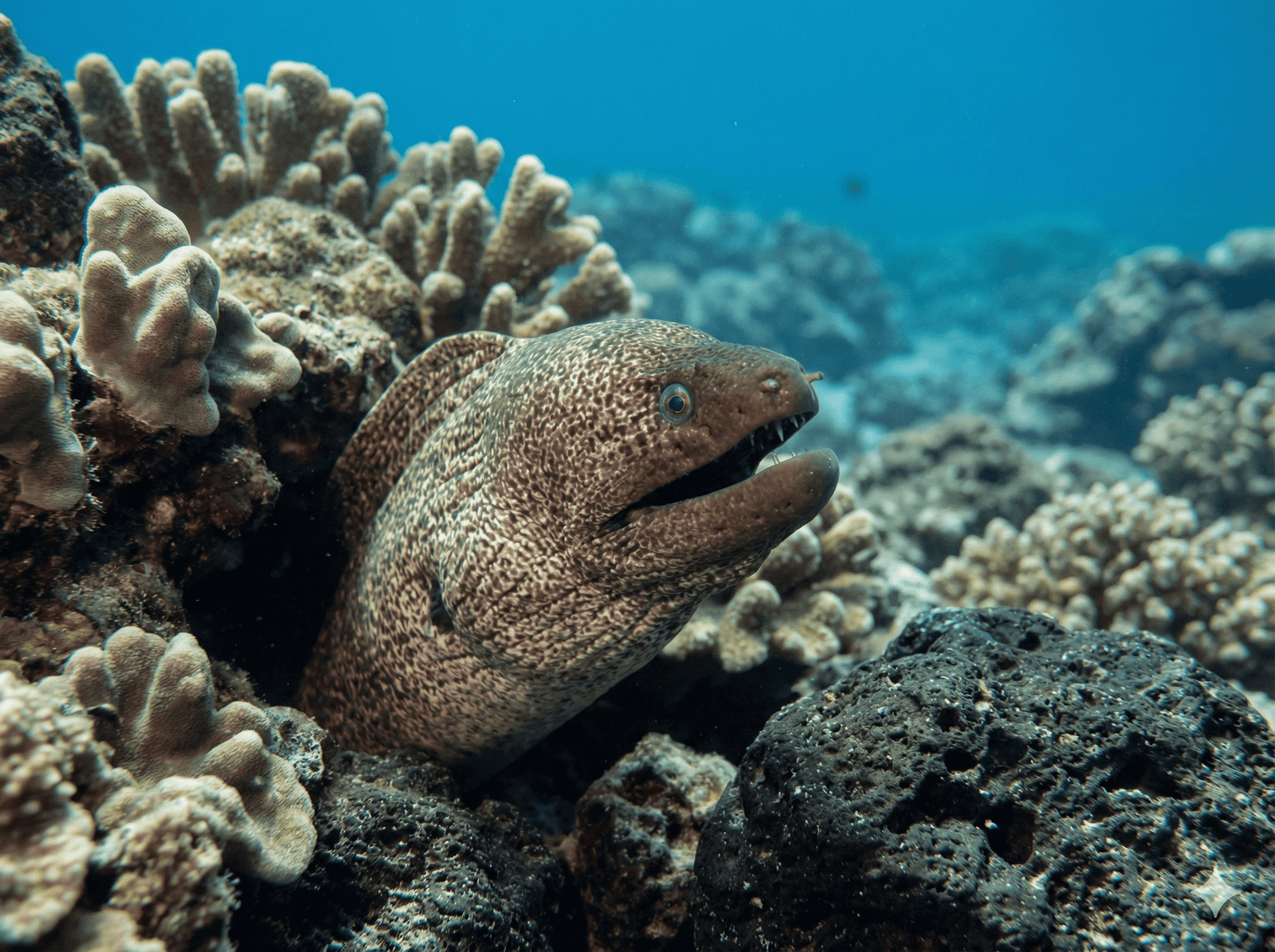
The moray eel’s distinctive body shape immediately sets it apart from other fish. Their long, strong bodies don’t have pectoral or pelvic fins, which gives them their snake-like look. Morays don’t have scales; instead, they have smooth skin covered in mucus that helps them move through tight spaces and rocky formations.
Their most striking feature is undoubtedly their powerful jaw structure. Moray eels have two sets of jaws: the main oral jaws that they use to grab prey and the pharyngeal jaws that are in their throats. This double-jaw system lets them catch and eat prey very quickly, making them very dangerous predators in the ocean.
Size Variations Across Species
The size of moray eels can be very different depending on the species. The smallest species, such as the dwarf moray eel, reach only a few inches in length as adults. The giant moray eel, on the other hand, can grow to be 10 feet long and weigh more than 65 pounds. Most species fall in between these two extremes and are usually 2 to 4 feet long as adults.
The giant moray eel is the biggest member of the family and is respected wherever it is found. These big predators can live for a long time and are at the top of the food chain in their reef ecosystems.
Where Do Moray Eels Live?
Moray eels are very adaptable when it comes to where they live, but they clearly prefer warm, tropical, and subtropical waters. Knowing where moray eels live is important for understanding how they act and what role they play in the ecosystem.
Main Habitats
Most moray eel species live in coral reefs. These complicated ecosystems have a lot of places to hide, a lot of prey, and the right conditions for their ambush hunting style. These secretive predators also like rocky reefs, underwater caves, and crevices.
Some species go into different places, like sandy bottoms, seagrass beds, and even areas with mangroves. The fact that moray eels can live in so many different habitats shows how adaptable they are.
Global Distribution
Moray eels live in oceans all over the world, from the tropics to the subtropics. The Indo-Pacific region has the most species diversity. The Red Sea, Hawaiian Islands, Great Barrier Reef, and waters throughout Southeast Asia are home to especially rich populations.
There are also a lot of moray eels in the Atlantic Ocean, from the Caribbean to the Mediterranean Sea. Each area has its own species that have adapted to the local conditions, water temperatures, and food sources.
Adaptations To The Environment
These amazing fish have made a number of changes that help them do well in the places they live. They can fit into tight spaces because they are strong, and they can find prey even in murky water or complete darkness because they have a great sense of smell.
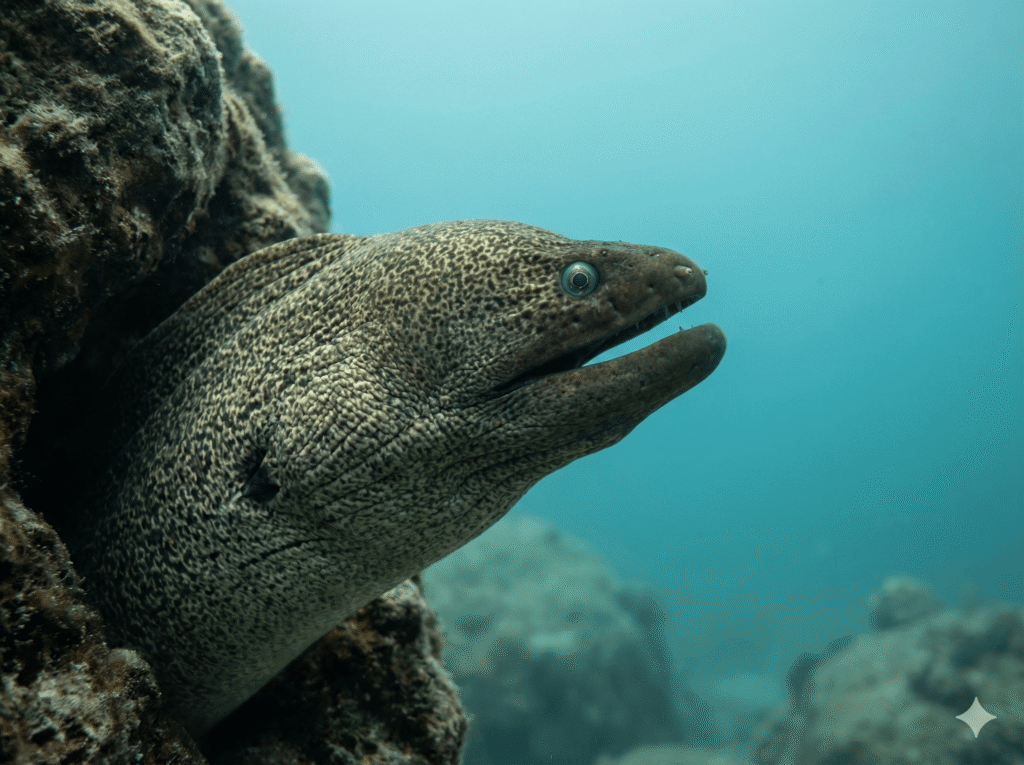
Their continuous gill opening and mouth breathing create the characteristic jaw movement that many divers find intimidating. This behavior is not a sign of aggression; it is necessary for breathing.
What do Moray Eels eat? Their diet and hunting habits.
The moray eel’s diet shows that these animals are skilled opportunistic hunters with advanced ways of catching their prey. Learning about what moray eels eat and how they hunt gives us a better idea of what they do in marine food webs.
Primary Food Sources
Moray eels are strictly carnivorous, with their diet consisting primarily of fish, crustaceans, cephalopods, and other marine organisms. Smaller species focus mainly on crustaceans like crabs and shrimp, while larger species can tackle substantial fish and even octopuses.
The size of the species, where it lives, and how easy it is to find food all affect what they eat. Species that live on reefs often eat small reef fish, while species that live in sandy areas may eat more bottom-dwelling animals like flounders and rays.
Hunting Strategies and Techniques
Moray eels employ an ambush hunting strategy that relies on patience, stealth, and explosive speed. They typically remain hidden in crevices or caves during daylight hours, emerging primarily at night to hunt. They can find prey even when they can’t see it well because they have a great sense of smell.
Moray eels strike with lightning speed when a good target comes close, using their strong jaws to grab their prey. Then, their pharyngeal jaws pull the animal they caught into their throat so it can’t get away.
The Power of Pharyngeal Jaws
The pharyngeal jaw system is one of the most advanced ways for marine animals to eat. These secondary jaws can move forward to grab prey that the primary jaws have already caught, and then they can pull food into the digestive tract. Moray eels can eat prey that is much bigger than their mouths would make you think they could.
Behavior and Social Structure
The behavior of moray eels calls into question many ideas we have about how smart and social fish are. These complicated animals show advanced behaviors that show how adaptable they are and how well they have evolved.
Nocturnal Habits
Most types of moray eels are active at night, when many reef fish look for shelter. This timing gives them a big edge over prey species and makes it easier for them to avoid competition with daytime predators.
Morays usually stay hidden in caves, crevices, or under coral formations during the day. They might stick their heads out of hiding places and use their sensitive chemoreceptors to look for signs of nearby prey.
Solitary Lifestyle
Moray eels usually live alone, and each one has its own territory that it protects from other moray eels. Territory size varies based on species, habitat quality, and food availability. Some species show more tolerance for neighbors than others, particularly in areas with abundant hiding spots.
Mutually Beneficial Relationships
One of the most interesting things about how moray eels act is how they interact with cleaner species. Cleaner wrasses and cleaner shrimps often establish cleaning stations where moray eels visit regularly to have parasites and dead tissue removed.
These relationships demonstrate remarkable trust, as the normally aggressive predators allow small fish and crustaceans to enter their mouths and gill chambers safely. The cleaners benefit from a steady food source, while the morays enjoy improved health and hygiene.
Life Cycle and Reproduction
The reproduction of moray eels involves complicated behaviors and amazing changes that show how advanced these ancient predators are biologically.
Reproductive Behavior
Some moray eel species are protandrous hermaphrodites, which means they start out as males and later change into females. This adaptation may improve reproductive success in places where finding a mate can be hard, though the reproductive biology of many species remains poorly studied.
Breeding usually happens in deeper waters that are not near reefs. The exact reproductive behaviors of many species remain poorly understood due to the difficulty of observing these secretive creatures in their natural environment.
Larval Development
Moray eel larvae, called leptocephali, look nothing like their adult forms. These clear, leaf-shaped animals float in ocean currents for months before changing into something else. The larval stage can last anywhere from a few months to more than a year, depending on the species and the conditions in which it lives.
Moray Eel Lifespan
Moray eels are believed to be long-lived, with larger species possibly surviving for decades in the wild, though exact lifespans have not been well documented. Their longevity makes them important, stable predators in marine ecosystems.
Moray Eels and People
The relationship between moray eels and humans has been shaped by centuries of misunderstanding, cultural significance, and growing scientific appreciation. Moray eels rank among Hawaii’s most iconic marine species that snorkelers and divers hope to encounter on the reef.
Do Moray Eels Pose a Threat?
The question “are moray eels dangerous” frequently arises among divers and snorkelers. Moray eels have strong jaws and sharp teeth, but they don’t naturally attack people. Most of the time, moray eels bite people when they try to feed them by hand or when they accidentally trap them in small spaces.
What You Need to Know About Moray Eel Bites
A moray eel bite can hurt a lot because their jaws are strong and their teeth are sharp like needles. But these things don’t happen very often, and when they do, it’s usually because of a mistake made by a person, not because the eel was acting aggressively. If you use the right diving techniques and respect marine life, the chances of having a bad encounter go way down.
Are Moray Eels Poisonous?
A lot of people ask, “Are moray eels poisonous?” The answer is no; moray eels are not poisonous; however, their mouths are full of bacteria, which can cause infections if a bite wound is not cleaned and treated immediately. Due to the bacteria in moray eels’ mouths and their ability to bite hard, their injuries must be treated immediately.
Cultural Significance
Throughout history, various cultures have attributed different meanings to moray eels. Some cultures in the Pacific Islands see them as protective spirits, while others see them as signs of strength and willpower. Moray eels were a delicacy in ancient Roman cooking, which is why they were grown in artificial pools.
Conservation Status and Threats
Moray eels are facing more and more threats to their long-term survival from human activities and changes in the environment.
Current Conservation Status
Most species of moray eels have stable populations right now, but there isn’t a lot of detailed information about them. Some localized populations have experienced declines due to habitat destruction and overfishing pressures.
Major Threats
Habitat destruction represents the primary threat to moray eel populations worldwide. Coral reef degradation, coastal development, and pollution have a direct effect on the complex ecosystems that these animals need to live.
Overfishing has both direct and indirect effects on moray eels. Some species face pressure from targeted fishing for food markets, while ecosystem-wide fishing pressure reduces prey availability and disrupts natural food webs.
Climate change is a new threat because it warms the oceans, makes them more acidic, and changes the way currents flow, all of which make it harder for larvae to spread and settle.
Conservation Efforts
Marine protected areas are very important for protecting moray eels because they protect important habitats and make it less likely that people will fish for them. Research efforts continue to enhance our comprehension of these organisms’ ecology and biology, thereby informing more effective conservation strategies.
Interesting Facts and Common Myths
Moray eels have inspired numerous myths and misconceptions throughout history. To really appreciate these amazing animals, we need to separate fact from fiction.
Debunking Common Myths
Myth: Moray eels are electric like electric eels.
Fact: Do moray eels have electricity? No, moray eels don’t make electricity. People often get confused because their names are similar to those of electric eels, which are not real eels at all.
Myth: Moray eels hunt people on purpose.
Fact: Moray eels don’t attack people and would rather not come into contact with them. They only bite when they feel threatened or when they are accidentally provoked.
Myth: All moray eels are large and dangerous.
Fact: Many moray eel species are quite small and pose no threat to humans. There are more than 200 species, and they all have very different sizes and personalities.
Interesting Facts
Moray eels possess one of the most sophisticated jaw systems in the animal kingdom. The alien in the movie “Alien” was based on the pharyngeal jaws of these creatures.
Some species can live for decades, with the largest individuals becoming legendary figures among local diving communities. These ancient predators are still alive today and connect us to marine ecosystems from long ago.
There is more to moray eels than just their physical adaptations. Divers sometimes report that individual morays seem to recognize familiar people, such as dive guides who visit their territories often, though such abilities have not been scientifically established.
Understanding Moray Eel Behavior for Safe Encounters
To interact safely with moray eels, you need to know how they act and give them space. Are moray eels friendly to humans? Many animals don’t naturally get along with people, but they can get used to respectful divers and may even seem interested in them.
Is a moray eel hostile? Moray eels aren’t naturally aggressive, but they will protect themselves if they feel threatened. Most of the time, what looks like “aggressive” behavior is really a defensive response to a threat.
The key to safe moray eel encounters lies in maintaining appropriate distance, avoiding sudden movements, and never attempting to touch or feed these powerful predators. Over time, experienced divers often get to know certain moray eels through respectful interactions.
Planning Your Moray Eel Adventure
For those who want to see these amazing animals in their natural habitat, good planning will make sure that both safety and unforgettable experiences happen. The waters around Hawaii are great places to see different kinds of moray eels in their natural coral reef habitats.
When you plan your underwater outing, think about the time of day, choose established dive sites with healthy reef habitat where moray eels are known to live, and learn about moray behavior beforehand so you know what to expect.
Responsible viewing means putting safety and conservation first: choose reputable operators, follow local guidelines, and give moray eels plenty of space in their natural habitat.
Moray eels reward patient, respectful observation. By understanding their behavior — from their remarkable double-jawed feeding mechanism to their quiet role as reef predators — divers and snorkelers can appreciate these animals for what they are: highly adapted, ecologically important fish that have thrived in tropical oceans for millions of years.