Bottlenose dolphins are the smartest marine mammals in the ocean. Here’s everything you need to know about them.

Bottlenose dolphins are one of the few marine animals that really capture our imaginations. These amazing mammals are one of the smartest and most socially complex species in the ocean. They always smile and are playful. All over the world, bottlenose dolphins live in warm waters. For centuries, people have been fascinated by their advanced communication skills, problem-solving abilities, and surprisingly complex social structures.
Bottlenose dolphins give you a glimpse into the complex world of marine intelligence, whether you’ve seen them while snorkeling in Hawaii or just admired them from a distance. The fact that they can recognize themselves in mirrors, use tools, and make friends for life makes us question what we know about how animals think and feel.
As these amazing animals deal with more and more stress from human activities and changes in the environment, it becomes more and more important to understand them. This in-depth guide covers everything from their physical adaptations to their complicated social behaviors. It will help you understand and appreciate one of nature’s most amazing marine species even more.
Physical Characteristics: Made for Life in the Ocean: Size and Weight Requirements
Bottlenose dolphins, whose scientific name is Tursiops truncatus, have a wide range of physical traits that depend on where they live. Bottlenose dolphins that live in the ocean are usually bigger than those that live near the shore. Adults are usually between 8 and 12 feet long. The weight of a bottlenose dolphin can be anywhere from 300 to 600 pounds, and males are usually about 20% heavier than females.
These marine mammals are part of the class Mammalia, which includes warm-blooded vertebrates. They live in water, but they have some of the same traits as other warm-blooded vertebrates. Their streamlined bodies are the result of millions of years of evolution, and they are perfectly suited for swimming and diving.
Anatomical Features That Set Them Apart
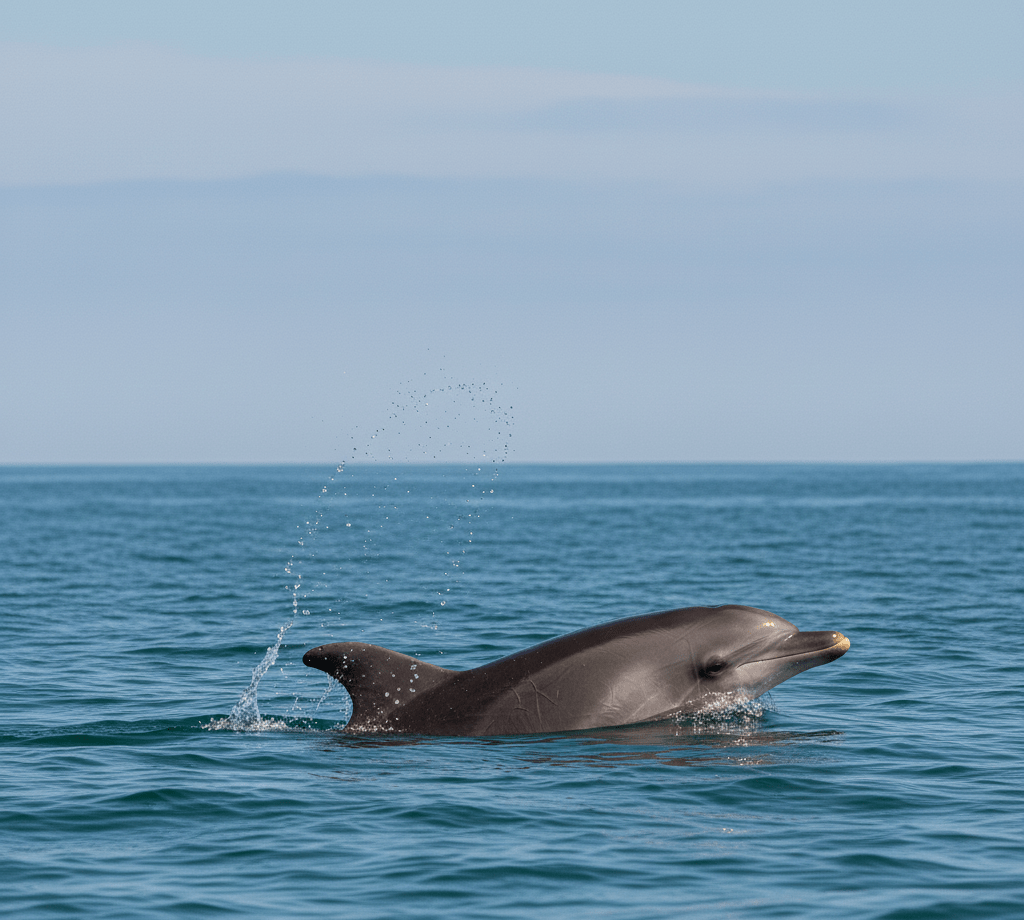
The “bottlenose” shape that gives these dolphins their name serves more than one purpose. This long rostrum has rows of sharp, conical teeth—usually 80 to 100—that are made for grabbing prey, not chewing it. Their colors can be light gray to dark charcoal, and their bellies are usually lighter, which helps them hide from both predators above and prey below.
Perhaps most remarkable is their dorsal fin, which acts like a fingerprint—each dolphin’s fin shape is unique, allowing researchers to identify individuals from photographs. Their strong tail fluke can push them through water at speeds of more than 25 miles per hour.
Where they live and where they are found: Global Ocean Citizens
Bottlenose Dolphin Habitat Preferences
Bottlenose dolphins are very adaptable when it comes to their habitats, and they do well in a wide range of marine environments around the world. They live in bays, estuaries, open oceans, coastal waters, and even some river systems. The temperature of the water is very important for where they live. They like tropical and temperate waters that are between 50°F and 90°F.
Coastal populations often favor shallow waters less than 100 feet deep, where abundant fish populations provide consistent food sources. These places also protect young animals from bigger predators and make it easier for them to grow up. Oceanic populations, on the other hand, go into deeper waters that are more than 3,000 feet deep in search of food and during seasonal migrations.
Geographic Range and Population Density
These mammals can live in any ocean except for the Arctic and Antarctic. There are large populations of them along the Atlantic and Pacific coasts of North America, in the Mediterranean Sea, around Australia and New Zealand, and in the warm waters around Hawaii and other Pacific islands.
Different subspecies have changed over time to fit their own environments. The bigger oceanic form swims in open seas, while the smaller coastal forms have learned to live in shallower waters with different kinds of prey and environmental problems.

Behavior and Social Structure: Difficult Communities
How Social Intelligence Works
Bottlenose dolphins live in sophisticated social groups called pods, typically containing 10 to 30 individuals, though super-pods of several hundred dolphins occasionally form during feeding or mating seasons. These aren’t just random connections; dolphins build complicated relationships based on family ties, shared benefits, and even their own tastes.
Female dolphins often remain with their mothers’ pods throughout their lives, creating multi-generational family units. When males reach puberty, they usually leave their birth pods and join bachelor groups or alliances that can last for decades. These groups of men work together to woo women and protect their territories.
Talking and Echolocation
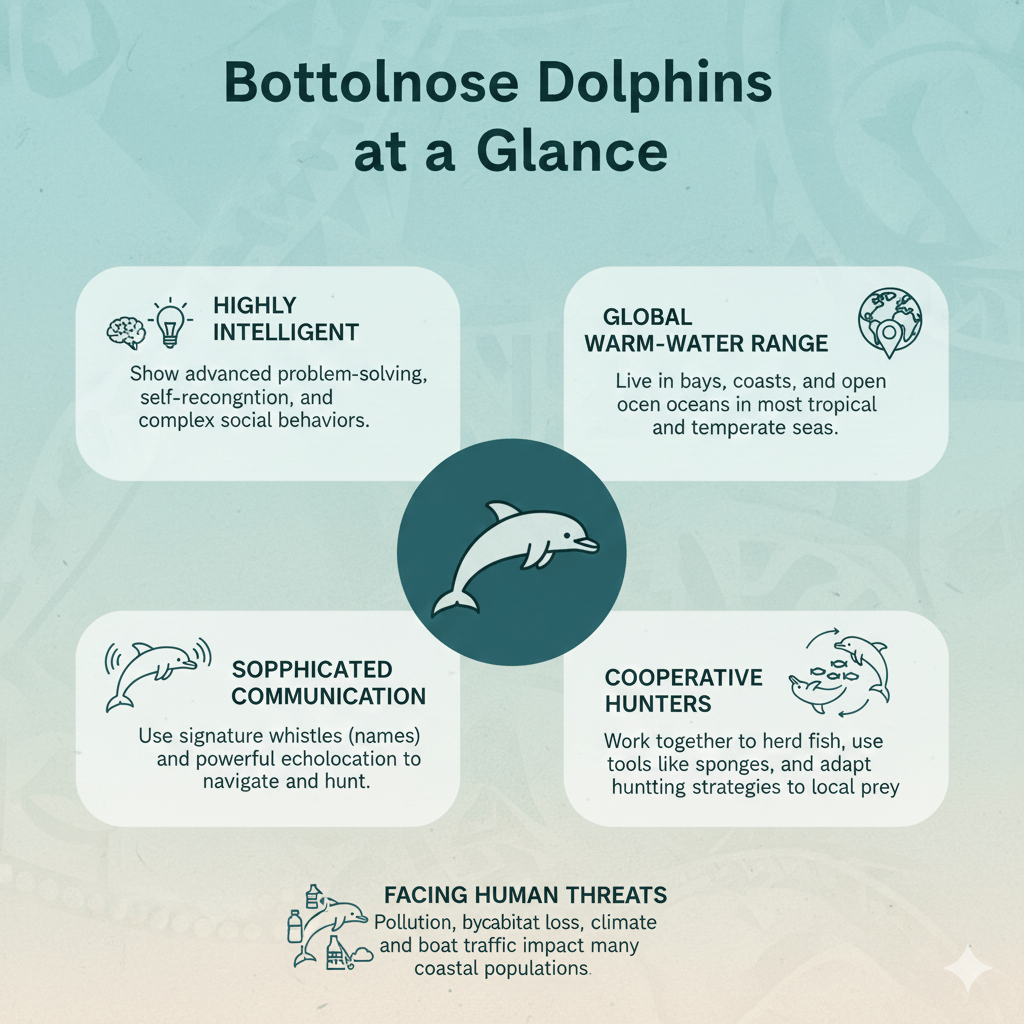
Dolphins possess one of the most sophisticated communication systems in the animal kingdom. Every dolphin learns to make a unique whistle that is like their name in the first year of their life. They use these whistles to tell other dolphins who they are, and they can also copy the whistles of friends and family.
Their echolocation abilities border on the supernatural. Dolphins make detailed three-dimensional maps of their surroundings by making quick clicks and listening to the echoes that come back. This biological sonar system is so accurate that it can find things buried in sand or tell the difference between different materials.
Food and Ways of Hunting: Ocean Predators with Skills
What do dolphins with bottlenoses eat?
Bottlenose dolphins mostly eat fish, squid, and crustaceans. Depending on where they are and what time of year it is, they eat different kinds of fish. Some of the most common ones are mullet, mackerel, sardines, shrimp, and small sharks. An adult dolphin needs to eat 15 to 30 pounds of food every day to keep up with its high metabolic needs.
They show incredible intelligence and teamwork in the way they hunt. Dolphins employ various strategies including:
Cooperative Herding: Groups of people work together to surround schools of fish, taking turns feeding while others keep the formation.
Some groups of strand-feeding animals have learned to chase fish onto muddy banks, where they temporarily beach themselves to catch their prey before sliding back into the water.
Using tools: Some dolphins use marine sponges as tools by putting them over their rostrums while they search for food on the seafloor. This keeps them safe from sharp rocks and coral.
Hunting Intelligence and Strategy
Dolphins are interesting to hunt because they can change their techniques based on the weather and the behavior of their prey. People have seen them make mud nets to catch fish, use their tail flukes to stun prey, and even work together with seabirds to hunt.
Intelligence and Learning: Ocean Einstein’s Cognitive Abilities and Problem-Solving
The question “What is the IQ of a bottlenose dolphin?” doesn’t have a straightforward answer since IQ tests are designed for humans. However, dolphins consistently demonstrate intelligence levels that rival those of great apes and young children. They pass the mirror self-recognition test, indicating self-awareness—a cognitive milestone achieved by very few animal species.
Dolphins are very good at solving problems. They learn how to do complicated things by watching and practicing. They can read and understand symbols, follow instructions that have more than one step, and even show what seems to be a sense of humor by playing with people and things.
Learning and Innovation in Culture
Dolphins may be the most amazing animals because they share knowledge with each other and with other dolphins, which researchers call “dolphin culture.” Social learning is how behaviors like using tools and specialized hunting strategies spread through groups of dolphins. Some behaviors become signature traits of certain dolphin communities.
Young dolphins undergo an extended learning period lasting several years, during which they observe and practice adult behaviors. This cultural transfer of knowledge helps them adapt to different environments in amazing ways.
Are Bottlenose Dolphins in Danger? Threats and Conservation Status
Are bottlenose dolphins in danger of going extinct? The answer depends on the population and the area. The International Union for Conservation of Nature says that the species as a whole is “Least Concern.” However, some specific populations are in danger and their numbers are going down.
Bottlenose dolphins can live for 20 to 45 years in the wild, but human activities make it harder for them to live that long. Coastal populations are under a lot of stress because their favorite shallow-water habitats are getting worse, polluted, and busier with boats.
Main problems and threats
Pollution Effects: Their food and homes are polluted by chemicals, plastic trash, and oil spills. Dolphins are apex predators, and their tissues store toxins that can harm reproduction and the immune system.
Interactions in the Fishing Industry: Accidental capture in fishing nets (bycatch) remains one of the most significant threats to dolphin populations worldwide. Even though rules have lessened some effects, the problem is still there in many places.
Effects of Climate Change: Dolphins have to change their usual ranges and behaviors because of rising ocean temperatures and changes in fish populations. This could break up social groups and mess up breeding patterns.
Degradation of habitats: Coastal development, more boats on the water, and noise pollution from underwater sources all make it harder for them to do what they normally do, especially when it comes to finding their way and hunting.
Interactions with People: Complicated Relationships
Links Between History and Culture
Are bottlenose dolphins nice to people? From ancient Greece to the present, stories have been told of dolphins coming up to people as if they were friends. These smart mammals are often curious about people. They may even start playing with them or seem to help swimmers who are in trouble.
But it’s important to know that dolphins act very differently toward people depending on who they are and where they live. Wild dolphins maintain natural caution, while those in areas with regular human contact may become more habituated to people’s presence.
Modern Human-Dolphin Encounters
Watching wildlife responsibly has become more popular. People can now see dolphins in their natural habitat without causing them stress or changing their behavior. Professional guides know how dolphins act and keep a safe distance from them that protects both people and animals.
Dolphin populations are studied by research programs all over the world, which helps us learn more about their complicated social structures and thinking skills. These studies give important information for conservation efforts and help figure out how to lessen the effects of humans on dolphin populations.
Why other marine animals respect dolphins
Why do sharks stay away from bottlenose dolphins? The answer is that dolphins are smarter, more cooperative, and stronger than other animals. Dolphins can move faster and more easily than most types of sharks. When they feel threatened, they work together to ram attackers with their hard rostrums, which could hurt or kill sharks.
Additionally, dolphins’ sophisticated echolocation gives them a tactical advantage in murky water where sharks rely primarily on other senses. They are tough opponents, even for big predator sharks, because they can work together to attack.
Five interesting facts about bottlenose dolphins
- Whistles with a signature: Each dolphin develops a unique vocal signature whistle that functions like a name, allowing individual recognition across long distances and time periods.
- Sleep Swimming: Dolphins must consciously breathe, so they sleep by resting one brain hemisphere at a time while the other remains alert to surface for air and watch for predators.
- Lifelong Friendships: Some dolphin friendships last for decades, and adults keep their social ties and work together to hunt.
- Dolphins have amazing healing powers. They can recover from serious shark bites and other injuries without getting sick, which may be because their skin contains antimicrobial compounds.
- Emotional Complexity: Dolphins can feel grief, joy, and empathy. There are even reports of people caring for injured pod members and getting upset when their friends die.
Keeping Our Ocean’s Geniuses Safe
Bottlenose dolphins represent far more than charismatic marine attractions—they embody the ocean’s intelligence and complexity. These amazing mammals make us rethink what we know about how animals think and show how healthy marine ecosystems are. They are one of the smartest species on Earth because of their complex social structures, advanced communication skills, and ability to solve problems.
It is everyone’s job to protect dolphin populations as we keep exploring and enjoying ocean environments. Supporting marine conservation efforts, choosing sustainable seafood options, and participating in responsible wildlife viewing all contribute to ensuring future generations can marvel at these extraordinary creatures.
The story of bottlenose dolphins shows us that the ocean is full of secrets and smart things that we don’t fully understand. We can keep these amazing animals and the delicate web of marine life that keeps our planet healthy by treating them with respect and care.
Are you ready to see dolphins in their natural habitat? Hawaii Guide Hub focuses on responsible marine wildlife encounters that put the animals’ well-being first and give people unforgettable learning experiences. Book a guided dolphin watching trip and find out why these amazing animals have fascinated people for thousands of years.