Hanauma Bay Reservations: How to Book Your Snorkeling Visit

Hanauma Bay is Oʻahu’s most famous snorkeling spot and its most tightly managed one. Every nonresident needs an advance reservation, entry is capped at about 1,400 visitors a day, and the booking window opens just 48 hours ahead at 7:00 a.m. sharp. Miss the window and you are standing outside the gate hoping for a walk-in. This guide covers exactly how Hanauma Bay reservations work: when to book, what it costs, the rules you must follow, and how to make the visit itself go smoothly.
Hanauma Bay Reservations at a Glance
| Hanauma Bay: the nonresident cheat sheet (per the City & County of Honolulu Parks and Recreation reservation system) | The rule | Timing tip |
|---|---|---|
| Who needs a reservation | All non-Hawaiʻi residents (book online) | Residents and military enter free |
| Booking window | 48 hours in advance, released daily at 7:00 a.m. HST | Be logged in before 7:00 a.m.; slots go fast |
| Entry fee | $25 per nonresident 13+; free for residents, kids 12 and under, military | Plus a small online service fee when booking |
| Parking | $3 nonresident / $1 resident, cash | Bring cash and small bills |
| Hours | Wed-Sun, 6:45 a.m.-4:00 p.m.; last entry 1:30 p.m. | Morning slots beat the crowds |
| Closed | Monday, Tuesday, Christmas Day, New Year’s Day | The bay rests two days a week |
Do You Need a Reservation for Hanauma Bay?
Yes, if you are not a Hawaiʻi resident. All nonresident visitors must book an advance online reservation through the City and County of Honolulu’s Parks and Recreation reservation system. Hawaiʻi residents with valid ID do not need a reservation and enter free, as do active-duty U.S. military members and their dependents. Everyone else: no reservation, no entry, with only a small number of walk-in tickets available each morning on a first-come, first-served basis.
How to Book: The 48-Hour Window
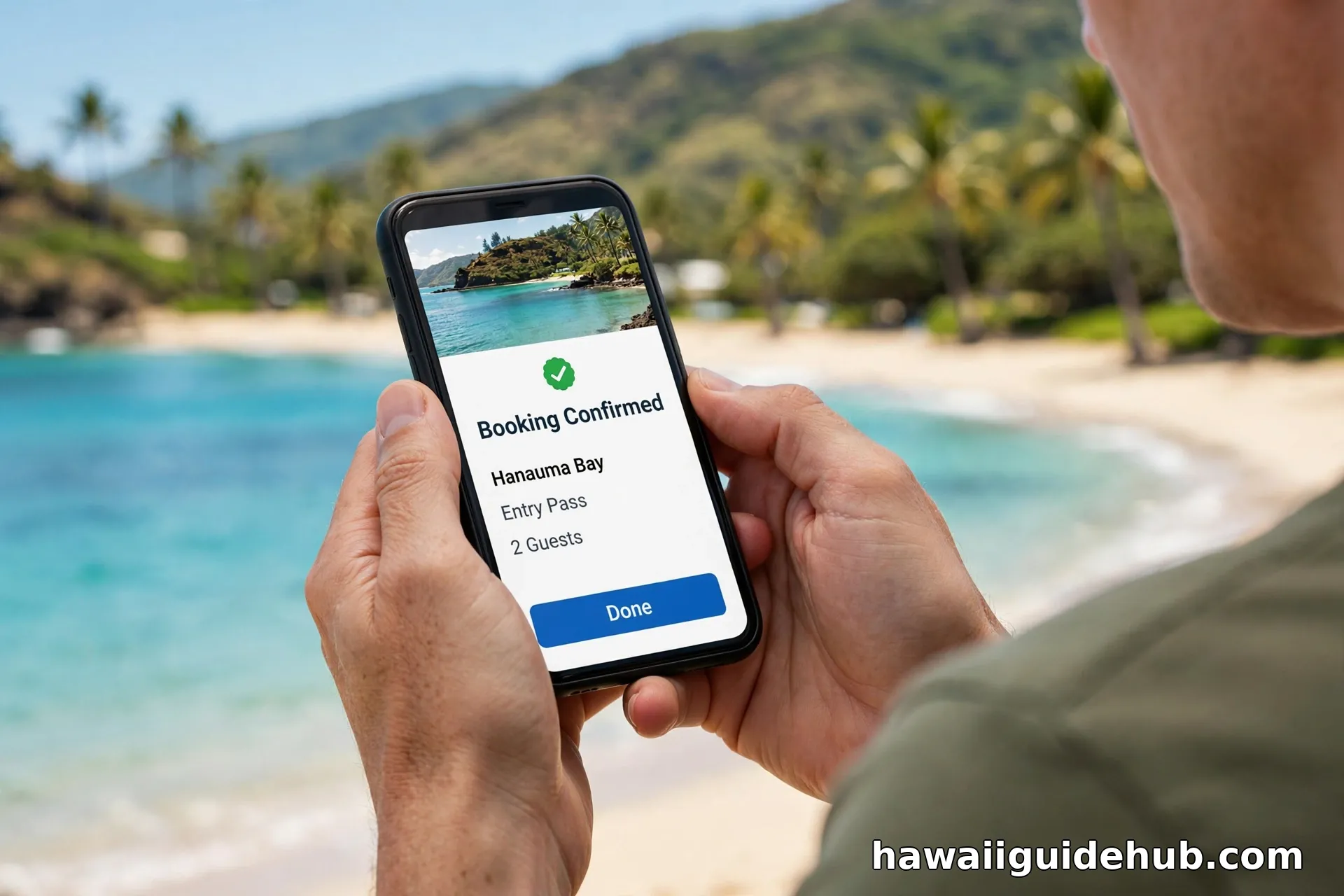
Reservations open exactly 48 hours before your visit date at 7:00 a.m. Hawaiʻi time, and the popular morning slots sell out within minutes. The strategy is simple but unforgiving: be logged into the City and County reservation site before 7:00 a.m. HST two days before the day you want to visit, have your party’s details ready, and book the moment the window opens. Have backup dates in mind, because your first choice may vanish while you are deciding. All ticket sales are final, with no cancellations or exchanges, so double-check your date before you confirm.
A practical note on the time zone: 7:00 a.m. HST is 10:00 a.m. Pacific, 1:00 p.m. Eastern. If you are booking from the mainland before your trip, set your alarm for the converted time. And remember the bay is closed Monday and Tuesday, so the booking calendar skips those days entirely.
What It Costs
Entry is $25 per nonresident aged 13 and older, plus a small online service fee when booking through the reservation system. Children 12 and under enter free, as do Hawaiʻi residents with valid ID and active-duty military with dependents. Parking is separate: $3 per vehicle for nonresidents, $1 for residents, cash only. Snorkel gear rentals run about $20 for a standard set, lockers about $10, and the tram between the upper level and the beach is free.
| What Hanauma Bay actually costs | Cost | Worth it or skip it |
|---|---|---|
| Entry, nonresident 13+ | $25 per person | The price of admission; no way around it |
| Entry, kids 12 and under | Free | Bring the whole family |
| Entry, Hawaiʻi residents and military | Free | Bring ID |
| Parking | $3 nonresident / $1 resident (cash) | Cheap; bring exact change |
| Snorkel set rental | About $20 | Bring your own if you have it |
| Locker rental | About $10 | Worth it if you snorkel without a watcher |
| Tram to the beach | Free | Save your legs for the reef |
For a family of four with rentals and parking, budget around $100-120 for the day.
Hours and Closed Days
Hanauma Bay is open Wednesday through Sunday. Entry begins at 6:45 a.m., the last visitors are admitted at 1:30 p.m., the beach is cleared at 3:30 p.m., and everyone must be out of the preserve by 4:00 p.m. The bay is closed every Monday and Tuesday to give the reef two days of undisturbed rest, plus Christmas Day and New Year’s Day. Plan around this: arriving near the 1:30 p.m. cutoff leaves you almost no time in the water after parking, check-in, and the mandatory video.
What Does Hanauma Mean?
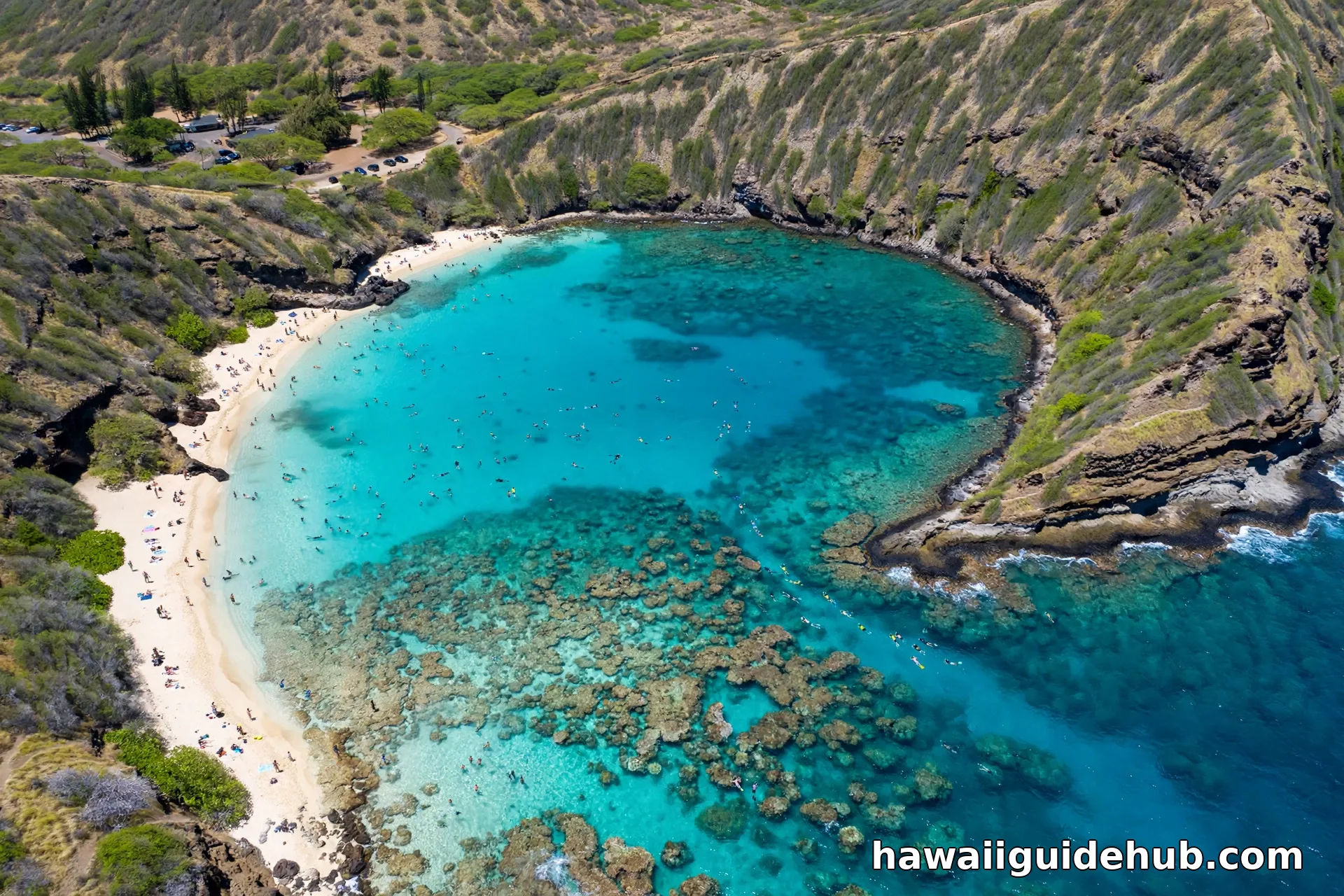
In Hawaiian, Hanauma means “curved bay,” a perfect description of the crescent you see from the overlook. The bay itself is a flooded volcanic crater, its seaward wall breached by the ocean long ago, leaving the calm, shallow bowl that makes it such ideal snorkeling. It is both a geological formation and a cultural place: the name records what the bay looks like, in the same descriptive tradition as so many Hawaiian place names. Knowing the meaning will not change your reservation strategy, but it will change how you see the curve of the reef from the trail down.
Why Reservations Exist: A Reef Brought Back
The reservation system is not bureaucracy for its own sake; it is the reason the bay still has a reef worth visiting. In the 1980s and 1990s, Hanauma Bay was being loved to death, with as many as 3 million visitors a year, cloudy water, damaged coral, and fish fed into unnatural behavior by tourists. The City and County responded with the measures you navigate today: the daily visitor cap of about 1,400, the mandatory education video, the two rest days each week, and the bans on fish feeding and coral contact. The result is visible in the water: clearer conditions, recovering coral, and marine life that behaves like wild animals again. Your reservation fee directly funds the preserve’s management, so the $25 is conservation money, not just admission.
The Mandatory Education Video
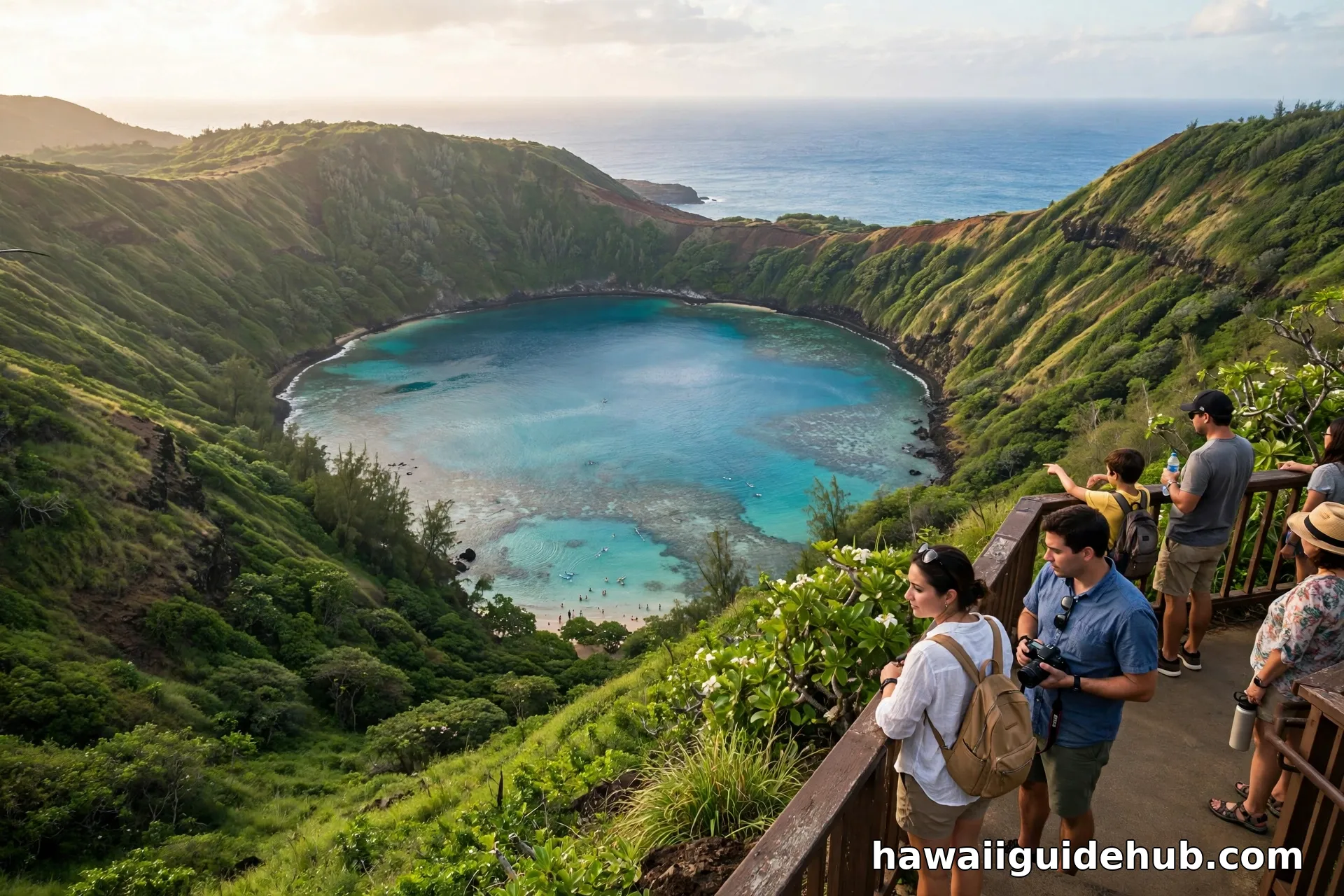
Every first-time visitor must watch a roughly 9-minute orientation video on reef safety, snorkeling technique, and conservation before heading down to the beach. It is not a formality. The video explains the rules that protect the reef: never stand on or touch coral, never feed the fish, and use only reef-safe sunscreen. Hawaiʻi state law bans sunscreens containing oxybenzone and octinoxate, and the bay enforces it. Buy reef-safe sunscreen before you go; the selection at the bay is limited and the rangers do check.
Snorkeling the Bay Responsibly
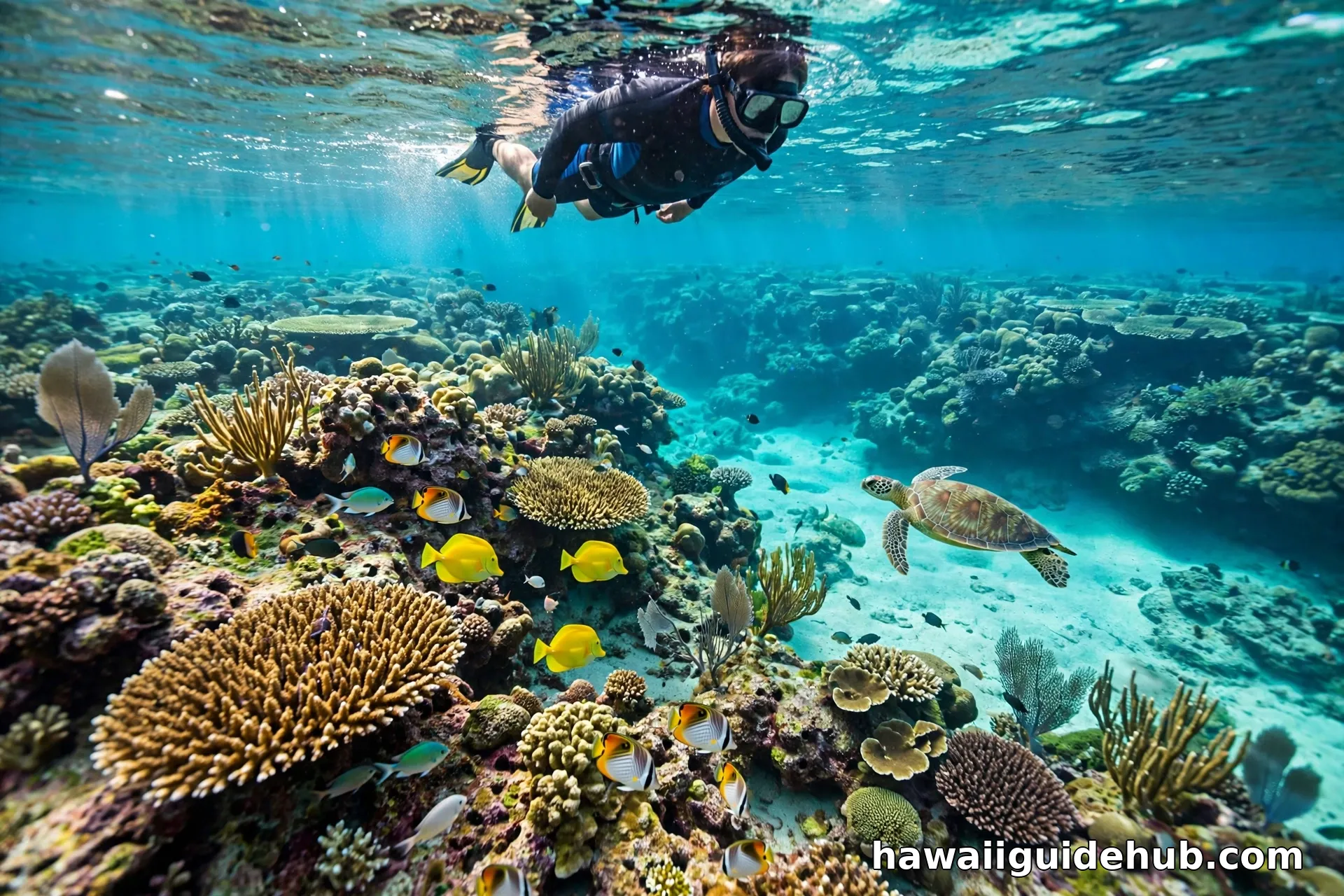
The bay’s calm, shallow inner reef is ideal for beginners, with hundreds of tropical fish visible in just a few feet of water. The single most important rule is simple: look, don’t touch. Even a light brush can kill coral polyps that took decades to grow. Float horizontally, keep your fins up and away from the reef, and never chase the fish or the turtles. Stay inside the bay; the outer edges have stronger currents and surge. Mornings bring the calmest water and clearest visibility, which is another reason the early reservation slots are the ones to fight for.
Water temperature is comfortable year-round, averaging about 75°F in winter and 82°F in summer. Most visitors snorkel comfortably without a wetsuit, though a rash guard helps with sun protection and the occasional jellyfish. If you are visiting in winter, the water is at its coolest and the surf can be rougher; check the surf forecast and skip the day if the south shore swell is up.
Getting There and Parking
Hanauma Bay sits on Oʻahu’s southeast coast at 100 Hanauma Bay Road, about 10 miles east of Waikīkī, roughly a 25-minute drive without traffic. The parking lot has only about 300 stalls and fills early, which is yet another reason to book a morning slot. Rideshare drop-offs are allowed near the entrance, and TheBus serves the area if you have time to spare. If you want another waterfall stop for your east-side day, Mānoa Falls pairs well for a second outing. For the drive itself, our Oʻahu island guide helps you plan the route, and our Hawaii food guide covers where to eat after.
Walk-In Tickets: The Backup Plan
If the reservation window beats you, there is a backup, but treat it as a gamble, not a plan. A limited number of walk-in tickets are issued each morning when the parking gate opens, first-come, first-served, and they go to the people already waiting in line. Visitors who have done it report arriving well before opening and still waiting hours, sometimes not reaching the beach until midday. On busy days the walk-in allocation can be gone before most people finish breakfast. The honest advice: use walk-ins only if you are already nearby with a flexible morning, and never build a tight itinerary around them. A failed walk-in attempt burns half a day you could have spent at another beach.
Best Time of Day and Year to Visit
Morning wins on every axis. The first reservation slots of the day get the calmest water, the clearest visibility before crowds stir up the sand, the shortest gear-rental lines, and the best parking odds. By early afternoon, visibility noticeably drops. For time of year, summer brings the calmest conditions on this south-facing shore, while winter can bring bigger swells that make the bay murky or even prompt closures on high-surf days. If your trip falls in winter, keep your Hanauma Bay day flexible and be ready to swap it with another outing if the surf forecast looks rough. The bay’s own conditions matter more than the calendar: a calm winter morning beats a windy summer afternoon.
What to Bring
Each person should bring a swimsuit, towel, reef-safe sunscreen, and cash for parking. A small cooler with snacks and non-alcoholic drinks is allowed; large coolers and glass containers are not. Bring your own snorkel gear if you have it, since rentals add up for a family, and bring water: the food concessions are at the upper level, not on the sand. Beach wheelchairs are available free from the volunteers on the beach for visitors with mobility needs.
Video: Snorkeling Hanauma Bay
Underwater at Hanauma Bay: what the snorkeling is really like and tips for your visit.
Frequently Asked Questions
Do you need reservations for Hanauma Bay?
Yes, for non-Hawaiʻi residents. Reservations open 48 hours in advance at 7:00 a.m. HST through the City and County of Honolulu’s reservation system. Hawaiʻi residents with valid ID do not need reservations.
How much does Hanauma Bay cost?
$25 per nonresident aged 13 and older, plus parking ($3 nonresident, cash). Children 12 and under, Hawaiʻi residents, and active-duty military enter free.
What days is Hanauma Bay closed?
Monday and Tuesday every week, plus Christmas Day and New Year’s Day. Open Wednesday through Sunday, 6:45 a.m. to 4:00 p.m., with last entry at 1:30 p.m.
Can you just walk into Hanauma Bay without a reservation?
A limited number of walk-in tickets are issued each morning on a first-come, first-served basis, but they are not guaranteed and go fast. Do not count on it; book the reservation.
Is Hanauma Bay good for beginner snorkelers?
Yes, it is one of the best beginner spots on Oʻahu. The inner reef is shallow, calm, and protected, with lifeguards on duty, gear rentals on site, and hundreds of fish visible in a few feet of water. If you want to compare it with other islands, our first-time visitor guide can help you choose where to snorkel.
Can you visit Hanauma Bay without snorkeling?
Yes. The overlook alone is worth the trip, and the beach is a fine place to swim and sunbathe even if you never put on a mask. Non-snorkelers pay the same entry fee and follow the same reservation rules.
Is the tram at Hanauma Bay free?
Yes, the tram between the upper level and the beach is now free and included. The walk down is a steep paved path that takes about 10-15 minutes; the tram saves your legs for the swim back up.
Hanauma Bay rewards the prepared and turns away the casual. Book at 7:00 a.m. sharp two days out, arrive early, watch the video, respect the reef, and you will get one of the great snorkeling mornings in Hawaiʻi. The reservation system exists because the bay was being loved to death; your compliance is what keeps it alive. And when you float over that recovering reef, watching the fish go about their business in clear water, you will understand exactly what the $25 and the 7:00 a.m. alarm bought: a place that was saved, and a morning you will remember long after the tan fades.