Turtle Canyon: Snorkeling With Oʻahu’s Sea Turtles

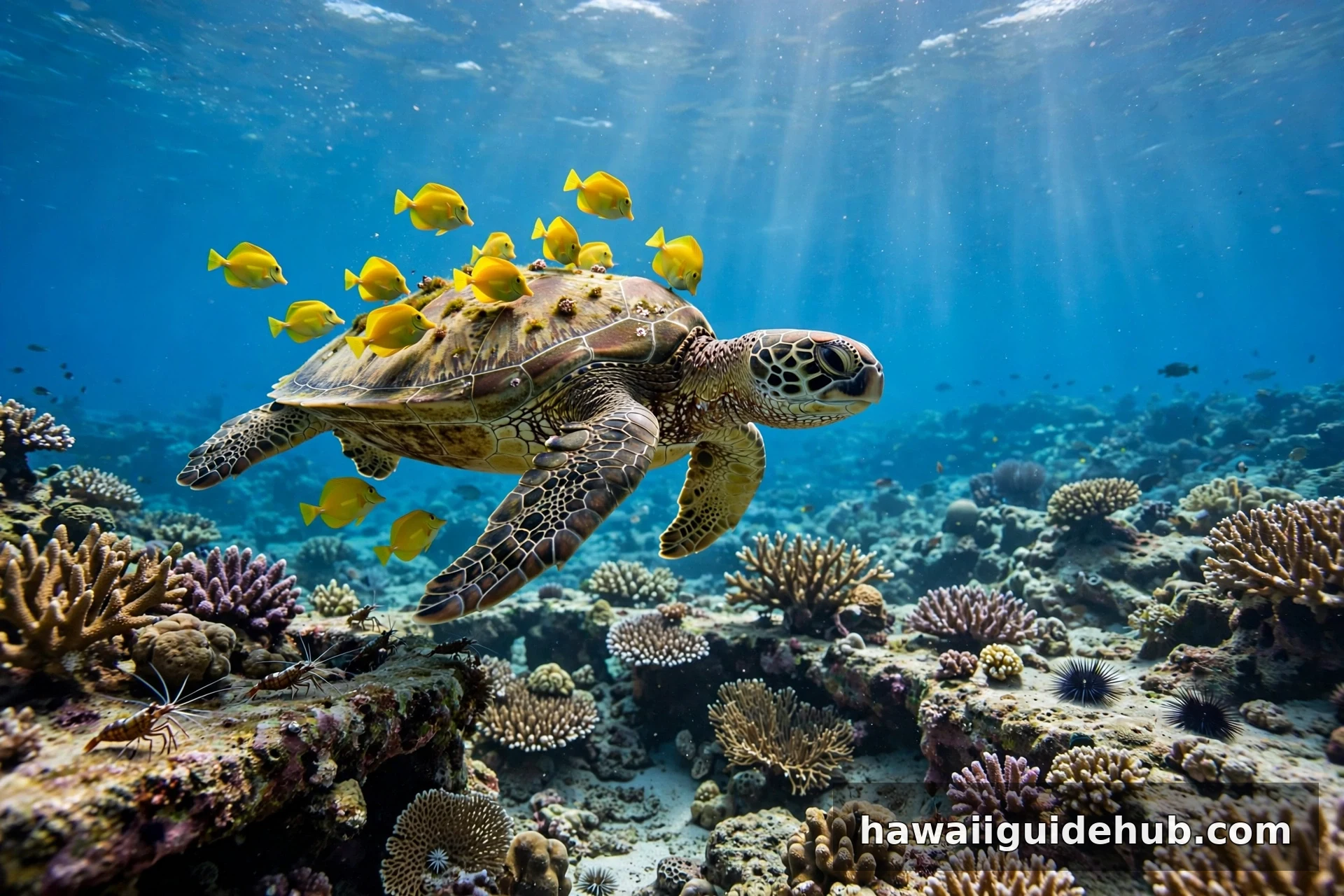
A Hawaiian green sea turtle hangs motionless over the reef while a cloud of bright yellow fish swarms its shell, picking it clean. That is Turtle Canyon, a natural underwater cleaning station off Waikīkī where honu gather day after day. It is one of the most reliable places on Oʻahu to snorkel with sea turtles, and one of the easiest wildlife encounters in all of Hawaii.
This is the complete guide to Turtle Canyon. It covers what the site is, where it sits, how you get there, what you will see, the rules that protect the turtles, the best time to go, what to bring, safety, and the honest truth about Kaʻena Point snorkeling. Whether you searched for turtle canyon, turtle canyon oahu, or kaena point snorkeling, every answer is on this one page.
Turtle Canyon at a Glance
| The selling point | The fine print |
|---|---|
| An underwater reef and turtle cleaning station, about 1.5 miles offshore from Waikīkī near Diamond Head | Boat only; you get there on a guided snorkel tour |
| Hawaiian green sea turtles (honu), up close | Stay at least 10 feet away; never touch |
| Easy to moderate; flotation available | Deep water, about 15 to 40 feet, and no lifeguards on site |
| Year-round, with the calmest water in summer | Tour prices vary; gear is usually included |
| Tour crews provide a safety briefing | The crew is your safety net; there is no shore to swim to |
What Turtle Canyon Actually Is
Turtle Canyon is not a beach and not a canyon you hike. It is a submerged reef sitting in clear water off Waikīkī, and it works as a turtle cleaning station. Sea turtles visit the reef regularly so that small reef fish can eat the algae growing on their shells. The turtle hovers in place, the fish swarm in, and snorkelers floating nearby get to watch the whole arrangement play out a few feet away. It is one of nature’s small partnerships, and it happens here with unusual reliability.
That reliability is what made the site famous. Turtles come to the same reef again and again, so on any given day there is a strong chance of seeing several honu at once, sometimes resting on the reef, sometimes surfacing for air. The reef itself is healthy but not known for the rainbow coral gardens you find at places like Hanauma Bay. Here the turtles are the show, and everything else is the supporting cast.
Where Turtle Canyon Is and How You Get There
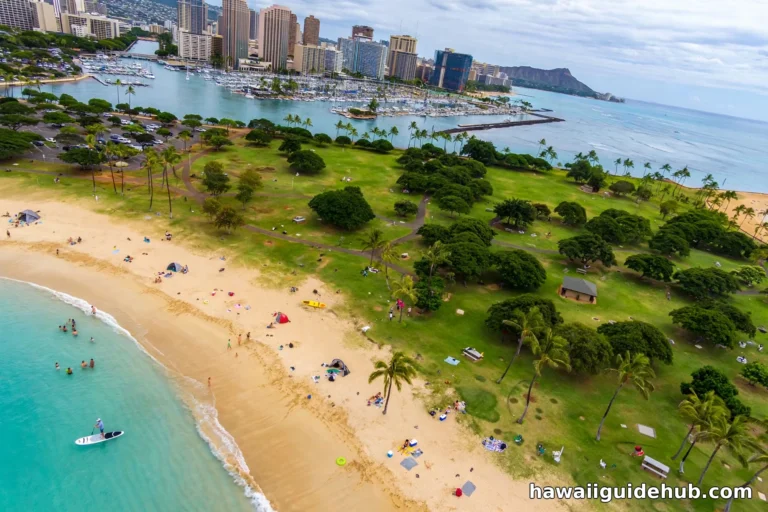
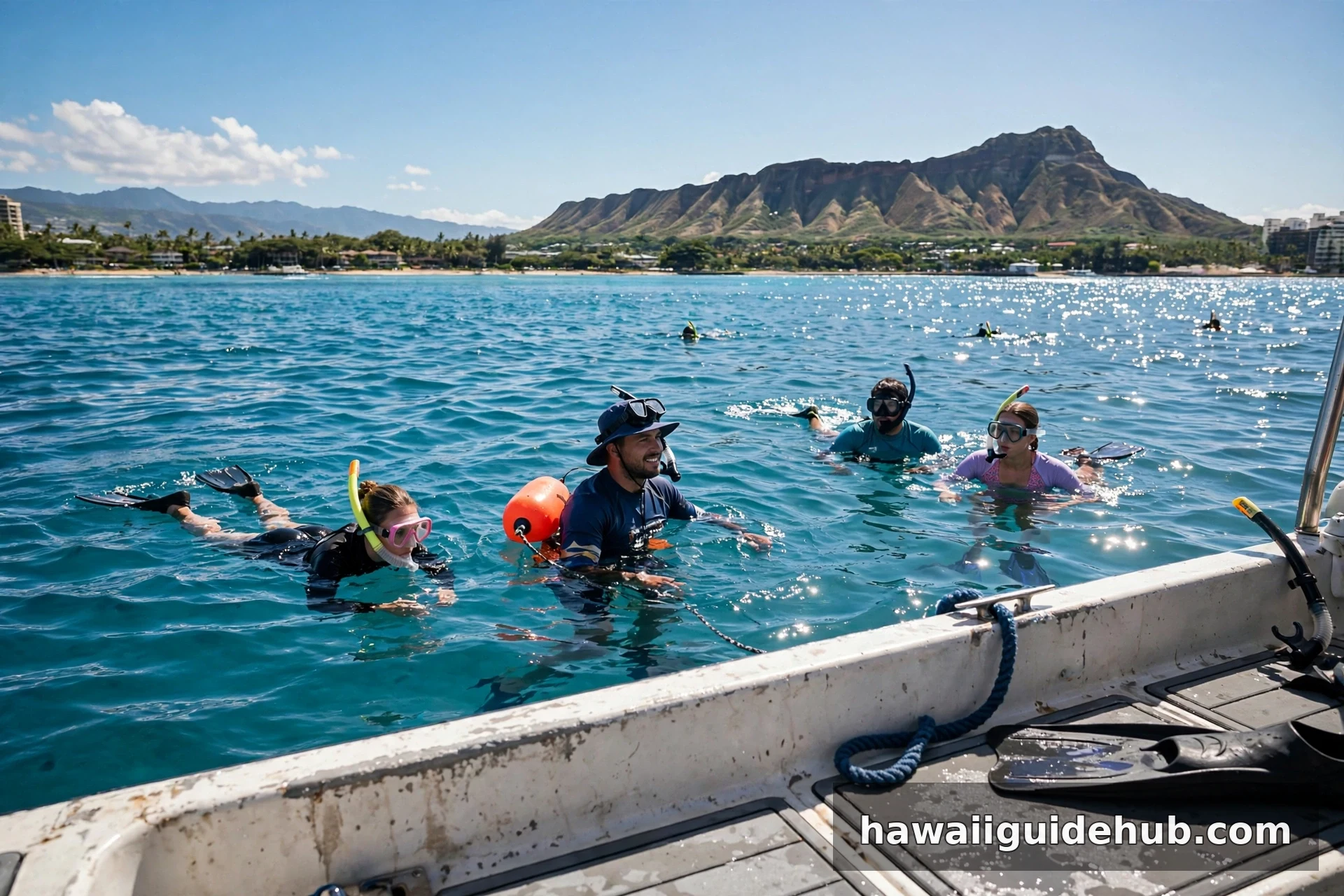
Turtle Canyon sits about a mile and a half offshore from Waikīkī Beach, toward Diamond Head. You cannot swim to it from shore and you cannot drive to it. The only practical way to visit is on a guided snorkel boat tour, most of which depart from Kewalo Basin Boat Harbor, a short ride from Waikīkī. The boat ride out takes only a few minutes, which is part of the appeal: you spend your time in the water, not getting there.
Tours typically run about two hours dock to dock, with roughly 45 minutes of snorkel time at the reef. Gear, meaning mask, snorkel, and fins, is almost always included, and most boats carry flotation belts or vests for weaker swimmers. Many Waikīkī departures include hotel pickup, so visitors without a rental car can still go easily. Parking at Kewalo Basin is limited, so if you do drive, arrive early or take a rideshare.
What You Will See Underwater
The Hawaiian green sea turtle, the honu, is the headliner. These are large, calm animals, often three feet across or more, and at the cleaning station they are focused on the fish, not on you. It is common to see multiple turtles in a single swim. Around them you will find the cleaners themselves: bright yellow tang, damselfish, angelfish, and wrasse, plus the usual Waikīkī reef residents like butterflyfish and the occasional octopus tucked into the coral. Dolphins sometimes pass offshore, and in winter, humpback whales can be spotted from the boat on the ride out.
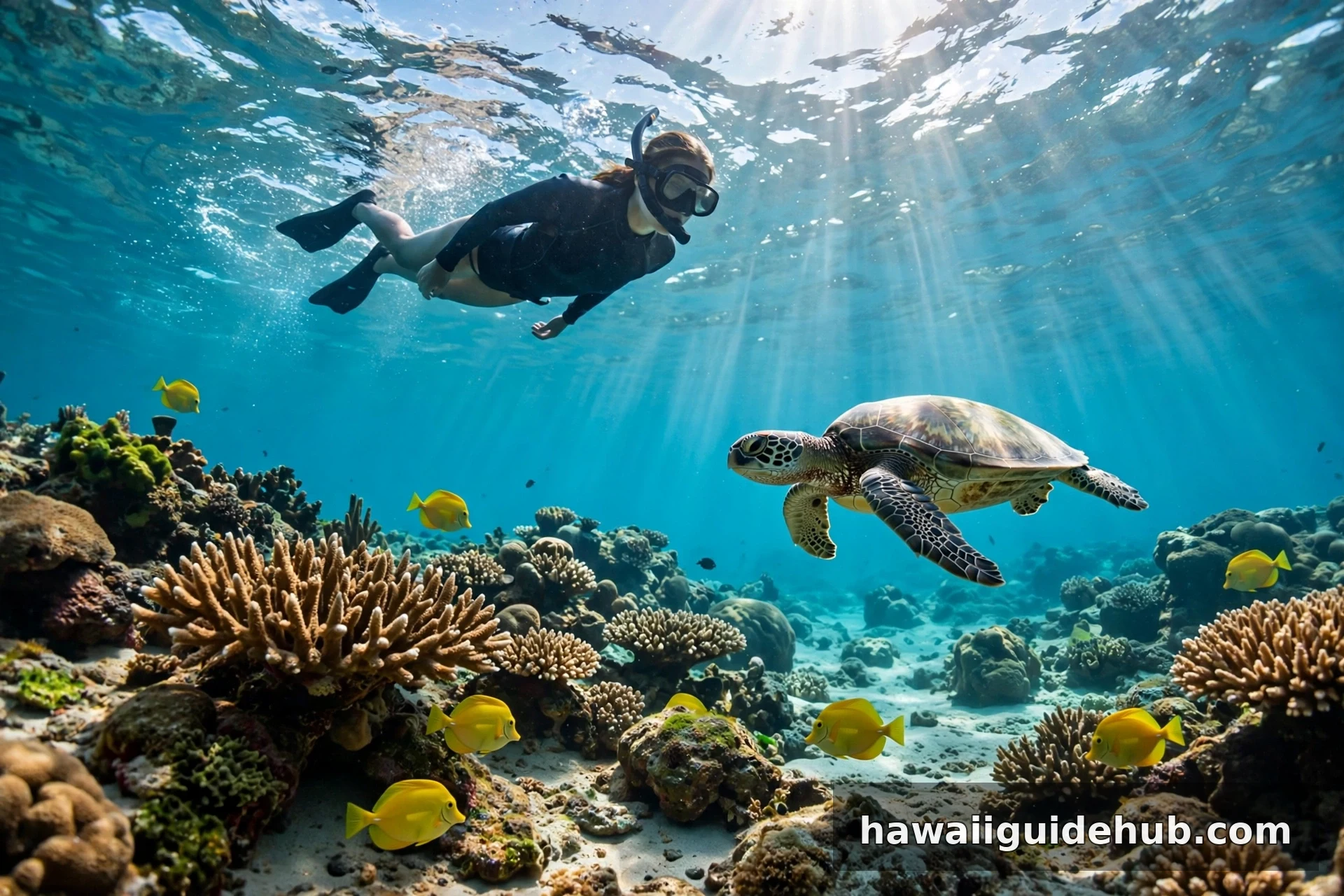
Visibility is typically excellent, which matters because the reef sits 15 to 40 feet below you. You snorkel at the surface and watch the turtles cruising and resting below. Strong swimmers can free-dive down for a closer look, but most visitors are perfectly happy floating on top. The water is warm enough year-round that many people snorkel without a wetsuit, though a rash guard is smart for sun protection.
The Rules: How to Watch Turtles the Right Way
Hawaiian green sea turtles are protected, and there are firm rules about how close you can get. NOAA asks everyone to keep at least 10 feet, about 3 meters, from sea turtles on land and in the water. Do not touch a turtle, do not chase one, and do not block its path to the surface. Turtles need to breathe, and a snorkeler hovering directly above a resting turtle can cut off its route to air.
These are not suggestions. Touching or harassing a sea turtle can bring serious fines under federal law, and tour crews will pull swimmers out of the water for breaking the rules. The good news is that the turtles at Turtle Canyon are relaxed around calm, quiet snorkelers. Float still, keep your distance, and they will often swim right past you on their own terms. That is a far better encounter than any chase.
The same respect applies to the reef. Do not stand on coral, and be careful with your fins in shallow sections. The reef here is the turtles’ cleaning station. Keeping it healthy keeps the turtles coming back.
Best Time to Snorkel Turtle Canyon
Turtle Canyon works year-round. The turtles do not migrate away, and the cleaning station operates in every season. That said, conditions have a rhythm. Summer brings the calmest, clearest water and the warmest temperatures, around 82°F. Winter water dips to about 75°F, which still feels warm to most visitors, and winter swells can occasionally make the boat ride choppier. Fall sits in between at roughly 79°F.
Time of day matters more than time of year. Morning trips usually have the calmest water and the best visibility, before the afternoon trade winds ripple the surface. If you can choose, book the morning departure. For help picking your overall travel window, our guide to the best island in Hawaii for first time visitors covers seasonal patterns across the islands.
What to Bring and How Hard It Is
This is an easy to moderate snorkel, and beginners do it every day. The main challenge is the depth: with 15 to 40 feet of water under you and no bottom to stand on, nervous swimmers should ask for a flotation belt or vest, which every reputable tour carries. You do not need to be a strong swimmer, but you do need to be comfortable floating in open water.
- Swimsuit and towel: you will already be wearing the first; the second waits on the boat.
- Reef-safe sunscreen: Hawaii law restricts sunscreens with oxybenzone and octinoxate. Apply before boarding, or better yet wear a rash guard.
- Underwater camera: the turtles are made for photos. Keep a respectful distance and use zoom instead of swimming closer.
- Seasickness remedy: if you are prone, take it before boarding. The ride is short but open ocean is open ocean.
- Cash or card for crew gratuity: tipping the crew is customary when they take good care of you.
Safety and Hazards
Turtle Canyon is a managed tour site, which keeps the risk profile low, but the ocean always deserves respect. The main hazards are sun exposure, dehydration, and overexertion for weak swimmers. Drink water before and after your swim, reapply reef-safe sunscreen, and tell the crew if you are uncomfortable at any point. That is what they are there for.
There are no lifeguards stationed at the reef itself. Your tour crew provides the safety briefing and in-water supervision. If you see a Hawaiian monk seal, give it even more space than the turtles: NOAA guidance calls for at least 50 feet on land and in the water, and 150 feet for a mother with a pup. Seals occasionally haul out on Oʻahu beaches, and the same respect rules apply everywhere.
Kaʻena Point Snorkeling: The Honest Truth
Many visitors search for kaena point snorkeling hoping for another turtle spot at Oʻahu’s wild northwestern tip. Here is the honest answer: Kaʻena Point is not a snorkeling destination. The point is a remote, wave-exposed coastline of cliffs, boulder beaches, and powerful surf. Hawaii’s Division of State Parks advises visitors to stay away from the wave-exposed coast unless they are familiar with hazardous ocean conditions, and swimming directly at the point is not recommended.
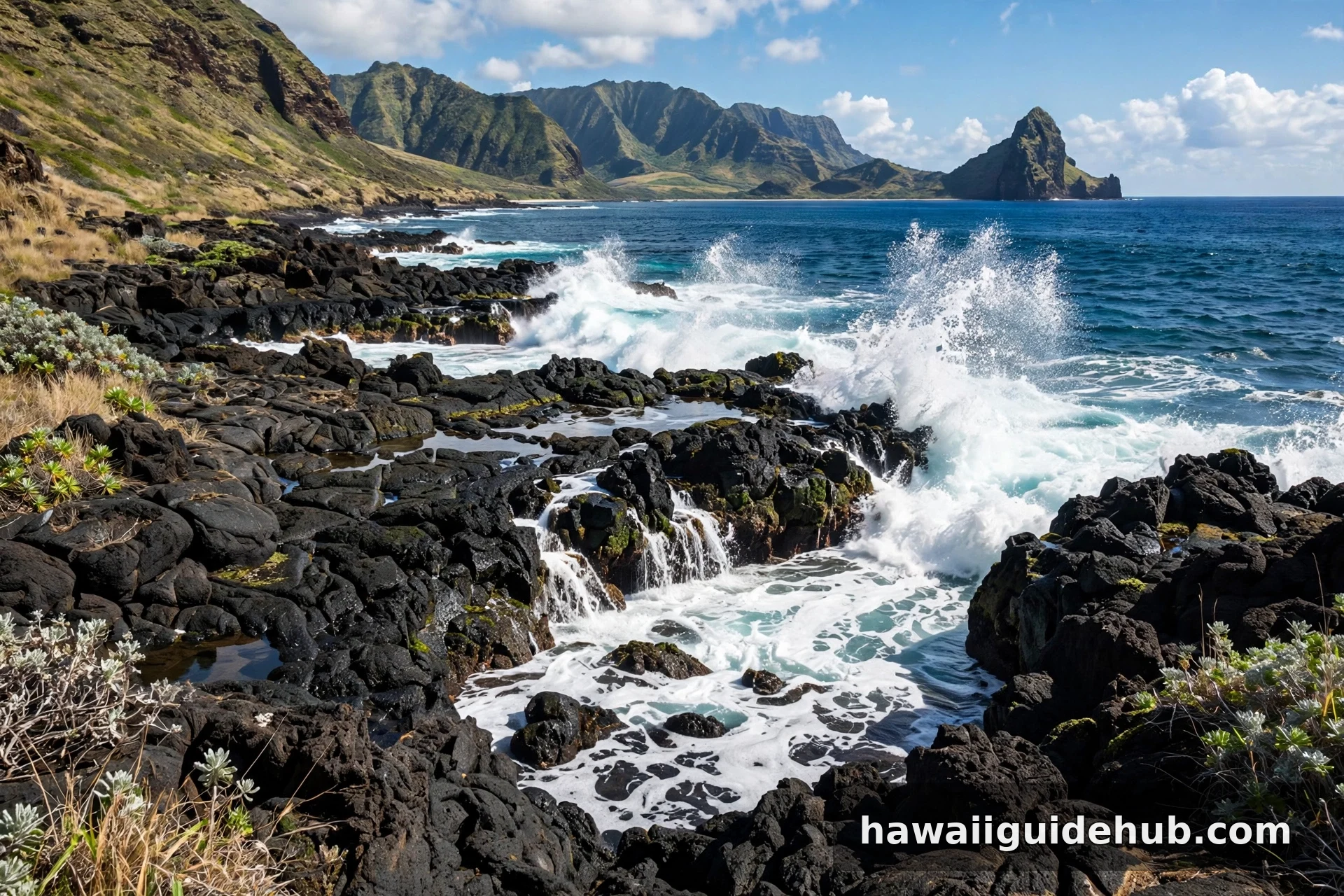
What Kaʻena Point is genuinely great for is the hike and the wildlife. The 2.5-mile trail each way along the old railroad bed leads to a protected natural area reserve with nesting seabirds, native coastal plants, and some of the best Hawaiian monk seal viewing on Oʻahu. If your goal is snorkeling with turtles, Turtle Canyon is the right call. If your goal is a wild coastal hike with seals and seabirds, Kaʻena Point delivers. For more ideas on pairing ocean time with island exploring, see our guide to outdoor adventures in Hawaii.
Nearby Alternatives Worth Knowing
If Turtle Canyon tours are fully booked, Oʻahu has other turtle options. Hanauma Bay, the famous curved bay east of Waikīkī, offers shore-entry snorkeling over a colorful reef where turtles are regular visitors, though it requires its own reservation and entry fee. Laniakea Beach on the North Shore is the island’s classic turtle basking beach, where honu haul out on the sand to rest, best watched from the shore at a respectful distance. Each spot has its own character. Turtle Canyon remains the most reliable for actually swimming near turtles in calm, clear water.
Video: Snorkeling Turtle Canyon
Watch a Turtle Canyon snorkel sail from Waikīkī, with turtles at the cleaning station and tips for the trip.
Frequently Asked Questions
Where is Turtle Canyon?
Turtle Canyon is a submerged reef about 1.5 miles offshore from Waikīkī on Oʻahu, toward Diamond Head. It is only reachable by boat, almost always as part of a guided snorkel tour departing from Kewalo Basin Boat Harbor.
Can you swim to Turtle Canyon from the beach?
No. It is too far offshore and sits in open ocean with boat traffic. The safe and standard way to visit is on a guided tour boat.
Will I definitely see turtles?
Nothing in nature is guaranteed, but Turtle Canyon is about as close as it gets. The reef is an established cleaning station that turtles visit daily, and most tours report sightings on nearly every trip. Some operators even guarantee turtle sightings.
How close can I get to the turtles?
Stay at least 10 feet away, on NOAA guidance, and never touch, chase, or block a turtle. Calm snorkelers who hold still are often rewarded when a turtle swims past on its own.
Is Turtle Canyon good for beginners?
Yes, with a caveat. The water is calm and the guides handle everything, but it is deep open water with no bottom to stand on. If you are a nervous swimmer, ask for a flotation vest and you will be fine.
Can you snorkel at Kaʻena Point?
Not safely as a general snorkel spot. The coast at Kaʻena Point is rocky and wave-exposed with strong currents. Go there for the hike, the seabirds, and possible monk seal sightings, and save your snorkeling for Turtle Canyon or Hanauma Bay.
What is the water temperature?
Expect about 75°F in winter, 78°F in spring, 79°F in fall, and 82°F in summer. Most people snorkel comfortably without a wetsuit year-round, though a rash guard helps with sun protection.
Turtle Canyon earns its reputation the honest way: the turtles simply keep showing up. A short boat ride from Waikīkī puts you over a reef where wild honu go about their day, attended by clouds of yellow fish, while you float quietly above it all. Go in the morning, keep your ten feet, and let the turtles come to you. Few Oʻahu experiences are this simple or this memorable. For more wildlife encounters done the right way, our look at Hanalei Bay’s wildlife and access covers another island classic.