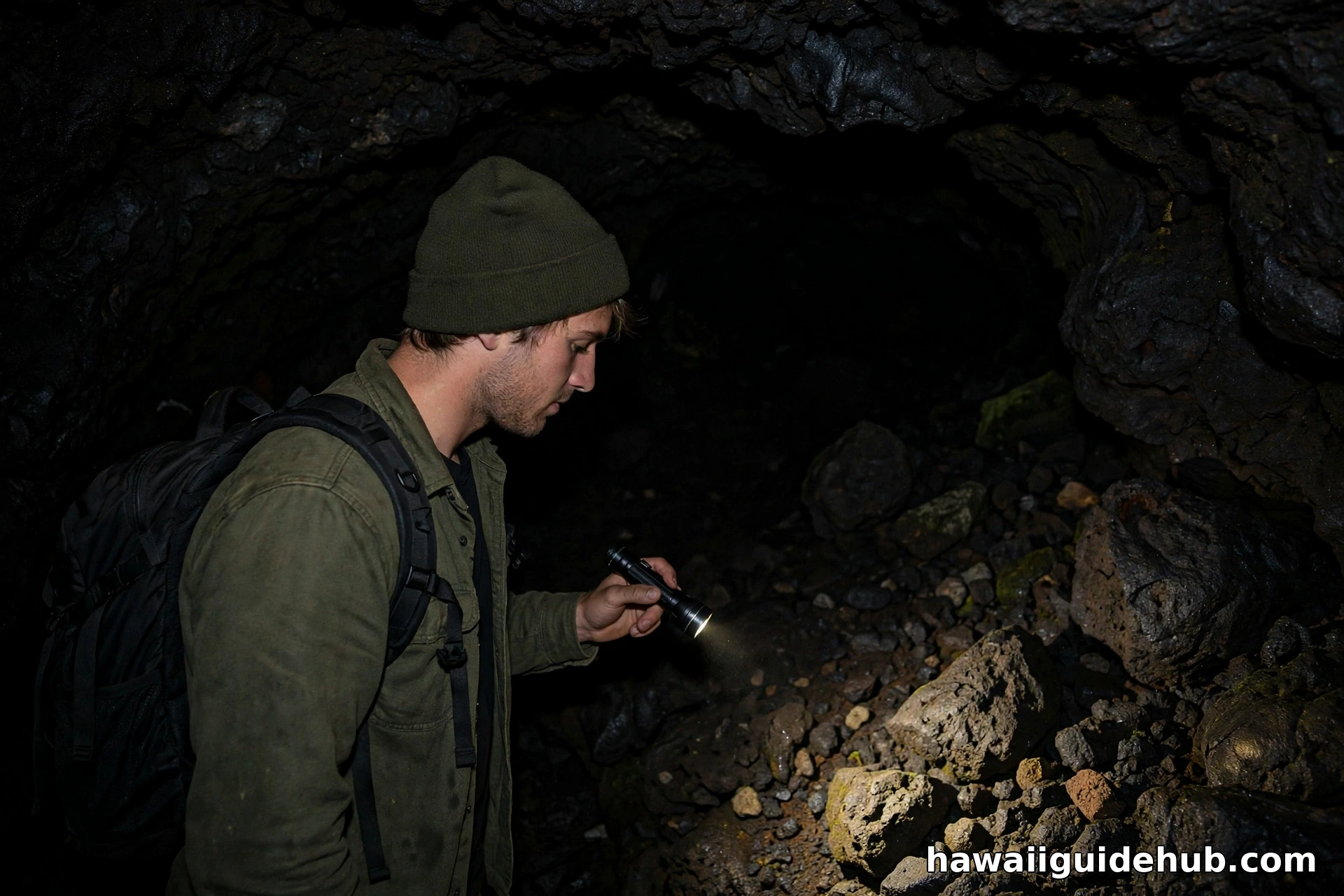
Lava Tube Maui: Hana’s Ka’eleku Caverns, Big Island Tubes & What to Know

Beneath the green hills of Maui and the black rock of the Big Island, rivers of lava once flowed underground. When those rivers drained away, they left behind tunnels: lava tubes. Walking through one feels like stepping inside the plumbing of a volcano. Hawaii has some of the most accessible lava tubes on the planet, and if you are visiting Maui, the Hana Lava Tube (also called Ka’eleku Caverns) is the one to know. This guide covers the lava tubes you can actually visit in Hawaii, how they form, what to expect inside, and how to explore them safely.
What Exactly Is a Lava Tube?
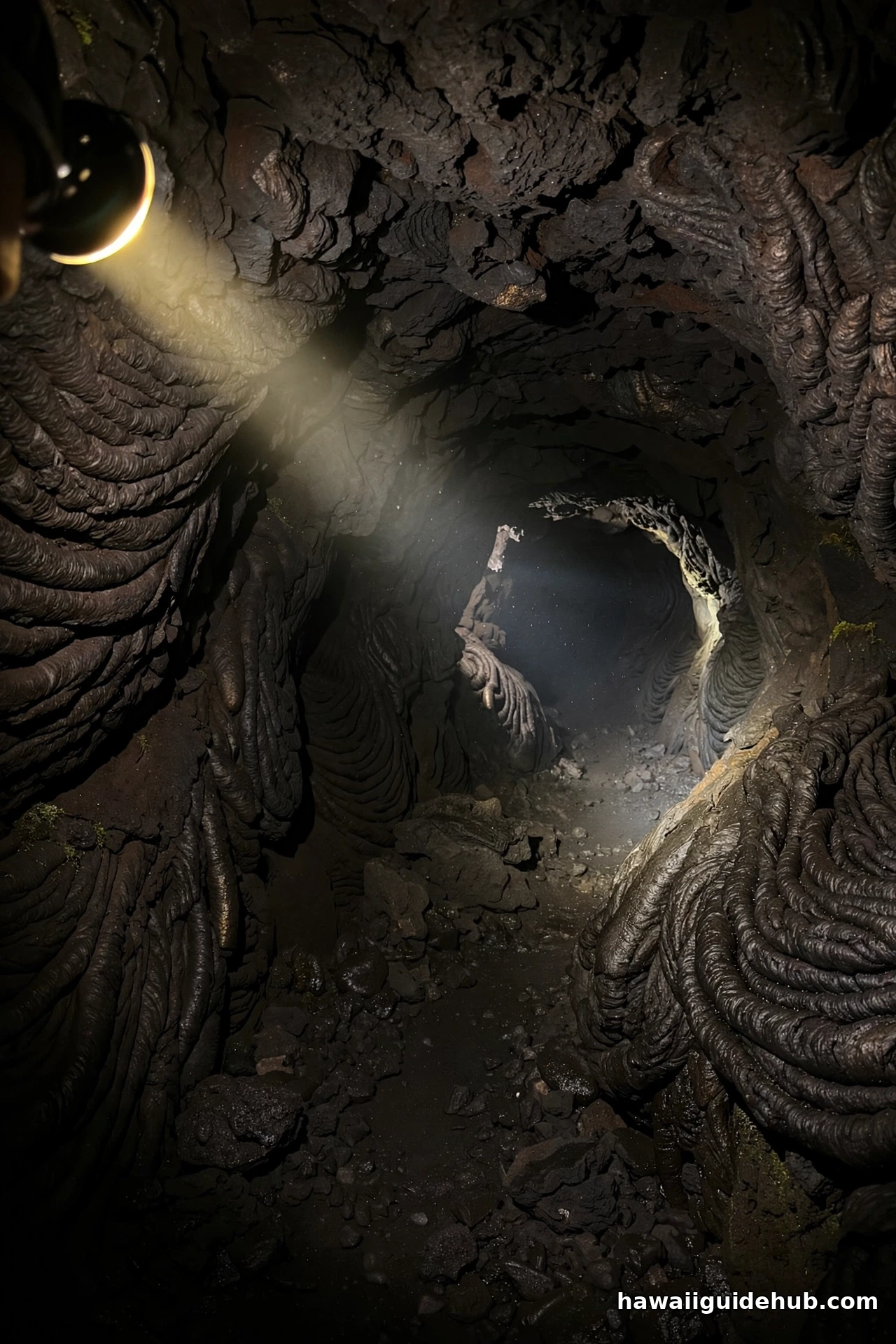
A lava tube is a tunnel left behind by flowing lava. It starts with a pahoehoe flow, the smooth, ropy kind of lava. The outer surface of the flow cools and hardens into a crust, but molten lava keeps moving underneath, insulated by that crust. When the eruption ends or the lava finds another path, the remaining liquid drains downhill, and an empty cave is left behind. While active, lava inside a tube can travel at temperatures above 2,000 degrees Fahrenheit. Once drained and cooled, the tube becomes a permanent cave, sometimes stretching for miles.
Hawaii’s shield volcanoes produce exactly the kind of long-lived, fluid flows that build lava tubes. That is why the islands are riddled with them, from small roadside cracks to caverns big enough to walk through standing upright. A few are open to the public, and those are the ones this guide focuses on.
Hawaii’s Lava Tubes at a Glance
Three lava tube experiences cover nearly every visitor’s needs. Here is how they compare.
| Lava tube | Island | Access and cost | Time needed | Choose it if |
|---|---|---|---|---|
| Hana Lava Tube (Ka’eleku Caverns) | Maui | Private attraction off the Road to Hana; around $12 per adult, kids under 5 free | 30 to 40 minutes | You want a self-guided walk with flashlights provided |
| Nahuku (Thurston Lava Tube) | Big Island | Hawaii Volcanoes National Park; free with park entry ($30 per vehicle, 7-day pass) | 30 to 60 minutes including the walk | You’re already in the park and want an easy lit tube, open 8 AM to 8 PM |
| Kaumana Caves | Big Island | County park near Hilo; free | 20 to 40 minutes | You want the wildest of the three and brought your own light |
Hana Lava Tube (Ka’eleku Caverns): Maui’s Underground Wonder
The Hana Lava Tube is the largest accessible lava tube on Maui and the one most Maui visitors can realistically add to their trip. It sits right along the Road to Hana, which makes it a natural stop on that famous drive.
Where to Find It
The tube is located at 205 Ulaino Road in Hana. Driving from Paia toward Hana, watch for mile marker 31 on the Hana Highway, then turn toward the ocean onto Ulaino Road. The entrance is less than half a mile ahead on the left. The phone number is (808) 248-7308 if you want to confirm hours before you go.
Hours, Admission and What to Expect
The attraction is open daily from 10:30 AM to 4:00 PM. Admission is around $12 per person, and children 5 and under go free. The tour is self-guided and takes most people 30 to 40 minutes. Strong flashlights are provided with admission, and handrails line the rockier stretches of the path.
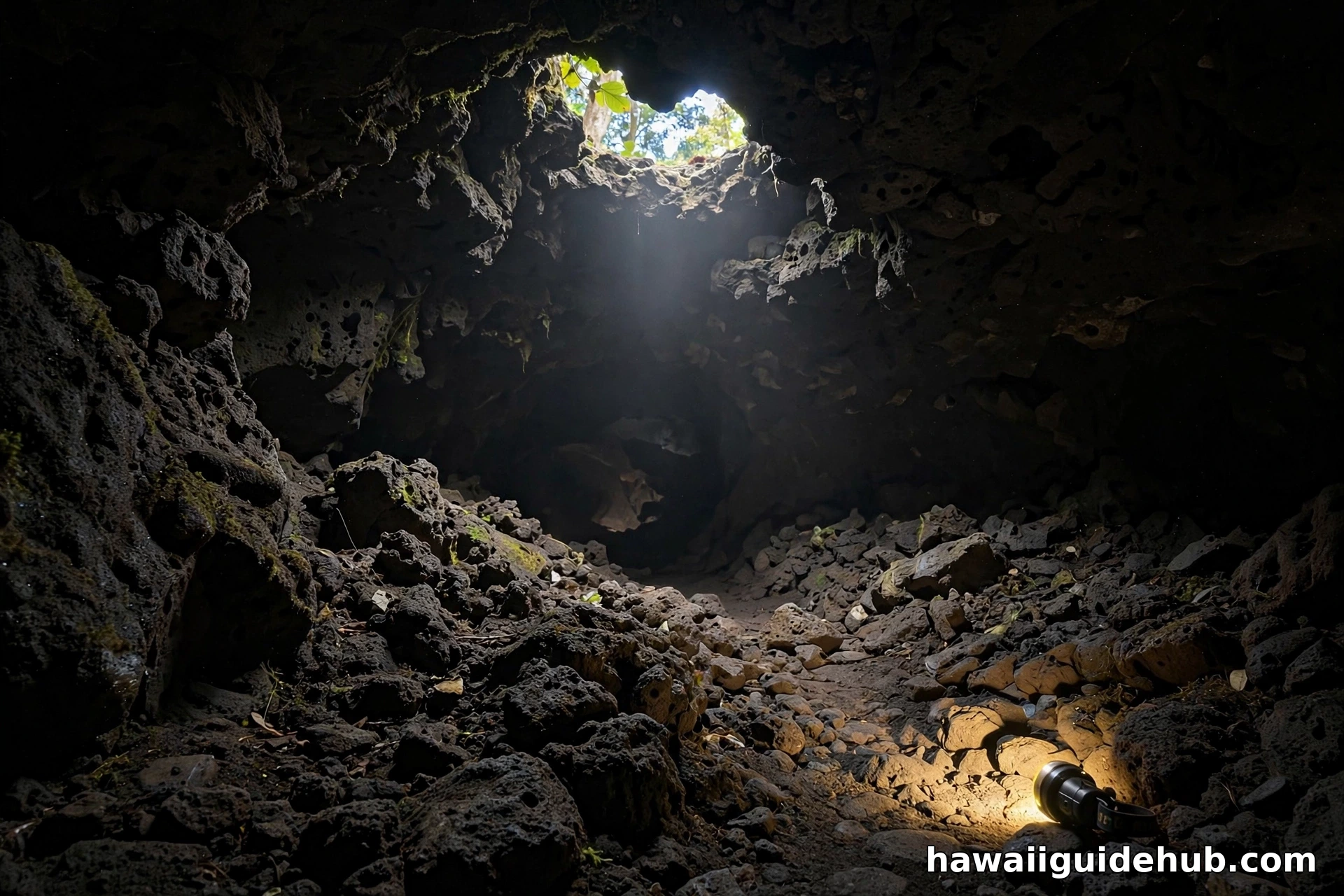
The walk covers about a third of a mile through the tube. The cave is spacious rather than claustrophobic, with a cinder path underfoot, though the ground can be uneven and damp. Wear shoes with good grip. The cave stays between about 66 and 72 degrees year round, which feels wonderful on a hot Hana day. There are no bats and no mosquitoes inside.
What You Will See Inside
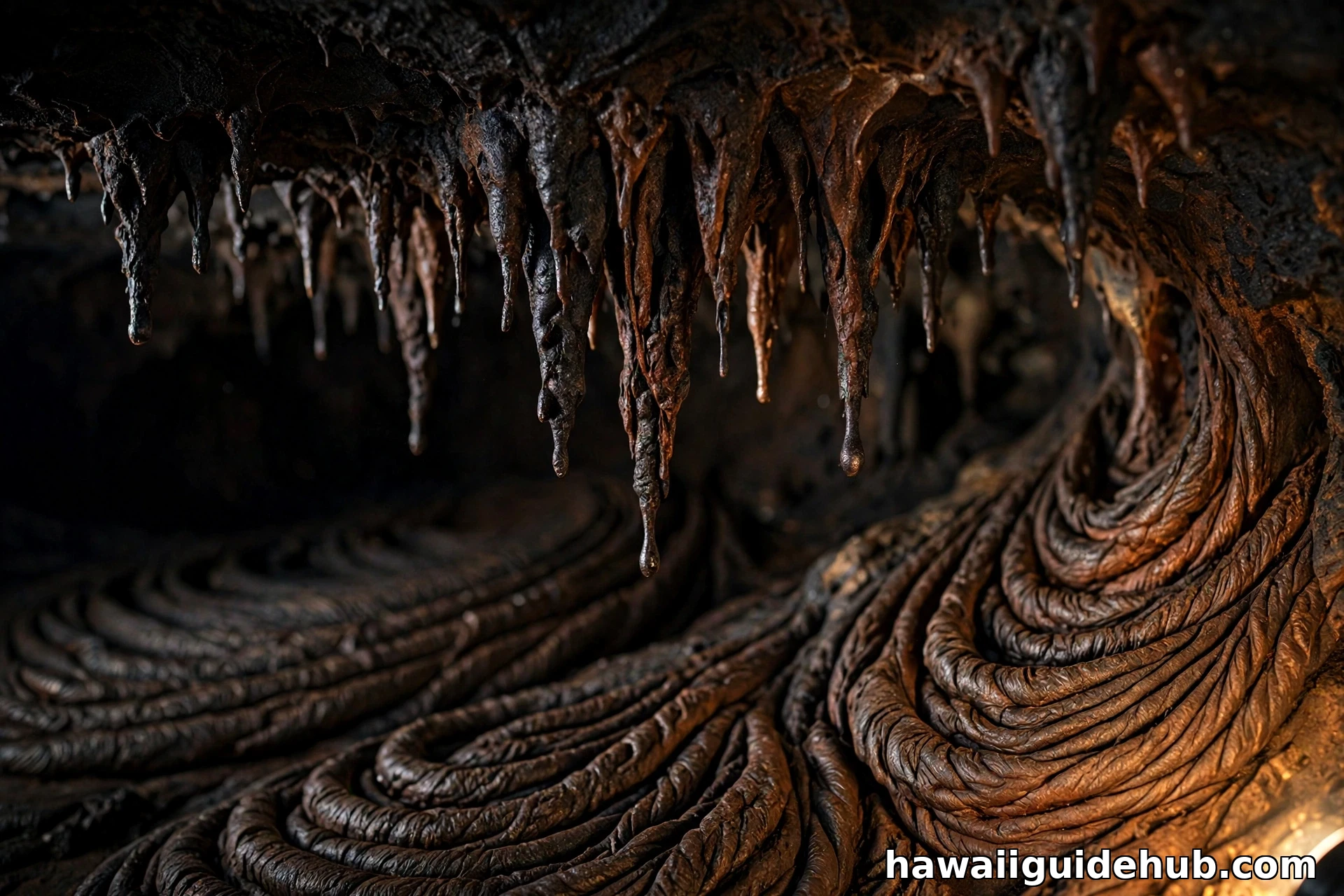
More than 30 educational signs along the route explain the geology and history as you walk. The formations are the real show: lavacicles (lava stalactites formed by dripping lava), stalagmites, ropey pahoehoe that looks like brownie batter, pillars, flowstone, and a stretch called the chocolate corridor where the ceiling looks like dripping chocolate. Sunlight falls through a collapsed skylight in one section, feeding a small patch of green ferns, the only plant life inside. A fun tradition: turn off all your flashlights for a moment near the end and experience true underground darkness.
A Surprising Bit of History
The tube formed roughly 960 to 1,000 years ago when lava flowed toward the sea for nearly two years after the eruption that created it. In places the ceiling is 30 to 60 feet thick, which is why the government once considered the cave as a fallout shelter. During an earlier era, a local slaughterhouse used part of the cave as a dumping ground, and the owner reportedly removed some 17,000 pounds of cattle bones before opening it to visitors. Keep an eye out and you might still spot a bone or two. The grounds also include a Red Ti botanical garden maze, which is worth a try after the cave.
Nahuku (Thurston Lava Tube): The Big Island Classic
If your trip includes the Big Island, the most famous lava tube in Hawaii is Nahuku, long known as the Thurston Lava Tube, inside Hawaii Volcanoes National Park. It formed more than 500 years ago during a Kilauea eruption and was discovered in 1913 by Lorrin Thurston, a Honolulu newspaper publisher. The Hawaiian name, Nahuku, means “the protuberances,” a reference to the lava drippings that once hung from its ceiling before early visitors carried them off as souvenirs.
Visiting Nahuku
The tube sits at the end of a short rainforest trail off Crater Rim Drive, about a 15-minute walk from the Kilauea Iki Overlook parking area. The lit portion of the tube is roughly 400 feet long with ceilings up to about 20 feet high, and electric lights illuminate it from 8 AM to 8 PM daily. Outside those hours you need a strong headlamp, since phone lights are not bright enough. There is no separate admission for the tube; you pay the national park entry fee of $30 per private vehicle, good for seven days. The trail to the entrance is paved with handrails but is not wheelchair accessible, and it is often wet.
What Changed in 2018
Before 2018, adventurous visitors could continue past the lit section into a longer, completely dark extension of the tube. A roof collapse during the 2018 Kilauea summit eruption closed that extension permanently, and the trail now ends at a barricade. The lit portion remains open and is still one of the easiest lava tube walks in Hawaii.
Kaumana Caves: A Free, Unguided Option Near Hilo
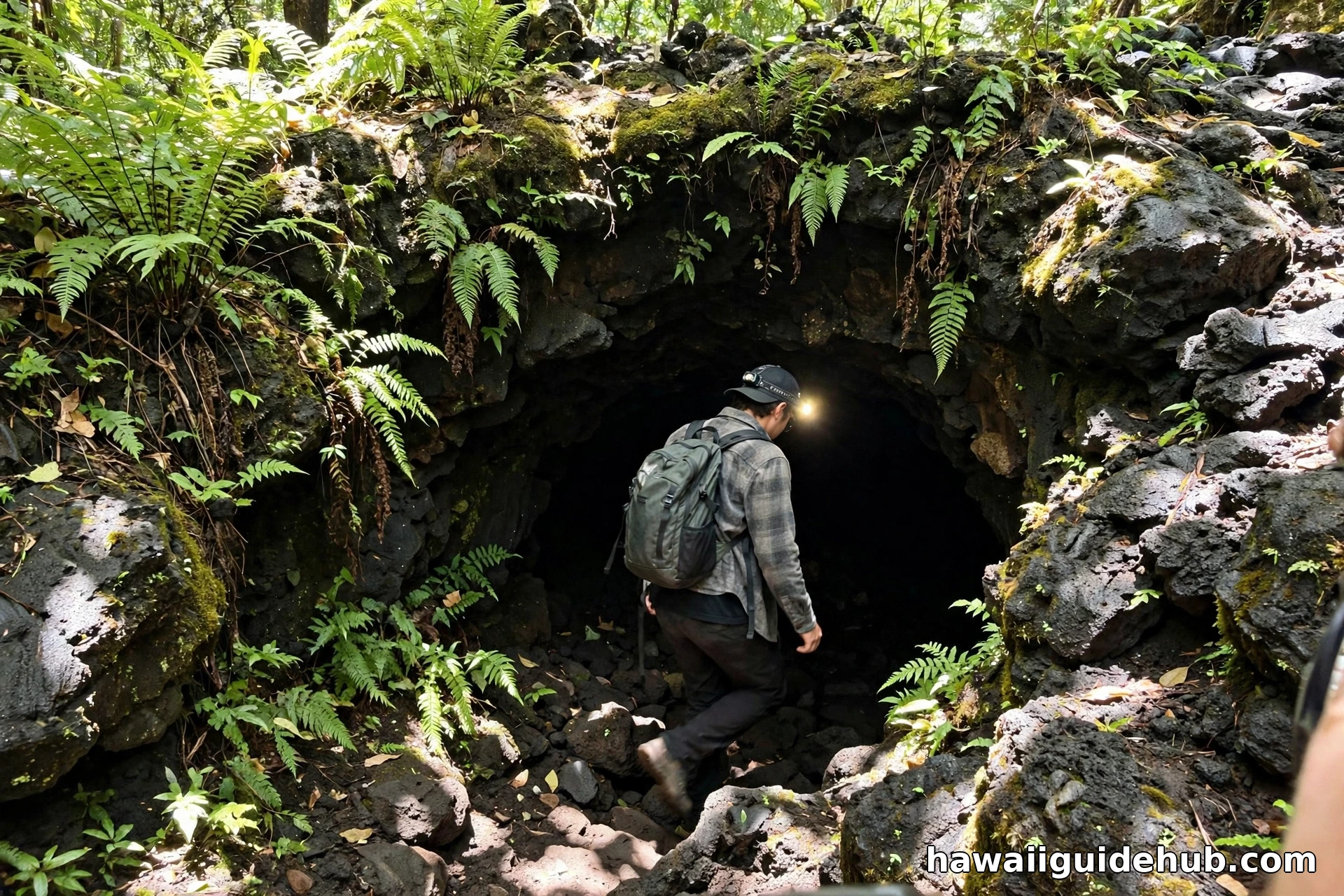
For travelers who prefer their caves raw, Kaumana Caves County Park near Hilo offers a free, unguided lava tube with no admission booth and no lights. This is a wilder experience: you bring your own flashlight, watch your step on uneven ground, and explore at your own risk. It is a good pick for confident, well-prepared explorers, but families and casual visitors are better served by the Hana or Nahuku tubes.
How Lava Tubes Form
The recipe is simple but requires the right volcano. First, fluid pahoehoe lava flows across the landscape. Its exposed surface chills and crusts over while the interior stays molten and keeps moving, sometimes for miles. Levees of cooled lava can wall the stream in, roofing it over completely. When the eruption stops or the lava diverts, gravity drains the tunnel, leaving a hollow tube. Skylights form where thin spots in the roof collapse. Over centuries, mineral-rich water dripping through the rock can decorate tubes with secondary formations, and in Hawaii’s wet climate, roots and water find their way in quickly.
Lava Tube Hazards and How to Stay Safe
Lava tubes are natural caves, not engineered attractions, so a little caution goes a long way.
- Wear sturdy, closed-toe shoes. Floors are rocky, uneven, and often wet. Sandals are a bad idea.
- Bring a real light. Even where flashlights are provided, a backup headlamp helps. Phone screens are not enough in true darkness.
- Watch your head. Ceilings vary, and some sections are low. Move slowly in unfamiliar stretches.
- Stay on the marked path. Off-trail areas can have hidden pits, unstable floors, and fragile formations.
- Do not touch or take formations. Oils from skin damage delicate features, and removing rock is illegal in parks and disrespectful everywhere.
- Check conditions. Heavy rain can flood low sections, and rockfalls, while rare, are a real hazard in natural caves.
One more caution for the truly adventurous: never walk on thin crust near active lava flows. Hidden tubes under fresh flows can collapse without warning.
A Quick Glossary: Tubes, Caves and Lavacicles
Lava tube: a tunnel formed by a drained underground lava river. Lava cave: a general term for any cave in volcanic rock, including tubes, blisters, and sea caves. Lavacicle: a stalactite-like formation made by dripping molten lava. Pahoehoe: smooth, ropy lava that builds tubes. A’a: rough, clinkery lava that generally does not. Skylight: a collapsed opening in a tube’s roof that lets in daylight.
Why Lava Tubes Matter
Beyond their wow factor, lava tubes are scientific and cultural time capsules. Their stable temperatures and isolation shelter unique life: Hawaii’s tubes host blind, pigmentless insects like cave crickets and millipedes found nowhere else on Earth. Geologists read flow direction, eruption duration, and lava chemistry from tube walls. And for Hawaiians, caves were historically used for shelter, storage, and burials, which is why treating them with respect matters as much as the geology does. Look, learn, photograph, and leave everything exactly as you found it.
Tips for Visiting the Hana Lava Tube
A little planning makes the stop much better. Arrive earlier in the day if you can: the tube opens at 10:30 AM, and midday tour buses can make the narrow path feel crowded. Budget about an hour total including the garden maze and the gift area, even though the cave walk itself is only 30 to 40 minutes.
Pair the tube with nearby Road to Hana stops to make the drive efficient. Wai’anapanapa State Park’s black sand beach and the town of Hana itself are both easy additions on the same day. Note that Wai’anapanapa now requires advance reservations, so book that separately before your trip. Bring a light jacket or long sleeves: the cave’s steady 66 to 72 degrees feels chilly after the humid Hana heat, especially if you are damp from a waterfall stop.
Photography inside is tricky but doable. The cave is genuinely dark, so turn off your flash and brace your phone against a handrail for steadier shots. The skylight section, where sunbeams hit the ferns, gives the best photos by far. And remember the golden rule of every cave in Hawaii: take only pictures, leave only footprints. The formations took centuries to grow and seconds to break.
See Inside a Maui Lava Tube
Before you go, take a quick video walk through the Hana tube to see the formations and the lighting conditions.
Frequently Asked Questions
Is there a lava tube on Maui?
Yes. The Hana Lava Tube, also called Ka’eleku Caverns, is on the Road to Hana at 205 Ulaino Road. It is the largest accessible lava tube on Maui, with a self-guided tour that takes about 30 to 40 minutes.
How much does the Hana Lava Tube cost?
Admission is around $12 per person, and children 5 and under are free. Flashlights are included, and no reservation is needed.
What is the difference between a lava tube and a lava cave?
A lava tube is a specific kind of lava cave: a tunnel left by a drained underground lava river. “Lava cave” is the broader term covering tubes, blisters, and other volcanic cavities.
Are Hawaii’s lava tubes safe to visit?
The developed tubes (Hana and Nahuku) are safe for most visitors when you wear sturdy shoes, stay on the path, and carry a good light. Unguided tubes like Kaumana Caves demand more caution and preparation.
Can you visit a lava tube on the Big Island?
Yes. Nahuku (Thurston Lava Tube) in Hawaii Volcanoes National Park is the most famous one, lit daily from 8 AM to 8 PM. Kaumana Caves near Hilo is a free, unguided alternative.
How old are Hawaii’s lava tubes?
It varies. The Hana Lava Tube formed roughly 1,000 years ago, while Nahuku on the Big Island is more than 500 years old. New tubes are still forming wherever fluid lava flows today.
If lava tubes sparked your interest in Hawaii’s geology, pair your visit with the broader outdoor adventures across the islands, from volcano hikes to snorkeling. And if you are still deciding which island fits your trip, start with our first-time visitor guide before you book anything.