Manoa Valley Hawaii: Waterfalls, Rainforest Hikes and the Arboretum

Fifteen minutes from Waikiki, Manoa Valley feels like another planet: a dripping rainforest valley with a 150 foot waterfall, a world class botanical garden, bamboo groves that starred in Jurassic Park, and rain that locals call a blessing. Manoa Valley is Oahu’s green escape, and this is the single complete guide to everything in it.
This page covers the Manoa Falls hike in detail, the Lyon Arboretum, the Manoa Heritage Center, where the valley appears in film, how to get there, what to bring, and FAQs. Everything about Manoa Valley is here on this one page.
Why It Rains Every Day: Manoa’s Weather Machine
Manoa’s rain is not bad luck; it is physics. The northeast trade winds push warm moist ocean air against the Koʻolau mountains, the air rises, cools, and squeezes out its moisture right over the valley: classic orographic rainfall. The back of Manoa receives well over 100 inches a year, which is why the falls almost always flow and the forest looks the way it does. The showers are usually brief and warm, the kind you can walk through laughing, and they are followed by the valley’s famous rainbows. Locals consider Manoa rain a blessing, and after one hike you will too.
Birds and Wildlife
The valley’s birdlife rewards quiet hikers. Native apapane and amakihi, small red and yellow honeycreepers, work the flowering trees, while introduced species like the red vented bulbul and Japanese white eye fill the understory with noise. Bring binoculars if you are a birder; the arboretum’s upper trails are the best viewing. You may also spot Jackson’s chameleons, an introduced species now common in the valley’s vegetation. Wild pigs root through the undergrowth at night, which is one more reason to stay on the trail.
Photography Tips
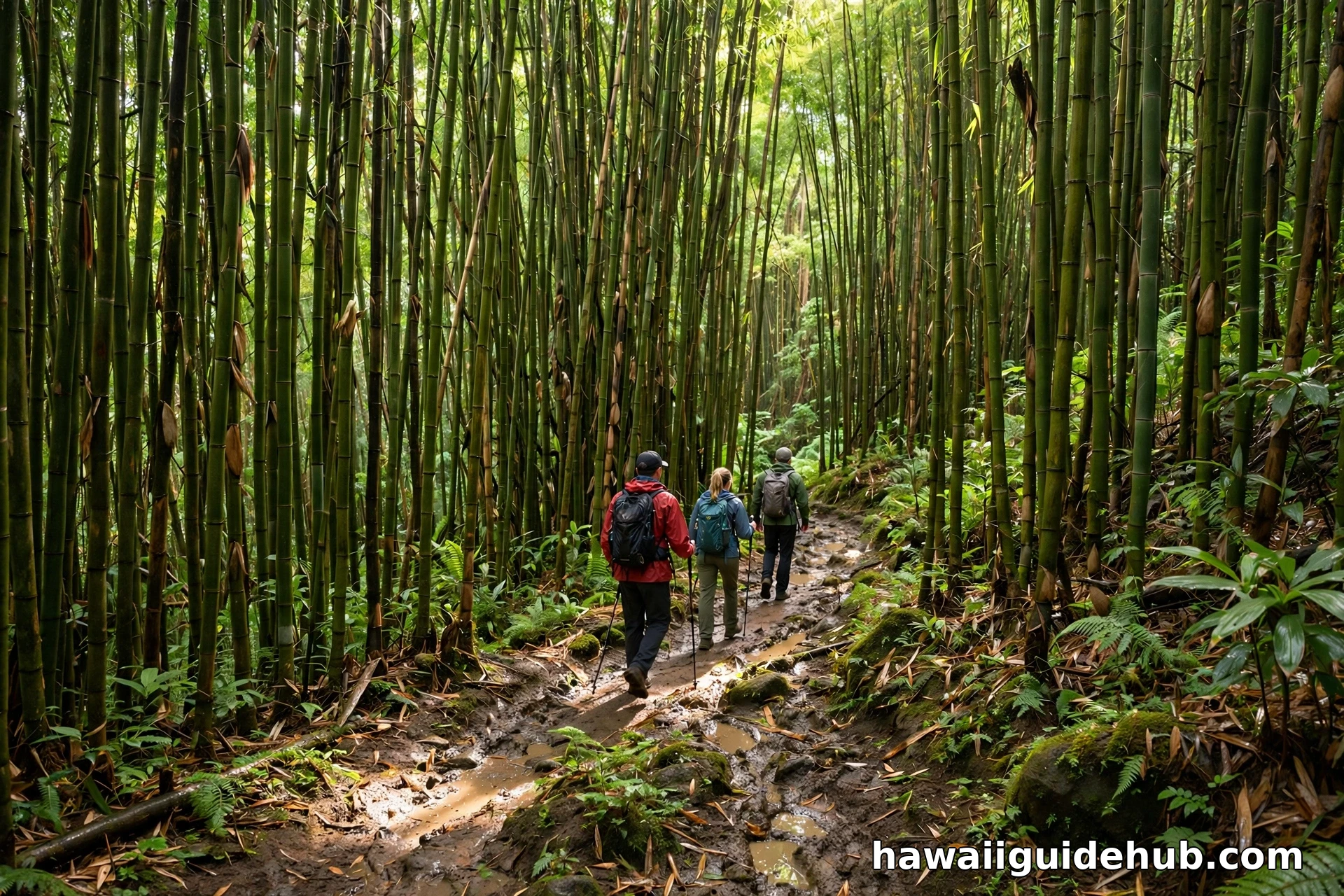
Manoa is a low light environment: the canopy eats the sun, the falls sit in shadow, and the mist adds atmosphere but fools meters. Use a tripod or brace against a tree for the falls, and do not be afraid of high ISO; a sharp noisy shot beats a blurry clean one. The bamboo grove photographs best looking straight down the trail with a hiker for scale. Protect your gear: a simple rain sleeve or even a shower cap saves cameras, and wipe the lens constantly in the falls’ spray. The money shot is the falls with a rainbow in the mist, which happens on sunny mornings after rain: be there early and be patient.
The Legend of Manoa: Kahalaopuna
Every Hawaiian valley has its legend, and Manoa’s is one of the saddest. Kahalaopuna was a beautiful maiden of Manoa Valley, loved by the wind and rain gods, whose jealousy destroyed her. The wind of Manoa, the Kaukau, and the rain, the Tuahine, are named in the old chants, and Hawaiians say you can still feel the story in the valley’s sudden mists. Knowing the legend changes the hike: the rain is not weather, it is the valley remembering.
Manoa Heritage Center
On the grounds of a historic valley estate, the Manoa Heritage Center runs guided tours through native Hawaiian gardens, ancient taro terraces, and one of the last intact heiau complexes in urban Honolulu. It calls itself a 3.5 acre living classroom, and it earns the name: the tours connect the plants, the archaeology, and the legends into a single story. Check tour times ahead; they run on a schedule, not drop in. For families, this is the valley’s best cultural stop, deeper than any signboard.
The University and the College Town
The University of Hawaii at Manoa anchors the valley’s lower end, and the surrounding streets have the easy feel of a college town: plate lunch shops, bubble tea, bookstores, and the weekly farmers markets at Manoa Marketplace. If you are visiting on a Sunday or Thursday, the marketplace’s farmers market is worth timing your trip around: tropical fruit, fresh poke, local honey, and seedlings from valley growers. It is where Manoa shops for itself.
Manoa on Screen
The valley’s film career deserves its own paragraph. Steven Spielberg’s Jurassic Park used Manoa’s jungle for the Gallimimus valley stampede sequence. Lost filmed extensively in the valley’s forests across six seasons. Hawaii Five-0 and Magnum P.I. both used the falls trail area. The Hunger Games: Catching Fire shot arena scenes here. Location scouts keep coming back for the same reason hikers do: within 15 minutes of downtown Honolulu, Manoa looks like the beginning of the world.
Beyond the Falls: Harder Manoa Trails
Fit hikers can go further. The Aihualama Trail branches left before the falls and switchbacks steeply up to Pauoa Flats and the ridge trail network above, a serious climb with big payoff views. The Manoa Cliff Trail contours along the valley rim with easier grades and fine views down into the green. Above the valley, the Tantalus drive and trail system offers Honolulu’s best sunset lookouts. These are real hikes: bring water, tell someone your plan, and check Hawaii DLNR’s Na Ala Hele trail site for closures, because Manoa trails close in severe weather.
When to Go
Manoa is a year round destination, but the experience shifts with the seasons. Winter (November to March) brings the heaviest rain and the most dramatic falls, plus the muddiest trail. Summer is drier and the falls can thin, but the hiking is easier. Morning is always better than afternoon: the parking lot fills, the tour buses arrive around 10, and the valley’s famous rainbows appear most often in the morning light after a passing shower. If you only remember one tip, make it this: go early.
What Is Manoa Valley?
Manoa is a lush residential valley about three miles inland from downtown Honolulu, home to the University of Hawaii’s flagship campus and some of the wettest, greenest scenery on Oahu. The valley traps moisture against the Koʻolau mountains, which is why it rains here almost daily, usually in brief passing showers, and why everything grows with such abandon. The name is often translated as “vast,” and standing at the back of the valley under the dripping cliffs, it fits.
The Manoa Falls Hike
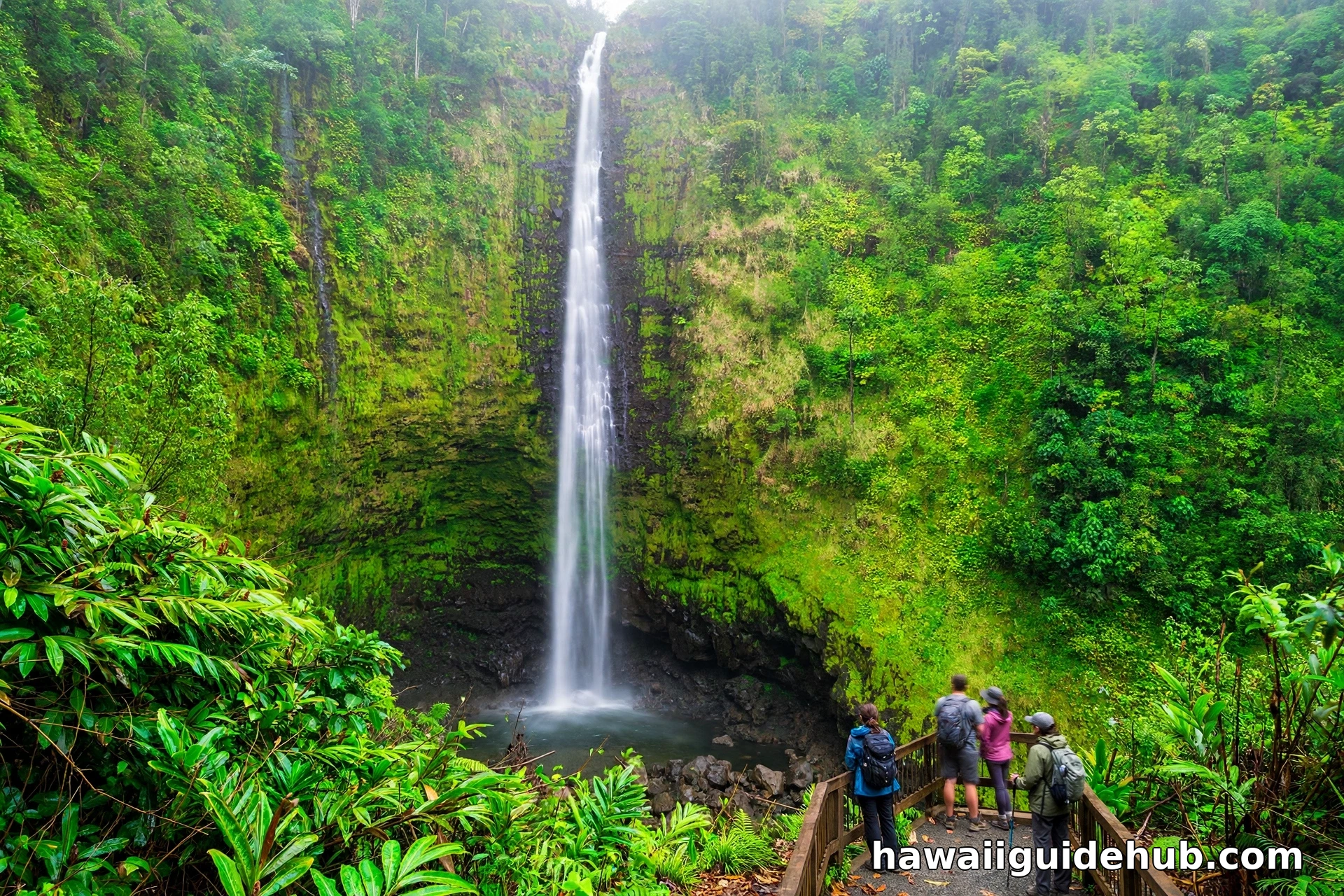
The Manoa Falls Trail is Oahu’s most popular rainforest hike: 1.6 miles round trip through bamboo forest, past giant eucalyptus and strangler figs, to a 150 foot waterfall pouring off a sheer cliff. The trail is rated easy to moderate, but the operative word is muddy. Manoa’s daily rain keeps the red dirt slick, so wear shoes with real grip, expect to get dirty, and bring a rain jacket even on sunny mornings.
Parking is in a paid lot near the trailhead (about $5 to $7 per car per recent visitor reports), and it fills by mid morning, so arrive before 9 AM or take TheBus route 5 from Ala Moana and walk the last stretch. The hike takes 1 to 1.5 hours round trip at a relaxed pace. At the falls, stay behind the barriers: rock slides are common around the cliff walls, and swimming is discouraged because the water can carry leptospirosis. The falls vary with rain: after a storm they thunder; in dry spells they thin to a veil. Either way the grotto is spectacular.
The Bamboo Forest and Film Locations
Halfway up the trail you pass through the bamboo grove, a cathedral of green stalks that clack in the wind. This stretch and the surrounding valley have starred in Jurassic Park, Lost, Hawaii Five-0, and The Hunger Games: Catching Fire. The valley looks prehistoric because in a sense it is: these wet windward valleys are among the oldest landscapes on Oahu, and the feeling of deep time is the real special effect.
Lyon Arboretum
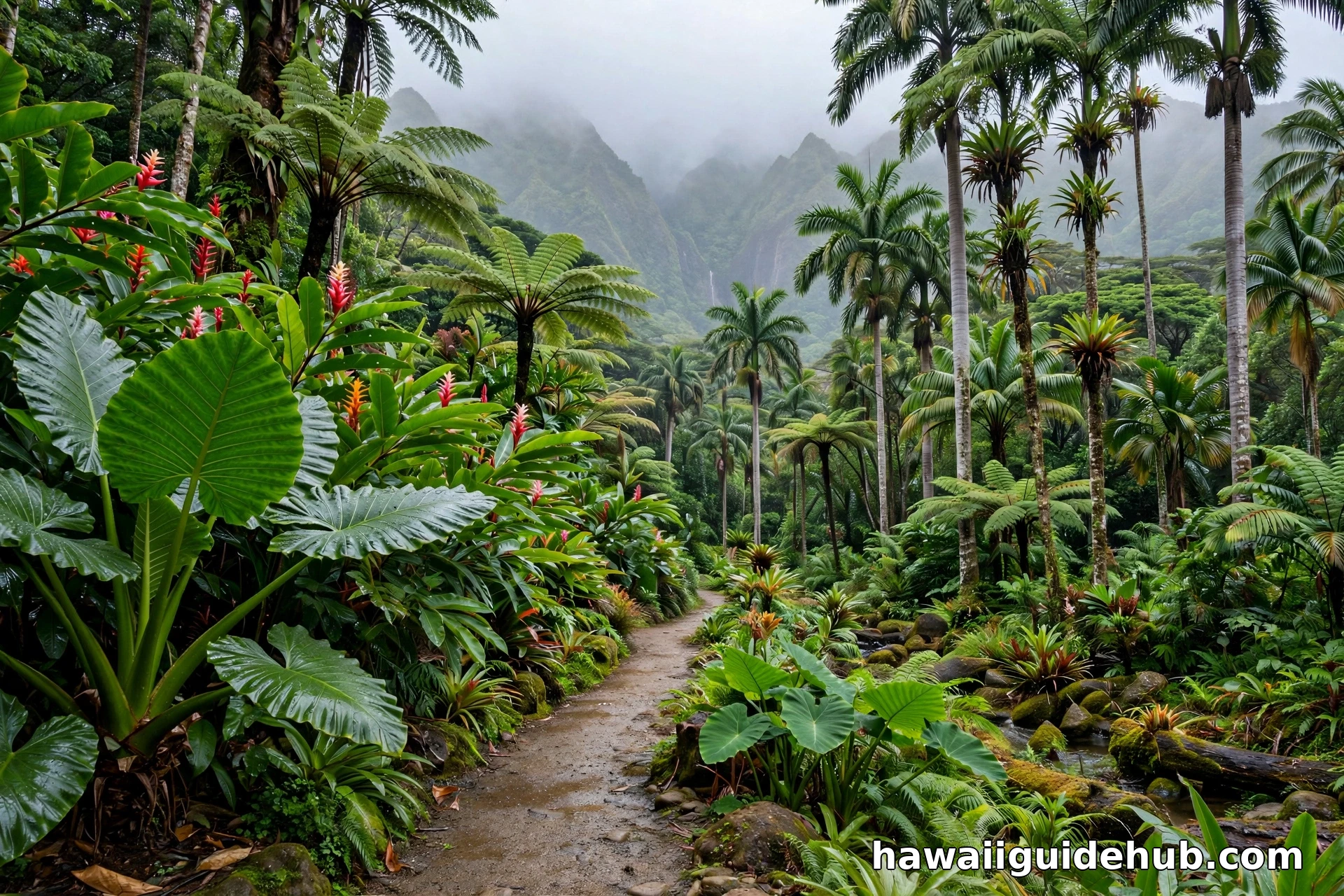
Right by the trailhead sits the Harold L. Lyon Arboretum, the only university botanical garden in a US tropical rainforest. Two hundred acres, more than 5,000 species of tropical and subtropical plants, 7 miles of trails, themed gardens including a Native Hawaiian garden and a spice garden, all run by the University of Hawaii. Admission is free with a requested donation; hours are weekdays 8 to 4 and Saturdays 9 to 3 per the arboretum’s published schedule. Most Manoa Falls hikers walk right past it. Do not be most hikers: the arboretum is quieter, deeper, and in some ways more beautiful than the falls trail.
Manoa Valley in a Half Day: How to Stack the Stops
| Stop | Time | Cost | Why go | Skip if |
| Manoa Falls hike | 1.5 hours | Parking ~$5 to $7 per recent reports | The iconic waterfall and bamboo forest | You hate mud or crowds |
| Lyon Arboretum | 1 to 2 hours | Free; donation requested | Quieter, deeper rainforest; 5,000+ plant species | You only have time for one stop |
| Manoa Heritage Center | 45 minutes | Tour fees vary; check ahead | Hawaiian culture and native plants; living classroom | Kids under 8 may lose interest |
| Manoa Marketplace | 30 minutes | Free entry | Farmers market twice weekly; local food | Not a market day |
The ideal morning: arrive by 8:30, hike the falls before the crowds, spend an hour in the arboretum, and finish with lunch in the valley. You are back in Waikiki by early afternoon with the whole beach day ahead. For more Oahu planning, see what not to miss on Oahu and how to visit Pearl Harbor on your own.
Manoa With Kids
Manoa is one of Oahu’s best family hikes: short, shady, and full of things that delight children, from the bamboo forest to the stream crossings. Kids over five usually manage the full trail; younger ones do fine for the first half mile to the bamboo grove and back, which is the prettiest stretch anyway. Bring a change of clothes and towels in the car, because children and Manoa mud are a guaranteed combination. The arboretum is stroller friendly on its main paths, making it the better choice for toddlers. Pack snacks: there is no food at the trailhead beyond a small shop with limited hours.
What to Bring
The Manoa packing list is short but non negotiable: grippy closed toe shoes you do not mind muddying, a light rain jacket, mosquito repellent, water, and a dry bag or ziplock for your phone. Trekking poles help on the slick sections if your knees complain. Everything else, snacks, camera, swimsuit for later, is optional. Do not bring white sneakers unless you want brown ones.
Video: Manoa Falls Trail Guide
Everything to know before hiking Manoa Falls: parking, trail conditions, and safety.
Frequently Asked Questions
How long is the Manoa Falls hike?
1.6 miles round trip, about 1 to 1.5 hours at a relaxed pace.
Can you swim at Manoa Falls?
It is discouraged. Rock slides are common and the water may carry leptospirosis. Stay behind the barriers.
Is Manoa Falls free?
The trail is free; parking costs about $5 to $7 per car per recent visitor reports.
How do I get to Manoa Valley from Waikiki?
Drive 15 minutes inland, or take TheBus route 5 from Ala Moana and walk from the Manoa stop to the trailhead.
What movies were filmed in Manoa Valley?
Jurassic Park, Lost, Hawaii Five-0, and The Hunger Games: Catching Fire all filmed in the valley.
Is the Lyon Arboretum worth visiting?
Yes. It is free, quiet, and holds 5,000+ tropical plant species across 200 acres: a deeper experience than the falls trail alone.
Manoa Valley is the Oahu that the postcards leave out, and it is the Oahu you will remember longest. The mud washes off. The feeling of standing in a green cathedral with water pouring off a 150 foot cliff while a bamboo forest clacks overhead does not. Go early, embrace the rain, and spend the afternoon at Sharks Cove on the North Shore.
The valley has been welcoming travelers for over a century, and it will be here long after your footprints wash away in the next shower.