Kahana Bay Beach Park: Oahu’s Hidden Crescent of Sand, Culture, and Calm

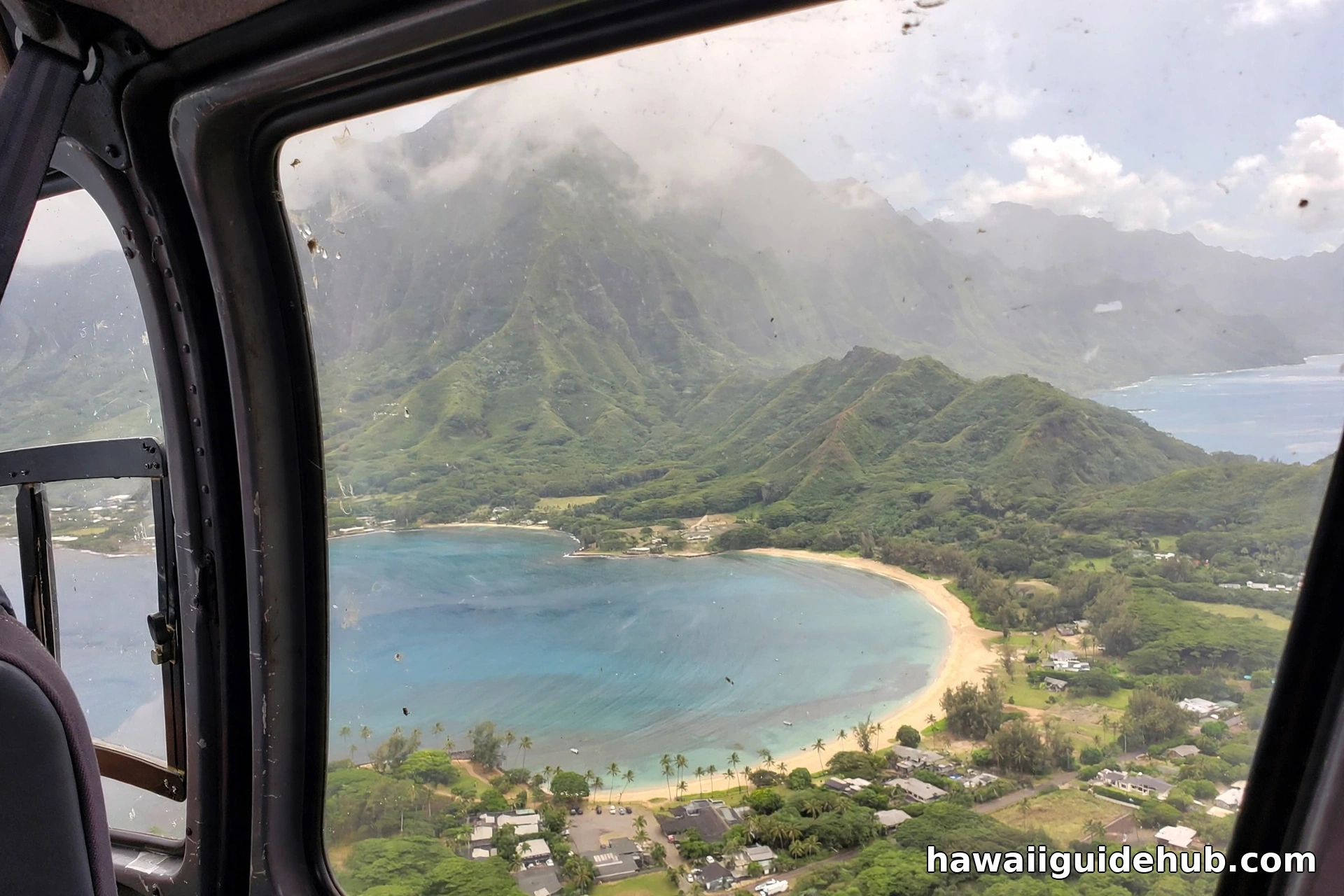
Most visitors blow right past it. The Kamehameha Highway curves along Oahu’s windward coast, the Koʻolau cliffs rising on one side and the Pacific glittering on the other, and drivers headed for the North Shore barely slow down at the small sign for Kahana Bay. Those who do stop find something the rest of the island’s famous beaches cannot offer: a crescent of golden sand wrapped around one of the calmest bays on Oahu, backed by a lush valley where ancient Hawaiians once farmed fish in a pond they built by hand, and where their descendants still live and work today.
Kahana Bay Beach Park sits inside Ahupuaʻa ʻO Kahana State Park, and the distinction matters. This is not just a pretty beach with a parking lot. It is one of the few places in Hawaii managed as a living cultural park, where the land is meant to be used the way it always was: for fishing, farming, gathering, and teaching. About thirty families live in the valley under a special arrangement with the state, keeping Hawaiian traditions alive in the same ahupuaʻa, the traditional land division running from mountain to sea, that sustained their ancestors. Visiting here feels different from anywhere else on Oahu, quieter and more grounded, like stepping into the Hawaii that existed before the high-rises.
Where Kahana Bay Sits and Why It Feels So Remote
You will find Kahana Bay on the windward coast, roughly between Kaaawa and Punaluu, about 40 minutes from Waikiki without traffic. The address is 52-222 Kamehameha Highway in Hauula. The park is open daily, with summer hours from 7:00 AM to 7:45 PM starting April 1 and winter hours from 7:00 AM to 6:45 PM after Labor Day. There is no entrance fee and parking is free.
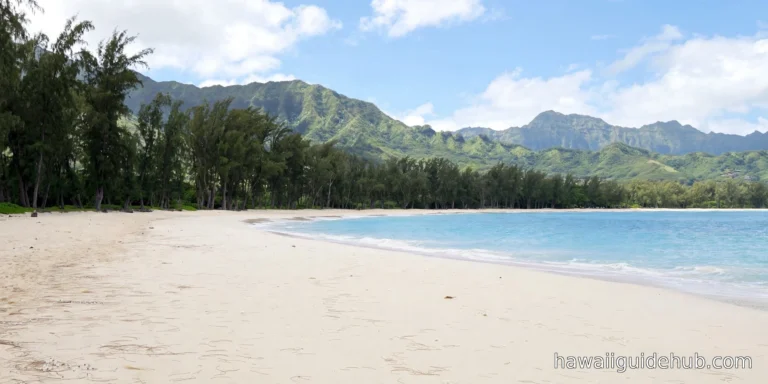
What strikes you first is the setting. The bay is a near-perfect crescent, sheltered from the open ocean, with the steep green walls of the Koʻolau range closing in behind it. Ironwood trees line the sand, their needle-like leaves whispering in the trade winds. On a weekday morning you might share the entire beach with a handful of fishermen and a white egret or two. It is the kind of place that makes you wonder why everyone crowds into Waikiki.
The remoteness is real but manageable. There are restrooms, outdoor showers, picnic tables, and a boat ramp. What you will not find are lifeguards, food concessions, or equipment rentals, so bring everything you need. Cell service can be spotty in the valley, which honestly adds to the charm.
The Bay Itself: Calm Water in a Wild Setting
Kahana Bay is one of the calmest swimming spots on the windward side, protected from the surf that pounds other parts of the coast. The water is shallow near shore and warms up nicely on sunny days, making it a good choice for families with small children and for anyone learning to paddle. Kayakers and stand-up paddleboarders love it here on calm mornings, gliding across glassy water with the mountains reflected around them. Bring your own gear, since nothing is rented at the park.
One honest caveat: Kahana Stream feeds into the bay, and after heavy rain the runoff can turn the water murky. This is one of the wettest valleys on Oahu, so showers are common. On clear days the water is lovely. After a big rain, give it a day to settle, or head for the hiking trails instead. Fishermen work the bay year-round, and you will often see them casting from the shore at dawn.
Huilua Fishpond: A National Historic Landmark in the Water
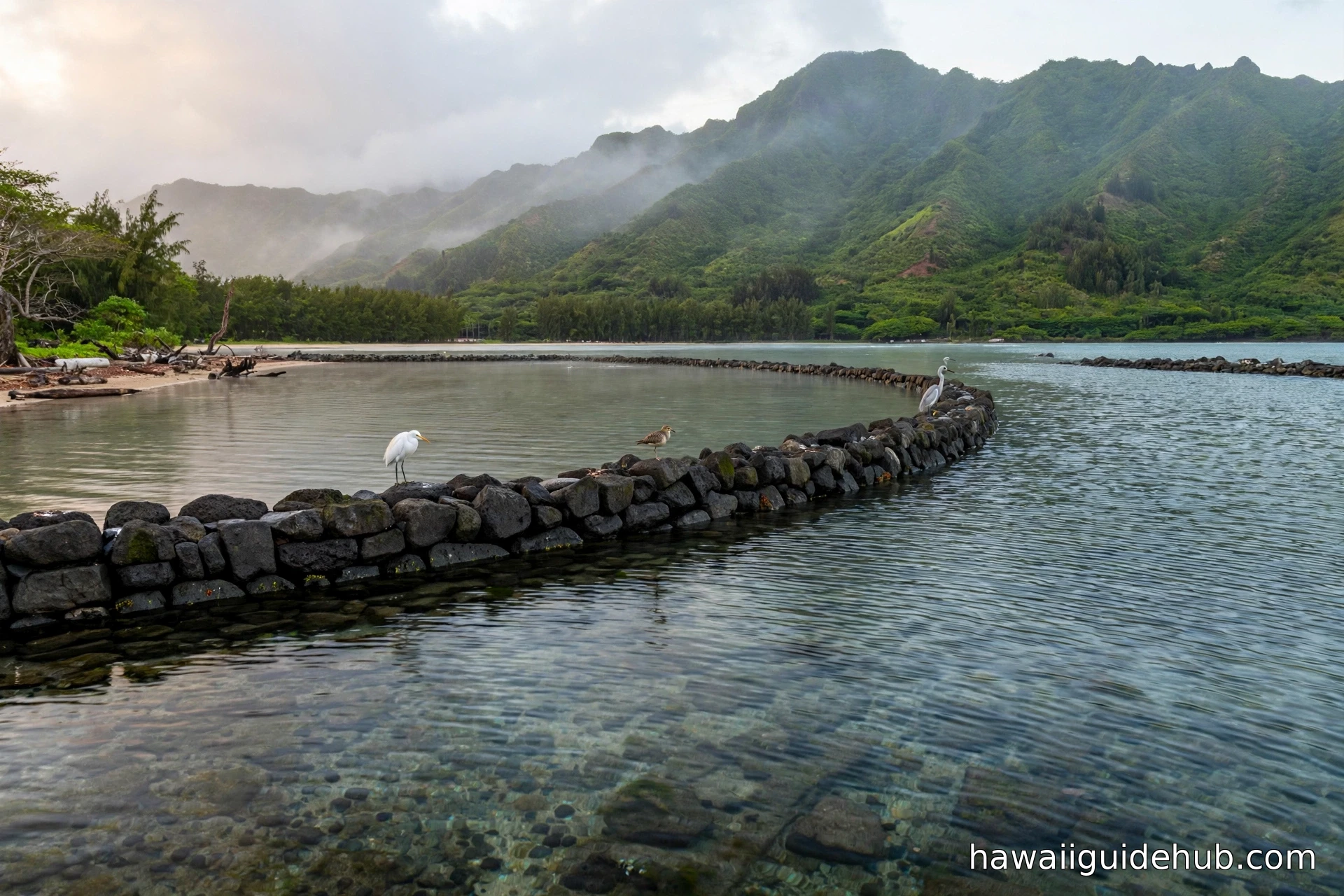
Walk to the eastern end of the bay at low tide and you will see it: a long, low wall of dark volcanic rock curving out into the water, enclosing a section of the bay. This is Huilua Fishpond, and it is one of the most remarkable things you can see on Oahu without paying a cent.
Centuries ago, Hawaiians hauled enormous rocks down from the valley and built this wall by hand, creating an artificial enclosure where young fish could swim in through gaps but could not escape once they grew. It was an ingenious form of aquaculture, and Hawaiians were the only Polynesian people to develop it. The pond once fed the entire ahupuaʻa. Today it stands as a National Historic Landmark, one of the last intact ancient fishponds in Hawaii.
Viewing it is simple. At low tide the wall is clearly visible from the shore, and you can trace its full curve. Egrets and herons often perch along the rocks, hunting in the shallows. Please treat it as the sacred cultural site it is: do not walk on the wall, do not move rocks, and do not disturb anything. The best thing you can do is stand quietly on the sand and appreciate that people built this with their hands long before any of us arrived.
Hiking the Valley: Two Trails Into Old Hawaii
The park maintains two public hiking trails, both free with no permit required, and both worth your time. Trail maps are available at the park’s orientation center.
Kapaʻeleʻele Koʻa Trail
This is the easier of the two, a relatively short coastal trail that leads to a fishing shrine, or koʻa, with sweeping views back across the bay. It is a good choice if you want a taste of the valley without committing to a long hike. The path can be muddy after rain, which is most of the time in Kahana, so wear shoes you do not mind getting dirty.
Nakoa Trail
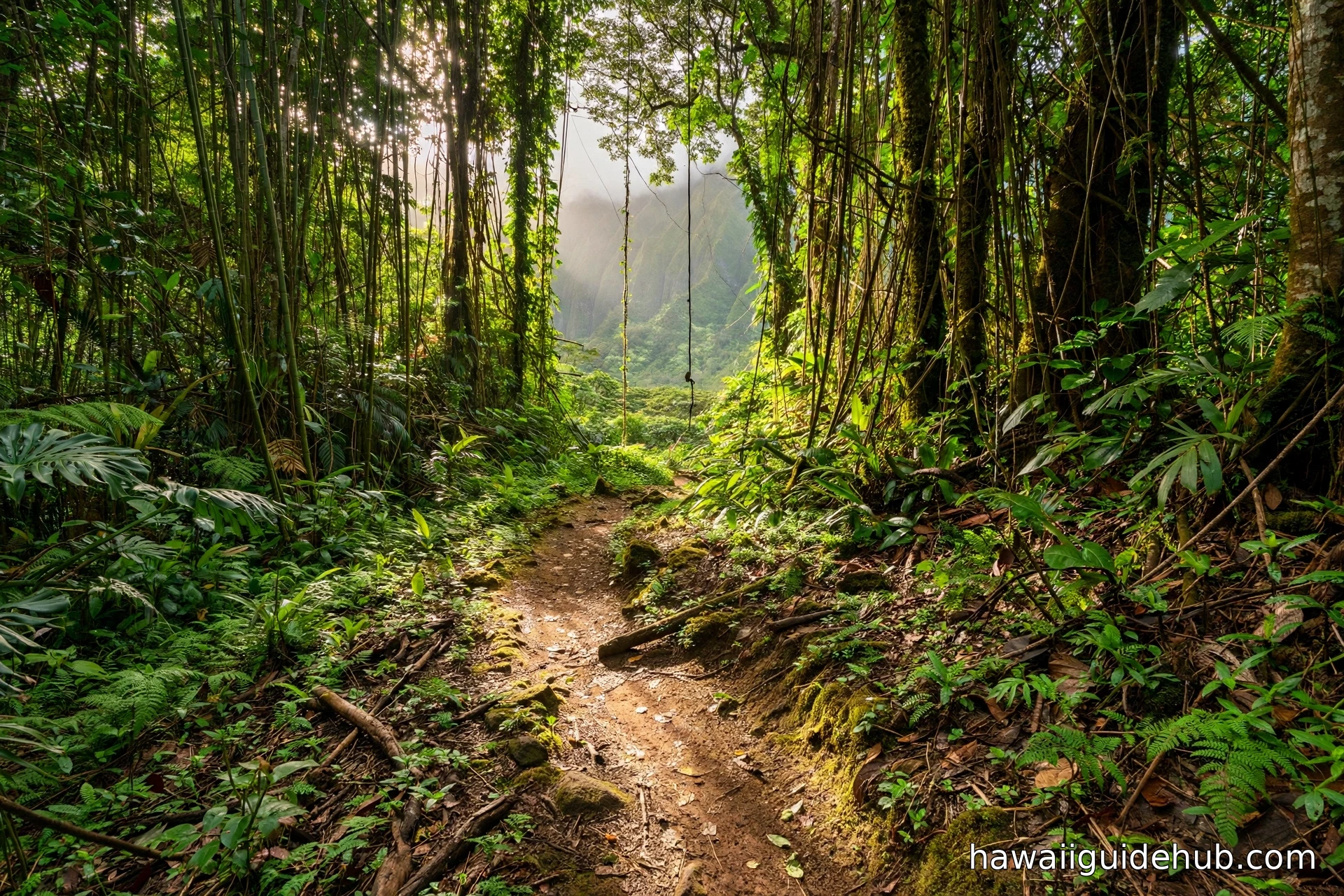
The Nakoa Trail goes deeper, climbing into the valley through rainforest toward the back of the ahupuaʻa. It is longer and steeper, and it rewards the effort with the feeling of walking into a Hawaii that has barely changed in centuries. Expect mud, stream crossings, and mosquitoes. Bring repellent, rain gear, and more water than you think you need. This is a genuine rainforest hike, not a manicured nature walk.
Camping on the Beach, the Old-Fashioned Way
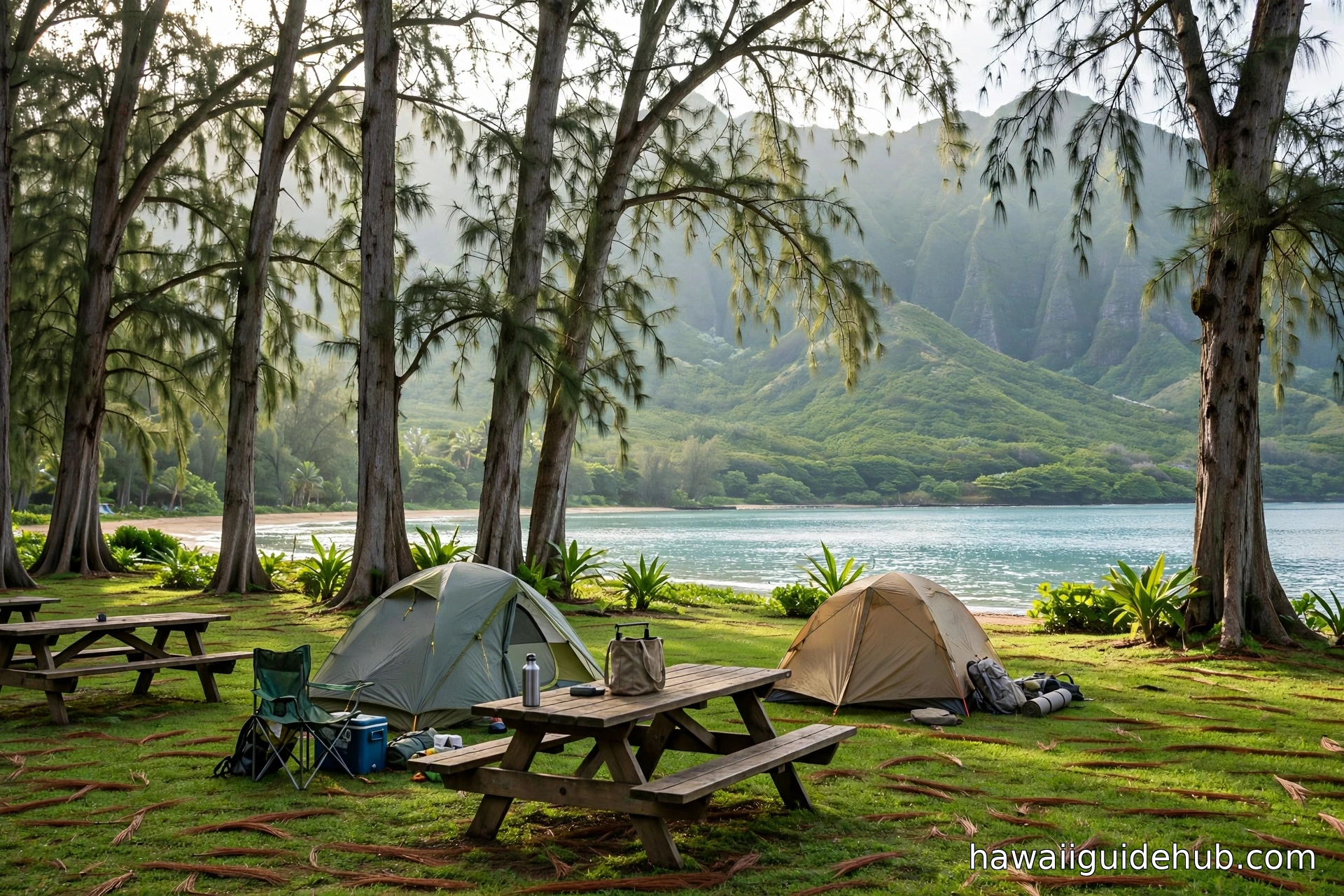
Kahana Bay is one of the few places on Oahu where you can camp right on the sand, and it is an experience worth having. The campground has ten sites set among the ironwood trees just steps from the water, each with picnic tables and room for tents. The setting at sunrise, with mist on the mountains and the bay perfectly still, is unforgettable.
Camping is by permit only, and you must reserve in advance through the state’s Explore Outdoor Hawaiʻi system at explore.ehawaii.gov. As of the latest DLNR published rates, campsites cost $20 per night for Hawaii residents and $30 per night for non-residents, with up to ten people allowed per site. Camp setup begins at 2:00 PM and checkout is by noon. Note that the campground is closed Wednesday and Thursday nights, and you need an overnight parking permit with only listed names allowed on site.
Come prepared. The facilities are basic: restrooms are across the main road, showers are open-air, and there is a lot of road noise from the highway. Bring serious bug spray, because the mosquitoes here are legendary, and pack rain gear no matter what the forecast says. Campers who embrace the rustic side of it, the rain, the bugs, the simplicity, tend to love it. Those expecting a resort experience should look elsewhere.
A few rules to know: no alcohol, no open fires, no smoking, no motorized vehicles, and no commercial activities. Dogs are allowed on leash. The point of these rules is to keep the valley the way it has always been.
The Living Park: Culture You Can Witness
What makes Ahupuaʻa ʻO Kahana genuinely special is the people. In the 1970s the state established the valley as a living park, a place where native Hawaiian culture would not just be preserved behind glass but practiced daily. Around thirty families live in the valley today, farming taro in the loʻi, maintaining the fishpond, and offering interpretive programs that share their traditions with visitors.
You may encounter cultural demonstrations or community work days during your visit. If you do, treat them with the respect they deserve. This is not a performance for tourists. It is a community living its values, and visitors are guests. The interpretive programs, when offered, are a rare chance to learn about Hawaiian land stewardship directly from the people who practice it.
Archaeological sites are scattered through the valley, including heiau (temples), house sites, and fishing shrines. Many are unmarked and all are protected. Look, learn, and leave everything exactly as you found it.
Fishing, Hunting, and Other Traditional Uses
Fishing is a way of life at Kahana, and you will see local families working the bay and the stream with nets and lines, just as their ancestors did. Visitors may fish as well, following state regulations. The bay also has a boat ramp used by small vessels.
Hunting is permitted in designated areas on weekends and holidays with the proper permits, part of the state’s management of the valley’s feral pig population. If you hear about hunting activity during your visit, give those areas a wide berth and follow any posted notices.
Planning Your Visit: Practical Tips
A few things that will make your trip smoother. First, check the weather and the stream. If it has been raining hard, the bay will be murky and the trails will be genuinely muddy. A dry morning after a rainy week can be perfect. Second, arrive with supplies. The nearest stores are in Hauula and Punaluu, small but adequate, and there is nothing at the park itself beyond the basics.
Third, respect the quiet. Kahana Bay is beloved precisely because it is not Waikiki. Keep noise down, pack out everything you pack in, and remember that families live here. Fourth, give yourself time. This is not a twenty-minute photo stop. The bay rewards lingering: a swim, a walk to the fishpond, a picnic under the ironwoods, and an hour on one of the trails adds up to one of the best low-key days on Oahu.
For lesser-known spots elsewhere on the island, Kahana sets the bar for what an uncrowded Oahu experience can feel like. Pair it with a drive up the windward coast and you have a full day that most visitors never discover.
See Kahana Bay on Video
Why Kahana Bay Belongs on Your Oahu Itinerary
Oahu has no shortage of beautiful beaches, but Kahana Bay offers something the famous ones cannot: a place where the natural beauty and the human story are inseparable. The same valley that gives you a perfect crescent of sand also holds a thousand years of Hawaiian history, from the fishpond wall in the bay to the taro patches in the valley to the families who still tend them.
It asks a little more of you than other beaches. You need to bring your own gear, tolerate the rain and the bugs, and slow down to its pace. In return you get one of the most authentic experiences on the island, a beach that feels discovered rather than developed, and a glimpse of the Hawaii that the ancient Hawaiians knew. For travelers who want more than a postcard, that trade is more than worth it.
If you are building a broader Oahu island guide into your trip, put Kahana Bay on the windward coast day. And if you love hiking in Hawaii, the valley trails here offer a rainforest experience you will not find on the dry leeward side. The North Shore gets the crowds, but Kahana Bay keeps the soul.