Where Is the Banzai Pipeline in Hawaii? Location, Directions and Visitor Guide

The Banzai Pipeline is the most famous surf break on the planet, and finding it is simpler than many visitors expect. It breaks just offshore of Ehukai Beach Park on Oahu’s North Shore, in the town of Pupukea, a short drive past Haleiwa. There is no ticket booth, no entrance fee, and no “Pipeline” sign on the highway. You park at a small beach park, walk across the sand, and one of surfing’s great cathedrals is right in front of you, about 100 yards out. This guide covers the exact location, directions, parking, winter versus summer conditions, and how to visit safely.
The Short Answer: Where the Pipeline Is
Location: The Banzai Pipeline breaks off Ehukai Beach Park, 59-337 Ke Nui Road, Haleiwa, HI 96712, in Pupukea on Oahu’s North Shore, roughly 40 miles (65 km) from Waikiki (per the 2026 wanderlustyle visitor guide). Landmark: look for Sunset Beach Elementary School on the mountain side of Kamehameha Highway (Highway 83); Ehukai Beach Park sits directly across the road (per govisithawaii). Cost: none. The beach park has no entrance fee and needs no reservation or permit (per the 2026 travelhawaiiwithus guide).
One practical warning before you go: typing “Banzai Pipeline” into a map app can drop the pin in the water, on a private driveway, or in the middle of the elementary school (per wanderlustyle, 2026). Search for “Ehukai Beach Park” instead and you will land in the right place every time.
Finding Ehukai Beach Park
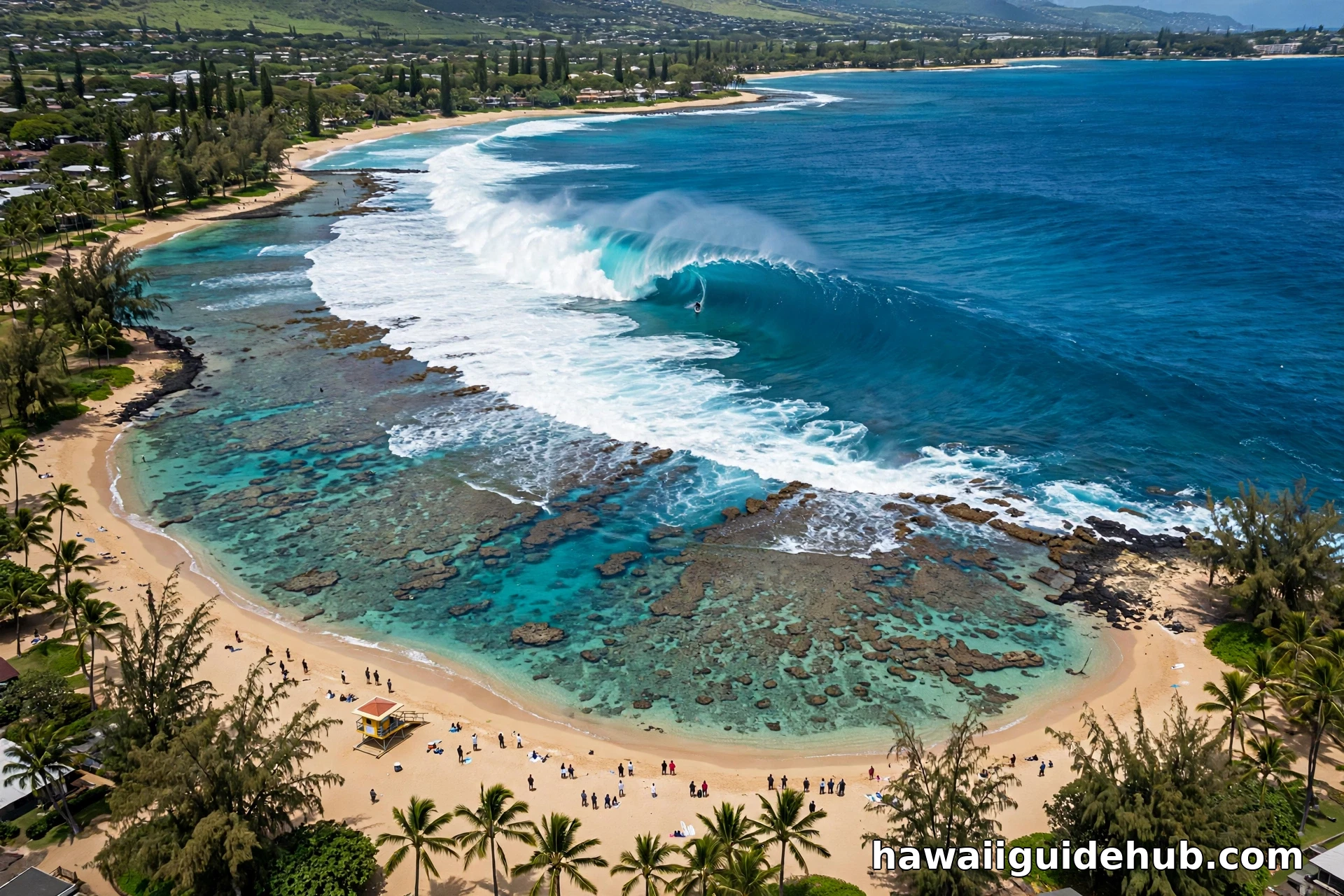
Ehukai Beach Park is a county beach park strung along a long curve of golden sand between Sunset Beach to the east and Waimea Bay to the west. The park itself is modest: a small parking lot off Ke Nui Road, restrooms, outdoor showers, picnic tables, barbecue pits, and grassy areas under ironwood trees (per the 2026 travelhawaiiwithus guide and thishawaiilife). Lifeguards staff the beach during the day (per travelhawaiiwithus).
The wave most people come to see breaks about 100 yards (90 m) to the left of the lifeguard tower when you face the ocean (per wanderlustyle, 2026). Stand on the sand near the tower on a winter swell day and you are watching elite surfers ride one of the heaviest waves in the world from remarkably close range. On flat summer days, the same stretch of sand is a calm, family friendly beach.
A note on names: many visitors say “Banzai Beach,” but the official name of the park is Ehukai Beach Park. “Banzai Pipeline” (or just “Pipe”) is the name of the surf break itself, not the beach. Searching for “Banzai Beach Hawaii” will generally lead you to the same place, but “Ehukai Beach Park” is the name on the county signs and the one your map app understands best.
How to Get to the Banzai Pipeline
Driving from Waikiki and Honolulu
From Waikiki, take the H-1 Freeway west, then the H-2 north. Follow the H-2 to Kamehameha Highway (Highway 99), which leads into Haleiwa town. Continue through or around Haleiwa as Highway 99 merges into Highway 83 along the coast. Stay on Highway 83 past Waimea Bay and keep going until you see Sunset Beach Elementary School on the mountain (mauka) side of the road. Ehukai Beach Park and its small parking area are on the ocean side, just past the school entrance (directions per best-of-oahu and hawaiianbeachrentals).
Give yourself an hour and a little more from Waikiki with an empty road, and closer to two hours on a weekend or a contest morning (per wanderlustyle, 2026). Winter surf days clog the two-lane Kamehameha Highway with spectators, so an early start pays off twice: easier driving and easier parking.
By Bus
You can reach the North Shore without a car. Take TheBus 52 from Waikiki (Kuhio Avenue) to Haleiwa town, then transfer to bus 60 or 88A, which run along the North Shore beaches. Ask the driver to let you off at Ehukai Beach Park (per best-of-oahu). Bus 88A also runs from Ala Moana Center to the North Shore and continues around the windward side of the island, so check the direction before boarding.
Parking at Ehukai Beach Park
Parking is the hardest part of visiting Pipeline on a big winter day. The free public lot at Ehukai Beach Park holds only about 30 cars and fills up fast, even on weekday mornings (per the 2026 travelhawaiiwithus guide). A second small lot exists, but on swell days both are full by mid-morning.
Backup: street parking along Kamehameha Highway, permitted on the ocean side wherever you do not see “no parking” signs (per hawaiianbeachrentals). Beach access paths, marked with blue “beach access” signs, run between the beachfront homes at intervals along the highway (per hawaiianbeachrentals). Take the no-parking zones seriously: police do ticket cars parked illegally, and visitors have watched it happen (per govisithawaii).
Practical tips from people who visit often: arrive before 9 a.m. on winter weekends, pack everything you need for the day so you can stay parked once you find a spot, and consider parking near Sunset Beach Park, which has a bigger lot, and walking the beach over to Pipe (per travelhawaiiwithus).
Facilities and Lifeguards
For a beach this famous, the facilities are refreshingly simple. Expect restrooms, outdoor showers, picnic tables, barbecue pits, grassy areas, and a lifeguard tower staffed during the day (per travelhawaiiwithus and thishawaiilife). There are no equipment rentals at the park itself, so bring your own snorkel gear, umbrellas, and beach chairs, or rent them in Haleiwa or Waikiki before you drive up (per travelhawaiiwithus).
Food is a short drive away rather than on site. Food trucks and restaurants line Kamehameha Highway, with Haleiwa town’s shave ice stands and restaurants a few minutes back toward town (per travelhawaiiwithus). Tent camping is allowed with a county permit (per thishawaiilife).
The lifeguard presence matters here more than at most beaches. Always check in with the lifeguard before entering the water, especially in winter, and swim near the tower. The Honolulu Fire Department’s ocean safety guidance applies double on the North Shore: swim near a lifeguard, observe posted warning signs, swim with a buddy, and stay out during high surf advisories (per fire.honolulu.gov).
Pipeline in Winter vs Summer: What to Expect
Ehukai Beach is two completely different beaches depending on the season. This is the single most important thing to understand before you plan your visit.
| Aspect | Winter (roughly November to March) | Summer (roughly April to October) |
|---|---|---|
| Surf size | Massive. Winter swells routinely produce 15 to 30 foot faces (per airial.travel and thishawaiilife) | Small to flat, with only occasional swells (per best-of-oahu) |
| Swimming | Not safe. Powerful shorebreak and currents; watch from the sand only (per Honolulu Fire Dept. ocean safety guidance) | Generally calm and swimmable on flat days; always check with the lifeguard first (per best-of-oahu) |
| Snorkeling | Not advisable in surf season | Good on calm days over the reef and rocks; ask the lifeguard about conditions (per best-of-oahu) |
| Crowds | Packed on big swell days; contests draw thousands (per hawaiianbeachrentals) | Quiet and uncrowded; easy parking (per best-of-oahu) |
| Parking | Lot full early; highway parking competitive (per travelhawaiiwithus, 2026) | Plenty of space in the lot (per travelhawaiiwithus, 2026) |
| Main draw | Watching pro surfers and contests like the Vans Pipe Masters (per hawaiianbeachrentals) | Relaxed beach day, swimming, snorkeling, sunset walks (per thishawaiilife) |
The takeaway: come in winter to watch the spectacle, come in summer to get in the water. Either way, check the surf forecast before you drive up, because the North Shore does not do “medium” very often.
Surf Conditions and Hazards
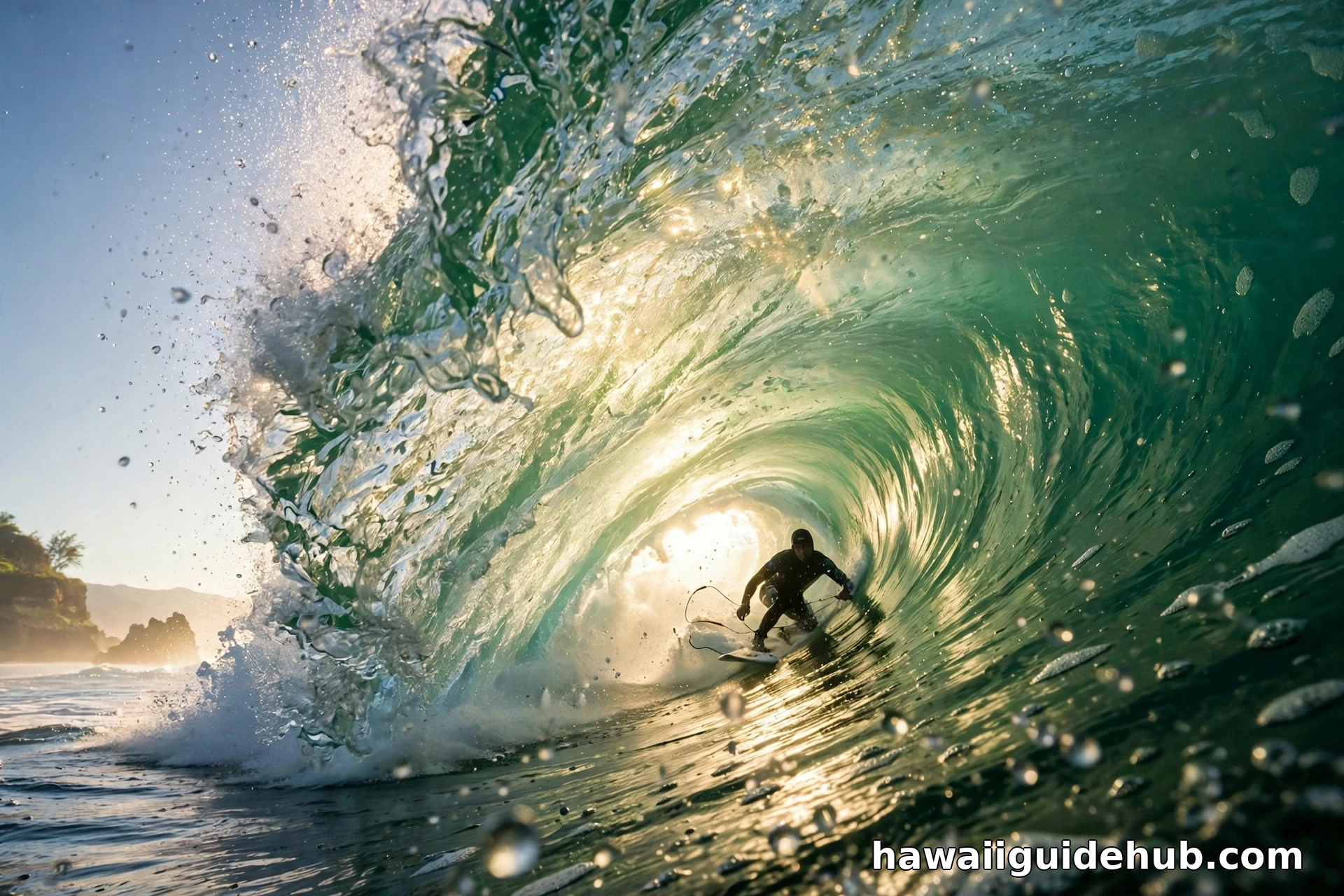
Pipeline breaks over a shallow, cavernous reef. As swells rush toward the reef, water surging through the underwater caverns helps shape the wave into the thick, hollow barrels that made this place legendary (per the Explore.org Pipeline cam guide). The same reef makes it one of the most dangerous waves in the world: the water over the reef is only a few feet deep in places, and wipeouts drive surfers into coral heads and rock.
The break actually produces two waves. The famous left-breaking Pipeline peels one way, while “Backdoor” is the right-breaking wave off the same reef, created by north and northwesterly swells (per thishawaiilife). Both are strictly for highly experienced and professional surfers. Beginners and intermediate surfers should not paddle out here in winter, full stop. Even experts get injured at Pipe; spectators have watched contest surfers carried in during qualifying heats (per govisithawaii).
If you surf and you are qualified to consider it, go with a local, know the lineup hierarchy, and respect it. If you are visiting to watch, the etiquette is simple: stay on the sand, keep the shoreline clear for surfers entering and exiting, and never turn your back on the ocean. Winter shorebreak at Ehukai has knocked spectators off their feet.
Swimming and Snorkeling at Ehukai Beach
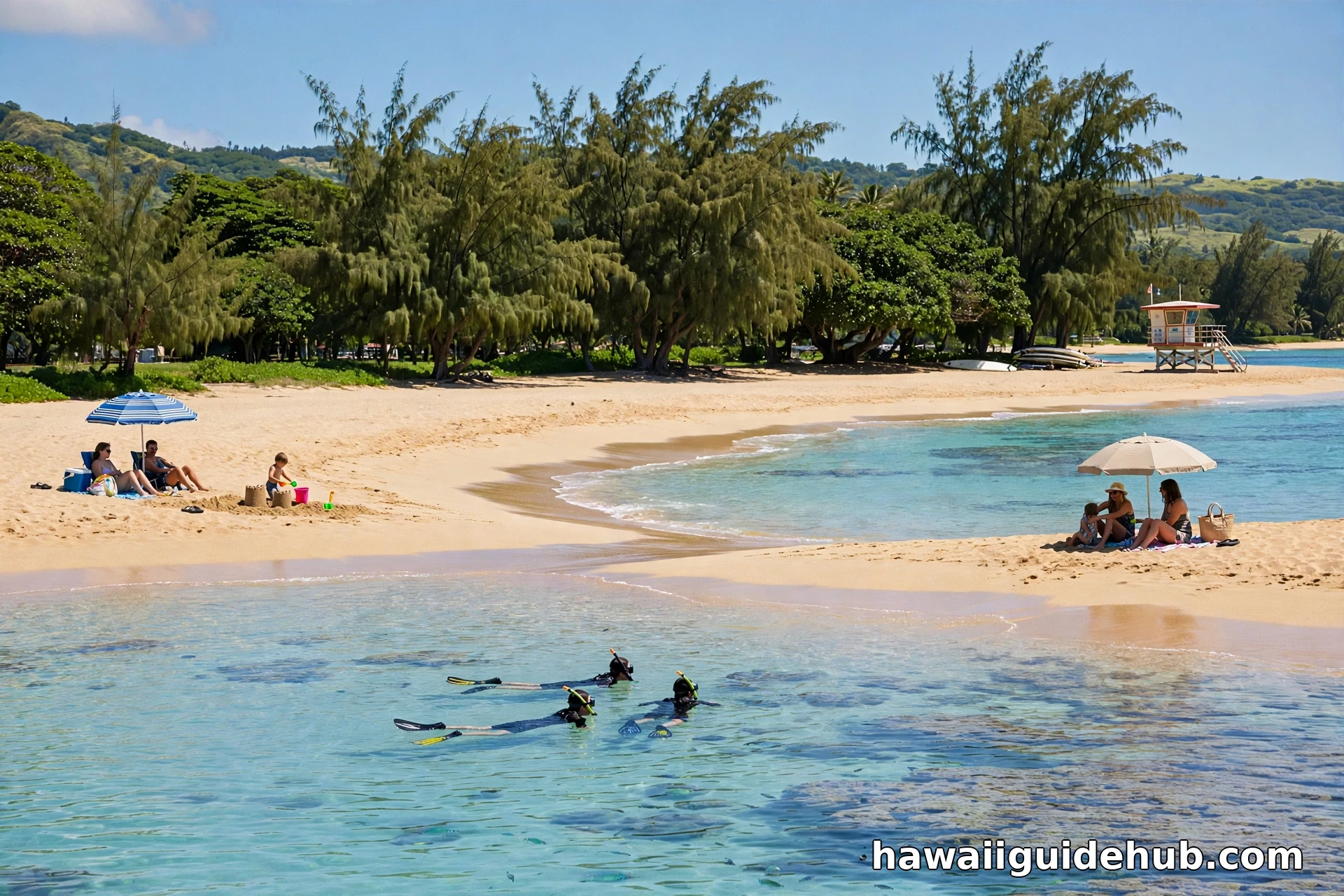
In summer, when the North Pacific goes quiet, Ehukai Beach Park becomes a lovely swimming beach. On flat days the water is clear and calm, and snorkelers can explore the reef and boulder fields just offshore (per best-of-oahu). A mild shorebreak can still form, so check in with the lifeguard before going in, and stay close to the tower.
In winter, treat the ocean as a look-but-don’t-touch attraction. The same reef that shapes perfect barrels creates deadly shorebreak, strong lateral currents, and surging water that can sweep waders off their feet. Every winter, North Shore lifeguards rescue visitors who underestimated a “calm-looking” day between swells. If a high surf advisory is posted, enjoy the show from well back on the sand.
Rules, Etiquette and Safety Tips
Ehukai Beach Park follows standard City and County of Honolulu beach park rules, plus a few unwritten ones that matter at a world famous surf break:
- No lifeguard, no swim. Swim near the tower during guarded hours, with a buddy, and never in high surf (per fire.honolulu.gov).
- Respect the lineup. Pipeline has a strict pecking order. Visitors do not paddle into a crowded pro lineup. Watch, learn, and surf mellower North Shore breaks instead.
- Keep the beach access clear. Surfers sprint from the sand into the shorebreak on big days; give them room.
- Protect the reef. Do not stand on or touch coral. Use reef-safe sunscreen, which Hawaii law requires anyway.
- Secure your car. Do not leave valuables visible. Break-ins happen at busy trailheads and beach parks island wide.
- Leave no trace. Pack out everything you packed in. The park has bins, but wind and waves scatter loose trash fast.
Best Time to Visit the Banzai Pipeline
It depends entirely on what you want. For the full stadium experience, with 20 foot barrels and the world’s best surfers, visit between November and March, and time your trip to a solid northwest swell. Check a surf forecast the night before; the difference between a 4 foot day and a 20 foot day is the difference between a nice beach walk and a core memory. Contest season concentrates the action further: the Vans Pipe Masters and events like the Volcom Pipe Pro and the IBA Pipeline Pro run during the winter months (per hawaiianbeachrentals).
For swimming, snorkeling, and a relaxed beach day, visit between April and October, when the ocean is usually calm. Early morning is the sweet spot year round: lighter winds, softer light for photos, and fewer people. If you are planning a winter trip around the big surf, our guide to the best places in Oahu to visit in winter season pairs well with this one.
Nearby Alternatives Worth Your Time
Pipeline sits in the middle of the densest lineup of famous surf spots on earth, so build a half day around it:
- Sunset Beach Park, about 1.5 miles east, is another legendary big wave arena with a bigger parking lot and room to spread out (per wanderlustyle, 2026).
- Waimea Bay Beach Park, about 3 miles back toward Haleiwa, hosts the Eddie Aikau Big Wave Invitational on the biggest swells and is a classic summer swimming beach (per wanderlustyle, 2026).
- Shark’s Cove, just past Waimea toward Pipeline, is one of the island’s best summer snorkeling spots. See our guide to Shark’s Cove, the best place to snorkel on Oahu.
- Ehukai Pillbox hike starts across the highway near Sunset Beach Elementary School and climbs to old military bunkers with sweeping North Shore views (per wanderlustyle, 2026).
- Haleiwa town, a few minutes south, is the place for shave ice, shrimp trucks, and surf shops after your beach stop.
For the bigger picture of the coastline, see our guide on what to do on Oahu’s North Shore.
Why Is It Called “Banzai Pipeline”?
The name has a humble origin. In the early 1960s, surfers were riding the break but it had no widely used name. Surfboard shaper Mike Diffenderfer, watching the waves one day, remarked that they looked like the massive concrete pipes stacked at a nearby construction project, and the name Pipeline stuck (per the Explore.org Pipeline cam guide). “Banzai” was added by the surf culture of the era, a nod to the charging, all-or-nothing spirit the wave demands. The name now belongs to one of the most photographed waves on the planet, breaking about 100 yards off an otherwise ordinary county beach park.
Frequently Asked Questions
Can you swim at the Banzai Pipeline?
In summer, yes, on calm flat days, and always after checking with the lifeguard. In winter, no. The surf is far too powerful and dangerous for swimming from roughly November through March.
Is there an entrance fee for the Banzai Pipeline?
No. Ehukai Beach Park is a public county beach park with no entrance fee, no parking fee, and no reservation requirement (per the 2026 travelhawaiiwithus guide).
Can beginners surf at Pipeline?
No. Pipeline and Backdoor are for highly experienced and professional surfers only. Beginners should take lessons at gentle breaks like Waikiki and leave Pipe to the pros.
Where do you park for the Banzai Pipeline?
In the small free lot at Ehukai Beach Park off Ke Nui Road, or along Kamehameha Highway where parking is permitted. Arrive early on winter swell days, and never park in marked no-parking zones.
What is the best month to see big waves at Pipeline?
December through February is the heart of the season, with November and March also producing major swells. Check the surf forecast before driving up.
Is the Banzai Pipeline the same as Backdoor?
They break off the same reef at Ehukai Beach. Pipeline is the famous left-breaking wave; Backdoor is the right-breaking wave that peels the other direction (per thishawaiilife).
Pipeline rewards the prepared visitor. Know which season you are visiting for, arrive early, park legally, check in with the lifeguard, and give the ocean the respect a wave this powerful has earned. Do that, and you will understand within about ten minutes of standing on the sand why surfers call this place the crown jewel of the sport.