
Lānaʻi Wildlife
On This Page
Lānaʻi Wildlife at a Glance
Lānaʻi is the smallest inhabited Hawaiian island, a single volcanic dome of about 141 square miles with roughly 3,300 human residents. Its wildlife story is one of dramatic contrast: the animals you are most likely to see are introduced game species brought here by people, while the native species that remain survive in a few protected pockets. Understanding that split is the key to reading the island.
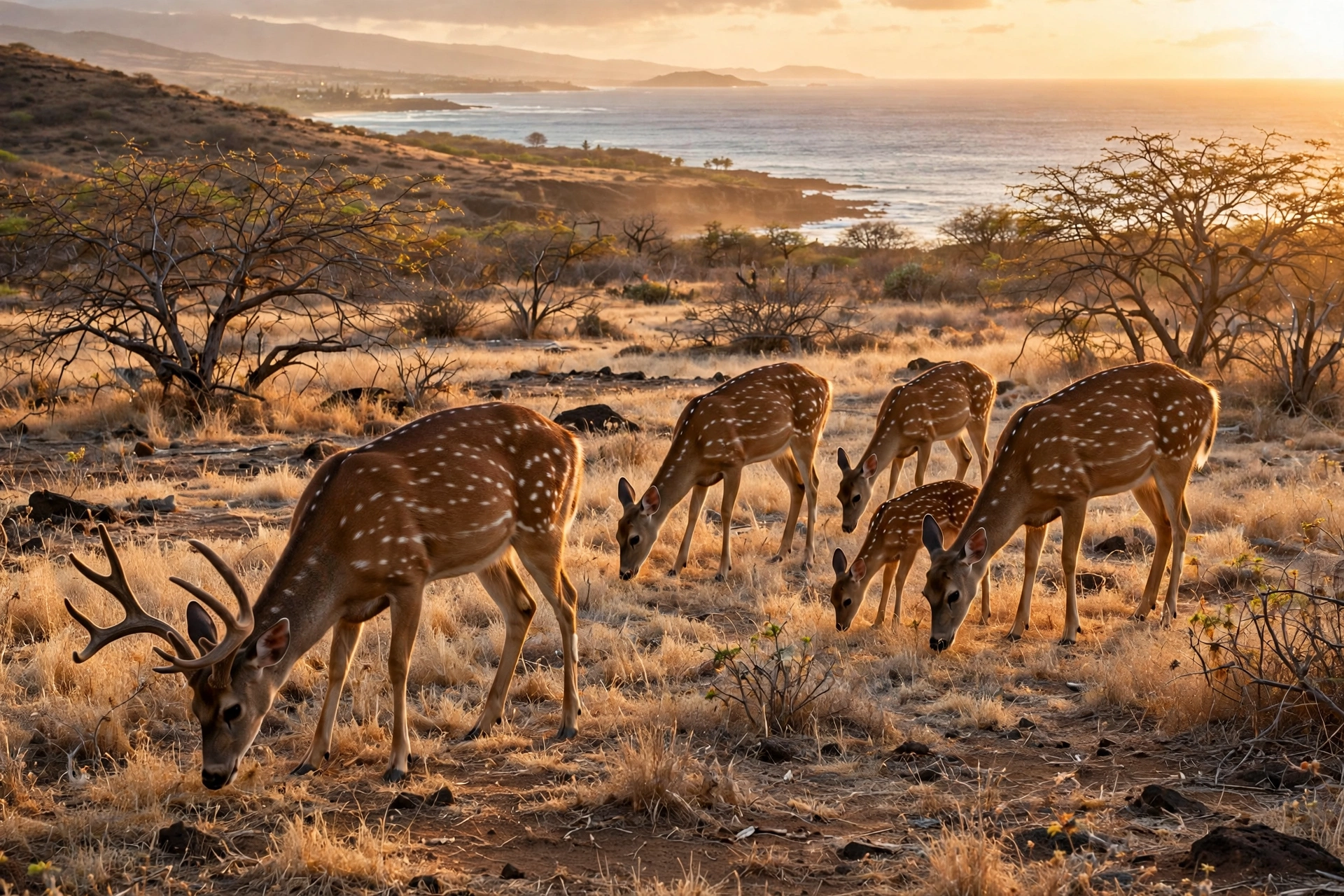
The island’s most visible wildlife is the axis deer, a spotted import from India that now numbers in the thousands and roams the dry west end and the pine forests of the central highlands. Mouflon sheep, wild turkeys, and feral pigs complete a cast of introduced animals that shapes the landscape far more than any native mammal. Hawaiʻi has only one native land mammal, the Hawaiian hoary bat, or ʻōpeʻapeʻa, and it is rare and elusive on Lānaʻi, as everywhere else.
Native birds fare better in specific places. The Kānepuʻu Preserve protects one of the last remnants of native dryland forest in Hawaiʻi, sheltering endangered plants and the insects and birds that depend on them. Offshore, Puʻupehe Islet is a designated seabird sanctuary where white-tailed tropicbirds and shearwaters nest. The north shore cliffs host nesting seabirds as well, visible from the shore and the Munro Trail on clear mornings.
The surrounding ocean is where Lānaʻi’s wildlife viewing truly excels. The ʻAuʻau Channel between Lānaʻi and Maui is one of the premier humpback whale habitats in the world during the winter months, and spinner dolphins rest in the island’s bays year round. Hawaiian monk seals haul out on remote beaches, and green sea turtles graze the reef flats off Hulopoʻe and Mānele. Because the island has so few visitors and no tour-boat crowds offshore, encounters here tend to feel personal and unhurried.
This guide covers what lives on and around Lānaʻi, where to find it, and how to observe it without causing harm. It does not cover activities in detail; for trails, beaches, and snorkeling spots, see the related guides at the end of this page.
One practical note shapes everything that follows. Lānaʻi has almost no visitor infrastructure for wildlife watching: no whale-watch boats departing its harbor, no nature centers with daily programs, no lifeguarded beaches with naturalist talks. What it has instead is quiet. The animals here are not habituated to crowds, which means sightings feel genuine but require patience, early starts, and a willingness to watch and wait. That trade is the heart of the island’s appeal.
Land Animals
Axis Deer
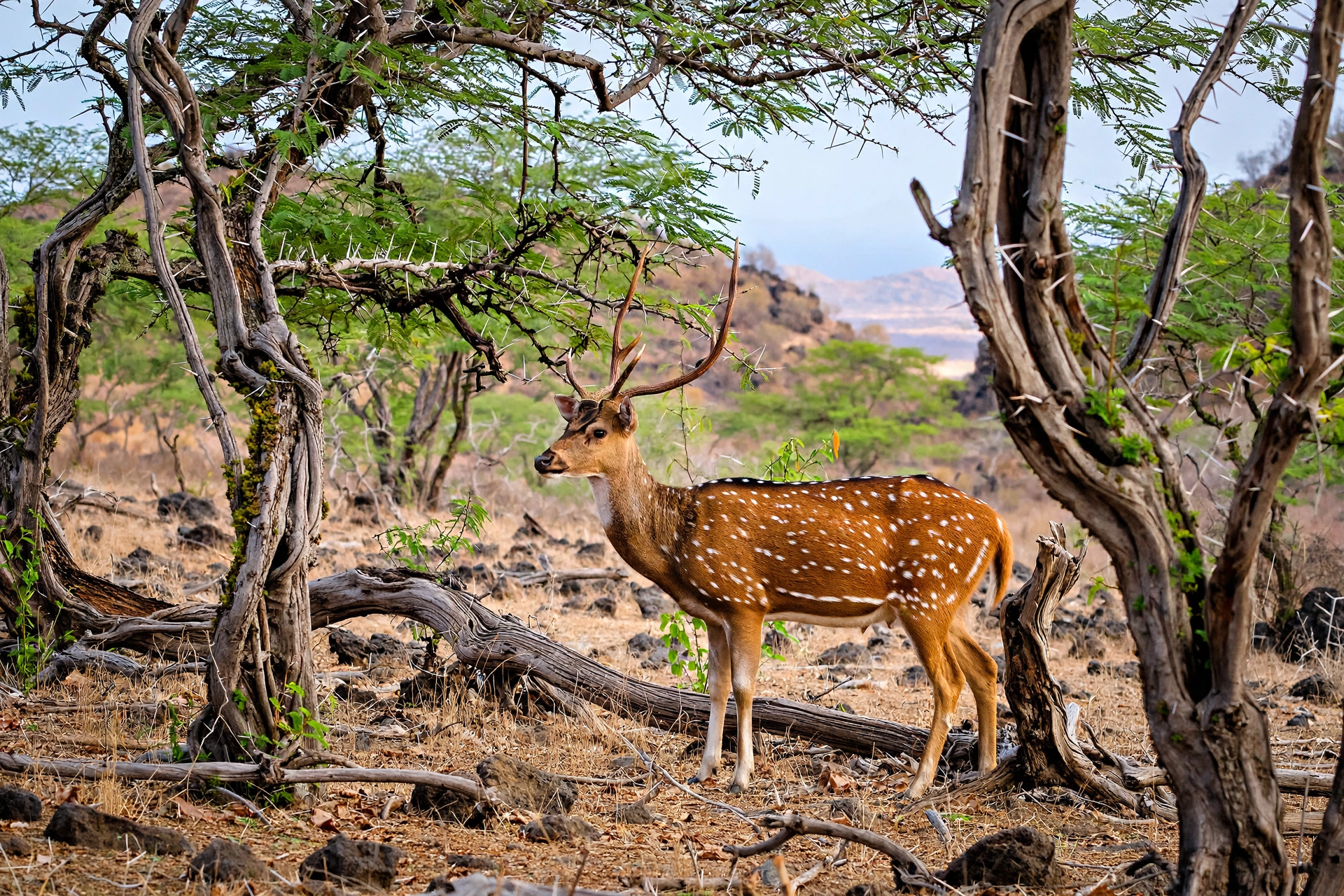
The axis deer is Lānaʻi’s signature animal and its most controversial one. Eight deer were gifted to King Kamehameha V in 1868 and released on the islands, and their descendants multiplied with no natural predators. Today thousands roam Lānaʻi, most visibly on the dry west end and around the central highlands. Their spotted coats and graceful movement make them photogenic, and visitors driving the dirt roads to Keahiakawelo or Shipwreck Beach will almost certainly see them at dawn or dusk.
Axis deer are also an ecological problem. They browse native plants to the ground, prevent forest regeneration, and compete with native wildlife. Managed hunting is the primary control method, and hunting seasons and rules are set by the Hawaiʻi Department of Land and Natural Resources. Visitors should know that parts of the island may be active hunting areas during open seasons; wearing bright clothing and staying on established routes is basic sense during those periods.
Mouflon Sheep
Mouflon sheep, a wild sheep species native to the Mediterranean and western Asia, were introduced to Lānaʻi for sport hunting and now roam the high ridges and the Munro Trail area. They are shyer than axis deer and usually seen at a distance, often as a flash of tan against the green of the Cook pines. Like the deer, they are managed as game animals and also damage native vegetation.
Wild Turkeys, Pigs, and Other Introduced Animals
Wild turkeys wander the highlands and the roadsides near Lānaʻi City, sometimes in flocks of a dozen or more. Feral pigs root through the gulches and wetter areas, though they are less visible than on the larger islands. Rats and mice arrived with the first Polynesian and European ships and remain widespread. Feral cats are a serious conservation problem statewide because their waste carries toxoplasmosis, a parasite that kills Hawaiian monk seals; on Lānaʻi the Lānaʻi Animal Rescue Center, known as the cat sanctuary, houses hundreds of rescued cats and works to reduce the feral population humanely. Visitors can visit the sanctuary during its public hours.
The Hawaiian Hoary Bat (ʻŌpeʻapeʻa)
The ʻōpeʻapeʻa is Hawaiʻi’s only native land mammal and an endangered species. It is a small, frosted-brown bat that roosts alone in trees rather than caves and hunts insects at dusk. Seeing one on Lānaʻi is a matter of luck; the best chance is to watch the sky over the central highlands or the Kānepuʻu area in the last light of evening. If you spot a bat fluttering with the quick, darting flight of a moth-eating hunter, you may be watching one.
It is worth pausing on what this list means. Every hoofed animal on Lānaʻi was put here by people, and every one of them damages the native ecosystems that the island’s remaining endemic species depend on. The axis deer and mouflon you photograph at sunrise are the same animals whose browsing keeps native seedlings from surviving. Wildlife watching on Lānaʻi is more interesting when you hold both truths at once: these are beautiful animals in a beautiful place, and they do not belong here.
Birds of Lānaʻi
Pueo, the Hawaiian Short-Eared Owl
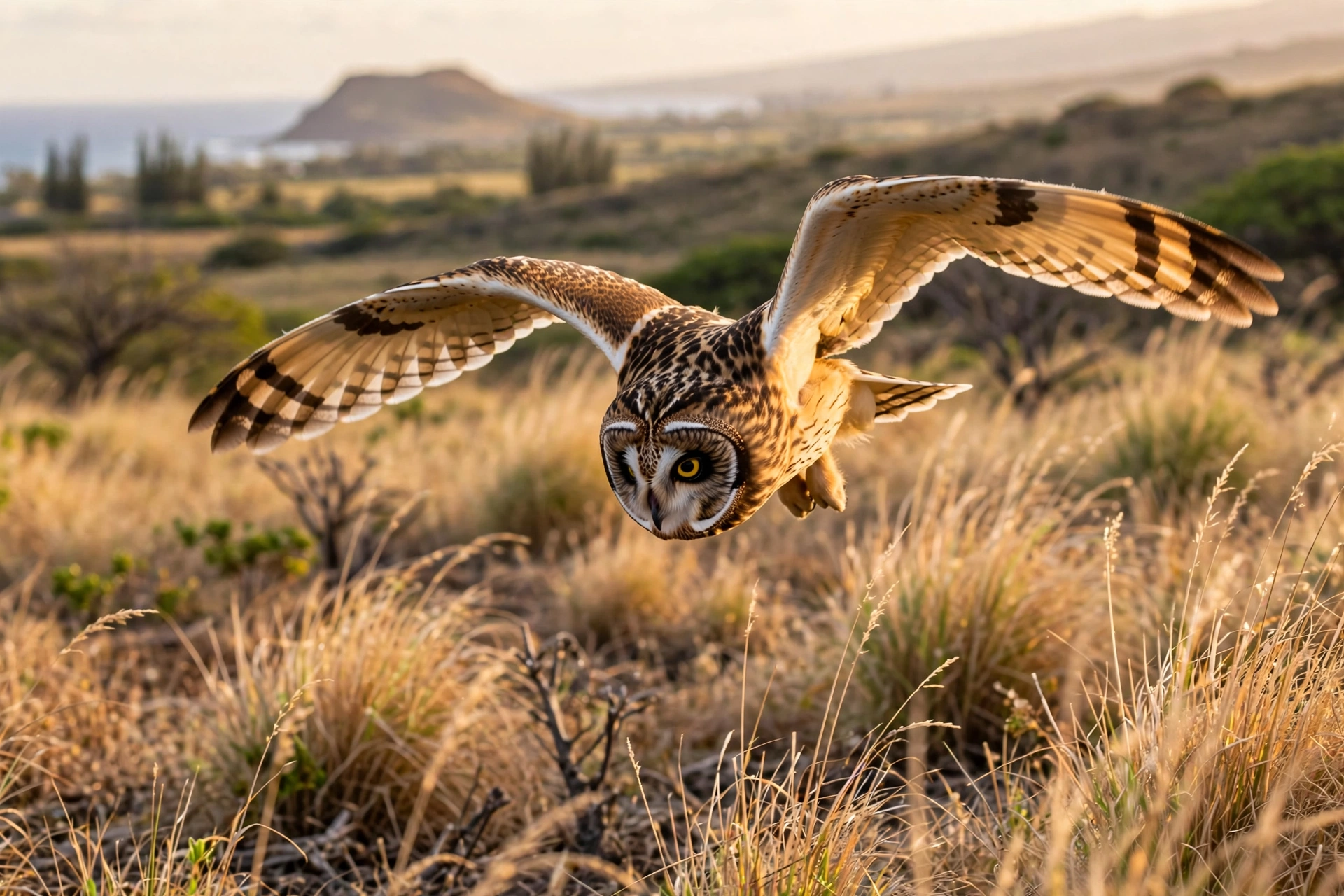
The pueo is one of the most culturally significant birds in Hawaiʻi, regarded in Hawaiian tradition as an ʻaumakua, or ancestral guardian. Unlike most owls it hunts by day, gliding low over grasslands on broad wings. On Lānaʻi it is most often seen over the open country of the west end and the central plateau, especially in the golden light of early morning and late afternoon. Its populations have declined on several islands, so a sighting here is genuinely special.
Seabirds
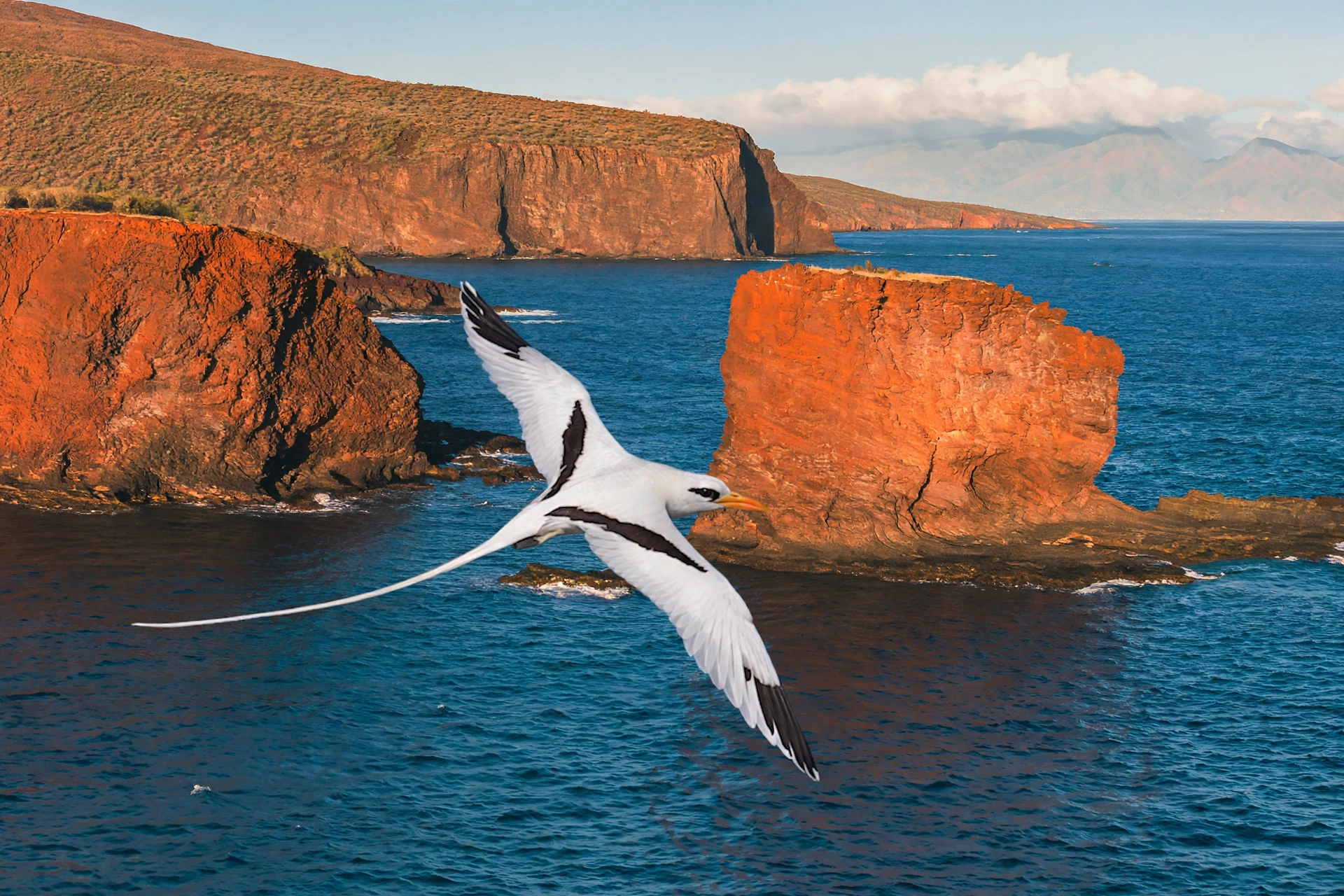
Lānaʻi’s seabird colonies are among its finest wildlife spectacles. Puʻupehe Islet, the small sea stack off Hulopoʻe Beach, is a protected seabird sanctuary where white-tailed tropicbirds (koaʻe kea) nest in the cliff crevices. From the coastal trail you can watch these elegant white birds with their long tail streamers wheeling around the rock. Wedge-tailed shearwaters (ʻuaʻu kani) also nest on the islet and on the north shore cliffs. Access to the islet itself is prohibited; all viewing is from the shore, which is exactly as it should be.
The north shore cliffs between Shipwreck Beach and the west end host nesting boobies and frigatebirds, best seen with binoculars from the shore or from a boat offshore. Dawn is the most active time, when birds stream out to their fishing grounds.
Native Forest Birds
Lānaʻi’s native forest birds survive mainly in the Kānepuʻu Preserve and the wetter pockets of the highlands. The preserve protects lama, ʻiliahi (Hawaiian sandalwood), and other native trees, along with endangered plants found nowhere else. Forest birds such as the Hawaiʻi ʻamakihi may be heard more often than seen; their sweet, trilling songs carry through the dry forest. Mosquito-borne avian malaria, which devastates native birds at lower elevations, is less of a factor in Lānaʻi’s cooler highlands, giving the preserve outsized importance.
Access to Kānepuʻu is by guided visit through The Nature Conservancy, which manages the preserve. This restriction protects fragile habitat and is worth respecting; a guided visit also dramatically improves your chances of actually finding the birds.
Introduced and Common Birds
Like every Hawaiian island, Lānaʻi hosts a full cast of introduced birds: Japanese white-eyes, common mynas, northern cardinals, zebra doves, and francolins among them. Wild turkeys, covered above, are the most conspicuous. These birds are part of the modern soundscape, but they also compete with native species, which is one more reason the protected pockets matter.
Marine Life
Humpback Whales
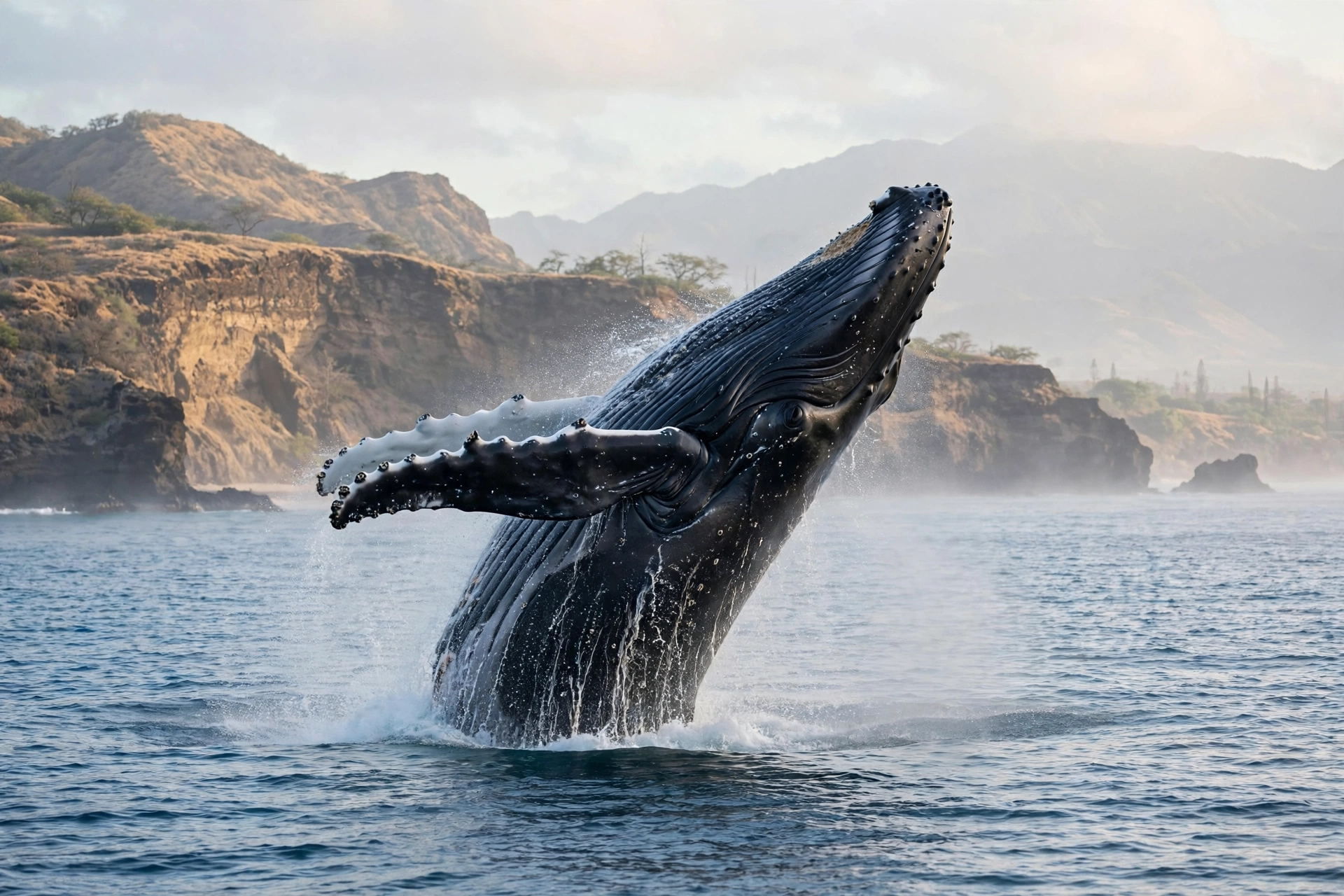
The ʻAuʻau Channel between Lānaʻi and Maui is the heart of the Hawaiian Islands Humpback Whale National Marine Sanctuary, and Lānaʻi’s west and south shores offer some of the best land-based whale watching in the state. Humpbacks arrive in December, peak from January through March, and most depart by April. From the cliffs near Shipwreck Beach, the Hulopoʻe shoreline, and the ferry route, you can watch breaches, tail slaps, and the unmistakable spouts on calm mornings.
Federal law requires staying at least 100 yards from humpback whales, whether you are on a boat, a kayak, or a paddleboard. If a whale approaches you, put your engine in neutral or stop paddling and let it pass. Listening from shore on a still morning, you may hear the low moans of singing males carrying through the water.
Spinner Dolphins
Spinner dolphins (naiʻa) rest in Lānaʻi’s sheltered bays during the day and hunt offshore at night. Pods are regularly seen off Mānele and Hulopoʻe, and their dawn departures and dusk returns are daily rhythms worth watching. Federal guidelines call for staying at least 50 yards away and never chasing, encircling, or attempting to swim with a resting pod. Daytime is their sleep time; a disturbed pod burns energy it needs for the night’s hunt.
Hawaiian Monk Seals
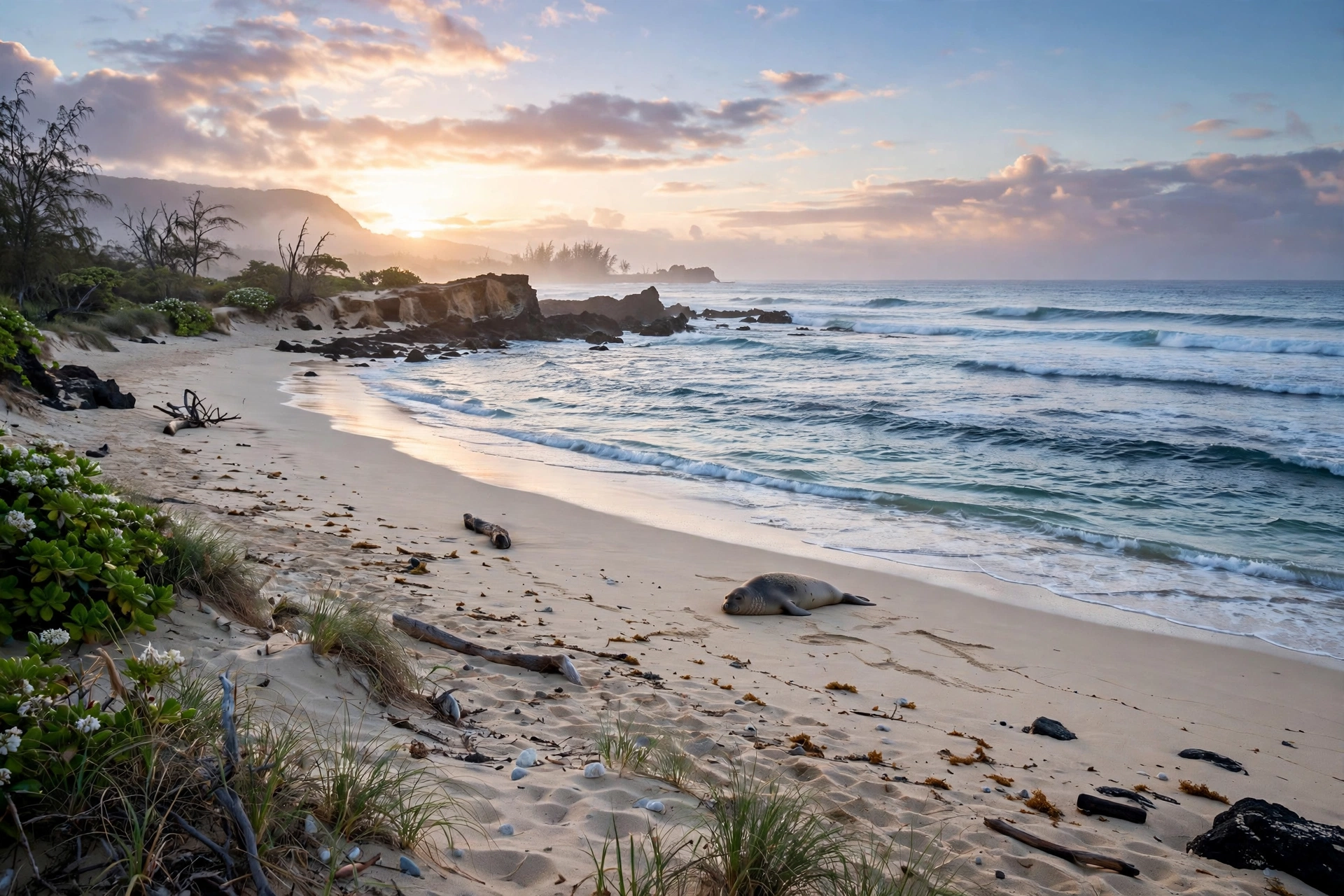
The Hawaiian monk seal (ʻīlio holo i ka uaua) is one of the most endangered marine mammals on earth, with roughly 1,600 animals remaining. They haul out on Lānaʻi’s remote beaches to rest, and occasionally a mother will choose a quiet cove to nurse a pup. If you encounter a seal, stay at least 50 feet away, keep dogs leashed and far back, and never get between a mother and her pup. Do not post the exact location on social media; crowds stress the animals. Sightings can be reported to NOAA Fisheries, which tracks the population.
Green Sea Turtles and Reef Fish
Green sea turtles (honu) are common around Lānaʻi, grazing algae on the reef flats off Hulopoʻe and Mānele and surfacing in the calm morning water. Federal and state law require giving turtles at least 10 feet of space; touching or chasing a turtle is a violation. The reefs hold the familiar Hawaiian assemblage: yellow tangs, convict tangs (manini), parrotfish (uhu), reef triggerfish (humuhumunukunukuāpuaʻa), and Moorish idols. Christmas tree worms dot the coral heads. Spotted eagle rays cruise the sandy channels, and whitetip reef sharks rest in caves by day; both are harmless when left alone.
The reefs off Lānaʻi are generally healthy, but they face the same pressures as reefs everywhere: warming water, runoff after heavy rains, and physical damage from careless swimmers. The Marine Life Conservation District at Hulopoʻe exists precisely to give one stretch of reef full protection, and its no-take rules are strictly enforced. Snorkelers can help by mastering buoyancy before entering the water, wearing reef-safe sunscreen, and choosing sandy entry points rather than walking across the reef flat.
Winter bonus: on calm winter mornings, stand quietly at the Hulopoʻe shoreline and listen. Humpback song can carry through the water to human ears at the surface, a low, haunting sound that needs no equipment to hear.
Where to See Wildlife
Kānepuʻu Preserve
Managed by The Nature Conservancy, the 590-acre Kānepuʻu Preserve protects the largest remaining remnant of native Hawaiian dryland forest. Guided visits are the only way in, and they are worth arranging in advance. Expect native trees like lama and ʻiliahi, endangered plants, native insects, and the best chance on the island to hear native forest birds. Wear sturdy shoes and bring water; there are no facilities.
Munro Trail and the Central Highlands
The Munro Trail runs along the Lānaʻihale ridge through Cook pine forest and open grassland. Dawn is the prime window: axis deer and mouflon feed in the clearings, turkeys work the road edges, and pueo hunt the grasslands. The ridge also offers the island’s best land-based vantage for watching whales in the ʻAuʻau Channel during winter. Start early, carry more water than you think you need, and check hunting season dates.
Hulopoʻe Beach and Puʻupehe
Hulopoʻe is Lānaʻi’s wildlife hub for marine life. Green sea turtles surface in the bay most mornings, spinner dolphins pass offshore, and the coastal trail to the Puʻupehe overlook puts you in front of the seabird sanctuary. The tide pools at the western end of the beach hold small crabs, sea cucumbers, and juvenile fish at low tide. Remember this is a Marine Life Conservation District with specific rules; see the snorkeling guide for details.
Shipwreck Beach and the North Shore
The windswept north shore is Lānaʻi’s wild edge. The cliffs host nesting seabirds, monk seals occasionally haul out on the sand, and winter brings migrating humpbacks close enough to see from shore. Access requires a four wheel drive vehicle and the road is rough; check conditions before going and never approach cliff edges. This is the least visited corner of the island, and its wildlife rewards the effort.
The West End
The dry country around Keahiakawelo (Garden of the Gods) is prime axis deer territory, especially at dawn and dusk. The open landscape makes animals easy to spot, and the red dirt roads see little traffic. Carry extra water and fuel; there are no services.
Lānaʻi City and the Cat Sanctuary
The Lānaʻi Animal Rescue Center sits just outside Lānaʻi City and welcomes visitors during public hours. Beyond the appeal of hundreds of friendly cats, the sanctuary tells an important conservation story: every cat housed here is one less predator threatening the island’s native birds and one less source of the toxoplasmosis that kills monk seals. It is the rare wildlife stop that is both heartwarming and directly meaningful to the island’s ecology.
Wildlife Ethics and the Law
Lānaʻi’s wildlife is easy to love and easy to harm. A few rules keep encounters safe for both sides.
- Keep your distance: 100 yards from humpback whales, 50 yards from spinner dolphins, 50 feet from monk seals, 10 feet from sea turtles. These are legal minimums, not suggestions.
- Never feed wildlife. Feeding changes behavior, spreads disease, and is illegal for marine mammals and turtles.
- Respect kapu and private land. Much of Lānaʻi is privately owned. Stay on public roads and trails, honor all signs, and never enter the Puʻupehe sanctuary.
- Control pets. Dogs must be leashed near wildlife at all times. Feral and free-roaming cats kill native birds and spread toxoplasmosis to monk seals; support the cat sanctuary’s work rather than feeding strays.
- Leave reefs alone. Do not touch, stand on, or take anything from coral. Use reef-safe sunscreen as required by Hawaiʻi law.
- Report, do not post. Report monk seal sightings to NOAA Fisheries. Do not share exact seal locations on social media.
Best Time for Wildlife
Winter, from December through April, is the headline season: humpback whales fill the ʻAuʻau Channel and north shore waters, and seabird activity is high. Mornings are the best time of day year round, with calmer water, active birds, and deer and mouflon feeding in the open before the heat builds.
Spinner dolphins and sea turtles are present all year. The dry summer months, roughly April through October, offer the calmest ocean conditions for snorkeling and shoreline watching. Axis deer are visible year round, most reliably at dawn and dusk on the west end. For native forest birds, any calm morning in the highlands will do; avoid the windiest afternoons when birds go quiet.
Frequently Asked Questions
What is the most famous animal on Lānaʻi?
The axis deer. Introduced in the 1800s, thousands now roam the island, and most visitors see them on the west end or along the Munro Trail. They are beautiful to watch and a serious ecological problem at the same time.
Can I see humpback whales from shore on Lānaʻi?
Yes. From December through April, the ʻAuʻau Channel hosts one of the densest humpback gatherings in the world. The Hulopoʻe shoreline, the west end, and the Munro Trail ridge are all good land-based vantage points on calm mornings. Bring binoculars.
Are there monk seals on Lānaʻi?
Yes, though sightings are less predictable than on some other islands. They haul out on remote beaches, most often on the north and west shores. If you see one, stay at least 50 feet away and report the sighting to NOAA Fisheries.
What is the Lānaʻi cat sanctuary?
The Lānaʻi Animal Rescue Center houses hundreds of rescued cats and works to reduce the feral cat population that threatens native birds and monk seals. It is open to visitors during public hours and is a legitimate wildlife conservation stop.
Can I visit the Kānepuʻu Preserve on my own?
No. Access is by guided visit through The Nature Conservancy only. This protects fragile native dryland forest and endangered plants. Arrange the visit in advance.
Where is the best place to see seabirds?
The coastal trail at Hulopoʻe Beach facing Puʻupehe Islet, a protected seabird sanctuary. White-tailed tropicbirds and wedge-tailed shearwaters nest there. The north shore cliffs are a second option, best with binoculars.
Are there snakes or dangerous land animals on Lānaʻi?
No snakes. There are no dangerous native land animals; axis deer and mouflon are shy and flee from people. The main land hazards are hunting areas during open seasons and the usual sun, heat, and remoteness.
When is whale season on Lānaʻi?
Humpbacks are present from December through April, with peak numbers from January through March. Federal law requires staying at least 100 yards away.
Related Guides
- Lānaʻi Travel Guide: the complete island overview
- Lānaʻi Map: regions, roads, and drive times
- Lānaʻi Beaches: Hulopoʻe, Shipwreck Beach, and ocean safety
- Lānaʻi Hikes: Munro Trail, Koloiki Ridge, and coastal walks
- Lānaʻi Snorkeling: Hulopoʻe Bay and reef etiquette
- Maui Wildlife: whales, dolphins, and birds on the neighboring island
- Hawaii Map: the full island chain
A Final Note
Lānaʻi rewards the patient observer. The island will not hand you wildlife the way a zoo does; the deer appear when the light is right, the pueo hunts when it chooses, and the whales surface on their own schedule. That unpredictability is the point. Bring binoculars, start early, keep your distance, and let the island set the terms. The encounters you earn this way stay with you far longer than the ones you chase.