
Lānaʻi Snorkeling
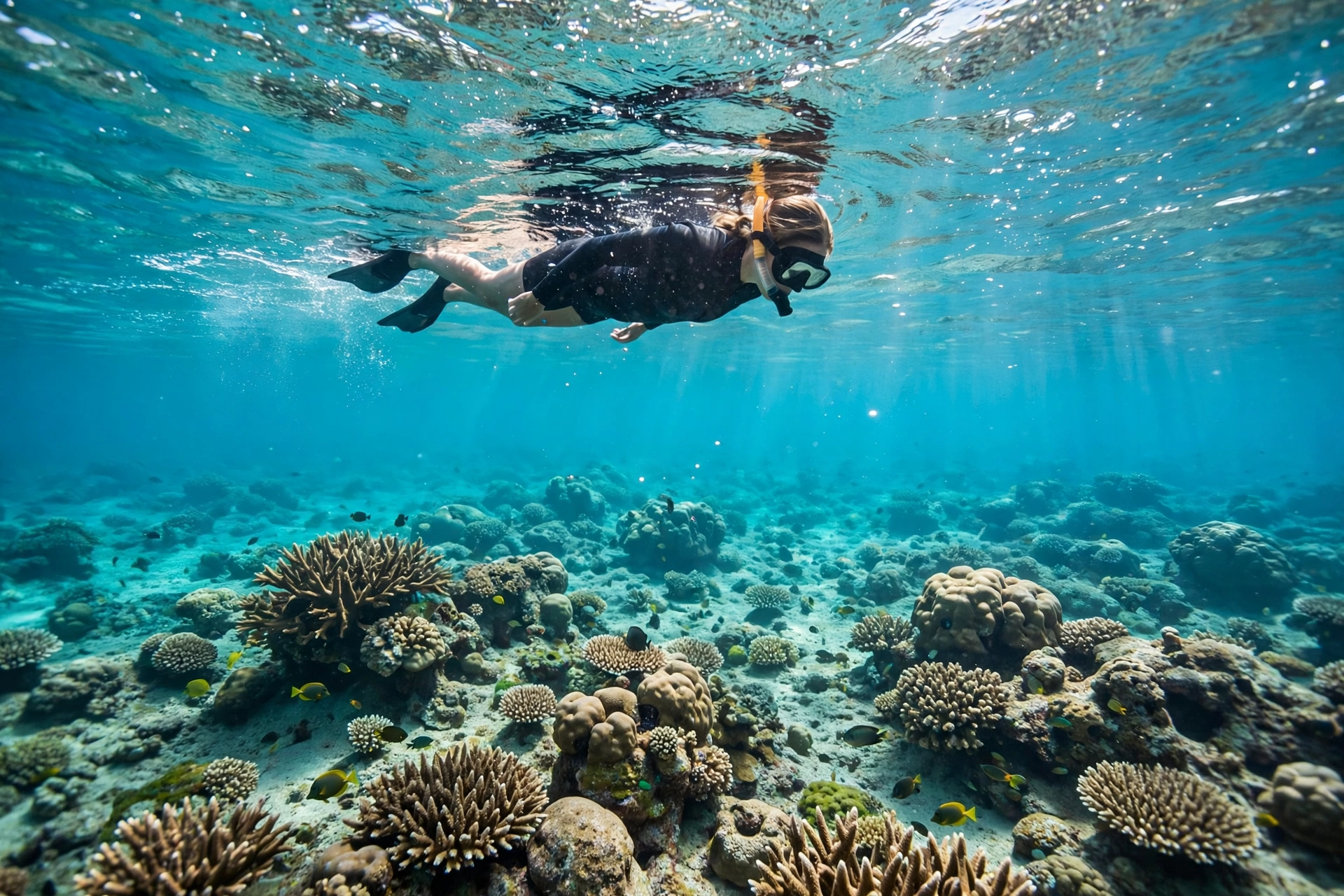
Lānaʻi is not a snorkeling destination in the way Maui or the Kona coast are. The honest framing matters: there is one genuinely excellent snorkeling beach, a handful of secondary options for confident swimmers, and a lot of coastline where the ocean is simply too rough to enter. But what Lānaʻi lacks in quantity it makes up for in quality and solitude. Hulopoʻe Bay, a protected marine life conservation district on the island’s calm south coast, holds some of the clearest and most rewarding reef water in Hawaiʻi, and on many mornings you will share it with more turtles than people.
Lānaʻi Snorkeling at a Glance
Snorkeling on Lānaʻi is defined by two facts. First, the island sits in the shelter of Maui and Molokaʻi, and its south coast faces the calm ʻAuʻau Channel. This protected leeward shore produces the island’s clearest water and its only reliable shore snorkeling. Second, Lānaʻi has no lifeguards, no snorkel tour boats, no rental shacks on the beach, and only one beach with facilities. Snorkeling here is a self-reliant activity: you bring your own gear, you read the ocean yourself, and you accept that if conditions turn, you are the rescue plan.
The centerpiece is Hulopoʻe Bay, designated as a Marine Life Conservation District by the State of Hawaiʻi Division of Aquatic Resources. The MLCD designation matters for two reasons. It means fishing and collecting are restricted, which is why the reef fish are abundant and unusually tame. And it means specific rules apply to everyone in the water, including a ban on harming or taking marine life and restrictions on activities that damage the reef. The bay sits just off Hulopoʻe Beach Park, the island’s most visited beach, with parking, restrooms, and picnic tables a short walk from the water.
Beyond Hulopoʻe, the options narrow quickly. Mānele Bay next door offers sandy-bottom swimming with patchy reef. The tide pools at the west end of Hulopoʻe are better for wading than snorkeling. Kaunolū on the southwest coast holds excellent underwater terrain but is reachable only by boat. The north shore, including Shipwreck Beach, faces open ocean and is not safe for snorkeling in any season. The honest summary: come to Lānaʻi, snorkel Hulopoʻe, and treat anything else as a bonus.
What surprises first-time visitors is how the whole experience differs from a big-island snorkel trip. There is no line of tour boats on the horizon, no crowd of rental fins at the shoreline, and no schedule to keep. You pick your morning, walk into the water, and the reef is simply there. That simplicity is the point, and it is also the constraint: Lānaʻi will not hand you variety, but it will hand you a morning you remember.
Reality check: Lānaʻi has a fraction of Maui’s snorkeling options. If snorkeling is the centerpiece of your trip rather than one activity among many, you will get more variety on a larger island. What Lānaʻi offers instead is crowd-free water, a protected conservation district, and reef life that has never learned to fear swimmers.
The Best Snorkeling Spots
Hulopoʻe Bay (the main event)
Hulopoʻe Bay is the reason this page exists. The bay sits at the south end of the island, sheltered from the trade winds and the winter swells that hammer the north shore. Water clarity is routinely exceptional, often exceeding one hundred feet of visibility on calm mornings. The reef starts within a short swim of shore: coral heads, sand channels, and a fish population that benefits directly from the MLCD protections.
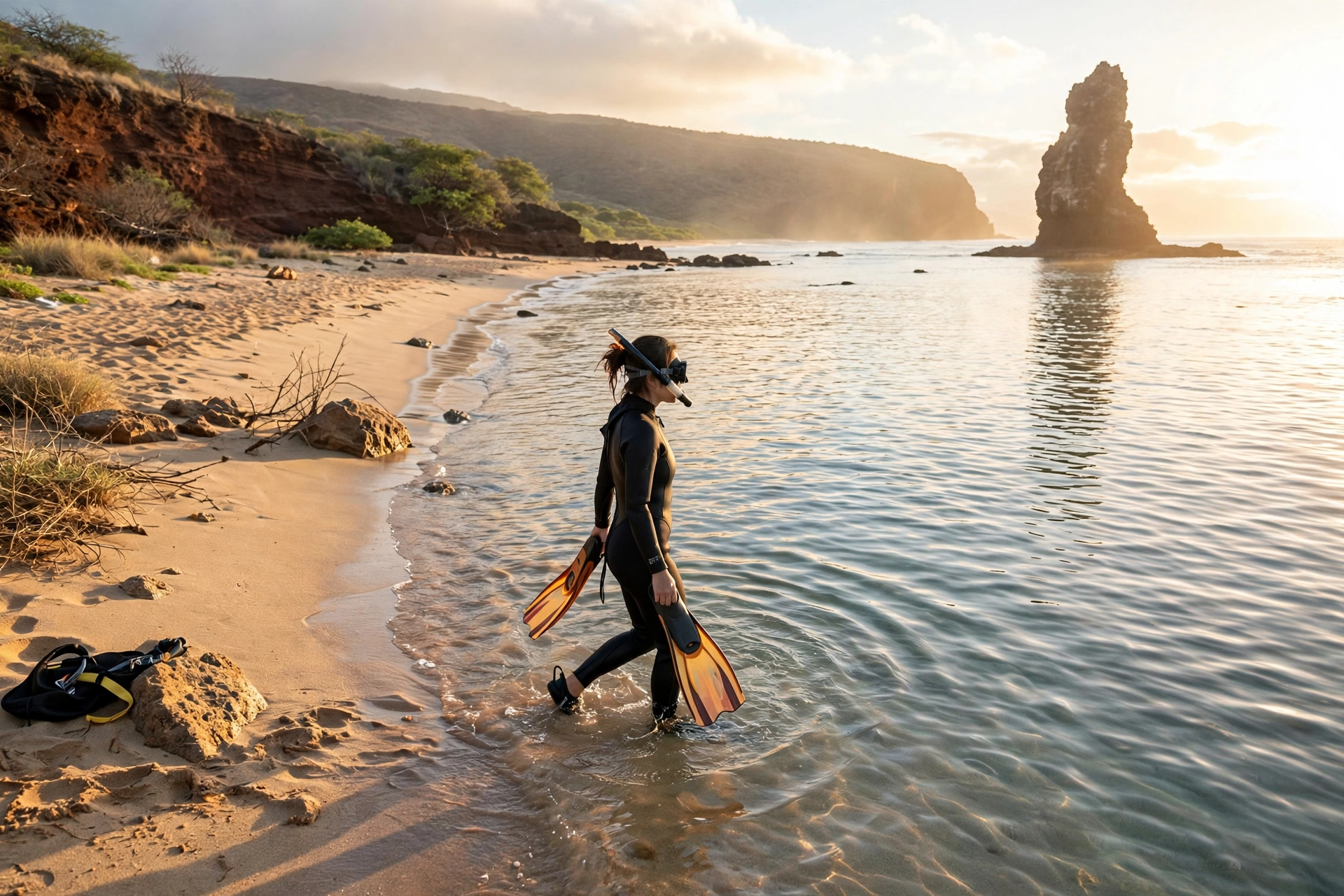
The best entry is from the beach itself. Wade in from the sand and swim out past the first sand flat toward the rocky points on either side of the bay. The reef is healthiest along the edges of the bay rather than directly in the middle, where the sand bottom is mostly featureless. The eastern (left, facing the water) rocky point holds the densest coral and the most fish; the western point near Puʻupehe leads toward the tide pool area and offers interesting terrain for confident swimmers.
Morning is non-negotiable for the best experience. Trade winds typically rise by late morning, chopping the surface and cutting visibility. Arrive before nine in the morning and you get glassy water, the best light for seeing fish color, and often the bay nearly to yourself. By midday the ferry day-trippers arrive from Maui and the beach fills, though the water itself rarely feels crowded.
The bay’s protection works in your favor beyond the reef itself. Because motorized fishing and most commercial activity are restricted inside the conservation district, the water stays quieter and calmer than at comparable beaches on larger islands. Kayaks and stand-up paddleboards share the bay peacefully with snorkelers, and the overall pace is unhurried. If you have ever snorkeled a reef while dodging jet skis, Hulopoʻe will feel like a different sport.
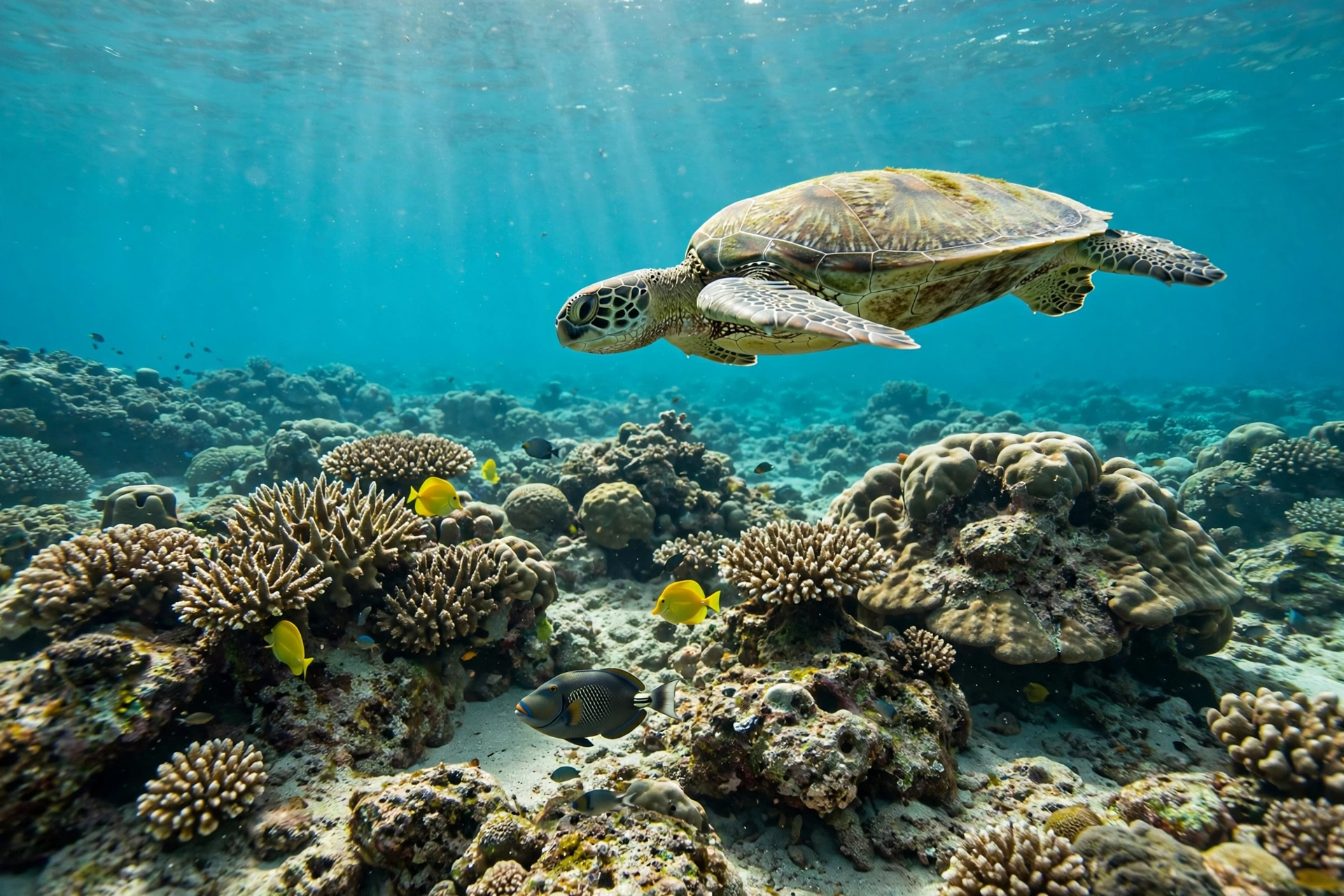
Hulopoʻe is also where you are most likely to snorkel alongside honu, the Hawaiian green sea turtle. Turtles rest on the reef and feed on algae along the rocky edges. Federal law requires you to keep at least ten feet from turtles; if one approaches you, float still and let it pass. Never chase or touch a turtle.
Mānele Bay
Mānele Bay sits just west of Hulopoʻe, below the Mānele harbor where the Maui ferry arrives. It is a broad sandy bay with excellent swimming and patchy reef near the rocky edges. Snorkeling here is secondary to Hulopoʻe: the reef coverage is sparser and the fish fewer, because Mānele is not a conservation district. But on a calm day the rocky points at either end of the bay hold enough to keep an hour interesting, and the bay is convenient if you are staying nearby or have just stepped off the ferry.
Entry is easy from the sand. Work the edges rather than the center. Visibility is best in the morning before the afternoon trades. Combine Mānele with a Hulopoʻe session on the same day for a full south coast snorkeling morning.
The tide pools (wading, not snorkeling)
At the western end of Hulopoʻe Beach, a rocky shoreline leads to natural tide pools carved into the lava. These are lovely for wading and peering at crabs, small fish, and sea urchins at low tide, but they are not a snorkeling spot. The pools are shallow, the surge can be strong, and entering them with fins risks both your safety and the fragile tide pool life. Enjoy them as a post-snorkel walk, not as a swim.
Kaunolū (boat access only)
Kaunolū on the southwest coast was once the royal fishing village of Kamehameha I, and the underwater terrain there is spectacular: deep reef, dramatic drop-offs, and large pelagic visitors. There is no road access. The only way in is by boat, and there are no commercial snorkel tours operating from Lānaʻi to Kaunolū. Private boaters occasionally anchor there in flat conditions. For almost every visitor, Kaunolū belongs on the list of places to know about rather than places to snorkel.
Day trips from Maui (the ferry option)
Most visitors reach Lānaʻi by the Expeditions ferry from Māʻalaea on Maui, which docks at Mānele. The crossing takes about forty-five minutes to an hour and fifteen minutes depending on conditions, with multiple round trips daily. A day trip built around Hulopoʻe is entirely practical: catch an early ferry, snorkel the morning glass at Hulopoʻe, eat in Lānaʻi City, and return on an afternoon sailing. There are no commercial snorkel tours departing from Lānaʻi itself, so every day-tripper is a shore snorkeler. Bring your own gear from Maui or rent on Maui before you sail, because there are no snorkel rental shops on Lānaʻi.
Where not to snorkel
The north shore, including Shipwreck Beach (Kaiolohia), faces open ocean swell year-round and has dangerous shore break and currents. Do not enter the water there. The west side beaches, including remote Polihua and Lōpā, require 4WD access and have powerful surf and no facilities. The east side is rocky and exposed. On Lānaʻi, the safe snorkeling rule is simple: south coast, calm mornings, Hulopoʻe first.
Marine Life You Will See
Hulopoʻe’s MLCD status shows in the fish. Expect large schools of convict tangs (manini) and yellow tangs moving over the reef, parrotfish (uhu) crunching coral, and Hawaiʻi’s state fish, the reef triggerfish (humuhumunukunukuāpuaʻa), working the rocky edges. Christmas tree worms dot the coral heads in electric colors. At cleaning stations, larger fish hover while tiny cleaner wrasses pick parasites from their gills.
Green sea turtles (honu) are the bay’s signature encounter. They are common enough that most morning sessions include at least one sighting. Spotted eagle rays occasionally glide through the sand channels. Whitetip reef sharks rest under ledges during the day; they are shy and pose no threat to snorkelers, but give them space and never corner one.
In winter, humpback whales (koholā) move through the ʻAuʻau Channel offshore. You will not snorkel with them, federal law requires staying at least one hundred yards away, but you can sometimes hear their song while floating over the reef, a deep thrumming that carries for miles underwater. It is one of the great accidental experiences in Hawaiʻi snorkeling.
Hawaiian monk seals (ʻīlio holo i ka uaua) occasionally haul out on Lānaʻi’s beaches. If you see one, stay at least fifty feet away, keep dogs leashed and away, and do not post the location on social media. Seals that are harassed stop using beaches, and every haul-out matters for a species with roughly sixteen hundred animals remaining.
Night snorkeling is not a thing at Hulopoʻe in any organized sense, and it should not be attempted. Without lifeguards, without lights on the beach, and with limited emergency response on the island, entering the water after dark carries risks far beyond any reward. Save the night reef for islands with guided night snorkel operations.
Snorkeling Safety on Lānaʻi
Lānaʻi has no lifeguards on any beach. This is not a footnote; it is the central safety fact. Every entry is your own judgment call, and every exit is your own responsibility. Snorkel with a buddy, tell someone your plan, and never enter water you have not watched for at least fifteen minutes.
At Hulopoʻe, the main hazards are modest but real. The reef has sea urchins in crevices; wear reef shoes or fins and never put your hands or knees down on the bottom. Surge over shallow reef can push you into coral; stay in water deep enough to float comfortably and maintain buoyancy. On falling tides, sand channels can develop a mild outward pull; swim at a rising or slack tide when possible.
Shore break deserves respect even at a calm beach. Watch the wave sets before entering, time your entry between sets, and exit the same way. Winter swells can reach the south coast on big northwest swell days; if the surf is up, skip the water entirely.
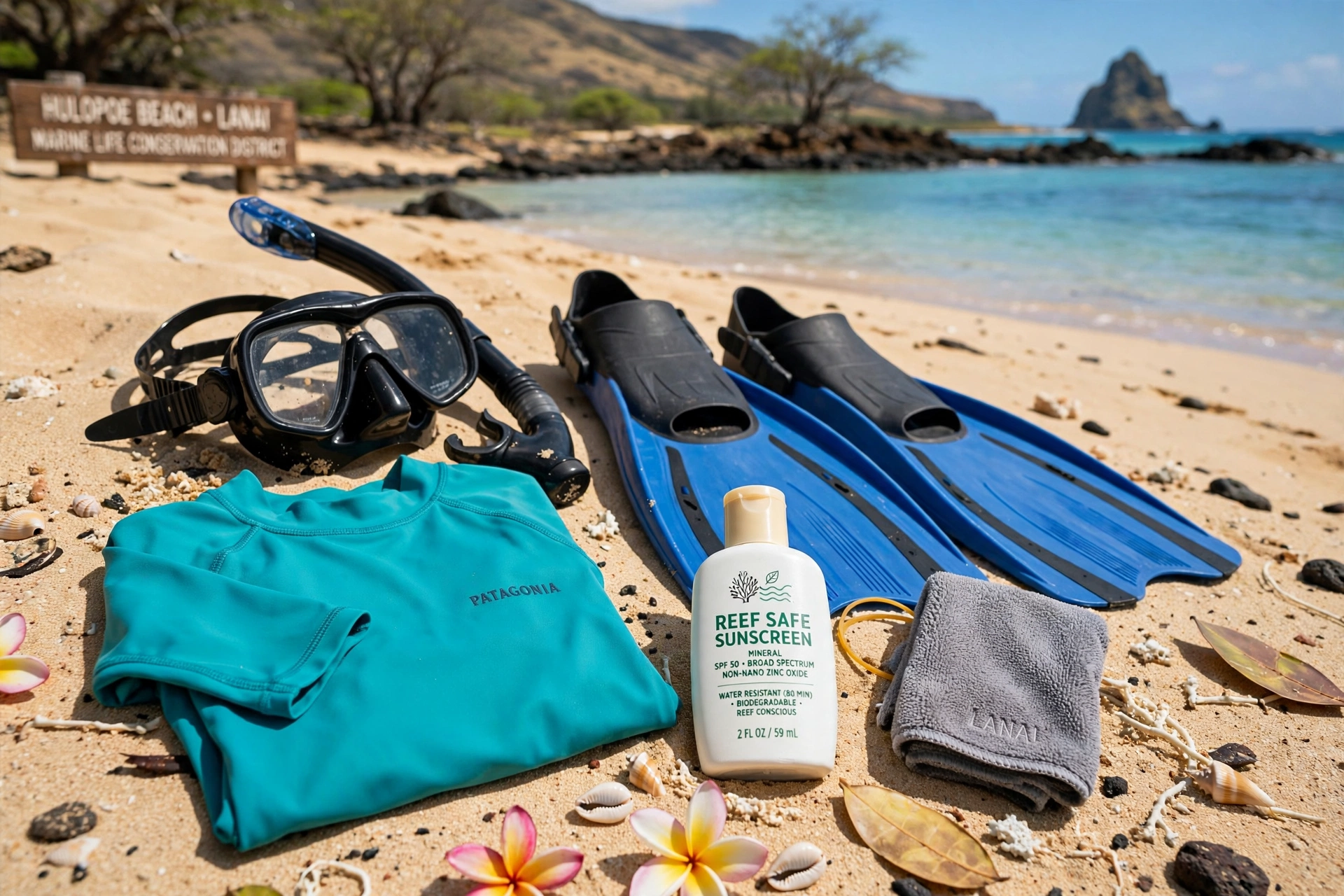
Sun protection is a serious matter on Lānaʻi. The reef reflects sunlight upward, doubling your exposure, and there is almost no natural shade at most beaches. Use reef-safe sunscreen (required by Hawaiʻi law), wear a rash guard, and reapply often. Dehydration sneaks up on snorkelers; drink water before and after every session.
The buddy rule is not optional here. With no lifeguards and limited cell coverage, a cramp, a jellyfish sting, or a dislodged mask can become serious fast if you are alone. Snorkel in pairs, stay within sight of each other, and agree on a simple hand signal for trouble before you enter.
Reef Etiquette and the Law
Hulopoʻe Bay’s conservation district rules exist to keep the reef the way you found it. The core rules: do not take, harm, or harass any marine life; do not damage coral; do not feed fish. Feeding changes fish behavior, degrades the reef, and is prohibited. Take only photographs.
Coral is alive and extraordinarily fragile. A single fin kick can destroy decades of growth. Practice buoyancy before you need it: float horizontally, keep fins at the surface, and never stand on the reef. If you need to rest, float on your back in deep water or swim back to the sand.
Hawaiʻi’s Act 104 bans the sale and distribution of sunscreens containing oxybenzone and octinoxate, the chemicals most damaging to coral reefs. Use mineral-based sunscreens with non-nano zinc oxide or titanium dioxide, or better yet, wear a rash guard and hat so you need less sunscreen at all. Apply sunscreen at least fifteen minutes before entering the water so it does not wash straight off onto the reef.
Wildlife distance laws apply everywhere: ten feet from sea turtles, fifty feet from monk seals, fifty yards from spinner dolphins. These are federal protections with real penalties. The distances also happen to produce better encounters; animals that do not feel threatened behave naturally.
Gear and Preparation
Bring everything from home or rent on Maui, because Lānaʻi has no snorkel rental shops. A well-fitting mask is the single most important item; a leaking mask ruins a session faster than any other gear failure. Test the seal on your face before you travel. Fins should be comfortable for an hour of kicking; full-foot fins work fine from the sandy entry at Hulopoʻe.
A rash guard or thin wetsuit top serves triple duty: sun protection, warmth on longer sessions, and a buffer against incidental coral contact. Water temperatures run in the mid to upper seventies in winter and low eighties in summer; most snorkelers are comfortable for an hour in just a rash guard.
A note on masks for eyeglass wearers: prescription snorkel masks are worth the investment if you snorkel more than once a year. The reef at Hulopoʻe is a place where seeing clearly pays off, from the tiny Christmas tree worms to the camouflaged scorpionfish tucked against the coral. Contact lens wearers should know that soft lenses are generally fine under a well-sealed mask, but bring a spare pair and keep your eyes closed if the mask floods.
Pack reef shoes or booties for the rocky entries, a dry bag for phone and keys, drinking water, and a small first aid kit with vinegar for jellyfish stings. An underwater camera is worth bringing; just remember the reef-contact rule applies to cameras too, so use a float strap and never set the camera down on coral.
Best Time to Snorkel
The best snorkeling window on Lānaʻi runs from April through October, when the south coast is at its calmest and the water is warmest. Summer mornings at Hulopoʻe are reliably glassy, with the lightest winds of the year. This is also the busiest period for day-trippers, so the early start matters more.
Winter, from November through March, brings the humpback whales and the chance to hear whale song underwater, but it also brings bigger swells that can reach the south coast and rougher ferry crossings. Check the surf forecast before committing to a winter snorkel day; on big swell days, stay out of the water.
Within any day, morning is always better than afternoon. The trade winds build through the morning and chop the surface by early afternoon, cutting visibility and making the swim back to shore harder. Plan to be in the water by eight or nine in the morning and out by noon.
Frequently Asked Questions
Is Lānaʻi good for snorkeling?
It is good at one beach and limited everywhere else. Hulopoʻe Bay is genuinely excellent, a protected conservation district with clear water and abundant fish. If you go in expecting one great spot rather than a coastline of options, you will not be disappointed.
What is the best snorkeling spot on Lānaʻi?
Hulopoʻe Bay, without competition. It is a state Marine Life Conservation District on the calm south coast, with easy sandy entry, parking, restrooms, and the island’s healthiest accessible reef.
Are there snorkel tours on Lānaʻi?
No. There are no commercial snorkel tour boats operating from Lānaʻi. All snorkeling is shore snorkeling, which means you need your own gear and your own judgment about conditions.
Can you snorkel at Shipwreck Beach?
No. Shipwreck Beach faces open ocean with dangerous shore break and currents year-round. It is a sightseeing beach, not a swimming beach. Do not enter the water there.
Will I see turtles while snorkeling on Lānaʻi?
Very likely at Hulopoʻe. Green sea turtles are regulars on the bay’s reef. Keep at least ten feet away, never chase or touch them, and let them approach you if they choose to.
Do I need reef shoes for Lānaʻi snorkeling?
They are strongly recommended. Entries at Hulopoʻe and Mānele cross rocky areas with sea urchins, and the lava shoreline elsewhere is sharp. Reef shoes or fin booties prevent the most common minor injuries.
Is the sunscreen ban real?
Yes. Hawaiʻi’s Act 104 prohibits sunscreens containing oxybenzone and octinoxate. Use mineral-based reef-safe sunscreen, apply it well before entering the water, and consider a rash guard to reduce sunscreen use altogether.
Can I rent snorkel gear on Lānaʻi?
No. There are no snorkel rental shops on Lānaʻi. Bring your own gear or rent on Maui before taking the ferry. If you are staying overnight on Lānaʻi, confirm gear with your lodging in advance.
Related Guides
- Lānaʻi Travel Guide: the complete island overview
- Lānaʻi Beaches: every beach, with honest swimming advice
- Lānaʻi Map: regions, roads, and landmarks
- Lānaʻi Hikes: Munro Trail, Koloiki Ridge, and coastal walks
- Maui Snorkeling: far more options, a ferry ride away
- Molokaʻi Snorkeling: the 28-mile fringing reef
- Hawaiʻi Beaches: the statewide beach guide
A Final Note
Snorkeling on Lānaʻi asks for a different mindset than snorkeling on a bigger island. There is no menu of sites, no boat to carry you to the reef, no lifeguard watching the entry. There is one bay, protected by law and sheltered by geography, holding water so clear and fish so unafraid that a single morning there can outshine a week of crowded reef hopping elsewhere. Bring your own gear, arrive early, float gently over the coral, and let the turtles come to you. Lānaʻi rewards the snorkeler who understands that less, done well, is more.