
Maui has earned its reputation as Hawaiʻi’s snorkel capital the honest way: clearer water, healthier reefs, and more shoreline access than any other island. From the protected walls of Molokini Crater to the turtle-rich shallows off Mākena, this guide maps every major snorkel spot, explains when each one shines, and covers the safety and etiquette rules that keep both you and the reef intact.
On This Page
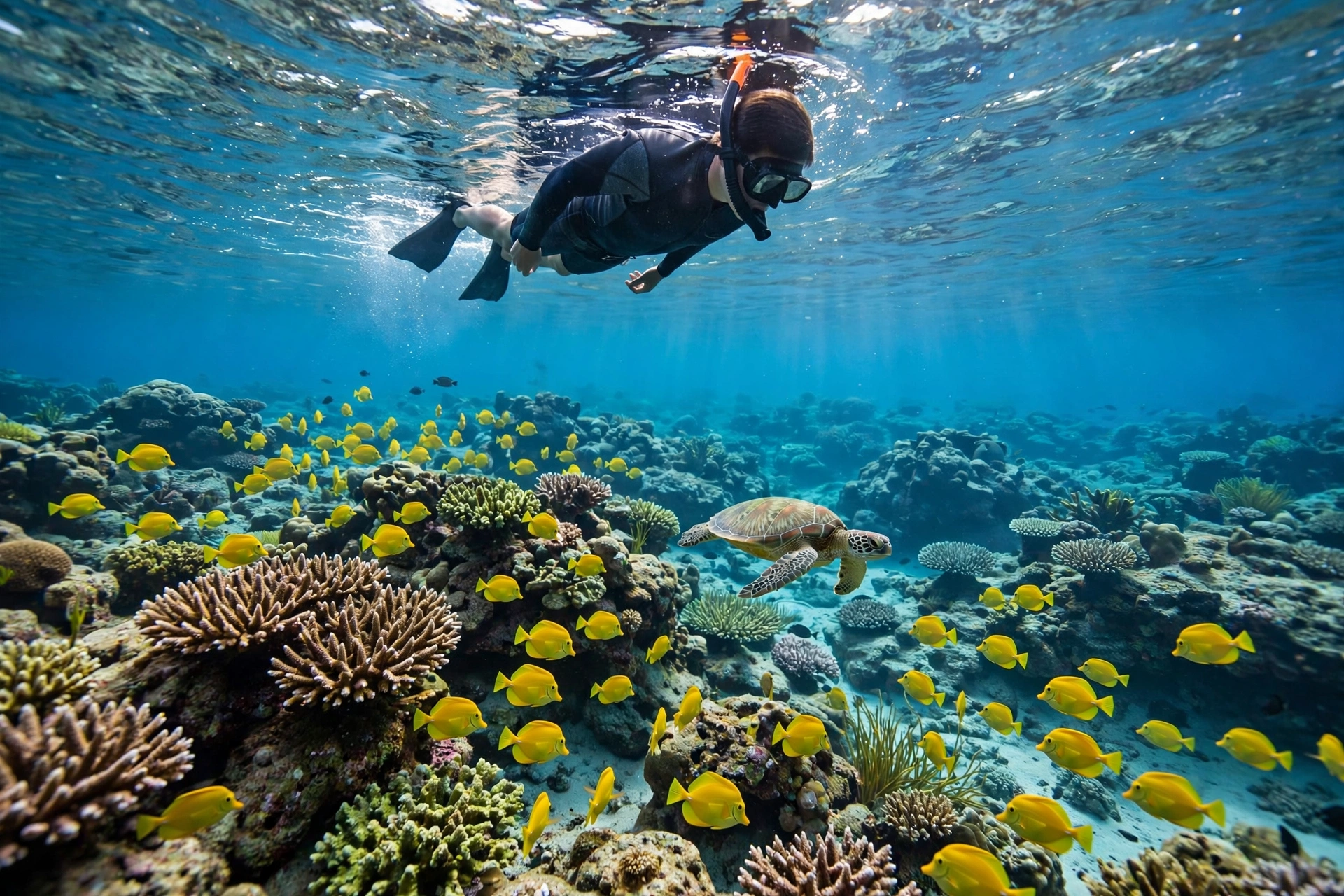
Why Maui Is Hawaiʻi’s Snorkel Capital
Ask a dozen Hawaiʻi visitors which island has the best snorkeling and most will say Maui, and the reasons go deeper than pretty postcards. Maui’s geography gives it an unusual combination of advantages. The island’s western and southern coasts sit in the rain shadow of the West Maui Mountains and Haleakalā, which means less runoff, less sediment in the water, and the kind of gin-clear visibility that can stretch past 100 feet on calm mornings. Where Oʻahu’s popular reefs sometimes fight urban runoff and the Big Island’s west coast deals with volcanic sediment, much of Maui’s leeward shoreline stays remarkably clear.
Depth and shelter matter just as much as clarity. Maui’s leeward bays (Honolua, Nāpili, Kapalua, Kāʻanapali, Wailea, Mākena) are carved into the coastline at angles that blunt the trade-wind chop, and many of them have fringing reefs that sit just yards off the sand. That means a competent swimmer can walk into the water and be over a healthy reef within minutes, something that is far less common on the windward sides of other islands.
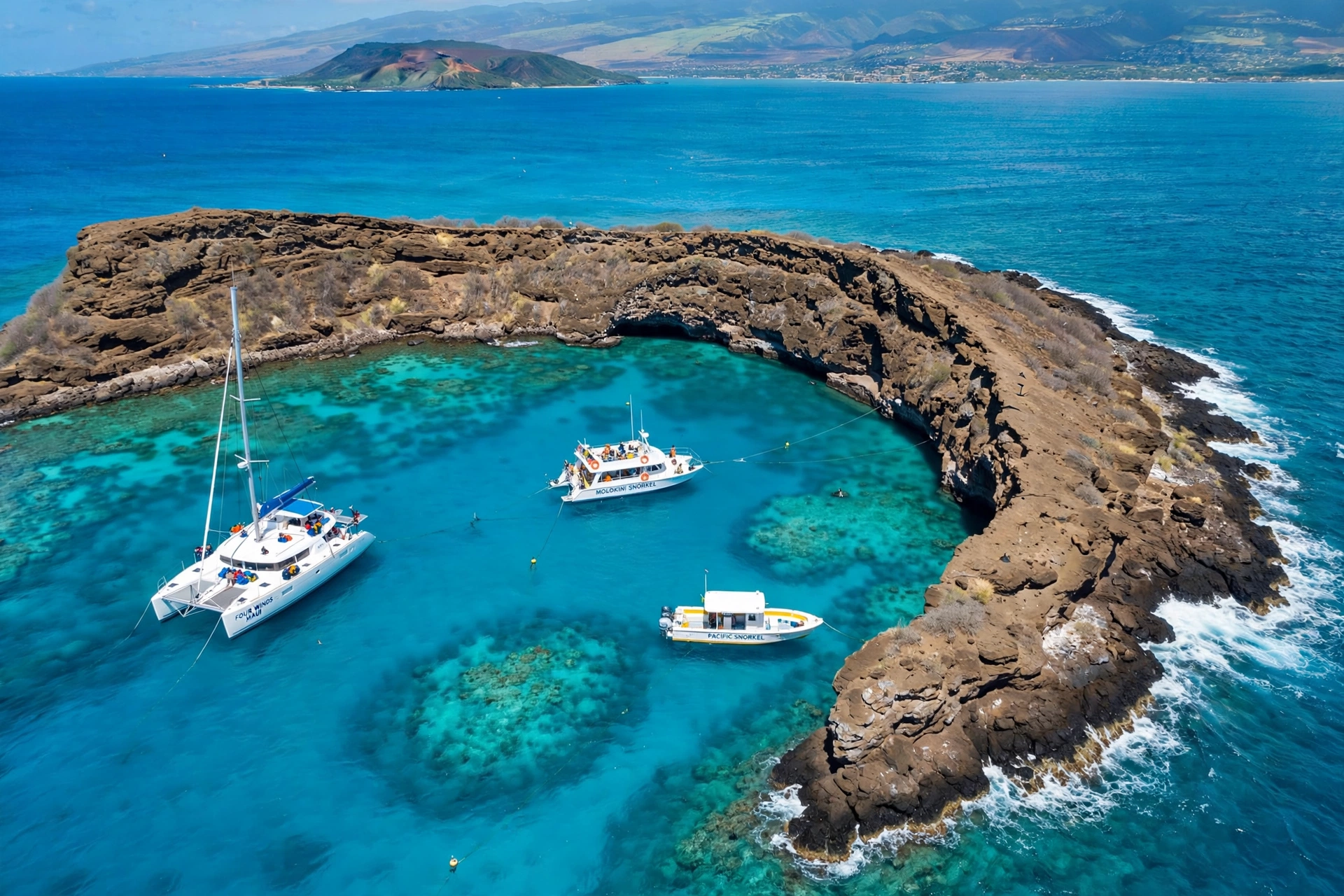
Then there is Molokini. The half-submerged volcanic crater sits about two and a half miles off Maui’s southwest coast and shelters one of the most protected marine environments in the state. Inside the crater’s crescent, the water is so still and so clear that first-time snorkelers sometimes feel they are floating in an aquarium rather than the open Pacific. It takes a boat to reach, but it sets a standard that anchors Maui’s reputation.
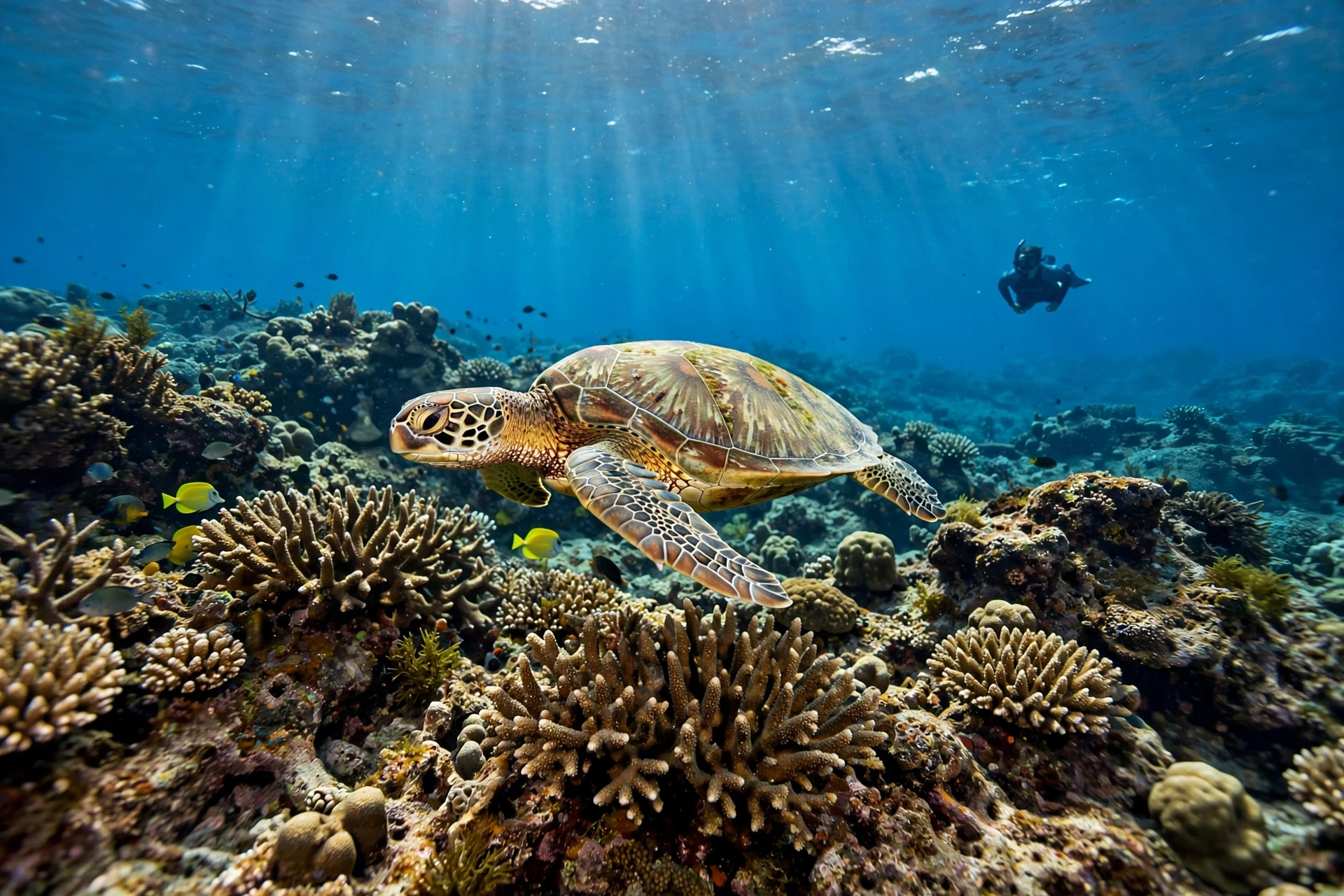
Finally, there is the turtle factor. Green sea turtles (honu) congregate along Maui’s south and west shores in numbers that surprise even repeat Hawaiʻi visitors. Spots like Turtle Town off Mākena and Ulua Beach in Wailea are named for the reliable turtle sightings, and the island’s healthy reef system gives the animals the algae-covered rock they feed on. Maui is not the only island with turtles, but it is the island where a snorkeler is most likely to drift alongside one on a calm morning.
The Top Snorkel Spots on Maui
Maui’s snorkel sites cluster along the west and south shores, where sheltered water meets healthy reef. Conditions at every site below change with the seasons: summer (roughly May through September) brings the calmest water to north and west-facing bays, while winter swells can make those same bays rough and redirect snorkelers to the south shore. Check the surf forecast before you go, and never enter water that looks bigger than you are comfortable with.
Molokini Crater
Molokini is the headliner. This crescent-shaped, partially submerged volcanic crater is a State Marine Life Conservation District, which means fishing is prohibited and the marine life inside is unusually relaxed around swimmers. The crater’s back wall rises about 160 feet above the surface while the submerged rim shelters a lagoon with visibility that regularly exceeds 100 feet, sometimes reaching toward 180 feet on exceptional days. The inner reef hosts more than 250 species of fish, many found nowhere else, along with occasional manta rays and, in winter, the sound of humpback whales passing offshore.
You can only reach Molokini by boat, and virtually all of Maui’s snorkel boats anchor inside the crater’s protected crescent. Trips typically leave from Māʻalaea Harbor or Kīhei Boat Ramp early in the morning, when the water is calmest and the light is best. The snorkeling itself is easy: the lagoon is sheltered, the entry is off the boat’s swim step, and the reef starts immediately. Because it is boat-access only and so consistently excellent, Molokini is the single most popular snorkel destination in Hawaiʻi.
Turtle Town (Mākena)
Turtle Town is not one precise spot but a stretch of reef off the Mākena coast, roughly between Nāhiku… correction, between Maluaka Beach and Mākena Landing, where green sea turtles gather in unusual numbers. The turtles come for the algae growing on the lava-rock reef, and on a calm morning it is common to see five, ten, or more honu drifting below you at once. Most snorkelers reach Turtle Town by boat from Māʻalaea or Kīhei, though experienced swimmers sometimes enter from shore at Mākena Landing and swim out along the coast.
Because Turtle Town is boat-accessed and turtle-dense, it is the classic answer to the question of where to guarantee a turtle sighting on Maui. The reef here also holds eels, octopus, and the usual cast of reef fish. Federal law protects green sea turtles, so admire them from a distance and never touch, chase, or block their path to the surface.
Honolua Bay
Honolua Bay, on the northwest coast past Kapalua, is a Marine Life Conservation District and one of Maui’s most beautiful shore-snorkeling sites. The bay is a deep, forested valley mouth with a rocky shoreline rather than a sandy beach, and the reef fills the right side of the bay (facing the ocean) with coral heads, schools of yellow tang, and frequent turtle visits. Summer is the season here: from roughly May through September the bay is glassy and the visibility superb. In winter, large north swells turn Honolua into a surf spot and snorkeling becomes unsafe.
Access is straightforward but rustic. Park along Honoapiʻilani Highway near the mile 32 marker, walk the short trail through the forest to the rocky shore, and enter over the rocks on the right side of the bay. There are no facilities, no lifeguards, and no sandy entry, so this is a spot for comfortable swimmers rather than first-timers.
Kāʻanapali Beach and Black Rock (Puʻu Kekaʻa)
Kāʻanapali’s three miles of sand are famous, but the snorkeling concentrates at the north end around Black Rock, the lava point known in Hawaiian as Puʻu Kekaʻa. The rock shelters a reef on both sides, and the drop-off along its face holds turtles, eels, and clouds of reef fish. Entry is easy from the sand, the water is usually calm in the morning, and the nearby hotels mean facilities are close. Black Rock is also the island’s most famous cliff-diving spot, with a nightly sunset dive tradition; snorkelers should give the jump zone a wide berth.
Kāʻanapali works for beginners because the entry is sandy, the reef is close, and the water stays shallow near the rock. Go early: the trade winds typically pick up by midday and chop the surface.
Nāpili Bay
Nāpili Bay is a small, crescent-shaped bay between Kapalua and Kāʻanapali that locals have loved for generations. The reef fringes both points of the crescent, leaving a sandy swimming area in the middle. The coral here is accessible in water just a few feet deep, which makes Nāpili one of the best beginner snorkel bays on the island. Turtles feed along the reef edges, and the bay’s small size keeps everything close together.
Nāpili is at its best in summer, when the water is flat. Like Honolua, it faces enough north to catch winter swell, so check conditions from roughly October through March. Parking is limited to a small lot and street spaces, so arrive early.
Kapalua Bay
Just north of Nāpili, Kapalua Bay was once named the best beach in America, and its snorkeling matches its sand. The bay is a near-perfect half-moon with reefs wrapping both sides, calm water most summer mornings, and a sandy entry that suits all skill levels. The right side of the bay (facing the ocean) holds the healthiest coral, with parrotfish (uhu), butterflyfish, and the occasional turtle.
Kapalua’s sheltered shape makes it one of the most reliable family snorkel spots on Maui. The beach has restrooms, showers, and shade from the adjacent resort landscaping, and the Coastal Trail runs along the shore for a scenic walk before or after your swim.
Ulua Beach (Wailea)
Ulua Beach in Wailea is a local favorite that flies under the radar of many visitors. The beach sits at the south end of the Wailea Beach Path, and the rocky points on both sides of the sand hold excellent snorkeling. Ulua is particularly known for its turtle cleaning station: a spot on the reef where turtles hover while small fish pick algae and parasites from their shells, and snorkelers who wait patiently are often rewarded with close, calm encounters.
The entry is sandy, the reef is close, and the south-shore location keeps Ulua swimmable in more conditions than the west-side bays. Morning is still best, before the afternoon winds arrive.
Mākena Landing
Mākena Landing is a small, historic beach park (once a landing for cattle shipments to the mainland) that serves as the shore-access gateway to Turtle Town. Experienced snorkelers enter here and swim south along the coast toward the turtle-rich reefs, though the swim is long enough that most visitors still prefer a boat. The landing itself has a small reef right off the beach that suits a short snorkel, and the park has restrooms and picnic tables.
This is a spot for strong swimmers only if you plan to reach the main Turtle Town reefs. The open coastline here is exposed to current, and there are no lifeguards.
Olowalu
Olowalu, between Māʻalaea and Lahaina, guards what marine biologists consider one of the healthiest and most extensive reef systems in Hawaiʻi. The reef here stretches far offshore in a broad, shallow flat, and the coral coverage is exceptional. Because the reef is wide and shallow, Olowalu is best explored with a guide or from a boat or kayak; swimming out from shore means a long kick over shallow coral that is easily damaged.
Olowalu’s reef is a stronghold for manta rays, which are sometimes seen gliding over the reef flat, and the area’s coral diversity is among the highest in the main Hawaiian Islands. If reef health is your priority, Olowalu belongs on your list.
Shore Snorkeling vs. Boat Snorkeling
Most Maui snorkeling happens from shore, and the island’s best shore sites (Kapalua, Nāpili, Ulua, Black Rock) are genuinely excellent. Shore snorkeling is free, flexible, and lets you go at dawn when the water is at its calmest. The trade-off is that you are limited to reefs within swimming distance of a beach entry, and you have to read the conditions yourself: no captain is watching the swell for you.
Boat snorkeling opens up the sites you cannot reach any other way. Molokini Crater is the obvious one, but boats also serve Turtle Town, the backside reefs of Lānaʻi, and coral gardens along the south coast that sit too far offshore for a comfortable swim. Morning boat trips include snorkel gear, flotation, instruction, and often breakfast and lunch, and the crew handles the condition calls. For nervous swimmers, the structured format of a boat trip (guides in the water, flotation noodles, a ladder back to the boat) is the most forgiving way to snorkel Maui.
A sensible plan mixes both. Book one morning boat trip to Molokini or Turtle Town early in your stay, then spend the rest of your snorkel days walking into shore sites at sunrise. The boat trip gives you the signature experience and a confidence baseline; the shore days give you freedom and repetition, which is when you start noticing the details: the cleaner shrimp in the crevices, the octopus that changes color as you watch, the turtle that surfaces beside you like it planned the meeting.
When to go
Mornings are almost always better than afternoons on Maui. The trade winds typically strengthen after 10 or 11 a.m., chopping the surface and reducing visibility, so the local rule is simple: be in the water by 8 or 9 a.m. Summer (May through September) brings the calmest conditions to the west and northwest-facing bays like Honolua, Nāpili, and Kapalua. Winter (November through March) can make those same bays rough while the south shore (Wailea, Mākena, Kīhei) stays relatively calm. Year-round, check the surf forecast from the National Weather Service Honolulu office before choosing a site.
Marine Life You Will See
Maui’s reefs host a cast of characters that rewards repeat visits. Knowing what you are looking at turns a pleasant swim into a memorable one.
Green sea turtles (honu)
The Hawaiian green sea turtle is Maui’s signature animal. Adults weigh 200 to 300 pounds, feed on algae growing on reef rock, and rest on the bottom or bask on beaches. You will see them at nearly every site in this guide, with Turtle Town, Ulua Beach, and Mākena Landing offering the most reliable encounters. Honu are protected under the federal Endangered Species Act and Hawaiʻi state law: keep your distance, never touch or chase them, and give a basking turtle at least 10 feet of space. A turtle that swims up to you is fine; you swimming after a turtle is not.
Reef fish
The reefs hold hundreds of species. Expect clouds of yellow tang grazing the coral, Moorish idols with their trailing dorsal fins, parrotfish (uhu) crunching coral with their beak-like mouths, and the humuhumunukunukuāpuaʻa (reef triggerfish), Hawaiʻi’s state fish, patrolling its territory with attitude. Raccoon butterflyfish, flame angelfish, and spotted boxfish add color, while moray eels peer from crevices and the occasional octopus (heʻe) flashes across the reef in a ripple of changing camouflage.
Manta rays
Manta rays glide over Maui’s reefs with wingspans reaching 12 feet or more, most reliably at Olowalu and off the south coast. They are plankton feeders, completely harmless, and one of the most thrilling animals you can meet while snorkeling. Sightings are never guaranteed, but dawn patrols at Olowalu and Turtle Town produce them with some regularity.
Spinner dolphins (naiʻa)
Hawaiian spinner dolphins rest in Maui’s bays during the day after feeding offshore at night. You may see pods cruising past while you snorkel, particularly along the west coast. Federal law requires keeping at least 50 yards from dolphins; never swim toward a pod or try to join them. NOAA has established time-area closures in some bays during midday rest hours, so check current regulations before you go.
Humpback whales (koholā)
From roughly December through April, North Pacific humpback whales migrate to Hawaiian waters to breed and calve, and Maui’s ʻAuʻau Channel hosts the densest concentration in the islands. You will not snorkel with whales (federal law requires staying at least 100 yards away, and approaching them in the water is prohibited), but you will very likely see them breaching from shore or hear their songs resonating through the water while you snorkel. If a whale approaches you while you are swimming, stay calm, keep your distance as best you can, and let it pass.
Hawaiian monk seals (ʻīlio-holo-i-ka-uaua)
The endangered Hawaiian monk seal, with only about 1,600 remaining, occasionally hauls out on Maui’s beaches to rest. If you see one, stay at least 50 feet away (federal guidelines recommend 50 yards for mothers with pups), keep dogs leashed and away, and never get between a seal and the water. A resting seal is not a stranded seal; it is doing exactly what it needs to do.
Snorkeling Safety on Maui
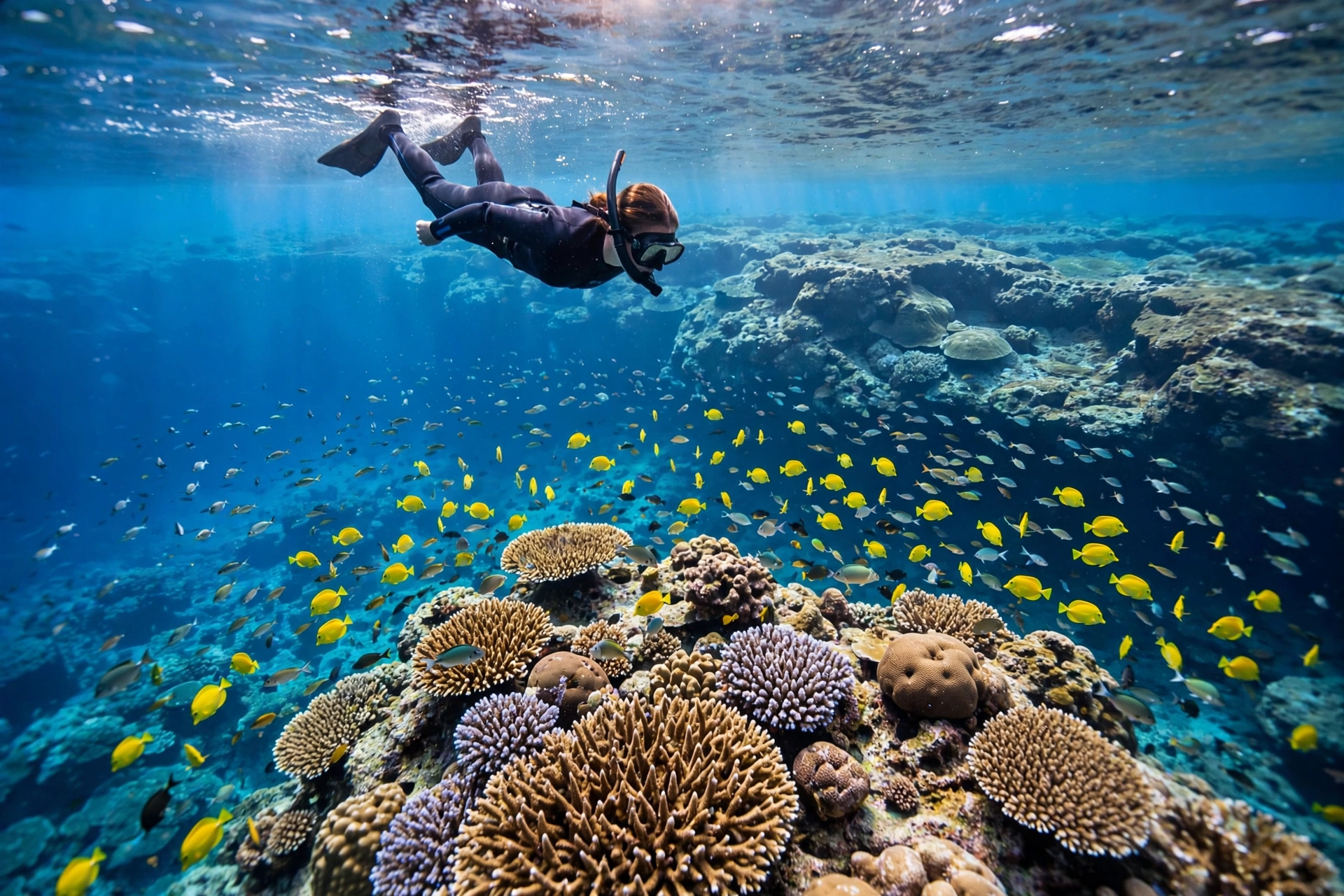
Snorkeling is a low-impact activity, but the ocean deserves respect. Hawaiʻi records drowning incidents every year involving snorkelers, and most share preventable causes: overexertion, unfamiliar gear, and entering water beyond one’s ability. The following rules are the difference between a great day and a dangerous one.
Know your limits and never snorkel alone
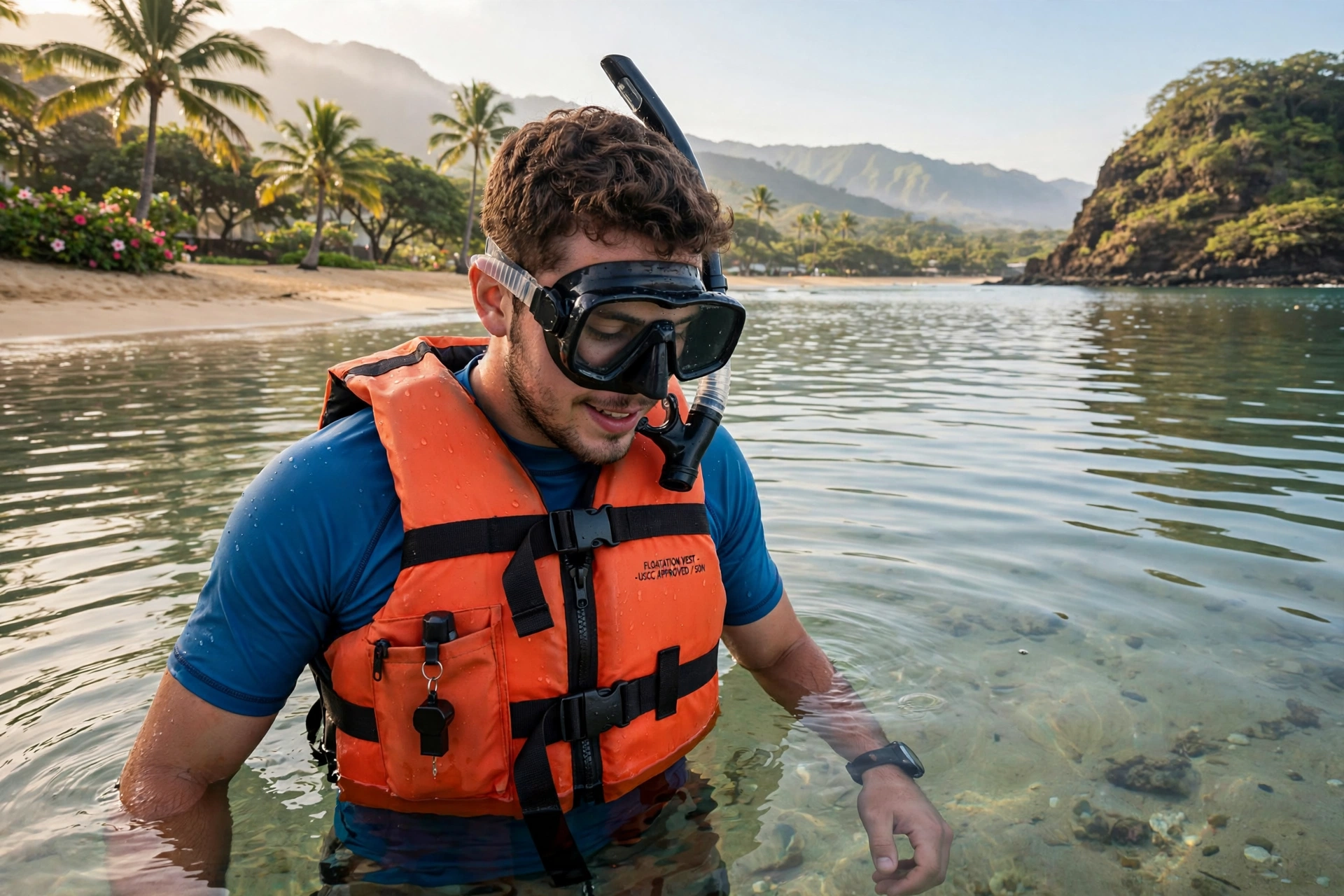
Snorkel with a buddy, stay within sight of each other, and agree on a plan before entering the water. If you are not a confident swimmer, wear a flotation vest or use a pool noodle, and consider a guided boat trip where crew members swim with the group. Snorkeling looks effortless, but kicking against even a mild current for an hour is real exercise. Rest when you are tired, and get out of the water before fatigue sets in.
Read the water before you enter
Spend five minutes watching the site before you swim. Look for the direction of the current, the size and interval of the waves, and where other snorkelers are entering and exiting. If the water looks rough, the entry is rocky, or the surf is pounding the reef, choose a different site or a different day. Winter swells can transform a calm summer bay into a dangerous shorebreak within hours. When in doubt, do not go out.
Enter and exit carefully
Most snorkeling injuries happen at entry and exit, not over the reef. Sandy entries (Kapalua, Nāpili, Ulua, Kāʻanapali) are the safest. Rocky entries (Honolua Bay, parts of Mākena) require timing the waves, wearing reef shoes, and keeping your mask on until you are past the surf zone. Watch for urchins on rocky bottoms: their spines break off in skin and are painful to remove.
Never stand on coral
Coral is a living animal that grows only a few millimeters per year. Standing on it kills it, and the Hawaiʻi Department of Land and Natural Resources treats reef damage seriously. If you need to rest, float on your back or swim to sand. Choose fins that fit well so you do not kick the reef accidentally, and keep your body horizontal in shallow water rather than dangling your legs downward.
Use reef-safe sunscreen
Hawaiʻi law (Act 104, in effect since 2021) bans the sale of sunscreens containing oxybenzone and octinoxate, two chemicals shown to harm coral. Choose a mineral sunscreen with non-nano zinc oxide or titanium dioxide as the active ingredient, apply it at least 15 minutes before entering the water, and consider a rash guard or swim shirt to reduce sunscreen use altogether. The sun in Hawaiʻi is intense even on cloudy days, and sunburn plus dehydration is the fastest way to ruin a snorkel day.
Watch for sun, dehydration, and marine hazards
Drink water before and after snorkeling, not just when you feel thirsty. Jellyfish occasionally drift into Maui’s bays (box jellyfish arrive on some south-facing shores roughly 8 to 12 days after a full moon); if stung, exit the water and rinse with vinegar if available. Do not touch anything you cannot identify: cone snails, scorpionfish, and urchins all demand respect. And keep an eye on the sky: Hawaiʻi weather can shift quickly, and lightning, while rare, means immediate exit from the water.
Gear and Practicalities
What to bring
A well-fitting mask is the single most important piece of snorkel gear. Test it by pressing it to your face without the strap: it should seal with a gentle inhale. Fins should be snug but not tight; open-heel fins with booties work well for rocky entries, while full-foot fins are fine for sandy beaches. A dry-top snorkel keeps water out of the tube when a wave washes over, which beginners appreciate. Bring a rash guard for sun protection, reef shoes for rocky entries, a towel, drinking water, and a waterproof bag for your phone and keys.
Renting vs. buying
Snorkel gear rental shops cluster in Kīhei, Lahaina, and Kāʻanapali, and weekly rentals typically cost less than a single day’s boat trip add-on. Renting makes sense for most visitors: the shops sanitize gear between users, swap sizes until the fit is right, and often include a mesh bag and defogger. If you snorkel at home too, consider buying your own mask before the trip; a mask molded to your face over many uses beats any rental. Whatever you rent, test the full set in a pool or calm shallows before committing to a deep reef.
Full-face masks: a caution
Full-face snorkel masks are popular with beginners because they allow nose breathing, but they have been linked to safety concerns, including carbon dioxide buildup in some designs. If you use one, choose a reputable brand, follow the manufacturer’s guidance exactly, never modify the mask, and remove it immediately if you feel dizzy, short of breath, or anxious. Traditional mask-and-snorkel setups remain the safest choice for most snorkelers.
Best time of day
Go early. Maui’s trade winds typically rise late in the morning, and by early afternoon the surface chop can cut visibility and make swimming harder. Aim to be in the water by 8 or 9 a.m., when the water is calmest, the light penetrates deepest, and the parking lots still have space. Early mornings also bring the best wildlife activity: turtles feeding, reef fish schooling, and mantas cruising the shallows.
Parking and facilities
Popular snorkel beaches fill early. Kapalua Bay, Nāpili Bay, and Ulua Beach have small lots that are often full by 9:30 a.m. in high season; have a backup site in mind. Beach parks generally offer restrooms and outdoor showers, while resort-adjacent beaches may have limited public parking. Never leave valuables visible in your car, and bring only what you need to the beach.
A Beginner’s Guide to Maui Snorkeling
If you have never snorkeled, Maui is one of the kindest places on earth to learn. Start at Kapalua Bay or Nāpili Bay on a calm summer morning: sandy entry, shallow reef, no current to fight. Practice in waist-deep water first. Put your face down, breathe slowly through the snorkel, and get comfortable with the sensation before kicking out to the reef. Keep your arms at your sides and kick gently from the hips; thrashing wastes energy and stirs up sand.
Clear your mask by tilting your head back, exhaling sharply through your nose, and letting the water drain out the bottom. Clear your snorkel with a sharp exhale when you surface. If water keeps leaking into your mask, the fit is wrong or your hair is breaking the seal; adjust the strap (snug, not tight) and smooth your hair back.
Use flotation without shame. A vest or noodle lets you relax, and a relaxed snorkeler breathes better, sees more, and stays safer. Many beginners also do their first open-water session on a guided boat trip to Molokini, where the crew fits your gear, briefs the group, and swims alongside. There is no prize for struggling; there is a reef full of turtles waiting for the snorkeler who takes it easy.
Finally, learn the etiquette before you go. Do not touch coral, turtles, or any marine life. Do not feed the fish; it disrupts their natural behavior and diet. Give other snorkelers space, and if you see someone in trouble, alert a lifeguard or call 911 rather than attempting a rescue beyond your ability.
Frequently Asked Questions
What is the best snorkeling spot on Maui?
Molokini Crater is the consensus pick for the clearest water and most protected reef, but it requires a boat trip. For shore snorkeling, Kapalua Bay and Honolua Bay (in summer) are the standouts. Turtle Town off Mākena is the best bet for guaranteed turtle encounters.
Do I need a boat to snorkel on Maui?
No. Many of Maui’s best sites (Kapalua, Nāpili, Ulua, Black Rock) are shore-accessible and free. A boat is required only for Molokini Crater and is the easiest way to reach Turtle Town and Olowalu’s outer reef.
When is the best time of year to snorkel on Maui?
Summer (May through September) offers the calmest water at the west and northwest-facing bays. Winter brings bigger surf to those bays but the south shore stays relatively calm, and it adds humpback whales to the experience from December through April.
Can beginners snorkel on Maui?
Yes. Kapalua Bay, Nāpili Bay, and Ulua Beach have sandy entries, shallow reefs, and calm morning water that suit first-timers. Use flotation, go with a buddy, and consider a guided boat trip for your first session.
Will I see turtles while snorkeling on Maui?
Very likely. Green sea turtles are abundant along Maui’s south and west shores. Turtle Town, Ulua Beach, and Mākena Landing offer the most reliable sightings. Remember that honu are federally protected: observe from a distance and never touch them.
Is the water cold?
Maui’s ocean temperature ranges from about 74°F in winter to 80°F in summer. Most snorkelers are comfortable without a wetsuit, though a rash guard adds sun protection and a thin layer of warmth on breezy days.
What should I do if I see a monk seal on the beach?
Stay at least 50 feet away (50 yards from mothers with pups), keep dogs leashed and away, and do not get between the seal and the water. Report sightings to NOAA’s marine mammal hotline if the animal appears injured or entangled.
Can I snorkel at Molokini without a tour?
Not practically. Molokini sits over two miles offshore in open ocean with boat traffic and no shore access. Every visitor reaches it on a commercial snorkel boat departing from Māʻalaea Harbor or Kīhei Boat Ramp.
Related Guides
Reading the Reef
Maui’s snorkeling rewards the patient observer more than the ambitious swimmer. The snorkelers who see the most are rarely the ones who cover the most ground; they are the ones who hover quietly over a coral head for ten minutes and let the reef come to them. Learn the rhythms: the early morning calm, the summer glass at Honolua, the turtle cleaning stations at Ulua, the winter whale song vibrating through the water at Molokini. Each site has its own character, its own season, and its own community of animals going about their day. Float gently, keep your fins off the coral, and give the honu the right of way. The reef has been here far longer than any of us, and snorkeling it well means leaving it exactly as you found it.