Sunset Beach Hawaii: North Shore’s Legendary Surf Beach and Sunset Spot

There are beaches you visit, and there are beaches that define a coastline. Sunset Beach on Oahu’s North Shore is the second kind. It is a two-mile curve of sand in Pupukea where the Pacific shows both of its personalities: glassy and gentle in summer, thunderous and towering in winter. The Hawaiian name for this place is Paumalu, and it has been drawing surfers, photographers, and sunset watchers for generations.
If you have seen footage of North Shore big wave surfing, there is a good chance you were looking at Sunset Beach. It sits right off Kamehameha Highway (Highway 83), roughly 39 miles from Waikiki, between Waimea Bay and Turtle Bay. The drive takes about an hour, and it is one of the most rewarding day trips you can make on Oahu.
Where Sunset Beach Sits and How to Get There
Sunset Beach occupies the central stretch of a continuous four-mile beach that runs along the North Shore community of Paumalu. The beach park address is 59-104 Kamehameha Highway in Pupukea, and the main parking lot sits directly across the highway from the sand. From Waikiki or Honolulu, take H-1 west, then H-2 north, and follow the signs for the North Shore on Kamehameha Highway. The drive through the island’s interior and down into Haleiwa is part of the experience.
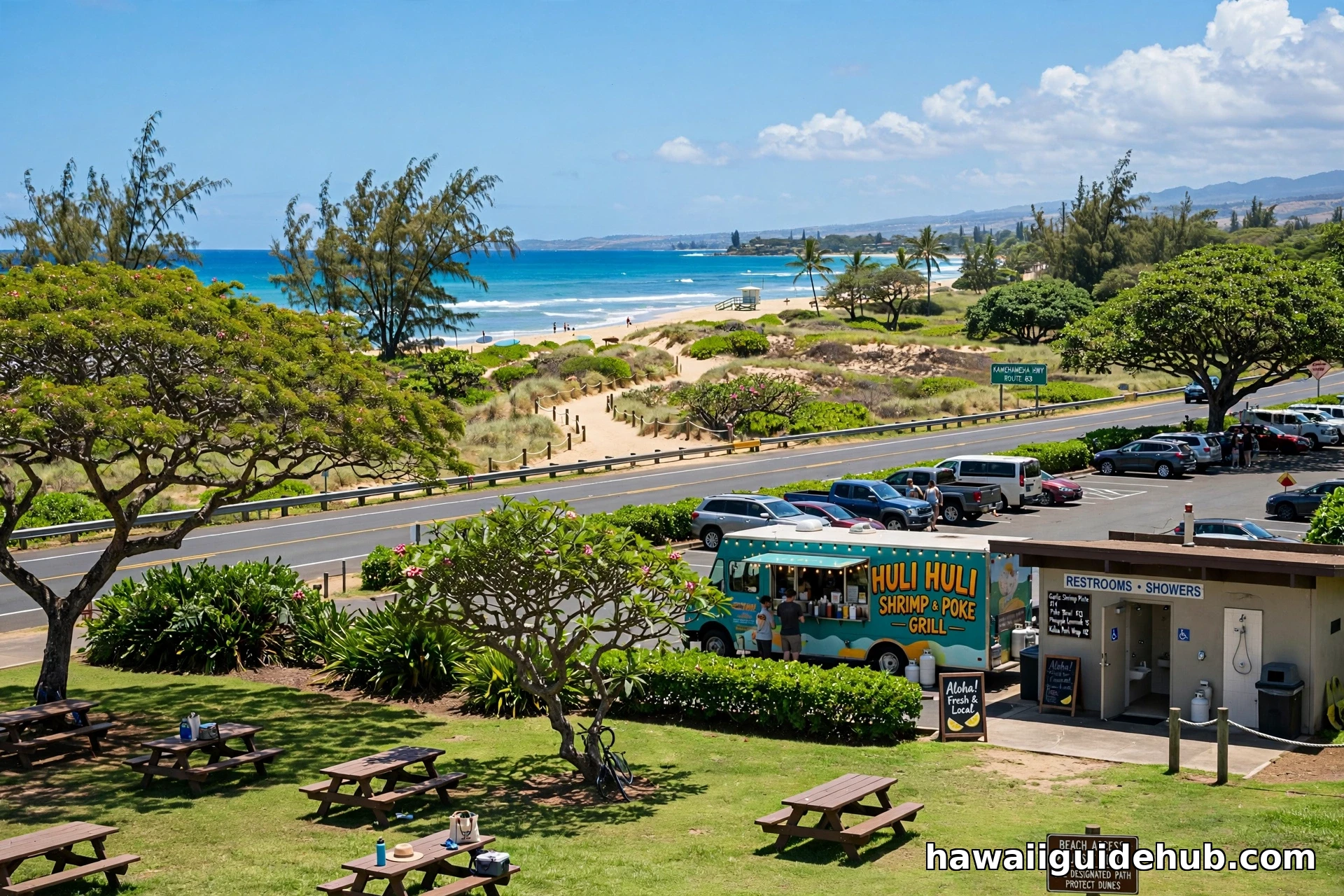
Parking is free at Sunset Beach Park, which has restrooms, outdoor showers, picnic tables, and shade trees. There is also roadside parking along the highway near Ted’s Bakery, a famous stop for the chocolate haupia pie. In winter, especially on big swell days and during surf contests, the lot fills early. Arrive before 9 in the morning if you want a spot close to the beach. No reservations are needed to visit. Sunset Beach is a public beach, open to everyone year round with no entry fee.
The Two Faces of Sunset Beach
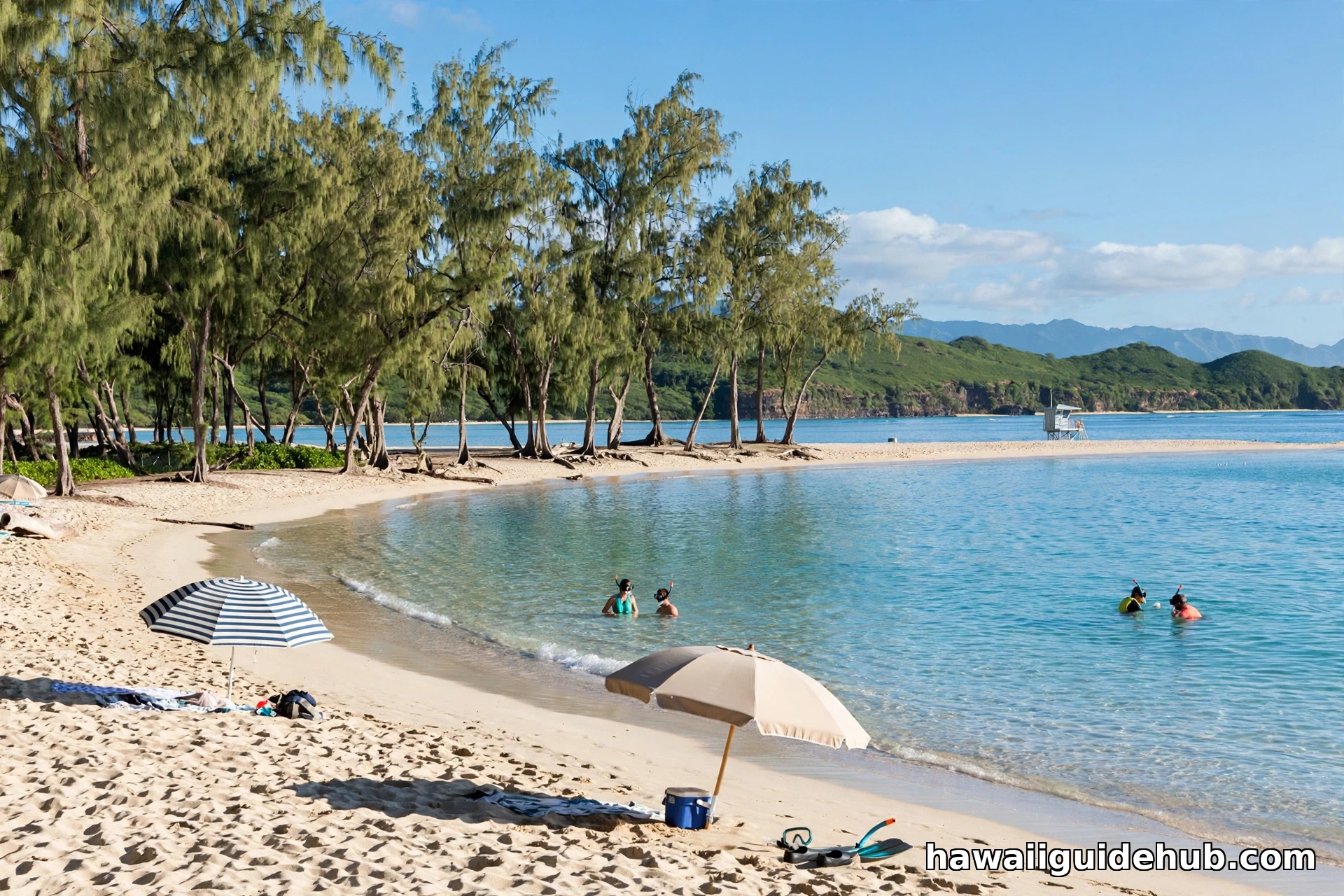
Understanding Sunset Beach means understanding that it is really two different beaches depending on the month. In summer, roughly May through September, the ocean goes flat. The water turns the color of pale glass, and families spread out on the sand with snorkel gear and beach umbrellas. Swimming is pleasant, snorkeling is decent around the rocky edges, and the whole mood is relaxed.
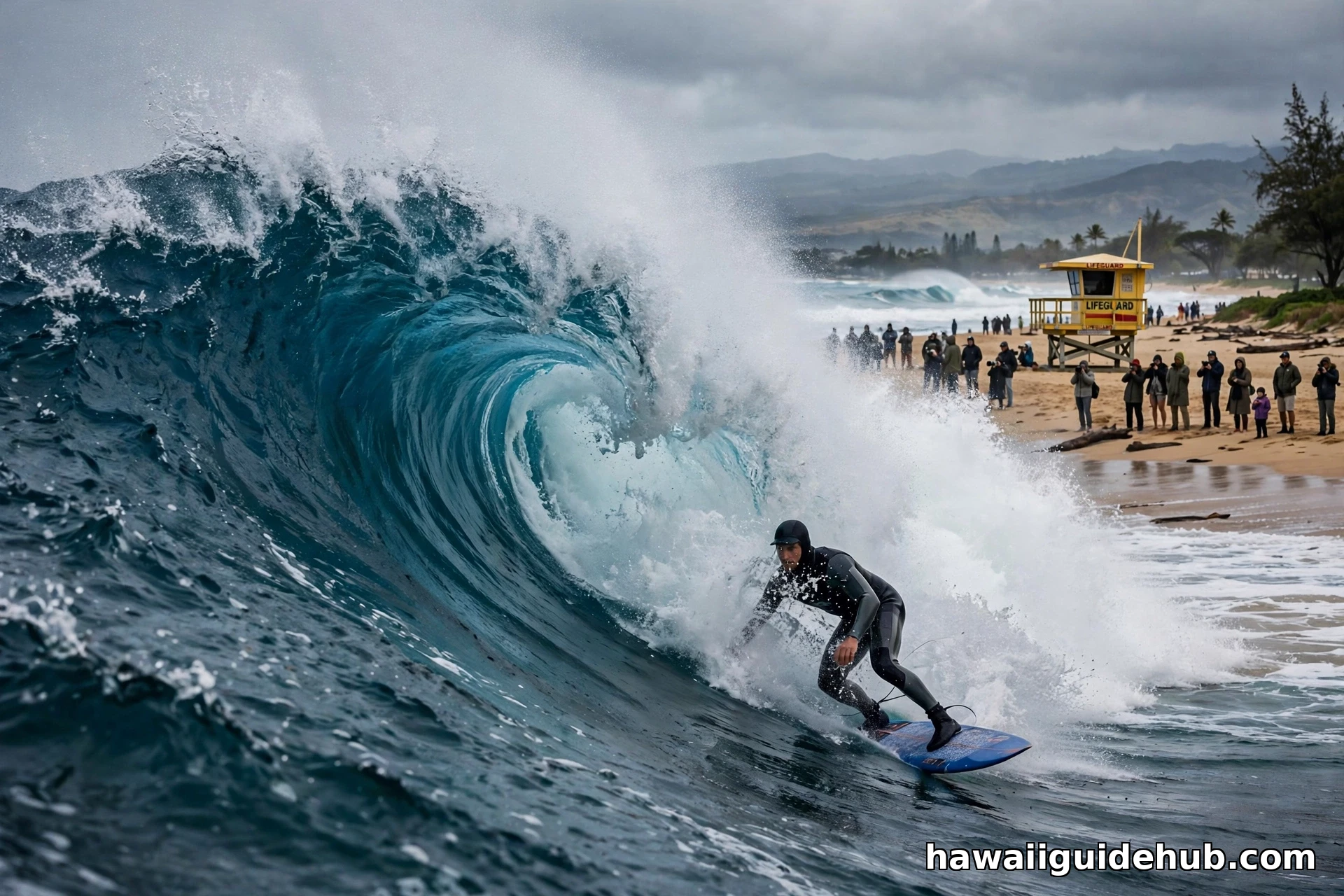
In winter, roughly November through March, the North Pacific sends massive swells toward Oahu’s north-facing shores. Waves at Sunset Beach routinely reach 15 to 25 feet, and on the biggest days they push past 30 feet. The beach transforms into an arena. Professional surfers paddle out while crowds gather on the sand to watch. The energy is electric, but the water is not for casual swimming. This seasonal split is the single most important thing to know before you plan your visit.
Winter: Big Wave Season
Winter is when Sunset Beach earns its reputation. The surf break here is wide and shifty, with multiple takeoff zones that appear and disappear as sets roll through. Unlike the famous Banzai Pipeline, which breaks close to shore over a shallow reef, Sunset Beach breaks further out and demands precise positioning. Surfers sit deep and adjust at the last second. It is considered one of the true tests of big wave surfing.
The conditions are not forgiving. Coral formations sit near the surface in places, and the trade winds that blow offshore can make paddling into waves difficult. Only experienced surfers should attempt Sunset Beach in winter. For everyone else, the show from the sand is spectacular enough. Bring binoculars if you have them, and keep a respectful distance from the water’s edge. Shorebreak can be powerful even when you are just watching.
Lifeguards are on duty most days, and their tower is a fixture on the beach. Talk to them before you even think about going in. They know the currents, the shifting sandbars, and which sections are safest on any given day.
Summer: Swimming, Snorkeling, and Long Lazy Days
Summer at Sunset Beach feels like a different planet. The same stretch of sand that hosted 25-foot waves in January becomes a calm swimming beach by July. The water is warm, the visibility is good, and the crowds thin out compared to Waikiki. It is one of the North Shore‘s best-kept summer secrets.
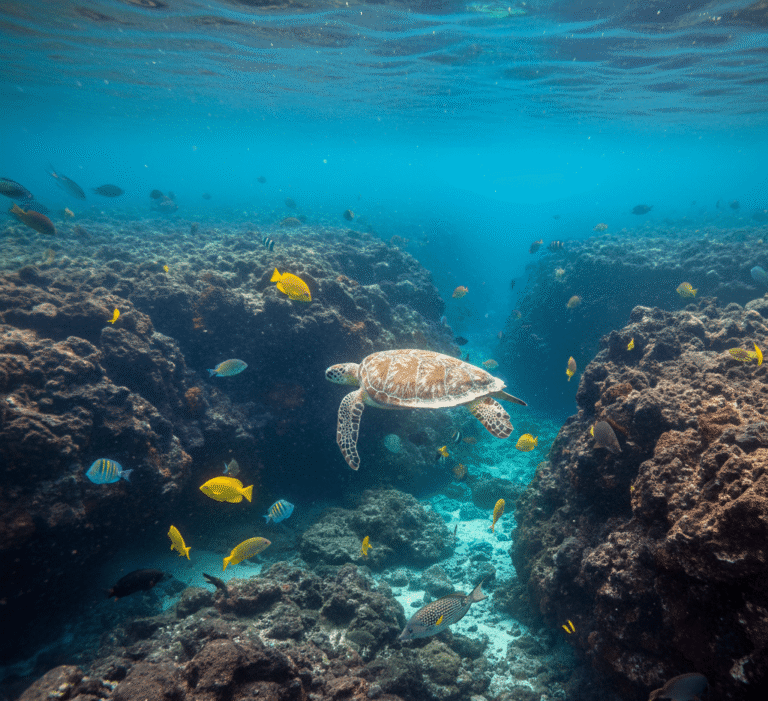
Swimming conditions vary along the two-mile beach, so look for the calmest section before you wade in. Snorkeling is best near the rocky outcrops at either end of the beach, where you can spot reef fish and the occasional honu, the Hawaiian green sea turtle. The sand is soft and pale, and there is plenty of room to spread out even on weekends.
If you want to snorkel somewhere with more consistent marine life, Shark’s Cove is a short drive away and offers some of the island’s best shore snorkeling in summer months.
Surf Culture and Legendary Contests
Sunset Beach is woven into the history of professional surfing. The Vans Triple Crown of Surfing, one of the sport’s most prestigious series, has long included a stop at Sunset Beach. The contest window typically falls in November and December, when the winter swells are at their most reliable. Watching the world’s best surfers take on Sunset Beach in competition is an unforgettable experience, and it costs nothing to stand on the sand.
The beach also played a role in the origin of the Eddie Aikau Big Wave Invitational, known simply as The Eddie. The event was created at Sunset Beach in 1984 before moving to nearby Waimea Bay, where it is held today when the waves reach the required 40-foot threshold. Eddie Aikau himself was a Waimea Bay lifeguard and big wave pioneer whose legacy looms large over the entire North Shore.
Even outside contest season, the surf culture here is palpable. You will see photographers with long lenses camped on the beach, surfers waxing boards in the parking lot, and locals who have been reading these waves for decades. It is a working surf beach, not a resort beach, and that is exactly its charm.
The Sunset That Gave the Beach Its Name
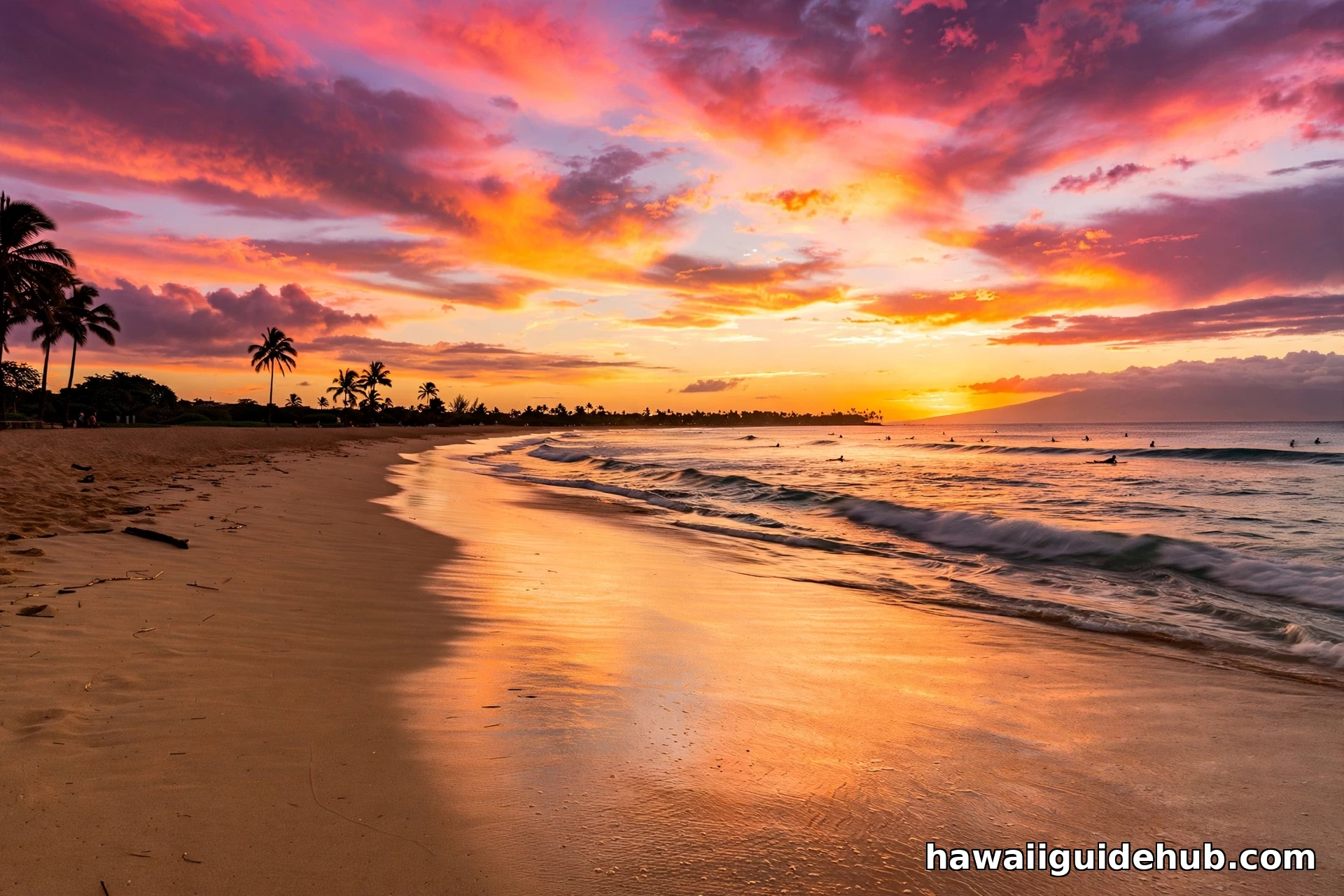
The name is not just marketing. Sunset Beach faces west-northwest, and on clear evenings the sun drops directly into the Pacific in a display of orange, pink, and gold. The two-mile beach gives you an unobstructed view, and the ironwood trees along the shore frame the scene beautifully. Locals gather here for pau hana, the after-work wind down, and visitors linger long after the swimmers have packed up.
Winter sunsets can be the most dramatic, with storm clouds catching fire on the horizon. Summer sunsets are softer but no less beautiful. Either way, bring a light jacket. The North Shore breeze picks up in the evening, and temperatures drop faster than you might expect after a day in the sun.
Practical Tips for Visiting
A few things that will make your visit smoother. First, there are no lifeguard-supervised swimming areas in the way you might expect at a resort beach. The guards watch the whole beach, but you are responsible for choosing a safe spot. Second, the facilities are basic but functional: restrooms, showers, picnic tables, and drinking water at the park across the street. There are no restaurants on the sand, but food trucks often park nearby, and Haleiwa town is a ten-minute drive for a full meal.
Third, protect the dunes. The vegetation along the beach holds the sand in place, and walking through it causes erosion. Use the designated beach access paths. Fourth, Hawaii’s beach rules apply here as everywhere: no alcohol, no smoking, no littering, and never touch turtles, monk seals, or coral. If you see a monk seal hauled out on the sand, give it at least 50 feet of space.
Finally, check the surf forecast before you go. The National Weather Service Honolulu office issues surf zone forecasts, and several surf report websites track Sunset Beach specifically. If the forecast calls for advisory-level surf, plan to watch, not swim.
What to Do Nearby
Sunset Beach makes an excellent anchor for a North Shore day. Waimea Bay is just down the road, with its famous rock jump and calmer summer swimming. Ehukai Beach Park is home to the Banzai Pipeline, the most famous wave in surfing, and it is worth seeing even when it is flat. For a change of pace, Waimea Valley offers a paved botanical garden walk to a waterfall where you can swim.
Haleiwa, the North Shore’s main town, is about ten minutes south. It has shave ice, shrimp trucks, surf shops, and the kind of laid-back atmosphere that makes you want to stay longer. If you are building a full island itinerary, our Oahu must-see guide covers how the North Shore fits into a longer trip.
Winter visitors should know that whale season overlaps with big wave season. From December through March, humpback whales migrate through Hawaiian waters, and you can sometimes spot them from the beach. Our guide to whale watching in Hawaii has the details on the best viewpoints.
The Story Behind the Name Paumalu
Long before it was Sunset Beach, this coastline was known as Paumalu. The name belongs to the ahupuaa, the traditional Hawaiian land division, that stretches from the mountains to the sea here. In the old system, each ahupuaa contained everything a community needed: upland forest for timber and birds, agricultural terraces in the valley, and fishing grounds along the reef. Paumalu was no exception.
The shoreline here was shaped by both nature and history. University of Hawaii coastal researchers have documented how the beach shifts dramatically with the seasons. Large winter swells pull sand offshore, narrowing the beach, and the calmer summer months push it back. Over the long term, the vegetation line has stayed remarkably stable since the 1920s, even as individual winters have carved away sections of the bike path and threatened beachfront homes. A massive swell in the winter of 1969 destroyed several houses along this coast, a reminder of the ocean’s power that locals still talk about.
Today, the name Paumalu survives on maps and in the memory of longtime residents, even as the world knows the beach by its English name. When you visit, you are standing on a coastline that Hawaiians have known and named for centuries.
Photography at Sunset Beach
Sunset Beach is a photographer’s dream, and you will share the sand with professionals on any given day. For sunset shots, the best vantage point is the middle of the beach, where the curve of the shoreline leads your eye toward the setting sun. Arrive at least 45 minutes before sunset to claim a spot and watch the light change.
For surf photography, winter is the season. A telephoto lens helps, but even a phone camera can capture the scale of the waves from the beach. The lifeguard tower makes a good foreground element. Morning light is often best for surf shots, as the trade winds are lighter and the wave faces are cleaner. If you are shooting surfers, be respectful. Do not walk into someone’s shot, and do not distract athletes who are focused on dangerous conditions.
Drone pilots should know that Hawaii has specific rules about flying near beaches and wildlife. Check current FAA and state regulations before launching, and never fly over crowds or close to monk seals and turtles.
What to Bring and What to Leave
Pack like you are going somewhere without services, because in a sense you are. Bring reef-safe sunscreen, more water than you think you need, and snacks. The sun on the North Shore is intense, and there is limited shade on the sand itself. A beach umbrella or pop-up tent makes a long day much more comfortable.
Bring swim gear in summer and warm layers in winter. Even on a sunny January day, the wind off the ocean can be chilly when you are just watching. Sturdy sandals or water shoes help on the rocky sections. If you plan to snorkel, bring your own gear. There are no rentals on the beach.
Leave the valuables in your hotel. Car break-ins happen at beach parking lots across Oahu, and Sunset Beach is no exception. Take only what you need, lock your car, and keep nothing visible inside. Leave the Bluetooth speaker at home too. The North Shore has a cherished quiet, and the sound of the surf is the only soundtrack you need.
Respecting the Local Community
The North Shore is not just a tourist destination. It is home to a tight-knit community of surfers, fishermen, farmers, and families who have lived here for generations. A little awareness goes a long way. Drive the speed limit on Kamehameha Highway. It is a two-lane road that locals depend on, and traffic backs up quickly when visitors stop suddenly for photos.
In the water, surf etiquette matters. If you are not an experienced surfer, do not paddle out at Sunset Beach in winter. It is not a learning wave. In summer, be mindful of others in the lineup, even in small surf. Do not drop in on someone else’s wave, and do not snorkel through the surf zone where people are riding.
On the sand, keep your distance from fishermen working the shoreline and from anyone who looks like they are having a private moment with the sunset. The aloha spirit is real, but it is a two-way street. A smile and a little courtesy will take you far.
Watch: Big Waves at Sunset Beach
When to Visit Sunset Beach
The honest answer depends on what you want. For big wave spectating and surf contests, come between December and February. For swimming, snorkeling, and relaxed beach days, come between June and August. The shoulder months of April, May, September, and October can offer a bit of both, with moderate surf and fewer crowds.
Sunset Beach rewards repeat visits. It is a beach that changes with the seasons, and each version has its own loyal following. Whether you come for the thunder of January or the glass of July, you will understand why this two-mile stretch of Paumalu has held its place in surf history for so long. For more ideas on outdoor adventures in Hawaii, from hiking to snorkeling, the island has plenty more to offer once you have had your fill of the North Shore.