Laie Falls Trail: Oahu’s Challenging Waterfall Hike, Permits & Honest Guide

On the quiet northeastern corner of Oahu, behind the small town of Laie, a ridge trail climbs through pine forest and guava tunnels to a waterfall that most visitors never see. The Laie Falls Trail is one of the island’s great reward hikes: long, steep, and muddy, with a swimming hole at the end that makes every hard mile worth it. But this is not a hike you can just show up for. It sits on private land, it requires a permit, and as of right now part of the trail is damaged and off limits. This guide gives you the honest, current picture so you can decide whether Laie Falls belongs on your Oahu plans. If this is your first trip to the islands, start with our guide for first-time visitors to put the hike in context.
Laie Falls at a Glance
| Detail | The reality check |
|---|---|
| Location | Laie, windward Oʻahu, near the North Shore |
| Distance | About 7 miles round trip, out and back, so train for it |
| Elevation gain | Roughly 1,840 feet of climbing |
| Difficulty | Hard: long climbs, mud, roots, and eroded sections |
| Permit | Free online permit from Hawaii Reserves, and it is required |
| Current status | Trail damaged by landslide past Pine Forest; do not go beyond that point |
| Dogs | Not allowed |
| Time needed | 4 to 6 hours for most hikers; start early |
Important: Read the Current Trail Status First
Hawaii Reserves, the private landowner that manages the trail, currently reports that a landslide has damaged the Laie Falls Trail past the Pine Forest section. Their instruction is clear: do not hike beyond that location. This matters because the waterfall itself sits past the damaged section. In practical terms, the full hike to the falls may not be possible right now.
Trail conditions on this route change often. Before you go, check the current status on the Hawaii Reserves hiking page and respect whatever boundaries are posted. A closed section is closed for a reason, and hiking past it risks both your safety and future access for everyone. The guidance below describes the full trail as it normally runs, with the closure clearly noted where it applies.
Where Laie Falls Is
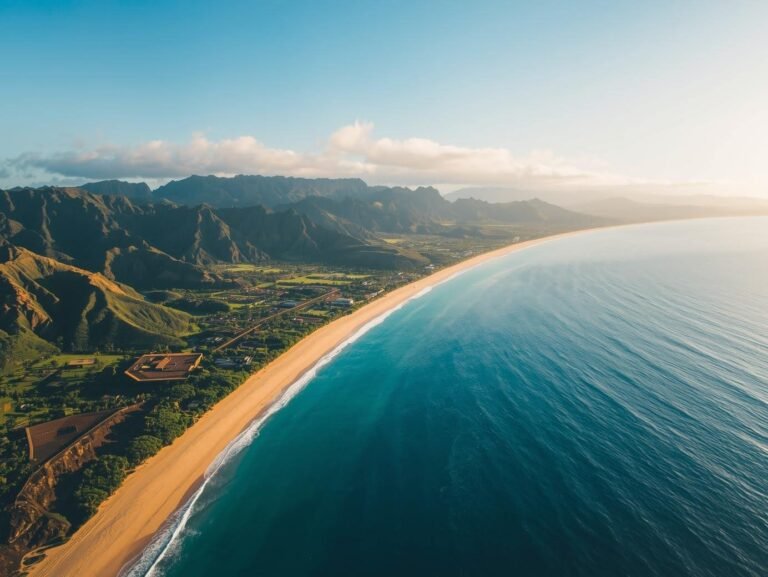
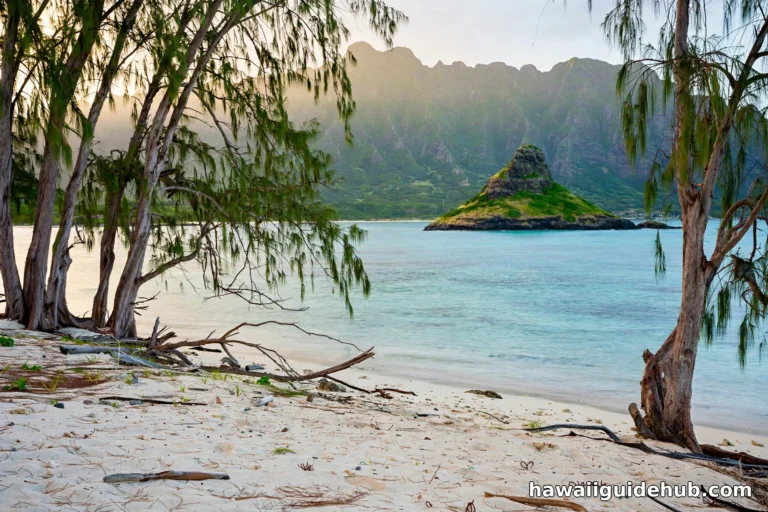
Laie sits on Oahu’s northeastern coast, about an hour’s drive from Waikiki without traffic. The town is best known for the Polynesian Cultural Center and the white spires of the Laie Hawaii Temple, but the mountains behind it hide a network of trails that few tourists ever find. The Laie Falls trailhead starts at the back of Poohaili Street, a residential road that dead ends at the base of the Koolau mountains.
From the trailhead the route climbs the ridge between two gulches, passing working agricultural land before entering the forest. The setting feels far from the resort strip. You will hear roosters, smell wet earth, and share the lower trail with farm traffic. It is real, working Hawaii, not a manicured park.
The Permit: Free, Online, and Required
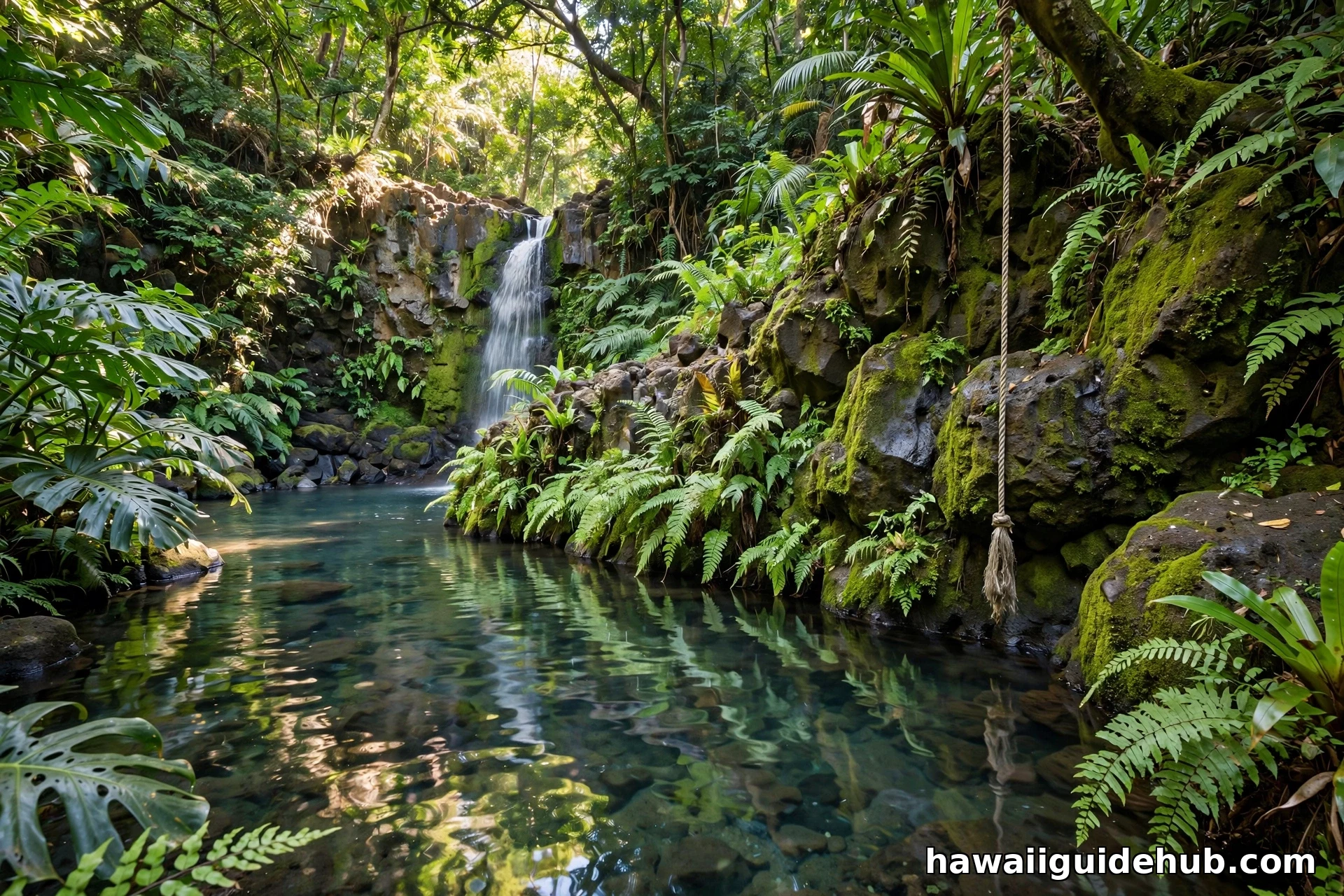
The entire trail sits on private property owned by Hawaii Reserves, Inc. You cannot legally hike it without a permit. The good news is that the permit is free and handled online. Visit the Hawaii Reserves hiking page, find the hiking permit application, and fill it out completely. When the form confirms that your response has been recorded, your permit is active.
Get the permit before you drive out. There is no office at the trailhead and no way to buy one on site. If you have questions, Hawaii Reserves lists a contact number, 808-293-6409, for hiking inquiries. Camping in the area is handled separately and only by phone, booked months ahead, but day hikers only need the online permit.
Getting to the Trailhead
Drive to the end of Poohaili Street in Laie and park where signs allow. Be careful here. This is a residential neighborhood and a working farm area, and parking in the wrong spot or on private property will not make you popular. Walk down the paved road until it turns to dirt, ignoring side roads, until you reach a gate area with signs marking the start of the Laie Falls Trail.
The first stretch passes taro fields on the left and a green pump house on the right, then crosses a small cement bridge. You will pass through a yellow gate and start climbing along a broad ridge. Wooden posts and a barbed wire fence line mark parts of the route. This lower section is a dirt farm road, wide and easy to follow.
The Trail, Section by Section
The farm road and lower climb
The hike begins gently on the dirt road, but the climbing starts early and never really stops. After the yellow gate the trail narrows and the grade steepens. You will pass through areas of thick vegetation where mosquitoes can be fierce in the morning, so bug spray is not optional.
The Cook pine forest
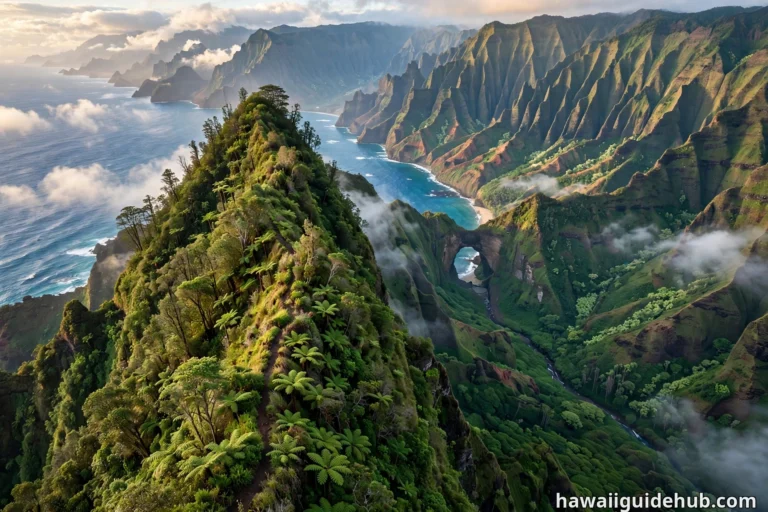
About halfway up, the trail enters a grove of tall Cook pines, one of the most distinctive stretches of the hike. The straight trunks and soft needle floor feel almost like a mainland forest dropped into the tropics. This is also the landmark that matters most right now: the landslide damage is reported past the Pine Forest, and Hawaii Reserves asks hikers not to go beyond this point until the trail is repaired.
The guava tunnel and upper ridge
Past the pines, on a normal open day, the trail continues through a long tunnel of strawberry guava trees. The red-barked trunks make excellent handholds on the steeper pitches. The path here is often deeply eroded, with roots and loose dirt underfoot. Blue ribbon markers tied to trees help you stay on route, and the trail is well traveled enough that getting lost is unlikely if you pay attention.
The falls descent
About three miles in, a signed junction points toward the falls. The final descent is the most technical part of the whole hike: steep, muddy, and slick, with a rope that past hikers have left to help with the climb down and back up. Stay to the left on the way down. You will first see the lower falls, then the main pool above it. The water is cool and clear, and on a hot day after three miles of climbing, it feels like a miracle.
The Waterfall and Swimming Hole
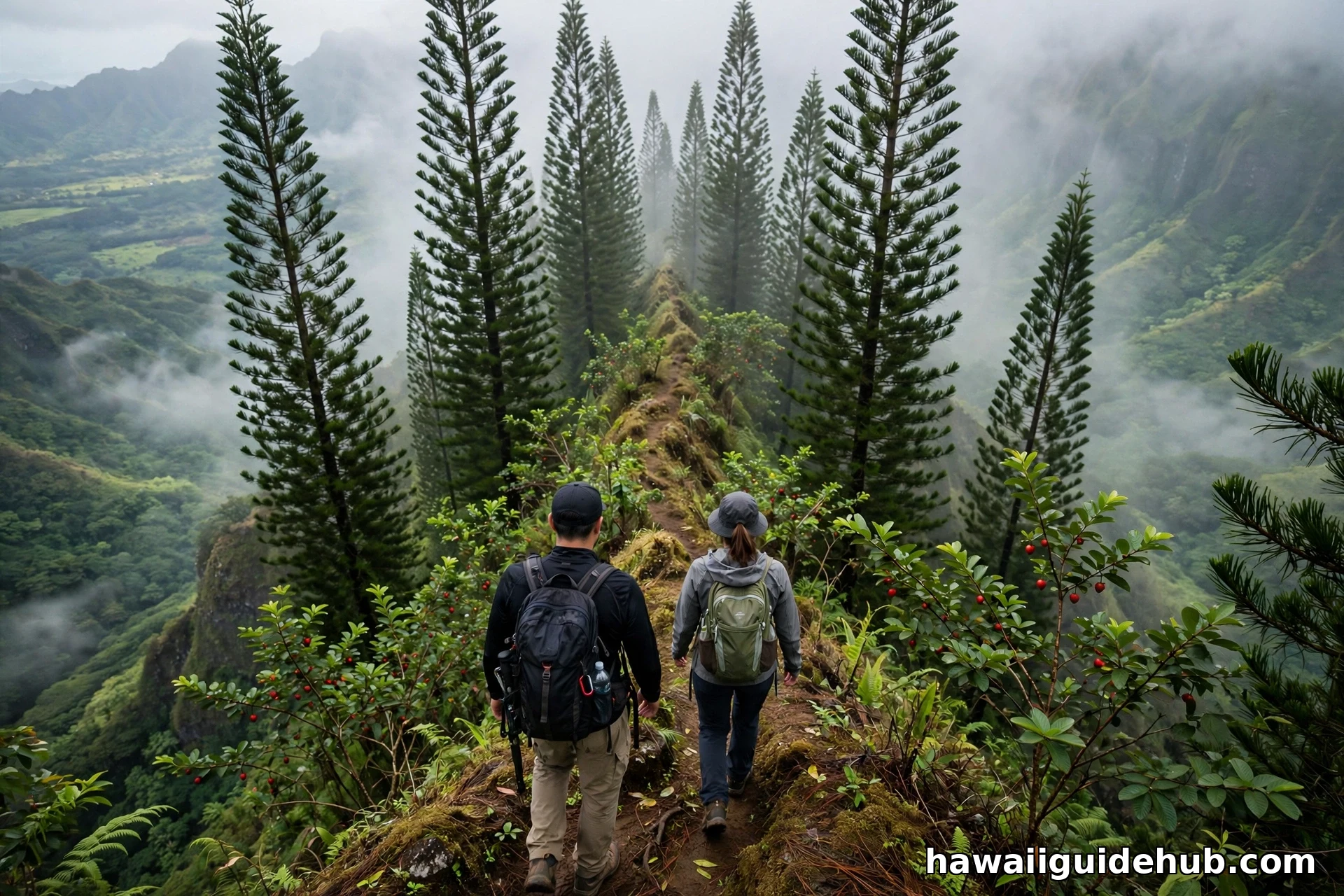
Laie Falls is not a towering curtain of water. It is a modest, pretty cascade dropping into a natural pool ringed by ferns and mossy rock. What makes it special is the setting and the effort it takes to get there. After the noise and heat of the climb, the pool is quiet, shaded, and deeply refreshing.
Swim carefully. The rocks around the pool are extremely slippery with algae, and there is no lifeguard, no phone signal you can count on, and no easy way to get help if something goes wrong. Wade in slowly, keep your shoes on around the edges, and never jump from the rocks. Crawdads live in the pool, and small fish dart through the shallows.
There is also a rough path that continues up past the falls toward the top of the waterfall, but it is steep and exposed. Most hikers are happier eating lunch at the pool and turning around.
How Hard Is It, Really
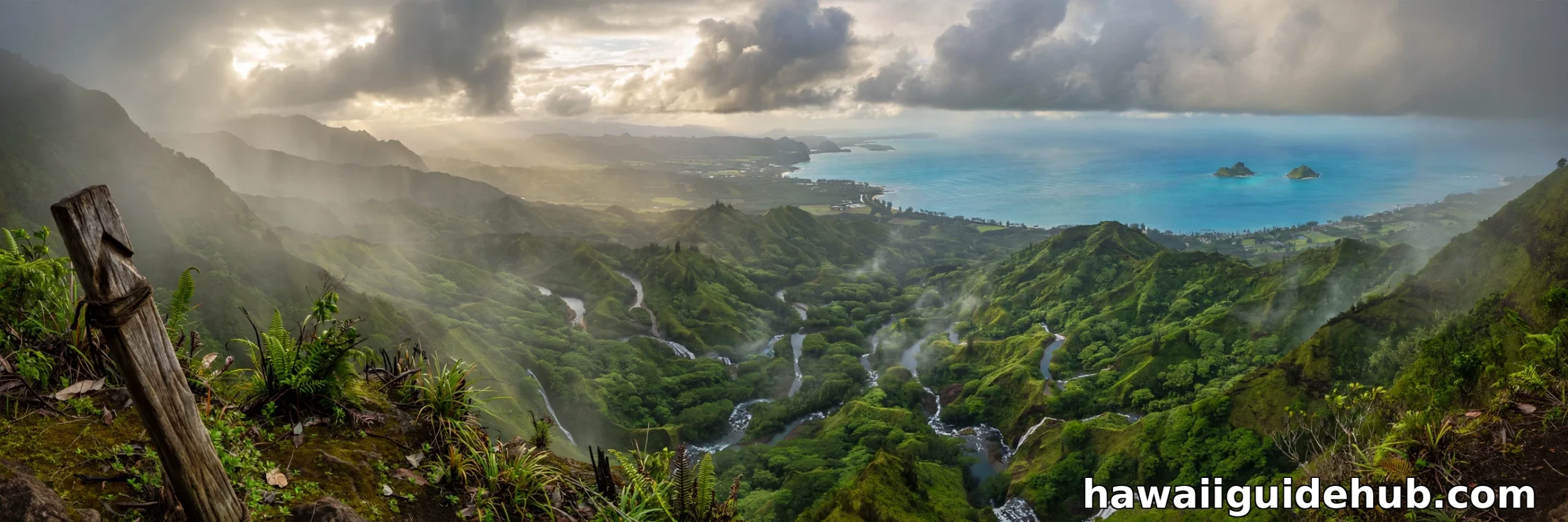
AllTrails rates this trail hard, and that is fair. Seven miles with nearly two thousand feet of climbing is a serious half day even before you add tropical heat, humidity, and mud. The eroded sections demand attention, and the falls descent is genuinely steep.
That said, fit hikers with good shoes finish it in four to six hours including a swim stop. You do not need technical climbing skills. What you need is stamina, balance, and the judgment to turn around if the weather turns. If you see rain clouds building over the Koolaus, do not start. A wet Laie Falls trail goes from challenging to dangerous fast.
What to Bring
Pack like the trail is longer than you think, because it is. Bring at least two liters of water per person. There is no drinking water and no restrooms anywhere on the route, so use facilities in Laie before you drive to the trailhead. Sturdy hiking shoes or trail runners with aggressive tread are essential. Flip flops and smooth-soled sneakers are a recipe for a fall.
Bug spray, sunscreen, and a hat cover the basics. Bring snacks or a real lunch for the falls, a dry bag or waterproof case for your phone, and a basic first aid kit. Trekking poles help enormously on the eroded climbs and the muddy descent. And bring a trash bag. Pack out everything you pack in, including food scraps. This trail survives on the goodwill of its private landowner.
Safety and Trail Etiquette
The biggest risks on the Laie Falls Trail are the ordinary ones: dehydration, heat, slippery footing, and flash flooding. Never enter the gulch or the pool area if heavy rain is falling or forecast upstream. Water levels in Hawaiian valleys can rise with terrifying speed.
Stay on the marked trail. Cutting switchbacks speeds up erosion on a path that is already badly eroded in places. Keep noise down near the farm areas at the start. Do not pick fruit or plants, and leave gates as you find them. And right now, the most important rule of all: respect the landslide closure. Do not hike past Pine Forest until Hawaii Reserves says the trail is repaired.
Best Time to Hike Laie Falls
The trail is open year round, but the best experience comes on a dry, clear morning. Start as early as you can, ideally by 7 in the morning. You will beat the heat on the exposed ridge climbs, dodge the mosquitoes at their worst, and finish before the afternoon clouds build over the mountains. Weekdays are quieter than weekends.
Winter brings more rain to the windward side, which means a fuller waterfall but a much muddier trail. Summer tends to be drier underfoot, though the falls may be thinner. Check the forecast the night before and the morning of. If it rained hard overnight, consider a different plan. Our guide to when it rains in Hawaii explains the windward-side patterns that shape this trail.
What Else to Do in Laie
Pair the hike with the town’s other draws to make a full day. The Polynesian Cultural Center sits right on Kamehameha Highway and needs most of a day on its own, so plan it for a non-hiking day. The Laie Hawaii Temple grounds and visitors center are peaceful and free to walk. Malaekahana State Recreation Area, a few minutes north, has a quiet beach and a campground if you want to stay over. The town also makes a good base for exploring the North Shore of Oahu.
For food, the shrimp trucks and plate lunch spots along Kamehameha Highway hit the spot after a long hike. Stock up on water and snacks in Laie before heading to the trailhead, since there is nothing to buy once you turn onto Poohaili Street.
See the Trail on Video
Watch a full walkthrough of the Lāʻie Falls hike, from the taro fields at the start to the swimming hole at the end, to get a feel for the terrain before you commit:
Video walkthrough of the Lāʻie Falls Trail, Oahu
Frequently Asked Questions
How long is the Laie Falls hike?
The full route is about 7 miles round trip, out and back, with roughly 1,840 feet of elevation gain. Most hikers need 4 to 6 hours including time at the falls. Note that a landslide currently blocks the trail past Pine Forest, so the full distance may not be hikeable right now.
Do I need a permit for Laie Falls?
Yes. The trail is on private land owned by Hawaii Reserves, Inc., and a free online hiking permit is required. Fill out the application on their hiking page before you go. There is no way to get one at the trailhead.
Can you swim at Laie Falls?
Yes, there is a natural swimming pool at the base of the falls. The water is cool and refreshing, but the rocks are extremely slippery and there is no lifeguard. Wade in carefully and never jump from the rocks.
Are dogs allowed on the Laie Falls Trail?
No. Dogs are not allowed on this trail.
Is Laie Falls good for beginners?
Not really. The distance, elevation gain, mud, and eroded sections make it a hard hike best suited to people with solid fitness and some hiking experience. Beginners will enjoy Oahu more on shorter waterfall hikes like Manoa Falls or Likeke Falls. See our guide to outdoor adventures in Hawaii for hikes that match your level.
Is the Laie Falls Trail open right now?
Partially. Hawaii Reserves reports landslide damage past the Pine Forest section and asks hikers not to go beyond that point. Check their hiking page for the latest status before you plan your trip, since conditions change.
The Honest Bottom Line
Laie Falls is one of Oahu’s best waterfall hikes when it is fully open: a long, honest climb through beautiful forest to a quiet swimming hole that you earn with your legs. But it is not a casual outing, it is not on public land, and right now it is not fully hikeable. Get the free permit, check the current closure status, start early, and treat the mountain with respect. Do that, and the trail gives back everything you put into it.