Hana Bay Maui: The Complete Guide to Hana’s Black Sand Town Beach

At the very end of the Road to Hāna, when the curves finally straighten and the jungle opens into a quiet country town, the road drops you at Hāna Bay. This is not the Hāna of postcards showing waterfalls deep in the rainforest. It is something better in its own way: a working town beach where local families picnic under the pavilions, outrigger canoes slide into calm water, and kids jump off the old pier on hot afternoons.
Most visitors blow through Hāna in a hurry, snapping a photo and turning around for the long drive back. That is a mistake. The town rewards those who linger, and the bay is the reason to stay a while. Hāna Bay, also called Hāna Beach Park, is the most sheltered and amenity-rich swimming spot on all of Maui’s wild east side. If you drove the Hāna Highway and skipped every beach because the surf looked rough, this is your reward at the finish line. Here is everything worth knowing before you go.
Hāna Bay at a Glance
| The detail | What is here | What is not |
|---|---|---|
| Setting | Dark volcanic sand at the end of the Hāna Highway, 150 Keawa Pl | A resort beach; this is a local park with wild edges |
| Swimming | Calmest on Hāna’s east side, best near the pier | A lifeguard you can count on; swim at your own risk |
| Facilities | Restrooms, 3 showers, pavilions with 13 tables, BBQ grills | Food vendors, rentals, or shops; bring everything with you |
| Parking | About 140 spaces, mostly unmarked along the access road | Marked stalls or attendants; arrive before the day-trippers |
| Best for | Families, picnics, kayaking, outrigger canoe paddling | Surfers chasing waves or anyone wanting services on the sand |
Where Hāna Bay Is and How to Get There
Hāna Bay sits in the middle of Hāna town on Maui’s far eastern tip, at 150 Keawa Place. You reach it by driving the Hāna Highway (Route 360) all the way to its end, roughly 52 miles from Kahului. The drive takes about two to three hours without stops, and most visitors sensibly take much longer.
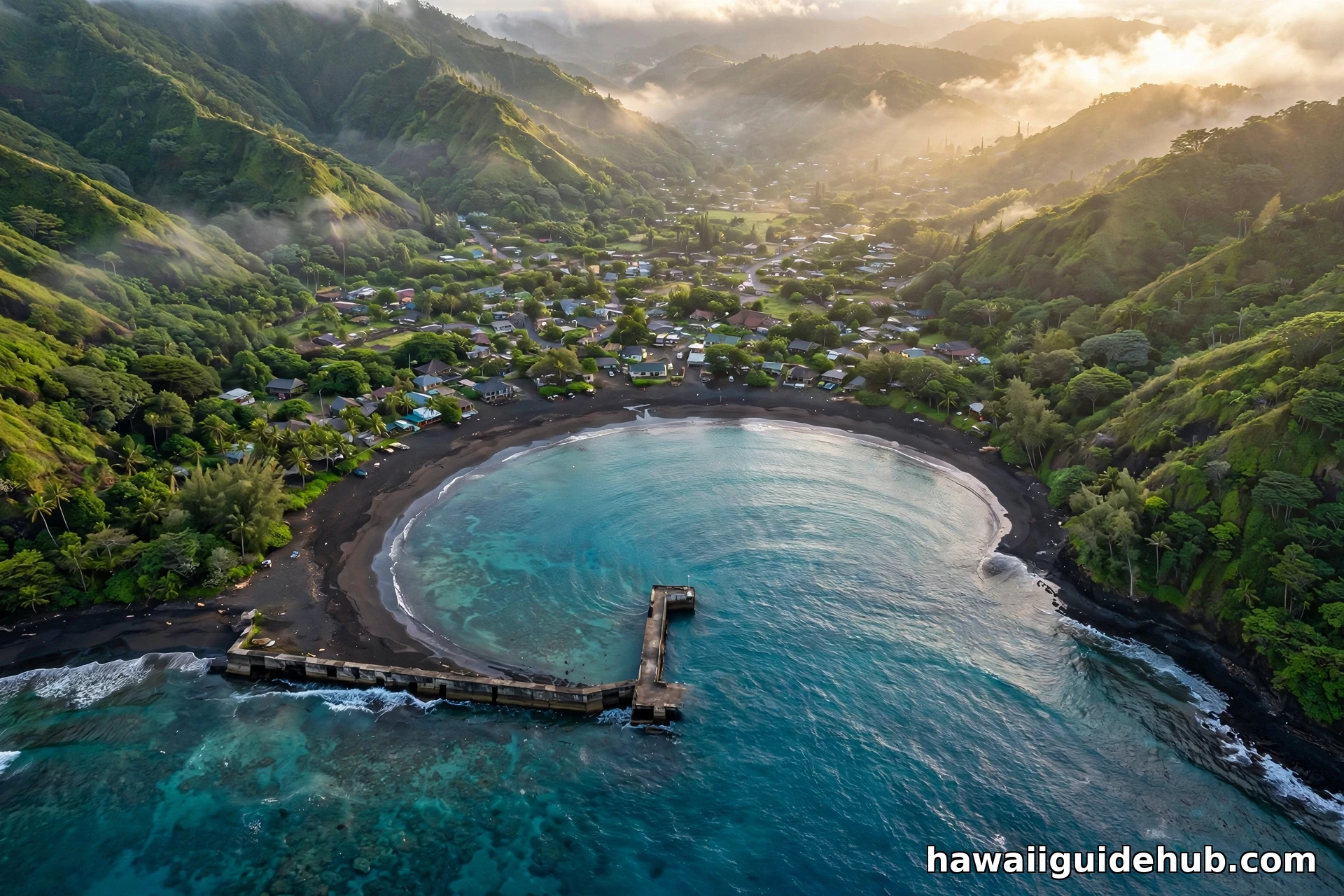
Once you roll into Hāna, follow the signs toward the bay. The park sits just below the main road, with the beach curving in a gentle crescent and the town’s small harbor tucked to one side. Parking is straightforward by east Maui standards: the county lists about 140 spaces, mostly unmarked along the access road and across the street. On busy weekends the lot fills with local families, so arriving before midday is the smart move.
A Short History of the Bay
Hāna Bay was not always a swimming beach. In the plantation era, the bay served as Hāna’s shipping point, and the concrete pier you see today is a remnant of the days when sugar and supplies moved by sea because no good road connected Hāna to the rest of Maui. Inter-island steamers called at the landing, and the town grew up around the waterfront.
The breakwater that now shelters swimmers was built to protect that working harbor, and it has taken punishment over the decades. State harbor records describe a severe November 2003 wave event, with surf reportedly reaching 40 feet, that damaged the breakwater and the boat ramp at the Hāna pier. Repairs followed, and today the structure does double duty: it still shelters the small boat harbor on one side while giving swimmers calmer water on the other.
That layered past is part of what makes the bay interesting. You swim in the shadow of a pier that once loaded sugar onto steamers, below a hill tied to the legends of Māui, in a town that still moves at the pace of an earlier Hawaii.
The Beach: Black Sand and a Sheltering Pier
The first thing you notice is the sand. Hāna Bay’s beach is dark volcanic sand, not the powdery white of Maui’s west side, and in places it mixes with lighter grains into a salt-and-pepper tone. It gets hot underfoot at midday, so keep your slippers handy until you reach the water.
What makes this beach special is its shape. The bay curves inward and is partly sheltered by a concrete pier and breakwater, which takes the edge off the trade-wind chop that pounds most of the east coast. The state harbor documents note that the breakwater took serious damage in a November 2003 wave event that sent 40-foot surf into the bay, which tells you two things: the ocean here commands respect, and the structures that protect the swimming area have earned their keep.
Swim on the pier side of the bay for the calmest water. The far end of the beach, away from the pier, faces the open ocean and can be choppy when the trades are up. Water clarity is usually decent but not the gin-clear blue of Maui’s leeward beaches, and after heavy rain a stream that feeds the bay can turn the water murky. When that happens, skip the swim and come back another day.
Swimming, Kayaking, and Outrigger Canoes
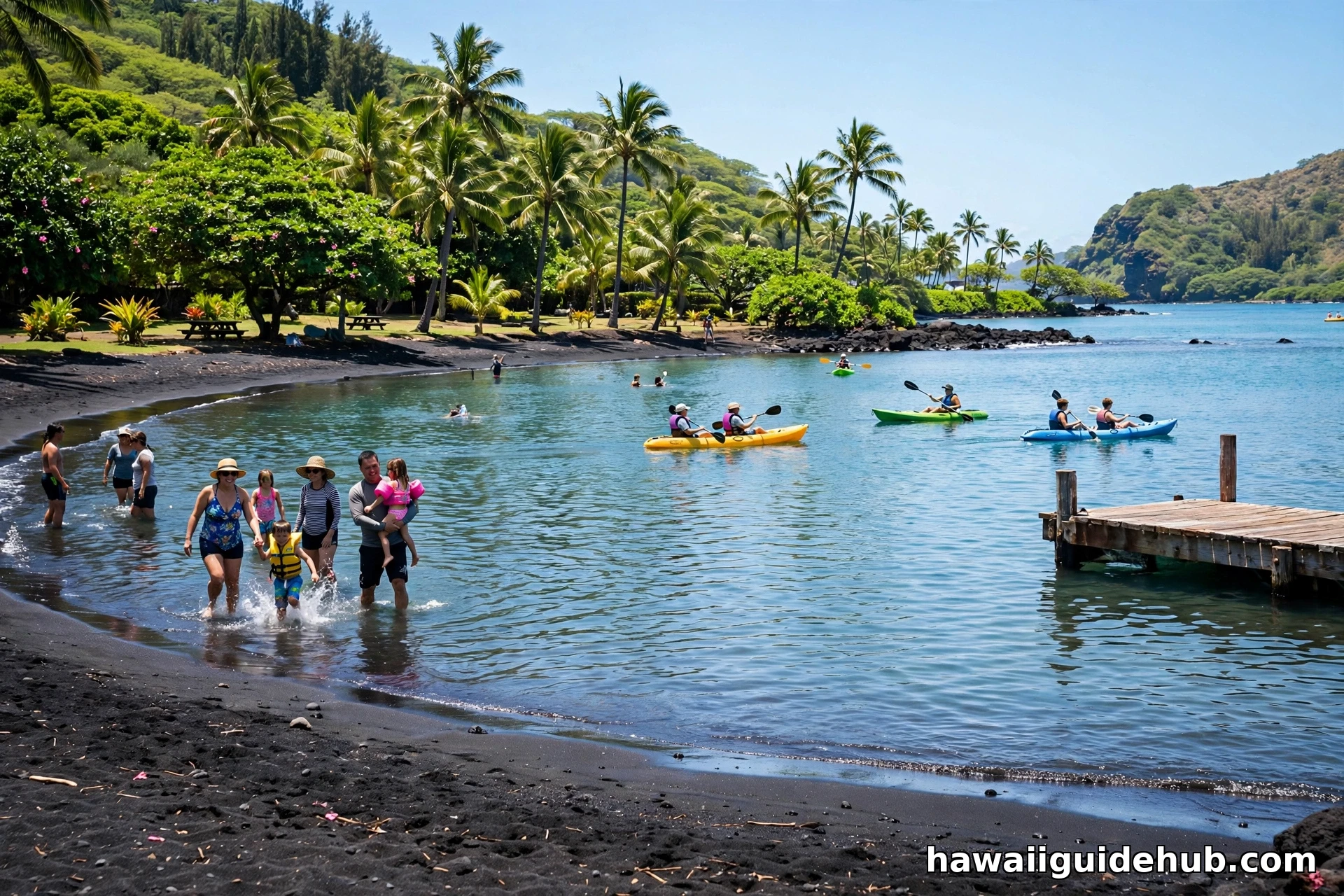
The County of Maui officially lists Hāna Bay as a popular swimming and canoe spot, and that matches what you see on the ground. On a calm morning the water inside the bay is flat enough for small kids to splash at the shoreline, and local families treat it as their neighborhood pool.
Kayaking is one of the best ways to enjoy the bay. The sheltered water makes for easy paddling, and you can cruise along the base of Kaʻuiki, the prominent hill on the southeast side of the bay. That hill carries real cultural weight: Hawaiian legend says the demigod Māui pushed up the sky from its summit, and it is also tied to stories of Kūʻula, the fish god whose son built important structures for the people of Hāna.
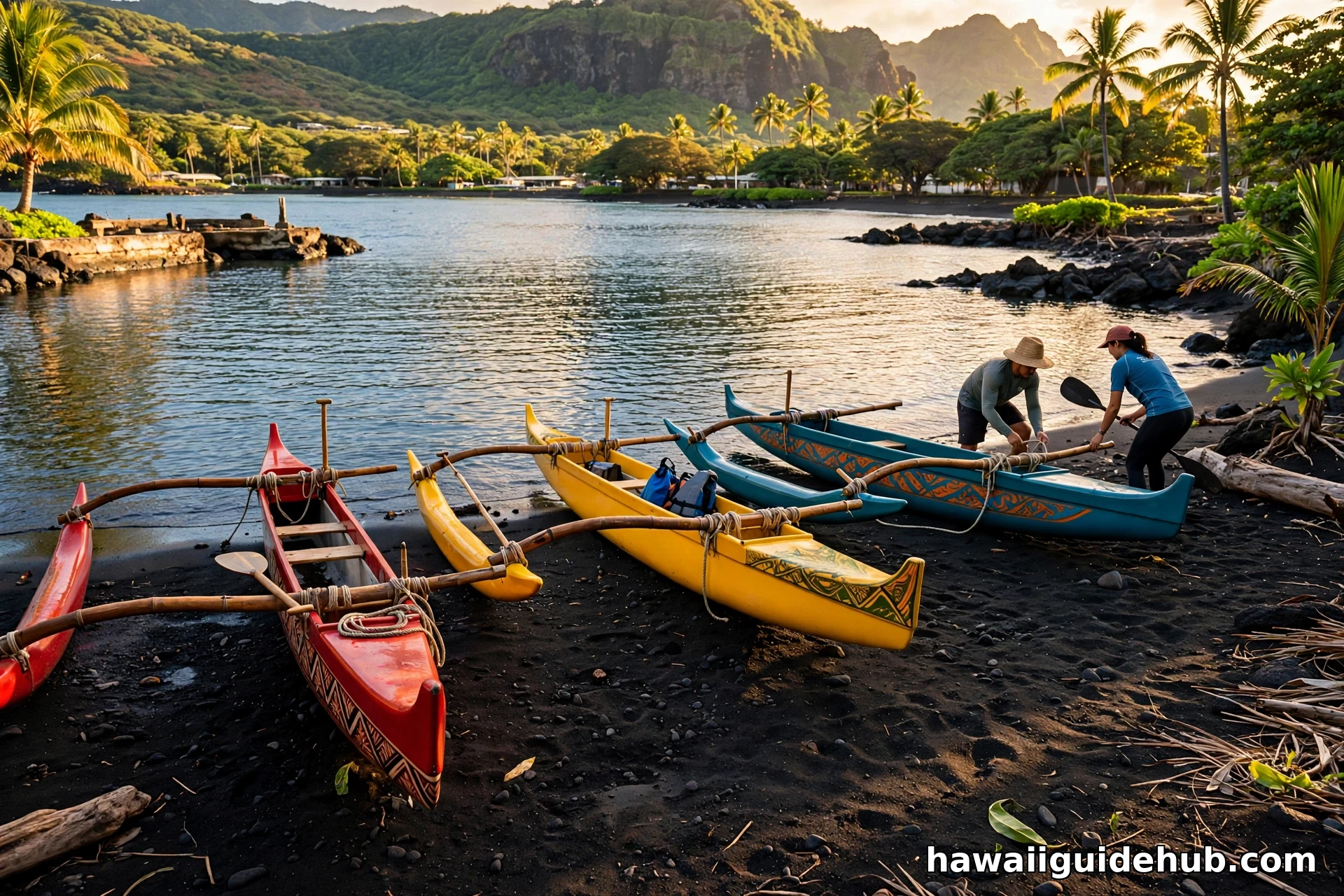
Outrigger canoe paddling is woven into daily life here. Hāna’s canoe club trains in the bay, and each year the park hosts the Hāna Canoe Regatta, which marks the opening of Maui’s canoe racing season. If your visit lines up with a regatta or a practice evening, watching six-person crews move in perfect sync across the bay is one of the most Hawaiian things you can witness without buying a ticket.
An Honest Word on Safety
Do not count on a lifeguard at Hāna Bay. The county’s official park listing includes no lifeguard among its amenities, and east Maui as a whole has almost no ocean safety coverage. Treat this like any unguarded beach: swim with a buddy, stay inside the sheltered part of the bay, keep kids within arm’s reach, and get out if the water looks rough or murky. The bay is the safest swimming option in the area, but “safest around” is not the same as “safe no matter what.”
Facilities and Parking
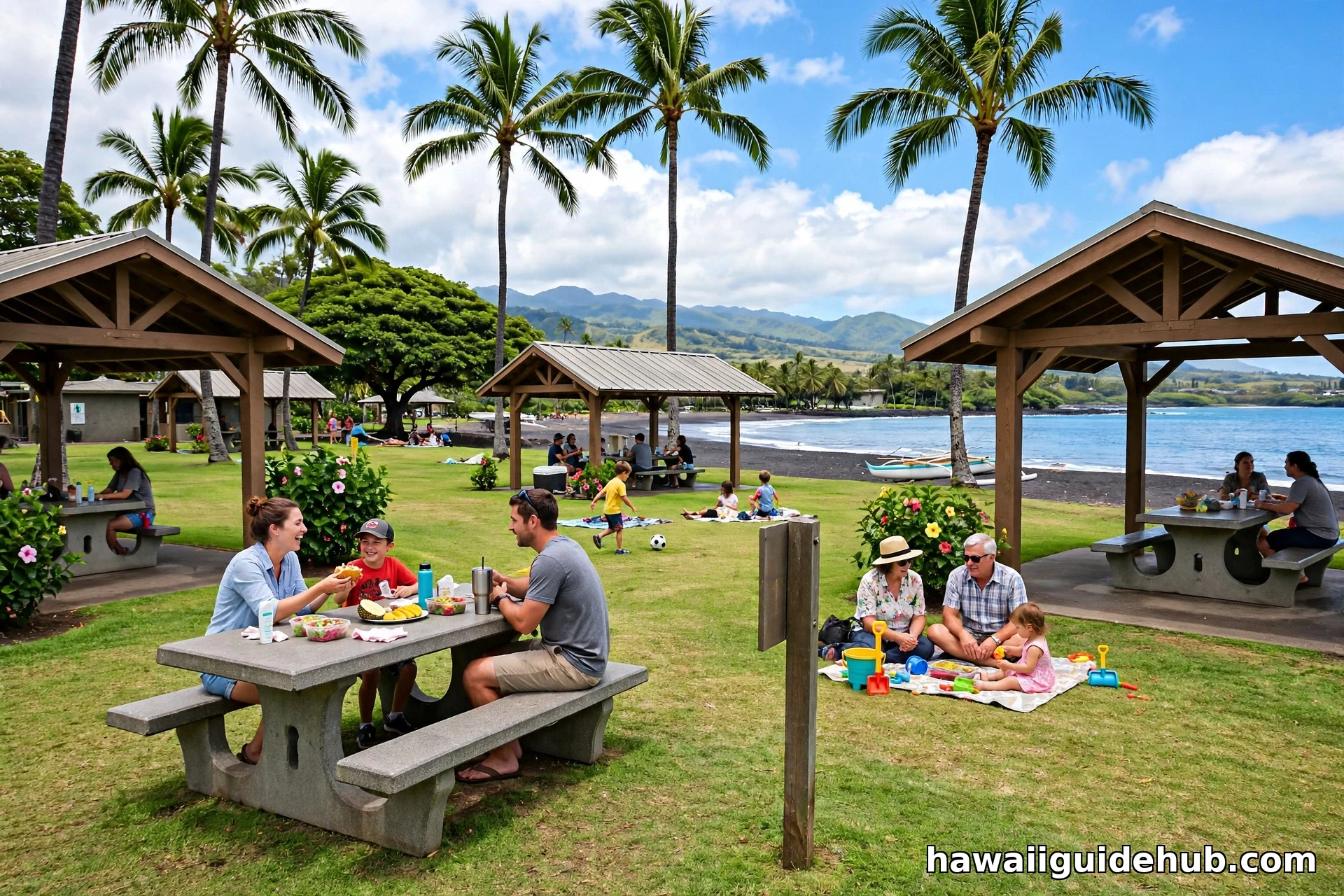
For a remote town park, Hāna Bay is well equipped. The county lists a restroom facility, three outdoor showers, and a water tap, plus pavilions holding 13 tables, concrete tables with benches, and barbecue grills. The picnic pavilion even has 110-volt electrical outlets, and restrooms, showers, and the pavilion are ADA accessible.
Next to the park stands Helene Hall, the community center where Hāna gathers for celebrations, and a small refreshment stand operates near the restrooms. Parking, as noted, runs to about 140 spaces along the access road and across the street. It is free, and on weekdays you will have no trouble finding a spot.
One practical note: Hāna is remote, and services are limited. There is no gear rental shop at the park itself, so if you want to snorkel or paddle, bring your own or rent in Kahului or Pāʻia before you start the drive. Pack food and water too, though Hāna town has a couple of small stores and food trucks for the basics.
Best Time to Visit
Mornings are the golden window at Hāna Bay. The trade winds that ruffle the bay usually build through the afternoon, so the calmest water and the easiest parking both belong to early arrivals. If you are driving the Road to Hāna as a day trip, consider making the bay your first long stop in town rather than your last: swim and picnic while the water is glassy, then explore the town and start the drive back before the afternoon winds pick up.
Summer months (roughly May through September) tend to bring the gentlest ocean conditions on the east side, while winter can deliver bigger swells that wrap into the bay. Even in winter, though, the pier side usually stays swimmable on ordinary trade-wind days; it is the big north swells that change the equation. Hāna sits on the wet side of Maui, and rain can arrive in any month, sometimes in sudden downpours that send the stream at the end of the bay running brown. When that happens, give the water a day to clear.
Weekdays are noticeably quieter than weekends, when local families claim the pavilions early. If you visit on a Saturday or Sunday, arrive before 10 a.m. to get a picnic table and a parking spot near the beach. If you are planning the broader trip, our guide to when it rains in Hawaii helps you pick your season.
What to Bring
Pack like the park has almost nothing, and you will be comfortable. The essentials: reef-safe sunscreen (required by Hawaii law), an umbrella or beach tent because there is almost no natural shade on the sand, reef shoes for the rocky patches, and plenty of drinking water. A cooler with lunch turns the visit into a proper picnic, which is how the local families do it.
Nearby Alternatives Worth Knowing
Hāna Bay is the calm family choice, but the coastline around Hāna offers very different flavors for confident ocean-goers. Kōkī Beach, a few minutes past town, has a small red-tinged sand beach popular with local surfers and bodyboarders, but it is unguarded with strong currents. Hāmoa Beach, tucked below sea cliffs, is often called one of Maui’s prettiest beaches, yet it too has no lifeguard and a powerful shorebreak. Both are look-and-enjoy spots for most visitors rather than swimming beaches.
Waiʻānapanapa State Park, about 15 minutes before Hāna on the highway, offers the famous black sand beach with sea caves and blowholes, but swimming there is often rough and the park now requires advance reservations. For most families driving the Road to Hāna, the honest advice is simple: sightsee at the wild beaches, swim at Hāna Bay.
See Hāna Bay on Video
Watch this short tour of Hāna Beach Park to get a feel for the bay, the black sand, and the park before you make the drive.
Hāna Bay FAQs
Is Hāna Bay the same as Hāna Beach Park?
Yes. Hāna Bay is the bay itself, and Hāna Beach Park (sometimes called Hāna Bay Beach Park) is the county park on its shore. Locals use the names interchangeably.
Can you swim at Hāna Bay?
Yes, and it is the calmest swimming on Maui’s east side thanks to the sheltering pier and breakwater. Stick to the pier side, check conditions, and remember there is no lifeguard on duty.
Is there a lifeguard at Hāna Bay?
Do not count on one. The County of Maui does not list lifeguard service among the park’s amenities, and ocean safety coverage across east Maui is extremely limited. Swim at your own risk.
How much is parking at Hāna Bay?
Parking is free. The county lists about 140 spaces, mostly unmarked along the access road and across the street.
Is Hāna Bay good for kids?
It is the best kid-friendly swimming option near Hāna. The sheltered water, gentle entry, showers, restrooms, and picnic pavilions make it far more family-ready than the wild beaches nearby. Keep children within arm’s reach as you would at any unguarded beach.
What is near Hāna Bay?
The park sits in Hāna town, minutes from local food trucks and stores. Nearby stops include Kōkī Beach and Hāmoa Beach for sightseeing, Waiʻānapanapa State Park’s black sand beach back along the highway, and the Seven Sacred Pools (ʻOheʻo Gulch) in the Kīpahulu District of Haleakalā National Park. If Hāna is your turnaround point, our reasons to visit Maui guide helps you plan what comes next.
Hāna Bay will not make anyone’s list of Hawaii’s most dramatic beaches, and that is exactly its charm. It is a town beach in the truest sense: a place where the community swims, paddles, picnics, and races canoes, and where a visitor who drove three hours through the jungle can finally, safely, get in the water. Bring a picnic, go early, respect the ocean, and you will understand why the people of Hāna are in no hurry to leave. For more ideas on filling your island days, browse our guide to outdoor adventures across Hawaii, our first-time visitor guide, and our roundup of must-try local dishes.