Pipikaula Recipe: Hawaii’s Beef Rope, the Paniolo Jerky Worth Making at Home

Walk into any gathering in Hawaii and you will likely find a platter of dark, glossy strips of beef sitting next to the poke and the malasadas. That is pipikaula, Hawaii’s own version of beef jerky, and once you taste it you will understand why locals guard their family recipes the way other people guard heirlooms. Salty, chewy, deeply savory, with a whisper of sweetness from the shoyu marinade, pipikaula is one of those foods that tells the whole story of Hawaii in a single bite: Hawaiian cattle country, Asian immigrant flavors, and the practical genius of the paniolo cowboys who invented it.
This guide covers everything: what pipikaula is, where it came from, the full recipe to make it at home, and how to serve it the way locals do.
What Is Pipikaula?
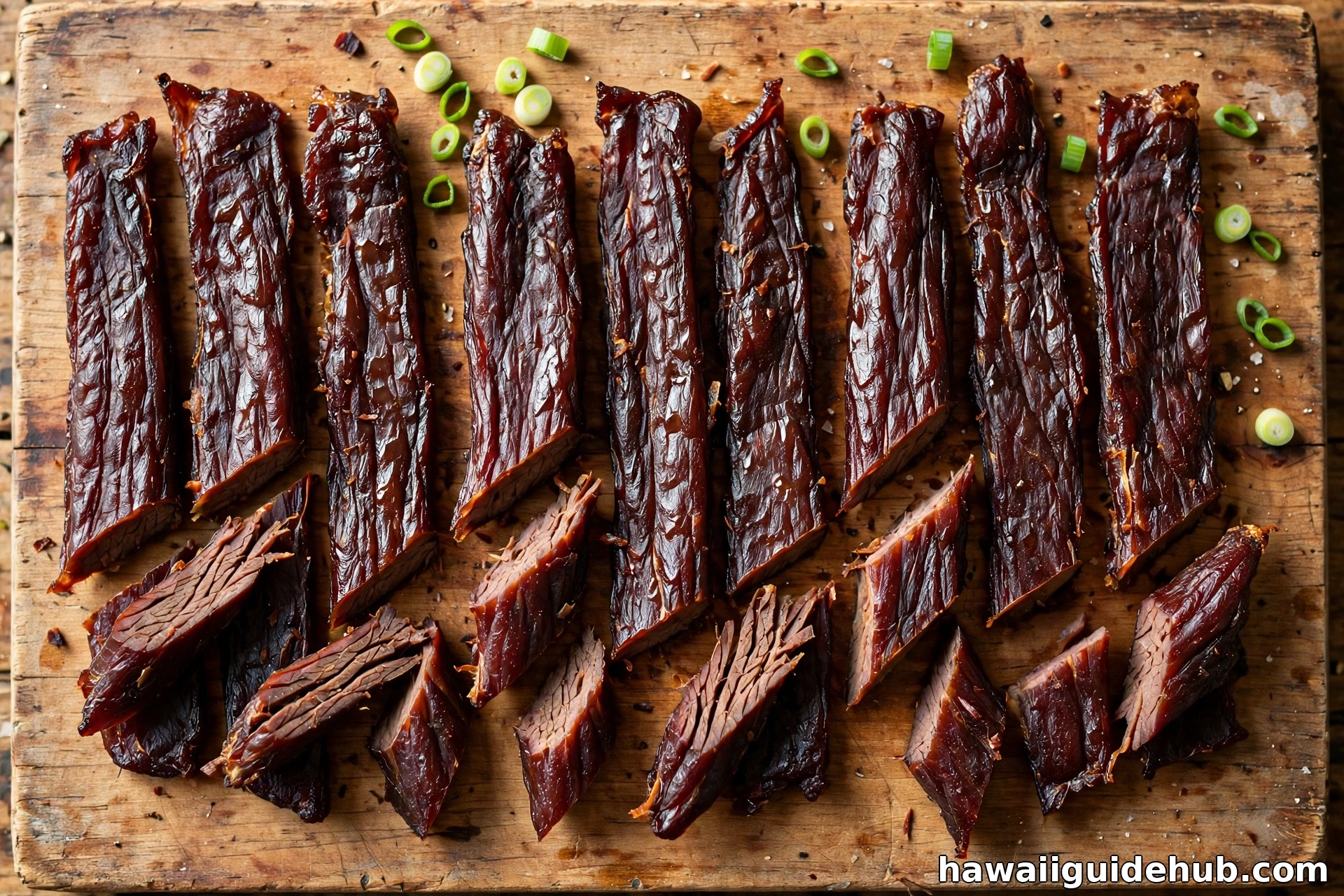
Pipikaula (pronounced pee-pee-kah-OO-lah) is Hawaiian dried beef. The name breaks down neatly in the Hawaiian language: pipi means beef, and kaula means rope or cord. Beef rope. The name describes exactly what it looks like: long, rope-like strips of seasoned beef, dried until firm and chewy.
Unlike mainland beef jerky, which is often dried to a tough, leathery crispness, traditional pipikaula stays slightly moist and tender. Think of it as closer to a slab of good pastrami than to the gas-station jerky in a plastic pouch. The flavor is unmistakably Hawaiian: shoyu, garlic, ginger, brown sugar, and Hawaiian sea salt, a marinade with deep island roots.
Pipikaula is a pupu, the Hawaiian word for appetizer or snack food served with drinks. It shows up at luaus, tailgates, beach days, and family parties. Many local delis and okazuya shops sell it by the bag, and once you start eating it, stopping is the hard part.
The Paniolo Story: How Pipikaula Was Born
To understand pipikaula, you have to start with the cow. Cattle are not native to Hawaii. In 1793, the British explorer George Vancouver gifted a bull and five cows to King Kamehameha I. The king placed a kapu, a sacred restriction, on killing the cattle so the herd could grow. That kapu lasted for decades, and the cattle multiplied wildly in the island forests. By the 1840s, tens of thousands of feral cattle roamed the Big Island, and someone had to deal with them.
That someone became the paniolo, the Hawaiian cowboy. The word paniolo itself comes from the Hawaiian pronunciation of espanol, because the first cowboys in Hawaii were Mexican vaqueros brought over to teach Hawaiians the trade. The paniolo worked long, hard days in the saddle, and they needed food that would keep. Fresh beef was plentiful, but it spoiled fast in the tropical heat. Drying it was the answer.
Paniolo cut beef into long strips, salted them heavily, and hung them in the sun or over smoky fires. The dried beef traveled well and delivered serious protein. Over time, as Chinese, Japanese, Portuguese, and Filipino immigrants arrived to work the plantations, their flavors worked their way into the marinade. Shoyu replaced plain salt as the backbone. Garlic and ginger joined the mix. Sugar balanced the salt. Pipikaula became what it is today: a Hawaiian original built from the whole world.
What Does Pipikaula Taste Like?
If you have only ever had commercial beef jerky, pipikaula will surprise you. The first thing you notice is that it is not bone dry. Good pipikaula has chew, a satisfying resistance that gives way to rich, beefy flavor. The shoyu marinade gives it a deep umami savoriness, the brown sugar adds a gentle caramel sweetness, and the garlic and ginger keep it from tasting one-note. A pinch of chili flakes, which many recipes include as an option, adds a slow background warmth.
The signature move, and the thing that separates pipikaula from every other jerky, is the finish. Many locals take the dried strips and sear them quickly in a hot oiled pan or skillet until the edges crisp and caramelize. Served hot this way, pipikaula is extraordinary: chewy in the middle, crackly at the edges, with the sugars in the marinade turning into a dark, sticky glaze. This is how it arrives at parties, and it never lasts long.
The Ingredients
One of the beautiful things about pipikaula is how simple the ingredient list is. You probably have most of it in your kitchen already.
For the Beef
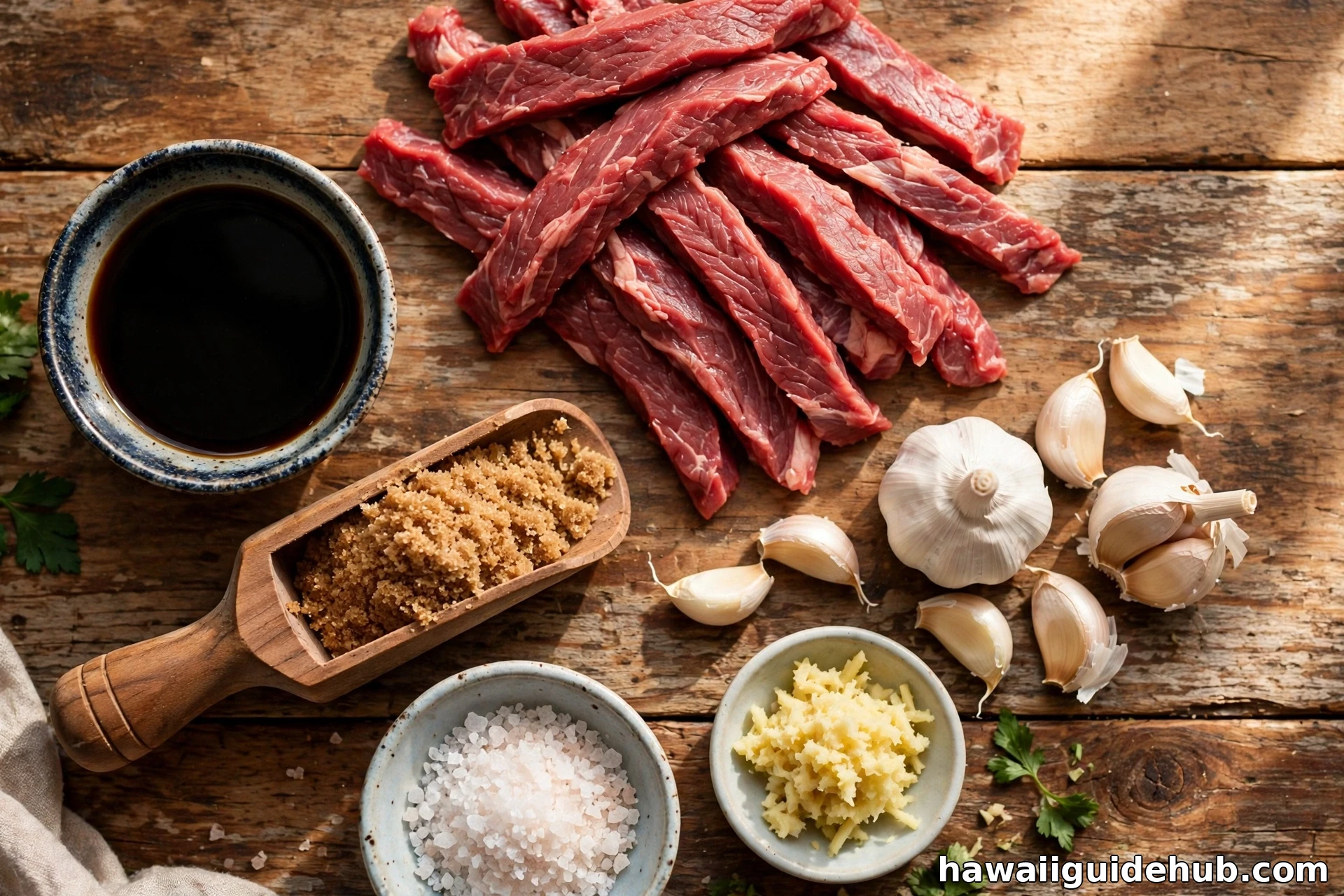
3 pounds flank steak. Flank is the classic cut for pipikaula. It has long muscle fibers that give the finished jerky its satisfying chew, and it is lean, which matters because fat goes rancid faster than lean meat in dried foods. Brisket flat or top round are solid substitutes. Whatever you choose, trim off all visible fat and the silvery membrane called silver skin.
A useful trick: partially freeze the beef for one to two hours before slicing. Firm, half-frozen meat slices far more evenly than soft meat, and even slices dry evenly. Aim for strips about one quarter inch thick. You can cut with the grain for a chewier bite or against the grain for a more tender one. Most pipikaula makers cut with the grain.
For the Marinade
1 cup shoyu (soy sauce). Shoyu is the soul of pipikaula. Aloha Shoyu is the local favorite in Hawaii, but any good soy sauce works. Do not use low sodium here; the salt is doing real work as a preservative.
1/4 cup brown sugar. This balances the salt and helps the edges caramelize when you sear the finished strips. Some old recipes use white sugar, but brown sugar adds a molasses depth that suits the beef.
2 tablespoons Hawaiian sea salt. Coarse Hawaiian sea salt, the pinkish alaea salt if you can find it, is traditional. The salt draws moisture from the meat and keeps bacteria at bay during drying.
1 tablespoon fresh ginger, grated. Ginger is the bright note in the marinade. Fresh matters here; the powdered kind tastes flat by comparison.
4 cloves garlic, minced. Garlic and shoyu are a classic Hawaiian pairing. Mince it fine so it coats the meat evenly.
1/2 teaspoon red chili flakes (optional). Not traditional in every family, but common enough. It adds warmth, not real heat.
1 tablespoon oyster sauce (optional). Some modern recipes add this for extra depth. It is not required, but it is delicious.
How to Make Pipikaula: Step by Step
Step 1: Slice the Beef
Trim the flank steak of all fat and silver skin. Partially freeze for one to two hours, then slice into strips about one quarter inch thick and as long as you like. Longer strips are traditional, the beef rope of the name, but shorter strips are easier to handle in a home oven.
Step 2: Mix the Marinade
Whisk together the shoyu, brown sugar, Hawaiian sea salt, grated ginger, minced garlic, and chili flakes if using. Stir until the sugar and salt fully dissolve. Taste it. It should be intensely salty, sweet, and savory. Remember that the flavor mellows as it dries, so bold is good.
Step 3: Marinate
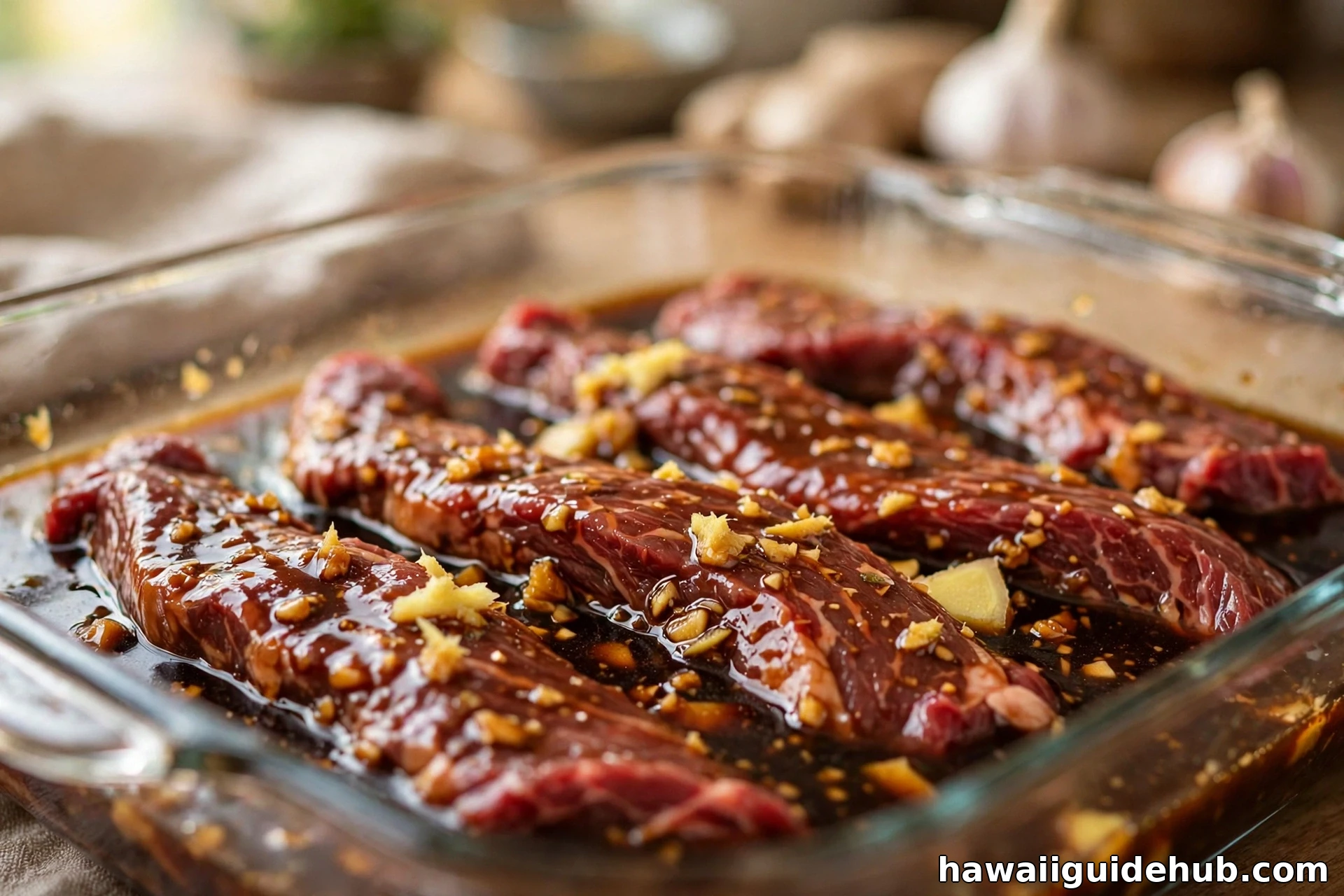
Place the beef strips in a large zip top bag or a shallow glass dish and pour over the marinade. Turn the strips to coat every surface. Seal and refrigerate for at least six hours, and preferably overnight, turning once halfway through. Always marinate in the refrigerator, never on the counter. Do your best not to pierce the meat while handling it.
Step 4: Dry
Preheat your oven to its lowest setting, ideally 170 degrees Fahrenheit. Line a rimmed baking sheet with foil for easy cleanup and set a wire rack on top. Lift the strips from the marinade, letting the excess drip off, and arrange them on the rack in a single layer with space between each strip. Air needs to circulate.
Dry for five to eight hours, until the meat is firm, dark, and dry to the touch but still pliable when you bend it. It should crack slightly when bent but not snap in half. Thicker strips take longer. If you own a dehydrator, set it to 160 degrees and dry for four to six hours.
For food safety, the USDA recommends that jerky reach an internal temperature of 160 degrees Fahrenheit to destroy bacteria. Most home ovens at 170 degrees accomplish this naturally over the long drying time. If you want extra assurance, you can preheat the strips in a 275 degree oven for ten minutes before dropping to the drying temperature.
Step 5: The Signature Sear (Optional but Recommended)
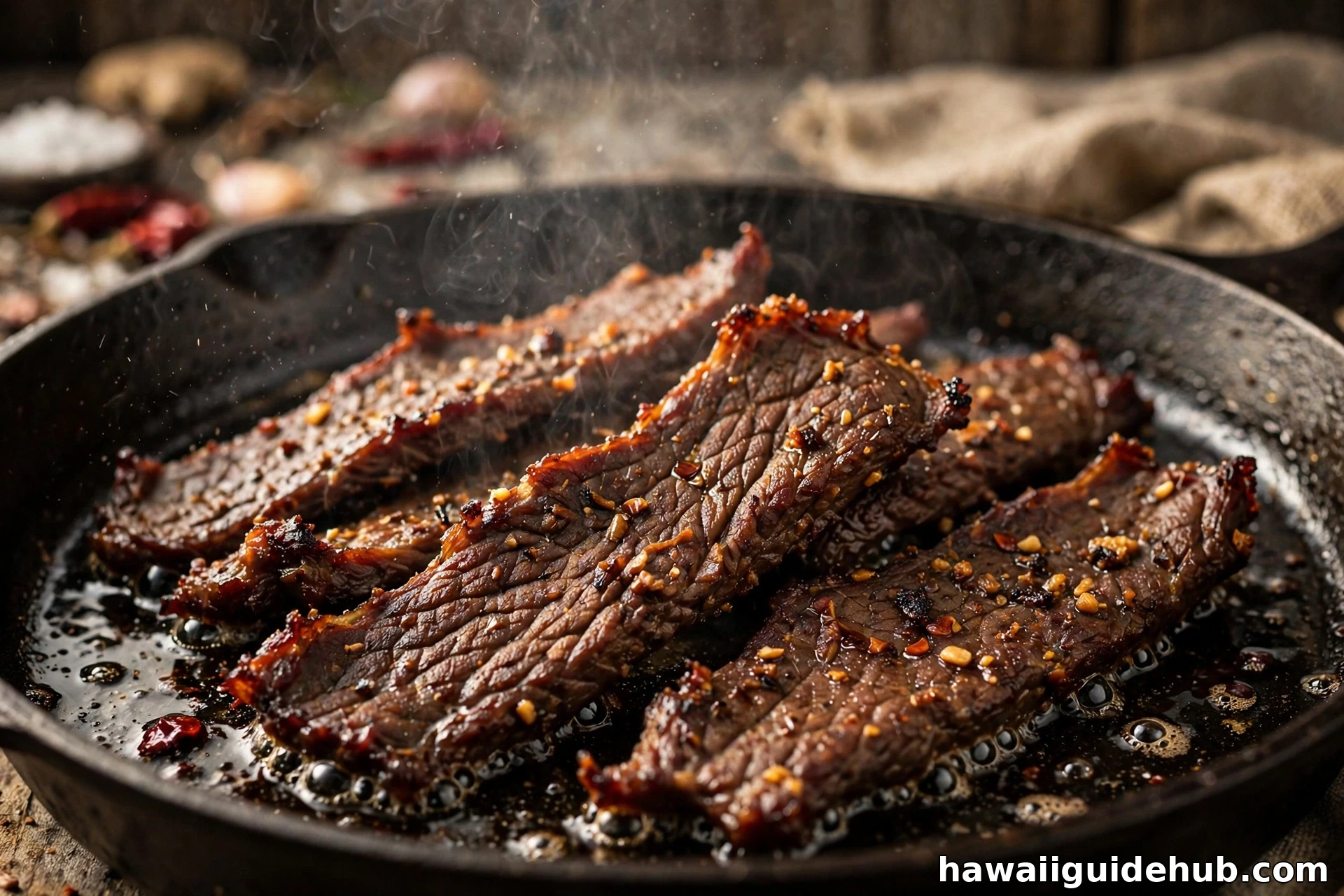
This is the step that makes pipikaula pipikaula. Heat a tablespoon of neutral oil in a cast iron skillet or heavy pan over medium high heat. Sear the dried strips for about a minute per side, until the edges crisp and caramelize. Drain briefly on paper towels, slice thinly on the diagonal, and serve hot.
Pipikaula Recipe at a Glance
Tips for the Best Pipikaula
Do not skip the wire rack. Laying meat directly on a baking sheet traps moisture underneath and steams the bottom instead of drying it. The rack is what makes oven drying work.
Keep the oven door cracked. Propping the door open an inch with a wooden spoon lets moisture escape and keeps the temperature low and steady. This is the closest a home oven gets to a real dehydrator.
Cut a test strip. Ovens vary, and so does meat thickness. After five hours, pull one strip, let it cool for a few minutes, and bend it. Firm with a slight crack means done. Still soft and raw looking in the middle means more time.
Make a big batch. Pipikaula shrinks dramatically as it dries. Three pounds of raw beef yields roughly one pound of finished jerky. It also disappears fast, so err on the side of more.
How to Serve Pipikaula
Pipikaula is endlessly versatile. The simplest way is also one of the best: sliced thin and eaten as is, straight from the container. It is the perfect road trip snack, hiking fuel, or afternoon pick me up.
For gatherings, serve it the local way: seared hot in a pan until crisp at the edges, piled on a platter, with toothpicks for spearing. Diced small, it makes an excellent topping for fried rice, saimin noodles, or a green salad.
Pipikaula also belongs on any Hawaiian platter of must-try local dishes, alongside huli huli chicken and lomi lomi salmon. If you are building a pupu spread for a party, it is the anchor.
Where to Find Pipikaula in Hawaii
If you would rather buy than make, you are in luck. Pipikaula is everywhere in Hawaii. Poke shops almost always carry it. Okazuya delis, the beloved Japanese Hawaiian lunch counters, sell it by the bag. Farmers markets often have a vendor with house made pipikaula, sometimes in flavors like spicy or teriyaki. Grocery stores with strong local food sections stock it near the jerky and dried seafood.
Quality varies, so ask around. The best pipikaula is made in small batches and sold fresh, not the shelf stable kind that sits for months. If a shop sears it to order, you have found a good one.
Storage and Food Safety
Let the pipikaula cool completely before storing. Trapped warmth creates condensation, and moisture is the enemy of dried meat. Store it in an airtight container or zip top bag in the refrigerator for up to one week. For longer storage, use freezer bags with the air squeezed out and freeze for up to three months. Thaw in the refrigerator, not on the counter.
A few safety rules keep homemade jerky safe. Always marinate in the refrigerator. Dry at 160 degrees Fahrenheit or above. Use lean meat and trim all fat, since fat can turn rancid even in dried meat. When in doubt, freeze it. These are the same principles behind all safely made jerky, and they apply whether you use an oven or a dehydrator.
Pipikaula Variations Worth Trying
A spicy version doubles the chili flakes and adds a teaspoon of cayenne to the marinade. A teriyaki style version adds a quarter cup of pineapple juice and an extra tablespoon of brown sugar for a sweeter, fruitier glaze. Some families add a splash of Worcestershire sauce or a spoonful of oyster sauce for extra umami depth.
Smoked pipikaula is the old paniolo style. If you have a smoker, dry the marinated strips at 160 to 170 degrees with kiawe or hickory wood for the first two hours, then finish in the oven. The smoke adds a layer of flavor that the oven alone cannot match.
Frequently Asked Questions
Is pipikaula the same as beef jerky?
Close, but not identical. Pipikaula is Hawaii’s version of beef jerky, but it is typically moister and more tender than mainland jerky, with a shoyu based marinade that gives it a distinctly Hawaiian flavor. The pan seared finish is also unique to pipikaula.
What does pipikaula mean?
Pipikaula means beef rope in Hawaiian. Pipi means beef and kaula means rope or cord, describing the long strips of dried beef.
How long does homemade pipikaula last?
Refrigerated in an airtight container, it keeps for up to one week. Frozen in airtight bags, it keeps for up to three months. Because homemade pipikaula has no commercial preservatives, do not store it at room temperature for more than a day.
Can I make pipikaula in a dehydrator?
Yes, and many people prefer it. Set the dehydrator to 160 degrees Fahrenheit and dry for four to six hours, until the strips are firm but pliable. The dehydrator gives more even results than most home ovens.
Why do people fry pipikaula before serving?
Searing the dried strips in a hot oiled pan crisps the edges and caramelizes the sugars in the marinade, adding texture and a deeper flavor. It is the traditional way to serve pipikaula as pupu, and it takes the dish from good to unforgettable.
See It Made
The Bottom Line
Pipikaula is more than a snack. It is a direct line to the paniolo era, when Hawaiian cowboys needed beef that would survive a long day in the saddle, and to the immigrant kitchens that gave it the shoyu, garlic, and ginger marinade it wears today. Making it at home takes mostly patience: slice, marinate, dry low and slow, and finish with that signature sear. The result is one of the great pupu foods of Hawaii, salty and chewy and gone before you know it. Make a double batch. You will be glad you did.