Kona Hawaii Beaches: Complete Guide (Snorkeling, Swimming & Best Spots)

Kona Hawaii beaches: the complete guide to the Big Island’s west coast shoreline. Kona’s coast is volcanic: pocket beaches, lava-rock snorkeling coves, and a few superb white-sand strands just north. This guide covers every beach worth your time, from Kailua-Kona to the Kohala coast, with honest assessments of swimming, snorkeling, facilities, and access.
Kona-Area Beaches: Which One for Your Day
| Beach | From Kailua-Kona | Best for | Facilities |
| Kahaluʻu Beach Park | 10 min south | Easy turtle snorkeling | Restrooms, lifeguard, rentals |
| Magic Sands (Laʻaloa) | 10 min south | Bodyboarding, sunset | Restrooms, lifeguard |
| Two Step (Hōnaunau) | 45 min south | World-class shore snorkel | Restrooms, no lifeguard |
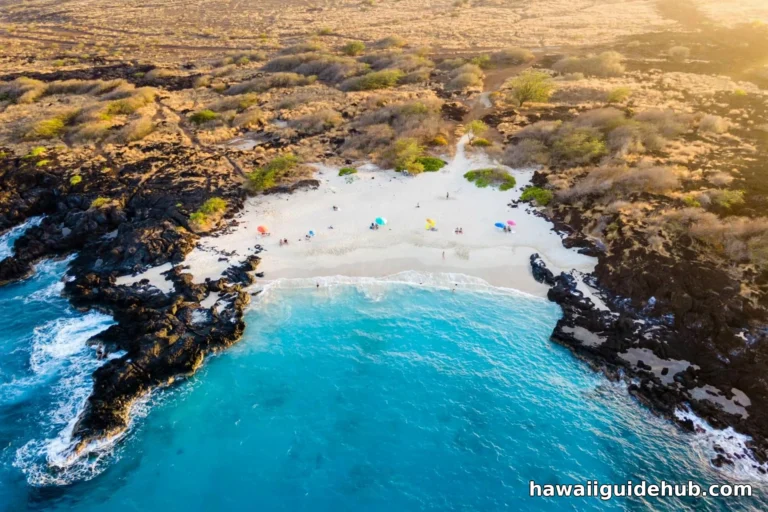
| Kua Bay | 25 min north | Swimming, sunset | Restrooms, no lifeguard |
| Hāpuna Beach | 40 min north | Best swimming beach | Full facilities, lifeguard |
| Makalawena | 30 min north + hike | Seclusion | None: bring everything |
The pattern: south of Kona for snorkeling, north of the airport for sand. Plan beach days by direction, not by whim.

Kahaluʻu Beach Park: The Easy Snorkel
Kahaluʻu, 10 minutes south of Kailua-Kona, is the island’s easiest turtle snorkel: a shallow, protected bay with lifeguards, restrooms, gear rentals, and honu grazing the reef. It gets crowded by midday: arrive before 9 AM. Watch for sea urchins on the rocks and do not stand on coral. For beginners and families, this is the pick: maximum wildlife, minimum effort.
Magic Sands and the Town Beaches
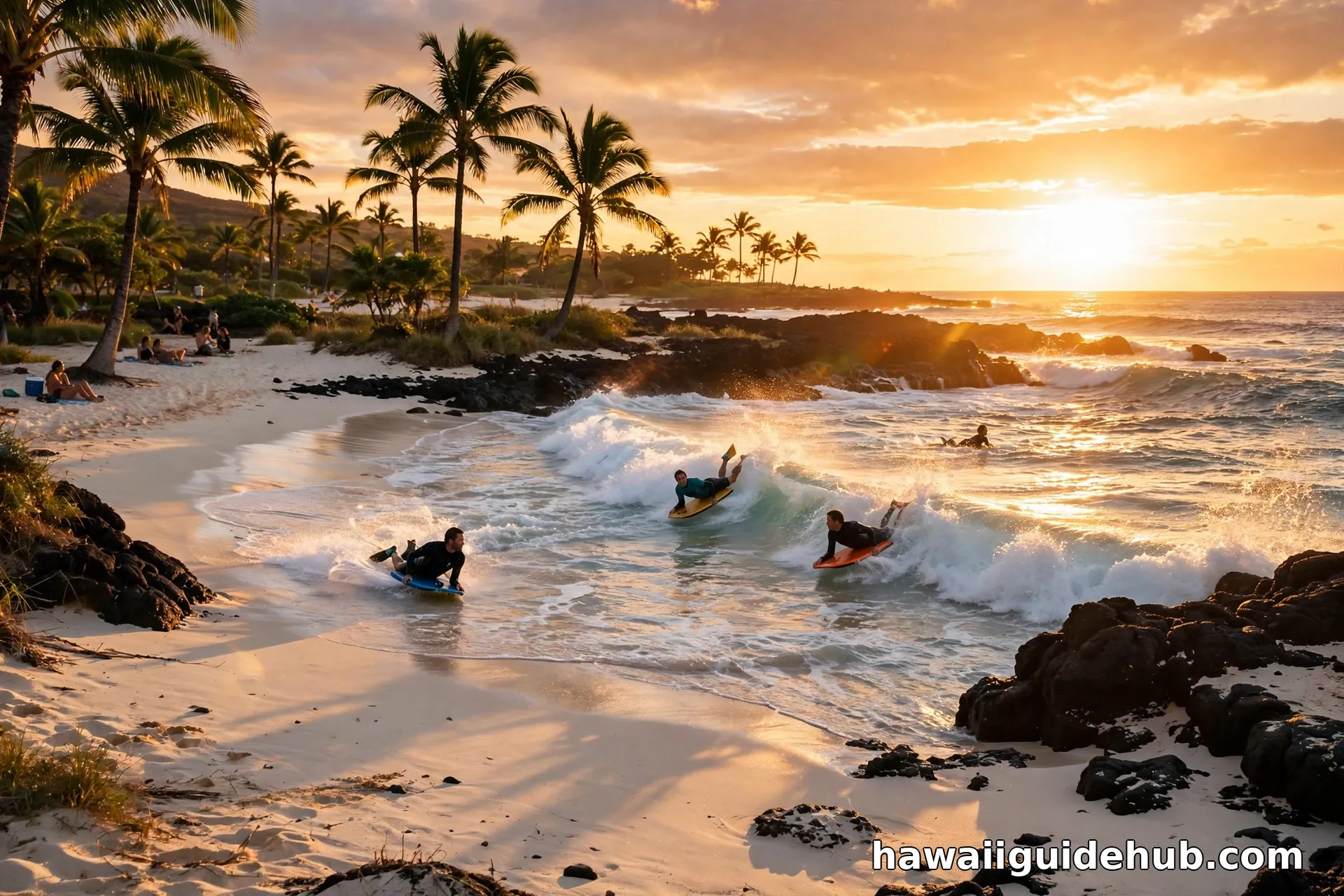
Magic Sands (Laʻaloa Bay), also 10 minutes south, is Kona’s town beach: white sand that famously disappears in winter surf and returns in summer (hence “Magic Sands”). Great for bodyboarding and sunset; shorebreak can be rough. Closer to town: Kamakahonu Beach (small, calm, by the pier) and Pawai Bay. These are convenience beaches: not destinations, but perfect for a quick swim after dinner in Kailua-Kona.

Two Step: The Snorkeler’s Pilgrimage
Hōnaunau Bay’s “Two Step” (Paʻea), 45 minutes south, is the best shore snorkeling and diving on the island: two natural lava steps drop you into aquarium water with coral gardens, turtles, dolphins, and occasional manta rays. No sand: the entire visit is the water. Arrive early for parking at the small lot; bring everything (no rentals on site). Pair it with Puʻuhonua o Hōnaunau National Historical Park next door: the Place of Refuge is one of Hawaii’s most sacred sites.
Old Airport Beach and the North Kona Pockets
Old Kona Airport State Recreation Area: the old runway is now a walking path, and the beach is a local favorite for swimming, picnics, and sunset. It is never crowded, has restrooms and shade, and sits minutes from town. Pawai Bay, just north, offers rocky-shore snorkeling. Further north: Kohanaiki Beach Park (Pine Trees), a local surf and swim spot with a striking black-lava backdrop. These are the beaches Kona residents actually use: unglamorous, uncrowded, and honest.
The Kohala Coast: Worth the Drive
Thirty to forty minutes north of Kona, the Kohala coast holds the Big Island’s best swimming beaches. Hāpuna Beach State Recreation Area: half a mile of white sand, lifeguards, facilities, and a small non-resident parking fee. Mauna Kea Beach (Kaunaʻoa Bay): limited public parking (arrive before 8 AM), superb snorkeling. Anaehoʻomalu Bay (A-Bay): resort-adjacent, calm, easy. Waialea Bay (Beach 69): local favorite with shade. Make at least one Kohala day: Kona’s snorkeling plus Kohala’s sand is the complete beach trip.
Beach Safety on the Kona Coast
The leeward coast is calmer than the rest of the island, but it is still the Pacific. Winter swells (October-March) can make Magic Sands’ shorebreak dangerous and close exposed beaches. Never turn your back on the ocean. Watch for wana (sea urchins) on rocky entries: wear water shoes. Do not stand on coral: it kills the reef and the urchins will punish you. Swim at lifeguarded beaches (Kahaluʻu, Hāpuna, Magic Sands) if you are not a strong swimmer. Check conditions every morning: calm at 8 AM can be choppy by 2 PM.
Kealakekua Bay: The Boat-Access Gem
Kealakekua Bay, 45 minutes south, is a marine reserve with the clearest water on the Kona coast: but there is no beach. Access is by boat tour, kayak (with restrictions), or a steep hike. The snorkeling rivals Molokini: coral gardens, spinner dolphins, and the Captain Cook monument. Book a morning boat tour from Keauhou or Honokohau: the bay is calmest before 10 AM. It is not a beach day: it is a snorkel expedition, and one of the best in Hawaii.
South Kona: Hoʻokena and Beyond
Past Two Step, the coast gets wilder. Hoʻokena Beach Park: a gray-sand beach with good snorkeling, camping, and spinner dolphins that rest in the bay (observe quietly, never chase). Miloliʻi: a tiny fishing village with a small beach park, the last vestige of old Kona. These are not tourist beaches: they are local places. Visit with respect, keep noise down, and you will see a Kona that most visitors miss entirely.
The Perfect Kona Beach-Hopping Itinerary
Day 1 (South): morning at Two Step for snorkeling, afternoon at Puʻuhonua o Hōnaunau, sunset in Kona town. Day 2 (North): Hāpuna for swimming, Mauna Kea Beach for snorkeling, Kua Bay for sunset. Day 3 (Local): Kahaluʻu morning snorkel with turtles, Old Airport afternoon swim, Magic Sands sunset with bodyboarders. Three days, three directions, every kind of Kona beach: and you never drive more than 45 minutes.
Video: Top 5 Big Island Beaches
Sand, snorkeling, shade, and parking: the west Hawaiʻi tour.
Frequently Asked Questions About Kona Hawaii Beaches
What is the best beach near Kona?
Kahaluʻu for easy snorkeling, Magic Sands for bodyboarding, Two Step for serious snorkeling, Hāpuna (40 min north) for swimming.
Are there white sand beaches in Kona?
Yes, north of the airport: Hāpuna, Mauna Kea Beach, Kua Bay, Makalawena. Kona town itself is mostly rocky shoreline.
Can you swim at beaches in Kona in winter?
The Kona (leeward) coast stays relatively calm year-round, but winter swells can affect exposed beaches. Mornings are calmest.
Is Two Step good for beginners?
Confident beginners, yes: the entry is easy and the water is clear. Weak swimmers should stick to Kahaluʻu’s shallow bay.
Snorkel Gear: Rent or Buy
Rent in Kona town ($15-25/day for a full set) if you snorkel once or twice. Buy a decent mask and snorkel at home if you snorkel most days: a well-fitting mask transforms the experience, and rental masks leak. Fins: full-foot fins for boat trips, adjustable strap fins with booties for rocky shore entries like Two Step. Rash guard: sun protection without sunscreen chemicals. And the full-face masks: convenient, but controversial among safety experts: a traditional mask and snorkel is the safer choice.
Kona Sunsets and the Green Flash
The Kona coast faces due west: sunset is a nightly event. The best sunset beaches: Magic Sands, Kua Bay, Old Airport, and any resort beach at Waikoloa. On clear evenings, watch for the green flash: a split-second emerald blink as the sun’s last sliver drops below the horizon. It is real, it is rare, and Kona’s clean western horizon is one of the best places on Earth to see it. Stay for the afterglow: the sky often peaks 15 minutes after sunset.
What is the calmest beach in Kona?
Kamakahonu Beach by the Kailua Pier and Kahaluʻu’s inner bay are the calmest. Mornings everywhere are calmer than afternoons.
Do Kona beaches have lifeguards?
Some: Kahaluʻu, Magic Sands, and Hāpuna have lifeguards. Two Step, Kua Bay, and Makalawena do not.
Turtles: Where to See Them (Responsibly)
Honu (green sea turtles) are everywhere on the Kona coast: Kahaluʻu’s reef, Two Step’s cleaning stations, Punaluʻu’s black sand (south), and Kiholo Bay. The rules: stay 10+ feet away, never touch, never feed, never block their path to the surface. A turtle approaching you is fine: you approaching it is not. The best encounters happen when you float quietly and let the turtle decide. Early morning snorkelers get the calmest water and the most active turtles.
What to Pack for Kona Beaches
Reef-safe sunscreen (Hawaii bans oxybenzone and octinoxate), rash guard, and hat. Water shoes for Two Step and rocky entries. Snorkel gear (or rent in town). Twice the water you think you need: the Kona sun is relentless. Cash for parking fees at state beaches. A dry bag for the phone and a cooler for the beach picnic. And patience for the Two Step parking lot: it fills by 9 AM, and the early snorkeler gets the clearest water.
Which Kona beach is best for kids?
Kahaluʻu Beach Park: shallow, lifeguarded, with restrooms and rentals. Kamakahonu Beach in town is also calm and small.
Can you snorkel in Kona in winter?
Yes: the leeward Kona coast is diveable and snorkelable year-round. Winter swells occasionally affect exposed sites: check daily conditions.
Kīholo Bay: The Hidden Blue Lagoon
Kīholo State Park Reserve, 30 minutes north, hides one of the Kona coast’s prettiest secrets: a turquoise lagoon behind a lava-rock breakwater, with sea turtles, a freshwater spring, and black-lava scenery. The hike in is 15-20 minutes over lava: wear shoes. There are no facilities and no lifeguard: this is a wilderness beach. Go on a weekday morning for near-solitude. The lagoon’s water is startlingly blue: the photos do not exaggerate.
Beach Etiquette on the Kona Coast
Give honu and monk seals space: 10 feet minimum for turtles, 50 for seals (federal law). Do not take sand, shells, or rocks. Pack out all trash. Keep noise down at residential beaches like Old Airport and Hoʻokena. Respect kapu signs. Do not stand on coral: ever. And at Two Step and other popular snorkel sites, do not feed the fish: it disrupts the ecosystem and is illegal in marine reserves. The coast stays beautiful because visitors behave: be one of them.
After Dark: Night Snorkeling from Shore
Experienced snorkelers can night-snorkel from shore at calm sites like Kahaluʻu: octopus, eels, and sleeping turtles emerge after dark. Go with a buddy, bring dive lights, and know the entry intimately from daytime visits. For most visitors, the guided manta ray night snorkel is the safer, more spectacular night option: mantas feeding in the lights is the single best after-dark experience on the Kona coast.
The Surf Scene: Where to Watch and Learn
Kona is not a surf capital like Oʻahu’s North Shore, but it has waves. Pine Trees (Kohanaiki) is the local surf spot: reef break, experienced surfers. Magic Sands gets a fun shorebreak for bodyboarding when the swell is up. Kahaluʻu has a gentle beginner break on the south side: surf schools operate here. For lessons, book with a licensed school at Kahaluʻu or Kamakahonu: small groups, soft-top boards, patient instructors. And in winter, drive the coast watching the swell hit the lava cliffs: spectacular and free. For the island’s wider adventure menu, see the best things to do on the Big Island.
Accessibility: Beaches for Everyone
Kahaluʻu Beach Park and Hāpuna have accessible parking, restrooms, and relatively easy water access. Magic Sands’ sand is soft but the shorebreak is rough: not ideal for limited mobility. Two Step’s lava-rock entry is not accessible. Old Airport has paved paths and calm water near the shore. If accessibility matters, call ahead: county beach parks can advise on current conditions. Everyone deserves the ocean: Kona’s best-accessible beaches make it possible.
Parking and Fees: The Practical Details
State beach parks (Hāpuna, including Waialea) charge non-residents $10 per vehicle parking plus $5 per person entry; Hawaiʻi residents are free with ID. County parks (Kahaluʻu, Magic Sands, Old Airport) are generally free. Two Step’s lot is tiny and fills by 9 AM: overflow parks along the road. Makalawena requires the Kekaha Kai hike: no fee, just effort. Bring cash or card for fees, arrive early everywhere on weekends, and never leave valuables visible in the car: beach break-ins happen. The early snorkeler gets the parking spot, the clear water, and the turtles.
Kona’s beaches reward the directional thinker: snorkel south, swim north, sunset everywhere. For the rest of your Kona days, see the best things to do in Kona and the manta ray night snorkel.