Kilauea at Night: Watching the Volcano Glow in Hawaiʻi Volcanoes National Park

There is nothing else in Hawaii like Kilauea at night. When the volcano is active, the dark sky above Halemaʻumaʻu crater pulses with a deep red-orange glow, steam rises lit from below, and on the best nights lava fountains spray into the blackness while the Milky Way arcs overhead. This guide tells you exactly where to stand, what to bring, how the current eruption works, and how to stay safe, so your night at the volcano is unforgettable for the right reasons.
This is the single complete guide to Kilauea at night. It covers what the night glow looks like, the current eruption activity, the best viewpoints after dark, what to bring, safety rules, stargazing, how to plan your visit, and answers to common questions. Everything about seeing kilauea at night is gathered on this one page, so you do not need to search anywhere else.
Kilauea at Night at a Glance
| THE SHOW | |
| What you see | Red-orange lava glow, steam lit from below, possible fountains |
| Current activity | Episodic summit eruption since Dec 2024; check USGS before you go |
| Best viewpoints | Uēkahuna, Kīlauea Overlook, Keanakākoʻi, Steaming Bluff |
| The bonus | Some of the best stargazing in Hawaii |
| THE LOGISTICS | |
| Where | Hawaiʻi Volcanoes National Park, Big Island |
| Park hours | Open 24 hours; no reservation needed |
| Entry fee | Yes; self-pay if you arrive after the booth closes |
| Elevation | About 4,000 feet; it gets cold and windy |
| THE KIT AND THE RULES | |
| What to bring | Warm layers, headlamp, tripod, binoculars, snacks |
| Safety | Stay on marked trails and overlooks; never enter closed areas |
What Kilauea at Night Looks Like
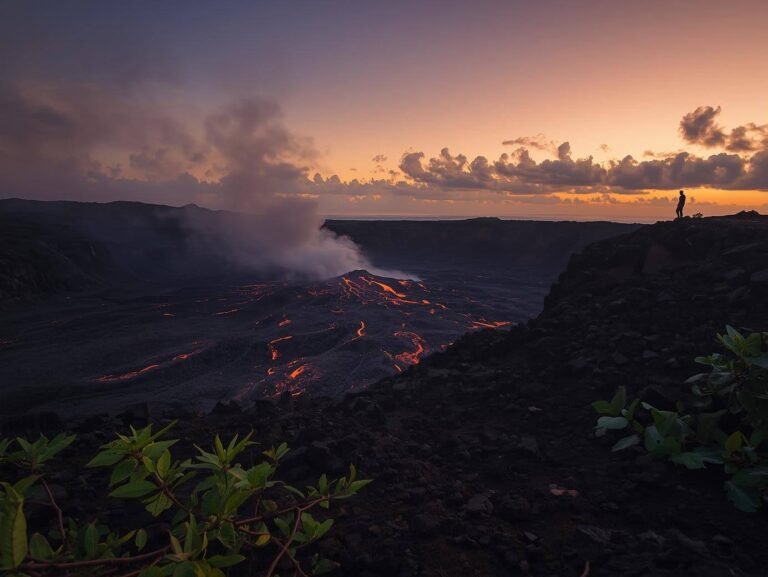
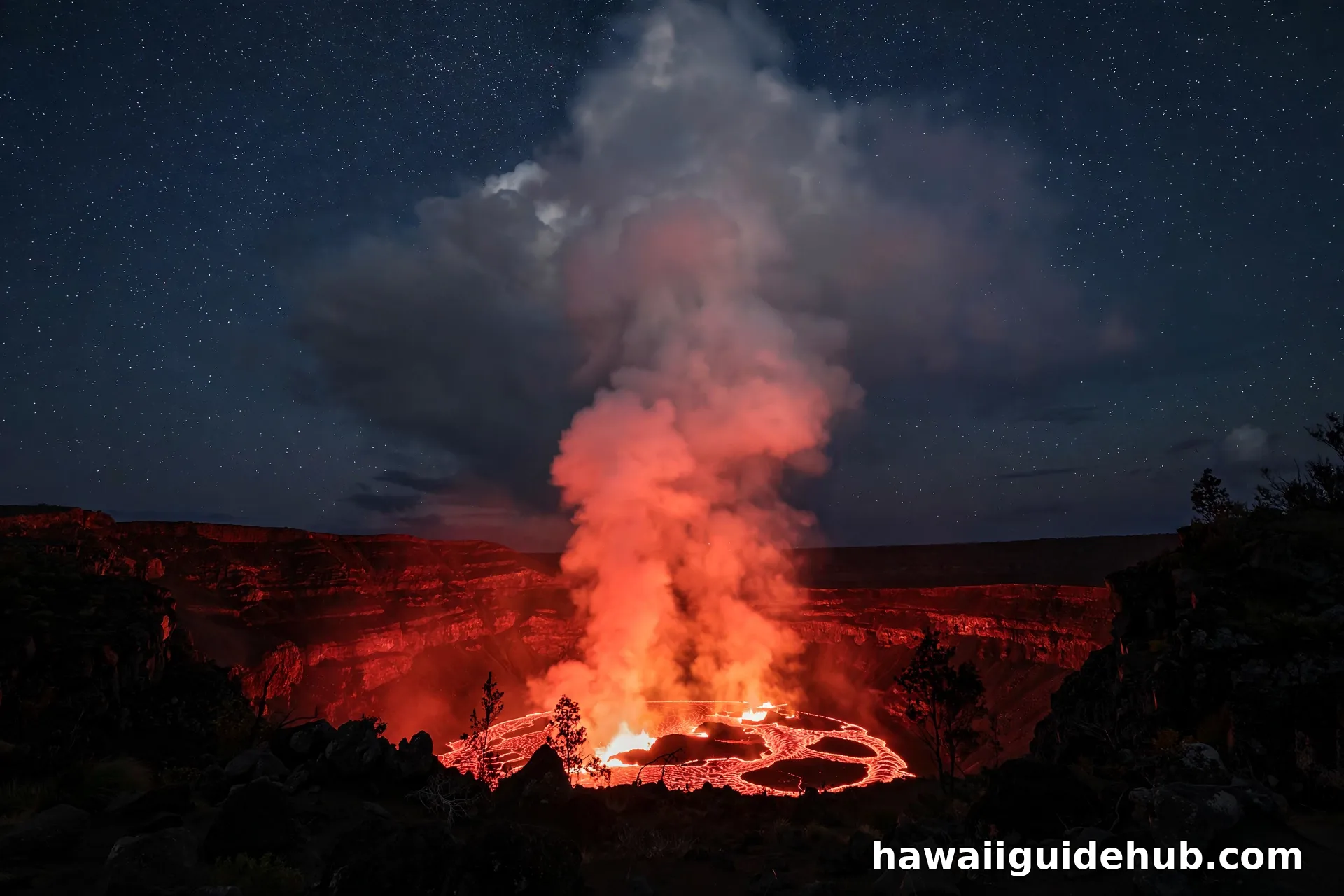
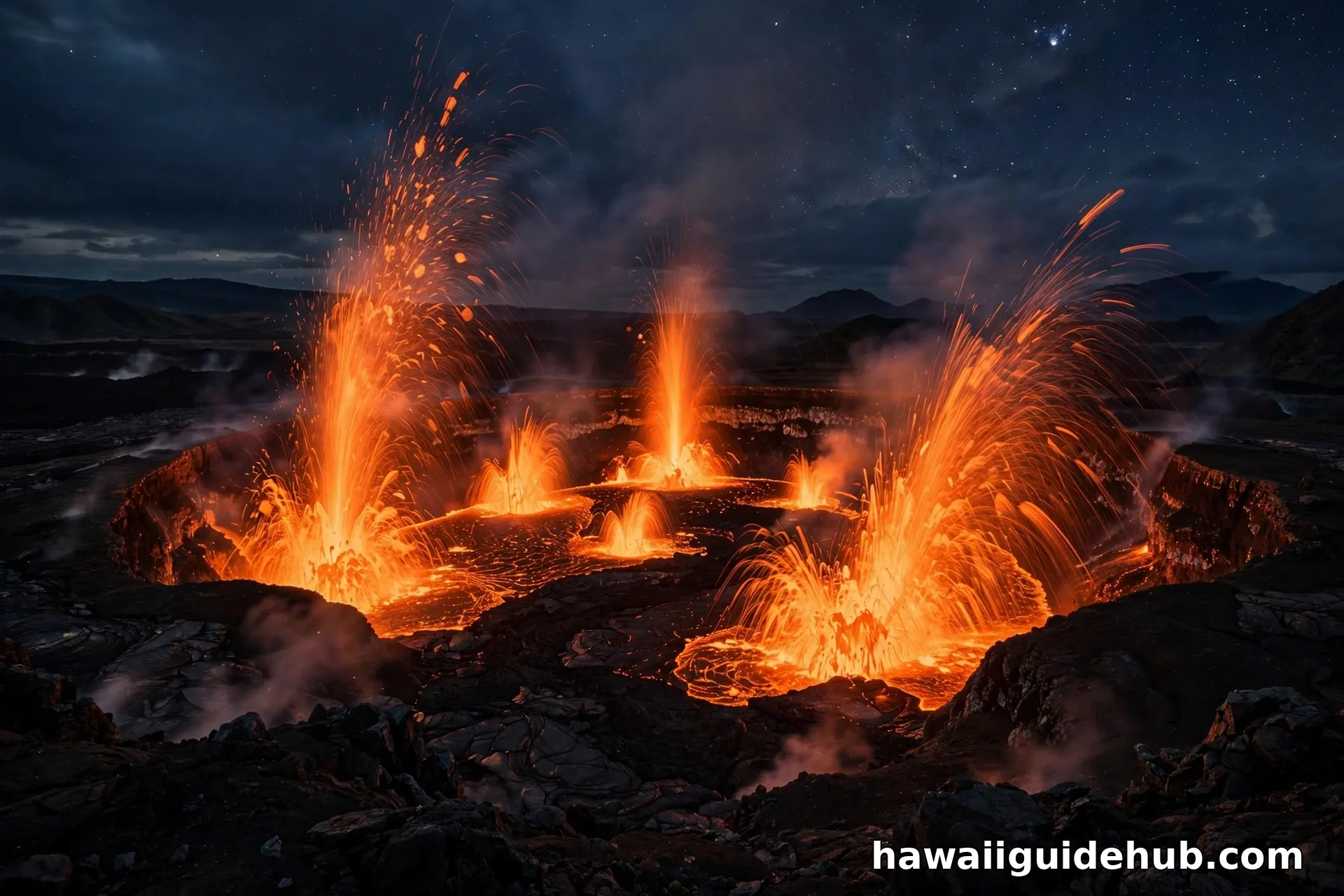
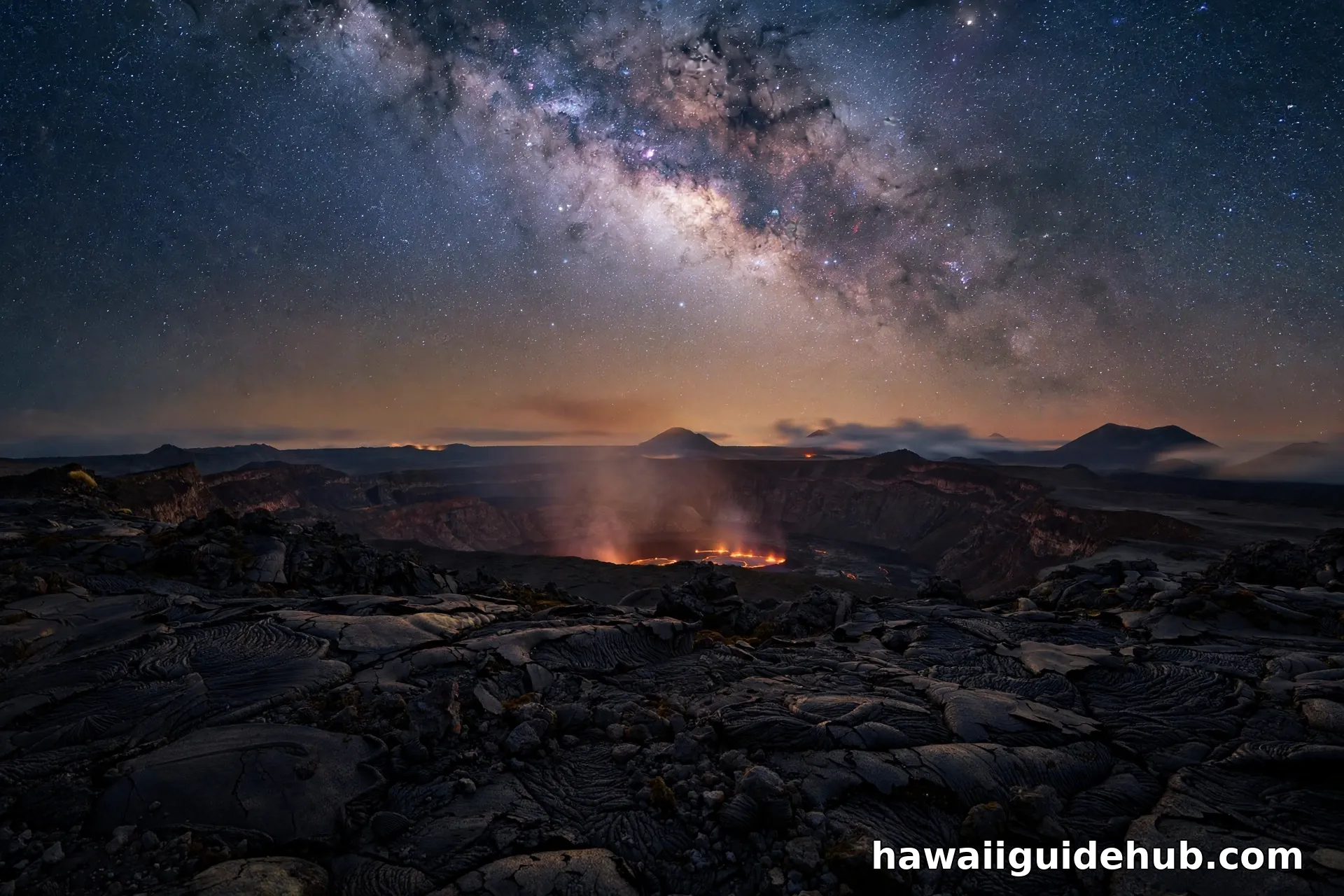
As dusk deepens over the caldera, the first sign is often a faint orange tinge in the steam plume rising from Halemaʻumaʻu crater. Then, as the sky goes fully dark, the glow intensifies into a pulsing, deep red-orange light show. The steam above the crater glows from beneath, the crater walls catch the light, and on high clouds the reflection reads for miles: on the strongest nights, the glow is visible from far outside the park. During active fountaining episodes, lava bursts rise dramatically above the vents before feeding flows across the crater floor, and spattering can briefly illuminate the whole crater. It is surprisingly quiet apart from the murmuring of other visitors. You might hear volcanic gases hissing or rumbling faintly if conditions are right, but mostly it is a silent, powerful display of light. And above it all, if the sky is clear, the Milky Way stretches across the darkness: a volcano glowing below and stars burning above, one of the great sights on Earth. For the bigger picture of the island, see our guide to the best things to do on the Big Island.
Current Eruption Activity: What to Know
Kīlauea has been erupting episodically since December 23, 2024, from vents in Halemaʻumaʻu at the summit. The pattern is episodic: intense bursts of lava fountaining, each generally lasting less than 12 hours, separated by pauses of two weeks or more. By mid-2026 the eruption had produced more than 50 fountaining episodes, making it one of the longest-running episodic fountaining eruptions on record. Between episodes, strong glow, spattering, and overflows continue at the vents, so even on a quiet night you can often see the crater glowing. As of early October 2026, the volcano sits at Alert Level WATCH with an ORANGE aviation color code, magma remains close to the surface, and scientists say another fountaining episode remains possible. But volcanic activity changes constantly: a pause can follow a spectacular episode within hours, and viewing areas can close with little warning. Check the USGS Hawaiian Volcano Observatory updates and the National Park Service conditions page on the day of your visit, and have a backup plan in case the glow is faint or an overlook is closed.
The Best Night Viewpoints
Three overlooks along the crater rim matter most after dark, all reached by car with short walks:
Uēkahuna. The west-rim overlook that replaced the Jaggar Museum viewpoint after the 2018 summit collapse. High vantage, wide view straight across Halemaʻumaʻu, railings, and paved paths from the parking lot. The most visited night overlook because it is the shortest walk from a car. Arrive before full dark to learn the layout, then let your eyes adjust for 10 to 15 minutes.
Kīlauea Overlook. Slightly north of Uēkahuna, also on the west rim: shorter, quieter, fewer people, a similar view. A good backup when Uēkahuna’s parking fills, which happens earlier than people expect on active nights.
Keanakākoʻi. On the southeast rim of the caldera, reached by walking a closed section of Crater Rim Drive from the Devastation Trail parking area, about a 2-mile round trip on paved road. This gets you closer to the vents than the west-rim overlooks, and it is the overlook the Park Service and USGS most often feature in their nighttime fountain photos. Bring a headlamp and warm layers for the walk back. The tradeoff is the walk in the dark: well worth it on a clear glow night, more work than you want on a rainy one. Note that the Keanakākoʻi overlooks have been closed at times during high activity, so check conditions before counting on this one.
Wahinekapu (Steaming Bluff) and Kupinaʻi Pali (Waldron Ledge). Additional crater-rim viewpoints along the trail with good angles on the glow and steaming ground underfoot. Do not bother with the old Chain of Craters Road viewpoints at night: the current eruption is confined to the summit, and the drive down is a long, cold detour to see nothing.
What to Bring After Dark
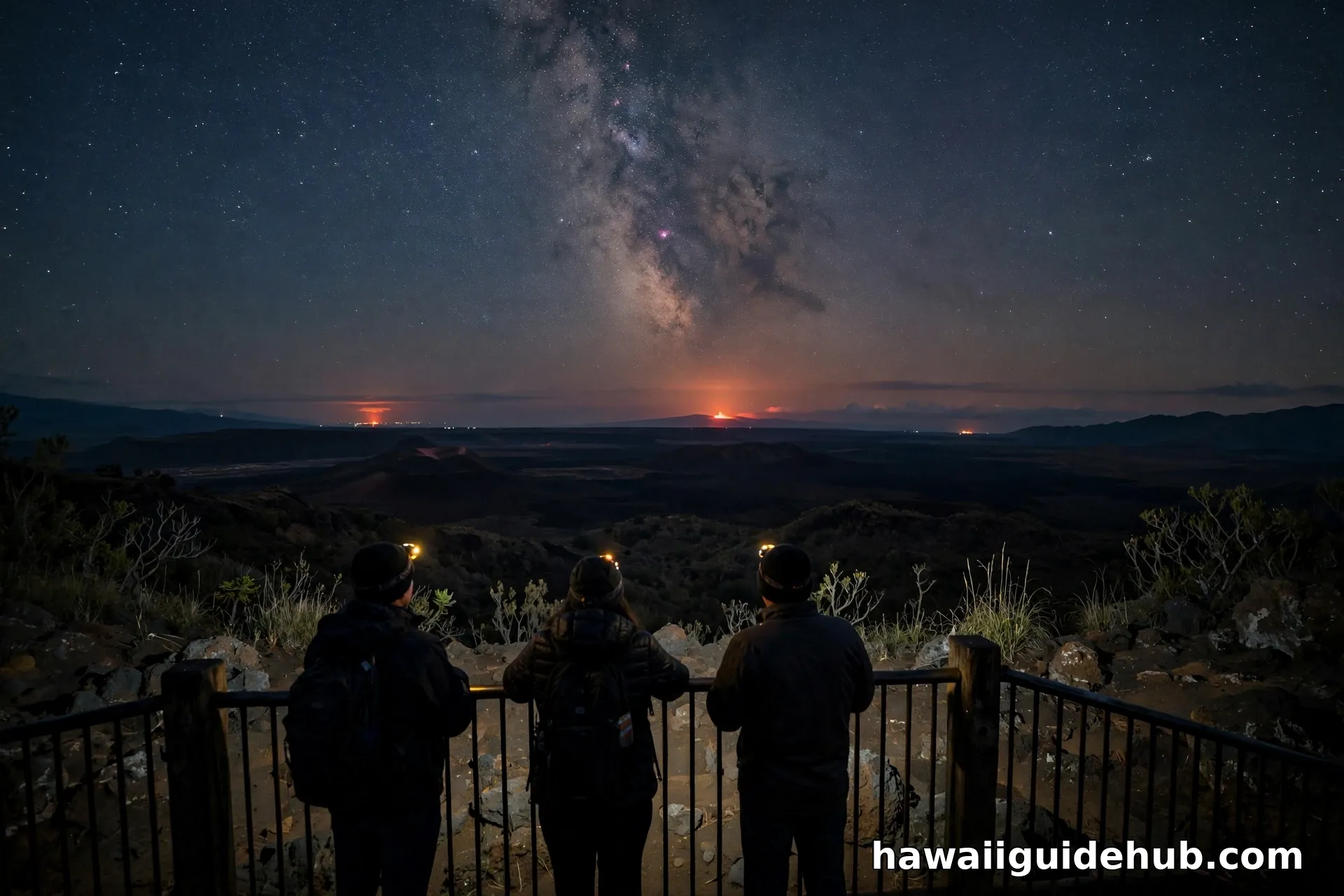
The summit sits at about 4,000 feet, and it gets surprisingly cold and windy at night: bring a warm jacket, long pants, and even a beanie. Temperatures can drop into the 40s and 50s after dark, and rain is common at the summit, so a rain layer is smart too. A headlamp is essential for walking safely; use red-light mode to preserve everyone’s night vision, since a blast of white light ruins the adjusted eyes of everyone nearby. A tripod is crucial if you want real night photos: know your camera’s low-light settings before you go, and do not expect a phone alone to capture what your eyes see. Binoculars bring the crater activity dramatically closer and are one of the best cheap upgrades to the experience. Bring snacks and water, since facilities are limited at night. And bring patience: crowds come and go, the glow waxes and wanes, and the best moments often arrive after you have settled in quietly. Keep voices low, skip bright white lights, and remember this is a sacred place for Native Hawaiians: the crater is the home of Pele, and respectful behavior matters.
Safety at Night
Volcanic eruptions are hazardous and can change at any time. Stay on marked trails and overlooks, avoid earth cracks and cliff edges, and never enter closed areas. The ground near the crater rim can be unstable and undercut, and in the dark a single step off the trail can be dangerous. Volcanic gas, including sulfur dioxide, can be a problem downwind of the vents: if you have respiratory issues such as asthma, check the vog conditions and consider skipping the closest overlooks. Drones are prohibited in the national park. In the dark it is easy to wander, so keep your headlamp on the path and stay with your group. If rangers have closed an area, respect it without argument: closures exist because conditions there are genuinely unsafe.
Stargazing Above the Glow
Even if the lava is quiet, the night sky is worth the trip. The summit’s elevation, dark skies, and distance from city lights make for superb stargazing, and the combination of the Milky Way above with the volcanic glow below is surreal. Uēkahuna is excellent for stars as well as lava, since it faces the dark sky over the caldera. Give your eyes 20 minutes to fully adjust, keep white lights off, and look up: on a clear, moonless night the sky from the crater rim is among the finest in Hawaii, with the Milky Way, planets, and satellites all on show.
Planning Your Visit
The park is open 24 hours a day, and no reservation is needed for independent entry at night. You do need to pay the entry fee: the entrance booth may close in the evening, in which case use the self-pay station near the entrance or pay online afterward. Arrive before 8 p.m. to secure parking at the main overlooks on busy nights; during active fountaining episodes, traffic into the park gets heavy fast, and the park posts real-time parking and crowd updates. If you are staying on the west side, our Kona guide and Waikoloa guide will help you plan the drive, which is about 2 hours from Kona and 45 minutes from Hilo. Fill up on gas and food before you go: options are thin after dark near the park. Volcano House, the historic hotel on the crater rim, offers a warm indoor alternative with views of the glow if the outdoor conditions do not work for everyone in your group. First-time Hawaii visitors should also read the best island for first-time visitors.
Video: Kilauea Erupts in Fiery Night Spectacle
Night footage of Kilauea’s north vent sending glowing lava bursts across Halemaʻumaʻu crater.
Frequently Asked Questions
Can you see lava at Kilauea at night?
It depends on the current eruption activity. During the ongoing episodic eruption, strong glow is often visible at night even between fountaining episodes, and during episodes you can see lava fountains and flows from the official overlooks. But the lava lake surface can crust over, reducing the glow to a faint line, and weather can hide everything: clouds and rain are common at the 4,000-foot summit. Check the USGS updates on the day of your visit.
What is the best time to see the glow?
After full dark, once your eyes adjust. Arrive before dark to find parking and learn the overlook layout, then stay at least an hour, since the glow shifts and the fountaining can start or stop at any time. The glow is best on clear, moonless nights when there is no cloud deck washing it out.
Is Hawaii Volcanoes National Park open at night?
Yes, the park is open 24 hours a day and no reservation is needed for independent entry. You still must pay the entry fee; if the booth is closed, use the self-pay station near the entrance. The visitor center keeps limited hours, but the overlooks never close.
Is it cold at the summit at night?
Yes. At about 4,000 feet elevation, summit nights can drop into the 40s and 50s Fahrenheit with wind and rain. Bring a warm jacket, long pants, and layers even if it was hot at the beach that day.
Is it safe to visit Kilauea at night during an eruption?
Yes, from the official overlooks, if you follow the rules: stay on marked trails and overlooks, avoid cracks and cliff edges, never enter closed areas, and heed rangers and USGS guidance. Volcanic gas can affect air quality downwind, so check vog conditions if you have respiratory concerns.
Can I see the glow without hiking?
Yes. Uēkahuna and Kīlauea Overlook are both short, paved walks from their parking lots. Only Keanakākoʻi requires a real walk of about 2 miles round trip.
Kilauea at night is the Big Island’s essential after-dark experience: the glowing crater, the fountains when they come, the stars above, the sulfur on the wind. Check the eruption status before you drive up, dress for the cold, respect the closures and the sacredness of the place, and give the night time to work on you. Few places on Earth let you watch the planet building itself in the dark, and fewer still pair it with a sky full of stars.