Waipiʻo Valley Road: Steepest Road on the Big Island, Access Rules and Visitor Guide

There is a road on the Big Island that drops nearly 900 feet in less than a mile, tilts to a 25 percent grade, and ends at the foot of 2,000-foot sea cliffs. It is called Waipiʻo Valley Road, and it is one of the steepest public roads in the United States. It is also, as of now, closed to you.
Since February 2022, Hawaiʻi County has kept the road shut to visitors under an emergency rule that it renews about every two months. That does not mean Waipiʻo Valley is off limits entirely. The overlook at the top of the road is free and open to everyone, and there is a permitted shuttle that carries visitors down to the valley floor. What you cannot do is walk it, drive it yourself, or treat it like a normal scenic drive.
This guide explains the road, the rules, the lookout, the shuttle, and the valley itself, so you can plan a visit that is safe, legal, and respectful.
The Road Itself: What Makes It So Extreme
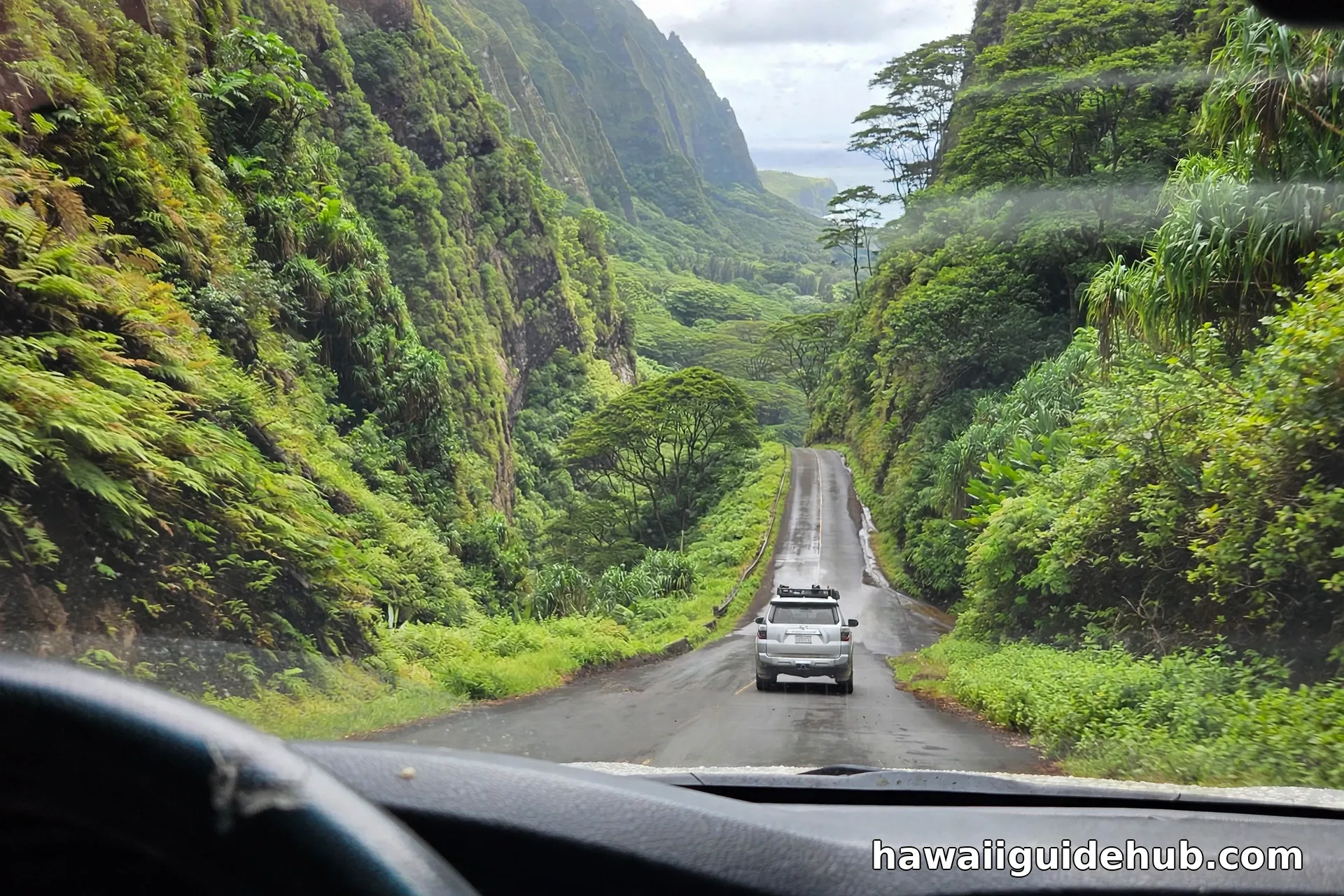
Waipiʻo Valley Road begins at the end of Highway 240, just past the town of Honokaʻa on the Hāmākua Coast, and plunges to the floor of Waipiʻo Valley. In roughly 0.6 to 1 mile of winding pavement, it loses about 800 to 900 feet of elevation. The average grade is 25 percent, with some pitches even steeper. For comparison, most interstate highways never exceed a 6 percent grade.
The road is narrow, with sharp switchbacks and sections where two vehicles can barely pass. Downhill traffic must yield to uphill traffic, and the surface can turn slick after rain, which falls often on this windward coast. A vehicle that loses brakes or traction here has very little room for error. The road earned its reputation long before the closure: rental car agreements on the Big Island have banned it for years, and tow trucks charge a small fortune to pull a stranded car back up the grade.
Why the Road Is Closed to Visitors
In January 2022, a geotechnical study of Waipiʻo Valley Road found active rockfall, unstable slopes, and erosion along the route. The county closed the road to visitors the following month under an emergency rule, and it has renewed that rule roughly every 60 days ever since. The most recent renewal, the twenty-fifth version, was signed on September 1, 2026 and runs through November 1, 2026. The underlying emergency declaration extends to February 25, 2027, so visitors should expect another renewal rather than a reopening.
The closure is not only about the pavement. Waipiʻo Valley is home to roughly 50 to 100 residents, working taro farms, and sites that are sacred to Native Hawaiians. Before the closure, the narrow road was carrying far more traffic than it could handle, with visitors trespassing on private land and overwhelming a place that was never built for crowds.
The Rules, Plain and Simple
The emergency rule is specific about who can use Waipiʻo Valley Road and who cannot. Understanding it will save you a wasted trip and a possible fine.
Who cannot use the road
All pedestrians are prohibited. All uncovered vehicles, including ATVs, are prohibited. Horseback access is prohibited. There are no exceptions for hikers, runners, or anyone on foot, not even residents or tour guests. The rule bans walking the road outright.
Who can use the road
Vehicle access is limited to three groups: Hawaiʻi County residents, licensed and insured tour operators holding a county permit, and Native Hawaiians exercising recognized traditional and customary rights. That is the complete list.
The vehicle rules
Even those allowed to drive face strict conditions. Only low-range four-wheel drive vehicles may be used, and four-wheel drive must stay engaged for the entire trip. All-wheel drive does not count. Everyone must ride belted inside an enclosed cabin. Downhill vehicles yield to uphill vehicles. The road closes outright in significant weather, as determined by county Civil Defense.
One point confuses many visitors, so it is worth stating plainly: a rental Jeep with a 4WD badge does not qualify. The exception is about who you are, not what you drive. Your rental agreement almost certainly bans this road anyway.
How Visitors Can Reach the Valley Floor
If you want to stand on the valley floor, there is currently one legal way to do it as a visitor: ride down with a permitted tour operator. One commercial shuttle currently runs the route. The Waipio Valley Shuttle carries visitors from the lookout down to the valley floor and back in about 105 minutes, with multiple departures through the day. Fares run about $67 to $75 for adults and about $36.50 to $41 for children ages 3 to 11, depending on how you book. The tour loops the valley floor with several stops to get out and look around, passing taro fields, the river, and the black sand beach, with wild horses often grazing nearby. There are no restrooms on the valley floor, so use the facilities at the lookout first.
Horseback tours and mule-drawn wagon rides into the valley have been suspended since the closure began in February 2022, and there is no announced date for their return. Camping permits for the valley floor are also suspended. Book the shuttle in advance, since seats are limited and the tour is the only game in town.
The Waipiʻo Valley Lookout: Free and Open to All
The easiest and most popular way to experience Waipiʻo Valley is the lookout at the top of the road, and it costs nothing. The Waipiʻo Valley Lookout sits at the end of Highway 240, about 9 miles past Honokaʻa town, at 48-5546 Waipiʻo Valley Road. It is a Hawaiʻi County park with a paved viewing platform, a covered pavilion, restrooms, and a small parking lot. There is no reservation, no gate, and no timed-entry window. Plan a daylight visit, since posted hours are not easy to find.
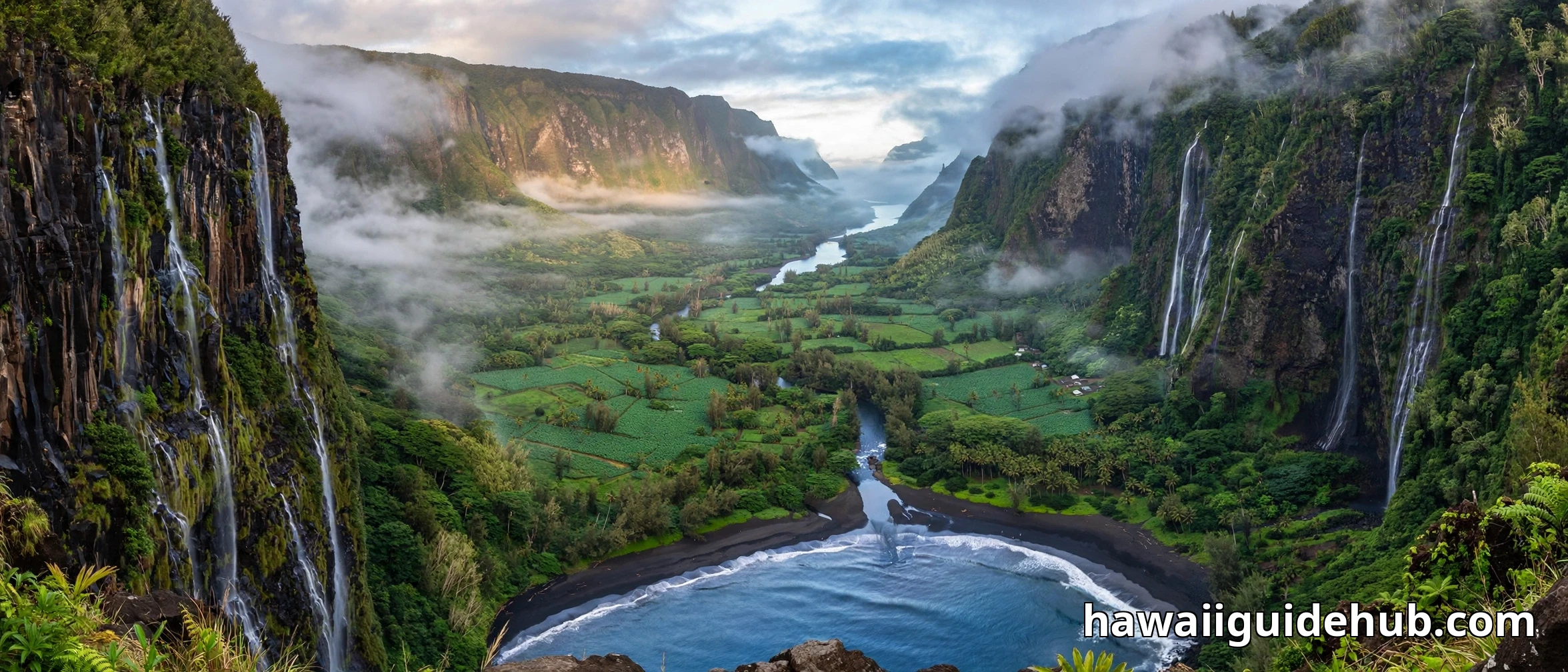
From the railing, the whole valley opens at once: a green floor about a mile wide at the coast, a black sand beach curving across its mouth, and sea cliffs marching off toward Kohala into the mist. On clear mornings the view is one of the finest on the island. Arrive early for the calmest air and the fewest cars, and stay for at least half an hour, since clouds move through the valley fast and the view changes by the minute.
What You Can See from the Rim
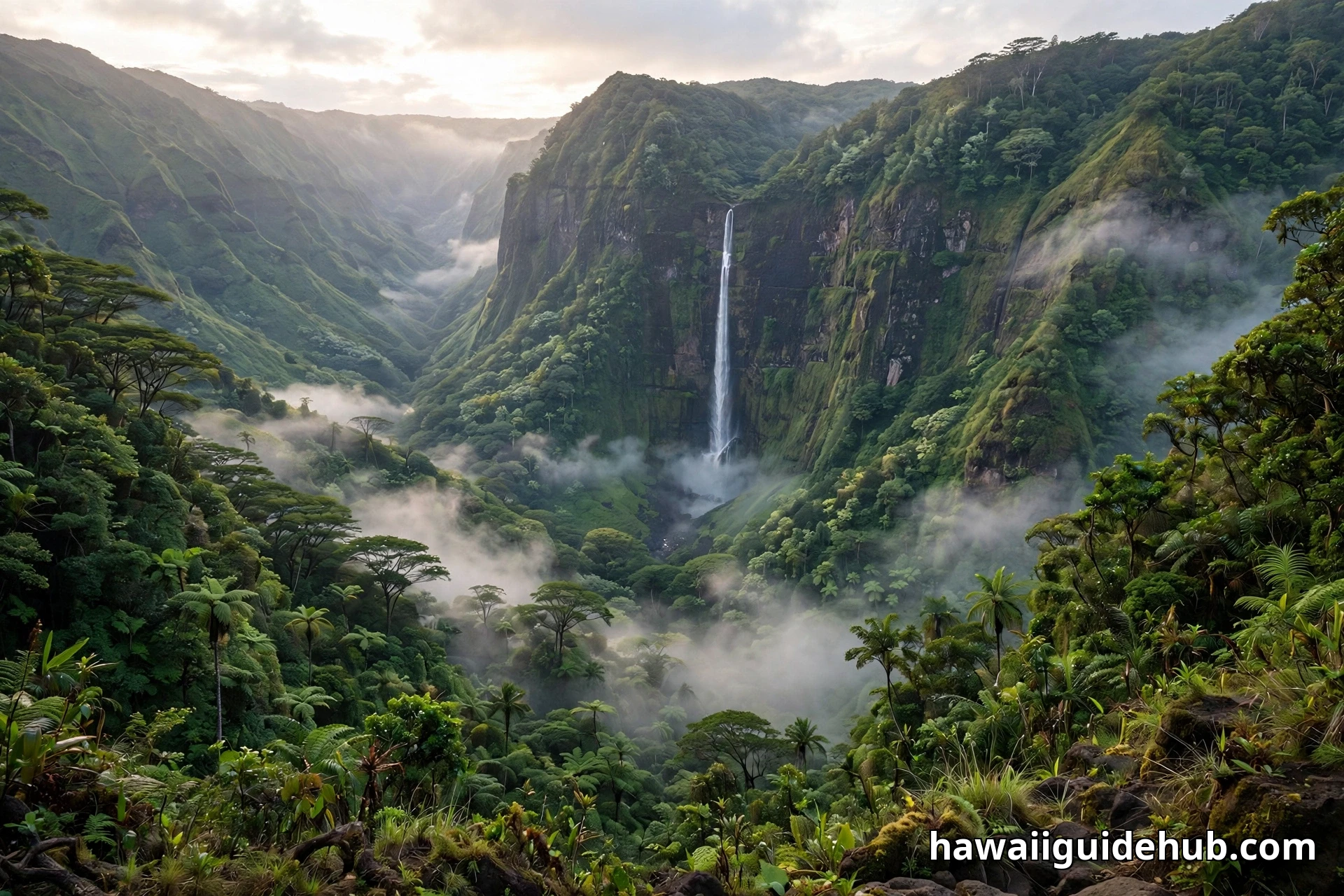
Even without going down, there is plenty to look at. Hiʻilawe Falls, a waterfall more than 1,200 feet tall, feeds the valley and is visible from the lookout on clear days, threading down the back wall. It is one of the tallest waterfalls in Hawaiʻi. The land beyond the falls is private property, so admire it from the rim.
On both sides of the valley, cliffs rise nearly 2,000 feet, streaked with hundreds of smaller cascades after rain. The black sand beach at the valley mouth is easy to spot, and on calm days you can watch the surf break along it. Wild horses sometimes graze the lower slopes. Bring binoculars if you have them; the valley is nearly six miles deep, and there is a lot to pick out.
The History and Culture of the Valley
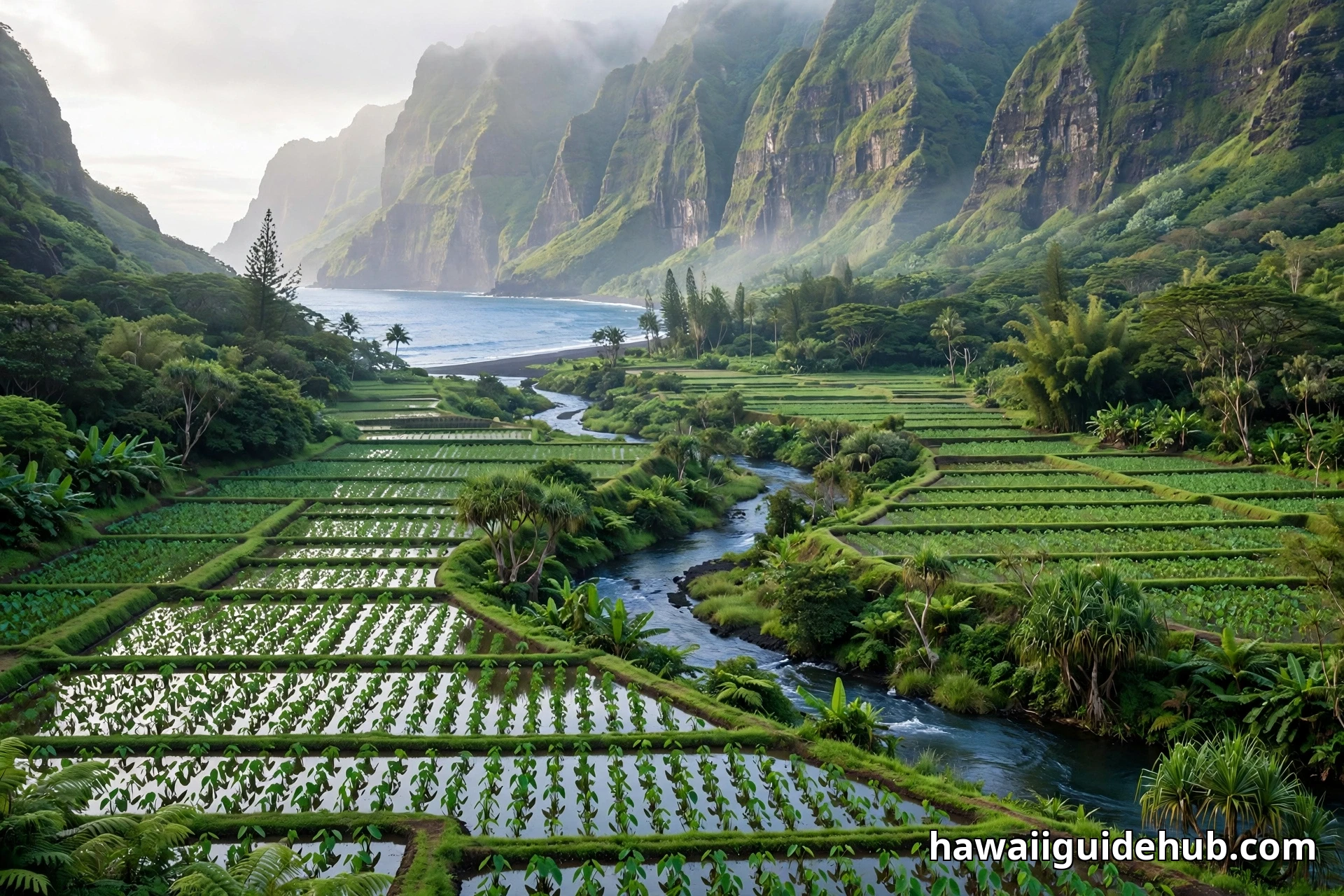
Waipiʻo Valley is known as the Valley of the Kings. It was home to many aliʻi, the ruling class of old Hawaiʻi, and it remains an active burial site and one of the most culturally significant places in the islands. Before Western contact, thousands of Hawaiians lived and farmed here, growing taro in the flooded fields that still patch the valley floor.
That history is why respect matters so much here. The valley is someone’s home, someone’s farmland, and a sacred place, not a theme park. Stay on public paths, do not enter private property, and do not disturb taro fields, fences, or homes. Treat the area the way you would treat a cemetery and a working farm, because it is both.
Hiking and the Valley Trails
This section needs to be blunt: you cannot hike down Waipiʻo Valley Road. The emergency rule prohibits all pedestrians on the road with no exceptions. The old walk to the black sand beach, about 6.5 miles round trip with 800 feet of climbing, is off the table for now.
The Muliwai Trail, which crosses to Waimanu Valley on the far side, technically remains open, and the state still issues Waimanu camping permits in some seasons. The practical problem is the trailhead, which sits across the valley floor with no lawful way for a visitor to walk to it. Until the county builds pedestrian access into a future reopening, which its own advisory council has formally requested, the trail is effectively unreachable for visitors. Check with the state before making any plans around it.
Planning Your Visit
The lookout is a quick stop on a Hāmākua Coast day, and it pairs well with the region’s other sights. Mornings bring the clearest views, since clouds tend to build over the valley by afternoon. Rain is frequent on this coast, so bring a light jacket even on sunny days. There is no food at the lookout, so eat in Honokaʻa on the way.
Honokaʻa is a plantation-era town worth a wander, and Tex Drive In on its main street serves its famous malasadas daily from 6 a.m. to 6 p.m. In Kukuihaele, just before the lookout turnoff, Waipiʻo Valley Artworks runs a small café, open Monday through Saturday from 10 a.m. to 5 p.m., closing at 4 p.m. on Tuesdays. If you take the shuttle, wear closed shoes, bring water, and use the restrooms at the rim before you board.
Nearby Stops Worth Adding
Waipiʻo Valley sits in good company. ʻAkaka Falls State Park, with its 442-foot waterfall, is a short drive south and makes a natural pairing. The Hāmākua Coast drive between Honokaʻa and Hilo is one of the island’s prettiest stretches of road, with botanical gardens and roadside fruit stands along the way. Pololū Valley, at the end of Highway 270 on the Kohala side, offers another dramatic valley overlook with a steep hike to a black sand beach that remains open. Together they make a full day of the island’s wild windward side.
For a broader look at what the island offers beyond the Hāmākua Coast, see our guide to the best things to do on the Big Island and the best things to do in Hawaiʻi Volcanoes National Park. If you are still deciding how the islands compare, our guide to the best island for first-time visitors can help, and our guide to outdoor adventures in Hawaii covers hiking and snorkeling statewide.
See Waipiʻo Valley on Video
Waipiʻo Valley Road FAQs
Is Waipiʻo Valley open to visitors?
The valley itself is not closed, but the road down is closed to visitors. The lookout at the top is free and open to everyone. The valley floor is reachable only on a permitted shuttle tour.
Can I drive down Waipiʻo Valley Road?
Not as a visitor. Vehicle access is limited to Hawaiʻi County residents, permitted tour operators, and Native Hawaiians exercising traditional rights, all in low-range four-wheel drive. A rental 4WD does not qualify.
Can I hike down the road?
No. The emergency rule prohibits all pedestrians on Waipiʻo Valley Road, with no exceptions.
Is the Waipiʻo Valley Lookout free?
Yes. It is a county park with no admission fee, no reservation, and no timed entry. It has a viewing platform, pavilion, restrooms, and a small parking lot.
How much does the shuttle tour cost?
The Waipio Valley Shuttle runs about 105 minutes and costs roughly $67 to $75 for adults and $36.50 to $41 for children ages 3 to 11. Book ahead, since it is the only tour currently operating into the valley.
Is Waipiʻo Valley worth visiting if I cannot go down?
Yes. The lookout view alone is one of the great sights on the Big Island, and the Hāmākua Coast around it is worth the drive. If you want the valley floor experience, the shuttle is a comfortable way to get it without the brutal climb.
Waipiʻo Valley rewards the visitors who meet it on its own terms. The road will likely stay restricted for the foreseeable future, with the current emergency declaration running into 2027. Go for the lookout, take the shuttle if the valley floor calls to you, and leave the valley quieter than you found it.