Hawaiian Boiled Peanuts: The Classic Island Recipe and Where to Find Them

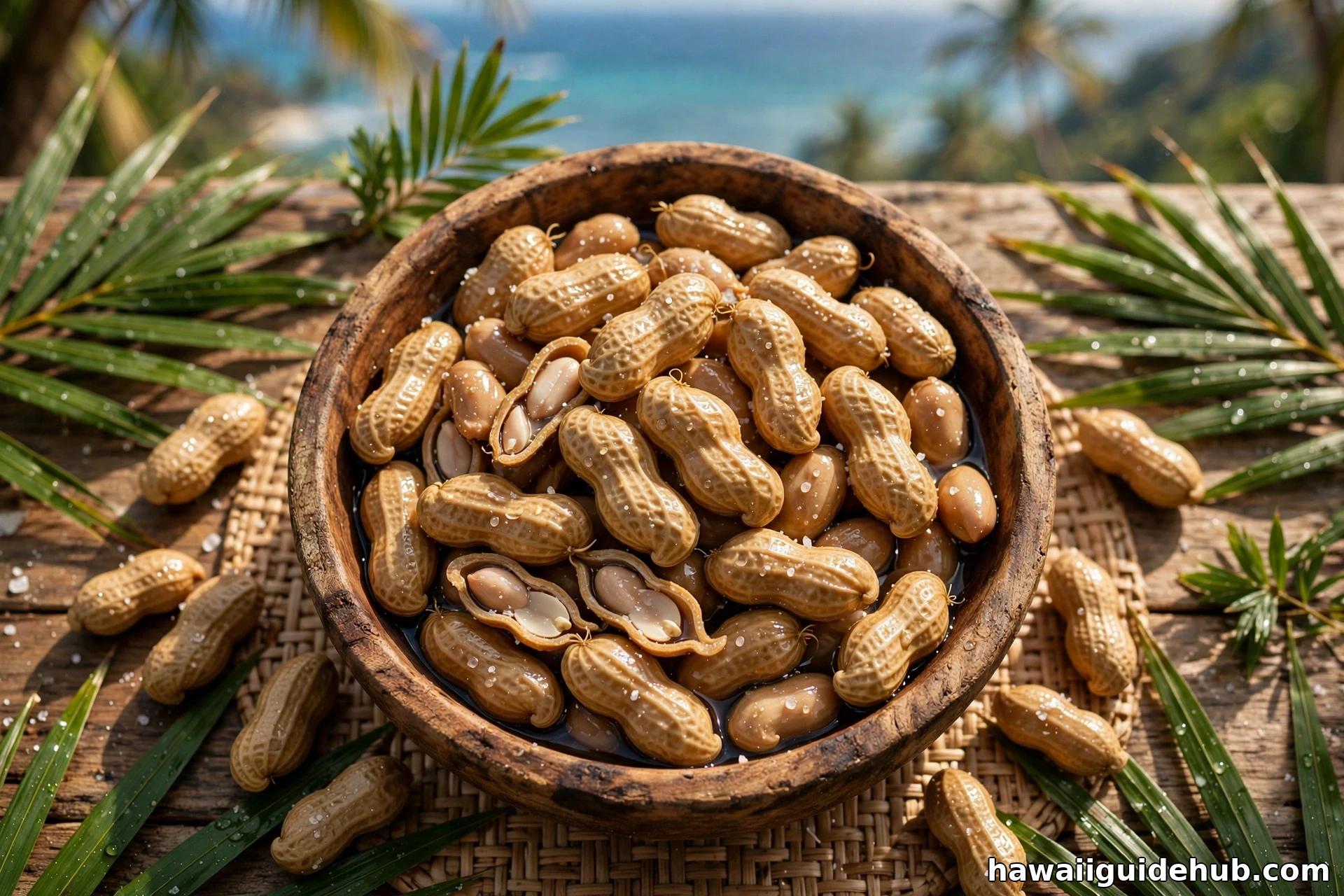
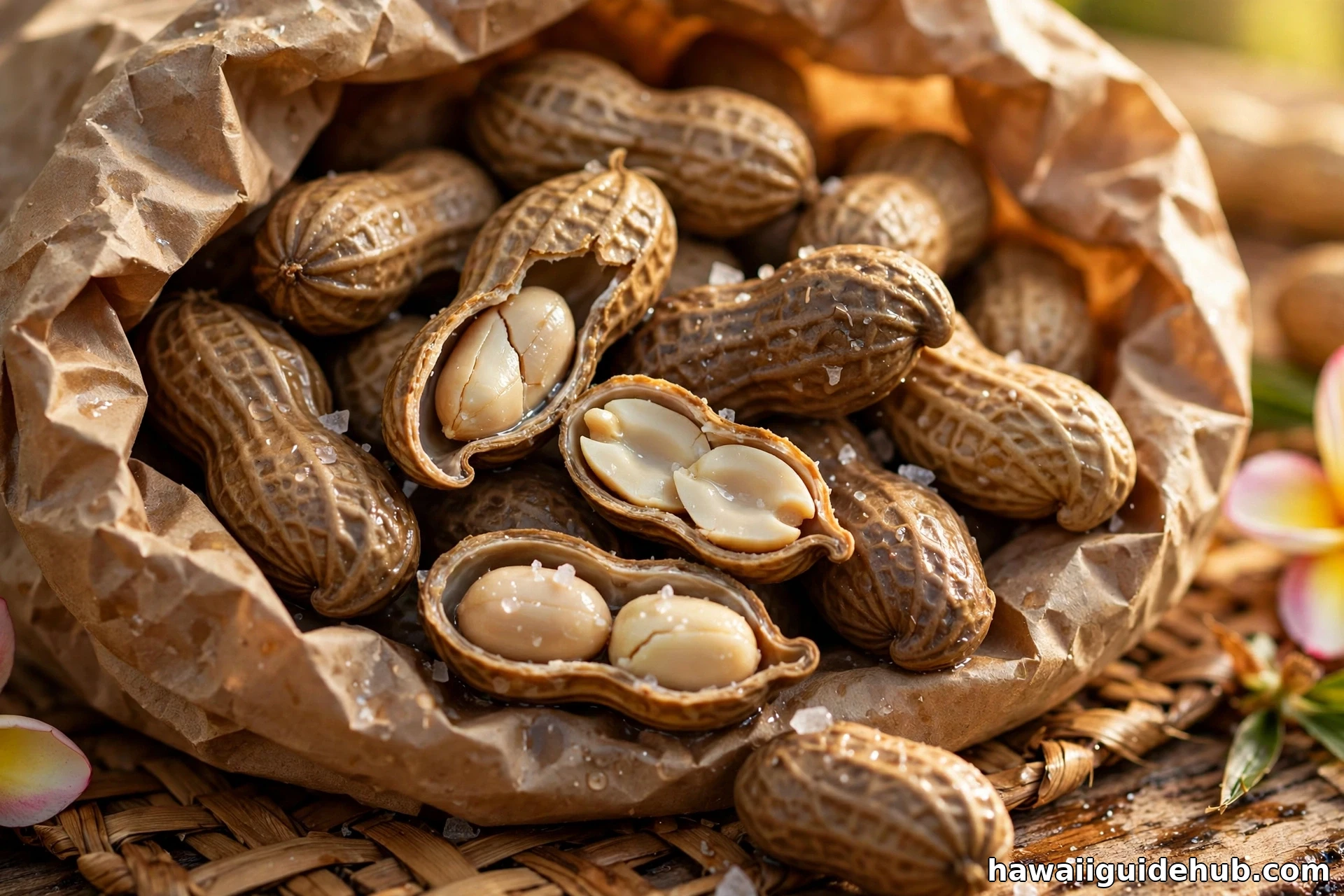
If you have spent any time at a Hawaii farmers market or a beachside snack stand, you have seen them: brown paper bags steaming gently in the morning air, filled with soft, salty peanuts still in their shells. Boiled peanuts are one of those snacks that visitors stumble onto by accident and then spend the rest of their trip hunting down. The shells are tender instead of papery, the nuts inside are creamy instead of crunchy, and the salt hits you in the best possible way.
This is not the roasted peanut you know from mainland ballparks. Boiling transforms the peanut completely. The texture lands somewhere between a cooked bean and a water chestnut, soft enough to bite clean through, with a briny depth that roasted peanuts never reach. In Hawaii, boiled peanuts are a pupu, a road trip staple, and for many locals, a taste that says home.
What Makes Hawaiian Boiled Peanuts Different
Boiled peanuts are a Southern tradition first, and they arrived in Hawaii the way so many island foods did: carried over by plantation workers and travelers, then reshaped by local tastes. What makes the Hawaiian version stand out is the seasoning. Where a classic Southern boil might stop at salt, the island version often leans into garlic, star anise, and dried chilies. The result is a snack with layers, salty first, then warm and aromatic, with a gentle heat that builds as you keep eating. And you will keep eating. That is the whole point.
The other difference is the salt. Many local cooks swear by Hawaiian sea salt, the coarse, mineral-rich kind. It dissolves into the cooking water and seasons the peanuts from the outside in. The shells act like little sponges, pulling the brine through as they simmer. By the time they are done, the flavor has worked its way into every nut.
You will also notice that boiled peanuts in Hawaii are sold everywhere. Gas stations, grocery store delis, swap meets, roadside stands. They are as normal a sight as malasadas at a bakery case. For visitors, that ubiquity is a gift. You do not need a reservation or a plan. You just need to be hungry and near a paper bag.
A Snack With Deep Roots
The story of the boiled peanut starts in the American South, where it has been a staple since at least the Civil War era. Peanuts were a cheap, abundant crop, and boiling was a practical way to cook the fresh harvest before it dried. Travelers carried the habit west, and Hawaii, with its plantation-era mix of cultures and its love of salty snacks, took to it immediately.
On the islands, the snack found a natural home. The plantation camps were full of workers from China, Japan, the Philippines, and Portugal, and many of those food cultures already had their own versions of simmered or salted legumes. Over the decades, the island version picked up its signature seasonings, garlic, star anise, and chilies, and became something distinctly local.
Today, boiled peanuts are sold at places like the KCC Farmers Market on Oahu and small stands across the neighbor islands. Some vendors have been boiling the same way for decades. It is a simple food, but it carries the same kind of quiet pride as any of the must-try local dishes in Hawaii.
The Classic Hawaiian Boiled Peanuts Recipe
Making boiled peanuts at home is easy, but it is not fast. The hands-on work takes about ten minutes. The waiting takes hours. That is the trade, and it is worth it. Here is the classic version, the one that tastes like a farmers market bag on a Saturday morning.
Ingredients
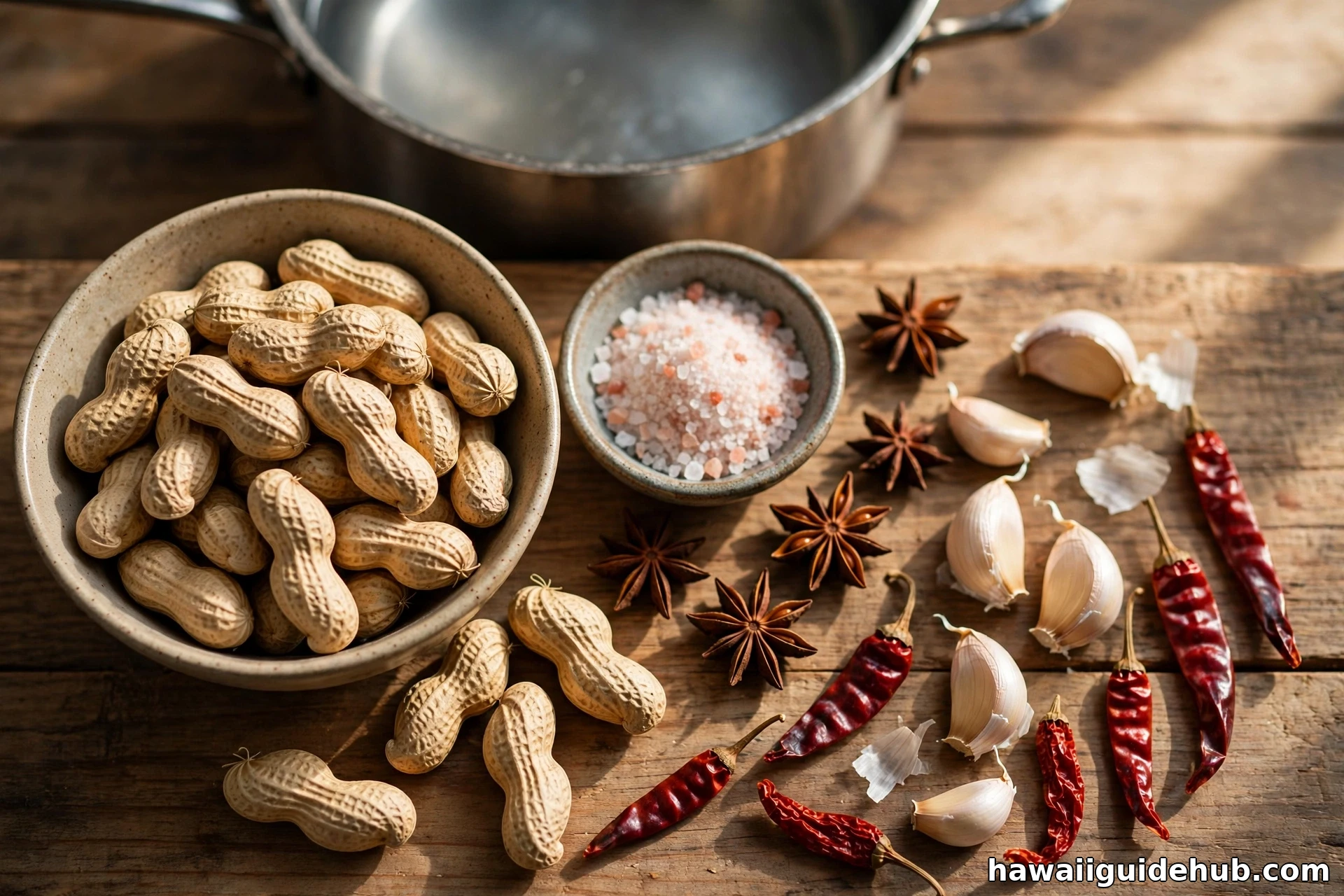
- 2 pounds raw peanuts in the shell (green peanuts if you can find them)
- 1/2 cup Hawaiian sea salt or coarse sea salt
- About 3 quarts water, enough to cover the peanuts by 2 inches
- 4 garlic cloves, crushed (optional but recommended)
- 2 star anise (optional)
- 3 dried red chilies (optional, for gentle heat)
Instructions
Step 1: Rinse the peanuts. Put the raw peanuts in a colander and rinse them under cold water, rubbing off any dirt or debris. Pick out any shriveled or damaged shells. This matters more with green peanuts, which come straight from the field.
Step 2: Load the pot. Place the peanuts in a large stockpot and add the salt, garlic, star anise, and chilies if you are using them. Pour in enough water to cover the peanuts by about 2 inches. The peanuts float, so be generous.
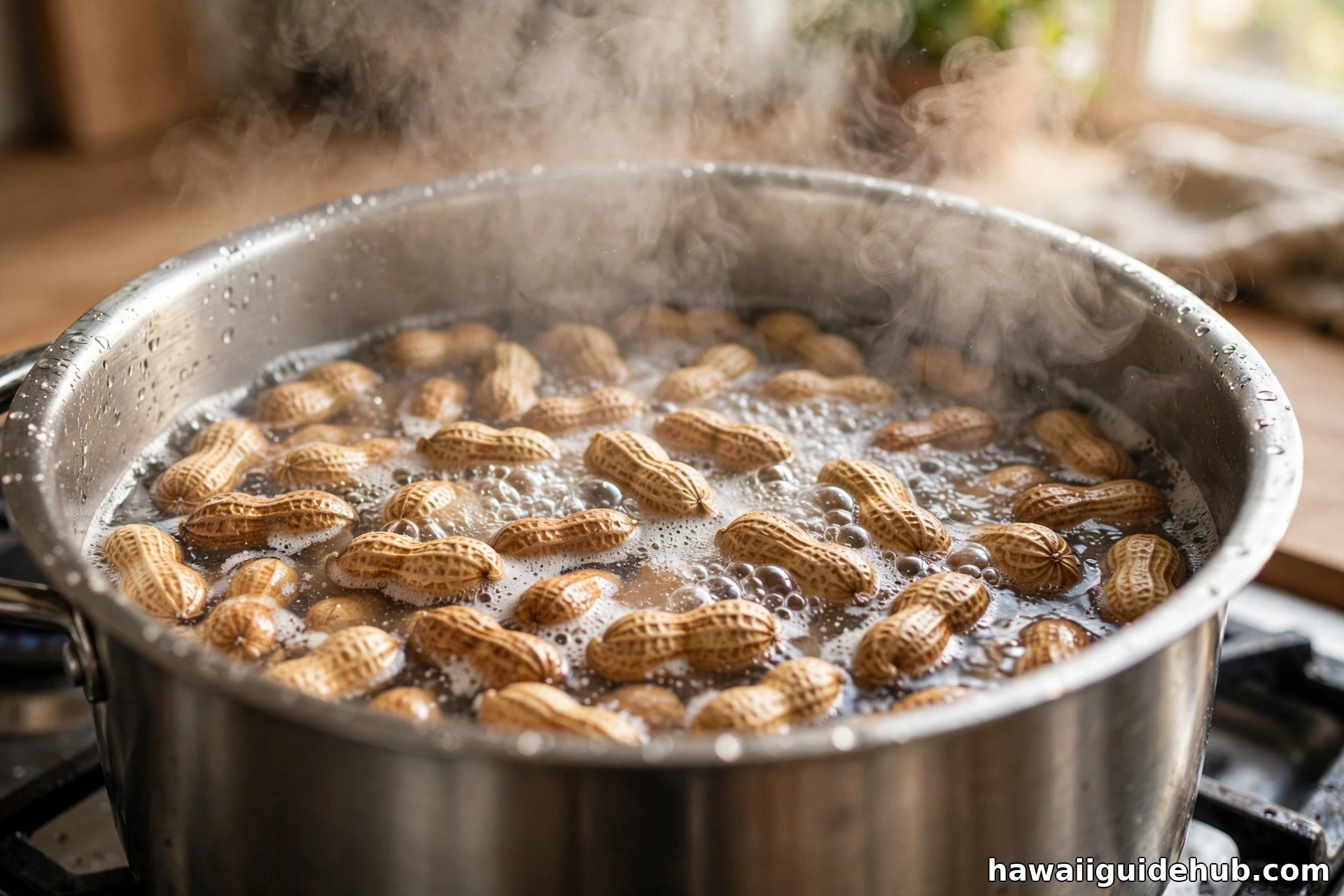
Step 3: Bring to a boil. Set the pot over high heat and bring it to a rolling boil. Give everything a good stir so the salt dissolves.
Step 4: Simmer low and slow. Drop the heat to a gentle simmer, partially cover the pot, and let it go. Fresh green peanuts need 1 to 2 hours. Raw dried peanuts need 4 to 6 hours. The peanuts will try to float the whole time, so lay a heatproof plate or a sheet of parchment on top to hold them under. Top up with hot water as the level drops.
Step 5: Taste, rest, and serve. Start tasting early and often. You are looking for a nut that is soft and creamy all the way through, with no crunch in the center. When they taste right, turn off the heat and let the peanuts sit in the hot brine for 30 minutes. This rest is where they soak up the deepest flavor. Serve warm, shells and all.
Pro Tips for Perfect Boiled Peanuts
The recipe is simple, but a few details separate great boiled peanuts from mediocre ones. These are the things that experienced cooks do without thinking, and they make all the difference.
Start with the right peanuts. This is the one rule you cannot bend. The peanuts must be raw and in the shell. Green peanuts, the freshly harvested kind, are the gold standard and cook the fastest. Raw dried peanuts from the store work well too. Roasted peanuts will never soften, no matter how long you boil them, so check the bag before you buy.
Salt like you mean it. The water should taste like the ocean. The shells are a real barrier, and a timid hand with the salt gives you bland nuts. Half a cup of coarse sea salt per 2 pounds of peanuts is the baseline. You can always adjust up from there.
Keep everything submerged. Floating peanuts cook unevenly, and the ones riding high will stay crunchy while the rest go soft. A heatproof plate or a crumpled sheet of parchment paper laid on top of the peanuts solves this completely. Check the water level every hour and add hot water to keep them covered.
Taste as you go. There is no timer that beats your own mouth. Start pulling out a peanut to taste after 1 hour for green peanuts and after 3 hours for dried ones. Cook them until they taste right to you, not until a clock says so.
Do not skip the rest. The 30 minutes the peanuts spend sitting in the hot brine after cooking is where the magic happens. As they cool slightly, they drink up the seasoned water. Skipping this step is the most common reason homemade boiled peanuts taste flat.
Fun Variations to Try
Once you have the classic down, the fun starts. Boiled peanuts are a blank canvas, and Hawaii cooks have strong opinions about the best way to dress them up.
Spicy Garlic
Double the garlic to 8 cloves and add 5 or 6 dried chilies, plus a teaspoon of crushed red pepper flakes. This is the version that disappears fastest at parties. The heat builds slowly and pairs perfectly with a cold drink.
Star Anise and Five Spice
Add 3 star anise, a cinnamon stick, and a teaspoon of five spice powder to the brine. The result is warm, sweet, and deeply aromatic, closer to a Chinese-style simmered snack. This version is popular with Hawaii’s Chinese community and at Lunar New Year gatherings.
Shoyu Peanuts
Replace a quarter of the salt with shoyu. Add 3 tablespoons of shoyu to the pot along with a thumb of sliced ginger. The peanuts pick up a savory, almost meaty depth that is completely different from the plain salted version.
Cajun Style
Add 2 tablespoons of Cajun seasoning to the brine. This nods to the snack’s Southern roots and gives the peanuts a smoky, peppery kick. A squeeze of lemon over the finished peanuts brightens everything up.
Sweet and Salty
Add 2 tablespoons of brown sugar to the brine along with the salt. It sounds strange, but the small amount of sweetness rounds out the salt and makes the peanut flavor pop. This is a good gateway version for anyone trying boiled peanuts for the first time.
Where to Find Boiled Peanuts in Hawaii
If you would rather buy than boil, you are in luck. Boiled peanuts are one of the easiest local snacks to find across the islands.
Farmers markets are the best bet for the freshest bags. The KCC Farmers Market in Honolulu, the Hilo Farmers Market on the Big Island, and the Upcountry Farmers Market on Maui all have vendors selling them hot. Go early, because the good vendors sell out.
Roadside stands and lunch wagons often keep a pot going, especially on weekends. If you see steam rising from a stand on the side of the road, pull over. That is almost always a good sign.
Grocery stores carry them too. Look in the deli section at Foodland, Times, and Safeway stores across the state, usually sold warm in bags near the poke counter. They are not quite as good as market-fresh, but they scratch the itch.
Swap meets and fairs are another reliable source. The Aloha Stadium Swap Meet on Oahu has multiple snack vendors, and boiled peanuts are a fixture. They are the ideal walking-around food, salty, satisfying, and easy to share.
Pair your peanut run with a broader tasting tour. A bag of boiled peanuts goes well with fresh native Hawaiian fruits from the same market, and it makes a fine appetizer before a plate of huli huli chicken from a nearby lunch wagon.
Serving Ideas
Boiled peanuts are a snack first, but they are more versatile than they look. Serve them warm in a big bowl at a party and watch them vanish. They are a natural pupu alongside beer, and they hold their own next to any spread of island appetizers.
For a beach day, pack them warm in a sealed container. They stay warm for hours and taste even better with sand between your toes. For a potluck, bring them in a slow cooker set to warm, with a stack of napkins and an empty bowl for shells.
Some cooks shell the finished peanuts and toss the tender nuts into salads or noodle dishes. The soft texture works surprisingly well as a topping. They are also excellent simply as they are, eaten one by one, the way they were meant to be.
Storage and Make-Ahead
Boiled peanuts keep well, which makes them a great make-ahead snack. Store leftovers in their cooking brine in a sealed container in the refrigerator for up to a week. The brine keeps them moist and the flavor actually deepens over a day or two.
To reheat, microwave a bowlful for a minute or two, or warm them gently in a pot of their brine. For longer storage, drain the peanuts and freeze them in zip-top bags for up to 3 months.
If you are making a big batch for a party, you can boil the peanuts a day ahead and refrigerate them in the brine. Warm them up the day of and nobody will know the difference. In fact, the overnight rest usually makes them taste better.
See Them Made
Frequently Asked Questions
Can I use roasted peanuts to make boiled peanuts?
No. Roasted peanuts have already been dried and cooked, and boiling will not soften them back up. You need raw peanuts in the shell, either fresh green peanuts or raw dried peanuts. Check the packaging carefully before you buy.
How long do boiled peanuts last?
In the refrigerator, stored in their brine, boiled peanuts stay good for up to a week. In the freezer, drained and sealed in zip-top bags, they last up to 3 months. At room temperature, eat them within a few hours for the best texture and food safety.
Why are my boiled peanuts still crunchy?
Either they did not cook long enough, or they floated above the brine and cooked unevenly. Keep them submerged with a plate or parchment, top up the water, and keep tasting until the centers are soft and creamy. Dried peanuts simply need more time, sometimes 5 or 6 hours.
Are boiled peanuts healthy?
Peanuts are a good source of protein, healthy fats, and fiber. Boiling keeps the calorie count lower than roasting in oil. The main thing to watch is the sodium, since the brine is salty by design. Enjoy them as a snack, not as a meal.
What is the difference between green peanuts and raw peanuts?
Green peanuts are freshly harvested and have a higher moisture content, so they cook in 1 to 2 hours and have a fresher, almost sweet flavor. Raw dried peanuts have been air dried after harvest and need 4 to 6 hours of boiling. Both make excellent boiled peanuts.
Can I make boiled peanuts in a slow cooker?
Yes. A slow cooker works well for boiled peanuts. Cook on high for 4 to 5 hours for green peanuts or 7 to 8 hours for dried peanuts, making sure they stay submerged. The gentle, even heat of a slow cooker is actually ideal for this.
The Takeaway
Boiled peanuts are one of those foods that seem too simple to be special until you try the real thing. A bag of them, still warm, is one of the purest tastes of local Hawaii. The recipe asks for almost nothing, just peanuts, salt, water, and time, but it gives back a snack with real character.
Whether you buy a bag at the farmers market or spend a Saturday afternoon tending a pot on your own stove, you are taking part in a tradition that stretches from Southern fields to island roadside stands. Make a batch, share them with people you like, and do not be surprised when the bowl empties fast. That is just how boiled peanuts work.