Is Little Beach Still Clothing Optional? The Honest Answer for Maui

Yes, Little Beach on Maui is still clothing optional, but the full answer matters more than the yes. Nudity is not legal at Little Beach or anywhere else in Hawaii: there are no official nude beaches in the state. What exists instead is a decades-long custom, stretching back more than half a century. This small cove in Mākena State Park has been Maui’s de facto nude beach for generations, tolerated by authorities and cherished by its community. Here is the honest picture of how it works, what the law says, how to get there, and how to behave.
This is the single complete guide to the Little Beach clothing-optional question. It covers the short answer, where the beach is, how to get there, the law versus the custom, recent enforcement history, etiquette, the Sunday drum circle, swimming safety, what to bring, nearby alternatives, and answers to common questions. Everything about whether little beach is still clothing optional is gathered on this one page, so you do not need to search anywhere else.
Little Beach at a Glance
| Question | Short answer | The fine print |
|---|---|---|
| Still clothing optional? | Yes, by custom | Not by law; nudity is technically illegal statewide |
| Access | Lava-rock scramble from Big Beach, about 5 minutes | Wear shoes you can scramble in |
| Facilities | None at Little Beach; restrooms at Big Beach | Go before you scramble over |
| Lifeguard | No | Swim at your own risk |
| Famous for | Sunday sunset drum circle and fire dancing | Sundays draw the biggest crowd |
| Cost | Free beach; state park parking fees may apply | Big Beach parking rules apply |
| Full name | Puʻu Olaʻi Beach (Little Beach) | Mākena State Park, south Maui |
| Size | About 660 feet of sand | A small, hidden cove |
The Short Answer
Little Beach remains Maui’s clothing-optional beach in practice. On any given day, a large share of visitors sunbathe and swim nude, and first-timers in swimsuits are completely welcome too. There is no official designation: Hawaii has no legal nude beaches, and public nudity is technically indecent exposure under state law. But for over half a century, Little Beach has been the place where the custom holds, where enforcement has historically looked the other way, and where a respectful, self-policing community keeps the tradition alive.
Where Little Beach Is
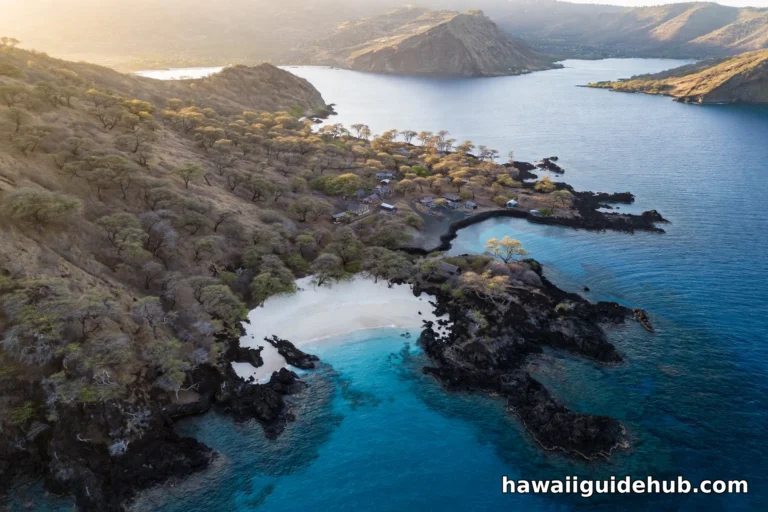
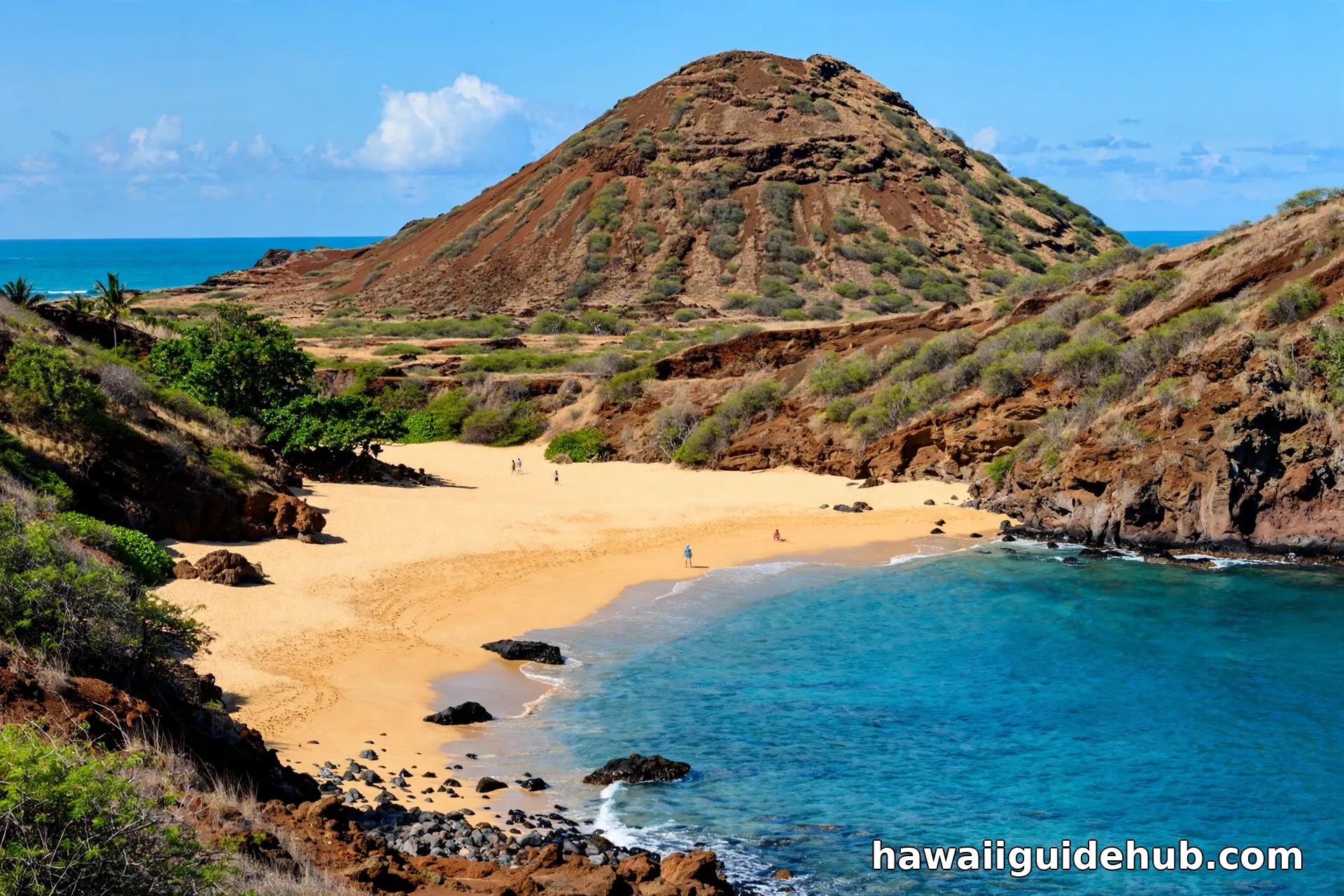
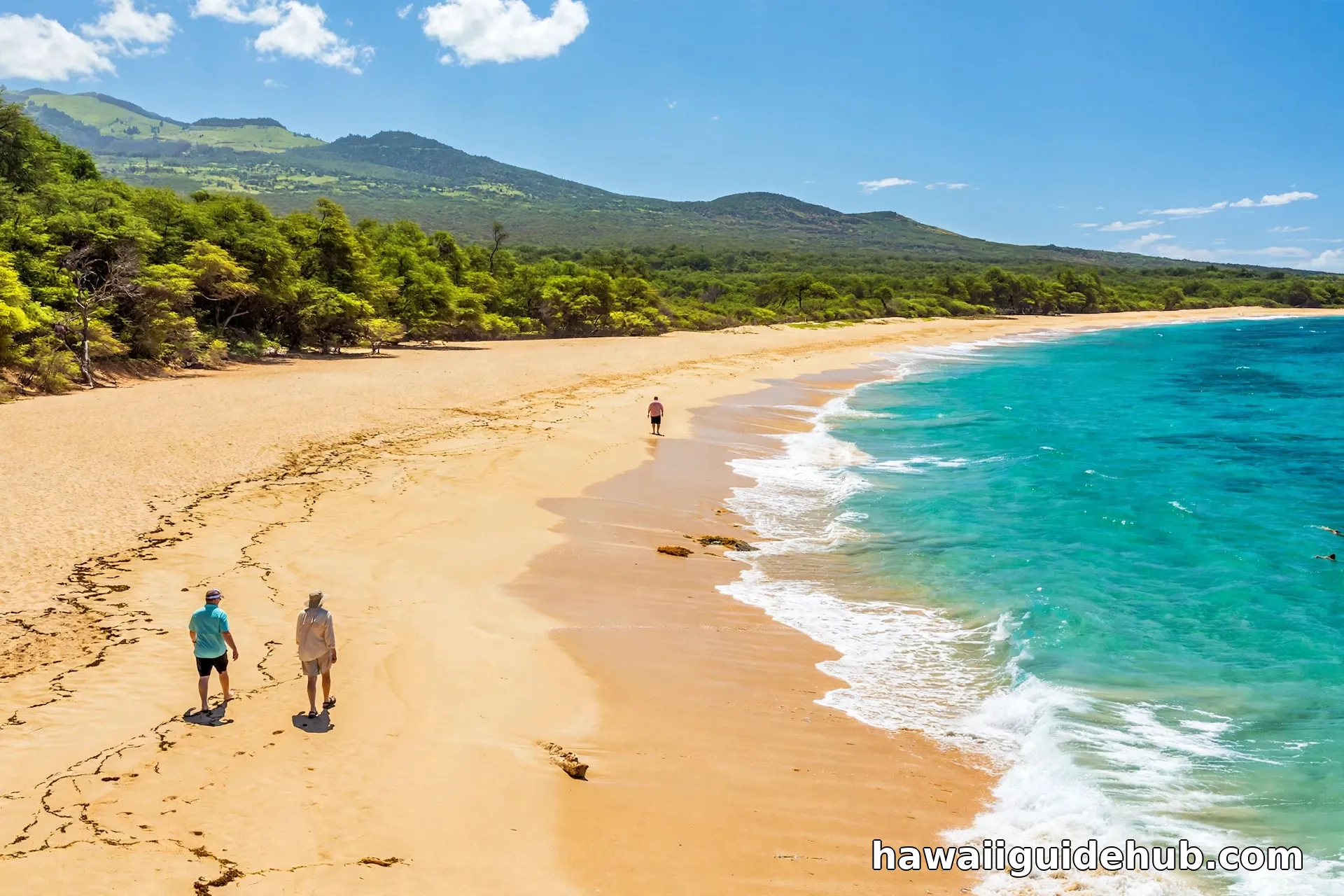
Little Beach, formally Puʻu Olaʻi Beach, sits inside Mākena State Park on Maui’s south shore, just north of Big Beach (Oneloa). The two beaches are separated by a steep lava-rock outcropping, the tip of the Puʻu Olaʻi cinder cone, a dormant volcanic hill that rises 360 feet behind the sand. Little Beach is tiny, about 660 feet long, tucked into the curve of the coast where it feels worlds away from the resorts of nearby Wailea, even though it is only a short drive south.
How to Get to Little Beach
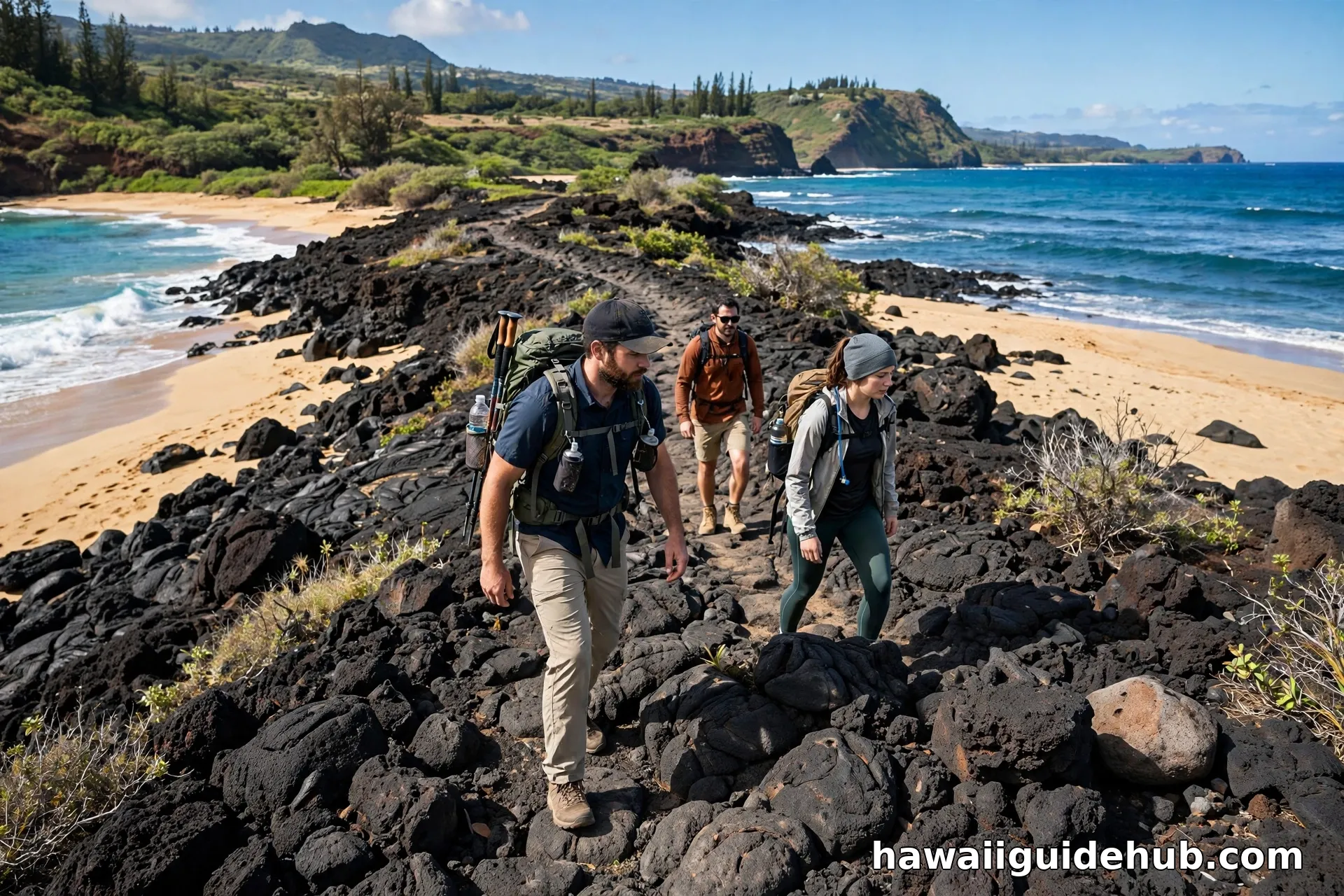
You cannot drive to Little Beach directly. Park at Big Beach in Mākena State Park, walk to the north (right) end of the sand, and climb the trail over the lava-rock outcropping. The scramble takes about five minutes and involves one awkward section where you will want both hands free, so wear real shoes rather than loose flip-flops and pack light. The trail is unmarked but obvious: follow the foot traffic. The rocks can be sharp and hot under the midday sun, so morning and late afternoon are the most comfortable times to cross. After dark, especially after the Sunday gatherings, the climb is much harder, so bring a flashlight if you stay late.
The Law vs. the Custom
Here is where honesty matters. For roughly 33 years under state park management, from the late 1980s onward, no nudity citations were issued at Little Beach. The beach was secluded, the community was respectful, and the authorities left it alone. The state parks website itself once noted that local police tolerated nude sunbathing there. That long peace is the foundation of the “clothing optional” reputation.
Things changed in the 2020s. During the pandemic, the huge Sunday gatherings drew enforcement attention: the state temporarily closed Little Beach in early 2021 over the parties, citing nudity, alcohol, and drugs among the problems. Since then, state conservation officers have periodically visited and issued nudity citations, ending the era when enforcement was a non-issue. A local advocacy group, Friends of Little Beach, has fought the citations in court with some successes, but the legal reality is unchanged: nudity at Little Beach is tolerated by custom, not protected by law, and officers can cite you.
What does that mean for you today? The custom continues. Visitors still go nude at Little Beach every day, and the atmosphere remains welcoming and non-sexual. The regulars describe it as a family environment, and the community’s own standards are strict: inappropriate behavior is not tolerated by the people who consider this beach their church, their gathering place, and their home away from home. But go with open eyes: it is a privilege maintained by good behavior, not a right. Respectful visitors who follow the etiquette below are continuing a tradition that depends on them, and one careless crowd can undo years of tolerance.
Etiquette: The Unwritten Rules
The community protects this beach by enforcing its own standards, and visitors are expected to follow them. Do not take photos or video of people, ever; the one guaranteed way to get confronted is to point a camera at strangers. In fact, leave the camera in your bag unless you are photographing the landscape with no people in the frame. Give people space, do not stare, and keep your behavior strictly non-sexual: lewd conduct can bring serious legal consequences and threatens the beach’s tolerance for everyone. Alcohol and drugs are illegal in the state park and have been the trigger for past crackdowns, so do not be the reason for the next one. The regulars include naturists, LGBTQ visitors, surfers, retirees, and spiritual groups who have shared this sand for decades, and they welcome newcomers who respect the vibe. Families with children do visit, and the regulars keep the beach family-appropriate. Pack out all your trash, since there are no bins, and stay on the established trail over the rocks rather than trampling the vegetation.
The Sunday Sunset Drum Circle
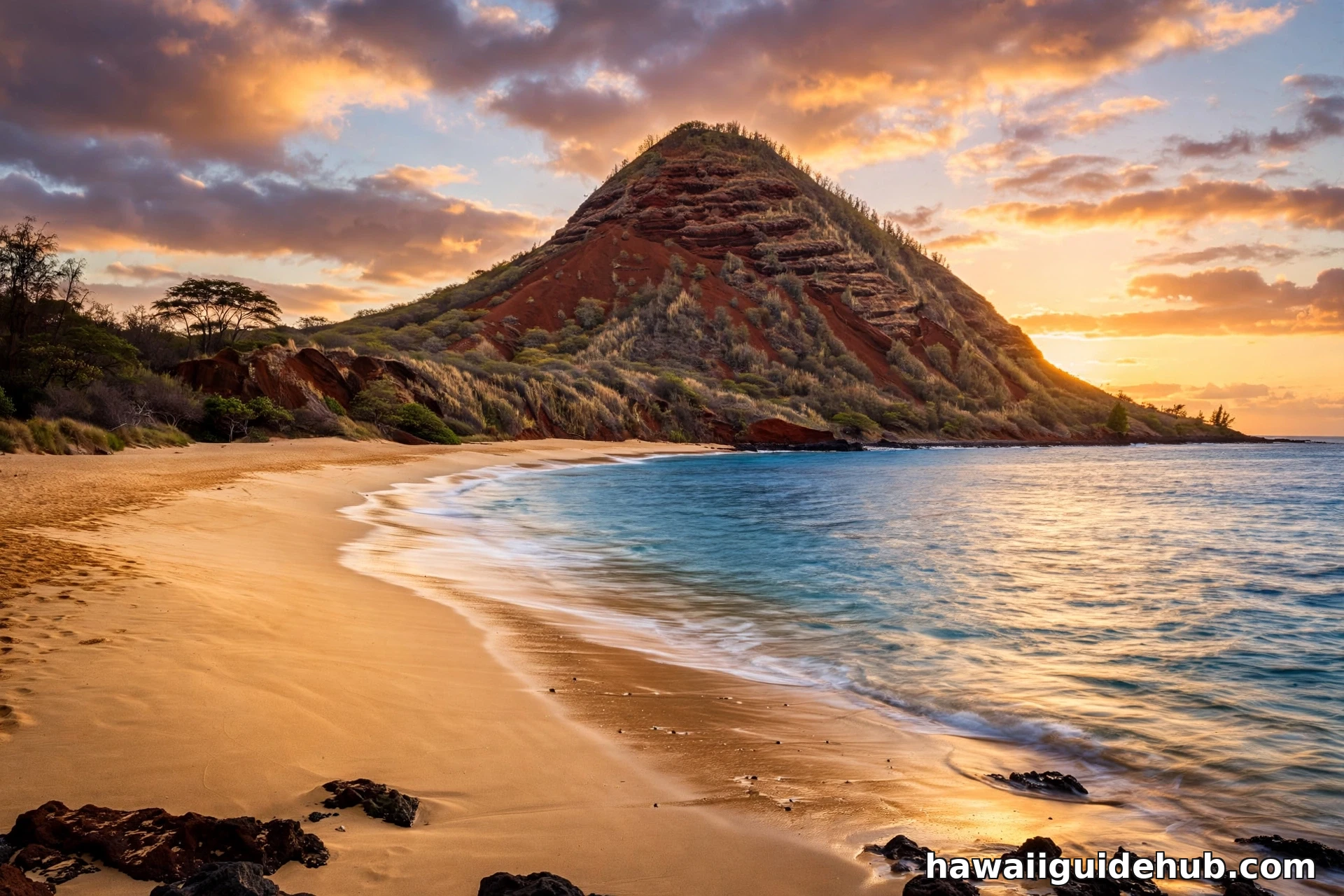
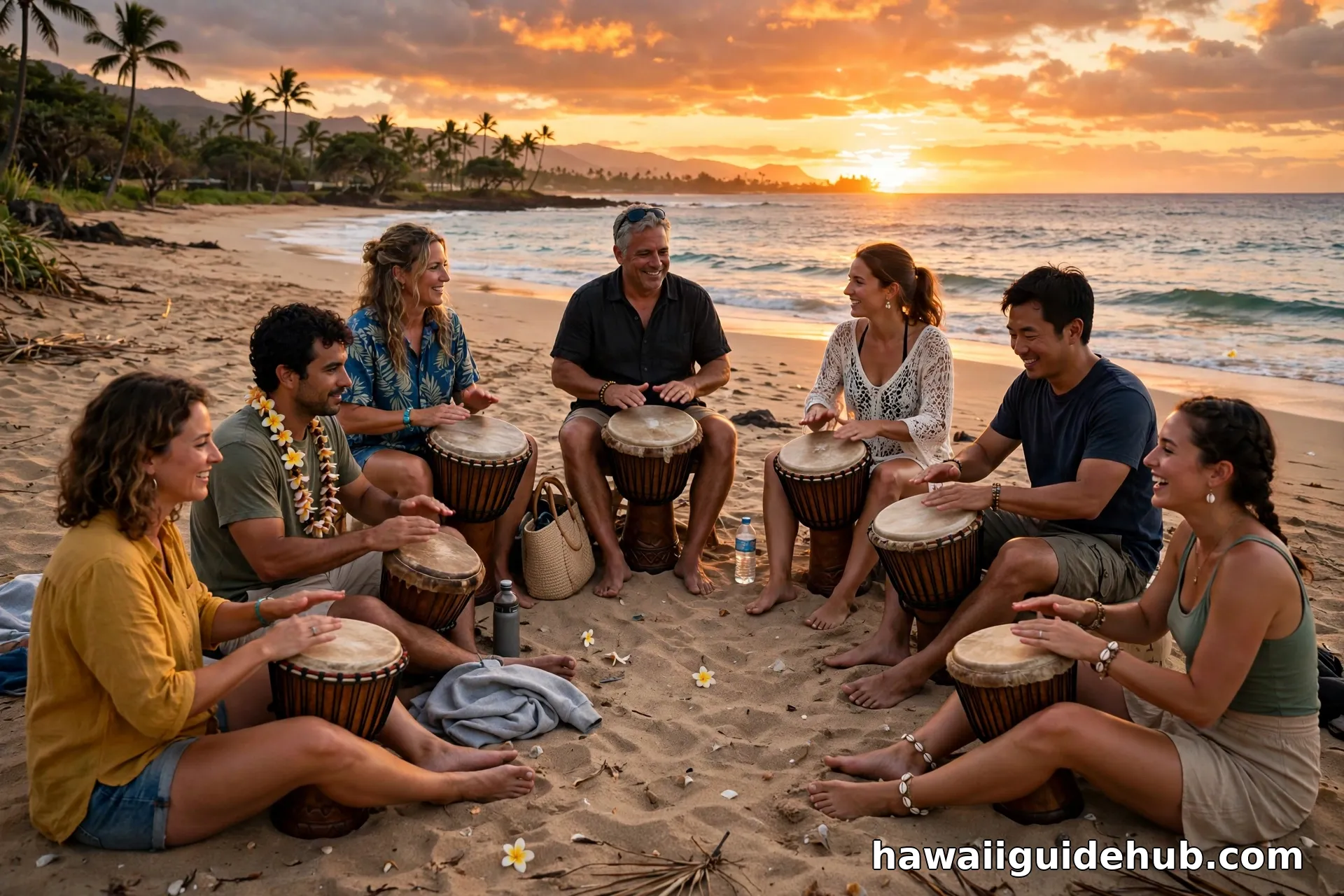
Little Beach’s other claim to fame is the Sunday sunset drum circle, a tradition stretching back decades. As the sun drops, drummers gather, dancers follow, and fire dancers often perform on the sand. It is joyful, communal, and unlike anything else on Maui, and for many visitors it is the highlight of their trip. It is also by far the busiest and least nude-friendly time to visit: the crowd skews younger and rowdier, alcohol appears despite the rules, and the beach can feel packed on its 660 feet of sand. These gatherings are also what drew enforcement attention in recent years, with officers visiting on Sundays and issuing citations, so the scene can vary from week to week. If you want the classic quiet Little Beach experience, come on a weekday. If you want the party, come Sunday, arrive early, and plan your exit before dark because the state park gates lock in the evening.
Swimming and Safety
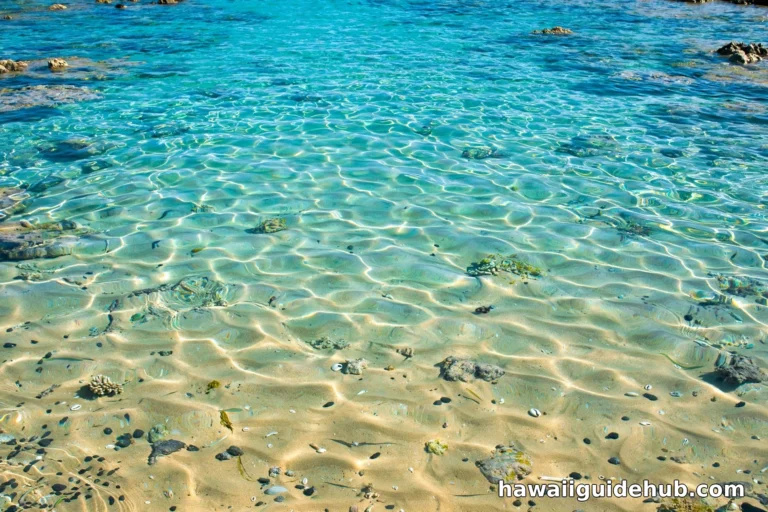
Little Beach is a good swimming and body-surfing beach when conditions are calm, with a gently rising sandy shelf that makes entry easy. In fact, the waves here can be better for body surfing than at Big Beach next door, where the shorebreak is famously rough. But the ocean here deserves respect. Shorebreak and rip currents can develop quickly, there are sharp shallow reefs on both sides of the cove, and there is no lifeguard. Swim conservatively, watch the water before you go in, and stay out when the surf is up. Never turn your back on the ocean, and if you are not a confident swimmer, enjoy the sand and the people-watching instead. Snorkeling is decent along the edges on calm days, with clear water thanks to the lack of nearby development and runoff.
What to Bring
There are no facilities at Little Beach: no restrooms, no showers, no drinking water, no trash cans, no lifeguard. Bring everything you need for the day, including plenty of water, food, reef-safe sunscreen, and something for shade, since the small beach offers little natural cover and the Maui sun is strong. Use the portable restrooms at Big Beach before you climb over, and remember that whatever you carry in must come back out with you. And bring a bag for your rubbish: keeping this beach clean is part of the deal that keeps it open and tolerated.
Little Beach vs. Hawaii’s Other Nude Beaches
Little Beach is the best known, but it is not the only de facto clothing-optional beach in Hawaii. Kehena Black Sand Beach on the Big Island’s east coast has its own long-standing nude-friendly custom, reached by a trail from the roadside. Red Sand Beach near Hāna on Maui is another, though its difficult trail and remote location make it a serious undertaking. The same legal reality applies at all of them: nudity is technically illegal statewide and tolerated by custom, and enforcement can and does happen. Little Beach remains the easiest to reach and the most social of the three, which is why it gets the most visitors.
If You Would Rather Keep Your Suit On
There is no pressure at Little Beach either way, but if the scene is not for you, Big Beach is right there over the rocks: a huge, beautiful, fully clothed beach with lifeguards and restrooms. The whole Mākena coastline is worth exploring, including the Teeth of the Dragon lava formations nearby. And for a completely different Maui evening, sunset at Haleakalā is unforgettable.
Video: Fire Dancing at Little Beach
Watch the famous Sunday sunset fire dancing at Little Beach on Maui.
Frequently Asked Questions
Is nudity legal at Little Beach?
No. Public nudity is technically illegal everywhere in Hawaii, and there are no official clothing-optional beaches. Little Beach is clothing optional by long-standing custom and tolerance, not by law, and officers have issued citations there in recent years.
Can I visit Little Beach with clothes on?
Absolutely. Many visitors wear swimsuits, and nobody will pressure you either way. The beach is welcoming to clothed and unclothed visitors alike.
Is Little Beach family friendly?
By the community’s standards, yes: families with children do visit, and the regulars keep behavior strictly non-sexual. But parents should know it is a nude beach and decide for themselves. Weekdays are calmer than Sundays.
Is there an entrance fee for Little Beach?
The beach itself is free. You park at Big Beach in Mākena State Park, where nonresident parking fees may apply. Check the current state park fee schedule before you go, and bring a card or cash as required. Arriving early on weekends and Sundays is wise, since the lots fill up and the walk to Little Beach is part of the adventure.
When is the drum circle at Little Beach?
The traditional drum circle gathers on Sunday afternoons into sunset, often with fire dancing. It is the busiest time at the beach. Enforcement actions have targeted these gatherings in the past, so the scene can vary; Sundays remain lively.
Is it safe to stay after dark?
Plan to leave before dark. The state park gates lock in the evening, the lava-rock climb back to Big Beach is difficult without light, and there are no facilities or lifeguards. Bring a flashlight if your exit might run late.
Little Beach is still clothing optional in the way that matters: the custom is alive, the community is welcoming, and the cove is as beautiful as ever. It has survived closures, citations, and court fights because generations of respectful visitors kept the tradition worthy of tolerance. It survives on respect, so if you go, give it. Follow the etiquette, pack out your trash, keep cameras away from people, and leave the beach better than the tolerance that protects it. That is the deal, and it is a good one.