When Will the Hawaii Volcano Erupt Again? The Honest Answer

It is the question every Big Island visitor asks: when will the Hawaii volcano erupt again? The honest answer has two parts. First, nobody, not even the scientists who watch these volcanoes around the clock, can tell you the exact day the next eruption will start. Second, you may not have to wait long at all, because Kilauea has been erupting in episodes at its summit, and the island’s volcanoes are never truly finished.
This guide gives you the full picture without hype. It explains how Hawaii’s volcanoes work, what Kilauea and Mauna Loa are doing right now, how to read the official alert levels, where the lava actually is on the Big Island lava map, and how to see an eruption safely if one is underway during your visit.
Hawaii Volcano Eruptions at a Glance
| THE VOLCANOES | |
| The one to watch | Kīlauea, summit elevation 4,091 feet |
| Current activity | Episodic summit lava fountaining; dozens of episodes since December 2024 |
| The sleeping giant | Mauna Loa, 13,681 feet; last erupted in late 2022 |
| THE FORECAST | |
| The honest answer | No exact timing; scientists track warning signs but not dates |
| How to check today | USGS Hawaiian Volcano Observatory daily updates |
| The alert scale | Normal, Advisory, Watch, Warning (plus aviation colors Green to Red) |
| YOUR MOVE | |
| Where to watch | Hawaiʻi Volcanoes National Park overlooks, especially after dark |
The Short Answer
Volcanic eruptions cannot be scheduled. The USGS Hawaiian Volcano Observatory, which has monitored Hawaii’s volcanoes since 1912, is clear on this: scientists can detect the warning signs of an approaching eruption, such as earthquake swarms, ground swelling, and gas changes, but they cannot say it will start on a particular day. When Kilauea was erupting in a repeating pattern of summit episodes, the observatory could offer rough forecast windows. When the pattern changed, those windows disappeared, and the observatory said so openly.
What this means for your trip is simple. Do not plan a vacation around a guaranteed eruption date, because no such date exists. Do check the observatory’s daily update before and during your visit, because the current status tells you what is actually happening. And do visit Hawaii Volcanoes National Park regardless, because the volcanic landscape is spectacular whether or not lava is fountaining that week.
Why Hawaii’s Volcanoes Erupt So Often
The Hawaiian Islands exist because of a hotspot, a plume of unusually hot rock rising from deep in the Earth’s mantle. As the Pacific tectonic plate drifts slowly northwest over this stationary plume, magma punches through the seafloor and builds volcanoes one after another. The Big Island sits directly over the hotspot today, which is why it hosts the active volcanoes, while the older islands to the northwest are slowly eroding into the sea.
Hawaii’s magma is basaltic, meaning it is relatively fluid and low in the gases that drive explosive eruptions. That is why Hawaiian eruptions tend to produce fountains and rivers of lava rather than the catastrophic explosions seen at some other volcanoes. Fluid does not mean safe, though. Lava destroys everything in its path, volcanic gases are hazardous to breathe, and new land built by lava entering the ocean is unstable and can collapse.
Kilauea: The Restless One
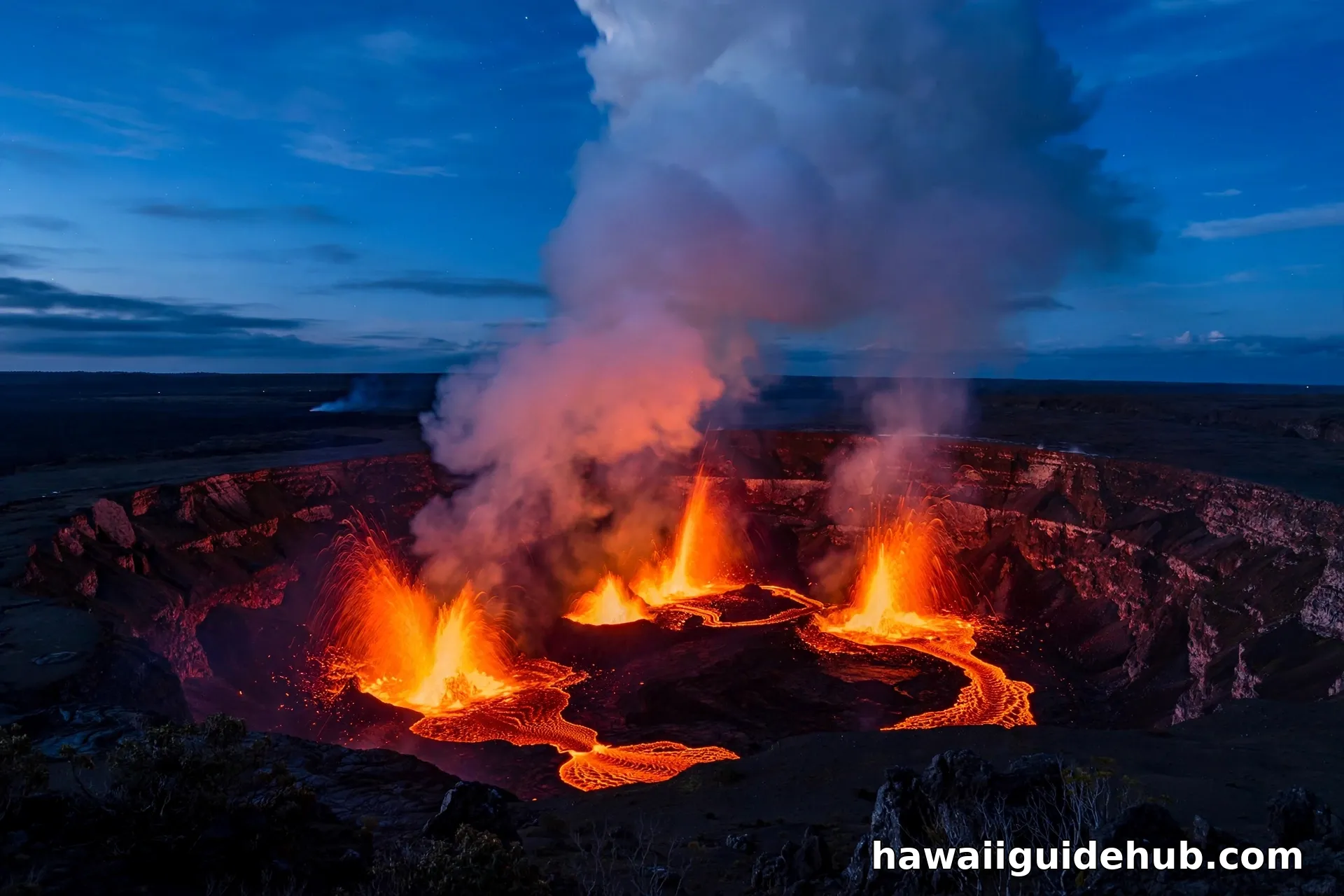
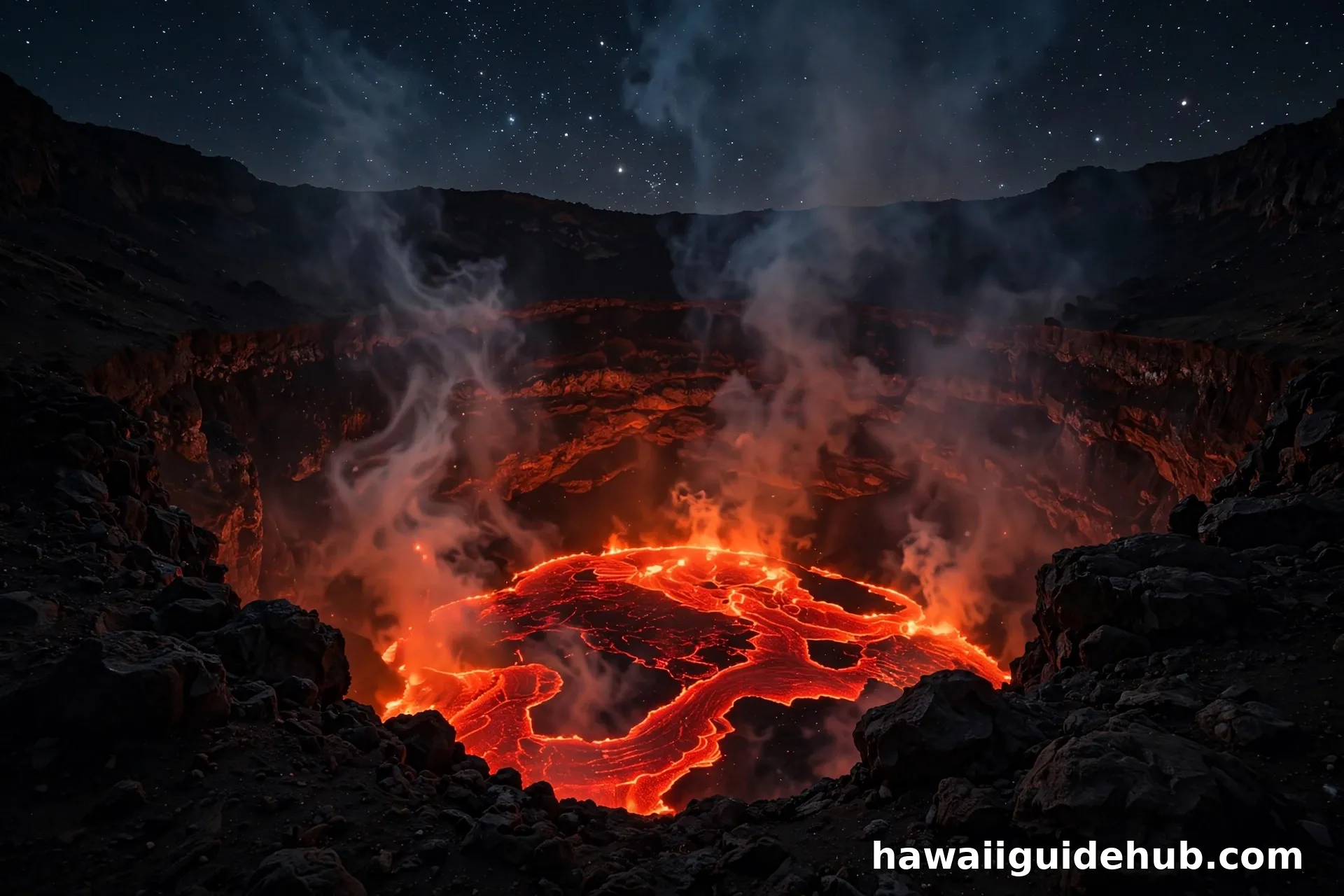
Kilauea is one of the most active volcanoes on Earth. Its summit sits at 4,091 feet above sea level, and for much of recent history it has hosted an on-and-off eruption inside Halemaumau crater at the summit caldera. Beginning in December 2024, the volcano settled into a striking episodic pattern: short, intense bursts of lava fountaining separated by quiet pauses. Dozens of these episodes played out over the following 20 months, with fountains in the biggest episodes reaching some 1,770 feet into the air and lava temperatures around 2,100 degrees Fahrenheit.
Between episodes, the summit goes quiet but not dormant. Magma keeps rising underground, the ground swells and deflates, and small earthquakes rattle the caldera. Then, sometimes with only hours of warning, fountaining resumes. This stop-start behavior is exactly why the question “when will it erupt again” has no fixed answer: the volcano is essentially always in the process of erupting, pausing, and preparing the next burst.
Mauna Loa: The Sleeping Giant
Next door to Kilauea stands Mauna Loa, a very different kind of volcano. At 13,681 feet, it is the largest subaerial volcano in the world by volume, a broad shield so massive it depresses the seafloor beneath it. Mauna Loa erupts far less often than Kilauea, sometimes going decades between eruptions, but when it does, the volumes of lava are enormous.
Its most recent eruption began in late 2022 along the Northeast Rift Zone, sending lava flows toward the Saddle Road area between Mauna Loa and Mauna Kea. The eruption lasted about two weeks and drew worldwide attention, partly because flows came within a few miles of the main cross-island highway. Since then Mauna Loa has been quiet, but it remains an active volcano under continuous watch, and its long repose periods are normal, not a sign it is finished.
How Scientists Grade the Danger: Alert Levels Explained
The USGS uses a four-tier Volcano Alert Level system: Normal, Advisory, Watch, and Warning. A separate Aviation Color Code, Green, Yellow, Orange, Red, describes the hazard to aircraft from ash. The two scales run side by side, so you will often see a volcano described as “Watch, Orange,” meaning heightened unrest with a possible eruption or an eruption underway that poses limited ash hazard to aviation.
For trip planning, the practical translation is this. Normal and Green mean background quiet. Advisory and Yellow mean elevated unrest worth watching. Watch and Orange mean an eruption is likely or underway with activity worth taking seriously. Warning and Red mean a major eruption with significant hazards is happening. Check the current level on the observatory’s site before you drive to the park, and check again when you arrive, because levels can change.
Where the Lava Is: Reading the Big Island Lava Map
When people ask for a Big Island lava map, they usually want to know one thing: where can I see lava right now? The answer moves around, which is why official maps matter more than any blog post. During the recent episodic period, all eruptive activity was confined inside Halemaumau crater at Kilauea’s summit, within Hawaii Volcanoes National Park. No lava was flowing toward towns, and no homes were at risk.
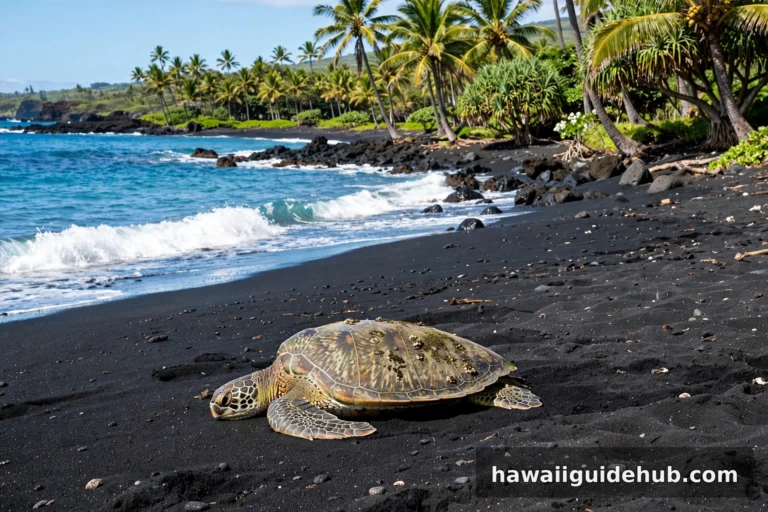
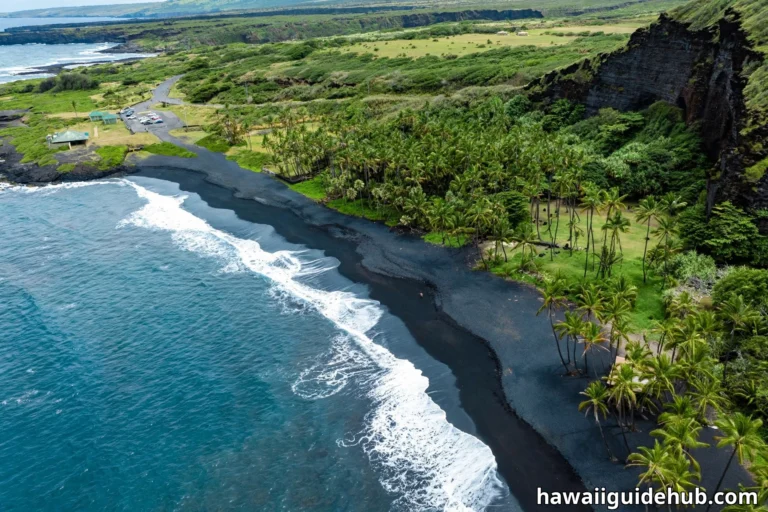
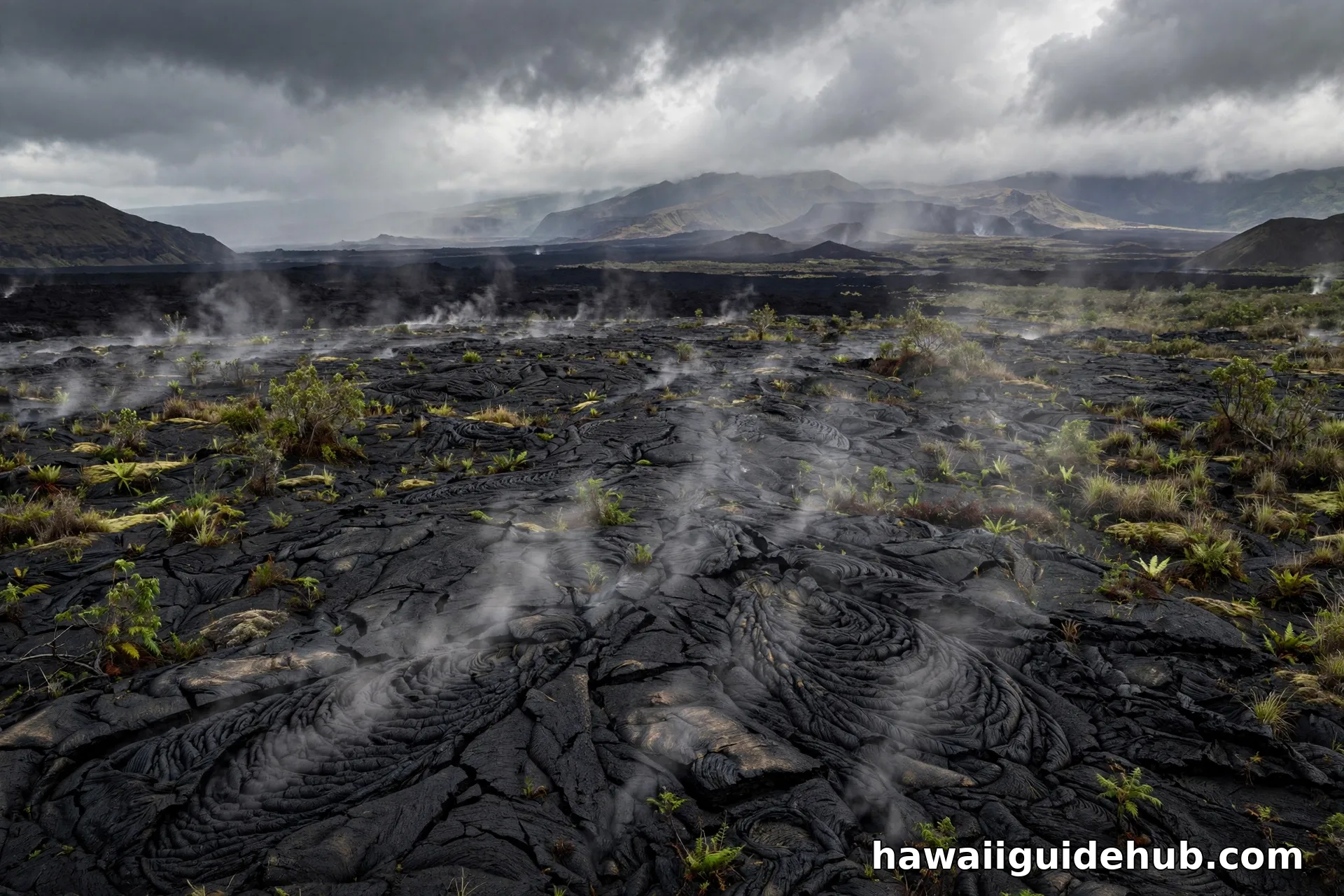
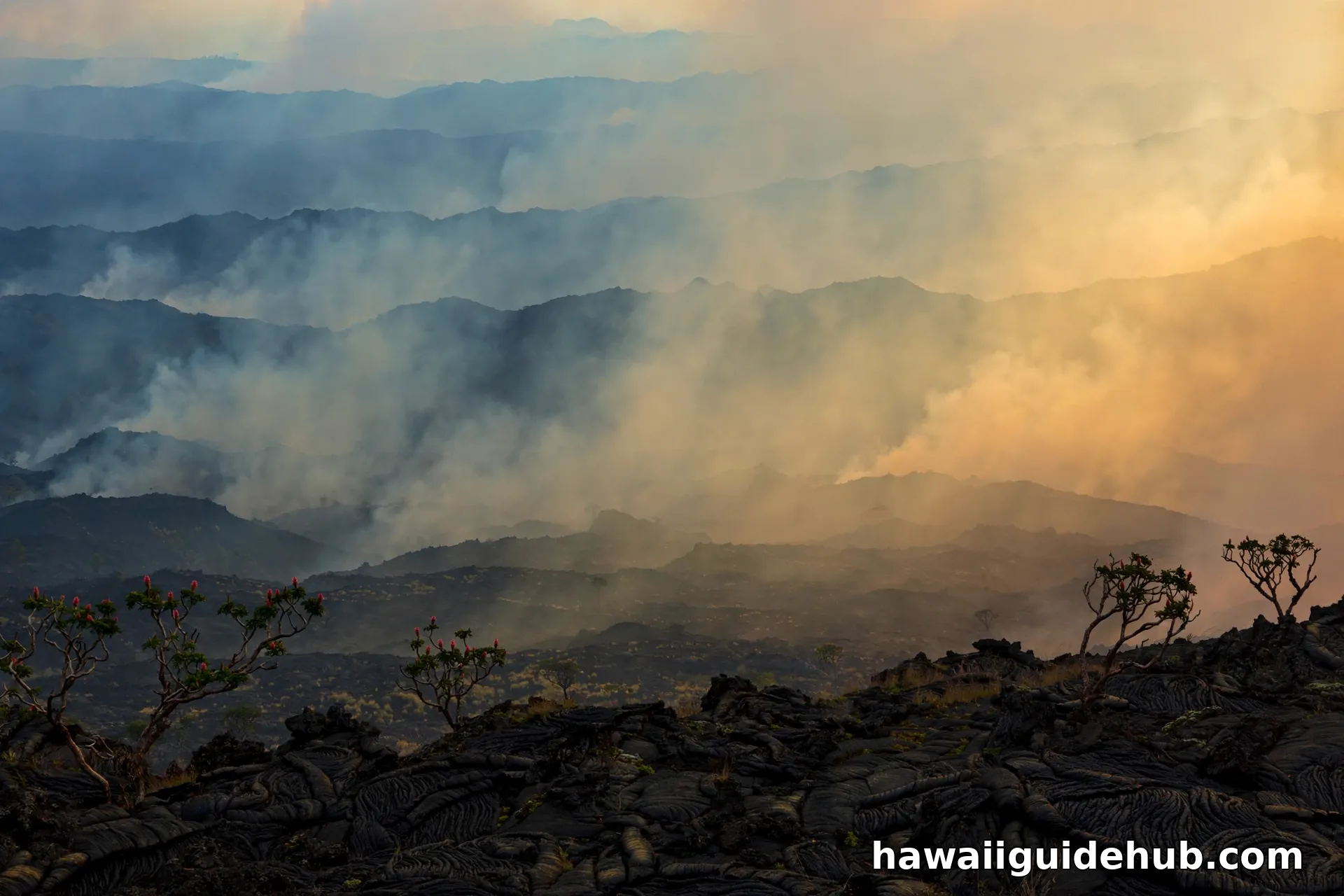
Historically, lava has appeared in very different places. The 2018 lower Puna eruption opened fissures in a residential area miles from the summit and destroyed hundreds of homes over several months, a reminder that Kilauea’s East Rift Zone can erupt far from the caldera. Older flows paved the coastal plains along Chain of Craters Road and built new black-sand beaches where lava met the sea. Today’s map is the summit; tomorrow’s could be somewhere else entirely.
For the current picture, use the observatory’s maps and the national park’s eruption viewing page, which show vent locations, closed areas, and the best legal viewpoints. Screenshots and secondhand reports go stale fast. The official sources are updated daily during active periods.
How to See an Eruption Safely
If lava is active during your visit, Hawaii Volcanoes National Park is the place to see it, and the park manages viewing with visitor safety as the priority. Overlooks along the caldera rim, such as the viewpoints near the summit, offer views into the crater. Go after dark if you can: even a modest eruption paints the plume and clouds above the crater in orange, visible from miles away, and the fountains themselves are far more dramatic at night.
Respect every closure. The park closes trails and overlooks when seismic activity, rockfall risk, or gas levels make them unsafe, and these decisions change with conditions. Cliff edges around the caldera are unstable and can collapse without warning. Stay on marked trails and behind railings, keep children close, and never approach lava, which can be far hotter than it looks even when the surface is black.
Take vog seriously. Volcanic smog, a haze of sulfur dioxide and fine particles, drifts with the wind and can irritate eyes, throats, and lungs, especially for people with asthma or other respiratory conditions. If the air looks hazy and smells sharp near the vents, limit your time there. Check the park’s air quality information if you are sensitive. Our guide to outdoor adventures in Hawaii has more on hiking safely around the islands.
Getting There: Plan the Drive
The park sits on the southeastern side of the Big Island, and most visitors drive in from either Kailua-Kona or Hilo. From Kailua-Kona on the west side, allow about two hours for the roughly 95-mile drive via Highway 11, which climbs over the saddle between the mountains. From Hilo on the east side, it is a much shorter trip of about 45 minutes. Fill your tank before you go, bring layers for the cooler, wetter summit weather, and check the park’s website for any road or entrance updates. Pair the volcano with the island’s west side highlights in our Kona and Waikoloa guides.
Mistakes Visitors Make
The most common mistake is treating an eruption like a scheduled show. Visitors book trips around rumored dates, arrive during a pause, and leave disappointed, or arrive during an episode and assume the show will run all week. Build your Big Island itinerary so the volcano is one highlight among many, and any active lava is a bonus.
The most dangerous mistake is ignoring closures to get closer. Closed areas are closed because of measurable hazards: unstable ground, rockfalls, toxic gas, or the chance of sudden eruptive activity. Rangers do not close viewpoints lightly, and fines and injuries follow people who duck the ropes. The overlooks exist because they are the safe places to watch. Use them.
Video: Kilauea’s Eruptive Episodes
Watch 20 months of Kilauea summit episodes compressed into eight minutes, built from real USGS observatory footage.
Frequently Asked Questions
Will the Hawaii volcano erupt again?
Almost certainly, and it may already be erupting when you read this. Kilauea has been erupting episodically at its summit, and Mauna Loa remains an active volcano. The exact timing of the next episode cannot be predicted, but the USGS Hawaiian Volcano Observatory publishes daily status updates.
Is it safe to visit Hawaii Volcanoes National Park during an eruption?
Yes, when you follow park guidance. The park manages viewing areas and closes trails or overlooks when conditions become hazardous. Stay in open areas, respect closures, and be aware of vog if you have respiratory sensitivity.
Where is the lava right now?
During the recent episodic eruption, all activity was confined to Halemaumau crater at Kilauea’s summit inside the national park. Check the USGS observatory and the park’s eruption page for the current vent locations, because they change.
What do the volcano alert levels mean?
Normal means quiet, Advisory means elevated unrest, Watch means an eruption is likely or underway, and Warning means a hazardous eruption is occurring. The aviation color code (Green, Yellow, Orange, Red) describes ash hazard to aircraft separately.
Can you see lava flowing into the ocean?
Not currently. Ocean entries only happen when flows reach the coast, which has not been the case during the recent summit episodes. All recent activity has stayed inside the summit crater.
How far is the volcano from Kona?
About two hours by car from Kailua-Kona, roughly 95 miles via Highway 11. From Hilo it is about 45 minutes. Many visitors stay on the Kona side and make the volcano a full day trip.
Hawaii’s volcanoes do not run on a schedule, and that unpredictability is part of what makes them worth seeing. Check the observatory’s daily update, give the park a full day, go after dark if lava is active, and respect every closure you encounter. Whether the fountains are flying or the summit is quietly steaming, you will be standing on one of the most dynamic landscapes on Earth.