How to Get to Hideaway Beach on Kauai: The Steep Trail Down

Hideaway Beach on Kauai is reached by exactly one public trail, and finding it is half the adventure. There is no sign on the highway, no big parking lot, and no facilities waiting at the bottom. What there is: a steep 10 to 15 minute trail down a Princeville bluff, rope handrails, and two small golden coves with some of the best calm-day snorkeling on Kauai’s north shore. This guide tells you exactly how to get to Hideaway Beach, where to park, and what to expect on the trail.
This is the single complete guide to getting to Hideaway Beach Kauai. It covers the step-by-step directions, the trailhead parking, what the hike is like, the beach itself, swimming and snorkeling conditions, what to bring, hazards, and the best nearby alternatives. Everything about how to get to Hideaway Beach Kauai is gathered on this one page, so you do not need to search anywhere else.
Hideaway Beach at a Glance
| The reward | The price of admission |
|---|---|
| Also known as Pali Ke Kua Beach (Hideaways Beach) | In Princeville, on Kauaʻi’s north shore, below the bluff |
| Excellent snorkeling on calm summer days | A steep 10 to 15 minute descent on the Kaumūmene Trail, with rope handrails |
| Good swimming when calm | Dangerous in winter surf; check conditions first |
| Summer mornings on uncrowded weekdays | A small public lot with about 9 tight spaces, at the end of Ka Haku Road |
| Free, always | No facilities: no restrooms, no water, no lifeguard |
Where Hideaway Beach Is
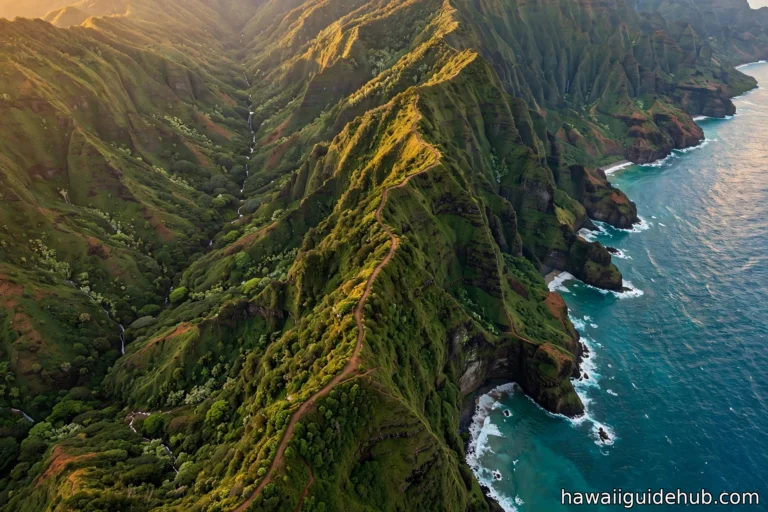
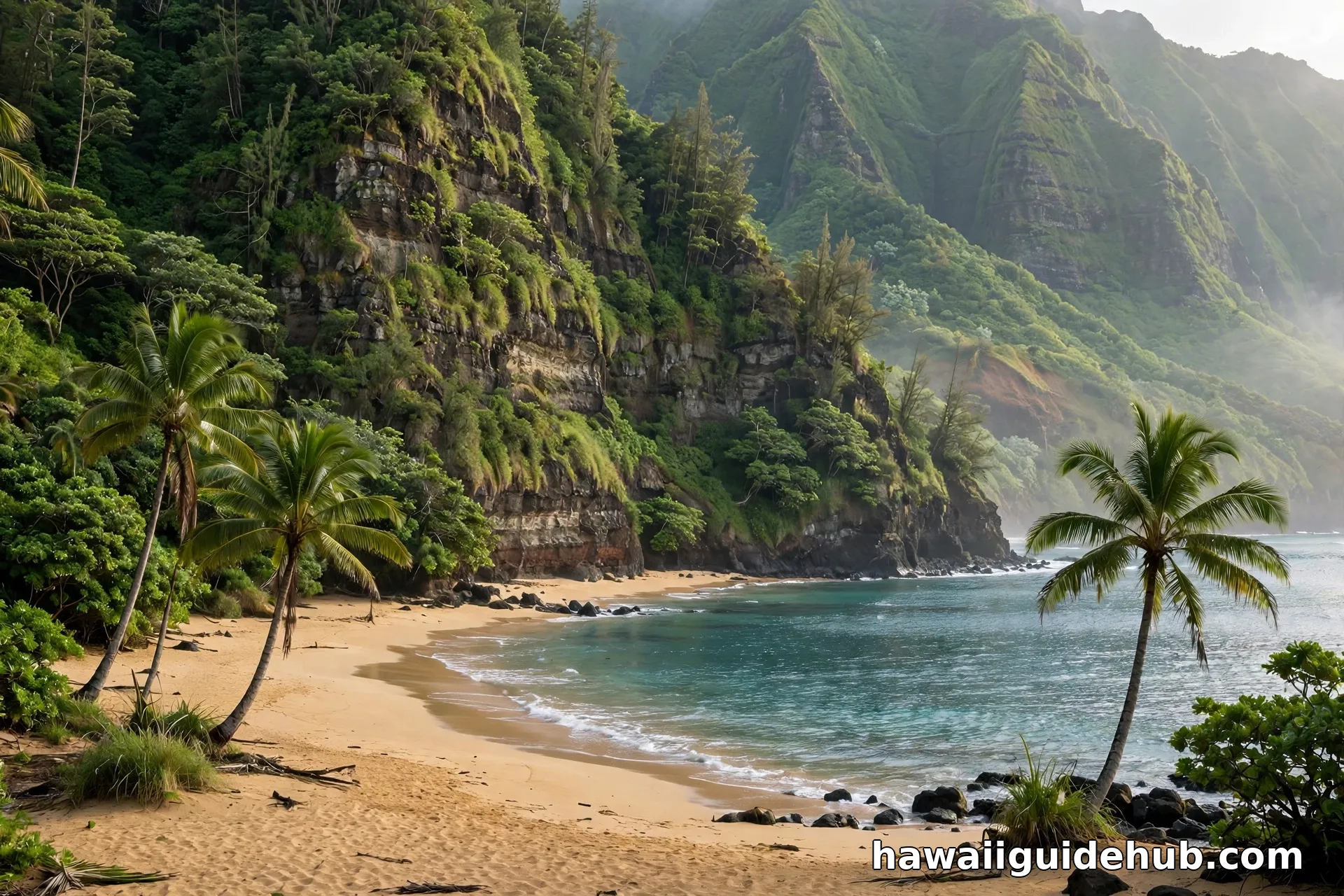
Hideaway Beach sits at the foot of the Princeville bluff on Kauai’s north shore, between the Puʻu Poa and Pali Ke Kua condo properties and just west of the 1 Hotel Hanalei Bay (formerly the St. Regis). The beach occupies two small coves separated by a lava rock outcropping, hidden below the cliffs that line this stretch of coast. From above, you would never know it is there, which is exactly why it stays quiet. If you are exploring the wider north shore, our guide to Hanalei Beach covers the area’s most famous shoreline a few minutes west.
Step by Step: How to Get to Hideaway Beach
Here is the exact route. Drive into Princeville on Kūhiō Highway and follow Ka Haku Road to its end, toward the 1 Hotel Hanalei Bay. From Līhuʻe, the drive to Princeville takes about 45 minutes; from Hanalei town, it is roughly 10 minutes east. Just before you reach the hotel gatehouse, look for a small public parking lot on your right, with about nine tight spaces. This is the trailhead parking, and it fills early on nice days. If you miss the lot, you will find yourself at the hotel entrance, so turn around carefully and try again.
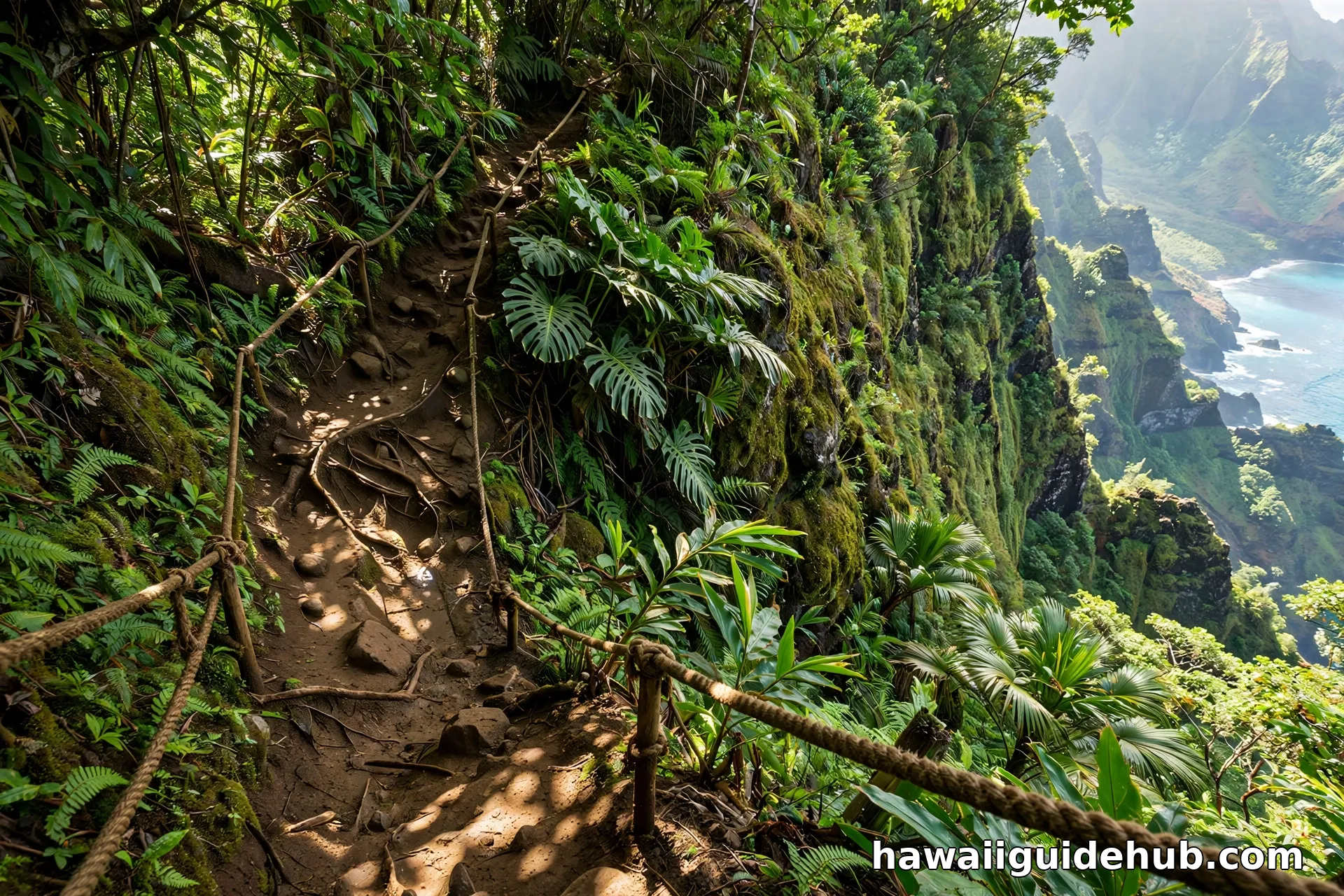
The Kaumūmene Trail starts on the west property line of the Puʻu Poa condos. Walk along the fence line toward the ocean until you reach the edge of the bluff, where steep stairs drop over the edge. The trailhead itself is unmarked and easy to walk past, so go slowly and watch for the opening in the vegetation near the fence. Follow the trail down, using the pipe and rope handrails in the steepest sections. About halfway down, the path splits: go right for the beach, left for a scenic overlook with steep drop-offs. The descent takes 10 to 15 minutes for most people. Wear real shoes, not flip-flops, because the trail is steep and gets very slippery after rain.
The Second Access: The Paved Path
There is a second, paved access down the bluff from the Pali Ke Kua condos to the east side of the beach. This is primarily for condo guests and residents rather than the general public, so the Kaumūmene Trail described above is the access most visitors should use.
Parking: What You Need to Know
Parking is the tightest part of the whole trip. The public lot at the trailhead holds only about nine cars in tight spaces, and on a beautiful morning it fills fast. Arrive early, ideally before 9 AM, for the best chance at a spot. Never park at the nearby condo complexes or vacation-rental properties, where unauthorized vehicles can be towed. The 1 Hotel Hanalei Bay offers paid valet parking to day guests as a backup option. For more on getting around the island, see our guide to things to do in and around Hanalei.
What the Trail Is Like
Be honest with yourself about the trail. It is short but genuinely steep, with dirt steps, roots, and sections where you will want both hands on the ropes. After rain it becomes slick enough that experienced hikers turn back, and the north shore gets plenty of rain, so check the ground before you commit. The county has rehabilitated the trail with improved steps and handrails, but it remains a real hike, not a beach stroll. The climb back up is the harder direction, especially in midday heat, so bring water and pace yourself. It is not suitable for young children, anyone unsteady on their feet, or anyone carrying a lot of gear. There is no shame in skipping it: Kauai has easier beaches, and this one will still be here when conditions suit you.
The Beach: Two Hidden Coves
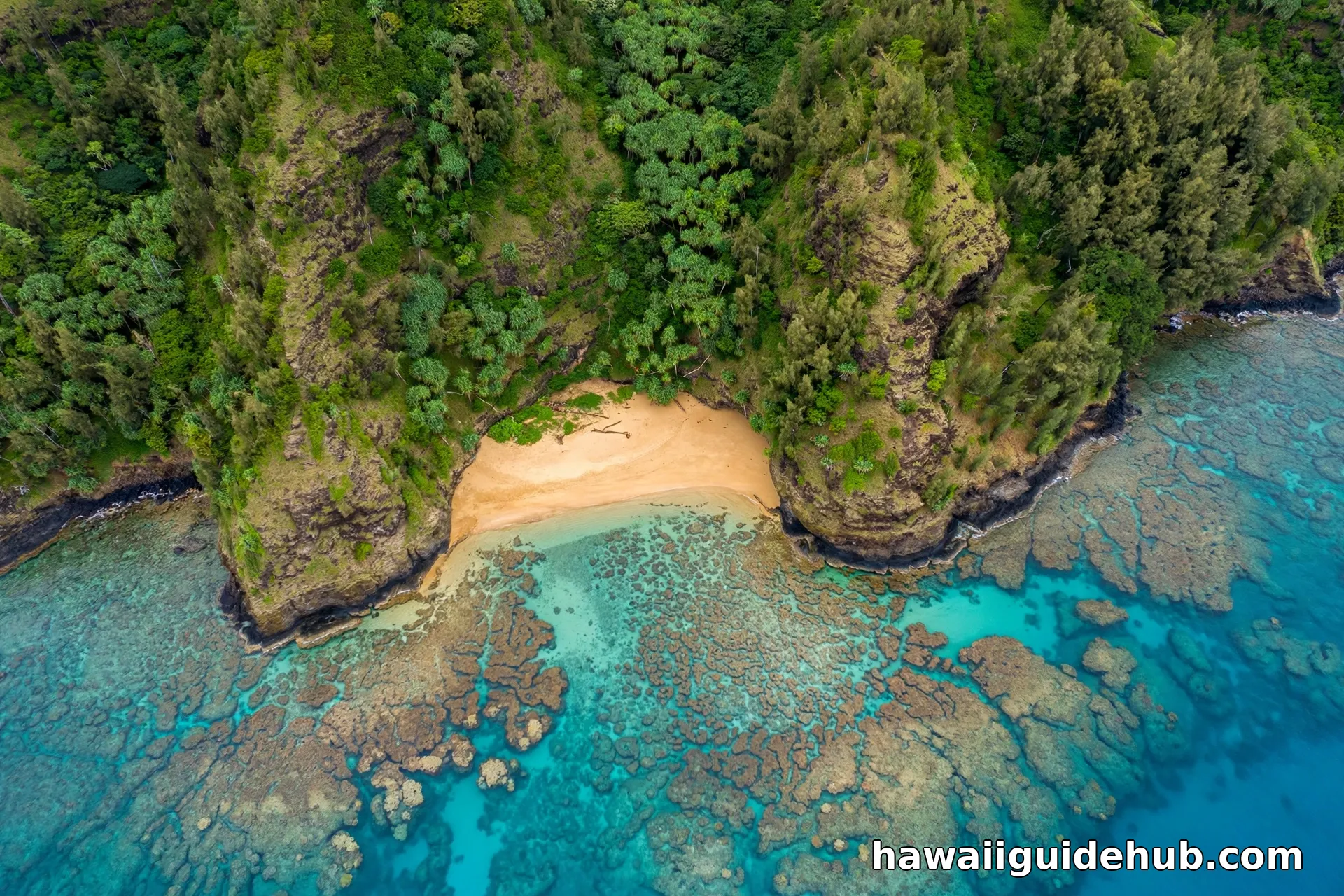
At the bottom, Hideaway Beach splits into two small coves divided by a lava rock outcropping. The sand is golden and clean, there is no stream bringing debris into the water, and the high cliff behind the beach blocks the view of Princeville’s development. It feels genuinely hidden, and on a weekday morning you may share it with only a handful of people. The eastern cove tends to be the calmer of the two for swimming when conditions allow, while the western cove offers its own quiet pocket of sand. There are no facilities of any kind: no restrooms, no showers, no drinking water, no lifeguard, and no food. Whatever you need for your visit comes down the trail with you and goes back up with you.
Swimming and Snorkeling
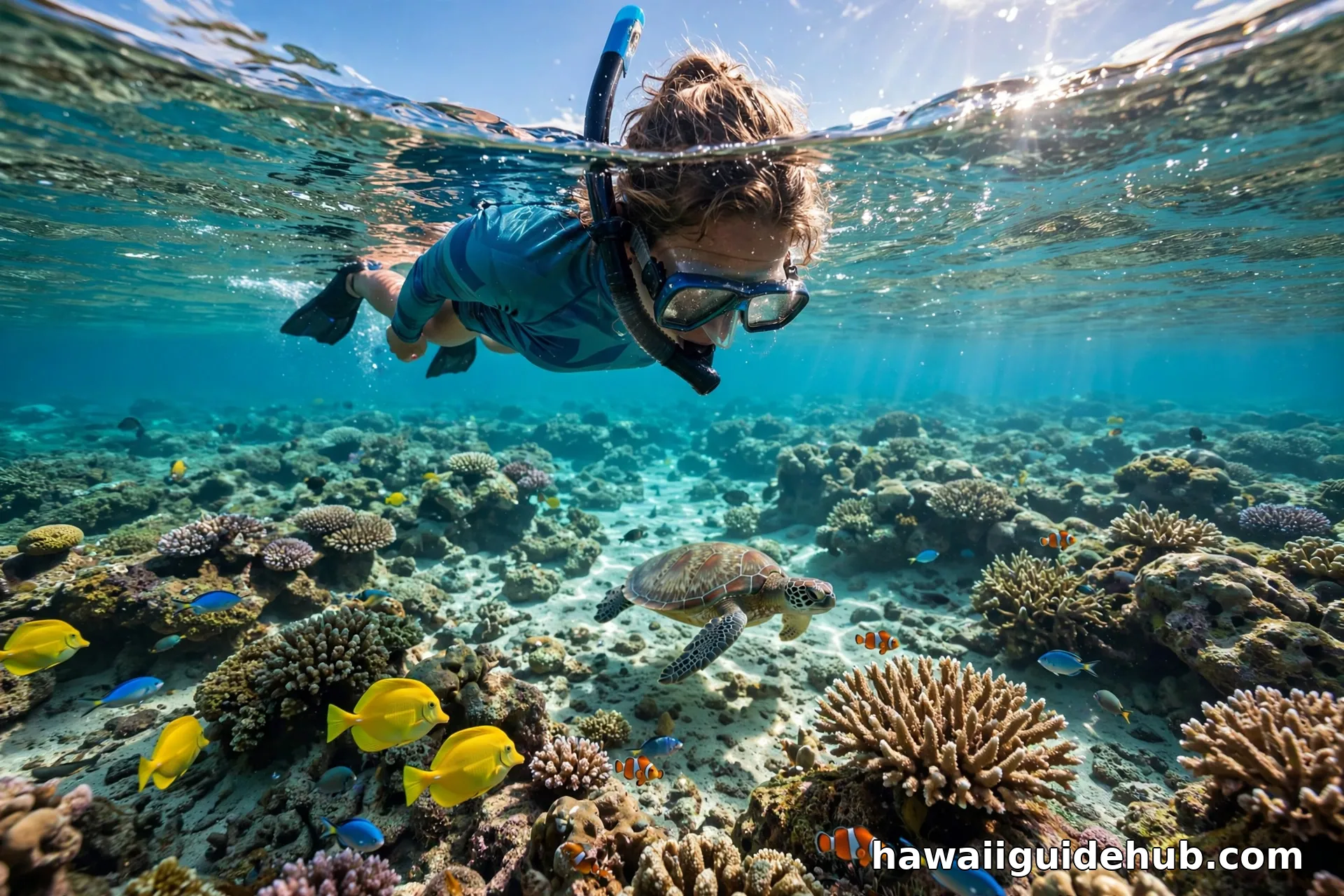
When the ocean is calm, usually in summer, Hideaway Beach is a gem. An offshore reef breaks the waves and creates a protected zone inside that is suitable for swimming, and the snorkeling can be excellent, with reef fish and the occasional sea turtle moving through the coral. The water is clearest in the morning before the wind picks up, and the reef sits close enough to shore that you do not need to swim far to see it. Bring your own snorkel gear, since there are no rentals anywhere near the beach, and enter the water slowly over the sandy patches rather than scrambling across the reef.
The other half of the story is winter. Kauai’s north shore takes big surf in winter, and strong surf can send turbulent water through the reef gaps right to the beach. Do not go in the water during high surf, and watch for currents flowing through gaps in the reef even on moderate days. There is no lifeguard here, so your judgment is the safety system. If the ocean looks rough from the trail, enjoy the view and swim another day. For a broader look at seasonal ocean changes, see our guide to what time of year it rains in Hawaii.
The Name: Hideaway Beach, Hideaways, or Pali Ke Kua?
Do not let the names confuse you. Hideaway Beach, Hideaways Beach, and Pali Ke Kua Beach all refer to the same stretch of sand at the foot of the Princeville bluff. Pali Ke Kua is the formal beach name you will see on county references, while Hideaway and Hideaways are the nicknames everyone actually uses, a nod to how well hidden the coves are. The trail is called the Kaumūmene Trail. When you are asking locals for directions, any of these names will get you pointed the right way, and this single guide covers them all, so there is no need to look for separate information under each name.
What to Bring
Pack like the trail is the price of admission, because it is. Bring water and snacks, reef-safe sunscreen, a towel, and snorkel gear if you want to explore the reef. Wear sturdy closed-toe shoes for the hike and carry beach sandals separately. A dry bag protects your phone and keys on the sweaty climb back up. And since there are no trash cans, bring a bag for your rubbish and leave the coves cleaner than you found them.
Hazards and Beach Rules
The two real hazards are the trail and the winter ocean. Hike the trail only in dry conditions, test the ropes before trusting them, and keep children away from the overlook’s drop-offs. In the water, respect the reef gaps and never swim in high surf. Standard county rules apply: no alcohol, no smoking, no glass on the beach, and pack out everything you pack in. Our guide to Hawaii beach park rules covers the details that apply across the islands.
Best Time to Visit Hideaway Beach
Summer, roughly May through September, brings the calmest ocean and the safest swimming and snorkeling, with the flattest water usually found in the morning before the trade winds build. Mornings are best for light, calm water, and parking, and the early hours also give you the driest trail conditions. Weekdays are quieter than weekends, when the small parking lot fills fastest. In winter, come for the views and the dramatic surf from the safety of the shore, not for swimming, since the north shore’s big swells make the water dangerous. If the trail is wet from rain, postpone the hike entirely, no matter the season.
Nearby Alternatives
If the trail or the surf rules out Hideaway Beach, the north shore has easier options. Hanalei Bay offers a huge sandy beach with lifeguards a few minutes west. Anini Beach has a famously calm, reef-protected lagoon that suits families. And if you want another beautiful beach day without a hike, the south shore beaches around Poipu are worth the drive.
Video: The Trail to Hideaway Beach
Watch the steep Kaumūmene Trail descent to Hideaway Beach on Kauai’s north shore.
Frequently Asked Questions
How long is the hike to Hideaway Beach?
The Kaumūmene Trail takes about 10 to 15 minutes down and a bit longer back up. It is short but steep, with stairs and rope handrails, and it gets very slippery after rain.
Is there parking for Hideaway Beach?
Yes, a small public lot with about nine tight spaces sits just before the hotel gatehouse at the end of Ka Haku Road. It fills early on nice days, so arrive before 9 AM. Never park at the condo complexes, where you can be towed.
Is Hideaway Beach good for kids?
Not for young children. The steep, slippery trail and the lack of lifeguards and facilities make it a poor choice for families with small kids. Older teenagers who hike can manage it in dry conditions with an adult.
Can you swim at Hideaway Beach?
Yes, when the ocean is calm, which is most reliable in summer. The reef creates a protected swimming zone. In winter surf, stay out of the water entirely. There is no lifeguard, so swim conservatively.
Is Hideaway Beach the same as Pali Ke Kua Beach?
Yes. Hideaway Beach, Hideaways Beach, and Pali Ke Kua Beach are all names for the same beach at the foot of the Princeville bluff. This guide covers all of them.
Do you need a reservation for Hideaway Beach?
No reservation is needed. The beach is free to visit. The only real constraint is parking, since the small trailhead lot fills quickly.
Hideaway Beach rewards the effort it demands. The steep trail keeps the crowds away, and the two quiet coves at the bottom feel like a discovery even when you share them with a handful of other hikers. Go on a dry summer morning, wear real shoes, bring everything you need, and respect the ocean’s mood. Kauai’s north shore has easier beaches, but few that feel this earned.