
Hāwī, Hawaiʻi
On This Page
Hāwī at a Glance
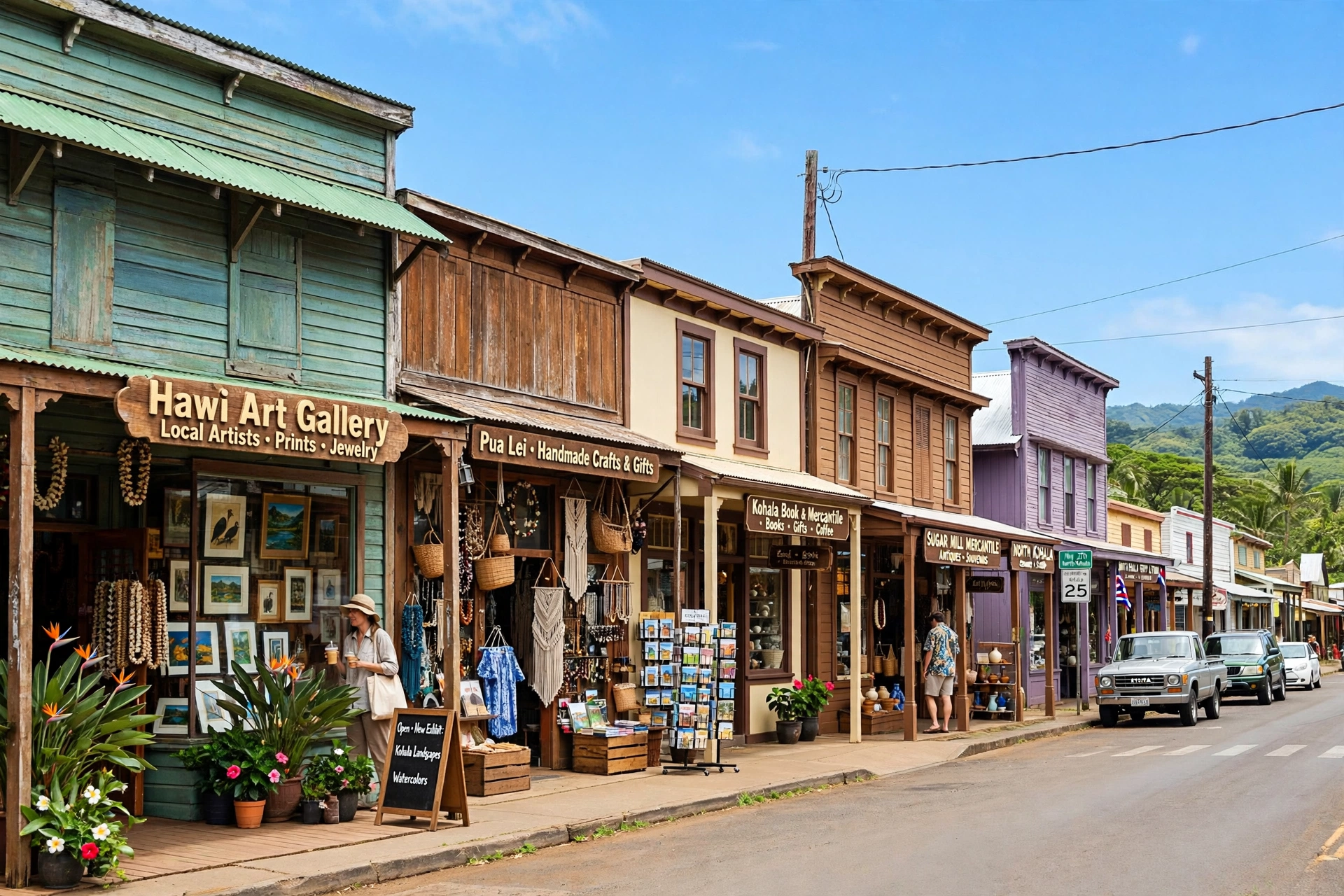
Hāwī (pronounced hah-VEE) is a small historic town at the northern tip of the Island of Hawaiʻi, in the district of North Kohala. It sits at the end of Highway 270, the Akoni Pule Highway, where the road bends east toward the Pololū Valley lookout and west back toward the Kohala Coast. With roughly a thousand residents, Hāwī is one of the smallest towns on the Big Island, and also one of its most distinctive. Its single main street is lined with plantation-era false-front buildings that now hold art galleries, boutiques, bookshops, and small eateries, giving the town a creative, unhurried character that feels very different from the resort areas farther south.
What brings most visitors to Hāwī is a combination of history, scenery, and small-town charm. North Kohala is the birthplace region of Kamehameha the Great, the chief who unified the Hawaiian Islands, and the countryside around Hāwī holds some of the most significant historic sites in the state. The town is also famous in the endurance sports world as the turnaround point of the Ironman World Championship bike course, which climbs from Kailua-Kona up the windswept highway to Hāwī each October. For travelers, Hāwī works beautifully as a half-day stop: stroll the galleries, have lunch, then continue to the Pololū Valley lookout or loop back through the ranch country of the Kohala Mountain Road.
Hāwī sits at a modest elevation on the slopes below the Kohala Mountains, and the climate here is noticeably drier and breezier than the rainy east side of the island. Trade winds funnel through the area, which keeps temperatures pleasant but can make the nearby coastline choppy. The surrounding landscape is a mix of pastureland, remnant sugar cane fields, and dry forest, with sweeping views toward Maui across the ʻAlenuihāhā Channel on clear days. Because the town is small and services are limited, most visitors come as a day trip from Waimea, the Kohala Coast resorts, or even Kailua-Kona, rather than staying overnight in Hāwī itself.
History of Hāwī
North Kohala is among the oldest settled regions in the Hawaiian Islands, and its history is inseparable from the story of Kamehameha I. Traditional accounts place Kamehameha’s birth at Kokoiki, near the sacred Moʻokini Heiau, just a few miles from present-day Hāwī, in the mid-18th century. He spent his youth in Kohala, and the district’s chiefs, warriors, and priests played central roles in his rise. When Kamehameha unified the islands by 1810, Kohala men fought in his armies, and the region remained closely tied to the monarchy throughout the 19th century. The original statue of Kamehameha that stands today in nearby Kapaʻau, erected in 1912, honors that connection.
The town of Hāwī itself grew up around sugar. In the second half of the 19th century, the Kohala Sugar Company and neighboring plantations transformed the district’s economy, and Hāwī developed as a plantation service town with stores, a post office, churches, and worker housing. Laborers arrived from China, Japan, Portugal, and the Philippines, and their descendants remain part of North Kohala’s community today. A narrow-gauge plantation railroad once carried cane to the mills, and the town’s wooden commercial buildings, many of which still stand along the main street, date to this era.
Sugar dominated Kohala for roughly a century, but the industry declined after World War II as global markets shifted and production costs rose. The Kohala sugar operations wound down by the mid-1970s, and Hāwī faced the same question as plantation towns across Hawaiʻi: what comes next. Rather than fading, Hāwī reinvented itself. Artists, craftspeople, and small business owners were drawn by the historic buildings, the dramatic northern landscape, and the town’s location on the route to Pololū. Galleries and shops gradually filled the old storefronts, and Hāwī became known as one of the Big Island’s most appealing small arts towns.
In recent decades, Hāwī has also become internationally recognized through the Ironman World Championship. The bike leg of the race climbs the Queen K Highway from Kailua-Kona to Hāwī, where athletes turn around and descend back to Kona, and the Hāwī turnaround is one of the most storied points on the course. Each October, the town fills with spectators, and year-round, visiting cyclists ride the same highway to test themselves against the famous crosswinds. Through all of these changes, Hāwī has kept its small scale and historic character, and the community remains protective of the town’s plantation-town atmosphere.
What to See and Do
The heart of a visit to Hāwī is the main street itself. Park the car and walk the short commercial strip, where the wooden false-front buildings house a concentration of art galleries, gift shops, and boutiques that is unusual for a town this size. The galleries feature work by Big Island artists, including paintings, photography, ceramics, glass, and woodwork inspired by the Kohala landscape. Even if you do not plan to buy anything, browsing is a pleasant way to spend an hour, and the shopkeepers are generally happy to talk about the town’s history. A local bookstore and a few specialty shops round out the strip, and the whole walk takes less than an hour at a relaxed pace.
Drive the Kohala Mountain Road
One of the finest scenic drives on the Big Island begins, or ends, in Hāwī. The Kohala Mountain Road (Highway 250) runs about 20 miles between Hāwī and Waimea, climbing through rolling ranch country with panoramic views in both directions. On the Waimea side, the road passes through green pastureland dotted with cattle, with the massive bulk of Mauna Kea rising ahead. Descending toward Hāwī, the views open toward the Kohala Coast and, on clear days, across the channel to Maui. The road is winding and narrow in places, with no guardrails on some stretches, so drive it in daylight and allow extra time for the views. There are a few informal pullouts where you can stop for photographs.
Experience the Ironman Turnaround
Even if you are not a triathlete, the Ironman connection is part of Hāwī’s modern identity. Highway 270 between Kawaihae and Hāwī is the outbound leg of the championship bike course, and the turnaround sits in town. Visiting cyclists ride the route year-round, and on any given morning you will likely see riders climbing toward Hāwī against the trade winds. During race week in October, the town takes on a festive atmosphere as spectators gather along the highway. If you cycle, the ride from the Kohala Coast to Hāwī and back is a classic Big Island training route, but be prepared for strong and gusty crosswinds, carry plenty of water, and ride single file on the narrow shoulder.
Browse, Lunch, and Slow Down
Hāwī rewards travelers who slow down. After the galleries, settle in for lunch at one of the town’s small eateries, which range from casual plate-lunch style counters to sit-down restaurants serving locally grown ingredients. Kohala’s farms and ranches supply much of what appears on local menus, and the town’s coffee shops make a good stop before the drive to Pololū or back over the mountain road. On weekends, farmers markets in the North Kohala area sell tropical fruit, vegetables, flowers, and baked goods from nearby farms. Check locally for current days and locations, as schedules change.
King Kamehameha Day
If your visit falls in June, North Kohala celebrates King Kamehameha Day with one of the most colorful parades in the state. The Kapaʻau parade, held near Hāwī, traditionally features pāʻū riders, women in long skirts and lei riding horseback in honor of Hawaiian royalty, along with floats, marching bands, and community groups. The holiday is June 11, and related events in Kohala often extend through the surrounding weekend. It is a genuine community celebration rather than a tourist production, and visitors are welcome to watch respectfully from the roadside.
Nearby Attractions
Hāwī’s greatest strength as a destination is its position: within a short drive in almost every direction are some of the Big Island’s most remarkable places. Most visitors combine Hāwī with at least one or two of the following stops, and the town makes a natural lunch break between them.
Pololū Valley Lookout
About 10 minutes east of Hāwī, Highway 270 ends at the Pololū Valley lookout, one of the most photographed viewpoints on the Big Island. Sheer, fluted sea cliffs drop nearly 2,000 feet to a black-sand beach and a wild, forested valley floor, with the ocean stretching to the horizon. A steep trail descends from the lookout to the beach, dropping most of that elevation in less than a mile. The hike is strenuous, the trail can be muddy and slippery, and there are no facilities or lifeguards at the beach, where shore break and currents can be dangerous. Many visitors are content with the view from the top, which requires no hiking at all. Go in the morning for the best light and the clearest views, and never leave valuables visible in your car at the trailhead.

Kapaʻau and the Kamehameha Statue
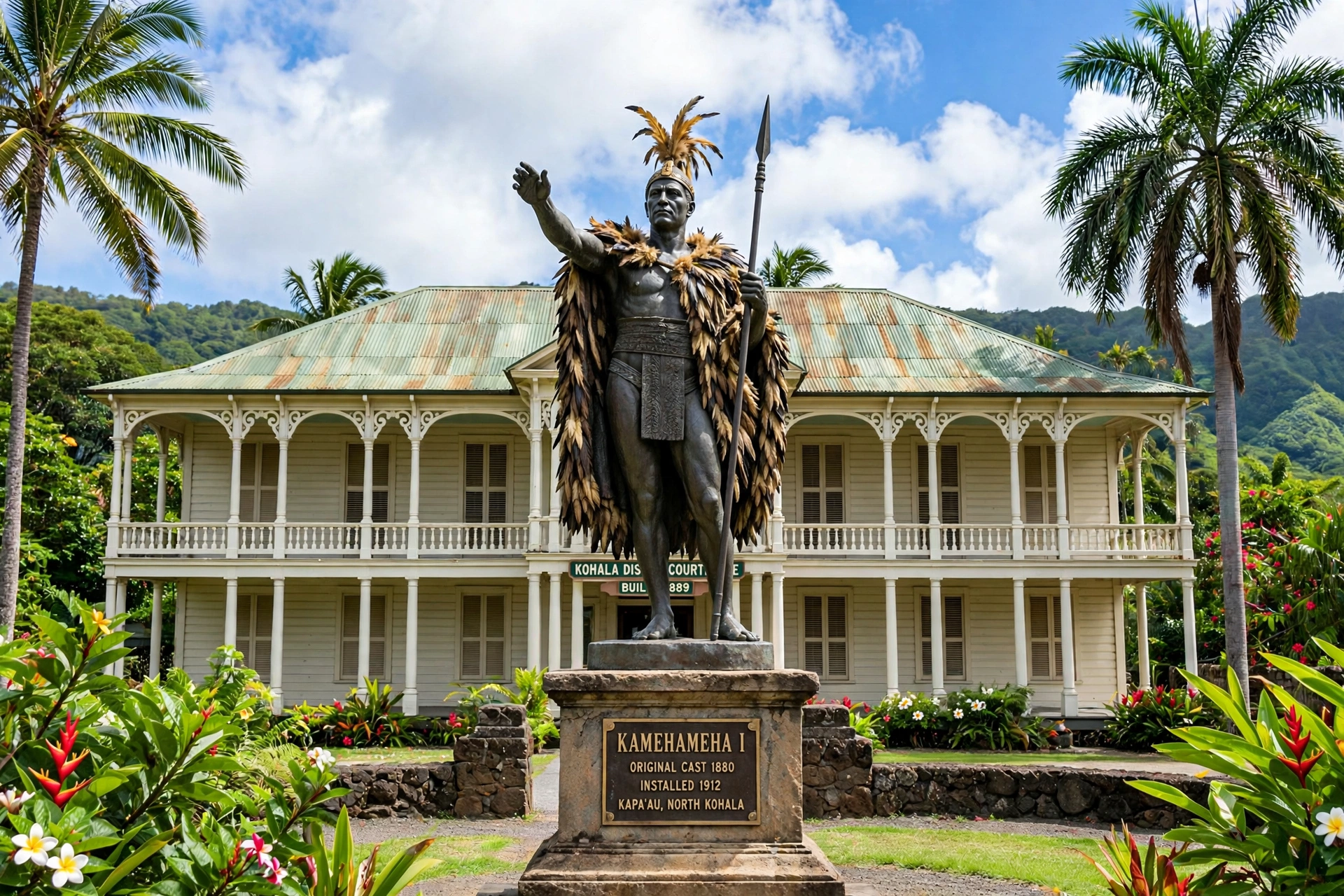
Just west of Hāwī, the even smaller town of Kapaʻau holds one of Hawaiʻi’s most important monuments: the original statue of King Kamehameha I, standing in front of the North Kohala courthouse. Commissioned in the 1870s and completed in 1880, the statue was lost at sea when the ship carrying it sank near the Falkland Islands, then recovered and eventually placed in Kapaʻau in 1912, near the king’s birthplace. A replica stands in Honolulu, but this is the original. The statue is draped with lei on King Kamehameha Day and at other times by visitors and residents. Kapaʻau itself is a quiet residential community with a historic church and a small commercial area, and the statue stop takes only a few minutes.
Moʻokini Heiau
North of Kapaʻau, near the coast at the northern tip of the island, stands Moʻokini Heiau, one of the oldest and most sacred temples in Hawaiʻi. Traditional accounts credit its construction to the priest Paʻao centuries ago, and it remains an active place of worship and cultural significance. The heiau is generally closed to the public, and visitors should not enter the structure or cross its walls. It can be viewed respectfully from the nearby road. Because this is a living sacred site, observe quiet, do not leave offerings unless you understand the protocols, and treat the area with the same respect you would bring to any place of worship.
Lapakahi State Historical Park
On the coast west of Hāwī, Lapakahi State Historical Park preserves a 262-acre ancient coastal fishing settlement. A self-guided, roughly one-mile trail winds through the remains of stone house sites, heiau, and agricultural terraces, with interpretive signs explaining how Hawaiians lived and fished here before European contact. The setting is stark and beautiful: dry coastal scrub, tide pools, and open ocean, very different from the lush windward side of the island. The park is free, there are no food or water facilities, and the trail is exposed, so bring sun protection and water. Allow one to two hours for the walk.

Kohala Coast and Waimea
From Hāwī, Highway 270 runs southwest along the coast to Kawaihae, where it meets the highway to the Kohala Coast resort area and Waimea. Many visitors pair a Hāwī morning with an afternoon at a Kohala Coast beach or in Waimea’s shops and restaurants. The drive from Hāwī to Waimea via the Kohala Mountain Road takes about 40 minutes without stops, while the coastal route via Kawaihae is longer but offers ocean views and the Puʻukoholā Heiau National Historic Site near Kawaihae harbor, where Kamehameha built the temple that helped him fulfill the prophecy of his rule.
Where to Eat and Stay
Hāwī’s dining scene is small but satisfying for a town its size. The main street and its side streets hold a mix of casual eateries and sit-down restaurants, many emphasizing ingredients from Kohala farms and ranches. Expect options like fresh fish, locally raised beef, tropical fruit, and baked goods, along with coffee shops that roast or brew island-grown coffee. Prices are moderate by Hawaiʻi standards, and lunch is the busiest meal as day-trippers pass through. For dinner, options are fewer and some establishments close early, so if you are staying in the area, plan accordingly or dine in Waimea, which has a wider selection.
Overnight lodging in Hāwī itself is limited to a handful of small inns, bed-and-breakfasts, and vacation rentals scattered through North Kohala. These suit travelers who want a quiet, rural base and do not mind driving for dinners and activities. Most visitors, however, stay elsewhere and visit Hāwī as a day trip. Waimea, about 40 minutes away over the mountain road, offers hotels, vacation rentals, and the island’s best-regarded restaurant scene outside the resorts. The Kohala Coast resort area, roughly an hour away via Kawaihae, is the choice for travelers who want beaches paired with their sightseeing. Kailua-Kona, about 90 minutes south, works for those combining North Kohala with the island’s west-side attractions. Book lodging well in advance for October, when the Ironman brings a surge of visitors to the entire Kohala region.
Getting to Hāwī
Hāwī is reached only by road, and a rental car is effectively essential. From Kona International Airport, the fastest route is Highway 19 to Waimea, then the Kohala Mountain Road (Highway 250) to Hāwī, a drive of about 90 minutes without stops. The coastal alternative, Highway 270 from Kawaihae through Kapaʻau, takes a bit longer but follows the ocean past Lapakahi and the Kamehameha statue. From Hilo, allow about two and a half hours via Waimea. There is no public bus service to Hāwī, and rideshare availability in North Kohala is unreliable, so do not count on either.
Parking in Hāwī is straightforward: free street parking along the main road and in small public lots, rarely full except during festival weekends and Ironman week. The town is compact enough to explore entirely on foot once you arrive. If you are continuing to the Pololū Valley lookout, the drive east on Highway 270 takes about 10 minutes, and the small lookout parking area can fill by midday, so an early start is wise. Cell service is generally available in town but can drop out along the more remote stretches of Highway 270 toward Pololū. Fuel up before leaving Waimea or Kawaihae, as Hāwī’s options are limited and prices run higher than in the larger towns.
Frequently Asked Questions
Where is Hāwī, Hawaiʻi?
Hāwī is a small town in North Kohala at the northern tip of the Island of Hawaiʻi (the Big Island). It sits at the junction of Highway 270, which runs along the North Kohala coast, and Highway 250, the Kohala Mountain Road to Waimea. It is about 90 minutes by car from Kona International Airport.
Why is Hāwī famous?
Hāwī is best known for three things: its plantation-era main street now filled with art galleries and shops, its location in North Kohala, the birthplace region of Kamehameha the Great, and its role as the turnaround point of the Ironman World Championship bike course. Together these give the small town an outsized reputation among art lovers, history buffs, and endurance athletes.
How much time do I need in Hāwī?
Most visitors spend one to three hours: enough to stroll the galleries, have lunch, and perhaps drive to the Pololū Valley lookout. Hāwī combines well with Kapaʻau, Lapakahi State Historical Park, and the Kohala Mountain Road for a full North Kohala day trip.
Can you swim near Hāwī?
Swimming options near Hāwī are limited. The North Kohala coastline is rugged, with strong currents and shore break at most beaches, and there are no lifeguarded beaches in the immediate area. Travelers seeking calm swimming should head to the Kohala Coast beaches south of Kawaihae instead, and always check ocean conditions before entering the water anywhere.
What is the Kamehameha statue in Kapaʻau?
The statue in front of the North Kohala courthouse in Kapaʻau, a few minutes west of Hāwī, is the original 19th-century statue of King Kamehameha I. Lost at sea and later recovered, it was placed in Kapaʻau in 1912 near the king’s birthplace. A replica stands in Honolulu. Visitors can view the statue freely and often see it draped with lei.
Is Hāwī worth visiting as a day trip?
Yes, particularly combined with the Pololū Valley lookout, Kapaʻau, and the Kohala Mountain Road. Hāwī makes an excellent lunch stop and gallery stroll on a North Kohala driving loop from Waimea or the Kohala Coast. Travelers short on time sometimes skip the town itself but still pass through on the way to Pololū.
What is the Kohala Mountain Road like to drive?
Highway 250 between Waimea and Hāwī is about 20 miles of winding two-lane road through ranch country, with beautiful views toward Mauna Kea and the Kohala Coast. It is paved and well maintained but narrow and curvy in places, with limited guardrails. Drive it in daylight, allow 40 minutes or more with stops, and watch for cattle near the road in ranching areas.
Where should I stay to visit Hāwī?
Most visitors stay in Waimea, the Kohala Coast resorts, or Kailua-Kona and visit Hāwī as a day trip. A small number of inns and vacation rentals in North Kohala itself suit travelers who prefer a quiet rural base. Book early for October, when the Ironman World Championship fills lodging across the region.
Related Guides
- Big Island Towns: Hilo, Kailua-Kona, Waimea, and more island communities
- Big Island Beaches: where to swim, including the calm Kohala Coast beaches south of Hāwī
- Big Island Weather: North Kohala’s dry, breezy climate and regional differences
- Hawaiʻi Towns: notable towns across all the islands
- Hawaiʻi Volcanoes: the volcanic forces that built the Kohala landscape
- Best Time to Visit Hawaiʻi: planning around seasons, crowds, and events like the Ironman
- Hawaiʻi Map: orienting yourself across the islands
A Final Note
Hāwī is the kind of place that rewards travelers who venture beyond the resort gates. It has no grand attraction with a ticket booth, only a historic main street, a dramatic landscape, and a front-row seat to some of the deepest history in the Hawaiian Islands. Walk the galleries, drive the mountain road, stand at the Pololū lookout, and pay your respects at the Kamehameha statue in Kapaʻau. Taken together, these small experiences add up to one of the most memorable day trips on the Big Island, and a reminder that some of Hawaiʻi’s richest places are also its quietest.