Hawaiian Sea Salt: Paʻakai, the Salt of Ceremony and Kitchen

Long before Hawaii had coffee farms or plate lunches, it had salt. Native Hawaiians independently developed the craft of evaporating seawater into paʻakai, and salt became woven into ceremony, healing, and cooking alike. Today Hawaiian sea salt comes in red, white, and black, seasons everything from poke to kalua pig, and to taste the dishes it seasons, see the best late-night eats in Hawaiʻi, and carries a cultural weight no ordinary seasoning can claim. This is the story of Hawaii’s most sacred pantry staple.
This is the single complete guide to Hawaiian sea salt. It covers what paʻakai is, how traditional salt is made, the three colors of Hawaiian salt and how to use each, the living salt-making tradition at Hanapēpē, ceremonial uses, modern deep-ocean salt farms, buying advice, and cooking tips. If you have been searching for anything about Hawaiian sea salt, the answers are all here on this one page.
Hawaiian Sea Salt at a Glance
| Hawaiian name | Paʻakai, literally “sea solid” (paʻa, solid + kai, sea) |
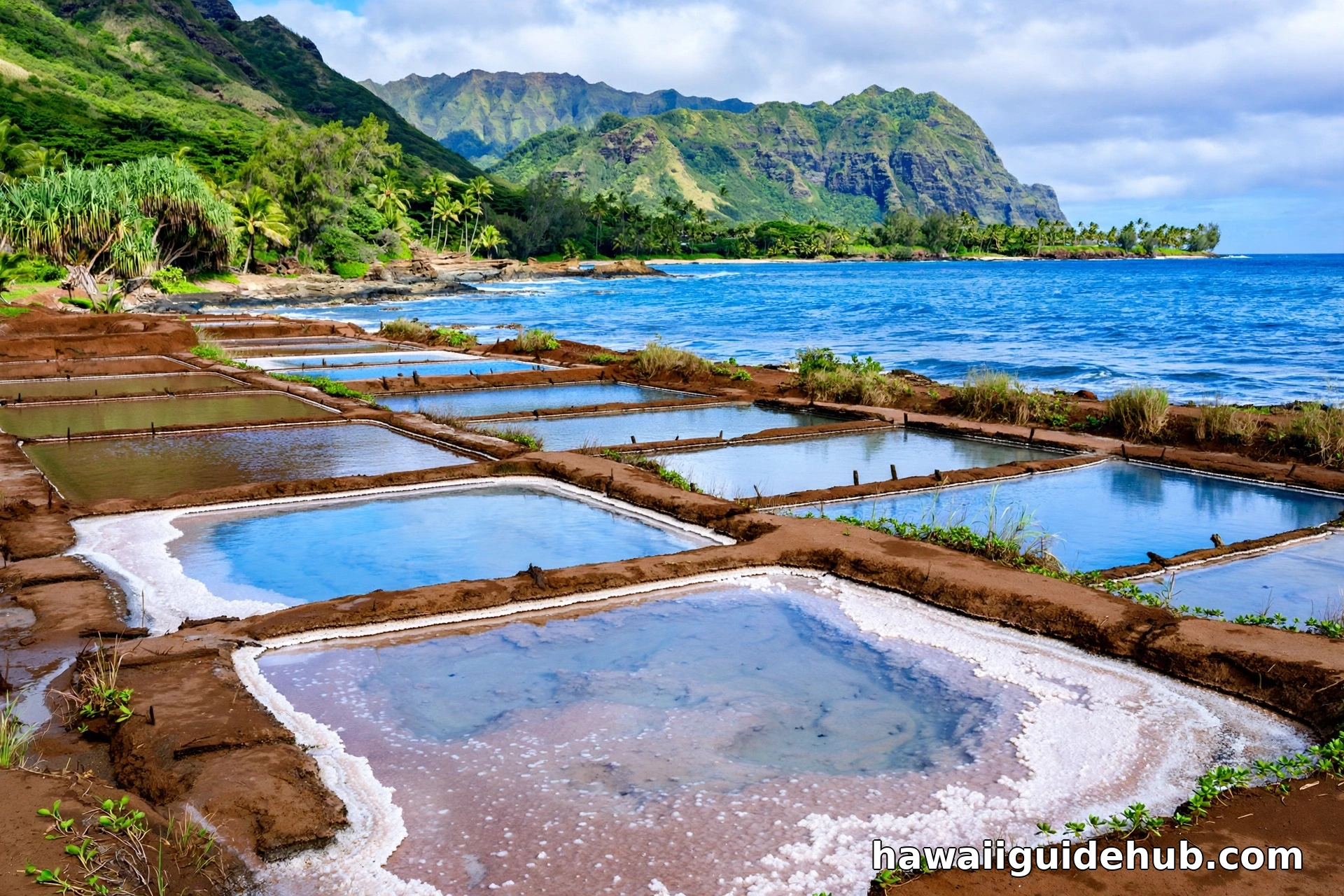
| Traditional craft | Solar evaporation of seawater in coastal clay salt beds (loʻi paʻakai) |
| Historic sites | Āliapaʻakai (Salt Lake) on Oahu, Kawaihae on Hawaii Island, Hanapēpē on Kauai |
| Living tradition | Hanapēpē, Kauai: about two dozen families still make salt the ancient way |
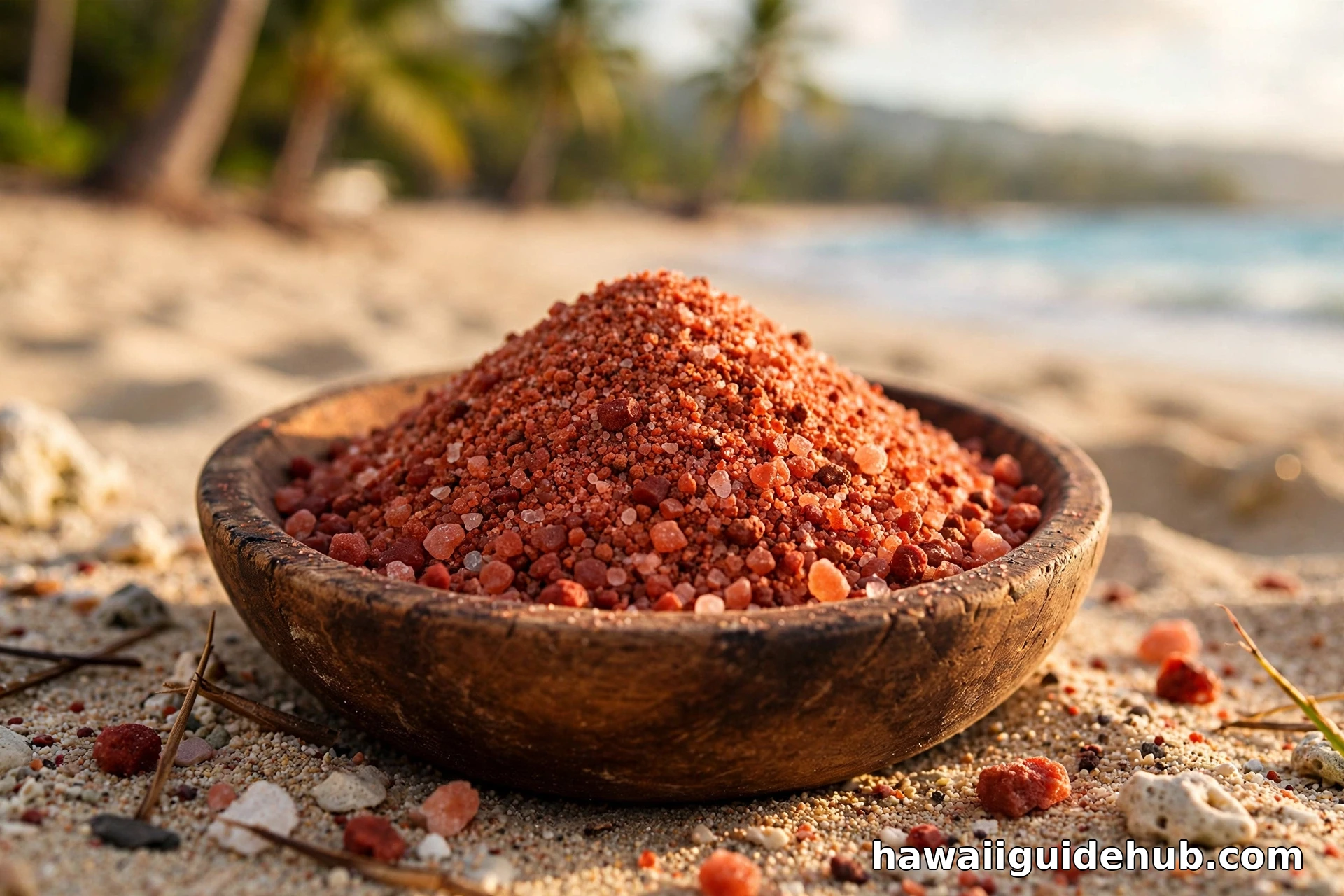
| Red salt | ʻAlaea: sea salt mixed with iron-rich red volcanic clay |
| White salt | Pure evaporated sea salt; clean, flaky, versatile |
| Black salt | Mixed with activated charcoal; a modern creation |
| Ceremonial role | Cleansing, purification, and blessing of tools, canoes, homes, and temples |
| Culinary role | Kalua pig, poke, pipikaula, finishing salt |
| Historic export | Shipped to the Pacific Northwest in the 1800s for curing salmon |
Paʻakai: The Word and the Craft
Paʻakai breaks down beautifully: paʻa means solid, kai means sea, so the word is “sea made solid.” Unlike other Polynesians, who seasoned food directly with seawater, Hawaiians developed the technology to extract dry salt, building shallow clay beds called loʻi paʻakai near the shore. Seawater was channeled in, the sun and wind evaporated it, and families scraped up the crystals with nets. It was patient, seasonal work tied to the dry months.
The craft flourished in three main places: Āliapaʻakai, the Salt Lake area of Oahu; Kawaihae on the Big Island; and Hanapēpē on Kauai. Of these, only Hanapēpē’s tradition survives as a living practice. In the nineteenth century, Hawaiians scaled up production using European techniques and became a leading supplier of salt to Pacific Northwest fishermen for curing salmon, an export trade most visitors never imagine.
The Three Colors of Hawaiian Salt
Hawaiian salt comes in three colors, and the colors are not decoration. Each one is a different product with different uses, and knowing the difference is the key to buying and cooking well.
| Salt | What it is | Flavor | Best uses |
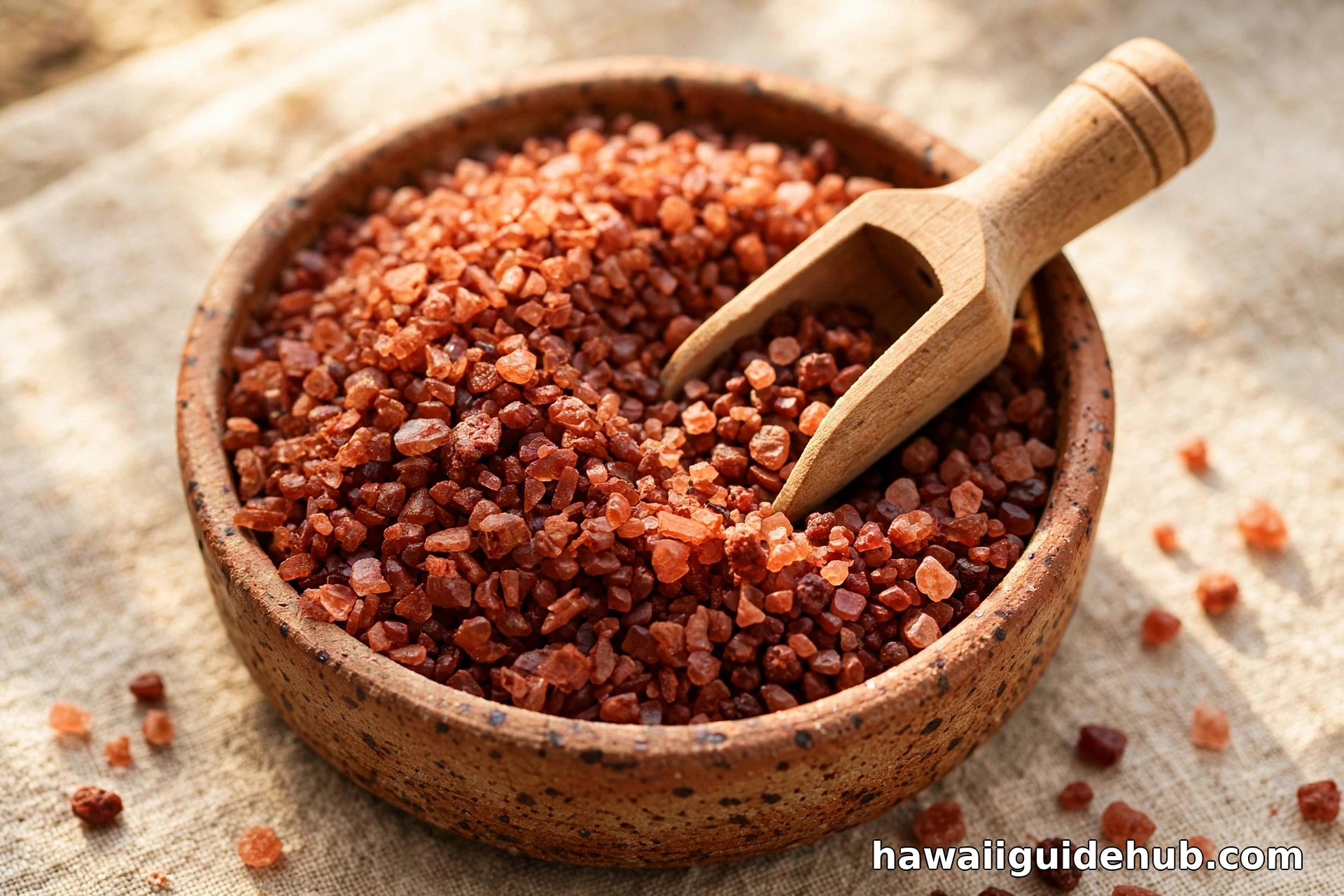
| Red ʻalaea | Sea salt blended with ʻalaea, an iron-rich red volcanic clay containing some 80 minerals | Mellow, earthy, less harsh than table salt | Kalua pig, poke, pipikaula; roasting and grilling meats |
| White | Pure evaporated sea salt, sometimes flaky | Clean, bright, straightforward salinity | Everyday cooking, finishing, baking |
| Black | Sea salt mixed with activated charcoal | Mild with a dramatic look; subtle mineral notes | Finishing salt for visual contrast on light foods |
Red ʻalaea is the traditional one, the salt of Hawaiian ceremony and classic dishes. Its brick-red color comes from iron oxide in the clay, and Hawaiians have long valued it for both flavor and the extra minerals. A word of caution from food writers: much of the “Hawaiian” alaea salt sold on the mainland is produced outside Hawaii. True Hawaiian-made ʻalaea salt costs more, and the label should say where it was made.
The Salt Ponds of Hanapēpē: A Living Tradition
At Salt Pond Beach Park on Kauai’s sunny west side, just past Hanapepe town, the clay salt beds lie behind the beach, where about two dozen Hawaiian families have made salt for generations. It is considered a sacred practice. Each family tends a designated area, forming the beds from clay, letting seawater evaporate to concentrated brine, and scraping the crystals with nets.
Here is what visitors must understand: this salt is not sold. It is gifted. The families share it within the community, and it carries cultural meaning no commercial product can match. Guests are welcome at the beds only by invitation. Otherwise, admire from a respectful distance and enjoy Salt Pond Beach itself, a lovely reef-protected beach. The tradition’s survival depends on that respect.
How a Salt Bed Works: Sun, Wind, and Patience
The physics of the loʻi paʻakai is simple and unforgiving. Seawater is led into shallow clay beds, where the tropical sun heats it and the trade winds skim vapor off the surface. As water leaves, the brine concentrates. First the bitter minerals precipitate out, then, at the right concentration, clean salt crystals form. The family’s skill lies in reading the water: knowing when to move brine between beds, when to drain off the bitter first salts, and exactly when to harvest the clean crystals.
Timing is everything. Salt-making is a dry-season craft; winter rains would dilute the beds and ruin a harvest. A good season yields crystals that are scraped up with nets, drained, and dried further before use. It is slow food in the truest sense: weeks of sun and attention for a harvest measured in baskets, not tons. That scarcity is part of why the Hanapēpē salt is gifted rather than sold. You cannot put a price on weeks of sacred work without cheapening it.
Salt in Hawaiian Ceremony
To understand paʻakai, you have to understand that Hawaiians did not see salt as a mere seasoning. It was a spiritual tool. Salt cleansed and purified: new canoes were blessed with it before their first voyage, tools and homes were purified with it, and heiau, the temples, used it in ritual. In healing practices, salt played a role in restoring spiritual balance. The hiʻuwai purification ceremony, a ritual cleansing, centered on salt’s power to wash away spiritual impurity.
This is why the Hanapēpē families guard their practice. They are not manufacturing a product; they are maintaining a relationship between their families, the land, and the spiritual traditions their ancestors carried. When a family gifts you their salt, they are sharing something sacred. Receive it that way.
Hawaiian Salt vs. Other Sea Salts
With fancy salts everywhere, an honest question: when is Hawaiian salt worth the premium, and when is it just marketing? An expert’s breakdown.
| Hawaiian ʻalaea | Generic sea salt | Fleur de sel / flaky finishing salt | |
| Origin story | Centuries of Hawaiian tradition; ceremonial roots | Industrial evaporation; no story | Artisanal French tradition |
| Mineral character | Iron-rich clay adds earthiness and 80 trace minerals | Varies; often just sodium chloride | Delicate, clean minerality |
| Best use | Roasting meats, Hawaiian dishes, grilling | Everyday cooking where salt dissolves | Finishing, where texture shines |
| Value verdict | Worth it for Hawaiian cooking and as a gift | Fine for the pasta pot | Worth it as a finishing salt |
| Watch out for | “Hawaiian style” made outside Hawaii | Nothing; it is honest salt | High prices for ordinary flakes |
The takeaway: buy ʻalaea when you want the flavor and the story, for Hawaiian dishes and for gifts. Buy flaky Hawaiian white salt when you want a finishing salt with island provenance. And keep honest cheap sea salt for the pasta water, where no one can taste the difference.
From Sacred to Kitchen: How Hawaiians Use Salt
Salt’s ceremonial role runs deep. Hawaiians traditionally used paʻakai to cleanse, purify, and bless tools, canoes, homes, and temples. It played a central part in healing rituals and in hiʻuwai, the purification ceremony. Salt was protection and blessing made tangible, which is why the Hanapēpē families treat their salt-making as sacred work rather than production.
In the kitchen, salt is the quiet foundation of Hawaiian cooking. Kalua pig is seasoned with ʻalaea salt before its long roast. Poke gets its savor from salt balanced against shoyu and sesame. Pipikaula, Hawaiian-style dried beef, depends on salt for preservation and flavor. The through-line is restraint: Hawaiian salt is mellow, and traditional cooking uses it to lift flavors rather than dominate them. To taste these dishes in their natural setting, consider a traditional luau, where kalua pig takes center stage.
Deep Ocean Salt: Hawaii’s Modern Salt Farm
Tradition is not the whole story. On the Big Island’s Kona coast, a working salt farm draws deep ocean water from 2,200 feet below the surface and evaporates it into flaky sea salt, billed as the only salt in the world made from deep ocean water. The farm sits on oceanfront acreage at the Hawaii Ocean Science and Technology Park, and it has drawn national attention, including a feature on a well-known food television series.
Deep ocean water is prized for its mineral content and purity, and the resulting salt is a premium finishing product. Farm tours show the evaporation process and end, naturally, at the shop. It is a fascinating counterpoint to Hanapēpē: ancient clay beds on one side, ocean-technology salt on the other, both producing paʻakai for the modern world.
Buying Hawaiian Sea Salt: What to Look For
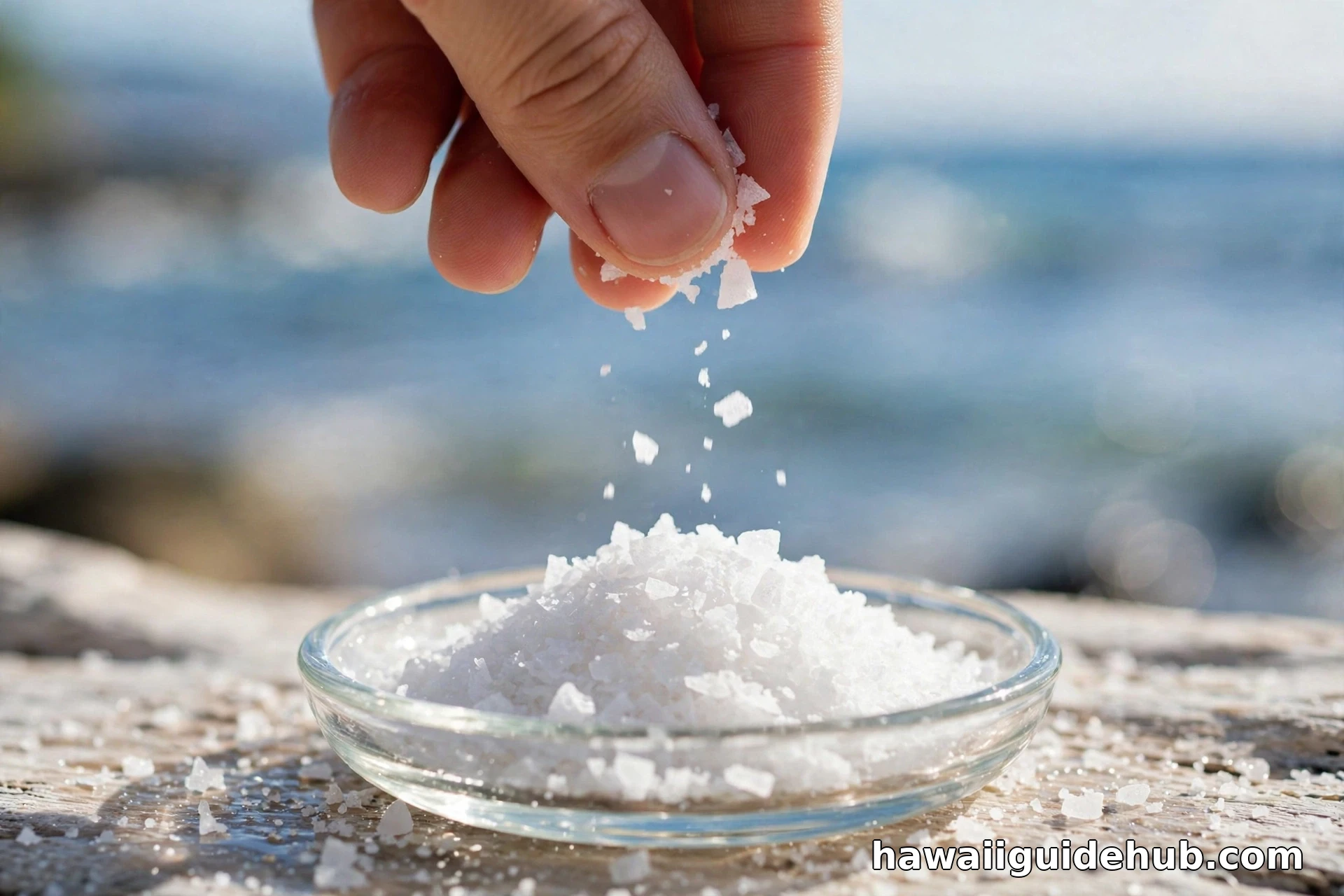
Buy Hawaiian-made salt from Hawaiian producers. For ʻalaea, check that the label names Hawaii as the origin; much mainland-sold “Hawaiian style” salt is made elsewhere. True Hawaiian ʻalaea costs more because the real clay and the real process cost more. White flaky finishing salts from the Kona coast farm are widely available in island shops and online. Small bags make excellent gifts: light, packable, and genuinely of the place.
A sampler with all three colors is the best introduction. Taste them side by side on something simple, like sliced tomato or avocado, and the differences become obvious. Store all salts in a dry place; the flaky whites especially hate humidity and clump fast.
Cooking With Hawaiian Salt
Use ʻalaea where tradition puts it: seasoning pork before roasting, finishing grilled fish, dressing poke. Its mellow earthiness suits long cooking. Use flaky white salt as a finishing salt, sprinkled over dishes just before serving so the crystals stay crisp and the flavor pops. Use black salt where the drama helps: on pale foods like fish, eggs, or potatoes, where the contrast is striking.
The broader rule is the Hawaiian one: salt to lift, not to overwhelm. Start with less than you think, taste, and adjust. For more island flavors built on this philosophy, explore our guide to must-try local dishes.
Video: Making Salt the Traditional Way
Watch a Hanapēpē family make salt at the traditional ponds: the clay beds, the evaporation, and the harvest.
Frequently Asked Questions
What is Hawaiian sea salt called?
Paʻakai, which means “sea solid.” Red Hawaiian salt is called ʻalaea, after the volcanic clay mixed into it.
What makes red Hawaiian salt red?
ʻAlaea, an iron-rich red volcanic clay containing some 80 minerals, blended into the sea salt. The iron oxide gives the characteristic brick-red color.
Can you visit the Hawaiian salt ponds?
You can visit Salt Pond Beach Park on Kauai and view the beds from a respectful distance. The salt-making areas themselves are open only by invitation from the families, and the traditional salt is gifted, not sold.
What is Hawaiian salt used for?
Traditionally: blessing and purification ceremonies, plus seasoning kalua pig, poke, and pipikaula. Today: the same dishes, plus finishing salt for modern cooking.
Is black Hawaiian salt traditional?
No. Black salt, made with activated charcoal, is a modern creation. Red ʻalaea is the traditional Hawaiian salt.
Where can you buy real Hawaiian sea salt?
From Hawaiian producers, in island shops, and online. Check that ʻalaea salt was actually made in Hawaii; much mainland-sold “Hawaiian style” salt is produced elsewhere.
Paʻakai is Hawaii in miniature: ocean made solid, blessed by families who have tended the same clay beds for generations, and seasoned into every great island dish. Bring some home, use it with respect, and taste the islands in every pinch. It is the smallest souvenir you can buy and one of the most meaningful.