Saimin: Hawaii’s Beloved Noodle Soup

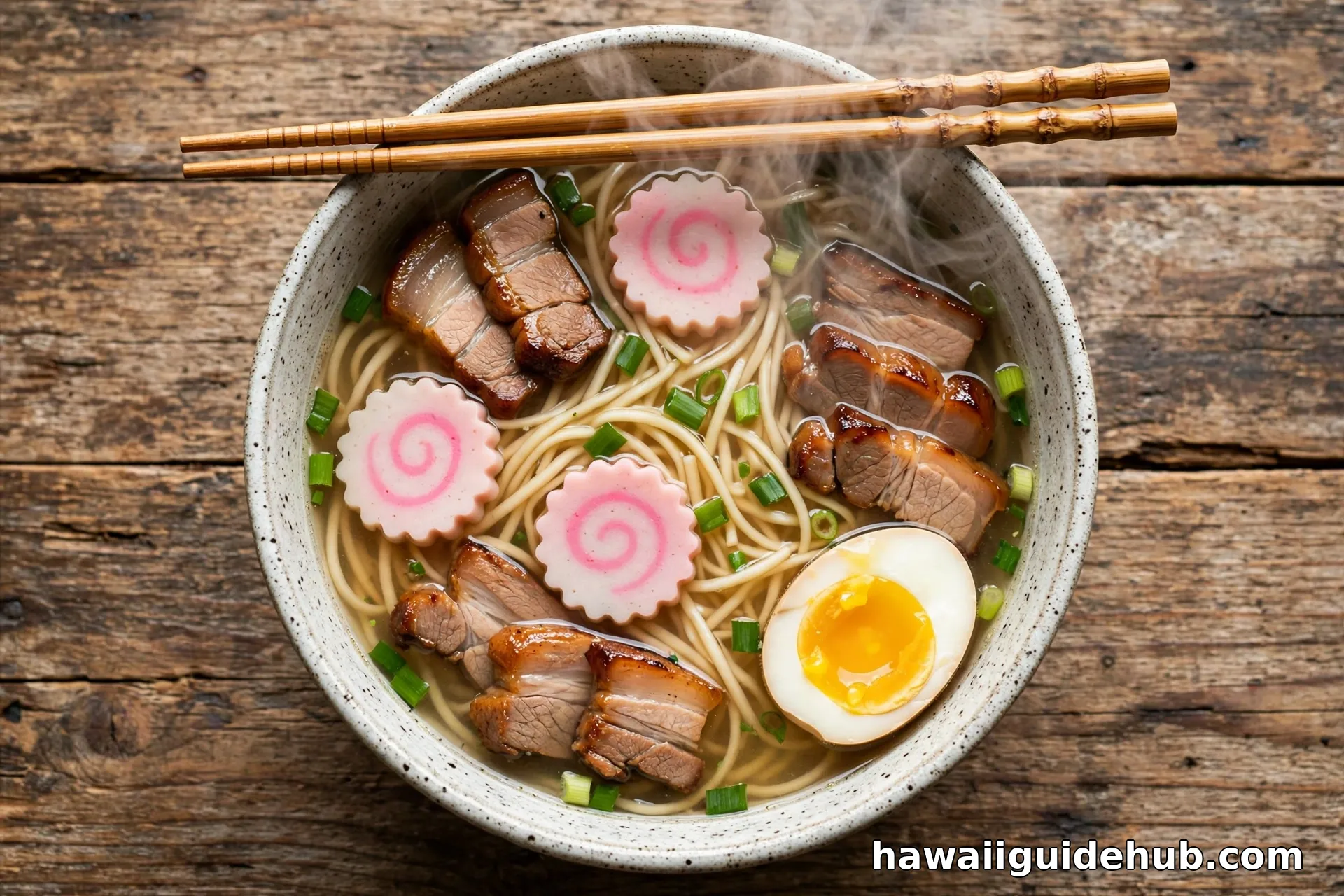
A steaming bowl arrives, and the first thing you notice is the broth: clear, light, and fragrant, nothing like the heavy tonkotsu of ramen. Thin wheat noodles curl beneath slices of pink kamaboko, char siu pork, and green onions. One spoonful and you understand why Hawaii defends this soup so fiercely. This is saimin, the islands’ own noodle soup, born on sugar plantations and found nowhere else on earth.
This is the single complete guide to saimin in Hawaii. It covers what saimin is, how plantation workers invented it, what goes into the broth and the bowl, how it differs from ramen, the dry and fried versions, and where visitors can eat an honest bowl across the islands. If you have been searching for anything about saimin Hawaii, the answers are all here on this one page.
Saimin at a Glance
| The bowl | The story |
|---|---|
| The noodles | Thin wheat noodles made with egg; soft bite |
| The broth | Dashi based, often with dried shrimp, shiitake, and pork or chicken bones |
| The toppings | Kamaboko, char siu, wonton, green onions, egg, nori |
| The roots | Chinese mein, Japanese ramen, and Filipino pancit blended on the sugar plantations in the late 1800s; the name comes from Cantonese words for thin noodles |
| The price then | About 5 cents a bowl at 1930s plantation saimin stands |
| The variations | Classic soup, dry mein, fried saimin |
| Where to find it | Saimin shops, Zippy’s, Liliha Bakery, McDonald’s in Hawaii, grocery stores |
| Best for | Comfort food, late-night eats, rainy-day meals |
What Is Saimin?
Saimin is Hawaii’s signature noodle soup. It starts with soft, thin wheat noodles made with egg, served in a clear, savory broth, and finished with toppings borrowed from across Asia: slices of kamaboko (Japanese fish cake), char siu pork, wontons, chopped green onions, and sometimes a soft egg or sheets of nori. It looks a little like ramen, but one taste tells you it is something else entirely.
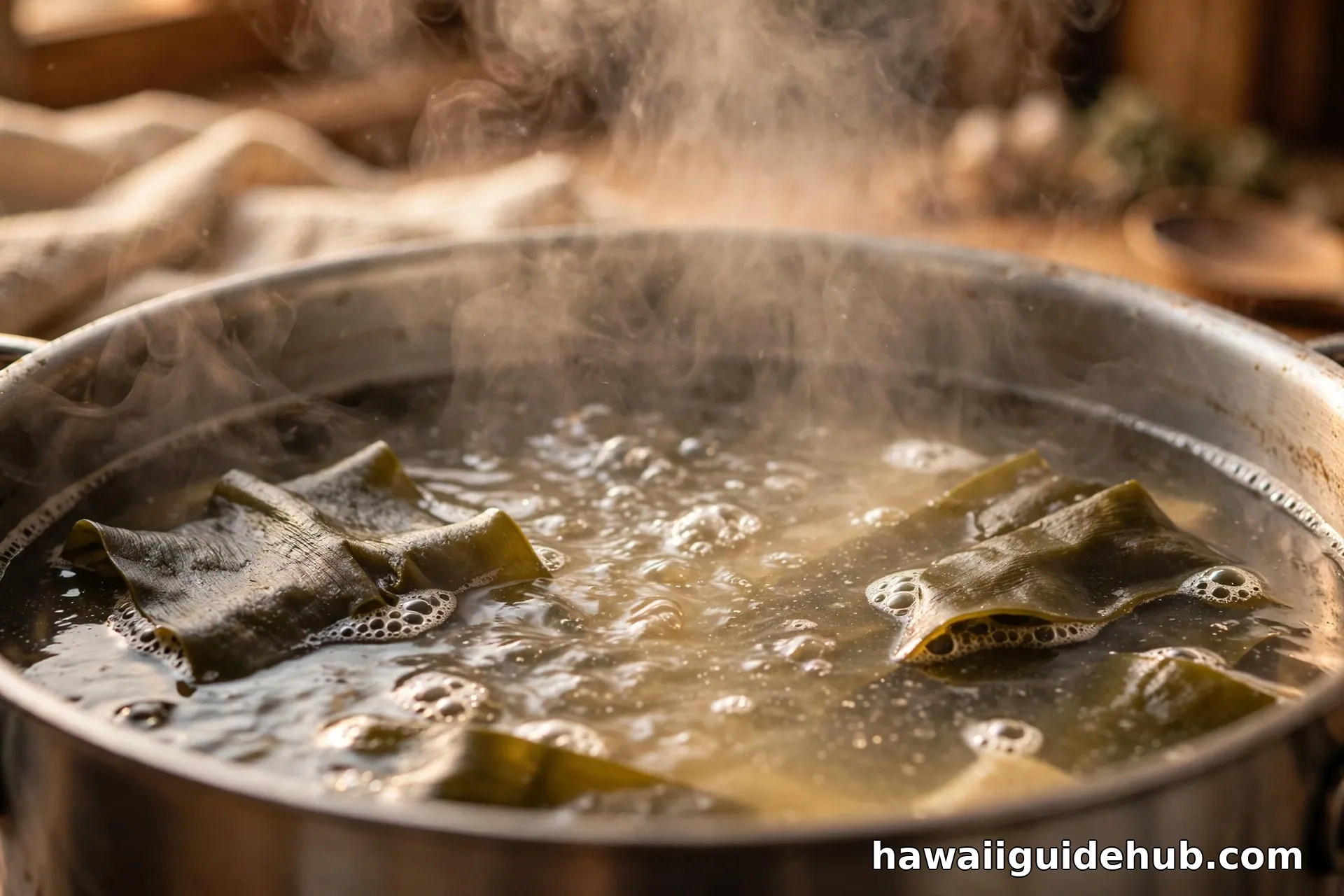
The defining feature is the broth. Where ramen broths are often rich, cloudy, and heavy, saimin broth is light and clean, built on dashi, the Japanese stock of konbu (dried kelp) and bonito flakes. Many cooks deepen it with dried shrimp, dried shiitake mushrooms, ginger, and pork or chicken bones, but the goal stays the same: a gentle, savory soup that comforts rather than overwhelms. Locals reach for saimin when they are tired, chilled, or just homesick for Hawaii.
The name itself tells the origin story. Saimin comes from Cantonese words meaning thin noodles, a hint that Chinese immigrants had a hand in its invention. And they did, along with just about everyone else who worked the plantations.
How Saimin Was Invented on the Plantations
Saimin was born in the late 1800s on Hawaii’s sugar plantations, where workers from China, Japan, Korea, the Philippines, and Portugal labored side by side. At mealtimes, they shared food across ethnic lines. The Chinese brought mein noodle soups, the Japanese brought ramen, the Filipinos brought pancit. Ingredients were traded, techniques were borrowed, and out of that daily exchange came a new dish that belonged to no single group and to all of them.
The first public mention of saimin appeared in 1917, when the Honolulu Star-Bulletin described it as a Chinese dish. By then, saimin wagons were already rolling. Immigrant families cooked noodles, broth, and toppings at home, loaded everything onto pushcarts, and sold bowls to plantation laborers wherever workers gathered. For many families, the saimin wagon was a first step into business in a new land.
By the 1930s, fixed saimin stands served the plantation towns, selling bowls for about 5 cents. One famous early stand, Shiroma’s in the Japanese camp at Waipahu, opened at 5:30 in the morning and stayed open until 11 at night to match the brutal 10 plus hour shifts of the field workers. Stands also sold teriyaki beef sticks and hamburgers alongside the soup, a pairing you can still order today.
As Hawaii’s economy shifted from agriculture to services in the 1960s and 1970s, saimin moved with the people. Stands opened near stadiums, theaters, pool halls, and schools. When Honolulu Stadium added saimin to its concession menu, the dish stepped into the spotlight as Hawaii’s fast food. Schools served it at lunch, teenagers ate it after nights out, and chains like Zippy’s made it a statewide staple. Today you can even buy saimin at McDonald’s in Hawaii and as instant noodles in every 7-Eleven, which tells you everything about its status.
What Goes Into a Bowl of Saimin
A proper bowl of saimin has three parts: noodles, broth, and toppings. The noodles are the soul of the dish. True saimin noodles are made from wheat flour and egg, which gives them a soft bite and a golden color. They are thinner and less curly than ramen noodles, and they drink up the broth in a way that makes each strand flavorful.
The broth starts with dashi and builds from there. Home cooks and shops guard their recipes, but the common building blocks are konbu, bonito flakes, dried shrimp, dried shiitake, ginger, and long simmered pork or chicken bones. Some add dried scallops for sweetness. The result should taste clean and deeply savory, never muddy.
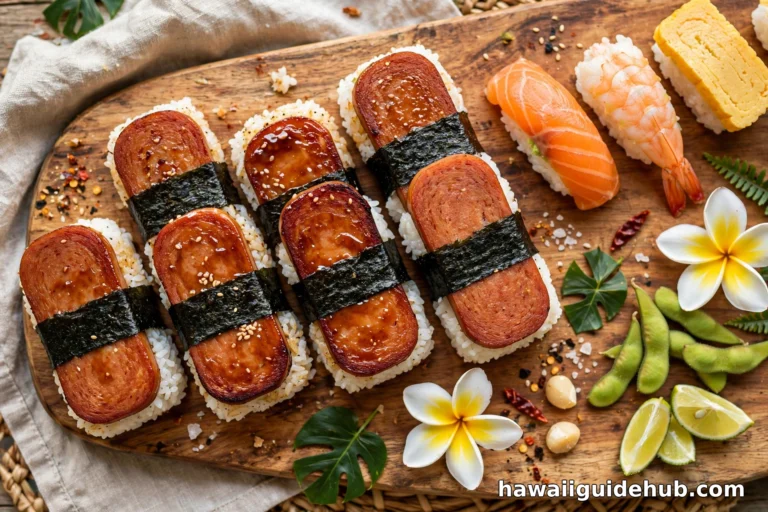
Toppings are where the multicultural history shows. Kamaboko brings Japan, char siu brings China, wontons bring China too, green onions and nori finish it the Japanese way. A sliced hard boiled or soft egg is common, and some bowls get Spam, a nod to Hawaii’s pantry. There is no single canonical topping set, which is why ordering saimin at different shops is half the fun. For the full spread of island flavors, see our guide to must try local dishes in Hawaii.
The Classic Saimin Toppings, Explained
If you are new to saimin, the topping lineup can look like a puzzle. Each one has a story, and knowing them makes the bowl better.
Kamaboko is the pink and white sliced fish cake you see spiraled on top. It is a Japanese staple, made from pureed white fish that is steamed into a loaf and sliced. In saimin it adds a mild sweetness and a firm, pleasant chew, plus that unmistakable pink swirl that makes the bowl look like Hawaii. Char siu needs little introduction after our manapua guide: the same sweet red barbecue pork, sliced thin, bringing richness to the light broth.
Wontons are the Chinese contribution, small pork filled dumplings that plump up in the hot broth. A soft or hard boiled egg adds comfort, and sheets of nori contribute a briny depth. Green onions go on everything in Hawaii, and saimin is no exception. Then there is Spam, the canned meat Hawaii loves without apology. Diced Spam in saimin is not traditional in the plantation sense, but it is thoroughly local in the modern sense, and plenty of shops offer it.
The beauty of the topping set is that it never really settled. Every shop, every family, every saimin wagon had its own combination, which is why two bowls of saimin are rarely identical. When you order, you are tasting one cook’s version of a dish that has been improvised for over a century.
Saimin vs Ramen: What Is the Difference?
Everyone compares saimin to ramen, so let us settle it. The two soups share ancestors, but they diverged long ago.
| Saimin (Hawaii) | Ramen (Japan) | |
| Noodles | Thin wheat noodles made with egg, soft bite | Wheat noodles without egg, often curly and chewy |
| Broth | Clear, light dashi based broth | Often rich, cloudy, and heavy |
| Toppings | Kamaboko, char siu, wonton, green onion | Chashu, ajitama egg, nori, menma |
| Roots | Chinese, Japanese, and Filipino plantation cooking | Chinese wheat noodles adapted in Japan |
| Where | Essentially only in Hawaii | Worldwide |
Think of it this way: ramen is Japan’s national noodle soup, refined over a century. Saimin is Hawaii’s, invented by workers sharing lunch. Both are delicious. Only one tastes like the islands.
Dry Mein and Fried Saimin
Saimin is not always a soup. Dry mein, also called dry saimin, takes the same boiled noodles and serves them without broth, tossed with a savory sauce and the usual toppings. It nods to Chinese chow mein and shows up at potlucks and family gatherings across the islands. If you see a tray of glossy noodles at a Hawaii party, that is probably dry mein.
Fried saimin goes a step further: the noodles are stir fried with toppings in the style of Chinese and Filipino noodle stir fries. It is hearty, a little greasy in the best way, and a fixture of local-style cooking. Between the soup, the dry mein, and the fried version, saimin covers every noodle craving Hawaii has.
Where Visitors Can Eat Saimin in Hawaii
You will not struggle to find saimin. On Oahu, Shige’s Saimin in Wahiawa and the various Zippy’s locations serve the classic bowls locals grew up on, and Liliha Bakery pairs its saimin with the bakery’s famous pastries. These are not tourist traps. They are the places Hawaii families actually eat, which is exactly why you should go.
On Kauai, Hamura Saimin in Lihue is the legend, a no frills counter that has anchored the island’s saimin culture for generations. Order the special saimin with a barbecue stick on the side, the way the plantation stands served it. On the other islands, ask locals for their saimin spot. Everyone has one, and everyone will have opinions about yours.
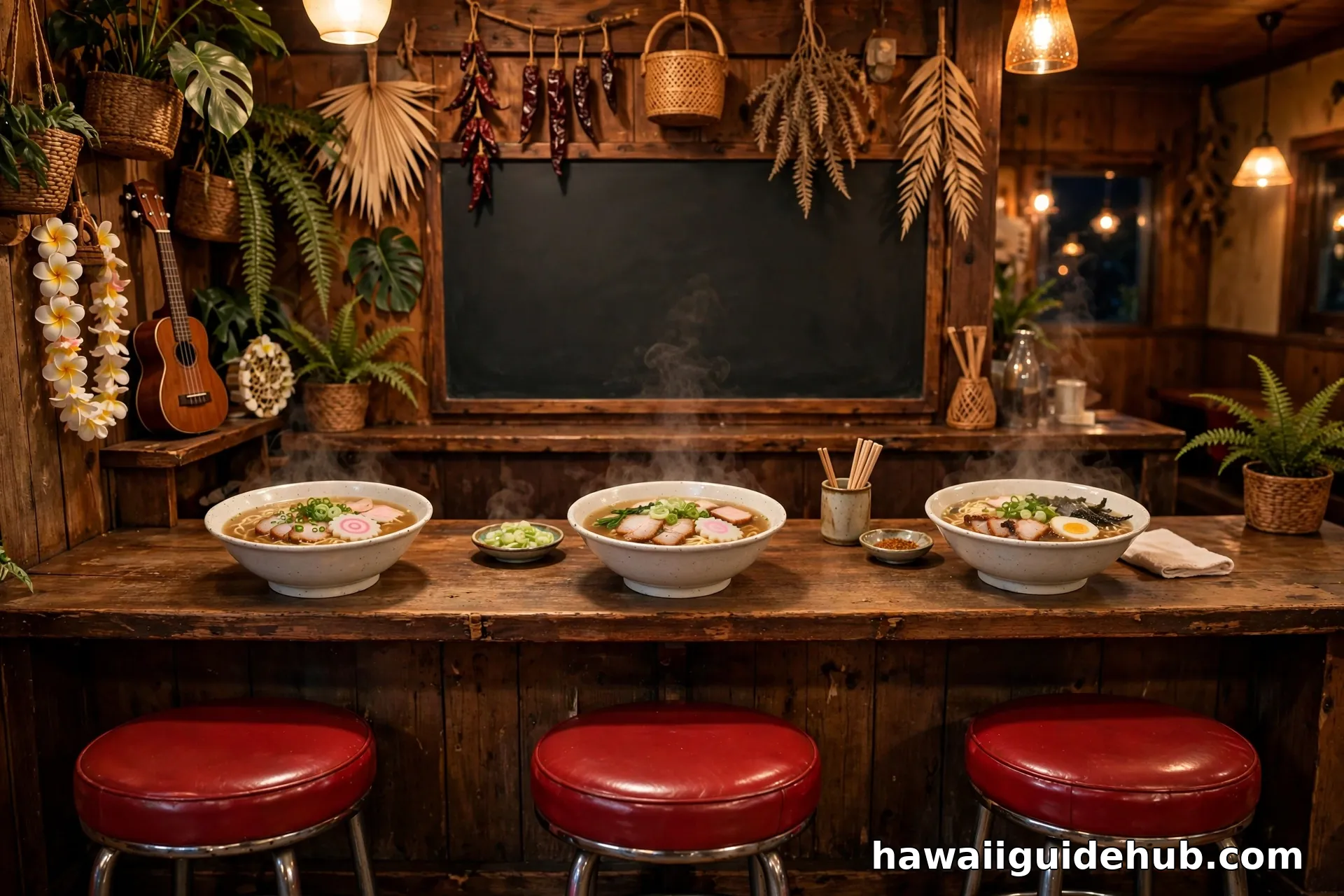
For the full experience, eat saimin the local way: late. Saimin has been Hawaii’s late night food for decades, the bowl you crave after an evening out. It anchors our best late night eats in Hawaii for good reason. And if you fall in love, grocery stores sell fresh saimin noodle packs and instant cups, so you can take the habit home.
Video: How Saimin Is Made
Watch Chef Sheldon Simeon build a saimin broth and bowl from scratch, with the classic barbecue skewers on the side.
Frequently Asked Questions
What is saimin made of?
Saimin is made of thin wheat egg noodles served in a light dashi based broth, topped with ingredients like kamaboko (fish cake), char siu pork, wontons, green onions, and egg. The broth often includes konbu, bonito flakes, dried shrimp, shiitake mushrooms, ginger, and pork or chicken bones.
Is saimin the same as ramen?
No. Saimin uses egg noodles and a clear, lighter dashi broth, while ramen typically uses eggless noodles and richer broth. Saimin was invented in Hawaii by plantation workers blending Chinese, Japanese, and Filipino noodle traditions. It is a distinct dish found essentially only in Hawaii.
What does saimin taste like?
Saimin tastes clean, savory, and comforting. The broth is light but deeply flavored, the noodles are soft and slurpable, and the toppings add sweet, salty, and fresh notes. It is milder than ramen and less aggressive than pho, the kind of soup that soothes.
What is dry mein?
Dry mein, or dry saimin, is saimin noodles served without broth, tossed in a savory sauce with the usual toppings. It is a popular potluck and party dish in Hawaii. Fried saimin is the stir fried version.
Where did saimin originate?
Saimin originated on Hawaii’s sugar plantations in the late 1800s, created by immigrant workers sharing Chinese mein, Japanese ramen, and Filipino pancit. It was first sold from saimin wagons in the early 1900s, then from stands that charged about 5 cents a bowl in the 1930s.
Can you buy saimin outside Hawaii?
Fresh saimin is essentially a Hawaii only food, though instant saimin cups are sold in some mainland stores with Hawaiian food sections. For the real bowl with fresh noodles and proper broth, you need to be in the islands. If noodles are your thing, our guide to Oahu restaurants covers more of the island’s best bowls.
Saimin is Hawaii in a bowl: not one culture but all of them, simmered together until something new emerged. It fed plantation workers for nickels, fueled teenagers after midnight, and still anchors family tables across the islands. Order it steaming hot, add the barbecue stick, and taste the history. For another soup with deep island roots, read about huli huli chicken and its place in local food culture.