Kauai Coffee: America’s Largest Coffee Farm on the Garden Isle

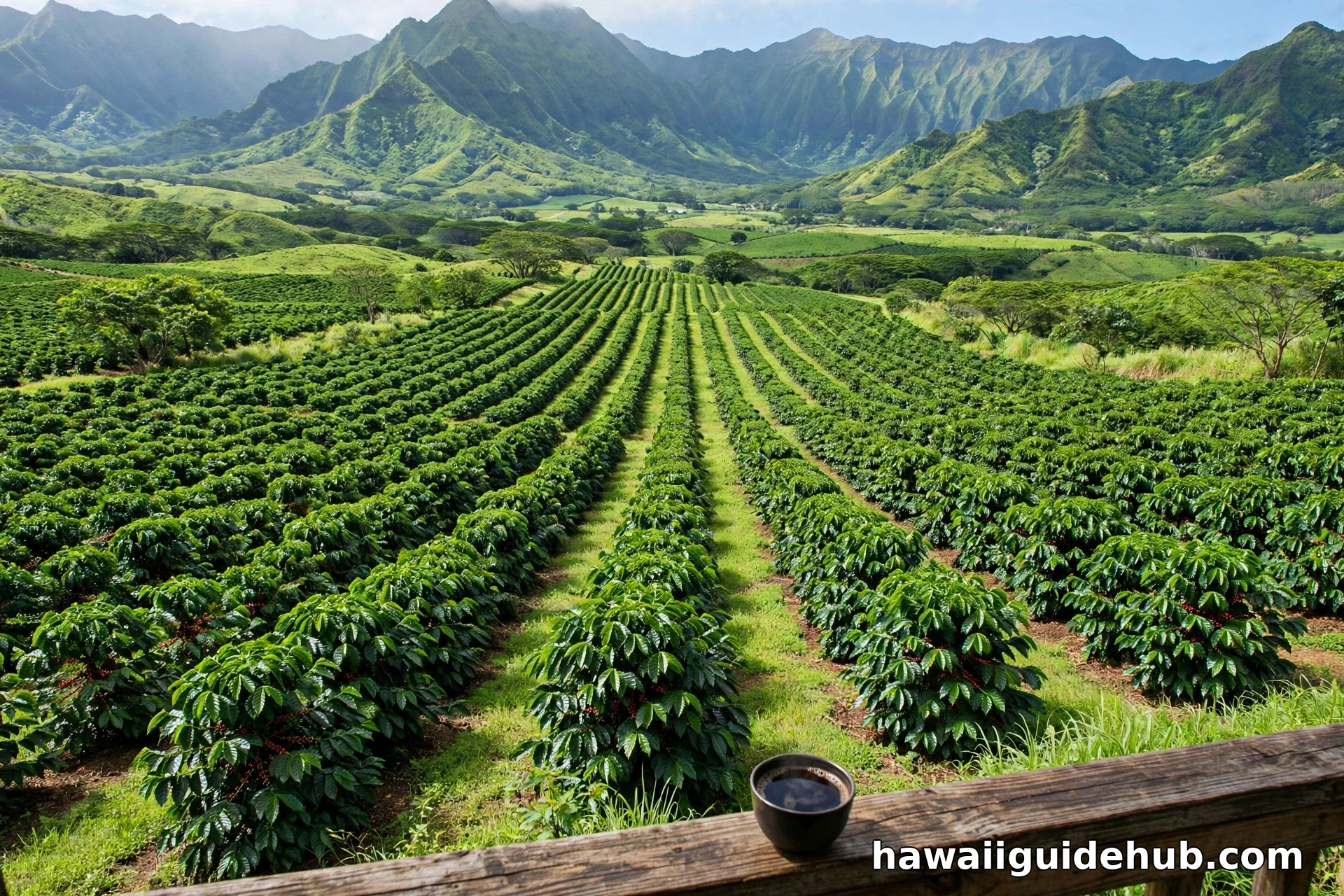
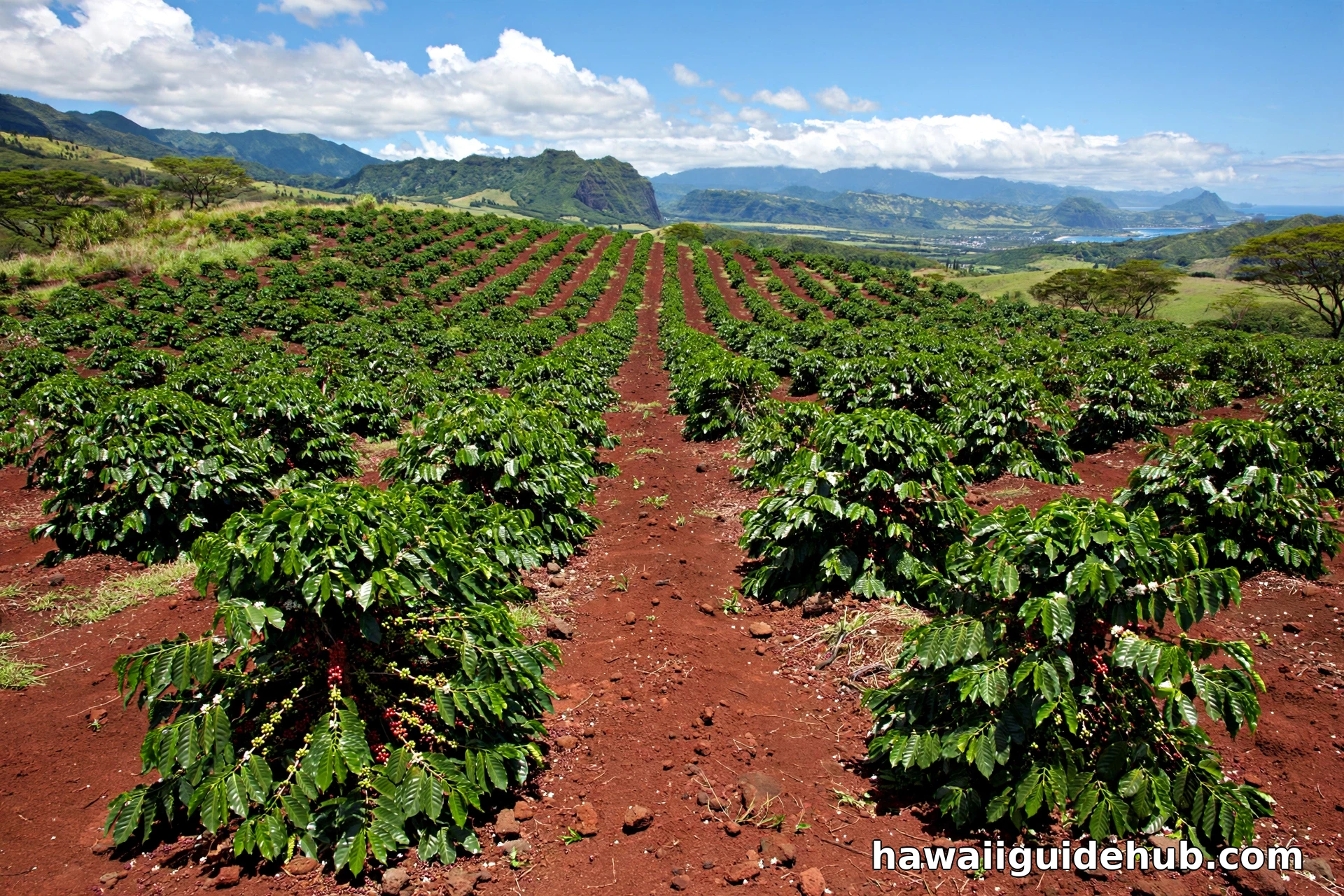
Kona gets the fame, but Kauai grows the most. On the Garden Isle’s sunny southern shore, the Kauai Coffee estate spreads across some 3,400 acres, making it the largest coffee farm in the United States. Where Kona is a patchwork of tiny family plots, Kauai is coffee at estate scale: orderly orchards, mechanical harvesters, and a visitor center that pours free tastings all day. It is a completely different window into Hawaiian coffee, and it is absolutely worth a visit.
This is the single complete guide to Kauai coffee. It covers the estate’s story from sugar plantation to coffee farm, what makes estate-grown coffee different, the varietals grown on Kauai, what the coffee tastes like, the visitor center experience, practical visit tips, and buying advice. If you have been searching for anything about Kauai coffee, the answers are all here on this one page.
Kauai Coffee at a Glance
| What it is | 100% estate-grown arabica from the largest coffee farm in the US |
| Location | Kalaheo, on Kauai’s southern shore between Koloa and Hanapepe |
| Size | About 3,400 acres, with roughly 2,300 actively farmed each year |
| Founded | 1987, as diversification from the McBryde sugar plantation |
| Varietals | Red and Yellow Catuai, Kauai Blue Mountain, Mundo Novo, Typica |
| Model | Estate: everything from seed to cup on one property |
| Harvest | Mechanical harvesting, unlike hand-picked Kona |
| Visitor center | Open daily with free walking tours and tastings |
| Taste | Clean, mild, smooth; approachable and consistent |
| Certification | Certified by the Hawaii Department of Agriculture for grade and origin |
From Sugar to Coffee: The Estate’s Story
Kauai Coffee exists because sugar died. For over a century, the McBryde Sugar Company farmed this land on Kauai’s south shore. As Hawaii’s sugar industry collapsed in the 1980s, McBryde needed a future for its fields and workers. In 1987, the first coffee trees went in as a diversification crop, in a joint venture with Hills Bros. Coffee. Coffee was a gamble. Sugar had been a certainty for generations.
The gamble nearly failed early. In 1992, Hurricane Iniki slammed into Kauai and inflicted some $8.5 million in damage on the young coffee operation. The farm rebuilt. By 1996, the coffee harvest exceeded the volume of the entire Kona region, a milestone that announced Kauai as a serious producer. The visitor center opened in 1998 at Numila, turning the working farm into one of Kauai’s most visited agricultural attractions. Today the estate is both a farm and a destination, a monument to an island reinventing itself.
What “Estate Grown” Actually Means
Wine lovers know the estate concept. Kauai Coffee works the same way: the coffee is propagated from seed, grown, harvested, processed, roasted, and packaged on one property. That vertical control is the quality argument. Nothing is blended from anonymous sources, nothing is processed by strangers. The estate’s managers describe their rows of trees as an orchard, not a field, and the distinction shows in the cup’s consistency.
Scale changes the methods. Unlike Kona’s hand-picked small farms, Kauai harvests mechanically, a necessity across thousands of acres. Purists sometimes sniff at machine harvesting, but the estate’s defense is selection: modern harvesters, careful sorting, and estate processing produce a clean, consistent coffee. The proof is in the tasting room, where visitors compare roasts side by side and judge for themselves.
Kona vs. Kauai: Two Models of Hawaiian Coffee
Visitors often ask which is better, Kona or Kauai. The honest answer is that they are different products of different philosophies, and understanding the contrast makes both more interesting.
| Kona | Kauai | |
| Scale | 600+ tiny family farms on about 2,300 total acres | One estate of about 3,400 acres |
| Harvest | Hand-picked, multiple passes per season | Mechanical harvesting |
| Business model | Hundreds of independent growers | Single vertically integrated estate |
| Price | Premium; among the world’s priciest coffees | Moderate; everyday-drinking range |
| Flavor | Complex, distinctive, variable by farm | Clean, mild, highly consistent |
| Best for | Connoisseurs and special occasions | Daily drinking and gifts |
| Visitor experience | Intimate small-farm tours | Grand estate with free tastings |
Neither model is “right.” Kona preserves a heritage of smallholder farming that is increasingly rare in world coffee. Kauai proves that Hawaiian coffee can be produced at a scale that keeps it affordable without sacrificing the estate standard. Try both, and you will understand Hawaiian coffee far better than either one alone could teach you.
An Island Reinventing Itself
Kauai Coffee’s story is really Kauai’s story. When sugar collapsed across Hawaii in the 1980s and 1990s, the islands faced a choice: let plantation land go fallow or find new crops. Kauai bet on coffee, and the bet paid off beyond the farm itself. The estate preserved agricultural jobs through the transition, kept thousands of acres in cultivation, and even took over the old plantation’s hydroelectric facilities, which at one point supplied a meaningful share of the island’s electricity.
That reinvention narrative is part of what makes the visit moving. The walking tour passes through land that fed sugar workers for a century and now grows coffee for the world. Guides tell the Iniki story, the hurricane that nearly ended the experiment in 1992, as a point of pride: the farm that survived the storm. For visitors interested in Hawaii’s plantation history, the estate is a living chapter of it.
The Varietals: A Tour of the Trees
Most Hawaiian coffee is arabica, but the varietal matters, and Kauai grows several. Here is what the estate’s lineup tastes like and why each one is planted.
| Varietal | Character | Why it is here |
| Red Catuai | Sweet, full-bodied, reliable cup | High-yielding workhorse; backbone of the estate’s blends |
| Yellow Catuai | Slightly brighter and more delicate than Red | Related varietal adding complexity to the mix |
| Kauai Blue Mountain | Smooth, mild, famously drinkable | The estate’s signature; descended from Jamaican Blue Mountain stock |
| Mundo Novo | Bold, productive, classic Brazilian heritage | Vigor and yield in the island climate |
| Typica | The original Kona varietal; sweet and clean | Heritage connection to Hawaii’s coffee history |
Kauai Blue Mountain is the name to remember. It is the estate’s signature varietal and the one most visitors take home. The name nods to Jamaica’s famous Blue Mountain coffee, and while the terroir is pure Kauai, the smoothness that made the Jamaican original famous comes through.
What Kauai Coffee Tastes Like
If Kona is the connoisseur’s coffee, Kauai is the crowd-pleaser. The estate’s coffees are clean, mild, and smooth, with gentle acidity and an easy-drinking body. They lack Kona’s mystique but also its price tag, and many casual drinkers prefer Kauai’s approachability. The medium roasts are the sweet spot: nutty, lightly sweet, and consistent from bag to bag, which is exactly what estate control is supposed to deliver.
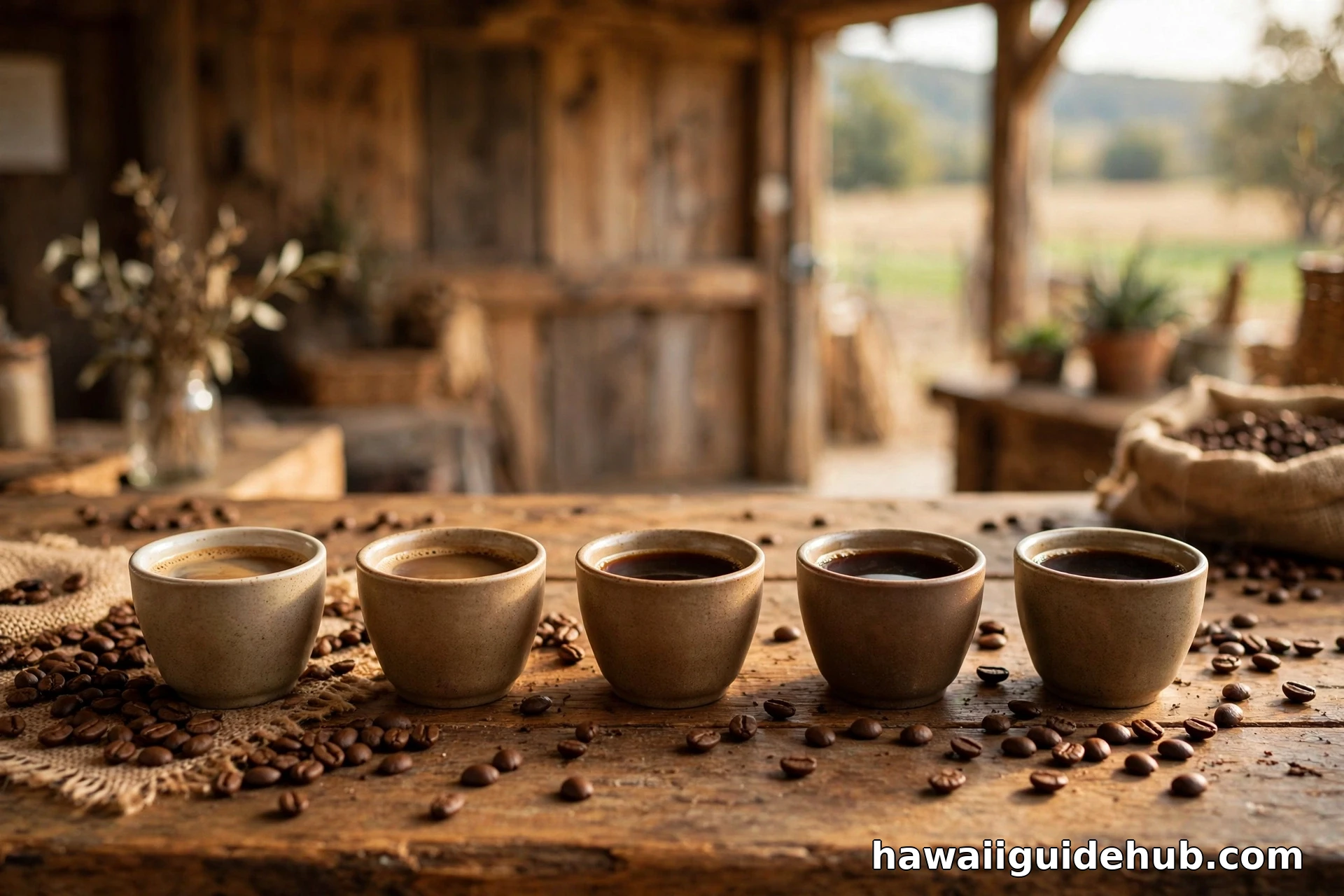
The visitor center tasting bar is the place to calibrate your palate. Work through the lineup from light to dark, and notice how the same estate’s beans change with roast level. It is a free education in what roast does to coffee, taught with the actual product in your cup.
Visiting the Kauai Coffee Estate
The visitor center at Kalaheo sits on the estate between Koloa and Hanapepe, an easy stop on Kauai’s sunny south shore and a natural pairing with Waimea Canyon or Poipu Beach. It is open daily, with a free self-guided walking tour through the orchards and a tasting bar pouring the estate’s coffees. Guided tours go deeper for those who want the full story.
Plan at least an hour, more if you take a guided tour. Mornings are pleasant before the south shore heat builds. The gift shop stocks the full range, including estate-exclusive roasts you will not find in mainland stores, and buying at the farm means peak freshness. For the rest of your Kauai planning, see our guides to things to do on Kauai and Poipu.
Buying Kauai Coffee
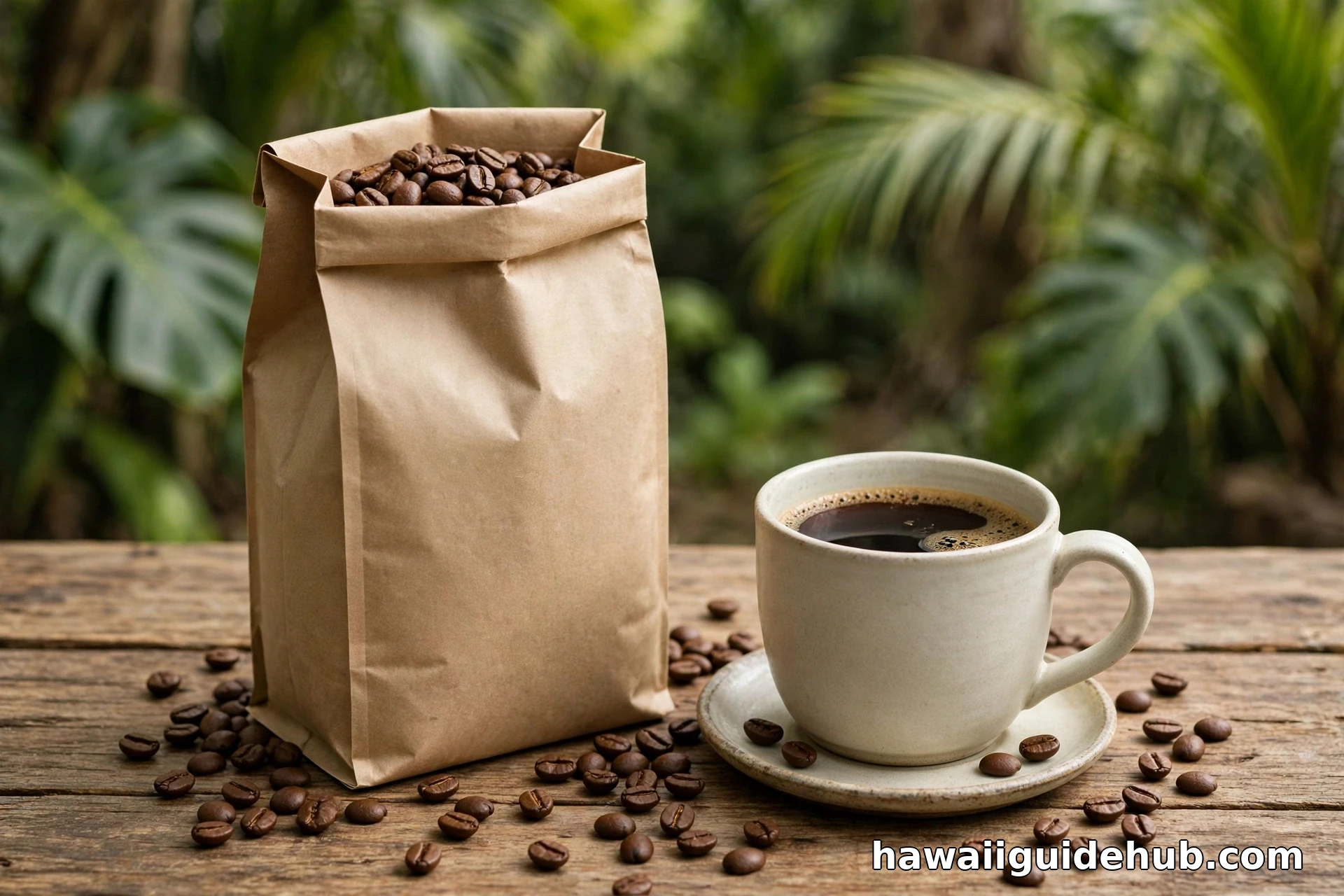
Kauai Coffee is widely available in Hawaii grocery stores and online, which makes it the easiest authentic Hawaiian coffee to buy. Look for the estate name and the 100% Kauai or 100% Hawaii-grown designation. Whole bean with a roast date is the freshest choice. The estate’s flavored coffees, like coconut caramel crunch, are popular souvenirs, while the single-origin Kauai Blue Mountain is the pick for serious drinkers.
Prices are friendlier than Kona’s, reflecting the estate’s scale. That is Kauai coffee’s quiet advantage: genuine Hawaiian estate coffee at a price you can drink every day. For the broader island coffee picture, see our guide to must-try local flavors in Hawaii.
Planning Your Visit: Practical Tips
A few practical notes make the visit smoother. The estate is on the south shore near Kalaheo, an easy drive from Poipu or Lihue, and it pairs naturally with Waimea Canyon, which lies to the west. Many visitors do the canyon in the morning and the coffee farm in the afternoon, or vice versa. The walking tour is outdoors and mostly flat, but wear sun protection and comfortable shoes; the south shore sun is strong even when the breeze feels cool.
Give yourself real time. An hour covers the free walking tour and a tasting; two hours lets you take a guided tour, browse the shop properly, and linger over the samples. The tasting bar is generous, so pace yourself if you are sensitive to caffeine. And bring a cooler bag if you are buying beans for the trip home; roasted coffee keeps its aromatics best away from heat, and a Kauai afternoon car can get very hot.
Beyond the Estate: Kauai Coffee Culture
The estate is the headline, but Kauai’s coffee culture extends across the island. Local cafes from Lihue to Hanalei pour Kauai Coffee as their house brew, and the island’s farmers markets sometimes feature small independent growers working tiny plots outside the estate system. If you fall in love with a particular roast at the tasting bar, ask at the shop which island cafes serve it; drinking your new favorite at a beachside cafe the next morning is one of Kauai’s small perfect pleasures.
For gifts, the estate shop beats the airport. Prices are better, the selection is wider, and the staff can tell you exactly what is in each bag. The flavored coffees make easy crowd-pleasing souvenirs, while a bag of Kauai Blue Mountain whole bean is the gift for the coffee geek in your life. Buy an extra bag for yourself. You will finish the first one faster than you expect.
Video: The Kauai Coffee Estate
Tour the estate with Kauai Coffee: the orchards, the harvest, and the journey from cherry to cup.
Frequently Asked Questions
Is Kauai Coffee really the largest coffee farm in the US?
Yes. The Kauai Coffee estate spans about 3,400 acres with roughly 2,300 actively farmed each year, making it the largest coffee farm in the United States by acreage.
Where is Kauai Coffee located?
In Kalaheo on Kauai’s southern shore, between Koloa and Hanapepe. The visitor center is an easy stop between Poipu Beach and Waimea Canyon.
Is the Kauai Coffee tour free?
The self-guided walking tour and the tasting bar are free. Guided tours with deeper access are available for those who want more.
What does Kauai coffee taste like?
Clean, mild, and smooth, with gentle acidity. It is more approachable and affordable than Kona, and very consistent thanks to estate-grown control.
What is Kauai Blue Mountain coffee?
The estate’s signature varietal, descended from Jamaican Blue Mountain stock. It is known for exceptional smoothness and is the most popular take-home coffee from the farm.
When did Kauai start growing coffee?
The first coffee trees were planted in 1987 as the McBryde sugar plantation diversified away from sugar. The visitor center opened in 1998.
Kauai coffee is Hawaii’s proof that scale and quality can coexist. Born from a dying sugar plantation, raised through a hurricane, it is now the biggest coffee farm in America and one of the friendliest farm visits in the islands. Go taste it at the source.