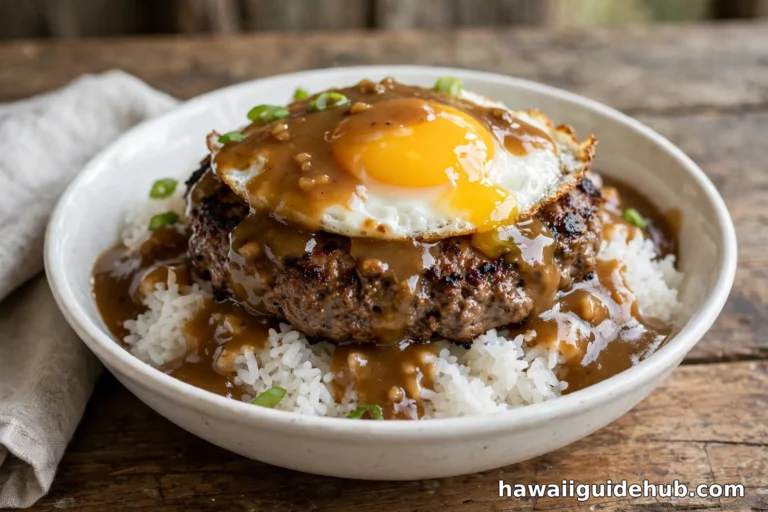
Edamame Recipe Hawaii: Hawaiian-Style Shoyu Garlic Edamame

Hawaiian-style edamame is the pupu you did not know you needed: bright green soybean pods tossed while still warm with shoyu, garlic, sesame oil, and chili, then finished with Hawaiian salt and toasted sesame seeds. It is the snack that shows up at potlucks, next to poke bowls, and in bento boxes across the islands, and it takes about ten minutes to make.
This is the complete guide to the edamame recipe Hawaii made its own. It covers what makes edamame Hawaiian style, the authentic method, the ingredients that matter, popular variations, what it tastes like, where visitors encounter it, and substitutions. Everything about Hawaiian-style edamame lives on this one page.
Hawaiian-Style Edamame at a Glance
| The basics | Details | Chef’s note |
|---|---|---|
| What it is | Edamame pods seasoned Hawaii-style with shoyu, garlic, sesame, and chili | Pupu-style: salty, garlicky, gone fast |
| Style roots | Japanese edamame meets Hawaii’s shoyu-garlic-chili seasoning tradition | The shoyu-garlic-chili trio shows up all over local cooking |
| Key ingredients | Edamame in pods, shoyu, garlic, sesame oil, chili flakes, Hawaiian salt | Do not skimp on the garlic; it is the point |
| Prep time | 5 minutes | Rinse and go; almost no knife work |
| Cook time | 5 minutes | Boil or steam, then toss while hot |
| Serves | 4 as a snack or side | Doubles easily for a party |
| Serve | Warm or chilled; as pupu, side dish, or poke bowl topping | Warm soaks up more seasoning |
| How to eat | Squeeze the beans from the pod with your teeth; the pods are not eaten | Pods are the handle, not the food |
What Makes Edamame “Hawaiian Style”
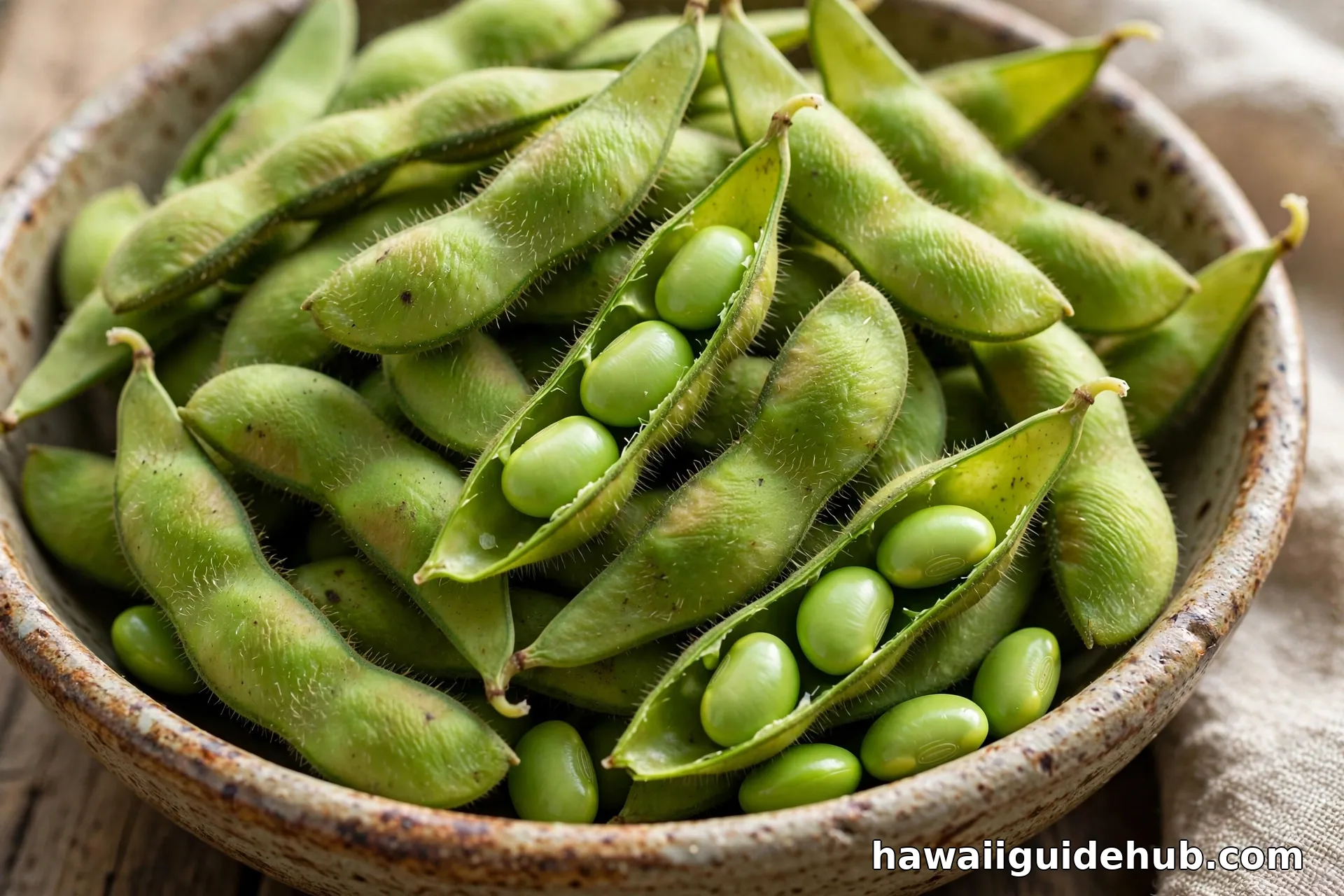
Plain edamame is Japanese: young soybeans in the pod, boiled and salted. Hawaiian-style edamame keeps the bean but changes the seasoning to the flavors Hawaii loves. Shoyu (Hawaii’s own Aloha Shoyu is the local classic) replaces plain salt. Garlic, lots of it, joins the party. Sesame oil and toasted sesame seeds add nuttiness. Chili, often Hawaiian chili pepper flakes or sambal, adds heat. The result tastes less like an izakaya snack and more like something from a Hawaii potluck, which is exactly the point.
Edamame became popular in Hawaii as Japanese food culture blended into everyday local eating. You now find it in stir-fries, soups, poke bowls, and even hummus at Hawaii grocery stores. The seasoned-pod version is the most beloved preparation, and it is the one this recipe covers.
The Authentic Hawaiian-Style Edamame Recipe
This is the classic home method: boil the pods, toss them hot with the seasoning, and serve. Some families marinate the cooled edamame for deeper flavor; both approaches are below. Active time is about ten minutes.
Ingredients
- 1 pound frozen edamame in pods (about 4 cups)
- 2 tablespoons shoyu (Aloha Shoyu preferred)
- 4 to 6 cloves garlic, minced
- 1 teaspoon toasted sesame oil
- 1/2 teaspoon toasted sesame seeds, plus more for garnish
- 1/4 teaspoon dried chili flakes, or to taste (Hawaiian chili pepper if you have it)
- Hawaiian salt or sea salt, to taste
- 1 tablespoon butter (optional, for a richer version)
Step by Step Method
- Cook the edamame. Bring a large pot of salted water to a boil. Add the frozen edamame and cook 4 to 5 minutes, until tender but still bright green and firm. Drain well.
- Mix the seasoning. While the edamame cooks, combine the shoyu, minced garlic, sesame oil, sesame seeds, and chili flakes in a large bowl.
- Toss hot. Add the hot drained edamame to the bowl and toss thoroughly so every pod is coated. The heat blooms the garlic and melds the flavors.
- Season to taste. Sprinkle with Hawaiian salt, toss again, and taste a bean. Add more shoyu for saltiness, more chili for heat, or a knob of butter for richness.
- Serve. Serve warm, or chill in the refrigerator and serve cold. Garnish with extra sesame seeds and sliced green onion if you like.
The Marinated Version
For deeper flavor, cool the tossed edamame, seal it in a bag or container with the seasoning, and refrigerate for a few hours or overnight, flipping once. The pods absorb the shoyu and garlic, and the cold version is exceptionally refreshing. Many Hawaii families make it this way for parties.
Variations
Once you know the base, the variations are endless. A poke-style version adds a drizzle of oyster sauce and extra sesame. A spicy version doubles the chili and adds a squirt of sriracha or sambal. A garlic-butter version melts two tablespoons of butter into the hot pods with the garlic before adding the shoyu. Shelled edamame can be used the same way for a version you eat with a spoon, which works well over rice or in poke bowls. And the seasoning blend here doubles as a marinade for tofu or chicken.
What Hawaiian-Style Edamame Tastes Like
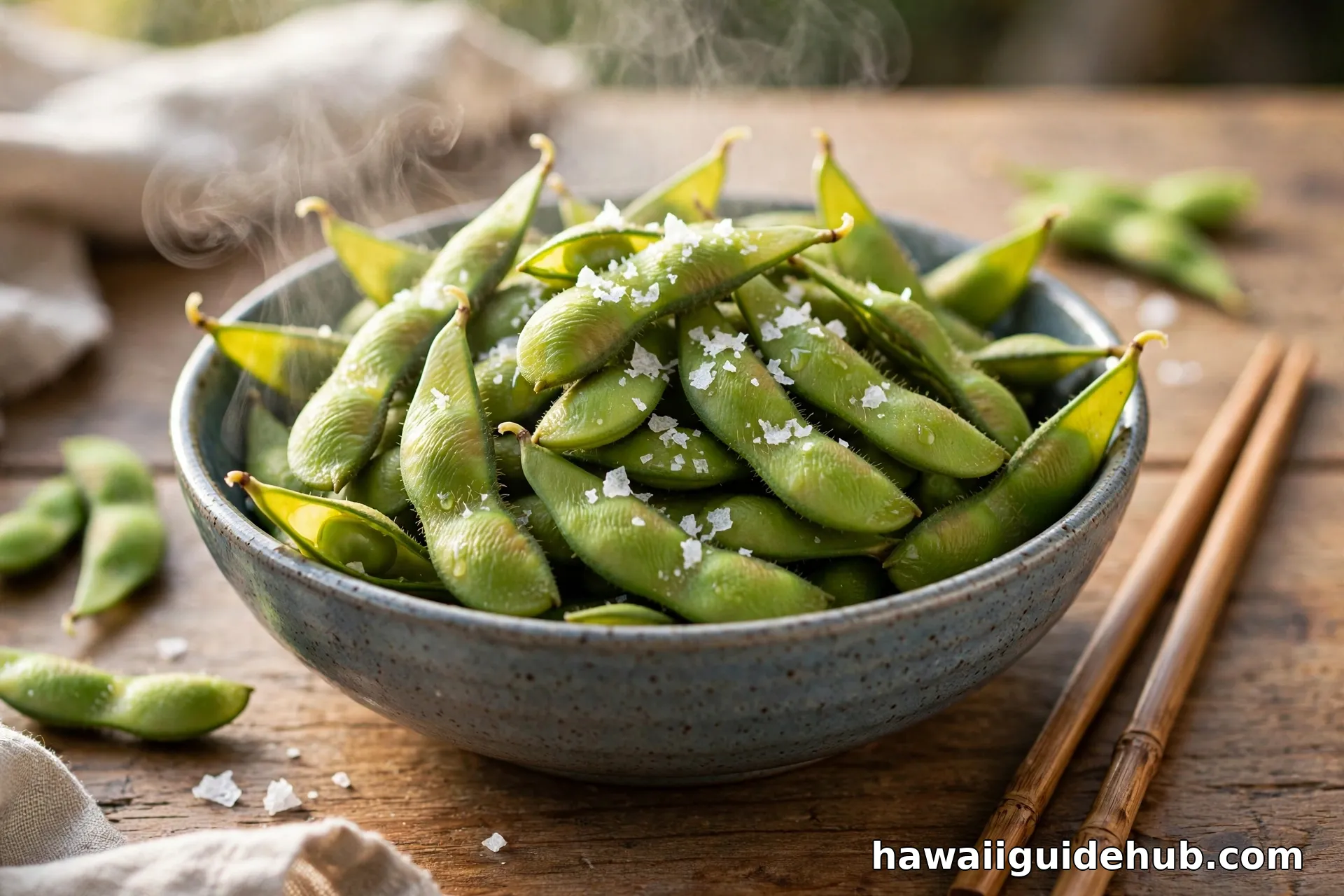
The beans themselves are mild, buttery, and slightly sweet, with a satisfying pop. The seasoning is what sings: salty shoyu, pungent fresh garlic, nutty sesame, and a warm chili finish. Eaten the proper way, pod to mouth, teeth squeezing the beans out, you get the seasoned exterior first and the sweet bean second. It is savory, snackable, and hard to stop eating.
How to Serve It
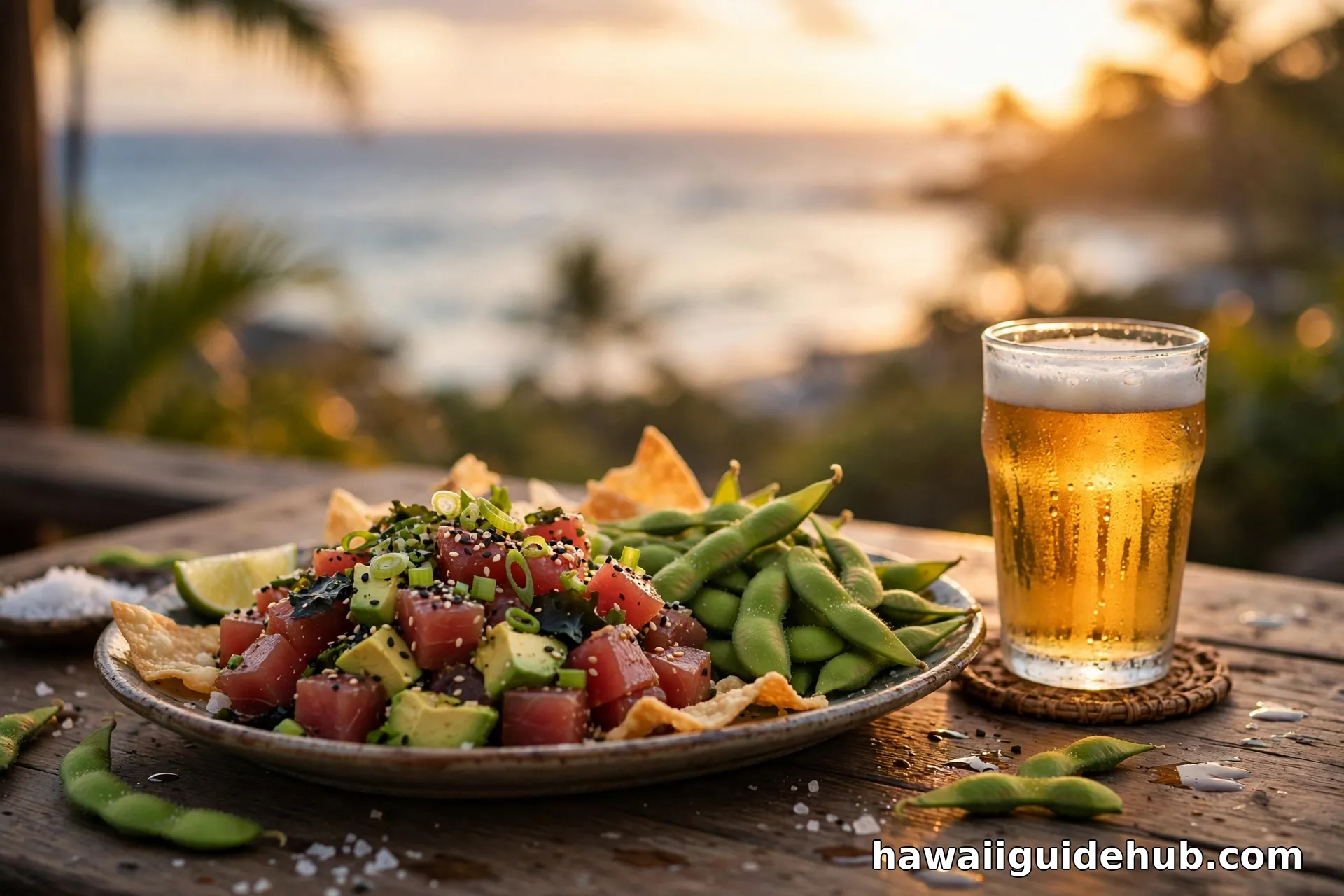
In Hawaii, seasoned edamame is a pupu first: the bowl that appears with drinks at gatherings and disappears before dinner. It is also a natural side for poke bowls, plate lunches, and bento, where its saltiness balances richer items. Pack it for the beach, add it to a potluck spread, or keep a container in the fridge for snacking. It is good warm, good cold, and good standing at the counter straight from the bowl.
Where Visitors Encounter Edamame in Hawaii
You will find seasoned edamame at poke shops, okazuya delis, and plate lunch counters across the islands, sometimes as a side, sometimes mixed into bowls. Grocery stores sell it in the deli case and as frozen pods to season yourself. It is one of the easiest local flavors to recreate at home, since frozen edamame and shoyu are available everywhere.
Substitutions and Notes
Frozen edamame in pods is the standard and works perfectly; fresh is a bonus, not a requirement. If you only have shelled edamame, use it and serve over rice. Aloha Shoyu is worth seeking out for the authentic flavor, but any good shoyu works. Hawaiian salt (alaea) adds a traditional touch, but sea salt is fine. For a gluten-free version, use tamari instead of shoyu.
Soybeans in Hawaii: How Edamame Got Here
Soybeans arrived in Hawaii with Japanese immigrants in the late 1800s, part of the food culture that plantation workers carried across the Pacific. Tofu, miso, and shoyu became staples of Hawaii kitchens within a generation, and edamame, the young soybean eaten in the pod, came along as the quintessential Japanese snack. For decades it was mostly a Japanese community food, served salted and simple at gatherings and bars.
The Hawaiian-style seasoning evolved as edamame moved beyond the Japanese community into general local food culture. Hawaii’s cooks applied the same shoyu-garlic-chili treatment they gave to everything from poke to popcorn, and the dish crossed over. By the 2000s, seasoned edamame was a standard pupu across ethnic lines, and the poke bowl boom of the 2010s made it nationally familiar. What started as an immigrant snack became an island staple.
Edamame Across Hawaii Food Culture
Today edamame shows up all over Hawaii eating, far beyond the seasoned pods. Poke bowls routinely include shelled edamame for protein and color. Grocery delis sell edamame hummus, a local twist on the chickpea classic. Stir-fries, soups, and even casseroles in Hawaii kitchens include it. KTA Super Stores, the Big Island grocery chain, features edamame in its recipe collections, a sign of how thoroughly the bean has been adopted. It is one of those ingredients that quietly became local.
More Ways to Use This Seasoning
The shoyu-garlic-sesame-chili blend in this recipe is a workhorse beyond edamame. Toss it with blanched green beans or asparagus. Use it as a marinade for chicken thighs or tofu before grilling. Drizzle it over steamed rice with a fried egg. Shake it with popcorn for the ultimate movie snack. Once you have the ratios dialed to your taste, you will find uses for it weekly.
Nutrition Notes
Edamame earns its reputation as a healthy snack. A cup of shelled edamame delivers substantial plant protein and fiber, along with folate, vitamin K, and iron. The pods themselves add almost no calories; the seasoning adds mainly sodium from the shoyu, so those watching salt intake can go lighter on the shoyu and heavier on the garlic, chili, and sesame. As party snacks go, a bowl of edamame beats the chips by a wide margin.
Edamame for Poke Bowls and Bento
Shelled edamame has become a poke bowl standard, and the Hawaiian-style seasoning works beautifully there too. Toss shelled, cooked edamame with a lighter version of the seasoning, shoyu, a little sesame oil, garlic, and a pinch of chili, and scatter it over your poke bowl for protein, color, and texture. It also fits naturally in bento boxes, where a small compartment of seasoned shelled edamame adds green brightness next to rice and protein. For meal prep, season a big batch of shelled edamame on Sunday and use it across bowls, salads, and snacks all week.
Serving Edamame at Parties
For gatherings, presentation matters. Serve the pods in a wide, shallow bowl so guests can easily grab handfuls, with a second empty bowl alongside for the discarded pods. Make a double batch; the first always vanishes faster than expected. Offer a mild batch and a spicy batch side by side, labeled, so everyone is happy. And keep the edamame chilled if it sits out more than two hours, especially outdoors in Hawaii’s heat.
Buying and Storing Edamame
Frozen edamame in pods is available in the freezer section of nearly every grocery store, and it is the practical choice for this recipe. Look for bright green pods without ice crystals or freezer burn. In Hawaii, farmers markets and some grocery stores occasionally carry fresh edamame in season; use it within a day or two. Store frozen edamame in the freezer for months. Once cooked and seasoned, refrigerate and eat within three days. Do not refreeze thawed edamame, and do not leave seasoned pods at room temperature for more than two hours.
Edamame vs. Soybeans: What Is the Difference
Edamame and soybeans are the same plant harvested at different stages. Edamame is the young, green soybean picked before it hardens; mature soybeans are the dried beige beans used for tofu, soy milk, and shoyu. The young harvest is sweeter, more tender, and eaten whole in the pod, while the mature bean needs processing. When you eat edamame, you are tasting the soybean at its freshest and sweetest, which is why the simple Hawaiian seasoning works so well.
Video: Garlic Ginger Spicy Edamame
Watch a spicy garlic-ginger edamame come together, the same shoyu-based seasoning style Hawaii loves.
Frequently Asked Questions
Do you eat the edamame pod?
No. Hold the pod, put it in your mouth, and use your teeth to squeeze the beans out. Discard the empty pod. The pod carries the seasoning, which is part of the pleasure.
Can I make Hawaiian-style edamame ahead of time?
Yes, and it may be better. The marinated version, refrigerated for a few hours or overnight, has deeper flavor. It keeps about 3 days in the refrigerator.
Is Hawaiian-style edamame spicy?
Only as spicy as you make it. The base recipe has gentle warmth. Add more chili flakes, fresh Hawaiian chili pepper, or sambal to turn up the heat.
What is Aloha Shoyu?
Aloha Shoyu is Hawaii’s own shoyu brand, brewed in the islands and a staple in local kitchens for generations. It has a slightly milder, sweeter profile than many mainland soy sauces, and locals swear by it for recipes like this one.
Is edamame healthy?
Edamame is nutritious: high in protein and fiber, with vitamins and minerals. The seasoning adds sodium, so enjoy it as part of a balanced diet. As pupu goes, it is one of the better choices on the table.
Hawaiian-style edamame proves that the best recipes are often the simplest: a good ingredient, a bold local seasoning, and ten minutes. Make a batch, put it out with drinks, and watch it vanish. Then make a double batch next time, because now you know. Once you have tried the classic version, experiment with the heat level and the marinated method until you find the combination your household reaches for first.