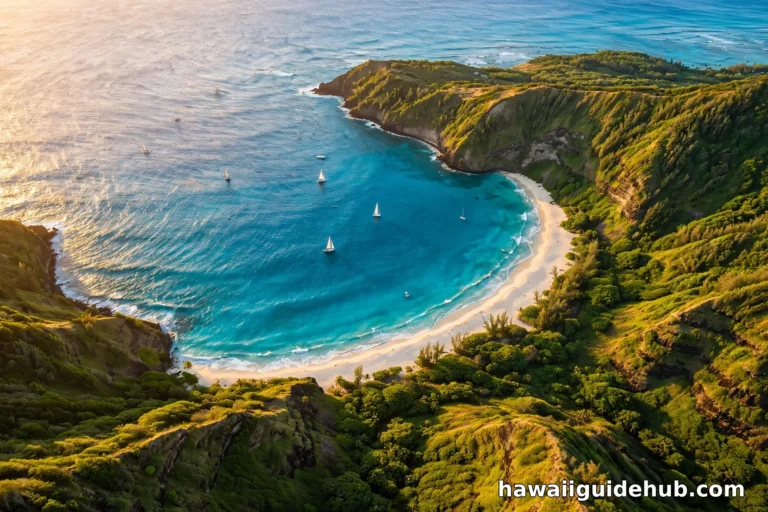
Hawaii State Symbols: Nene, Humuhumunukunukuapuaa & Every Emblem

Hawaii’s state symbols read like a love letter to the islands: a goose that walks on lava, a fish with the longest name in American heraldry, a yellow hibiscus found nowhere else on Earth. This is the complete, official guide to every Hawaii state symbol: the bird, fish, flower, tree, mammals, motto, flag, seal, song, dance, sports, and more, with the real stories behind each one and where you can see them yourself.
The Living Symbols at a Glance
| Symbol | Hawaiian name | What it is | Adopted | Where to see it |
| State bird | Nēnē | Hawaiian goose | 1957 | Haleakalā, Kauaʻi refuges |
| State fish | Humuhumunukunukuāpuaʻa | Reef triggerfish | 2006 | Any snorkel reef |
| State flower | Pua aloalo | Native yellow hibiscus | 1988 | Botanical gardens |
| State tree | Kukui | Candlenut tree | 1959 | Everywhere, all islands |
| State mammal | ʻĪlioholoikauaua | Hawaiian monk seal | 2008 | Remote beaches |
| State marine mammal | Koholā | Humpback whale | 1979 | Whale season, Dec-Apr |
| State land mammal | ʻŌpeʻapeʻa | Hawaiian hoary bat | 2015 | Dusk, Big Island forests |
| State insect | Pulelehua | Kamehameha butterfly | 2009 | Native forests |
| State plant | Kalo | Taro | 2007 | Loʻi patches statewide |
| State gem | n/a | Black coral | n/a | Jewelry shops (farmed) |
Adoption years follow the official state record: the bird predates statehood, the fish took two tries (1985, then permanently in 2006), and the newest symbols, like the state limu (algae) and shrimp, were added in the 2020s.
State Bird: The Nēnē
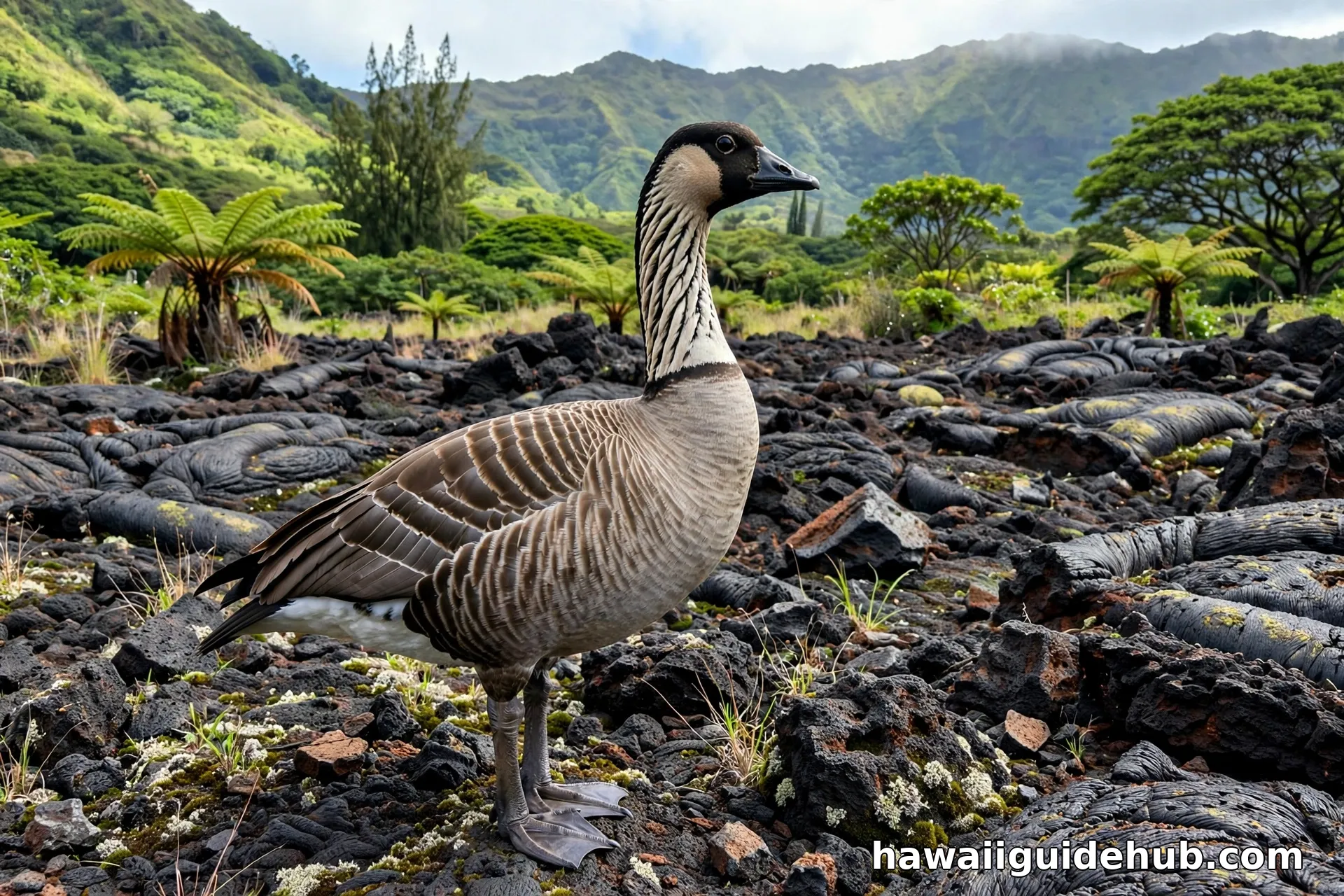
The nēnē (Hawaiian goose) is the world’s rarest goose and Hawaii’s official bird since 1957. Descended from Canada geese that arrived half a million years ago, it evolved to walk on sharp lava: its feet are only partially webbed. Hunted and predated nearly to extinction (fewer than 30 birds remained in the 1950s), captive breeding brought it back to a few thousand. It is still endangered: never feed nēnē, keep dogs leashed near them, and brake for them on Saddle Road and around Haleakalā, where they wander onto pavement with total confidence.
State Fish: The Humuhumunukunukuāpuaʻa
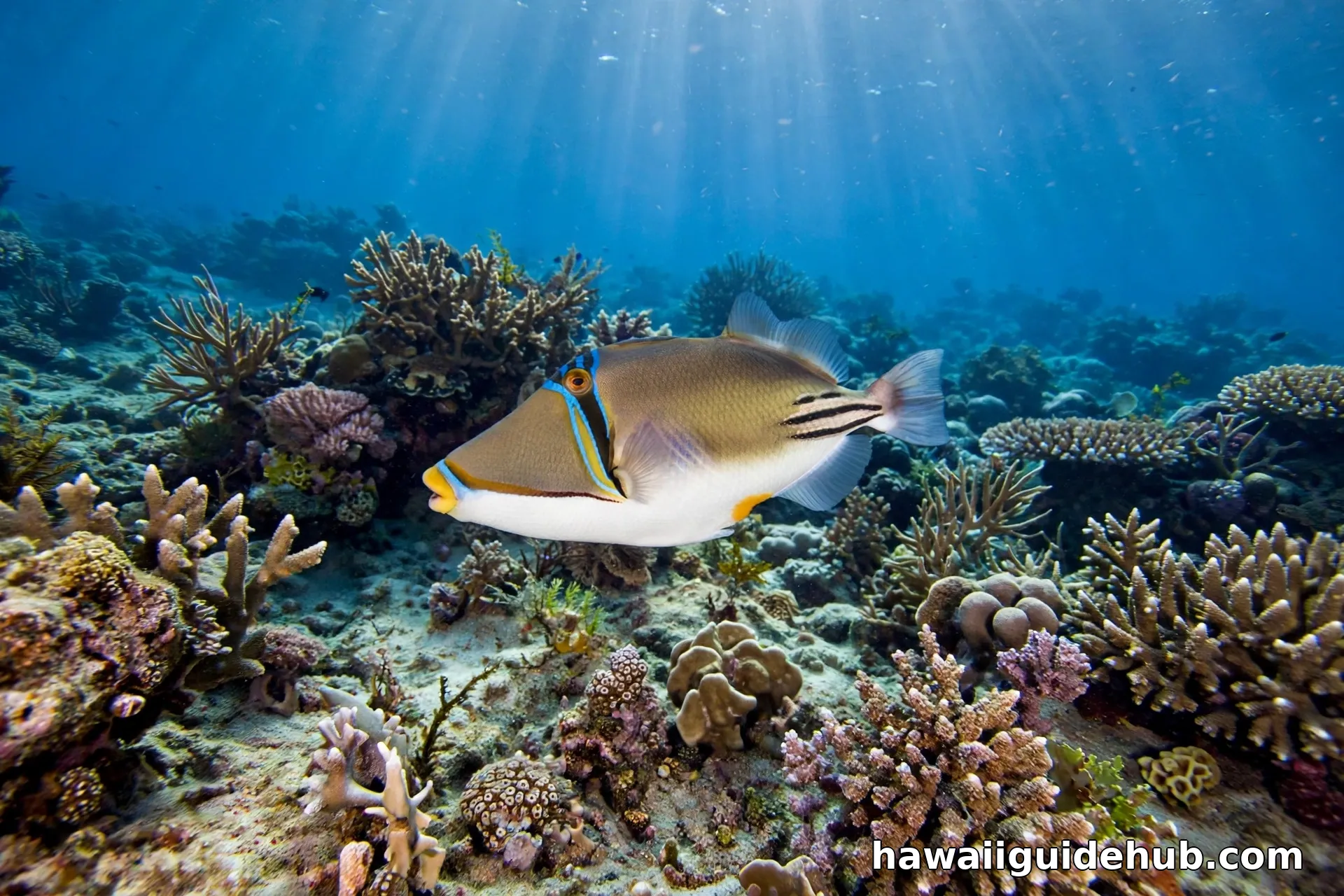
Say it: hoo-moo-hoo-moo-noo-koo-noo-koo-AH-poo-AH-ah. It means “triggerfish with a pig-like snout,” and it is the longest name of any U.S. state symbol. The reef triggerfish (Rhinecanthus rectangulus) was first named state fish in 1985, lost the title when the law sunset, and was restored permanently in 2006 after schoolchildren campaigned for it. You will see humuhumu on nearly every snorkel: small, bold, beautifully patterned, and fiercely territorial. They are not for eating: admire, photograph, and leave them to their reef.
State Flower: Pua Aloalo (Yellow Hibiscus)
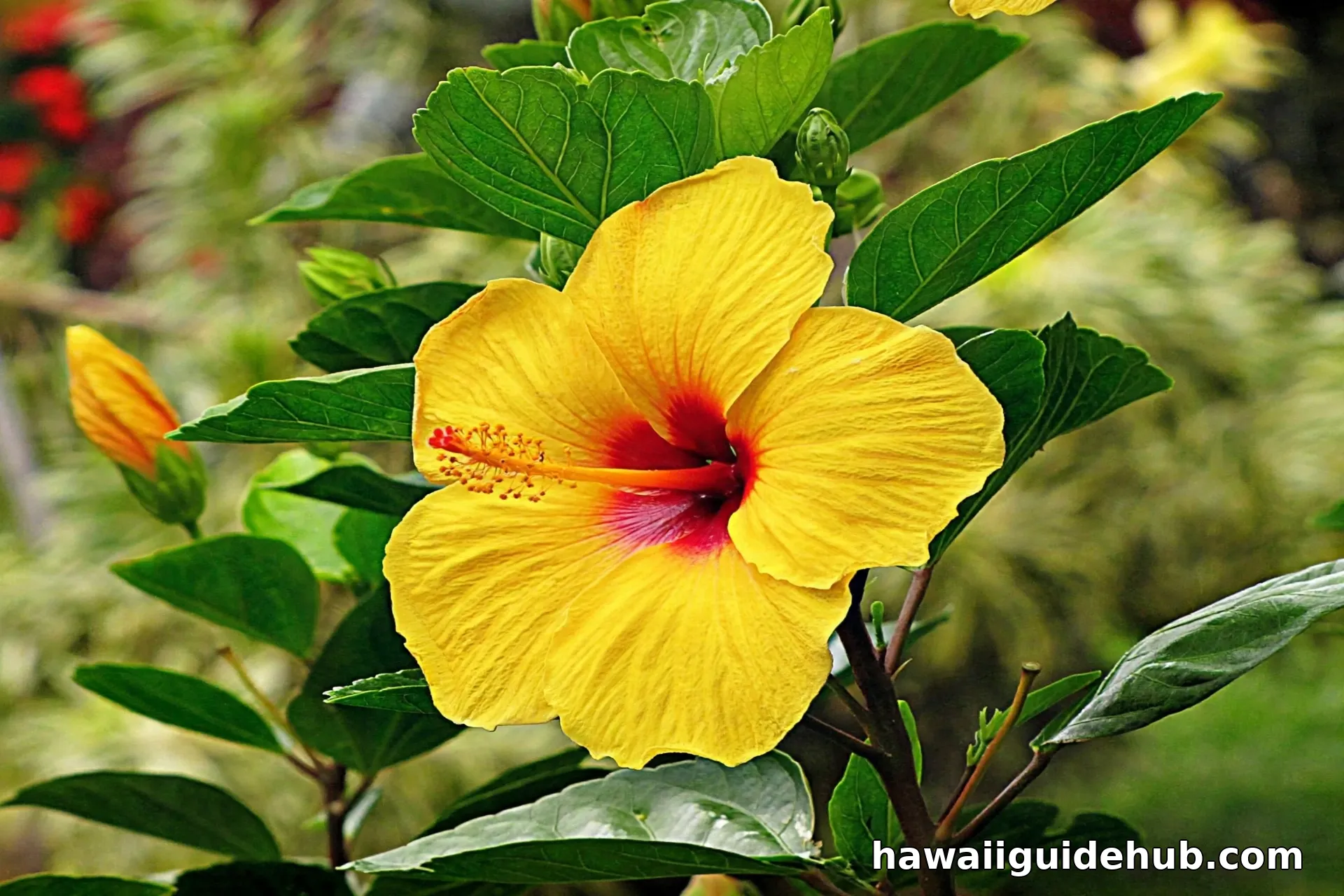
Hawaii’s state flower since 1988 is the pua aloalo: the native yellow hibiscus (Hibiscus brackenridgei), found nowhere else in the world. Do not confuse it with the common red hibiscus in every hotel garden: that is an introduced ornamental. The true yellow hibiscus is actually endangered in the wild; botanical gardens like Foster Garden in Honolulu cultivate it. Each island also has its own official flower and color for lei-making: Maui’s lokelani rose, Oʻahu’s ʻilima, Kauaʻi’s mokihana berry, and more.
State Tree: Kukui (Candlenut)
The kukui, designated in 1959, is the tree you have already seen a hundred times: silvery-green leaves, round nuts, often planted along roads. Polynesian voyagers brought it as a canoe plant: the oily nuts were burned for light (hence “candlenut”), the sap and bark used in medicine and dye, the nuts strung into the lei you see at graduations. It is also a symbol of enlightenment and protection in Hawaiian culture.
State Mammals: Monk Seal, Humpback, Hoary Bat
Hawaii has three official mammals, each in its own category. The Hawaiian monk seal (ʻīlioholoikauaua, “dog that runs in rough water”) became state mammal in 2008: one of the world’s most endangered seals, with about 1,600 remaining. Give hauled-out seals 50 yards of space: it is the law. The humpback whale (koholā) has been the state marine mammal since 1979: 10,000-plus visit each winter to breed and calve. The Hawaiian hoary bat (ʻōpeʻapeʻa), state land mammal since 2015, is Hawaii’s only native land mammal: look for it fluttering at dusk over Big Island forests.
Flag, Seal, Motto, and Song
Hawaii’s flag is the only U.S. state flag with a Union Jack: a legacy of the Kingdom era, when British advisors were close to the monarchy. The eight stripes represent the eight main islands. The state seal, adopted in 1959, shows Kamehameha the Great and the Goddess of Liberty flanking a shield, with a phoenix rising beneath: symbolizing rebirth from monarchy to democracy. The motto, “Ua Mau ke Ea o ka ʻĀina i ka Pono” (“The life of the land is perpetuated in righteousness”), was spoken by Kamehameha III on July 31, 1843, the day sovereignty was restored after a brief British occupation. The state song, “Hawaiʻi Ponoʻī,” was written by King Kalākaua with music by Henri Berger, the royal bandmaster: it served as the national anthem of the Kingdom first.
The Newest Symbols: Limu, Shrimp, and Snails
Hawaii keeps adding symbols. In 2023, limu kala (a native seaweed, Sargassum echinocarpum) became the state limu: limu is central to Hawaiian cuisine and ceremony. In 2024, nine endemic kāhuli (land snail) species, one per main island, were designated state snails: a tribute to Hawaii’s extraordinary and imperiled snail diversity. In 2025, the ʻōpae ʻula (Hawaiian red shrimp, Halocaridina rubra), the tiny red shrimp of anchialine pools, became the state shrimp. These additions show the symbol list is a living document, not a dusty relic.
State Instruments: ʻUkulele and Pahu
Hawaii uniquely has two state musical instruments. The ʻukulele is the modern state instrument: brought by Portuguese immigrants in 1879, embraced by King Kalākaua, and now synonymous with the islands worldwide. The pahu (sharkskin-covered drum) is the traditional state instrument: the heartbeat of hula kahiko, carved from a single coconut or breadfruit log. Together they span the full arc of Hawaiian music, from ancient ceremony to Waikīkī beach bars.
Island Flowers and Colors
Each island has official colors and lei materials, a tradition visitors encounter at festivals and ceremonies. Hawaiʻi Island: red (ʻōhiʻa lehua blossom). Maui: pink (lokelani rose). Oʻahu: golden yellow (pua ʻilima). Kauaʻi: purple (mokihana berry). Molokaʻi: green (pua kukui). Lānaʻi: orange (kaunaʻoa). Niʻihau: white (pupu shells). Kahoʻolawe: gray (hinahina). Wearing or gifting the right island’s lei material is a mark of cultural fluency.
Video: The True Story Behind Hawaiʻi’s Motto
How “Ua Mau ke Ea o ka ʻĀina i ka Pono” was born: on July 31, 1843.
Frequently Asked Questions About Hawaii State Symbols
What is the state bird of Hawaii?
The nēnē (Hawaiian goose), designated in 1957. It is the world’s rarest goose and still endangered.
What is the state fish of Hawaii?
The humuhumunukunukuāpuaʻa (reef triggerfish), permanently designated in 2006 after schoolchildren campaigned for it.
What is Hawaii’s state fruit?
Hawaii has no official state fruit. Pineapple is the popular unofficial answer, but the legislature has never designated one.
What is Hawaii’s state flower?
The pua aloalo: the native yellow hibiscus, designated in 1988. It grows only in Hawaii.
What is Hawaii’s state motto?
“Ua Mau ke Ea o ka ʻĀina i ka Pono”: “The life of the land is perpetuated in righteousness.” Spoken by Kamehameha III in 1843.
What is Hawaii’s state dance and sport?
The state dance is hula. The state individual sport is surfing (heʻe nalu); the state team sport is outrigger canoe paddling.
Where to See the Symbols Yourself
Turn the symbols into a scavenger hunt. Nēnē: Haleakalā National Park’s Hosmer Grove and the Kauaʻi refuges at dawn. Humuhumu: any snorkel at Hanauma Bay or Maui’s reefs. Yellow hibiscus: Foster Botanical Garden in Honolulu. Kukui: everywhere, once you learn the silvery leaf. Monk seals: keep distance at remote beaches (never approach). Humpbacks: December to April whale watches. Kalo: the loʻi at Waimea Valley or Limahuli Garden. Black coral jewelry: reputable shops sell only sustainably harvested pieces. The Hawaii State Capitol in Honolulu displays the seal, motto, and flag together: the symbols’ official home.
What is Hawaii’s nickname?
The Aloha State, adopted in 1959. It appears on license plates and in the state song’s spirit, if not its lyrics.
What is Hawaii’s state gem?
Black coral: one of the few state gems that is organic rather than mineral. Harvest is strictly regulated.
What is Hawaii’s state insect and plant?
The Kamehameha butterfly (pulelehua), designated in 2009: one of only two butterflies endemic to Hawaii. The state plant is kalo (taro), designated in 2007: the staff of life in Hawaiian culture.
The State Seal, Decoded
Look closely at the seal and it tells Hawaii’s whole story. Kamehameha the Great (left) and the Goddess of Liberty (right) hold the shield together: the old order and the new, jointly upholding the state. The shield’s quarters carry the eight-striped flag motif and the puloʻuloʻu (tabu ball and stick) of chiefly authority. Below, a phoenix rises from eight taro leaves flanked by banana foliage and maidenhair fern: resurrection from monarchy to democracy, rooted in native plants. The star at the shield’s center marks Hawaii as the 50th state. “1959” dates statehood. Every element was deliberate: designer Viggo Jacobsen packed a constitution into an emblem. Schoolchildren across Hawaii study the seal’s elements as a civics lesson: the phoenix for democratic rebirth, the taro leaves for the eight islands, the motto as a promise. It appears on state documents, flags, and the capitol building itself: once you can read it, you will spot it everywhere in Honolulu.
Why the Symbols Matter: Conservation Wins
State symbols are conservation tools. The nēnē’s 1957 designation focused attention that helped fund the captive-breeding program which saved it. The monk seal’s 2008 designation boosted the recovery programs now slowly rebuilding its numbers. The 2024 kāhuli snail designations spotlighted a silent extinction crisis: Hawaii has lost over half its native land snail species. When a species becomes a symbol, its fate becomes a public trust. Visitors honor that trust simply: keep distance from seals and nēnē, never take shells or coral, always leave reefs exactly as you found them, and teach the kids in your group to do the same: the next generation of proud symbol-keepers truly starts with all of them. The black sand beaches where monk seals haul out are the best place to practice respectful wildlife viewing.
The State Quarter: Symbols in Your Pocket
In 2008, Hawaii’s quarter joined the 50 State Quarters program, and its design is a greatest-hits of the symbols: a hula dancer, the islands, and the motto “Ua Mau ke Ea o ka ʻĀina i ka Pono” inscribed around the edge. It remains one of the most beautiful quarters in the entire series and a favorite of collectors, often cited alongside the most artful state designs ever minted. Check your change before your trip: finding a Hawaii quarter in circulation on the mainland feels like a small preview of the islands, and it is a fun, completely free souvenir to hunt with kids on the way to the airport.
Fun Facts for the Symbol-Obsessed
The humuhumunukunukuāpuaʻa’s name has 21 letters: the longest of any state fish, and a favorite spelling-bee terror. The nēnē is the only goose that evolved to lose most of its webbing. Hawaii’s flag predates statehood by over a century: it flew over the Kingdom from 1816. The ʻukulele’s name means “jumping flea,” for the players’ dancing fingers. Black coral grows so slowly that large specimens are centuries old. And the state team sport, outrigger canoe paddling, draws thousands of competitors to races like the Molokaʻi Hoe each year: symbols you can watch, live, from the beach.
Hawaii’s symbols are not decorations: they are the islands’ natural and cultural heritage, voted into law one by one. Learn them, and you will see the islands with new eyes: every nēnē on the road, every humuhumu on the reef, every yellow hibiscus in a garden becomes a small ceremony. For the volcanic landscapes where the nēnē walks, see our Big Island volcano guide. The state flag, with its Union Jack canton, tells the kingdom-era story at a glance.