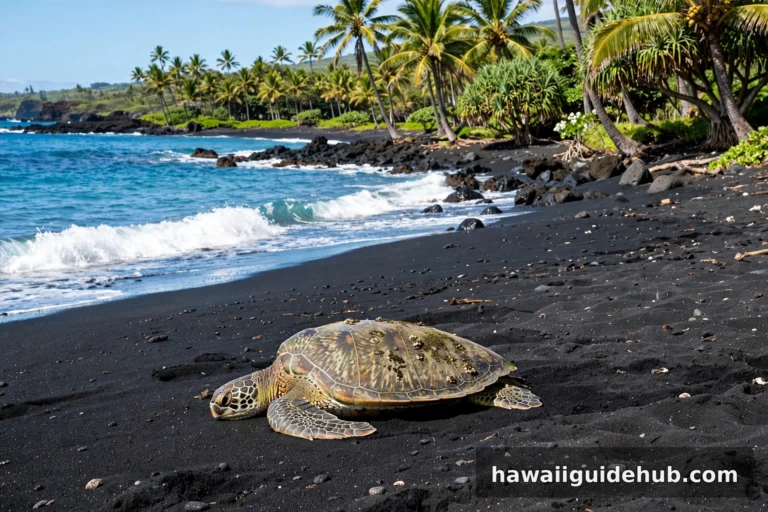
Hawaii National Park Reservations: Sunrise, Volcanoes & Pearl Harbor

Hawaii’s national parks play by federal rules, which means the state reservation systems you used for Diamond Head or Hāʻena do not apply here. Instead, you are dealing with the National Park Service and Recreation.gov, and the most important booking in all of Hawaii travel: the Haleakalā sunrise reservation. This guide covers every reservation, fee, and timing rule for Hawaii’s national parks, including Haleakalā’s famous sunrise, Hawaiʻi Volcanoes, and the USS Arizona Memorial at Pearl Harbor.
Hawaii has two full national parks, Haleakalā on Maui and Hawaiʻi Volcanoes on the Big Island, plus the Pearl Harbor National Memorial on Oʻahu, which is run by the Park Service in partnership with the Navy. Each has its own system, and mixing them up is the most common planning mistake visitors make.
National Park Reservations at a Glance
| Site | Reservation needed? | Book this far ahead | Cost | Book on |
|---|---|---|---|---|
| Haleakalā sunrise (3–7 a.m.) | Yes, per vehicle | 60 days + 2 days ahead, 7 a.m. HST | $1 + $30 park entry | Recreation.gov (per the National Park Service) |
| Haleakalā, rest of the day | No; walk in | n/a | $30 park entry | n/a |
| Hawaiʻi Volcanoes | No; walk in | n/a | Federal entrance fee | n/a |
| USS Arizona Memorial program | Yes, per person | 8 weeks + 24 hrs ahead, 3 p.m. HST | $1 | Recreation.gov |
Haleakalā Sunrise: The Reservation That Matters Most
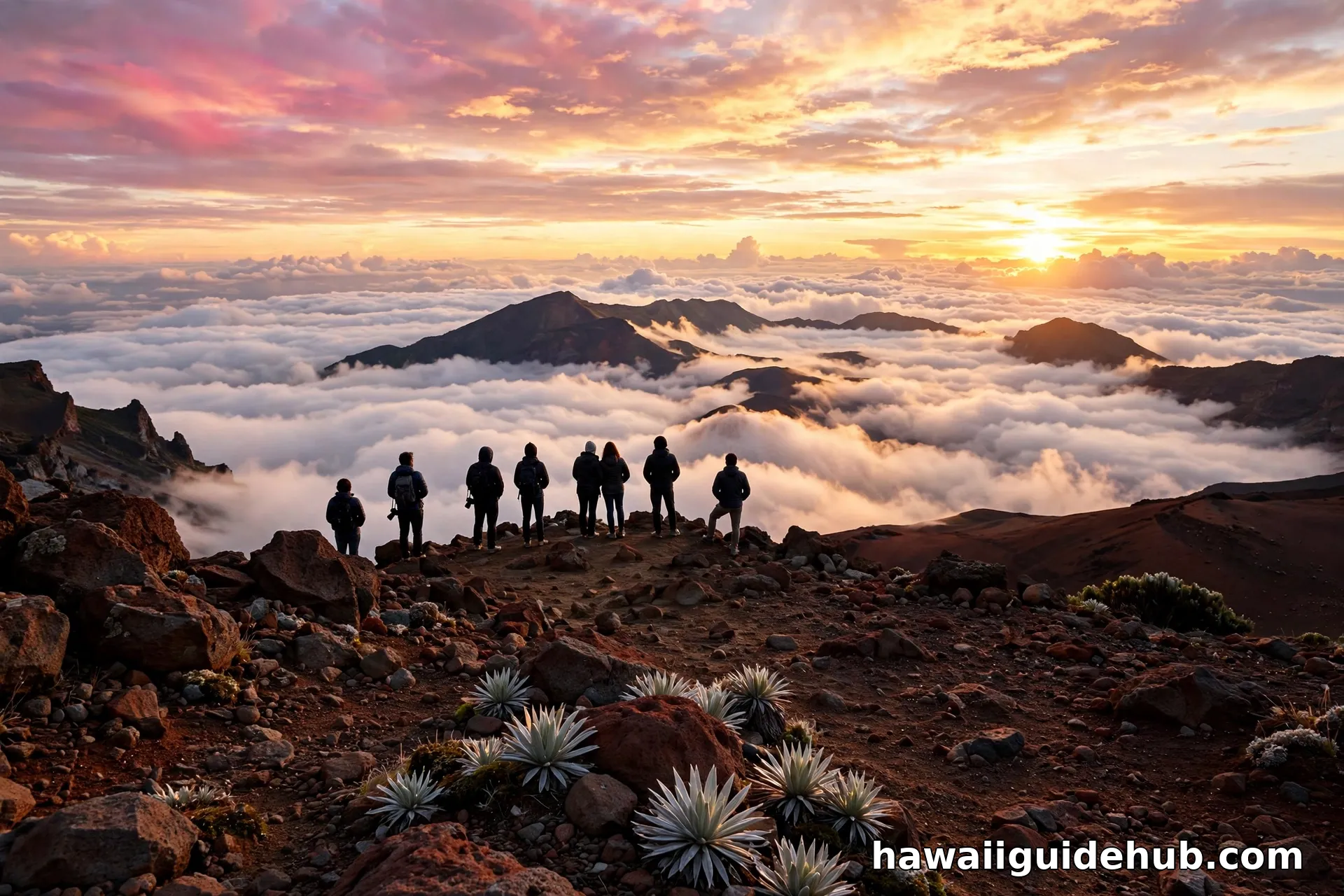
Watching sunrise from the summit of Haleakalā, at 10,023 feet above a sea of clouds, is one of Hawaii’s signature experiences. It is also the most competitive reservation in the islands. Since 2017, the Park Service has required a vehicle reservation for anyone entering the park between 3 a.m. and 7 a.m., and without one the gate stays closed until 7, which is well after sunrise for most of the year.
Book on Recreation.gov. Reservations open 60 days ahead at 7 a.m. Hawaii time, with a second batch released 48 hours before each date, and they routinely sell out within minutes of release. The reservation costs $1 per vehicle and is separate from the $30 per vehicle park entrance fee, which you pay on arrival by card. Each customer is limited to one sunrise reservation per three-day period, the reservation is valid for one day only, and the name on it must match the photo ID of the person at the gate. There are no refunds for bad weather or low visibility, so a cloudy sunrise is simply your luck of the draw.
Logistics matter as much as the booking. The Park Service recommends reaching the park gate no later than 90 minutes before sunrise, and it takes roughly 30 minutes to drive from the gate to the summit after that. There are no gas stations inside the park, so fill up in Kahului, Pukalani, or Makawao before you climb. And dress for winter, not for Maui: summit temperatures regularly drop into the 30s Fahrenheit with wind chill, even in summer. Long pants, a warm jacket, a hat, and closed shoes are essential, and many visitors bring a blanket too.
Driving the Summit Road
The drive itself is part of the experience. From Kahului, you follow highways 36, 37, 377, and 378 up 38 winding miles to the 10,023-foot summit, climbing through ranchland, eucalyptus forest, and finally an otherworldly volcanic desert. Allow up to two hours from the airport area, more if you are coming from West Maui. The road is well marked but steep and winding, with fog, cattle, and goats sometimes on or near the pavement in the dark. Drive slowly, use pullouts to let faster traffic pass, and never stop in the travel lane for photos. Your last chance for food and gas is in the upcountry towns, so treat Pukalani or Makawao as your final supply stop.
What to Pack for the Summit
Pack like you are visiting the mountains, because you are. The essential kit: warm layers including a real jacket, long pants, closed-toe shoes with socks, a hat, and gloves if you run cold. Bring a reusable water bottle, snacks or a full breakfast, and a camera, because there is nowhere to buy food in the park and the light at dawn is worth capturing. Sunglasses help after sunrise, when the glare off the cinder is intense. If anyone in your group is sensitive to altitude, know that 10,023 feet affects some people with headaches or shortness of breath; take it slow, drink water, and descend if symptoms bother you.
Haleakalā Sunset: No Reservation, But Come Early
If the sunrise reservation eludes you, sunset is the consolation prize that many visitors end up preferring. No reservation is required for sunset, the golden-hour colors over the crater are spectacular, and you can stay for some of the best stargazing in Hawaii afterward. The catch is parking: the summit lots fill, and the Park Service advises arriving as much as three hours before sunset during the busy winter season. Vehicles are turned away once capacity is reached, so treat sunset with the same punctuality you would give sunrise.
Hawaiʻi Volcanoes National Park: No Reservation Needed
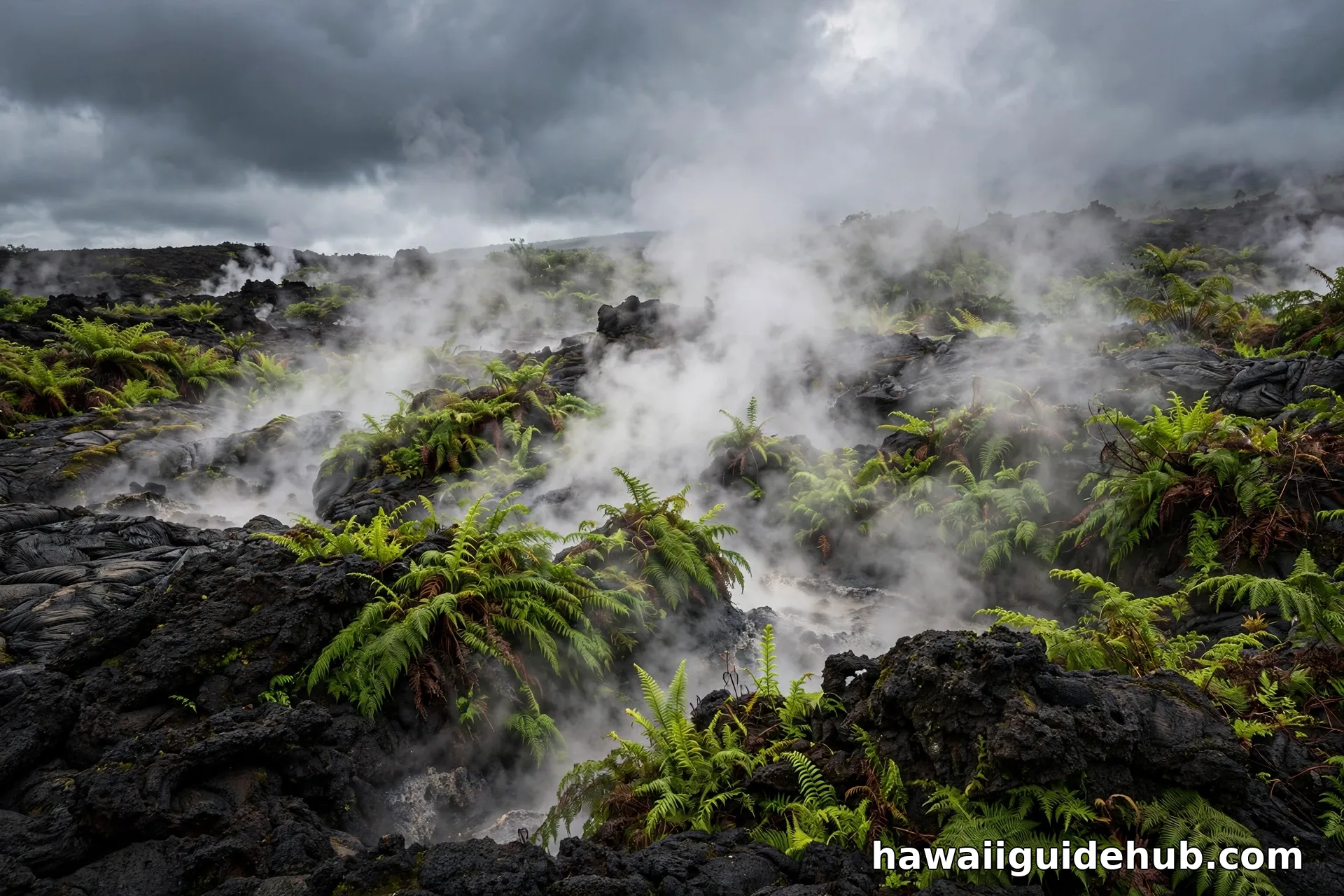
On the Big Island, Hawaiʻi Volcanoes National Park is refreshingly simple: there is no entry reservation system. You pay the federal entrance fee at the gate and drive in. That simplicity does not mean you can wing it, though. The park’s star attraction is an active volcano, and conditions change with eruptions, vog, and road closures. Check the Park Service alerts and the USGS volcano updates before you go, and read our Hawaiʻi Volcanoes guide to plan the crater rim, the Thurston Lava Tube, and the Chain of Craters Road in the right order.
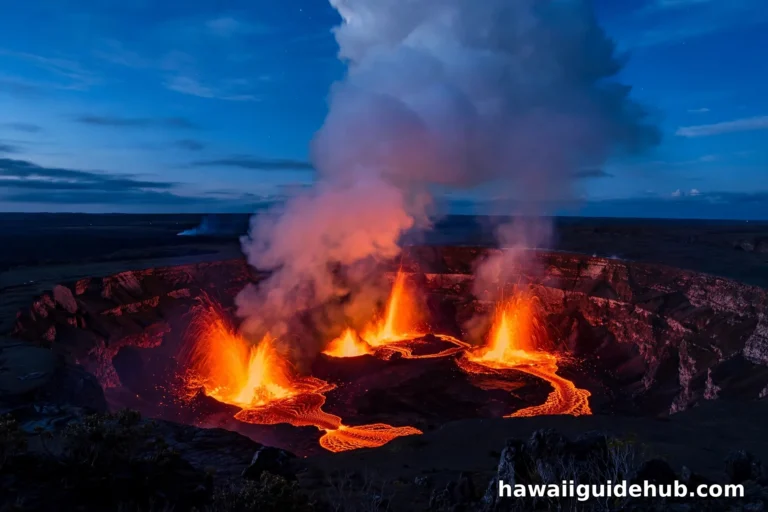
Eruption viewing is the wildcard that can make or break a visit. When Kīlauea is erupting, the park extends hours at popular overlooks and the glow after dark draws crowds that rival sunrise at Haleakalā; when it is quiet, the park is all steam vents, craters, and lava landscapes, still spectacular but calmer. Either way, arrive with a full tank, layers for the 4,000-foot elevation chill, and a flashlight for the lava tube. Stay on marked trails and behind railings at all times: volcanic terrain is fragile, unstable, and genuinely dangerous off trail.
Pearl Harbor: USS Arizona Memorial Tickets
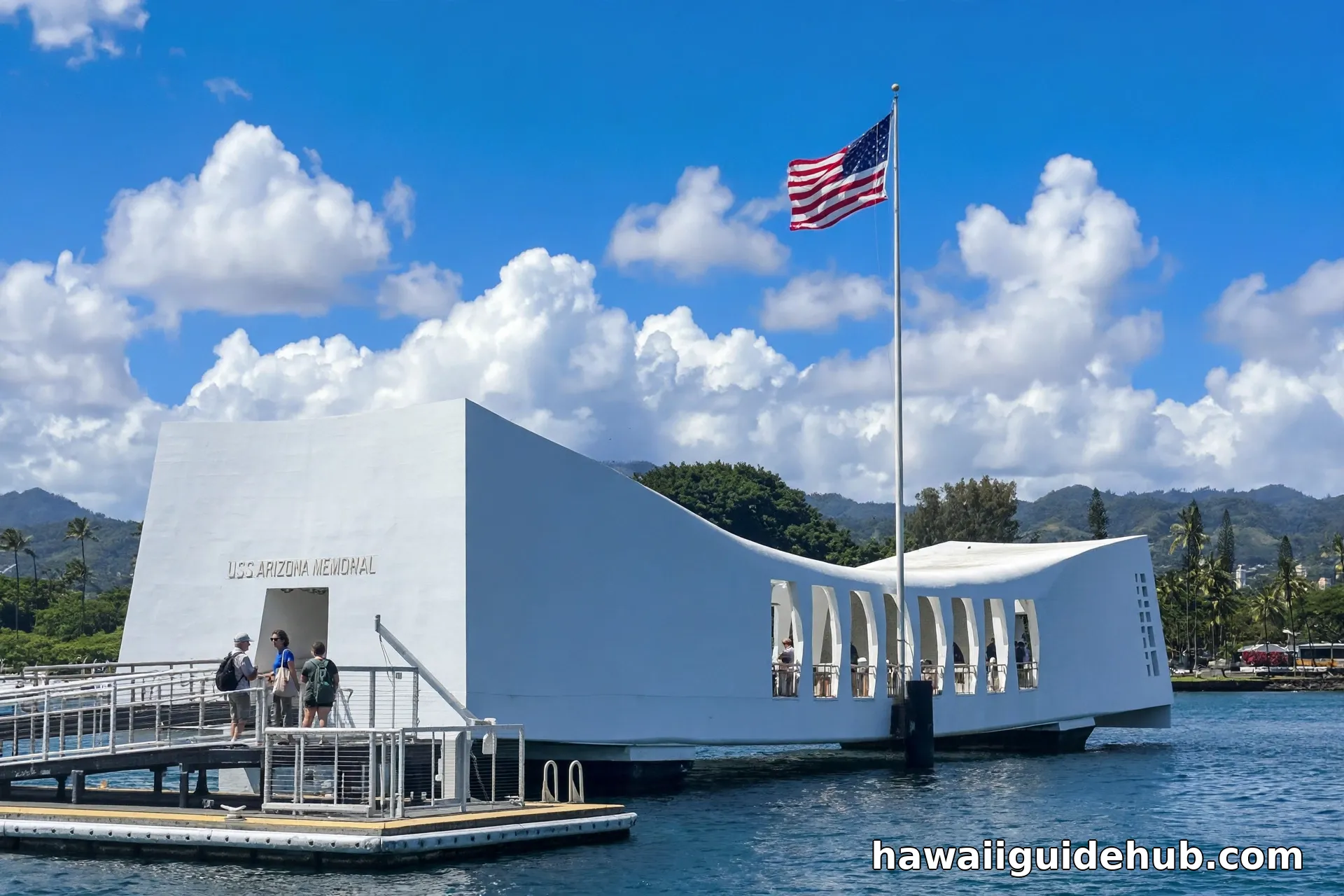
The USS Arizona Memorial program at Pearl Harbor is the third reservation every Hawaii visitor should know. Boat tickets to the memorial are released on Recreation.gov in two batches: 8 weeks ahead and 24 hours ahead, both at 3 p.m. Hawaii time, and they cost $1 per ticket. The memorial itself is free; the ticket reserves your boat time. Walk-up tickets exist in limited numbers but are unreliable in peak season, so book ahead. If you are staying on Oʻahu, pair it with our North Shore guide on a different day rather than cramming both into one.
Plan for a half day and pack light. The Pearl Harbor visitor center enforces a strict bag policy: bags larger than a small clutch are not allowed past security and must be stored for a fee, so bring only essentials. Allow time for the museums and the film before your boat departure, arrive at least an hour before your ticket time, and remember that this is an active military installation and a war grave: the atmosphere is quiet and respectful by design. It is one of the most moving hours in Hawaii, and the reservation system exists to keep it that way.
Don’t Forget the Kīpahulu District
Haleakalā has two districts, and visitors constantly underestimate the second one. The coastal Kīpahulu District, home to the Pīpīwai Trail’s bamboo forest and 400-foot Waimoku Falls, sits along the Road to Hāna and is not connected to the summit by any internal road: the drive between them takes over three hours. No reservation is required for Kīpahulu, but your park entrance receipt covers both districts, so keep it. Plan Kīpahulu as its own day, ideally combined with the Road to Hāna, rather than as an afterthought to sunrise.
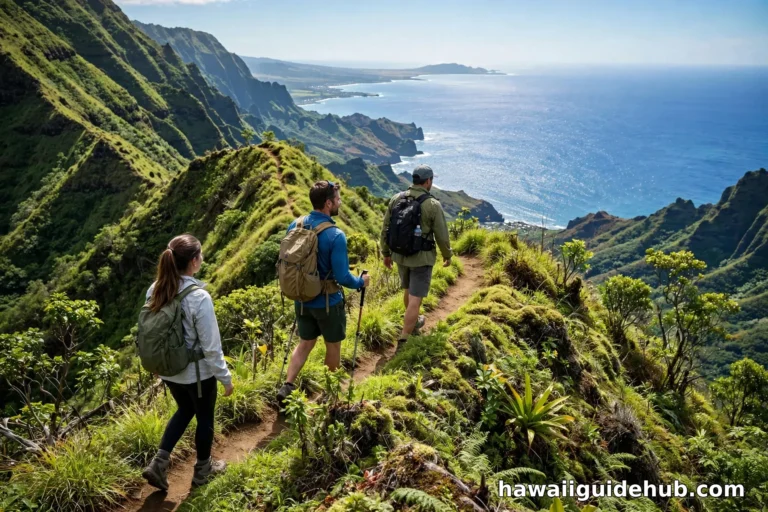
The Pīpīwai Trail deserves special mention because it surprises everyone. The four-mile round trip climbs through a towering bamboo forest that creaks and sways in the wind, passes the 185-foot Makahiku Falls, and ends at the base of 400-foot Waimoku Falls, one of Hawaii’s tallest waterfalls. It is a completely different world from the summit’s volcanic desert, and it is included in the same park entry you already paid for.
After the parks, most Maui visitors head for the beach towns to recover. Charley Young Beach in Kīhei is a calm, family-friendly choice for the day after a 3 a.m. wake-up call.
Camping and Cabins Inside the National Parks
Both parks offer overnight stays, booked through Recreation.gov rather than the state systems. Haleakalā has two drive-up campgrounds, Hosmer Grove near the summit and the coastal Kīpahulu Campground, plus the famous wilderness cabins at Hōlua and Palikū along the crater trails, which must be reserved well ahead and are some of the most sought-after backcountry beds in the Park Service. Hawaiʻi Volcanoes has the Nāmakanipaio Campground and the historic Volcano House lodge inside the park. Cabin and campground reservations open on their own schedules, so check Recreation.gov early if sleeping inside the park is part of your plan.
Which Park for Which Traveler
Choose Haleakalā if you want the single most dramatic morning in Hawaii and do not mind the 3 a.m. alarm, the freezing summit, and the reservation battle. Choose Hawaiʻi Volcanoes if you prefer a full day of exploring at your own pace, with lava tubes, steam vents, and crater overlooks and no timed entry to stress about. Choose Pearl Harbor if history moves you: the Arizona Memorial program is quiet, powerful, and pairs naturally with a Honolulu day. If your trip allows, do all three across two islands, and you will have seen Hawaii from 10,023 feet above the clouds to the floor of an active volcano to the still water above a battleship.
National Park FAQs
Can I enter Haleakalā for sunrise without a reservation?
No. Vehicles without a reservation cannot enter between 3 a.m. and 7 a.m. Arriving on foot or by bicycle is the only workaround, which is impractical for most visitors.
Does the sunrise reservation guarantee parking?
No. The reservation covers entry, not a specific parking spot. Arrive early and staff will direct you to available lots.
What if my sunrise is cloudy?
There are no refunds for weather. Check the summit forecast the night before, but go anyway: clouds often break at dawn.
Do I need a reservation for Haleakalā at noon?
No. Reservations apply only to the 3 a.m. to 7 a.m. window. Midday and sunset visits need only the park entrance fee.
Is the USS Arizona Memorial free?
The memorial program itself is free; the $1 Recreation.gov ticket reserves your boat time slot.
Can I visit both Haleakalā districts in one day?
Technically yes, but it is a grueling day: the districts are over three hours apart with no connecting road. Give Kīpahulu its own day.
Do national park passes work in Hawaii?
Yes. Federal passes like the America the Beautiful pass are honored at both national parks, though the Haleakalā sunrise reservation fee is still required on top.
Watch: Haleakalā National Park Guide
This guide walks through both Haleakalā districts, covering the sunrise reservation system, cabin bookings, and the best trails and overlooks.
Hawaii’s national parks reward planners and punish procrastinators. The sunrise reservation is the single booking most worth setting an alarm for, and everything else, from volcano crater rims to the Arizona Memorial, falls into place once you understand which system each site uses. Book the hard ones first, pack for freezing summits and tropical coasts in the same day, and you will see the islands at their most extraordinary.