Donkey Beach Kauaʻi: The Complete Guide to Pālikū Beach

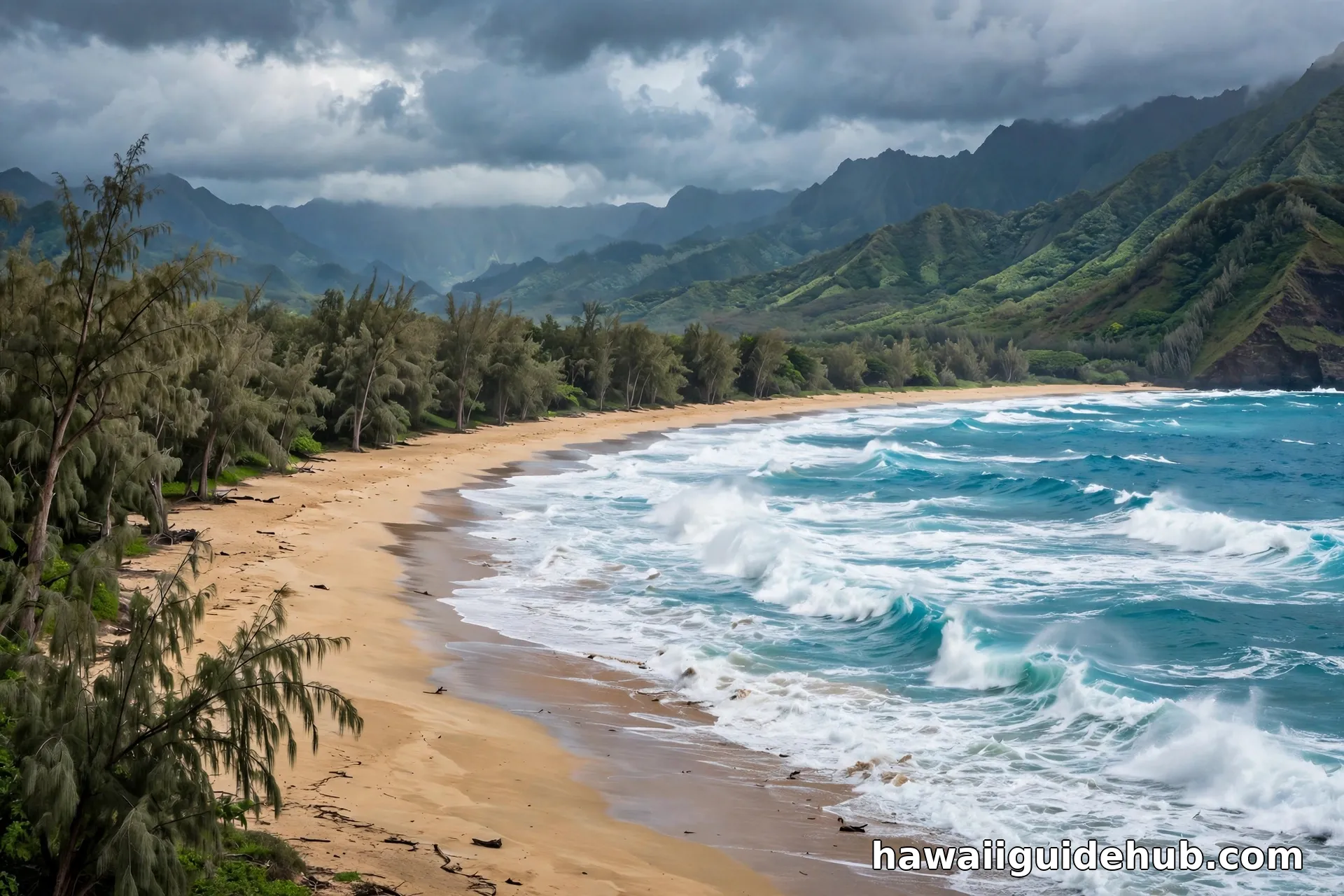
Donkey Beach is Kauaʻi’s beautiful contradiction: a long crescent of soft golden sand that looks like a swimming beach and absolutely is not one. The water here is powerful, the currents are real, and the lifeguards are nonexistent, which is exactly why this east-side shoreline stays quiet while the island’s swimmable beaches fill up. Come for the seclusion, the tree-tunnel walk in, and the drama of the surf, not for a dip.
This guide is the single complete resource for Donkey Beach Hawaii, covering donkey beach in the same place. It covers the official name and the donkey story, location and access, parking, why swimming is discouraged, seasonal conditions, the clothing-optional past, facilities, nearby alternatives, and FAQs. This guide covers the beach itself, the walk in, the swimming question, the clothing-optional past, facilities, nearby alternatives, and FAQs: everything worth knowing before you go.
Donkey Beach at a Glance
| GO IF YOU WANT | |
| The beach | Pālikū Beach (also Kuna Bay, Kumukumu) |
| The location | East Kauaʻi, off Kūhiō Hwy north of Kapaʻa |
| The quiet | Low crowds, one of Kauaʻi’s quietest beaches |
| The price | Free |
| The access | Free parking lot, about a 10-minute walk down |
| The surf | Experienced surfers and bodyboarders only |
| SKIP IF YOU NEED | |
| Swimming | Not recommended: strong currents, rough water |
| Snorkeling | Not recommended |
| Lifeguards | None |
| Facilities | Restrooms at the parking lot only |
Why It Is Called Donkey Beach
The official name is Pālikū Beach, and it is also called Kuna Bay and Kumukumu Beach, but nobody calls it that. The Donkey Beach nickname comes from the plantation era, when the Līhuʻe Plantation Company kept donkeys and mules in a pasture beside the beach and used them to haul bundles of seed cane. The animals are long gone and the cane fields are now luxury estates, but the name stuck.
The beach’s other famous reputation has faded too. When the only access was a hike through cane fields, Donkey Beach was Kauaʻi’s clothing-optional beach. As the surrounding land was developed and sold to high-end buyers, anti-nudity laws began to be enforced. Today it is a regular, clothing-required public beach, and the old reputation survives mostly in guidebooks.
The plantation story behind the name runs deep on this coast. Sugar dominated Kauaʻi’s economy for over a century, and the Līhuʻe Plantation worked vast fields of cane across the east side. Mules and donkeys were the engines of the harvest, hauling seed cane and cut stalks along field roads. The pasture beside Pālikū was one small piece of that system, but it gave the beach a name that outlasted the industry itself. When you walk the trail down today, you are crossing land that fed one of Hawaiʻi’s defining eras.
Location and Access
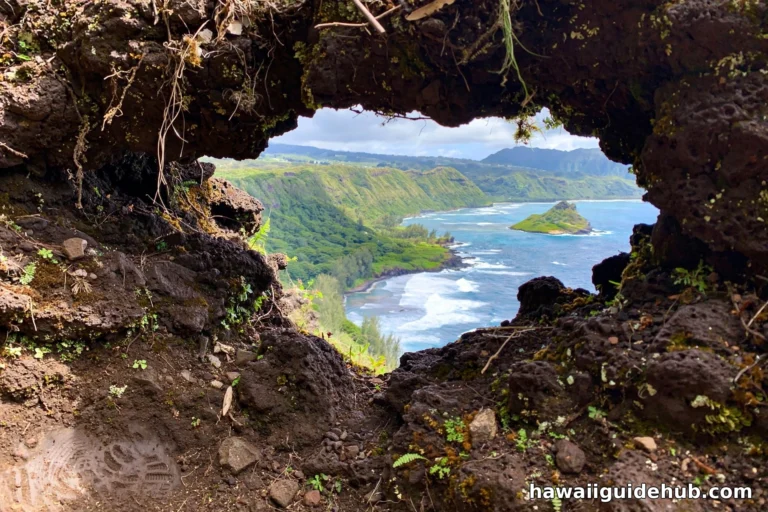
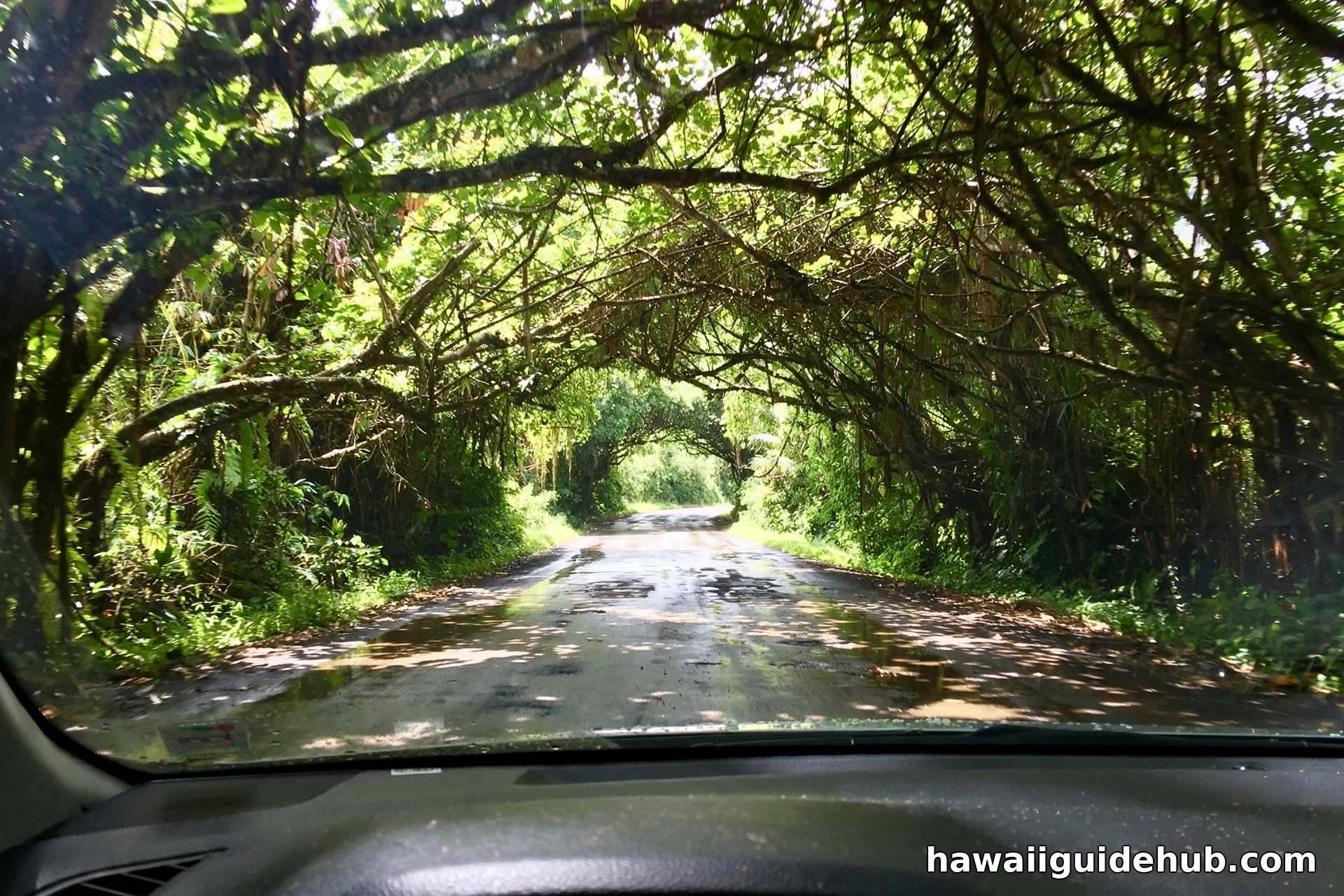
Donkey Beach sits on Kauaʻi’s east shore about five miles north of Kapaʻa. Drive north on Kūhiō Highway (Highway 56) and watch for cars parked along the road just past mile marker 11. The public parking lot and restrooms sit a short distance further north; park there rather than on the highway shoulder. From the lot, a trail leads down to the beach in about 10 to 15 minutes, roughly four-tenths of a mile, passing through a striking tunnel of trees that photographers love.
Do not trust your GPS blindly: typing Donkey Beach into navigation can direct you to a gated community instead of the public lot. Look for the signed public parking area with restrooms just north of mile marker 11. The beach is also connected to the Ke Ala Hele Makalae coastal path, which runs south about a mile and a half to Keālia Beach, so you can walk or bike between the two.
The coastal path deserves its own mention. Ke Ala Hele Makalae, the Path That Goes by the Coast, is a paved multi-use trail linking Lydgate Beach Park in the south to the Donkey Beach area in the north, passing Keālia along the way. Renting a bike in Kapaʻa and riding the path to Donkey Beach is one of the east side’s best low-key adventures: ocean views the whole way, whale sightings in winter, and a beach waiting at the end. Lock your bike at the lot and walk the tree tunnel down.
Swimming: Read This First
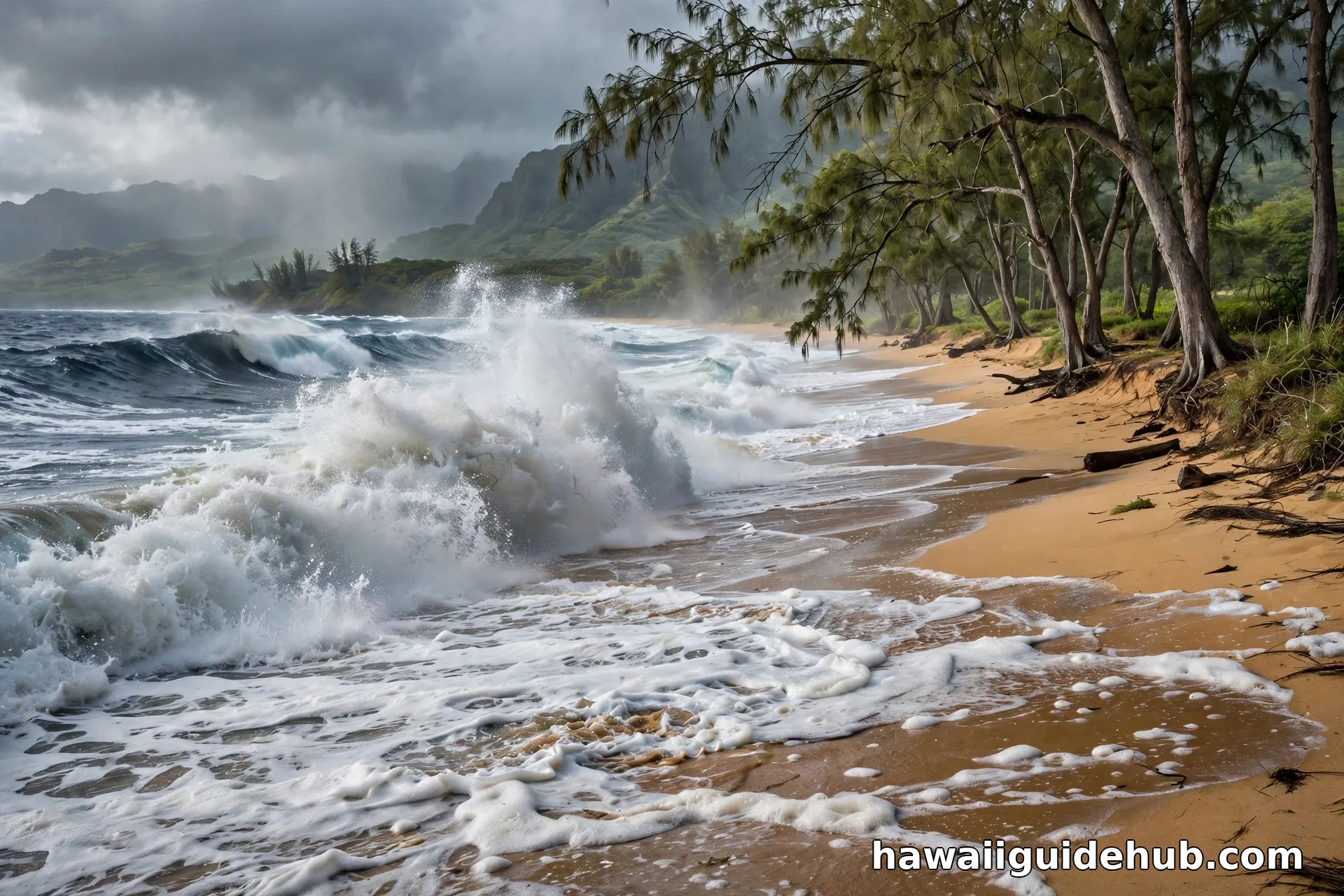
This is the most important section of this guide. Donkey Beach is generally not safe for swimming. The beach faces the open ocean on Kauaʻi’s exposed east side, and the water is rough with strong currents and a punishing shore break most of the time. There are no lifeguards, and the conditions can change quickly. Visitors are advised to admire the ocean from the sand and stay out of the water.
The exception that proves the rule is the shallow cove at the north end of the beach, where wading is possible in calm conditions. Even there, exercise caution and watch the water before you commit. Experienced local surfers and bodyboarders do ride the waves here when conditions suit, which tells you the surf has real power. If you are looking for a Kauaʻi swimming beach, this is not it: nearby Keālia and Lydgate on the east side, or Poʻipū on the south shore, are far better choices.
Safety rule: if the waves look big from the parking lot, they are bigger at the waterline. Never turn your back on the ocean at an unguarded east-side beach, keep children well away from the water’s edge, and when in doubt, stay on the sand. Kauaʻi’s east shore demands more respect than its beauty suggests.
Understanding the Surf
Why is Donkey Beach so rough when it looks so inviting? Geography. Kauaʻi’s east shore faces the full fetch of the trade winds, which blow steadily out of the northeast most of the year. Wind plus open ocean equals constant surf energy, and the beach’s offshore profile offers little to break it up before it reaches the sand. The result is a powerful shore break and lateral currents that can sweep even strong swimmers sideways. In winter, North Pacific storm swells add size on top of the trade-wind chop, which is why the October-to-March window is the most dangerous.
This is not a flaw in the beach; it is the character of the whole windward side of every Hawaiian island. Windward beaches are wilder, emptier and more dramatic than their leeward counterparts. Once you understand that, Donkey Beach makes perfect sense as a place to walk, watch and photograph rather than swim.
What Donkey Beach Is Good For
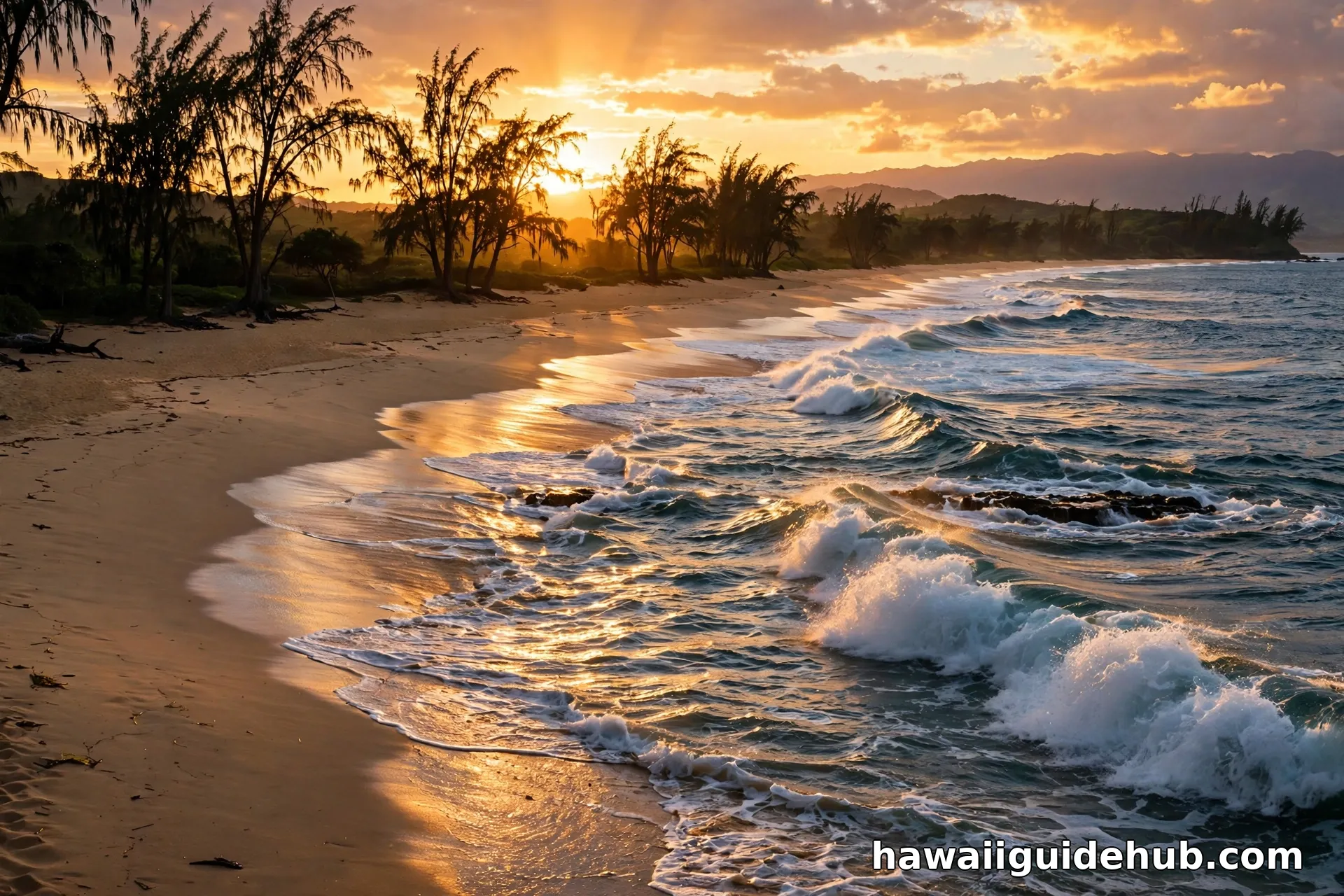
Freed from swimming expectations, Donkey Beach is genuinely lovely. The crescent of soft golden sand stretches far enough that you will always find space, and on many days you will share it with only a handful of people and Kauaʻi’s famous wild chickens. It is a superb beach for sunbathing, reading, beachcombing and long walks, with a cool trade-wind breeze that the south-shore beaches lack. Photographers come for the tree-tunnel entrance, the ironwood-lined sand and the drama of the waves. Whale watchers scan the horizon in winter, when humpbacks pass offshore.
Photography at Donkey Beach
Donkey Beach is one of the east side’s most photogenic spots, and it rewards photographers who work for their shots. The tree tunnel at the trail entrance is the signature image: shoot it in the morning when light filters through the canopy. The beach itself is best at golden hour, when low light rakes across the sand and the surf glows. Long exposures turn the crashing waves into silk, but keep your gear well back from the waterline: sneaker waves and windblown spray have ruined many cameras here. A wide-angle lens captures the full crescent; a telephoto compresses the waves against the mountains.
Seasonal Conditions
East-side surf follows the trade winds. Summer generally brings smaller, more manageable surf and the calmest conditions of the year, though Donkey Beach is never a calm-water beach. Winter brings bigger swells generated by North Pacific storms, and the shore break can be genuinely dangerous from roughly October through March. There is no season when swimming becomes advisable for casual visitors; the seasonal difference is between rough and rougher. Check the surf forecast before you go, and treat any high-surf advisory as a stay-on-the-sand day.
Facilities and Rules
Facilities are minimal. There are restrooms at the public parking lot, but nothing at the beach itself: no showers, no drinking water, no trash cans, no lifeguards. Bring water, sun protection and a bag for your trash. Shade is limited to a few ironwood trees, so bring your own if you burn easily. Standard beach rules apply, and the clothing-optional era is over: swimwear is required. As always on Kauaʻi, pack out everything you pack in.
What to Bring
Pack Donkey Beach like a light hike, not a resort day. Bring reef-safe sunscreen and a hat, because shade is scarce. Carry drinking water; there is none at the beach. Wear sandals you can walk a rough trail in, and bring a beach blanket rather than expecting loungers. If you plan to stay for sunset, bring a light layer: the trade-wind breeze cools quickly once the sun drops. And always bring a bag for your trash, since there are no bins at the beach.
Nearby Alternatives
If you drove out for a swim, redirect rather than risk it. Keālia Beach, a mile and a half south on the coastal path, has lifeguards and a more swimmable profile. Lydgate Beach Park, with its protected lagoons, is the east side’s best family swimming spot. For snorkeling, head south to Poʻipū. And for planning the rest of your Kauaʻi beach days, the Hanalei Beach guide covers the north shore’s most famous stretch, while the best places in Kauaʻi in winter guide helps with seasonal planning.
Frequently Asked Questions
Can you swim at Donkey Beach?
It is not recommended. Strong currents, rough water and a heavy shore break make swimming dangerous, and there are no lifeguards. Enjoy the beach from the sand and swim at nearby Keālia or Lydgate instead.
Is Donkey Beach still a nude beach?
No. It was known as clothing-optional decades ago, but anti-nudity laws are now enforced and swimwear is required.
How do you get to Donkey Beach?
Drive north from Kapaʻa on Highway 56 past mile marker 11 to the signed public parking lot with restrooms, then walk the tree-lined trail about 10 minutes down to the beach. Do not follow GPS to the gated community.
Are there lifeguards at Donkey Beach?
No. There are no lifeguards, no facilities at the beach itself, and only restrooms at the parking lot. Swim at your own risk is the wrong mindset here: the safe choice is to stay out of the water.
Can you surf at Donkey Beach?
Experienced local surfers and bodyboarders ride here when conditions suit, but it is not a learner’s break. The shore break is heavy and there are no lifeguards. Beginners should head to a guarded beach with surf lessons instead.
Is Donkey Beach worth visiting if you cannot swim there?
Yes, if you value seclusion and scenery over swimming. The tree-tunnel walk, the long empty crescent, the whale watching in winter and the sheer drama of the surf make it one of the east side’s most memorable stops. Just plan your swim for another beach.
Why is it called Donkey Beach?
Its official name is Pālikū Beach, but it was nicknamed for the donkeys and mules the Līhuʻe Plantation Company pastured nearby and used to haul sugar cane.
Donkey Beach rewards the traveler who reads the ocean honestly. It is one of the prettiest and quietest beaches on Kauaʻi, a long golden crescent with a storybook walk in and room to breathe. Just remember what it is: a beach for the eyes and the soul, not for swimming. Respect the surf, enjoy the solitude, and save your swim for the island’s guarded shores. Walk in through the trees, find your stretch of sand, and let the Pacific do the entertaining.