Hawaii Red-Eye Flight Tips: How to Survive the Overnight Flight Home

The Hawaii red-eye is a special kind of endurance event: a five-to-six-hour overnight flight eastbound, leaving the islands between 6 p.m. and 2 a.m. and landing on the mainland at dawn, having crossed two or three time zones while you tried to sleep upright. More than half of Honolulu’s transpacific departures now leave in those overnight hours, so if you fly home from Hawaii, odds are you will fly a red-eye. The good news: it is survivable, and it buys you an extra full day in paradise.
This is the single complete guide to Hawaii red-eye flight tips. It covers why Hawaii flights skew overnight, a hour-by-hour survival timeline, the sleep kit that actually works, seat strategy, what to eat and drink, making the last day count, and landing recovery. If you have been searching for anything about surviving a Hawaii red-eye, the answers are all here on this one page.
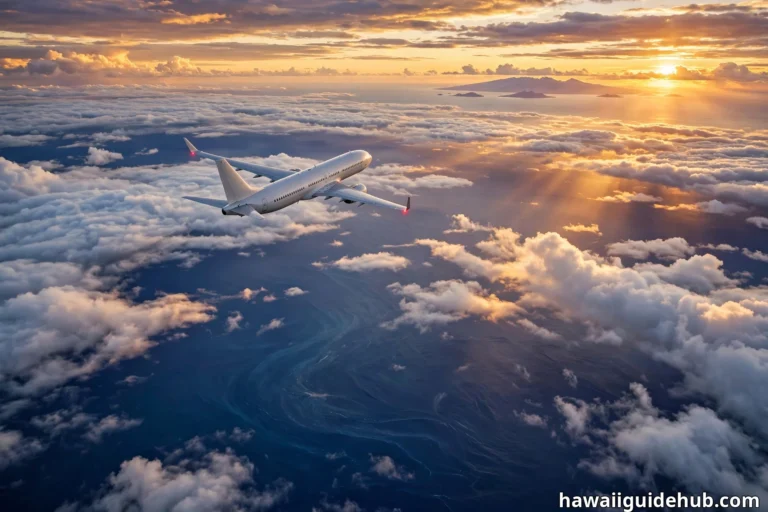
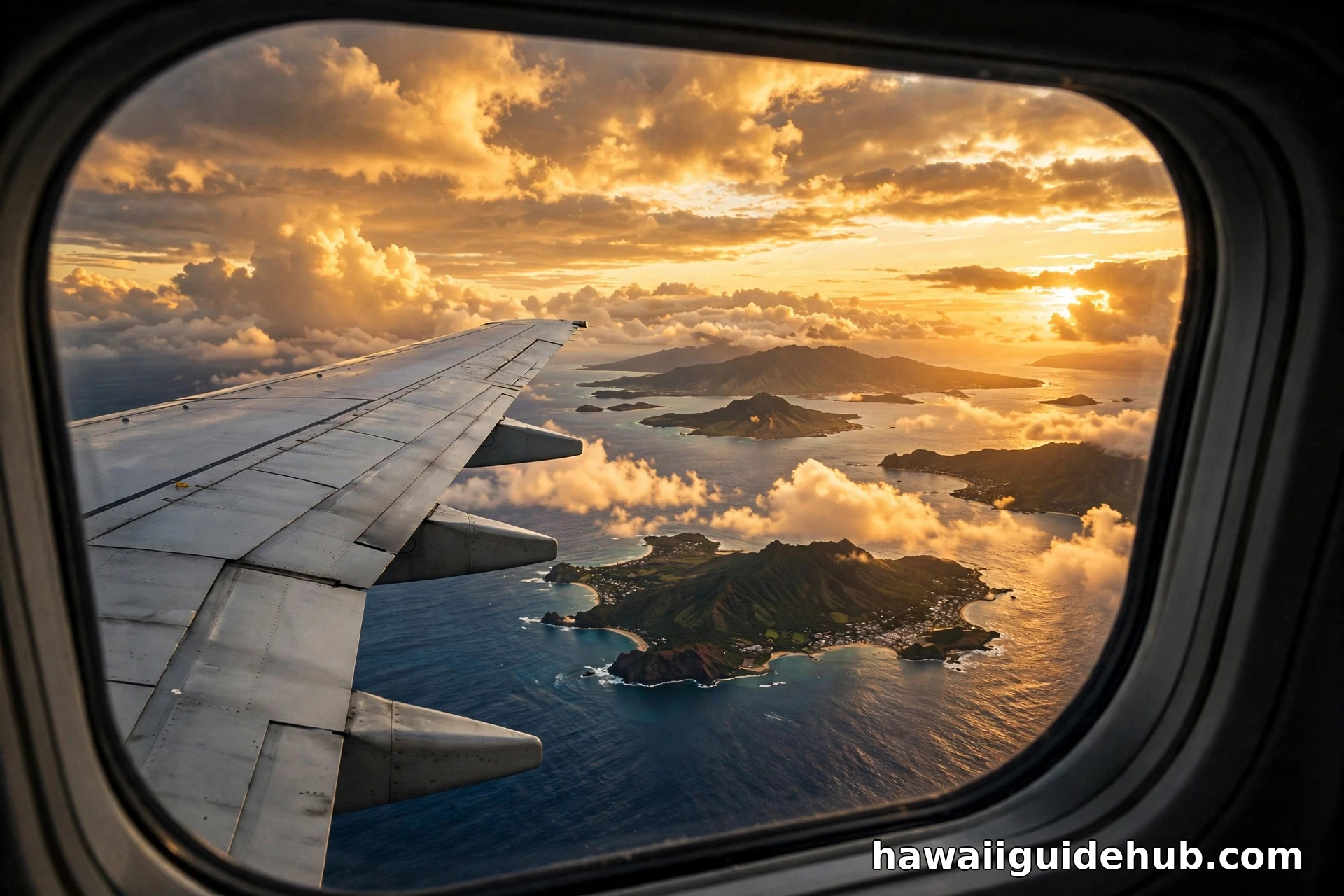
This is the view that makes the red-eye worth it: the islands falling away below in golden light, the whole archipelago laid out like a promise you are leaving and a reason to return. Take the window seat on the way home, watch the sunset over the Pacific, and let the drone of the engines do its work. The sleep may be broken, but the farewell is perfect.
Why Hawaii Flights Skew Overnight
Airlines love red-eyes because Hawaii is a leisure market with few business travelers: overnight flights let carriers reposition aircraft and reuse crews, keeping planes earning during hours they would otherwise sit. For travelers, the trade is straightforward: you gain a full last day in Hawaii, and you pay with a night of broken sleep. Knowing the trade helps you prepare for it instead of resenting it at 30,000 feet.
The Case Against the Red-Eye
Honesty requires the counterargument: not everyone should take the red-eye. If you are a truly terrible plane sleeper, if you have a medical condition that makes sleep deprivation dangerous, if you are traveling with infants who will not sleep either, or if you land and must immediately drive, work, or function at full capacity, the daytime flight is worth the extra fare and the lost beach day. Some carriers still offer morning and afternoon departures from Honolulu; they are calmer, kinder, and easier on the body. The red-eye is a trade, and trades should be entered with open eyes, even tired ones.
Traveling With Kids on the Red-Eye
Kids change the calculus. Some children sleep beautifully on planes, lulled by the drone, and parents land with a full extra vacation day banked. Others do not sleep at all, and neither does anyone within three rows. If your kids are good car sleepers, they will likely be good plane sleepers; if not, reconsider. Bring the full comfort kit in kid sizes: their pillow, their blanket, snacks, water, and downloaded entertainment for the hours they are awake. Book the window-and-middle pair so the child leans on the wall, not on a stranger. And pack extra patience for everyone.
The Upgrade Question
Is premium economy or first class worth it for five hours? The math: a lie-flat or deep-recline seat converts the red-eye from endurance to actual rest, and arriving functional has real value if you must work the next day. But Hawaii red-eye premium cabins sell out to status upgrades and paid upgrades early, so do not count on a cheap bid clearing. Check upgrade prices at booking, not at the gate; by the gate, the cabin is full. For most leisure travelers, the $150 sleep kit beats the $600 upgrade; for the business traveler landing into a meeting, the upgrade is the trip.
What to Wear
Dress for the destination discrepancy: you leave 80-degree Honolulu and land in a mainland morning that could be 40 degrees. Layers solve it: comfortable pants, a T-shirt, a warm mid-layer, and slip-on shoes for security and the cabin. Compression socks help on any flight over four hours. Avoid anything tight, wrinkly-precious, or hard to sleep in. You want to look like you tried, feel like pajamas, and be ready for whatever temperature waits at the other end.
The Morning-After Playbook at Home
The landing day is part of the mission, so plan it before you fly. Arrange for someone else to drive from the airport, or take a rideshare; drowsy driving kills. Keep the day light: unpack, grocery shop, one easy errand, early bedtime. Tell work you are offline until the next day if you can; the traveler who schedules a 9 a.m. meeting after a red-eye has misunderstood the assignment. The souvenirs can wait. Sleep cannot.
Your Red-Eye Hour by Hour
A red-eye is a mission with phases. The table below is the flight plan.
| Phase | When | Mission |
| Pre-board | 2 hours before | Eat a real dinner; hydrate; bathroom; one coffee max, early only (per sleep experts) |
| Takeoff + 1 hr | First hour airborne | Decline the meal or eat light; set watch to destination time; mask on |
| The long middle | Hours 2 to 4 | Sleep attempt: neck pillow, earplugs, eye mask; no screens |
| Descent – 1 hr | Final hour | Wake up; water; light snack; freshen up; plan the landing day |
| Landing day | Morning arrival | Sunlight, movement, normal meals; no long nap or the cycle breaks |
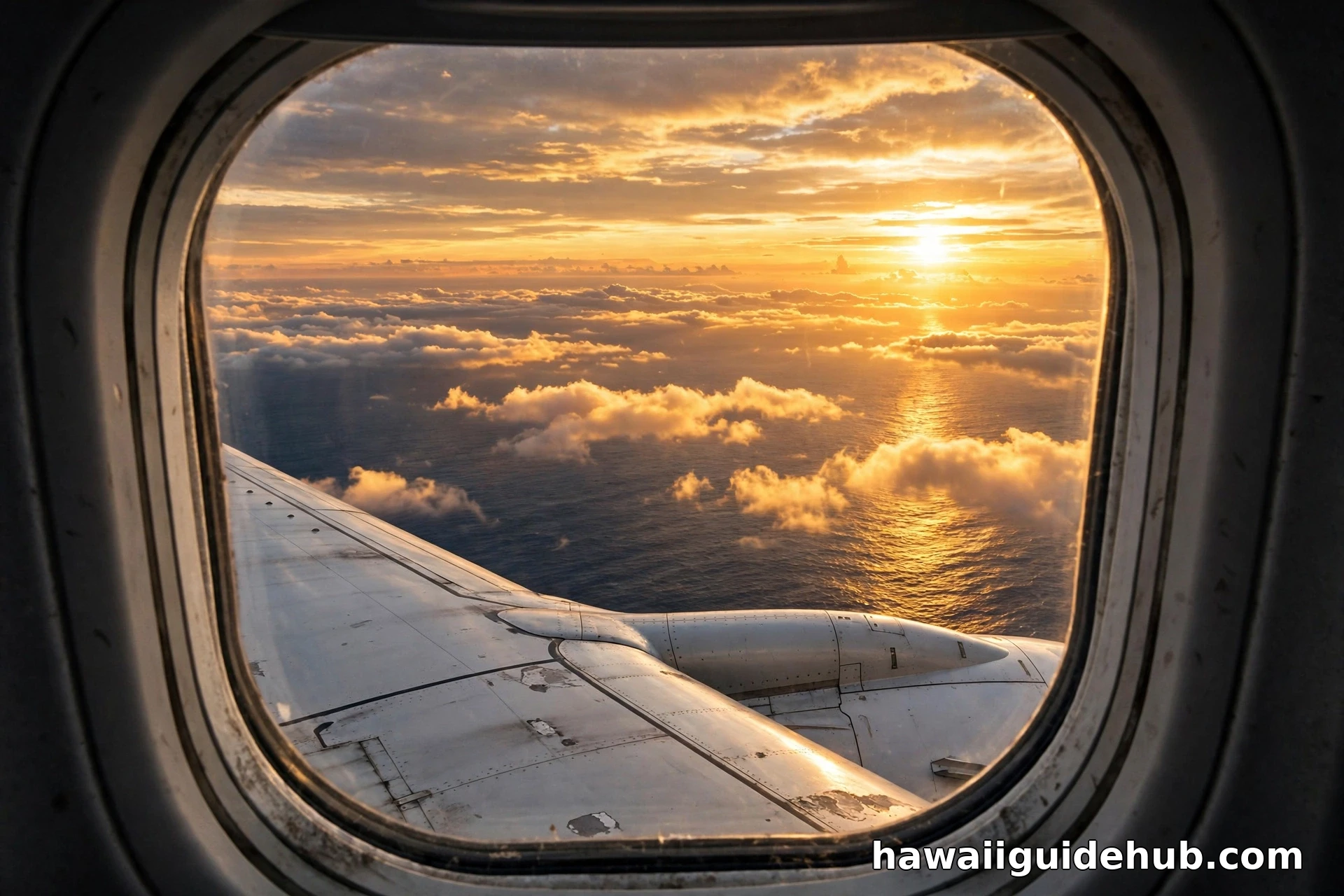
The golden hour at 35,000 feet is the red-eye’s consolation prize: the sun setting over an ocean of clouds while the islands shrink behind you. This is the hour to be awake for, mask off, watching the light change. Then the cabin dims, the drone takes over, and the mission begins. Savor the sunset; it is the last Hawaiian light you will see for a while, and it is spectacular.
The Sleep Kit That Actually Works
Four items separate the sleepers from the sufferers: a neck pillow that supports without pushing your head forward, a contoured eye mask that blocks all light, earplugs or noise-canceling earbuds, and layers for the cabin’s temperature swings. Add a refillable water bottle (fill after security), lip balm, and a change of clothes in your carry-on for the landing-day reset. What does not work: counting on the airline’s thin blanket, expecting an empty middle seat, or “just being tired enough.” Prepare like you mean it.
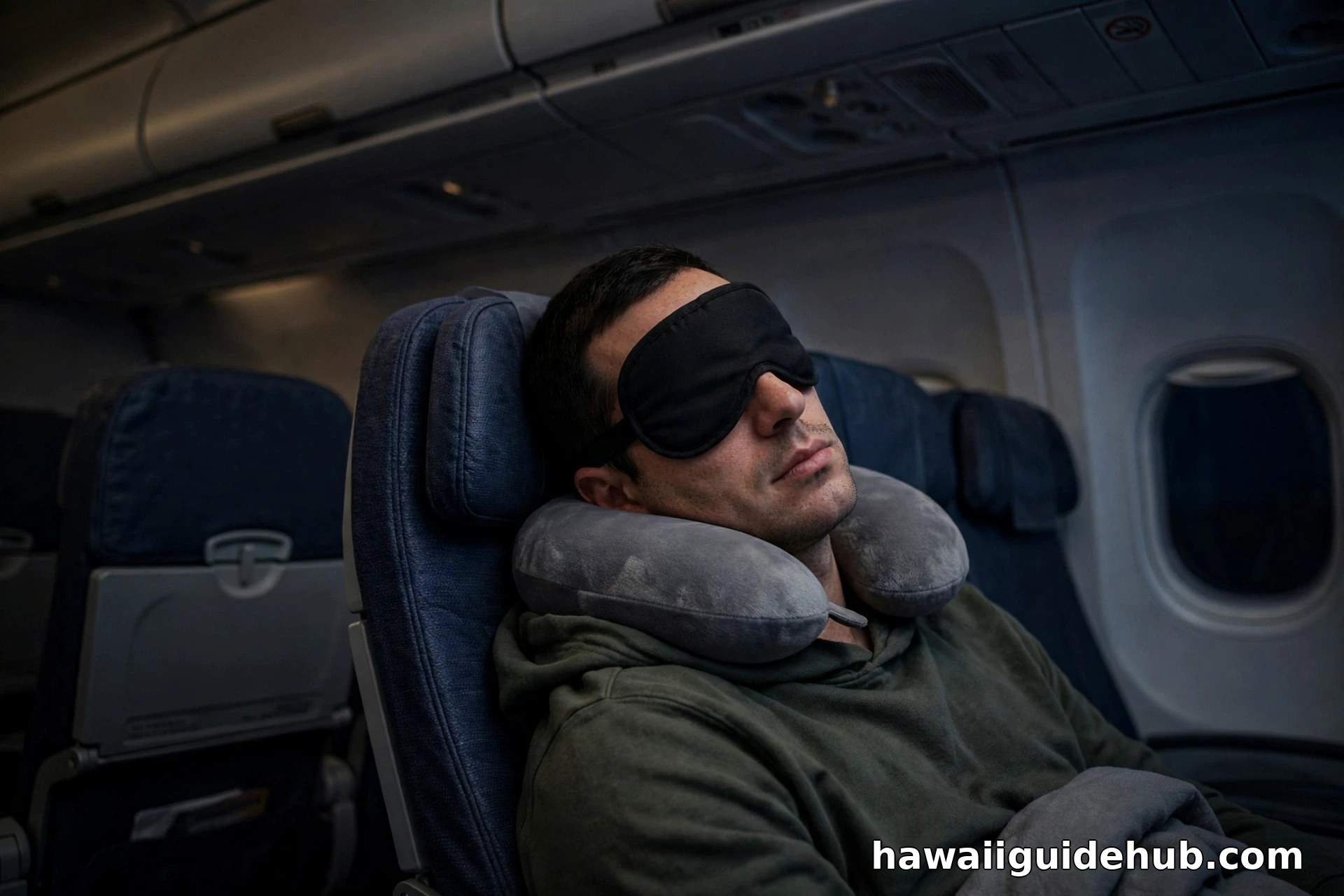
This is the goal state: mask on, pillow supporting, cabin dim, the middle hours of the flight given over to genuine rest. It does not happen by accident. The travelers sleeping like this are the ones who ate before boarding, skipped the second coffee, picked the window seat in row 12, and put the screens away. The kit is not magic; it is just preparation, and preparation is the whole game.
Seat Strategy
The window seat is the red-eye throne: a wall to lean on, no seatmates climbing over you, and control of the shade. Avoid the last row and anything near the lavatories, where light, noise, and traffic never stop. If you are tall, the exit row’s legroom is worth the price; if you are a light sleeper, the front of the cabin boards first and deplanes first, minimizing standing time. Book the seat when you book the flight: the good ones go first, and red-eyes are increasingly full.
Finally, reframe the discomfort. The red-eye is not an ordeal the airlines inflict on you; it is a deal you struck willingly: one rough night for one more day in the most beautiful place you know. Travelers who board resentful sleep worse than travelers who board grateful, and the research on sleep backs up the folk wisdom: stress is the enemy of rest. Board with the kit, the plan, and the attitude that this is the last adventure of the trip, not the punishment after it. The islands gave you everything; the least you can do is fly home gracefully.
Eat, Drink, and Caffeine Discipline
Eat a real dinner before boarding; the in-flight meal is salty, small, and served when you should be sleeping. Skip it or eat lightly, and sleep through the service instead. Caffeine discipline is the hard part: one coffee in the morning of departure day, then none, because afternoon caffeine will still be in your system at midnight. Alcohol is a trap: it sedates, then fragments sleep and dehydrates. Water steadily, not gallons at once, and save the celebratory mai tai for the trip, not the flight home.
One more tactic for the desperate: the strategic layover. If your itinerary allows, break the journey with a night in a mainland gateway city, Los Angeles, San Francisco, Seattle, rather than connecting straight through at dawn. A real bed for even six hours converts the red-eye from a wrecking ball into a manageable hop, and the extra hotel night often costs less than the upgrade would have. It is not the fastest way home, but it is the kindest, and kindness to yourself is the entire philosophy of this guide.
Making the Last Day Count
The red-eye’s gift is the final full day, and it deserves a plan. If your hotel allows a late checkout, take it; if not, ask about a day room or hospitality suite for showering before the airport. A beach day works if you pack the post-beach kit separately: change of clothes, towel, wipes, toiletries, so you are not digging through suitcases in a parking lot. Store bags with the bell desk, never visible in the car. One more poke bowl, one more sunset, one more swim: the last day can be the best day if you engineer it.
Landing Recovery
You land at dawn, bleary and three time zones east. The recovery protocol: sunlight immediately, it resets the clock faster than anything; movement, a walk, not a workout; normal meals on destination time; and no long nap, which is the trap that stretches jet lag into days. A 20-minute power nap is the maximum. By the second night, with discipline, you are mostly human again. The red-eye did not break you; it just borrowed a night, and gave you a day in return.
For more trip planning, the guide to Hawaiian cultural traditions adds the cultural layer, while responsible travel practices and the guide to Hawaii’s natural environments help you travel well.
Watch: How to Survive a Red Eye Flight
Frequently Asked Questions
Are red-eye flights from Hawaii worth it?
Usually yes: you gain a full last day in Hawaii for the price of one rough night. Travelers who prepare properly arrive functional.
What should I bring for a Hawaii red-eye?
A neck pillow, contoured eye mask, earplugs, layers, refillable water bottle, and a change of clothes in your carry-on.
What is the best seat on a red-eye?
Window seat, away from lavatories and the last row. Exit rows are worth it for legroom.
Should you drink coffee before a red-eye?
One cup early in the morning of departure day only; no caffeine after that, or it will block sleep on the plane.
How do you recover after a red-eye?
Sunlight immediately, movement, meals on destination time, and no long naps. A 20-minute power nap is the maximum.
The Hawaii red-eye is the price of paradise’s last day, and like most prices, it is negotiable with preparation. Pack the kit, pick the window, eat before you board, guard the caffeine, and engineer the final day like the gift it is. You will land tired, but you will land having squeezed every possible hour out of the islands. That is a trade worth making, and the sunset from the window seat is the receipt. File it with the boarding pass, the sand in your shoes, and the memory of the last wave you caught. The red-eye ends, the tan fades, but the extra day was real, and it was worth every single yawn, every stiff neck, and every bleary-eyed sunrise landing, because paradise never gives its extra days away for free, and frankly it never, ever should.