Hawaiʻi Ports: The Complete Guide to Cruise Ports & Harbors

Hawaiʻi runs on its ports. Nearly everything the islands consume arrives by ship, and for travelers, the ports are where cruises begin, interisland adventures launch, and the working waterfront meets the vacation. Whether you are sailing in on a cruise, catching an interisland voyage, or just curious about the harbors you will see, this guide explains how Hawaiʻi’s ports work and what to expect at each one.
This guide is the single complete resource for hawaii port, covering hawaii ports in the same place. It covers the ten commercial harbors, the cruise ports on each island, Honolulu Harbor and Aloha Tower, tender ports at Kona and Lahaina, interisland cargo, cruise schedules, getting around from each port, and FAQs. Everything about hawaii port is gathered here in one URL.
Hawaiʻi’s Ports at a Glance
| Where your ship may dock | Honolulu, Kahului, Hilo, and Nāwiliwili, plus tenders at Kona and Lahaina |
| When ships come and go | Cruise schedules are posted publicly by the Harbors Division |
| First-timer move | Honolulu’s Aloha Tower waterfront |
| The working harbor behind it | 10 commercial harbors managed by the Hawai’i DOT Harbors Division; Young Brothers barges link the islands with interisland cargo |
The Ten Commercial Harbors
The Hawaiʻi Department of Transportation Harbors Division manages ten commercial harbors across the islands. On Kauaʻi: Nāwiliwili Harbor and Port Allen. On Oʻahu: Honolulu Harbor and Kalaeloa Barbers Point Harbor. In the Maui district: Kahului Harbor on Maui, Kaunakakai Harbor on Molokaʻi, Kaumalapau Harbor on Lānaʻi, and Hana Harbor. On the Big Island: Hilo Harbor and Kawaihae Harbor. These harbors handle cargo, passengers, fishing and other commercial maritime activity, and together they form the statewide system that keeps the islands supplied.
For travelers, only a handful of these matter directly. The cruise ports are Honolulu, Kahului, Hilo and Nāwiliwili, with cruise ships also anchoring off Kona and Lahaina, where passengers come ashore by tender boat. The rest are working harbors: fascinating to know about, but not places you will board a ship.
Hawaiʻi’s harbors have deep roots. In the 19th century, Honolulu Harbor served the sandalwood trade and then the whaling fleet, when hundreds of ships a year called at the islands and Lahaina and Honolulu competed as Pacific ports. The modern harbor system grew from those natural anchorages, dredged and engineered over the decades into the deep-draft facilities of today. When you sail into Honolulu past Sand Island, you are entering a harbor that has welcomed the world for two centuries.
Honolulu Harbor: Hawaiʻi’s Main Port
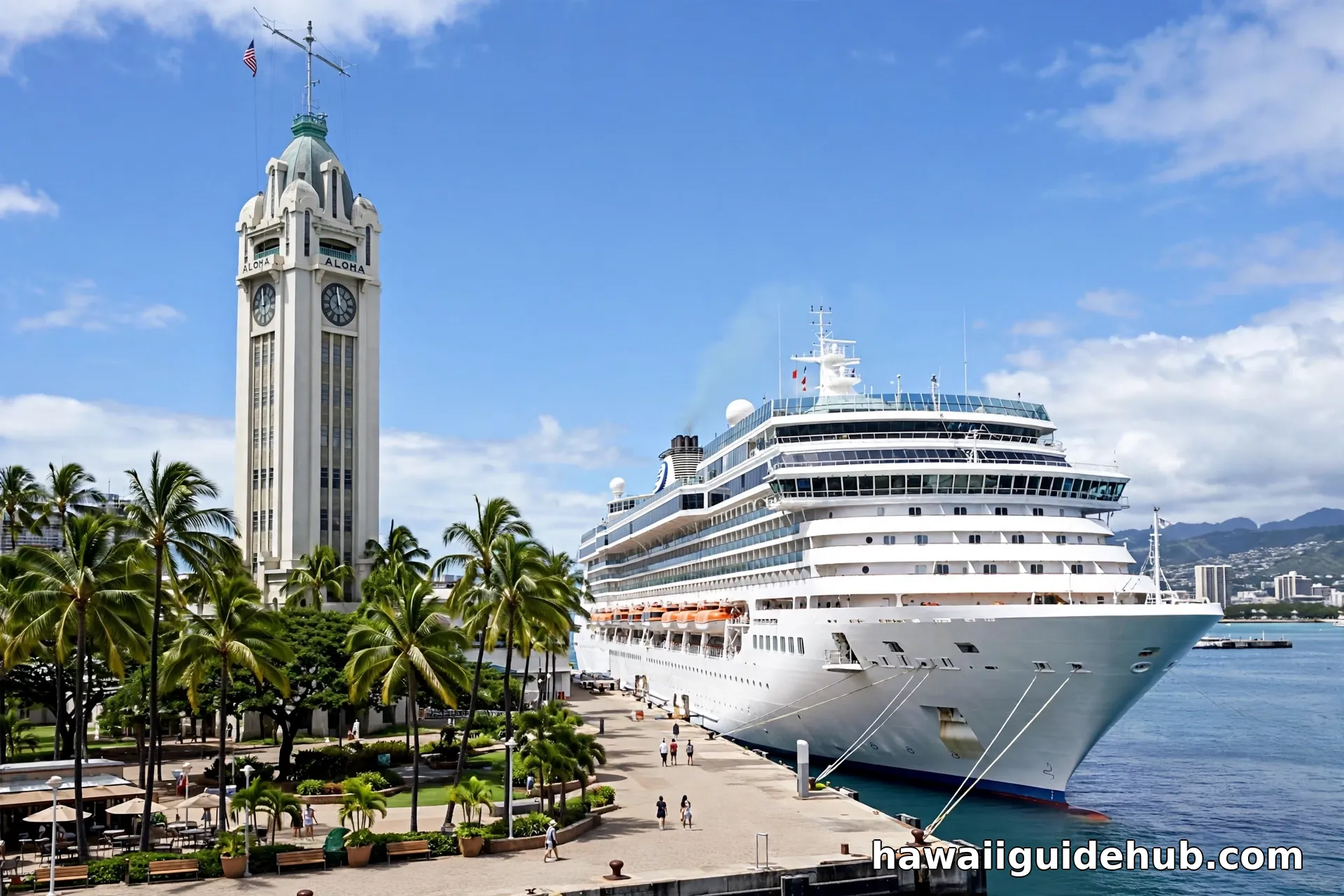
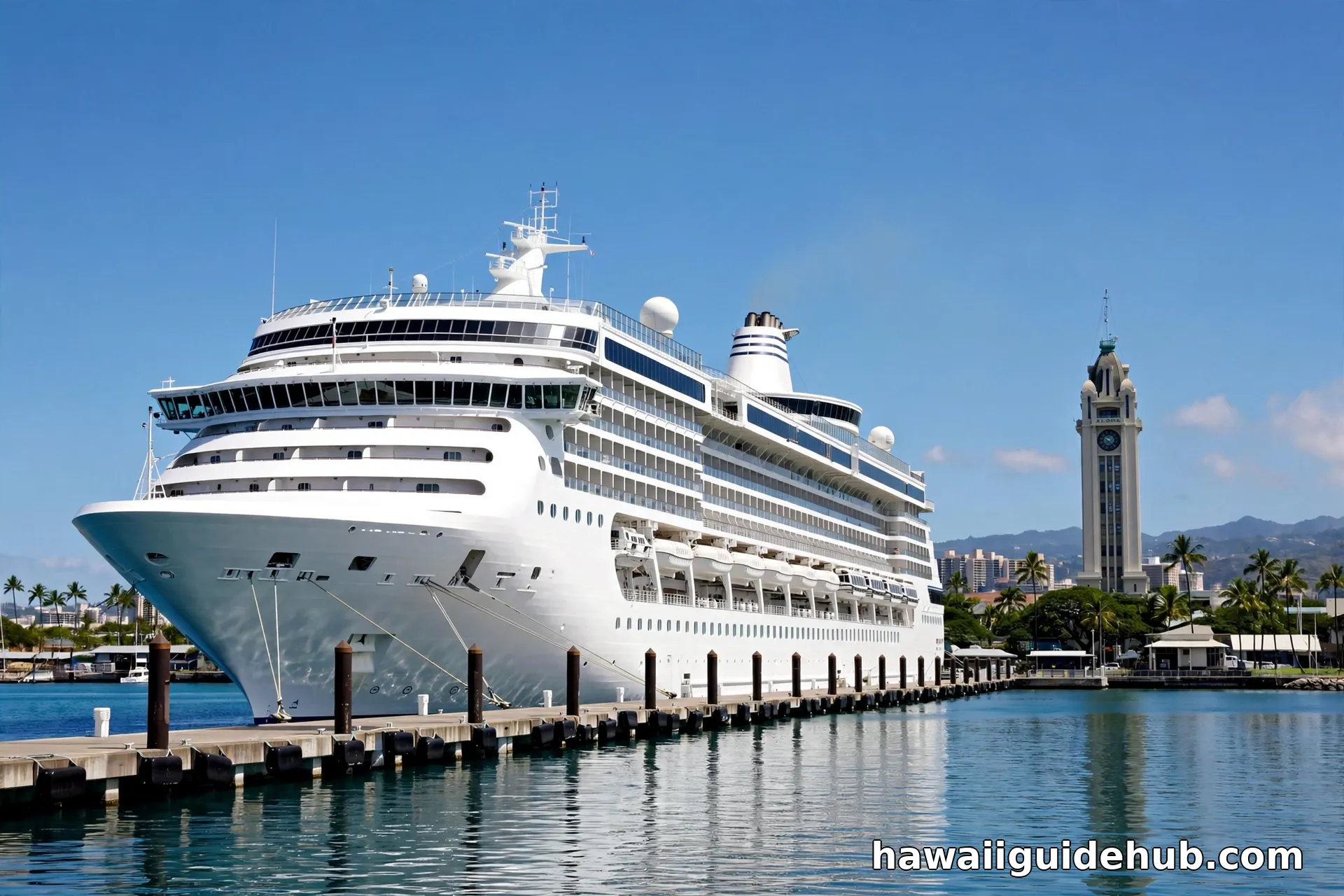
Honolulu Harbor is the principal deep-draft harbor in the state and the hub of the entire system. Nearly all containerized cargo for the islands passes through here before being barged to the neighbor islands. For cruise passengers, the harbor’s passenger facilities cluster around the Aloha Tower area at Pier 9, where the landmark Aloha Tower, built in 1926, still welcomes ships the way it greeted ocean liners a century ago. The waterfront around the tower has shops and restaurants, and downtown Honolulu is a short ride away.
Aloha Tower: The Harbor’s Landmark
No symbol says Honolulu Harbor like Aloha Tower. Completed in 1926, the 184-foot, ten-story tower was the tallest structure in Hawaiʻi for decades, and its four clocks and glowing ALOHA letters greeted every ocean liner that entered the harbor. In the boat-day era, the Royal Hawaiian Band played on the pier, crowds gathered, and arriving passengers were draped with lei. The tower still houses a free observation deck with panoramic views over the harbor, downtown and Diamond Head, and the surrounding Aloha Tower Marketplace offers shops and dining on the waterfront. If your ship docks at Pier 9, start your Honolulu day here.
Cruise Ports Island by Island
The classic Hawaiʻi cruise is a seven-day interisland loop that calls at five ports. Here is what to expect at each.
Honolulu, Oʻahu
The start and end of most itineraries. Ships dock at the Aloha Tower piers, minutes from downtown Honolulu, Chinatown and the state capitol. Waikīkī is about two miles east. Many passengers add pre- or post-cruise hotel nights in Waikīkī, which is easy to reach by taxi or rideshare. If you are flying in, Honolulu’s airport is about 20 minutes from the port by car.
Kahului, Maui
Maui’s commercial harbor and the island’s main cargo port. The cruise berth sits in a working harbor, not a resort marina, so expect an industrial backdrop rather than a pretty waterfront. Kahului town is walkable from the port for basics, but most passengers head straight out: the Road to Hāna, Haleakalā and the west-side beaches are the day’s draws. Rental cars and shore excursions stage from the terminal area.
Hilo, Big Island
Hilo Harbor sits on the island’s rainy windward side, and the port reflects the town: lush, local and unpretentious. The big draw is Hawaiʻi Volcanoes National Park, about 45 minutes south, and most cruise visitors make that the day’s excursion. Hilo town itself rewards a wander, with its farmers market, historic storefronts and nearby waterfalls like Rainbow Falls.
Kailua-Kona, Big Island
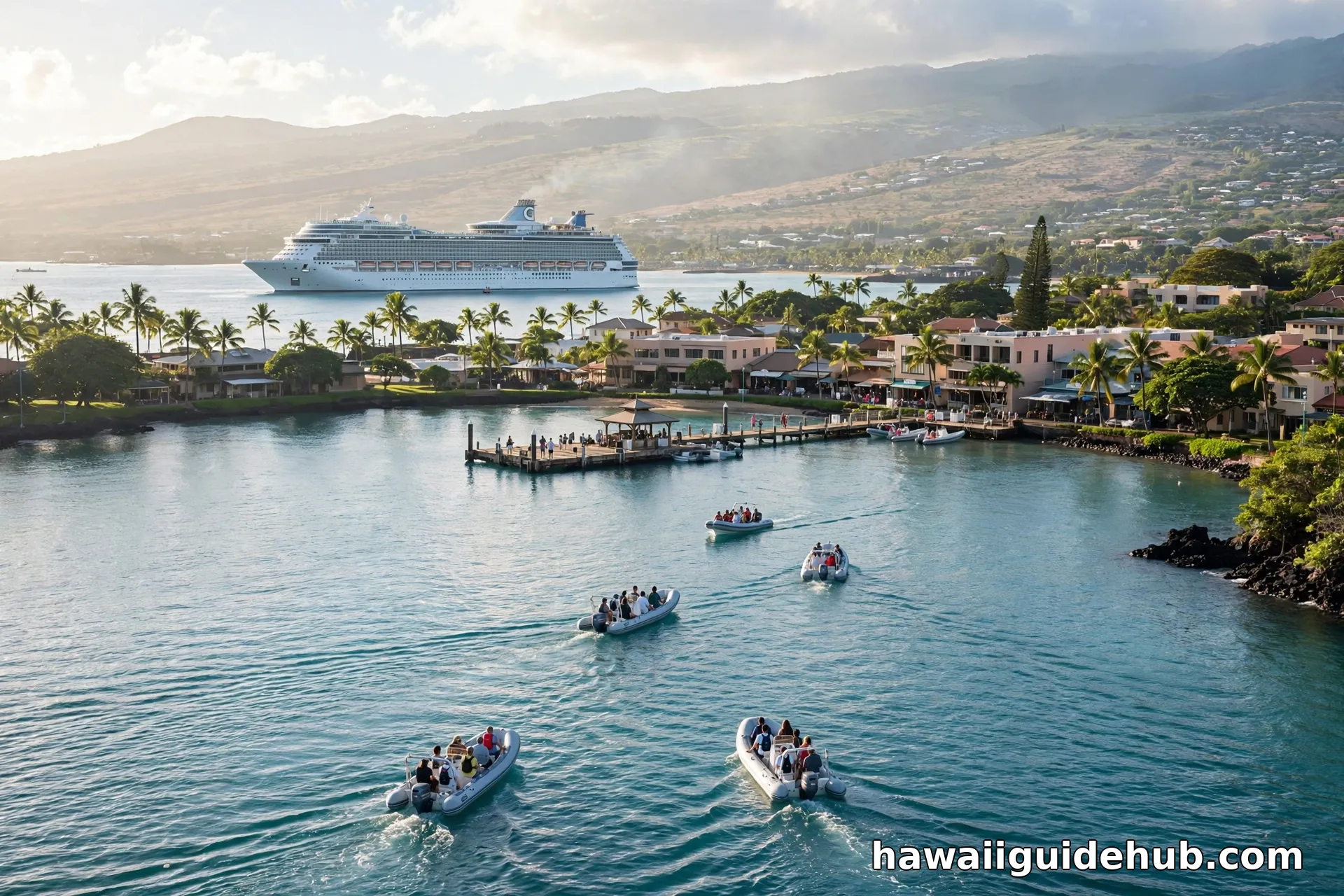
Kona is a tender port: the harbor is too small for large cruise ships, so they anchor offshore in Kailua Bay and ferry passengers in on tender boats. The ride is short and scenic, landing you at the Kailua Pier in the heart of Kona town, steps from Aliʻi Drive’s shops, restaurants and historic sites like Huliheʻe Palace. See the best things to do in Kona for the full town guide. Tendering adds time to your day ashore, so plan accordingly and watch the last-tender time carefully.
Nāwiliwili, Kauaʻi
Kauaʻi’s main commercial harbor sits in Nāwiliwili Bay, just south of Līhuʻe. Ships dock at the pier, and the terminal area has basic facilities. Līhuʻe town is close by, and the island’s sights, Waimea Canyon, the Nā Pali Coast, the north shore, spread out from there. Many passengers book island tours that depart from near the port.
Lahaina, Maui
Lahaina Harbor has historically served as a tender anchorage for cruise ships visiting Maui’s west side. Check current schedules and local conditions before planning around it, as harbor operations and waterfront access on the west side have been affected by the 2023 wildfires and the ongoing recovery.
Cruise schedule tip: the Harbors Division publishes cruise ship schedules publicly, showing which ships are in which port and when. If you want to greet arriving family, avoid port-day crowds, or just watch the big ships come in, check the schedule before you go. Schedules change with weather and operations, so confirm on the day.
Tender Ports: What to Know
Tendering confuses first-time cruisers, so here is how it works. At Kona and Lahaina, the ship anchors offshore and small tender boats shuttle passengers between the ship and the pier. You will typically need a tender ticket or assigned group, distributed on board that morning. The process adds 30 to 60 minutes each way compared with docking, and it is weather dependent: if the swell is too high, the call can be shortened or canceled. Wear shoes you can step in and out of a bobbing boat in, keep hands free, and listen to the crew. The upside is the view: arriving at Kona by water, with Hualālai rising behind the town, is one of the prettiest port arrivals in Hawaiʻi.
Interisland Cargo: The Ports’ Other Job
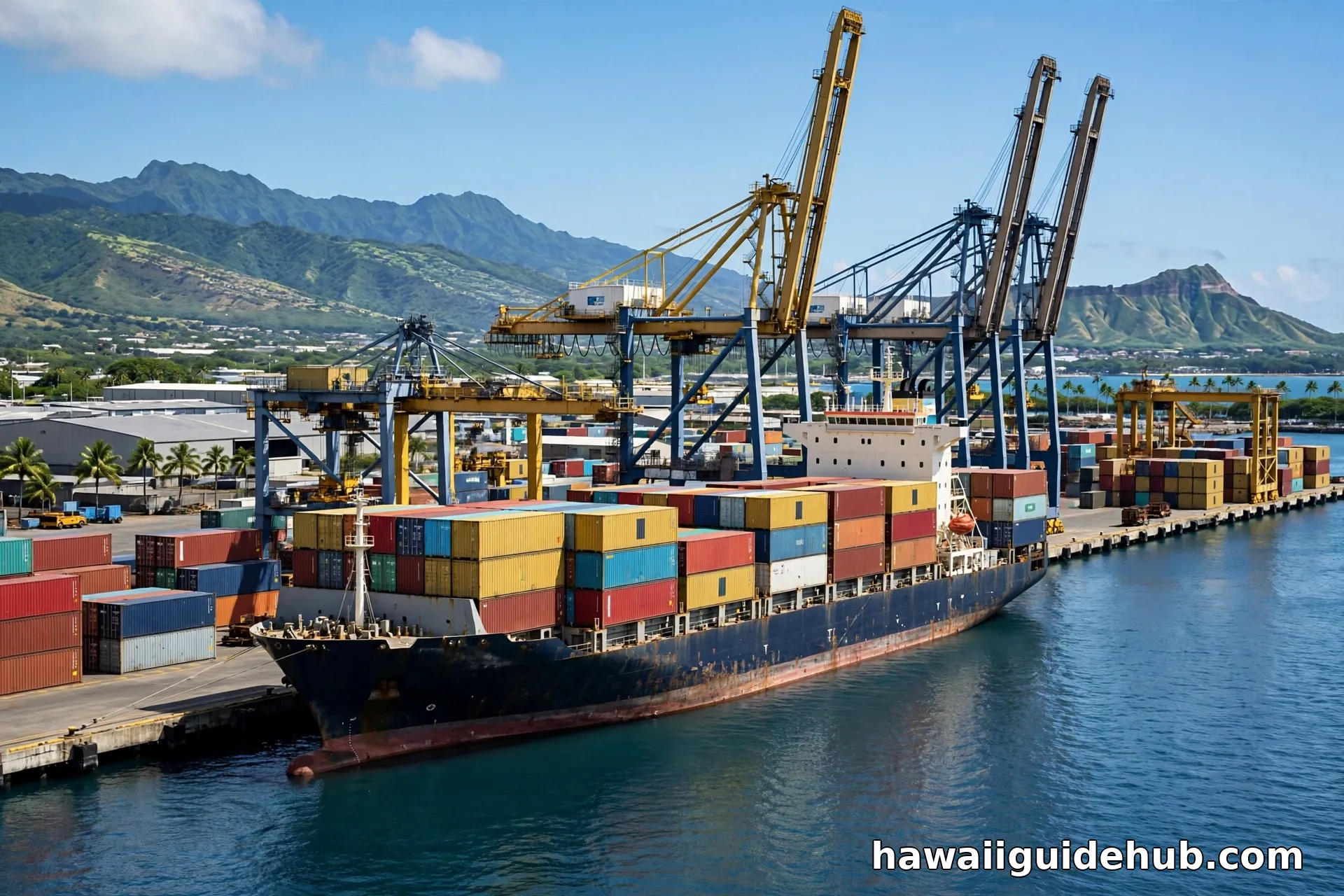
Cruise ships are the glamorous visitors, but the ports’ real job is freight. Matson and Pasha Hawaii bring containerized goods from the mainland to Honolulu, and Young Brothers barges distribute cargo to the neighbor islands from there. That is why your groceries, your rental car and very nearly everything else in Hawaiʻi arrived by water. When you see the container terminals at Honolulu, Sand Island and Kalaeloa, you are looking at the islands’ supply chain. It is also why shipping disruptions and harbor labor disputes make statewide news: Hawaiʻi has no alternative route.
Fishing and Small-Boat Harbors
Beyond the ten commercial harbors, Hawaiʻi has a separate system of small-boat harbors managed by the state Department of Land and Natural Resources. These are the marinas where sport-fishing charters, snorkel cruises, whale-watch boats and local fishermen berth: places like Kewalo Basin near Waikīkī, Honokōhau on the Big Island and Māʻalaea on Maui. If you book a fishing charter or a snorkel sail, you will likely depart from one of these harbors rather than a commercial port. They have their own parking, restrooms and charter docks, and they are worth a visit even if you are not boating: the fish auction and the charter docks are among the most local scenes on the waterfront.
Getting Around From Each Port
At Honolulu, you are in the city: taxis, rideshares and TheBus all serve the Aloha Tower area, and Waikīkī is a short ride east. At Kahului, Hilo and Nāwiliwili, the ports sit in working harbors away from the resort zones, so plan transport in advance: rental cars, pre-booked excursions or ship-sponsored shuttles. Public buses exist near each port but run on island time with limited luggage space. At Kona, you land in the middle of town on foot, which makes it the easiest port for independent exploring. Wherever you dock, agree on a meeting point and a return time with your group before anyone scatters: port areas are busy and cell service can be spotty among the containers.
Port Day Planning Checklist
Ship days are short, usually 8 to 10 hours in port, and the islands are bigger than they look. Book the one thing you most want to do in advance, whether that is a volcano tour from Hilo, a Hāna excursion from Kahului or a snorkel sail from Kona. Leave buffer time for tender ports. Carry photo ID and your ship card ashore. And check the all-aboard time twice: it is usually 30 minutes before sailing, and the ship will not wait for stragglers.
Frequently Asked Questions
What is the main port in Hawaii?
Honolulu Harbor on Oʻahu is the state’s principal commercial harbor. Nearly all containerized cargo for the islands passes through it, and it is the main cruise homeport at the Aloha Tower piers.
Which ports do Hawaii cruises visit?
The standard interisland itinerary calls at Honolulu (Oʻahu), Kahului (Maui), Hilo (Big Island), Kailua-Kona (Big Island, by tender) and Nāwiliwili (Kauaʻi). Lahaina (Maui) has also served as a tender call.
Do cruise ships dock or tender in Kona?
They tender. Kailua-Kona’s harbor cannot take large cruise ships, so they anchor in Kailua Bay and ferry passengers ashore on tender boats to the Kailua Pier.
How many commercial harbors does Hawaii have?
Ten, managed by the Hawaiʻi Department of Transportation Harbors Division: Nāwiliwili and Port Allen (Kauaʻi); Honolulu and Kalaeloa Barbers Point (Oʻahu); Kahului, Kaunakakai, Kaumalapau and Hana (Maui district); Hilo and Kawaihae (Big Island).
What is the busiest port in Hawaii?
Honolulu Harbor, by far. It handles the vast majority of the state’s containerized cargo and serves as the transshipment hub for the neighbor islands, plus cruise homeport operations at the Aloha Tower piers.
Can you visit the ports without a cruise?
The waterfront areas are partly accessible. Honolulu’s Aloha Tower Marketplace is open to the public, and you can watch ships from public viewpoints near several harbors. The working terminals themselves are secure areas, so you cannot wander the container yards.
Almost everything Hawaiʻi consumes arrives by ship through Honolulu Harbor, which handles the vast majority of the state’s imported goods. From there, barges run on regular schedules to neighbor-island ports at Kahului, Hilo, Kawaihae, and Nāwiliwili. This hub-and-spoke system is the reason grocery prices climb the farther you travel from Oʻahu, and why a storm delay in Honolulu ripples across every island.
Hawaiʻi’s ports are where the islands meet the world: container ships full of groceries, cruise ships full of visitors, fishing boats, barges and tenders all sharing the same water. Understanding which port does what turns a cruise itinerary from a list of names into a real sense of place. Watch the schedule, mind the tender times, and take a moment on deck as you sail in: arriving in Hawaiʻi by water is the oldest way to do it, and still one of the very best.