Hawaii Etiquette: Local Customs Every Visitor Should Know

Hawaii runs on unwritten rules: take your shoes off, don’t touch the turtles, drive with aloha, and never call the mainland “the States.” Visitors who learn the local customs get the real Hawaii; those who don’t get the stink eye. This guide covers the essential Hawaii etiquette: the do’s and don’ts that turn a tourist into a welcomed guest.
This is the single complete guide to Hawaii etiquette and local customs. It covers shoes-off culture, wildlife rules, ocean safety respect, driving with aloha, cultural sites, tipping, language respect, photography etiquette, supporting local, and FAQs. Everything about Hawaii etiquette lives on this one page.
Take Your Shoes Off
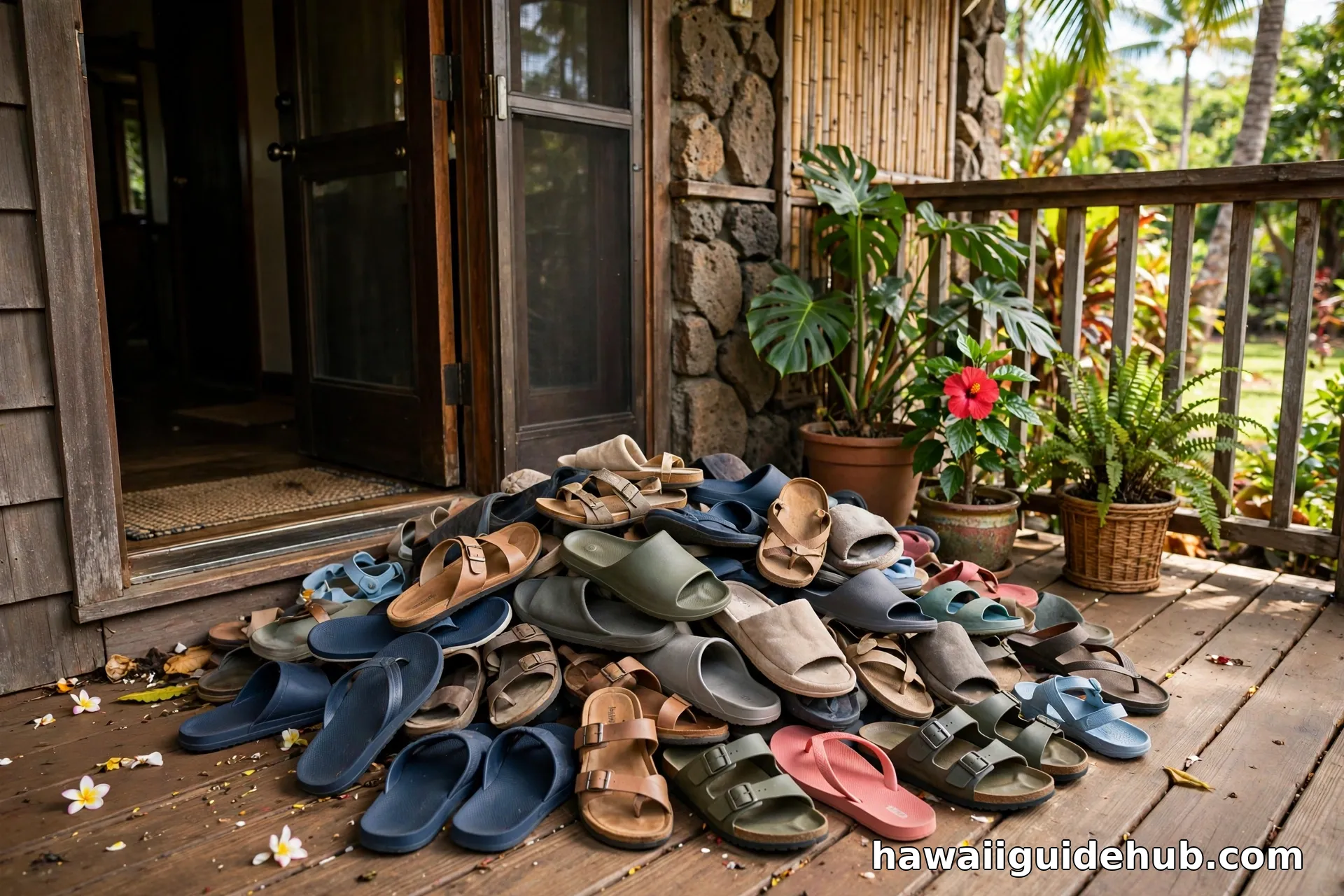
The first rule of Hawaii homes: shoes come off at the door. It is a custom with deep roots in Asian and Pacific cultures, and it is nearly universal in local households. Watch for the pile of slippers by the entrance: that is your cue. The same applies in some shops, offices, and sacred spaces. Wearing shoes inside someone’s home marks you instantly as a malihini who doesn’t know. Kick ’em off, no one will think twice.
Never Touch the Wildlife
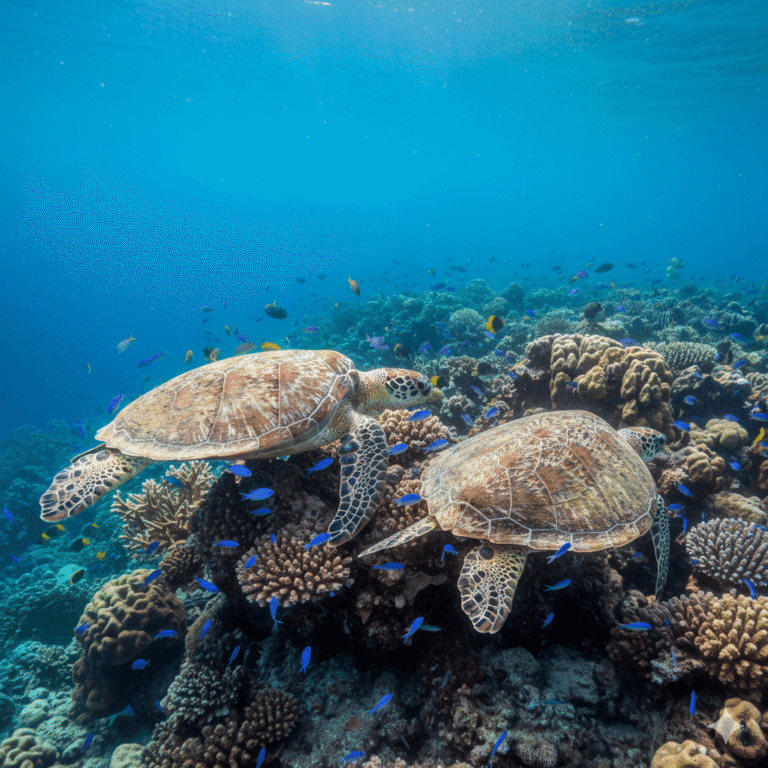
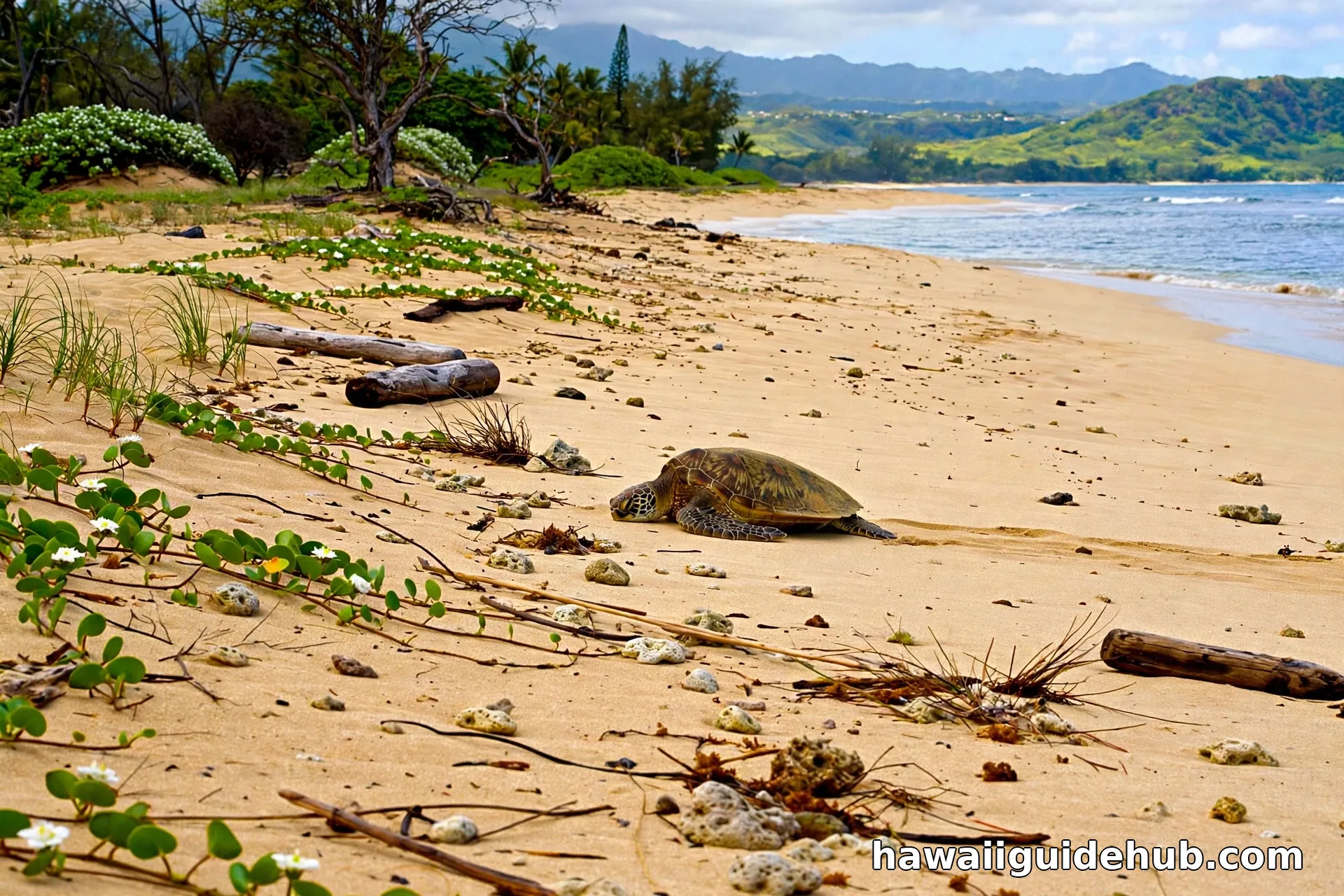
Green sea turtles (honu) and Hawaiian monk seals rest on the beaches: look, photograph from a distance, and never touch. Touching a honu can bring a large fine and even jail time; monk seals are among the most endangered marine mammals on Earth. The same goes for coral: never stand on it, and use reef-safe sunscreen without oxybenzone or octinoxate, which Hawaii has restricted by law. The wildlife was here first; you are the guest. If you plan to snorkel with turtles, read up on turtle etiquette before you get in the water.
Hawaii Etiquette: Do This, Not That
| Situation | Do | Don’t |
| Entering a home | Remove shoes at the door | Track sand through the house |
| Seeing a honu or monk seal | Watch from a distance | Touch, feed, or crowd them |
| Driving | Let people merge; shaka thanks | Honk, rush, block roads for photos |
| Cultural sites (heiau, fishponds) | Observe quietly; stay on paths | Climb, move stones, take artifacts |
| Talking about home | Say “the mainland” | Say “the States” (you are in one) |
| At restaurants and with staff | Tip 20%+; treat workers with dignity | Act entitled or snap fingers |
Drive with Aloha
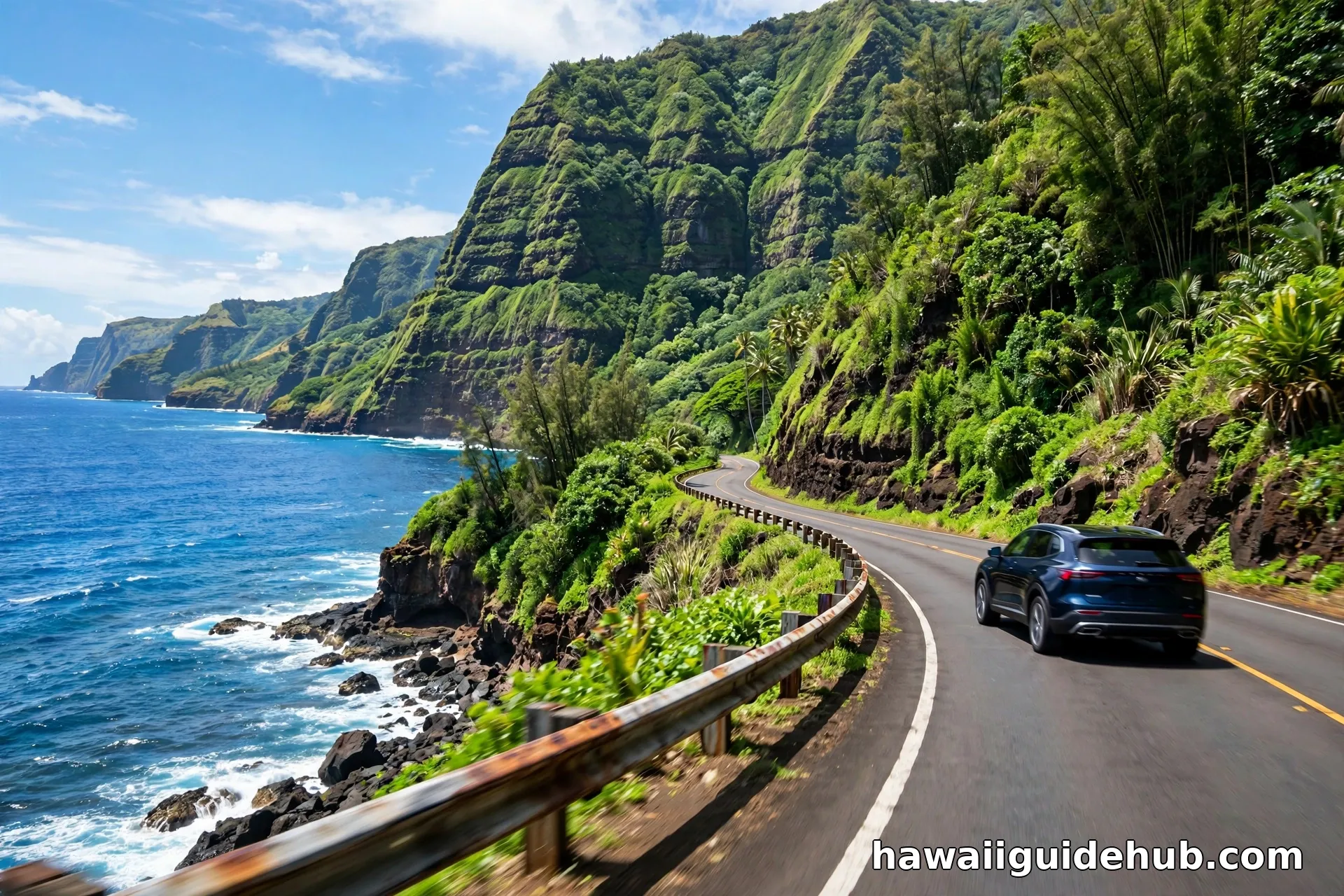
Hawaii’s roads run on courtesy: let people merge, don’t honk except for safety, and flash a shaka when someone lets you in. Never stop in the middle of the road for a photo: pull over fully or skip the shot. Respect private roads and no-trespassing signs; they mean it. And plan around traffic: Honolulu rush hours are real, and a laid-back schedule beats a honking one every time.
Respect Sacred Places
Heiau (temples), fishponds, petroglyphs, and burial sites are not photo props: they are sacred to Native Hawaiians. Stay on marked paths, don’t climb on structures, never move stones or stack them (rock stacking displaces cultural and ecological features), and don’t take lava rocks, sand, shells, or coral: besides the cultural disrespect, removing natural materials is illegal in many places. If a place feels sacred, treat it that way.
Language and Names
Make the effort: learn to pronounce place names, use the okina where it belongs (it’s Hawai’i, not Hawaii, in the Hawaiian spelling), and don’t invent nicknames or shortcuts for places and historical figures. Don’t assume someone’s ethnicity: ask, or just don’t. Learn a little Hawaiian and a little Pidgin, and use both with respect. And never say “the States” for the mainland: Hawaii is a state, and locals notice.
Support Local, Tip Well
Eat at the mom-and-pop spots, not just the chains you have at home: they are the heartbeat of the local economy. Tip 20% or more at restaurants; tip musicians, dancers, and hotel staff. Don’t haggle at farmers markets like it’s a bazaar. And ask before photographing people, especially performers: consent is respect, and a little courtesy goes a long way.
Ocean Etiquette: The Unwritten Rules
The ocean has its own customs. Never turn your back on the waves for a photo: sneaker waves and shore break injure visitors every year. Don’t drop in on someone else’s wave: surf lineup etiquette is real, and locals enforce it. Ask a lifeguard about conditions before swimming somewhere new; heed the warning signs, they are written in injuries. And never swim with dolphins in their resting bays: it stresses the animals and violates federal guidelines. The ocean is not a swimming pool; it is a wilderness with moods.
Hiking Etiquette: Stay on the Trail
Hawaii’s trails cross sacred ground and fragile ecosystems. Stay on marked trails: shortcutting causes erosion and damages native plants found nowhere else on Earth. Don’t hike closed trails: closures exist for safety and cultural reasons, and rescues endanger first responders. Start early, bring more water than you think you need, and never hike alone on remote trails. If a trailhead is in a residential neighborhood, park legally, keep quiet, and remember people live there.
Beach Etiquette: Share the Sand
Local beaches are living rooms: families gather on weekends, aunties hold court under the trees, kids learn to swim in the shallows. Don’t blast music, don’t set up a sprawling camp that blocks access, and give local gatherings space. On weekends, consider visiting less-crowded spots and leaving the popular family beaches to the families. Pick up your trash and any you find: leave the beach better than you found it. The sand is shared; act like it.
Lei Etiquette: Give and Receive
Receiving a lei is an honor: accept it graciously, wear it (don’t refuse or immediately remove it), and never throw a lei in the trash: return it to the earth or the ocean when it fades. Don’t wear a lei before you are given one as a costume. The lei is a symbol of aloha, not a party accessory: treat it with the respect the giver intended. A lei given with love carries the giver’s mana; honor that.
The Kapu System: Respect the Signs
Kapu means sacred or forbidden: when you see kapu signs, they mark places with cultural or spiritual significance. Don’t enter, don’t climb, don’t take photos over the barriers. This isn’t bureaucratic fussiness: these are the temples, burial grounds, and sacred sites of a living culture. The same respect applies to private property: Hawaii’s “no trespassing” signs are enforced, and “I didn’t know” is not a defense. When in doubt, stay out.
Don’t Geotag Sensitive Spots
That hidden waterfall, that secret beach, that sacred pool: posting exact locations on social media has overwhelmed fragile places and angered communities. If locals share a spot with you, keep it to yourself: geotagging it is a betrayal of trust. The overtourism of sensitive places is a real crisis in Hawaii; your Instagram likes are not worth a destroyed ecosystem or a closed community. Share the beauty, not the coordinates.
Learn Before You Go: The History
The deepest etiquette is knowledge: learn Hawaii’s history before you arrive. The overthrow of the Hawaiian Kingdom, the plantation era, the military’s footprint, the sovereignty movement: these are not ancient history but living context. Understanding them changes how you see the islands: the place names, the politics, the pride. Visitors who know the history ask better questions, listen better, and are welcomed more warmly. The islands reward the curious and humble. Start with the overthrow and annexation: understanding that Hawaii was an independent kingdom changes everything about how you see the place. Read about the plantation era and the immigration waves that built the local culture. Learn what the sovereignty movement seeks and why. None of this requires agreeing with any position: it requires only the respect of knowing. An informed visitor is a better guest, and the islands can tell the difference immediately.
Quiet Hours: Keep It Down
Hawaii’s neighborhoods are quiet by custom: loud parties, booming car stereos, and late-night noise violate both ordinances and the social contract. Vacation rentals in residential areas have made this a flashpoint: visitors partying while neighbors work mornings. Keep the volume down, especially after 10 PM, and remember that the walls are thin and the neighbors are real. The islands’ peace is part of what you came for: don’t be the one who breaks it.
The Aloha Spirit Law
Hawaii is the only state with the aloha spirit written into law: Hawaii Revised Statutes Section 5-7.5 defines it as mutual regard, affection, and warmth extended with no obligation in return. It is not enforceable in court, but it is the state’s official ethos: public officials are “reminded” to consider it. For visitors, the law is a hint: aloha is not just a greeting but a standard. The islands hold themselves to it; guests should try to match it. For deeper background, see what aloha in Hawaiian culture really means beyond the greeting.
What to Do When You Mess Up
You will mess up: everyone does. The etiquette for the mistake matters more than the mistake: apologize sincerely, don’t get defensive, listen to the correction, and change the behavior. “I’m sorry, I didn’t know” works once; “I’m sorry, I didn’t know” for the same thing twice does not. Locals are generous with first chances and short on second ones. Humility is the universal solvent: a genuine apology and a changed attitude fix almost anything.
Watch: Top 10 Things NOT to Do in Hawaii
Hawaii Etiquette FAQs
Why do people take shoes off in Hawaii homes?
It is a custom rooted in Asian and Pacific cultures: removing shoes keeps the home clean and shows respect. It is nearly universal in local households; follow the slipper pile at the door.
Can I touch a sea turtle in Hawaii?
No: touching green sea turtles (honu) or monk seals is illegal and can bring large fines or jail time. Watch from a respectful distance and never feed them.
What should I not say in Hawaii?
Don’t call the mainland “the States,” don’t assume someone’s ethnicity, and don’t use tourist nicknames for places. Learn real pronunciations and use them.
Is it okay to take lava rocks home?
No: removing lava rocks, sand, shells, or coral is culturally disrespectful and illegal in many areas. Leave everything where you found it.
How much should I tip in Hawaii?
Tip 20% or more at restaurants, and tip musicians, dancers, drivers, and hotel staff. Treat every service worker with dignity.
Be a Guest Worth Having
The whole of Hawaii etiquette fits in one idea: you are a guest in someone’s home. Take your shoes off, don’t touch what isn’t yours, drive like you live there, tip like you care, and learn before you assume. The islands welcome millions of visitors; the ones who are remembered fondly are the ones who acted like guests, not customers. Come with an open heart, leave only footprints, and the aloha will take care of the rest. Bookmark this guide and read it again on the plane: the shoes-off custom, the wildlife rules, the driving courtesy, the sacred-site respect, the tipping, the language, the quiet hours. None of it is hard; all of it matters. The visitors Hawaii loves are not the ones who spend the most but the ones who care the most: the ones who learn the pronunciations, who ask before photographing, who pick up the extra trash, who tip the musician. Be that visitor, and the islands will open to you in ways no guidebook can promise. The auntie will share the extra plate; the uncle will point you to the real swimming spot; the musician will play the extra verse. Aloha is reciprocal: give it genuinely, and it comes back multiplied. That is the whole secret, and it was never really a secret: it was written on every slipper pile, every kapu sign, every returned shaka. Learn it, live it, and pass it on to the next visitor who clearly has not read this guide yet, with kindness and a genuine smile, the patient and generous way the islands themselves once taught you. For more travel tips, see our volcanoes guide and Kauai guide.