The Shaka: Hawaii’s Hand Gesture, Meaning & Etiquette

Thumb out, pinky out, middle fingers folded: the shaka is Hawaii’s universal hand gesture, meaning hello, thanks, goodbye, and hang loose all at once. But where did it come from, what does it really mean, and are visitors supposed to use it? This guide covers the shaka’s meaning, its origin stories, how to throw one properly, and the etiquette every visitor should know.
This is the single complete guide to the shaka sign and shaka etiquette in Hawaii. It covers what the shaka means, the Hamana Kalili origin story, competing theories, how the gesture spread worldwide, how to do it right, when to use it and when not to, the state gesture bill, and FAQs. Everything about the shaka lives on this one page.
What the Shaka Means
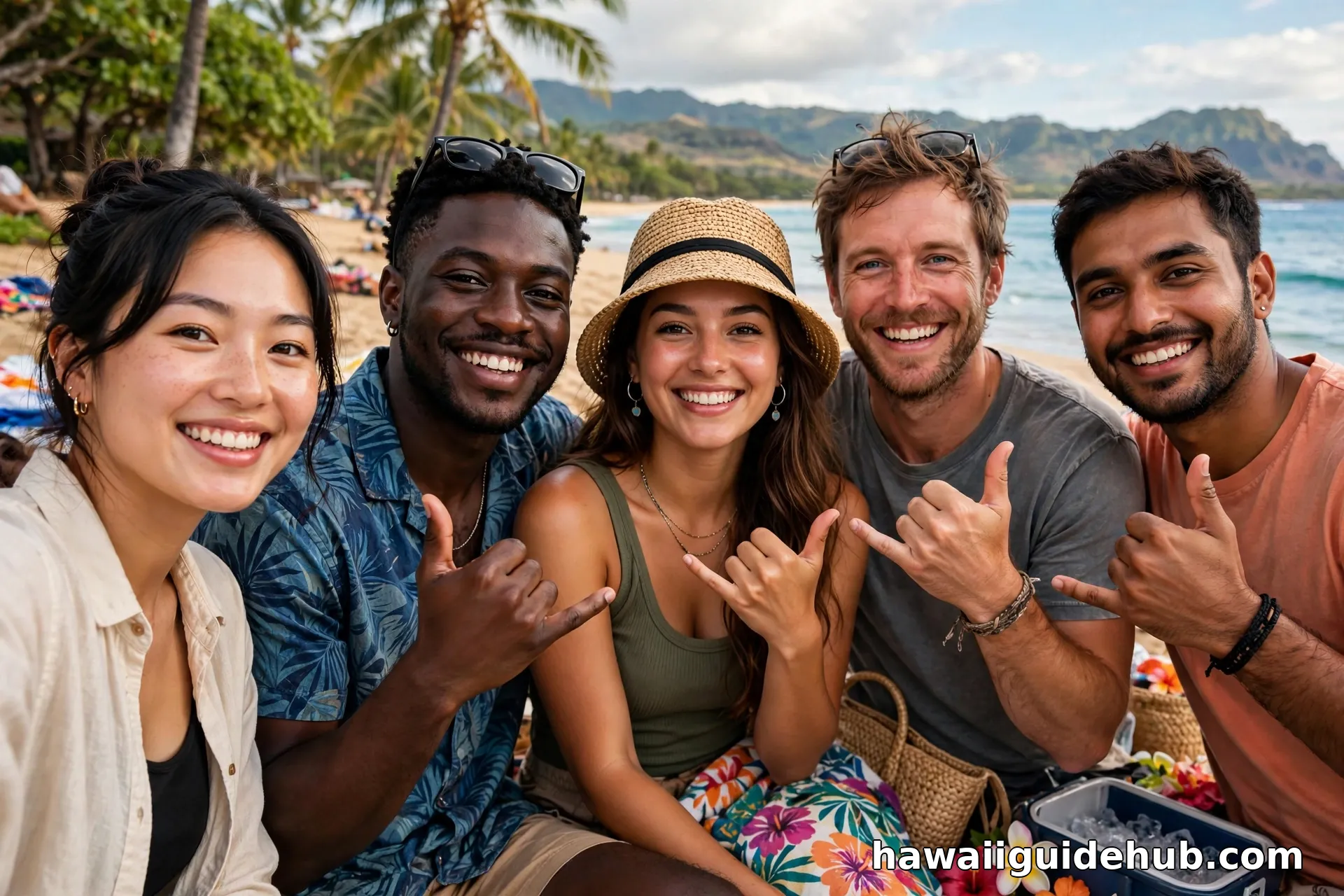
The shaka is gloriously multi-purpose: “hi,” “thank you,” “all right,” “see you,” “peace,” “goodbye,” “take care,” and “chill out” are all in the gesture, with the exact meaning set by context. A driver lets you merge: flash a shaka, meaning thanks. A friend leaves the beach: shaka, meaning see you later. Someone cuts you off in traffic: a shaka can defuse the tension, meaning no worries. It is the physical form of the aloha spirit: friendliness, warmth, and goodwill in a single hand shape.
How to Throw a Shaka
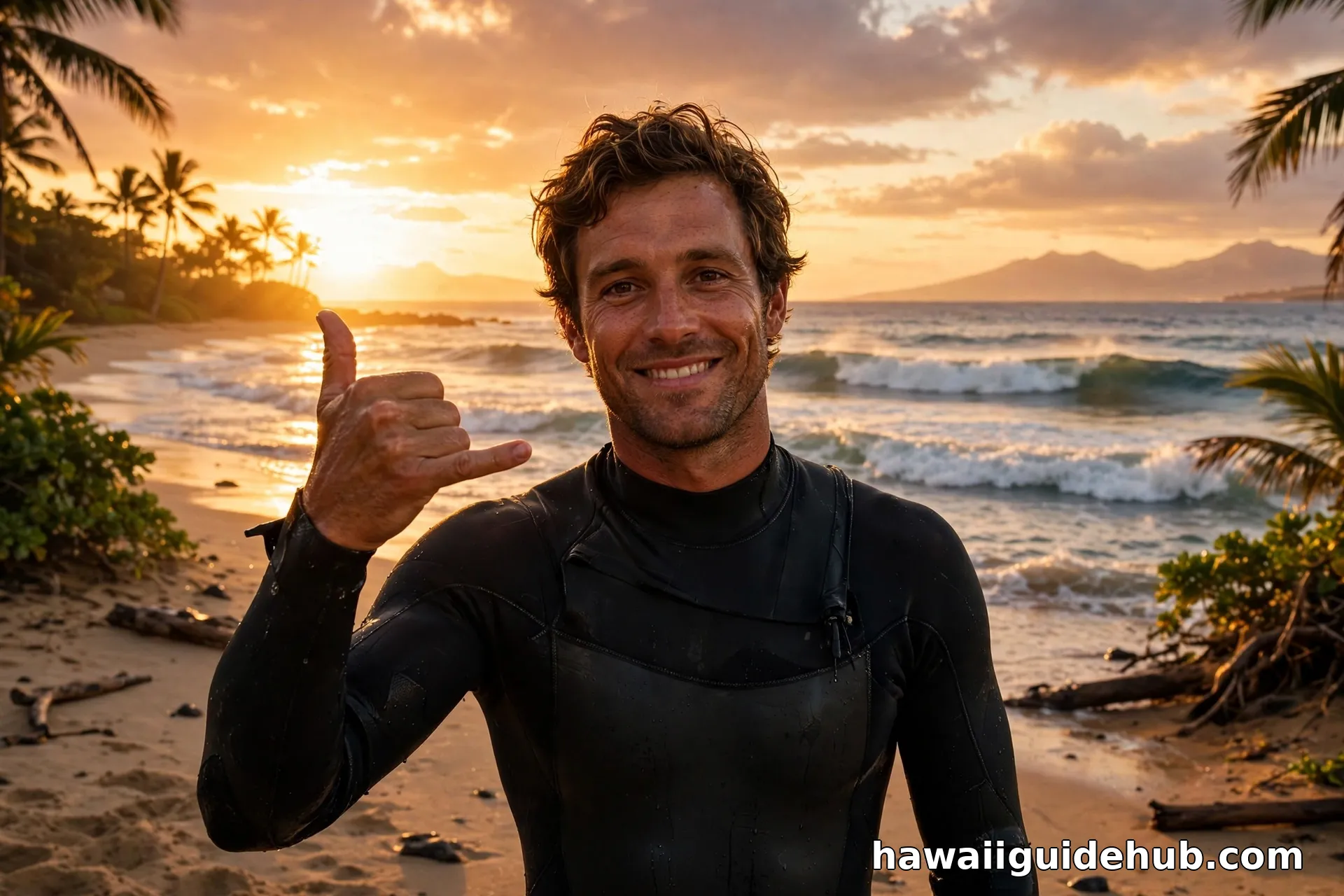
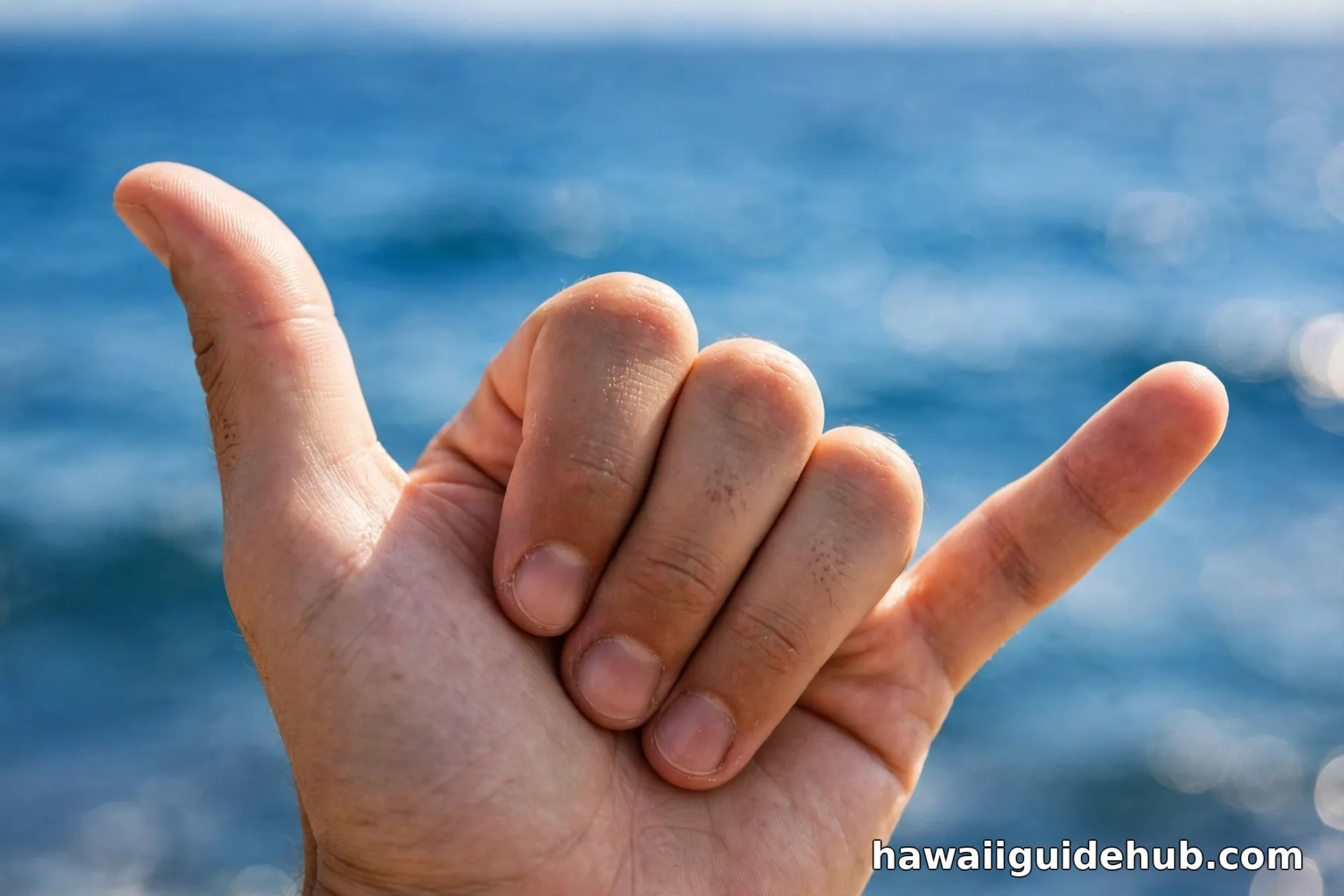
Make a fist, then extend the thumb and pinky while keeping the three middle fingers folded: that is the shape. Hold it up, often with a slight rotation or shake of the wrist, though some locals insist the real shaka is held still, palm facing outward as a sign of respect. Double shakas, both hands at once, mean extra enthusiasm. Low shakas greet children. The form is simple; the feeling behind it is what matters.
The Hamana Kalili Origin Story
The prevailing origin story belongs to Hamana Kalili of Laie (1882-1958), a fisherman and community leader on Oahu’s North Shore. Working at the Kahuku Sugar Mill, Kalili lost the three middle fingers of his right hand in an accident with the cane rollers. Reassigned as a guard on the sugar train running between Sunset Beach and Kaaawa, he waved off children trying to jump the train: with only thumb and pinky left, his wave became the shape we know. The kids began mimicking the gesture, using it as an all-clear signal, and the shape stuck. Kalili is honored today with a statue in Laie throwing the shaka. The legend is one of many surprising facts about Hawaii worth knowing.
Competing Theories
The Kalili story is the best known, but not the only one. Some credit “Lippy” Espinda, the Honolulu used-car salesman whose 1960s TV ads ended with “shaka, brah,” popularizing both the gesture and its name. The word “shaka” itself is not Hawaiian: the language has no letter S. Researchers trace it to Japanese Buddhism, where Shaka (Shakyamuni) is a name for the Buddha: Japanese plantation immigrants brought the word, and Espinda may have picked it up from the 1963 film “Buddha (Shaka).” Others point to Spanish immigrants’ gestures or to surfers inventing it independently. The honest answer: the shaka, like Pidgin, is a melting-pot creation with many parents.
How the Shaka Conquered the World
From Laie, the shaka rode the Kahuku football team around Oahu, then caught the surf boom: visiting surfers in the 1960s and 1970s carried it home alongside boardshorts and aloha shirts. Mayor Frank Fasi used it in his campaigns. President Barack Obama, raised in Hawaii, threw shakas from the world stage. There is now an official shaka emoji. In 2024, Hawaii lawmakers passed bills in both chambers with unanimous support to make the shaka the state’s official gesture: the ultimate recognition of a hand shape born in a sugar mill accident.
Shaka Etiquette: When to Throw It vs When to Skip It
| Situation | Shaka? | Why |
| Someone lets you merge in traffic | Yes | The classic thank-you shaka; expected |
| Greeting or parting with friends | Yes | Natural aloha; the gesture’s home turf |
| Returning a local’s shaka | Yes | Always return the goodwill |
| Posing for every tourist photo | Skip | Forced shakas read as a costume, not a greeting |
| Mocking the gesture or hamming it up | Never | It is a real cultural symbol, not a joke prop |
| Formal or solemn occasions | Skip | Read the room; warmth has its settings |
The Shaka Around the World: Different Meanings
The shaka traveled, and meanings shifted along the way. In China, the same hand shape means the number six. In Russia, a similar gesture can be an invitation to drink. In some Caribbean islands, it carries a very different, suggestive meaning: a reminder to research before you gesture abroad. But in most surf towns worldwide, it kept its Hawaiian soul: goodwill, stoke, and connection. The gesture’s global journey mirrors Hawaii’s own: a local thing the world adopted, sometimes understanding it, sometimes not. The shaka is an extension of aloha in Hawaiian culture, so use it with the same warmth.
Shaka in Sports: The Touchdown Shaka
Hawaii’s athletes throw shakas the way other players point to the sky: the touchdown shaka, the home-run shaka, the post-game shaka to the crowd. Local high school stars flash it crossing the goal line; University of Hawaii teams made it a signature. The gesture in sports is pure local pride: a player telling the islands “this one’s for you” without saying a word. When you see it on national TV, you are seeing Hawaii’s culture broadcast in a single hand.
The Documentary: A Story of Aloha
Filmmaker Steve Sue spent years researching the shaka for a documentary, originally titled to tell “the” story of aloha, then retitled “A Story of Aloha” when the research revealed how many origin stories exist. His work, and the legislative push it inspired, brought the Hamana Kalili story to the statehouse: Kalili’s great-great-granddaughter asked lawmakers to include his name in the official-gesture bills. The documentary’s lesson: the shaka’s true origin may be unknowable, but its meaning is not. Aloha is the point; the rest is footnotes.
Shaka vs Hang Loose: Same Thing?
Mainlanders often call it “hang loose”: the phrase surfers attached to the gesture as it spread. In Hawaii, it is just the shaka: the “hang loose” label is a mainland import, a translation for people who needed words for it. Locals rarely say “hang loose” unironically. The distinction is small but telling: the gesture belongs to Hawaii; the nickname belongs to the surf magazines. Call it the shaka, and you sound like you know.
Teaching Kids the Shaka
Watch a Hawaii keiki learn the shaka: tiny thumb and pinky, held up with total seriousness, the gesture passed down like a family recipe. Parents teach it as early as waving: it is often a child’s first piece of local culture. The keiki shaka, flashed at parades, games, and family gatherings, is pure joy: the islands’ friendliness starting young. If a child throws you a shaka, you have been honored: throw one back with everything you have.
The Business of the Shaka
The shaka sells: it is on t-shirts, stickers, license plate frames, restaurant logos, and real estate ads across the islands. Lippy Espinda proved the commercial power in the 1960s; the merchandising has never stopped. Most locals accept the commercial shaka with a shrug: it is their symbol, and the world loving it is fine. The line is mockery: selling the shaka is business; making fun of it is disrespect. The gesture can take the commerce; it cannot take contempt.
Shaka Fails: How Not to Do It
The classic fails: the sideways J, where the wrist twists the shape into nonsense; the three-finger salute, where the middle fingers forget to fold; the aggressive pump-fist shaka, which turns aloha into attitude. Then the social fails: throwing shakas in every photo like a uniform, using it sarcastically, or explaining to locals what “their” gesture means. The fix is simple: relax the hand, mean the feeling, and let the gesture be what it is. A quiet, genuine shaka beats a loud, performed one every time.
The Shaka and the Pandemic
COVID-19 gave the shaka a new job: when handshakes became suspect, the shaka became the safe greeting. No contact, all warmth: it was the perfect pandemic hello, and Hawaii leaned into it. Businesses used it in signage; officials used it in briefings. The gesture proved its versatility once again: a hundred-year-old hand shape solving a twenty-first-century problem. Some habits from the pandemic faded; the shaka-as-greeting stayed, stronger than ever.
Famous Shaka Moments
The shaka’s highlight reel: Obama throwing it on the world stage, the presidential half-shaka; Mayor Billy Kenoi’s full mayoral shaka; athletes flashing it after championships; the kayaker who paddled 2,400 miles solo from California to Hilo and still had the energy to throw one on arrival. Each moment added a layer: the gesture collecting stories the way a reef collects coral. Your shaka, thrown with feeling on a Hawaii beach, joins that collection.
The Future of the Shaka
Official state gesture status, an emoji, global recognition: the shaka’s future looks secure. The risk is dilution: as it spreads, the meaning thins, becoming just another photo pose. Hawaii’s answer is the same as ever: keep throwing it for real, and the real thing survives. The gesture lasted from a sugar mill accident to the statehouse; it will survive Instagram. As long as there are islands, there will be shakas: thumb and pinky, extended in friendship, world without end.
Watch: The History of the Shaka
Shaka FAQs
What does the shaka mean in Hawaii?
Many things: hello, thank you, goodbye, all right, hang loose, take care. The meaning comes from context; the constant is friendliness and the aloha spirit.
Where did the shaka come from?
The best-known story credits Hamana Kalili of Laie, who lost three fingers in a Kahuku Sugar Mill accident; children mimicked his wave. The name may come from Japanese Buddhism via 1960s ads. Multiple theories exist.
Should tourists use the shaka?
Yes, when it is genuine: returning a local’s shaka, thanking a driver, greeting friends. Do not force it for photos or mock it. Sincerity is the whole etiquette.
Do you shake the shaka or hold it still?
Both are seen: many give it a wrist shake, while some locals hold it still with the palm out as a sign of respect. Either is fine; the feeling matters more than the form.
Is the shaka Hawaii’s official gesture?
In 2024, Hawaii’s legislature passed bills in both chambers with unanimous support to designate the shaka as the state’s official gesture, recognizing its cultural significance.
One Gesture, All Aloha
The shaka is Hawaii in miniature: born of hard labor and an accident, raised by children playing, named by a car salesman, carried worldwide by surfers, and now the state’s official gesture. It asks nothing and offers everything: a little goodwill, extended thumb and pinky. Use it when you mean it, return it when you get it, and never treat it as a joke. The islands invented the world’s friendliest hand shape: the least we can do is throw it with respect. So here is the whole etiquette in one breath: learn the shape, mean the feeling, return every shaka you receive, thank drivers with it, greet friends with it, skip it when it would be a costume, and never, ever mock it. Do that, and the gesture will do the rest: it has been making friends for a hundred years, and it is just getting started. Next time you are in the islands, watch for it: the driver who lets you in, the uncle at the beach park, the keiki at the parade. Throw one back, and feel the connection click into place. That click is a hundred years of aloha, delivered in a single hand, from Hamana Kalili’s Laie to wherever you are standing right now, traveler. Throw it like you mean it, because now you truly know exactly what it really means, deep down. For more local culture, see our volcanoes guide and Kauai guide.