Hawaii First-Time Visitor Mistakes: 12 Errors to Avoid on Your Trip

Every year, millions of people visit Hawaii for the first time, and every year they make the same dozen mistakes: trying to see four islands in six days, showing up at Hanauma Bay without a reservation, touching a sea turtle for a photo, or learning that the summit of Haleakalā is 40 degrees colder than the beach. The islands are forgiving, but some mistakes cost real money, real time, or real danger.
This is the single complete guide to first-time visitor mistakes in Hawaii. It covers the island-hopping trap, the reservation blindside, ocean safety errors, wildlife and reef mistakes, logistics blunders, and packing failures, with a mistake audit showing what each one actually costs and the simple fix. If you have been searching for anything about Hawaii first-timer mistakes, the answers are all here on this one page.
The Mistake Audit: What It Costs vs. the Fix
Not all mistakes are equal. The table below ranks the costliest first-timer errors by what they actually cost you.
| Mistake | What it actually costs | The 5-minute fix |
| Island-hopping too much | Two half-days lost per hop to airports; ~$100+ interisland fare each way | Max 2 islands per week; fly early morning |
| No reservations | Turned away at Hanauma Bay, Diamond Head, Haleakalā sunrise | Book on official sites 2 to 30 days ahead (per park systems) |
| Touching wildlife | Federal fines up to thousands; harassment harms animals (per NOAA/DLNR) | Stay 10+ feet back; zoom lens, not hands |
| Ignoring ocean warnings | Drowning is the leading visitor killer; north shores in winter are deadly | Ask a lifeguard; never turn your back on the ocean |
| Banned sunscreen | Oxybenzone/octinoxate sunscreens illegal since 2021 (per state law) | Buy mineral reef-safe sunscreen on arrival |
| Underestimating drives | Road to Hana is a full day; island “shortcuts” do not exist | Double Google Maps times; start before 8 a.m. |
The Island-Hopping Trap
The classic first-timer error is treating Hawaii like a sampler platter: three nights on Oʻahu, two on Maui, two on the Big Island. Each hop eats the better part of a day, between hotel checkout, airport arrival, rental car return and pickup, and the flight itself. You also pay for it: interisland fares typically run $100 or more each way per person, and you will need a new rental car on each island. For a one-week trip, two islands is the maximum that still feels like a vacation; for ten days or more, three can work. The islands reward depth, not breadth.
The Reservation Blindside
Hawaii’s most popular experiences now require advance reservations, and first-timers routinely discover this in the parking lot. Hanauma Bay books out days ahead; Diamond Head requires reservations; Haleakalā sunrise requires a reservation for the 3 a.m. to 7 a.m. window. These systems exist because the places were being loved to death, and they are enforced: no reservation, no entry, no exceptions for “we flew 3,000 miles.” Check the official park sites, not third-party blogs, for booking windows, which range from a couple of days to a month out depending on the site.
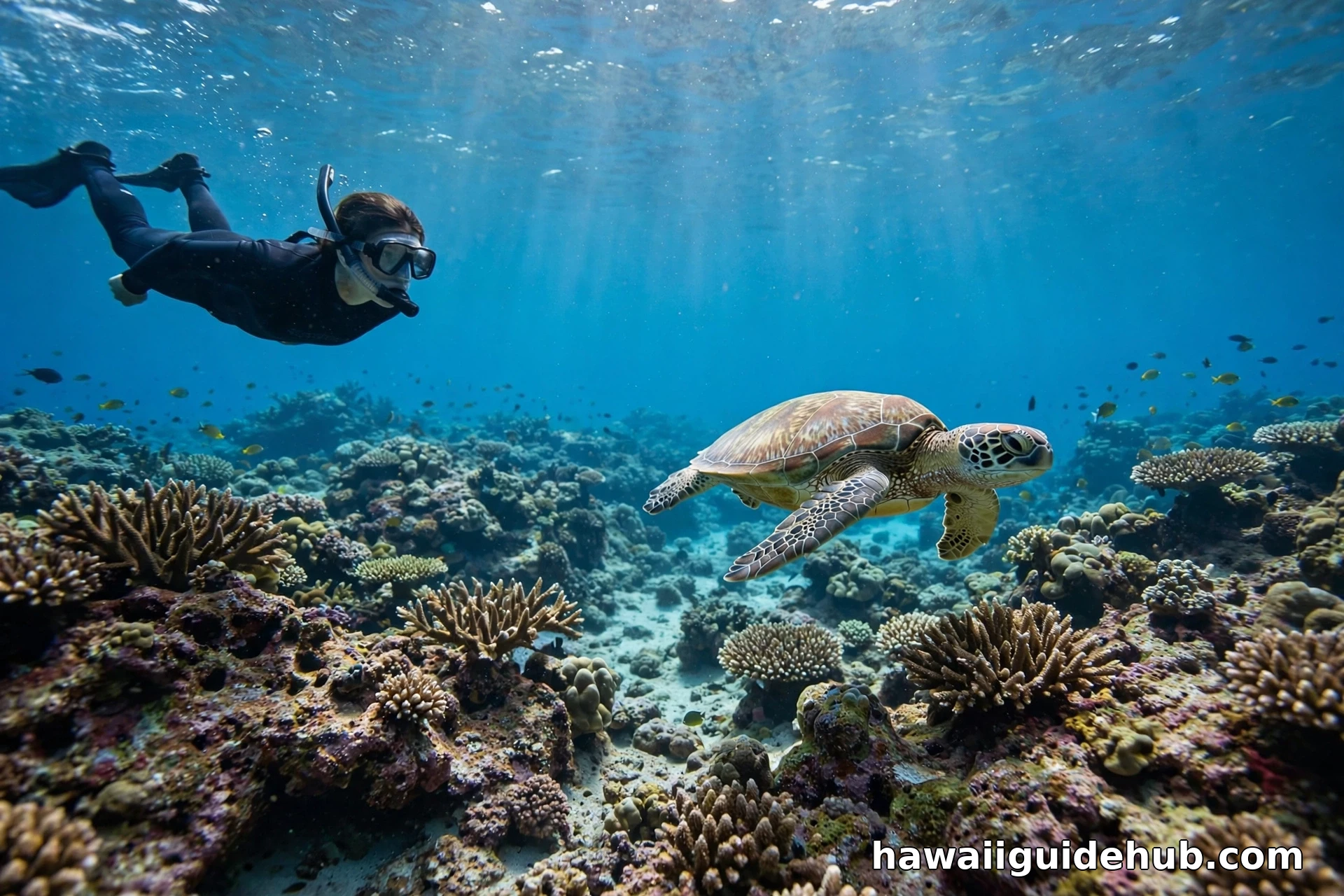
The snorkeler in the photograph is doing it exactly right: watching the turtle from a respectful distance, floating calmly, letting the animal set the terms of the encounter. This is the posture to copy everywhere in Hawaii, with turtles, with seals, with dolphins, with the ocean itself. Curiosity with restraint is the whole philosophy of visiting well: look closely, touch nothing, leave everything as you found it, and the islands will keep showing you wonders.
Ocean Mistakes That Can Kill
Drowning is the leading cause of visitor deaths in Hawaii, and almost all of it is preventable. First-timers underestimate the ocean in specific ways: swimming at unguarded beaches, turning their backs on the surf for photos, snorkeling alone or exhausted, and visiting north-facing shores in winter when the surf is enormous. The rules are simple and non-negotiable: swim only at lifeguarded beaches, ask the lifeguard about conditions, never turn your back on the ocean, and respect warning signs and red flags. If in doubt, don’t go in: the ocean will be there tomorrow.
Wildlife and Reef Mistakes
Touching a Hawaiian green sea turtle or a monk seal is illegal under federal and state law, with fines that can reach thousands of dollars, and it stresses animals that are already fighting for survival. The same goes for standing on coral, which kills the living polyps, and for taking lava rocks, which is both illegal in parks and, per local legend, invites Pele’s curse. Watch wildlife from at least ten feet away, use reef-safe sunscreen, and never feed fish, turtles, or birds: it changes their behavior and damages the ecosystem.

The Reef-Safe Sunscreen Rule
Hawaii’s sunscreen law surprises first-timers twice: once when they learn it exists, and again at the price of compliant sunscreen in resort shops. Since January 1, 2021, the sale and distribution of sunscreens containing oxybenzone and octinoxate has been banned statewide, because those chemicals damage coral reefs. Bringing your own banned sunscreen from home does not exempt you; the law targets sale and distribution, but the ethical move is the same either way. Mineral sunscreens with zinc oxide or titanium dioxide are the compliant choice, and buying them after arrival guarantees you are using what the law intends. Apply before you get to the beach, reapply after swimming, and remember that no sunscreen replaces a rash guard and shade at midday.
The Tipping and Culture Gap
First-timers from countries without tipping culture under-tip; first-timers from the mainland overthink it. Hawaii follows standard U.S. tipping: 18 to 20 percent at restaurants, a few dollars per drink at bars, tips for tour guides and hotel housekeeping. Beyond money, the culture gap matters more: learn to pronounce the place names you will say a hundred times, understand that “aloha” is not a theme-park greeting but a real value, and never treat sacred sites as photo backdrops. Heiau (temples), burial sites, and certain beaches carry kapu, restrictions, that deserve respect whether or not a sign explains them.
The deeper mistake is the mindset that Hawaii is America with better weather. It is America, but it is also a place with its own kingdom history, its own language, and a Native Hawaiian culture that predates the hotels by a millennium. Visitors who arrive curious about that history, who read even a little about the overthrow and the sovereignty movement, experience a profoundly richer trip than those who never look past the pool.
The Overplanner’s Regret
The most common post-trip regret is not what people did but the pace they did it at: sunrise hike, morning snorkel, afternoon lūʻau, sunset sail, every day for a week, returning home needing a vacation from the vacation. Hawaii punishes overplanning in a specific way, because the best moments are unplannable: the turtle that surfaces beside your kayak, the rain shower that ends in a double rainbow, the food truck you stumble on because you took the wrong turn. Schedule one anchor activity per day and leave the rest open. The islands fill empty time better than any itinerary can.
The Trailhead Crime Problem
Rental cars are targets, and first-timers make it easy: luggage visible in the back seat, parked for hours at remote trailheads. Thieves know the patterns, and a smashed window can ruin a day and compromise your documents. The fix is boring but effective: leave valuables at the hotel, bring only what you need, keep the car visibly empty, and park in busy areas when possible. Take a photo of your rental’s license plate, because in a lot full of identical white SUVs, you will not remember which one is yours.
The Interisland Flight Mistake
First-timers book interisland flights like mainland connections, tight layovers and late arrivals, then discover that Hawaiian airports run on island time and interisland terminals require real buffer. Book morning flights for island hops to protect the rest of your day, allow extra time at Honolulu’s airport when connecting, and remember that the last flight of the day is the most likely to cascade into delays. Better yet, structure the trip so each island gets a clean block of days with the flight as a planned travel morning, not a stolen afternoon.
These visitors came prepared: puffy jackets, beanies, backpacks, and they are the ones still smiling at 6 a.m. while the unprepared huddle in rental-car blankets. The summit rewards the packed layer and punishes the forgotten one; there is no gift shop selling warmth at 10,023 feet. When the packing list says “jacket for Haleakalā,” believe it.
Logistics Blunders
Beyond reservations, first-timers mishandle the basics. They skip the rental car on islands where the bus does not reach the good stuff, then discover that “close on the map” means an hour on a two-lane road. They plan the Road to Hana as a half-day trip when it demands a full one, starting early. They eat only at resort restaurants and chains, missing the plate lunches, poke shops, and farmers markets where Hawaii actually eats. And they try to schedule every minute, leaving no room for the unplanned beach, the roadside fruit stand, or the nap the sun demands.
The Packing Failures
Hawaii packing has two classic failures. The first is bringing only beach clothes and freezing at 10,000 feet: Haleakalā and Mauna Kea summits can be near freezing at sunrise, and even upland towns get chilly. The second is bringing the wrong footwear: flimsy slippers for muddy hikes, or heavy boots for beach days. Pack layers, a light rain jacket (windward sides are wet), reef-safe sunscreen bought after arrival to guarantee compliance, and water shoes or sturdy sandals. Leave the valuables at home: rental car break-ins target tourist vehicles at trailheads.
For deeper trip planning, the guide to Hawaiian cultural traditions explains the etiquette behind the rules, while responsible travel practices and the guide to Hawaii’s natural environments cover visiting with care.
Watch: 10 Mistakes When Planning a Trip to Hawaii
Finally, the meta-mistake: treating Hawaii as a checklist. First-timers arrive with a spreadsheet of 40 “must-dos” and spend the trip racing between them, photographing each for exactly four minutes. The islands do not reward this approach; they reward the opposite. The visitors having the best time are the ones who picked three things that mattered, did them well, and let the rest happen. A beach with no agenda, a shave ice with no line, a sunset with no filter: these are the moments the spreadsheet cannot schedule, and they are the ones you will remember in ten years.
Frequently Asked Questions
What is the biggest mistake first-time Hawaii visitors make?
Trying to visit too many islands in one trip. Each hop costs a half-day and $100+ per person; two islands per week is the comfortable maximum.
Do you need reservations for Hawaii attractions?
Yes, for the most popular ones: Hanauma Bay, Diamond Head, and Haleakalā sunrise all require advance reservations through official park sites.
Is it illegal to touch sea turtles in Hawaii?
Yes. Touching green sea turtles or monk seals violates federal and state law, with fines reaching thousands of dollars. Stay at least ten feet away.
What sunscreen is banned in Hawaii?
Sunscreens containing oxybenzone and octinoxate have been banned since January 2021. Use mineral-based reef-safe sunscreen.
How cold is Haleakalā summit?
Temperatures can approach freezing at sunrise, roughly 40 degrees colder than sea level. Bring a warm jacket and layers.
The perfect first Hawaii trip is not the one with the most activities checked off; it is the one where you slowed down enough to let the islands work on you. Avoid the dozen mistakes above, build in empty time, ask locals and lifeguards for advice, and treat the ocean and the wildlife with the respect they demand. Do that, and paradise delivers exactly what it promises. And when you start planning your second trip, because you will, you will already know what the first-timers around you are getting wrong.