Hawaii Island Hopping Guide: Is It Worth It, Costs & Itineraries

Should you visit one Hawaiian island or three? Island hopping is the defining decision of a Hawaii trip: done right, it delivers volcanoes and Waikīkī, the Nā Pali Coast and the Road to Hana, in a single vacation; done wrong, it turns paradise into a week of airports and rental-car counters. The honest answer depends on your trip length, your budget, and what kind of traveler you are.
This is the single complete guide to island hopping in Hawaii. It covers whether hopping is worth it, the true cost of adding an island, a fast briefing on each island’s personality, the hop-day playbook, sample itineraries that actually work, and when to stay put. If you have been searching for anything about Hawaii island hopping, the answers are all here on this one page.
Should You Hop? The Honest Math
Every island hop costs you roughly half a day: hotel checkout, rental car return, airport security, the flight, baggage, new rental car, new hotel check-in. On a seven-day trip, two hops consume two of your seven days in transit, and that is before you count the mental overhead of packing, navigating, and reorienting. The rule of thumb used by experienced Hawaii travelers: one island for trips under six days, two for a week to ten days, three only for two weeks or more. Four islands in a week is not a vacation; it is a layover tour.
The True Cost of Adding One Island
Hopping is not just time; it is money. The table below itemizes what one additional island actually adds for two travelers.
| Cost item | Typical range | Source/notes |
| Interisland flights (2 people) | $200 to $400 round total | Per current Hawaiian/Southwest fare listings; book early |
| Extra rental car days | $80 to $150/day | Per major rental listings; each island needs its own car |
| Extra hotel/resort fees | $250 to $600/night | Per booking listings; resort fees add $30 to $50/night |
| Transit time lost | Half day per hop | Checkout, airports, rental counters, check-in |
| Total per added island (2 travelers, 3 nights) | $1,200 to $2,500+ | Before food and activities |

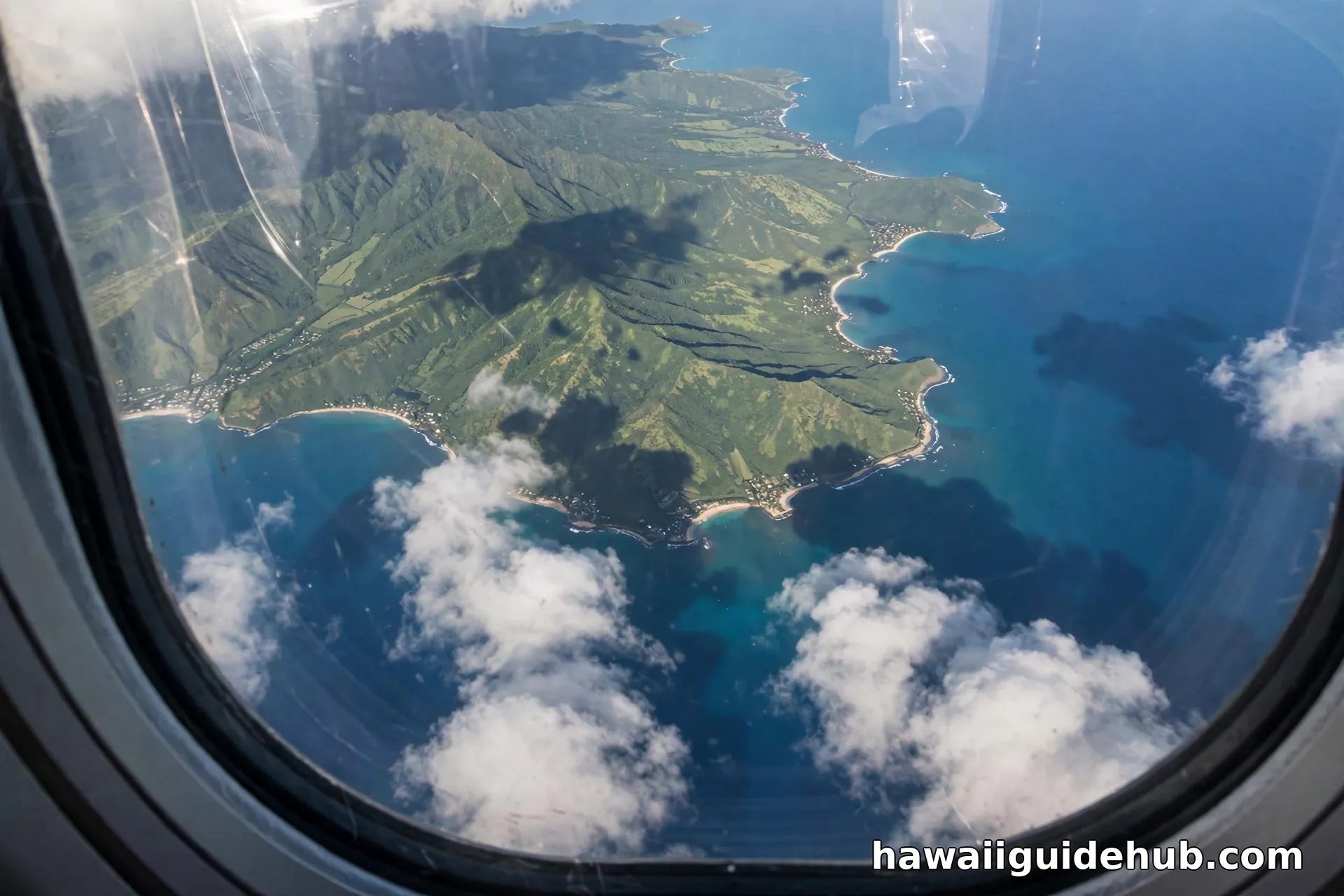
The flight between islands is itself part of the experience, and window seats are worth requesting. On a clear day the interisland hop delivers views no postcard captures: the islands rising from impossibly blue water, clouds stacked over the peaks, the channels between islands showing every shade of turquoise. The flights are short, often under an hour, but the perspective they give, of an archipelago rather than a single destination, reframes the whole trip. You are not visiting a place; you are visiting a chain of worlds.
The Nā Pali Coast is the single best argument for adding Kauaʻi to any itinerary: 4,000-foot sea cliffs, waterfalls threading down green walls, dolphins riding the bow wake, and no road reaching any of it. Whether you see it by boat, by helicopter, or on the Kalalau Trail for the very fit, it is the kind of landscape that recalibrates your sense of what “beautiful” means. No other island has anything quite like it, which is precisely the logic of hopping: each island holds something the others cannot offer.
Know the Islands: The 60-Second Briefing
Oʻahu is the city island: Waikīkī, Pearl Harbor, Diamond Head, the North Shore, world-class dining, and the most to do per square mile. First-timers who want variety and nightlife start here. Maui is the resort island: the Road to Hana, Haleakalā, luxury beaches, whale watching in winter, and the priciest hotels. Kauaʻi is the wild island: the Nā Pali Coast, Waimea Canyon, lush and rainy, the least developed of the big four. The Big Island is the adventure island: active volcanoes, black and green sand beaches, coffee country, and eleven climate zones in one island.
Lānaʻi and Molokaʻi are the quiet islands: Lānaʻi for luxury seclusion, Molokaʻi for deep Hawaiian culture and the world’s tallest sea cliffs. Both reward travelers who have already seen the big four and want what mass tourism cannot provide. Choose by personality, not by postcard: the wrong island for your travel style is the most expensive mistake in this guide.
The Hop-Day Playbook
Hop smart and the transit day costs you almost nothing. Book the first flight of the day: morning flights are the least delayed, and you gain a usable afternoon on the new island. Pack so checkout takes ten minutes. Return the rental car with a full tank the night before if the return is off-airport. Eat breakfast before the airport; interisland terminals have thin food options. Check into the new hotel, pick up the new car, and plan one easy afternoon activity, a beach, a drive, a shave ice, not a summit sunrise. Save the big days for full days.

Oʻahu: Why the City Island Deserves More Than a Layover
First-timers often treat Oʻahu as the airport island, two nights in Waikīkī before escaping to the neighbor islands. That is a mistake. Oʻahu packs more variety into one island than most states manage: Pearl Harbor’s history, Diamond Head at sunrise, the North Shore’s surf culture, Kailua’s beaches, the Byodo-In Temple’s serenity, and Honolulu’s dining scene, which rivals any American city. Four to five nights lets you do the highlights without rushing and discover the island beyond Waikīkī, which is where Oʻahu actually lives.
Maui vs. Kauaʻi: The Classic Dilemma
If you can only add one neighbor island, the choice usually comes down to Maui or Kauaʻi, and it reveals your travel personality. Choose Maui if you want polish: luxury resorts, the Road to Hana, Haleakalā sunrise, excellent snorkeling, and winter whale watching. Choose Kauaʻi if you want wild: the Nā Pali Coast, Waimea Canyon, rain-soaked valleys, and the least commercialized of the major islands. Maui costs more and delivers more comfort; Kauaʻi costs less and delivers more awe. Honeymooners lean Maui; adventurers lean Kauaʻi; nobody regrets either.
The Big Island Demands Five Days Minimum
The Big Island is larger than all the other islands combined, and it punishes short visits. Its highlights are spread across the island: Hawaiʻi Volcanoes National Park near the southeast, Kona’s coffee and manta rays on the west, Waimea’s ranch country in the north, Hilo’s waterfalls in the east. Driving from Kona to the volcano is two hours each way. Five nights is the realistic minimum, ideally split between the Kona side and the Hilo/Volcano side to avoid repeating the cross-island drive. This is the island to pair with Oʻahu on a ten-day trip, not to squeeze into a long weekend.
Booking the Hop: Flights, Cars, Hotels in That Order
Book in the order of scarcity. Interisland flights first: Hawaiian Airlines and Southwest run the routes, and morning departures sell out first because every experienced traveler wants them. Rental cars second: island fleets are small and prices spike, especially on Maui and Kauaʻi, where booking months ahead can halve the cost. Hotels last, with one caveat: if you are set on a specific resort or a vacation rental in a tight market like Princeville or Wailea, lock it early. For flights, Tuesday through Thursday departures are cheapest; for cars, compare the rental companies’ own sites against aggregators, and check whether your credit card covers the insurance.
The Luggage Strategy
Island hopping with four checked bags is a special kind of misery. Pack for the hop: one checked bag and one carry-on per person maximum, laundry halfway through, and the same reef-safe sunscreen and layers working on every island. Interisland baggage fees add up with every hop, and hauling dive gear or golf clubs between islands doubles the pain. If you must bring bulky gear, consider renting it on the island where you will use it most and skipping it elsewhere. The travelers gliding through the interisland terminal with a single roller bag are the ones who read this section.
Standing at the rim of an erupting Kīlauea at night is the most primal experience Hawaii offers: the earth building itself in real time, glow on the clouds, the smell of sulfur, the sense of deep time made visible. No other island can give you this, which is why the Big Island justifies its five-day minimum on the volcano alone. Check the USGS eruption status before planning around it, since activity varies, but even a quiet crater, steaming and vast, is worth the pilgrimage.
Sample Itineraries That Actually Work
Seven days: four nights on Oʻahu, three on Maui, or five on the Big Island and two on Kauaʻi if volcanoes are the priority. Fly into one island and home from the other to avoid backtracking. Ten days: five and five on any two islands, or four-three-three across three if you accept one pure transit day. Two weeks: the grand tour works, four to five nights each on Oʻahu, Maui, and the Big Island, or substitute Kauaʻi for Maui if wilderness beats resorts for you. In every case, put the relaxing island last: ending on Kauaʻi or Maui beats ending in an airport.
One more piece of hop-day wisdom: build a buffer day before your flight home. Island-hop delays cascade, and a missed connection on the last day can mean a missed international flight and a very expensive rebooking. Spend the final night on the island you fly home from, preferably near the airport, with nothing scheduled but a last swim and a last shave ice. The trip should end with aloha, not with sprinting through a terminal. Plan the hop days with the same care you plan the beach days, and the logistics become part of the adventure rather than the weary tax always levied on overly rushed itineraries.
When Not to Hop
Stay on one island if your trip is under six days, if you are traveling with small children or mobility limitations, if your budget is tight, or if you found your island: some travelers land on Kauaʻi and never want to leave, and they are right. Depth beats breadth every time. A single island done well, its hidden beaches, its local food, its back roads, delivers more than three islands done at a sprint. The islands are not going anywhere; the best reason to skip one is to have a reason to come back.
For deeper planning, the guide to Hawaiian cultural traditions adds the cultural layer, while responsible travel practices and the guide to Hawaii’s natural environments help you travel each island well.
Watch: Choosing the Right Hawaiian Island
Frequently Asked Questions
Is island hopping in Hawaii worth it?
Yes, if your trip is at least a week long. Each hop costs half a day and $1,200+ for two travelers, so one island per 4 to 5 days is the comfortable pace.
How many Hawaiian islands should you visit in a week?
Two at most. One island for trips under six days; three only for two weeks or more.
How much does it cost to hop between Hawaiian islands?
About $1,200 to $2,500+ per added island for two travelers over three nights, including flights, rental car, and hotel, before food and activities.
Which two islands are best for a first trip to Hawaii?
Oʻahu plus Maui is the classic first-timer pairing: city and history plus resorts and the Road to Hana. Oʻahu plus the Big Island suits adventure travelers.
Do you need a rental car on every island?
Yes, effectively. Each island needs its own rental car; public transit does not reach most sights outside urban Honolulu.
Island hopping is Hawaii’s greatest luxury and its greatest trap, and the difference is entirely in the pacing. Give each island the days it deserves, hop in the morning, end somewhere relaxing, and never let the transit eat the trip. Done right, you will stand on a black sand beach on Monday and watch the sunrise above the clouds on Friday, and understand why no single island could ever be enough. And you will already be planning which island gets your full attention next time.