The 1935 Hawaii Dollar Bill: WWII Emergency Money Explained

If you have a dollar bill stamped “HAWAII” in big letters, you are holding one of the strangest chapters in American money: emergency currency printed during World War II so the U.S. could declare it worthless overnight. After Pearl Harbor, Washington feared Japan would invade Hawaii and capture the islands’ cash. The answer was the Hawaii overprint notes: dollars with brown seals and “HAWAII” stamped on both sides, instantly identifiable and instantly cancellable. Here is the full story and what your bill is worth.
This page covers why the notes were printed, the four denominations, how to identify one, collector values, the famous error notes, and FAQs. Everything about the 1935 Hawaii dollar bill is on this one page.
The Short Answer
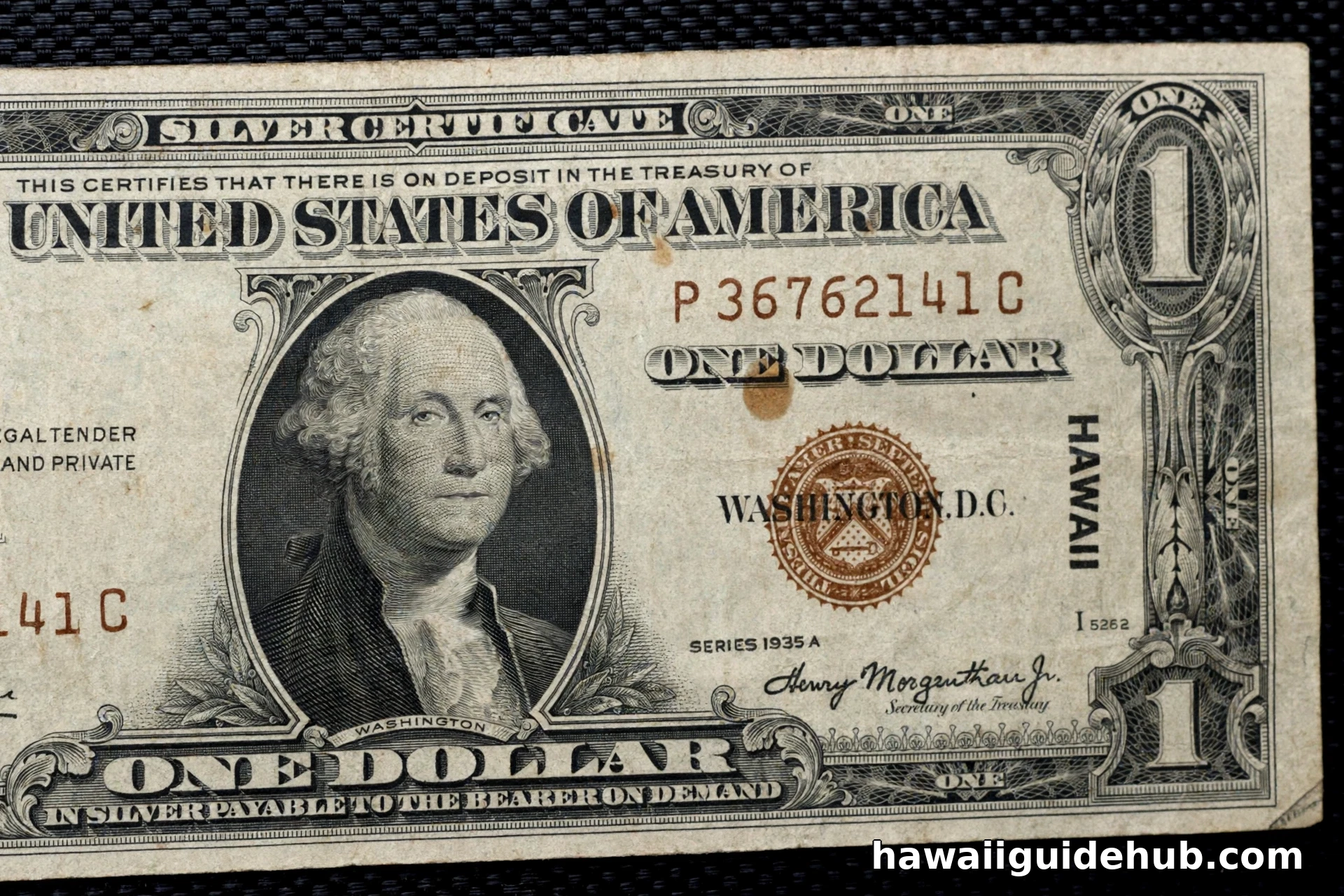
The “1935 Hawaii dollar bill” is a WWII emergency note: a Series 1935A $1 silver certificate with a brown seal and “HAWAII” overprinted twice on the front and once across the back. Printed in Washington (not Hawaii) and issued in July 1942, it was the only legal paper money in Hawaii from August 1942 to October 1944. Circulated examples are worth roughly $10-40 to collectors; uncirculated ones $135 and up, per collector price guides. The overprint program covered $1, $5, $10, and $20 notes.
Why America Printed Money It Could Destroy
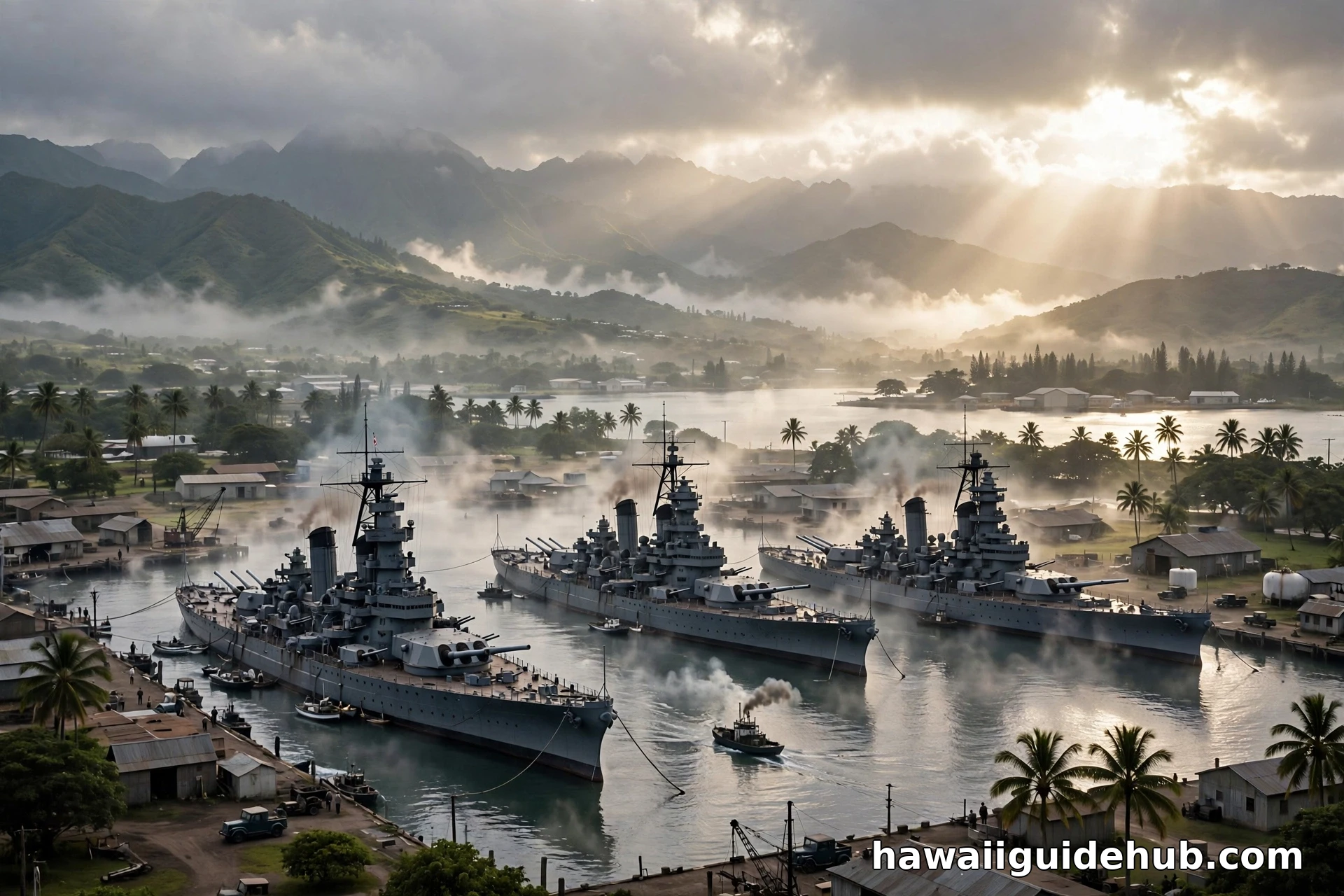
After the December 7, 1941 attack on Pearl Harbor, U.S. officials faced a nightmare scenario: a Japanese invasion of Hawaii that captured the islands’ entire currency supply, funding the enemy’s war. The Treasury’s solution was elegant. Print special notes for Hawaii with unmistakable markings: brown Treasury seals instead of blue, and “HAWAII” overprinted in large letters on both sides. If invasion came, Washington would declare every Hawaii-marked note worthless with a single announcement. The enemy would hold a fortune in paper and nothing else. The notes were released in July 1942; from August 15, 1942, they were the only paper money legal in the islands.
The Four Denominations and Their Value
| Denomination | Series | Type | Collector value, circulated |
| $1 | 1935A | Silver certificate | $10-40, per collector price guides |
| $5 | 1934 / 1934A | Federal Reserve Note | About $50, per FinanceBuzz |
| $10 | 1934A | Federal Reserve Note | $45-75, per collector Q&A sources |
| $20 | 1934 / 1934A | Federal Reserve Note | Several hundred uncirculated, per collector guides |
How to Identify a Hawaii Note
Three things mark a genuine Hawaii overprint. First, the brown seal and brown serial numbers: regular $1 silver certificates had blue. Second, “HAWAII” overprinted in large black letters: twice vertically on the front (left and right) and once horizontally across the back. Third, the series date: all $1 Hawaii notes are Series 1935A, even though they were printed in 1942. (The Treasury reused the series date; the “1935” on the bill is not the printing year.) If your bill has all three, you have the real thing.
The Recall: All the Money in Hawaii, Swapped
The logistics were staggering. In 1942, the government recalled every dollar of regular U.S. currency in Hawaii and replaced it with the overprint notes: civilians turned in their cash and received Hawaii-marked bills. For over two years, the islands ran on money designed to be destroyed. The invasion never came. In October 1944, with Allied victory approaching, the restrictions were lifted and normal currency returned. Millions of Hawaii notes were later destroyed; survivors entered circulation on the mainland, where their strange markings made people save them as curiosities. That is why they still turn up in drawers today.
What Is Your Bill Worth?
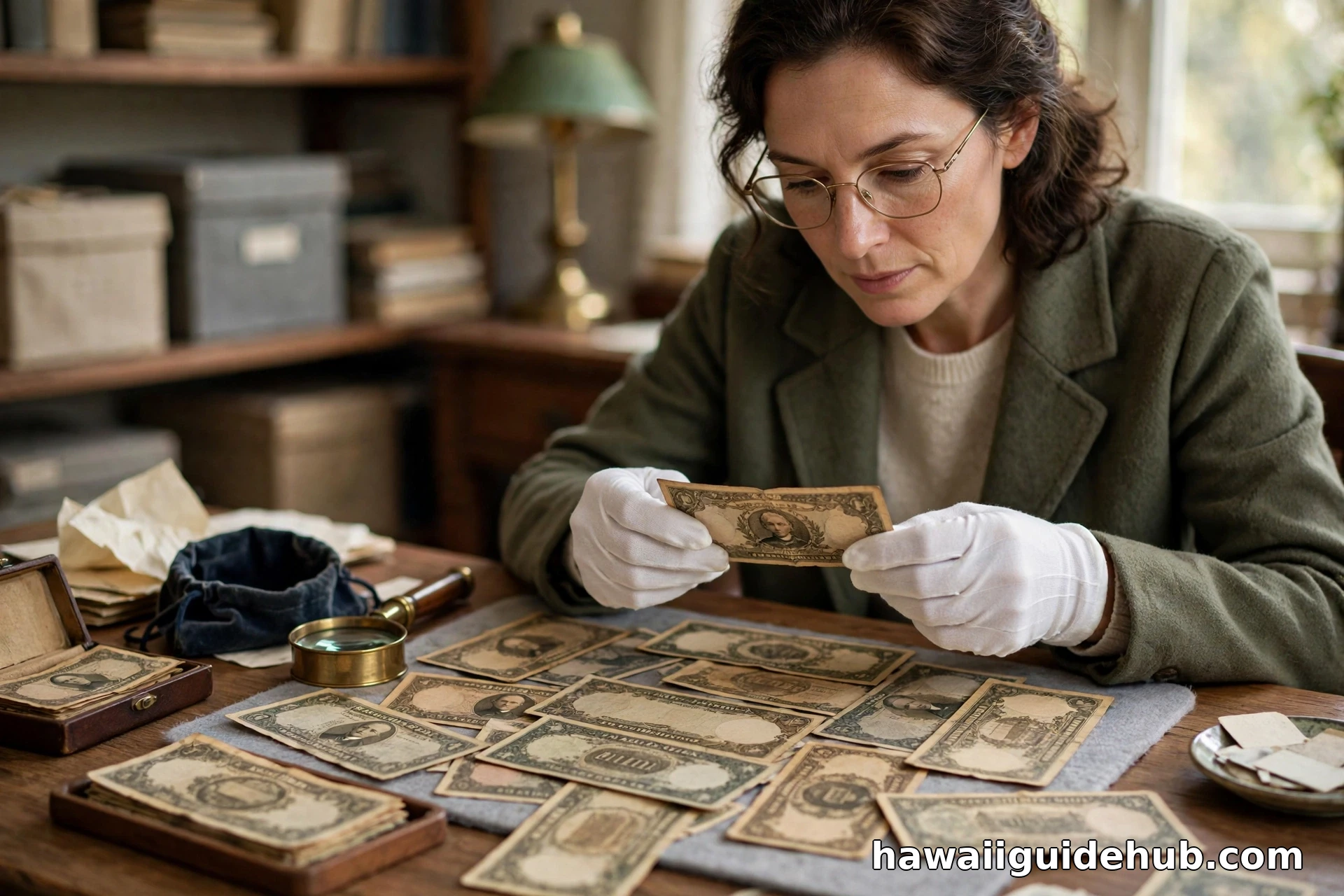
Value depends on denomination, condition, and variety. The common $1 in worn condition: $10-25. Crisp uncirculated: $135 and up. Fine to Very Fine: $45-50, per Coin World’s paper money values. The $5, $10, and $20 notes are scarcer and worth more: $20 notes in uncirculated condition reach several hundred dollars. Star notes (replacement notes with a star in the serial number) command big premiums: up to $2,000-6,000 for the $5, per market reports. Error notes, like the famous inverted overprint, have sold for $7,050. Get a professional grading before assuming anything: condition is the entire game.
The North Africa Notes: The Twin Program
Hawaii was not the only emergency currency. The U.S. printed a parallel series for the North Africa campaign: notes with yellow seals and no overprint, designed to be demonetized if captured by Axis forces. The two programs were twins: brown seals for the Pacific, yellow for North Africa, both born of the same fear. Collectors often pursue both series together. The Hawaii notes are the more famous, but the yellow-seal notes have their own following. Wartime money is a whole collecting field.
For Hawaii’s wartime history, see Hawaii’s history before the 50th star, the significance of ohana, and Hawaiian traditions: hula, chanting, and storytelling.
Martial Law: The Islands Under the Military
The currency swap happened under martial law: Hawaii lived under direct military rule from December 1941 to October 1944, the longest martial law in American history. Civilians needed passes to travel, the courts were military, and the economy ran on military orders. The Hawaii overprint notes were one instrument of this control: money the military could cancel at will. Understanding the notes means understanding the occupation-like conditions of wartime Hawaii. The islands were a fortress, and the currency was part of the fortifications.
The Mechanics of the Overprint
The overprint was applied at the Bureau of Engraving and Printing in Washington. Regular note designs were printed, then the brown seals and serial numbers were substituted for the standard colors, and the “HAWAII” overprint was stamped: twice vertically on the face, once horizontally across the back. The brown ink was the instant identifier: any cashier, soldier, or official could spot a Hawaii note at a glance. The design was deliberate anti-counterfeit and anti-capture engineering: the markings had to be obvious to everyone, including the enemy.
The Inverted Overprint: The $7,050 Error
The most famous Hawaii note error is the inverted overprint: a $1 note where the “HAWAII” on the back was printed upside down. One such note sold for $7,050 at auction. Error notes happen when sheets are fed wrong or plates misalign; most are caught and destroyed, but a few escape. The inverted Hawaii overprint is the king of the series’ errors: dramatic, obvious, and vanishingly rare. Check the backs of your notes: the error is visible at a glance, which is exactly why it is so valuable.
Star Notes: The Collector’s Prize
When a note was damaged during printing, the Bureau replaced it with a “star note”: same design, but with a star at the start of the serial number. Star notes were printed in small quantities, making them scarce. In the Hawaii series, star notes command large premiums: $5 Hawaii star notes have been valued at $2,000 to $6,000 depending on condition, per market reports. If your Hawaii note’s serial number begins with a star, you have something special: get it professionally graded immediately.
Where Hawaii Notes Turn Up Today
After the war, Hawaii notes circulated on the mainland: soldiers brought them home, civilians saved them as curiosities. They turn up in inherited coin collections, estate sales, old desk drawers, and safety deposit boxes. Dealers report a steady stream of discoveries: grandpa’s war souvenirs, forgotten envelopes. The notes are common enough that most are worth modest sums, but every discovery deserves a proper look: the difference between a $20 note and a $2,000 note can be a tiny star or a crisp corner.
How to Sell (and Not Get Cheated)
If you decide to sell: first, do not spend it as a dollar. Second, get it appraised by a reputable currency dealer or submit it to a grading service (PMG is the standard for paper money). Third, check recent auction results for comparable notes: eBay sold listings and Heritage Auctions archives are public. Fourth, beware the lowball: uninformed sellers are a dealer’s profit margin. A common circulated $1 is a $20-40 item; do not accept $5 for it. Knowledge is the difference between a fair price and a story you will regret.
Fakes and Alterations
Where money is collectible, fakes follow. The common scams: regular 1935A notes with fake “HAWAII” overprints added, bleached and reprinted notes, and artificially aged reproductions. Genuine overprints have specific ink, placement, and typography: a dealer or grading service can authenticate in minutes. Never buy an expensive Hawaii note raw (ungraded) from an unknown seller. The $20 you spend on authentication can save you hundreds. The fakes are good; the experts are better.
After the War: The Notes’ Second Life
When the restrictions lifted in October 1944, the Hawaii notes did not vanish. They remained legal tender and circulated alongside normal currency: first in Hawaii, then across the Pacific as troops carried them, then on the mainland. The Treasury destroyed millions, but millions survived. The notes’ second life was as souvenirs: their strange brown seals and big “HAWAII” made everyone who handled one save it. That souvenir instinct is why they are collectible today: enough survived to be available, few enough in top condition to be valuable.
Grading: What the Numbers Mean
Paper money grading runs from Poor to Gem Uncirculated, with numeric grades from 1 to 70. A circulated Hawaii $1 in Very Fine (20-35) is a $30-50 note; the same note in Gem Uncirculated 65 is a $200+ note. The differences: crispness, centering, folds, pinholes, stains. Professional grading by PMG or PCGS Banknote authenticates and encapsulates the note, and graded notes sell for premiums. For any note you believe is valuable, grading is worth the $30-50 fee: it is the difference between “trust me” and certified.
The Collector’s Checklist
Building a Hawaii overprint set? The checklist: all four denominations ($1, $5, $10, $20), a star note of at least one denomination, and if your budget allows, an error note. Buy the best condition you can afford: quality beats quantity in paper money. Store notes in archival sleeves, away from light and humidity. And learn the history: the notes are interesting because of the story, and the story is what you will tell when you show the collection. The money is the medium; the war is the message.
The Bureau’s Wartime Sprint
The Bureau of Engraving and Printing produced the Hawaii notes under wartime pressure: new plates, new inks, new procedures, all in secret. The brown seals required different ink stocks; the overprint required additional press runs. The notes had to be ready for the July 1942 release, and the entire Hawaiian money supply had to be swapped in weeks. It was one of the great logistical feats of wartime finance, executed without the public understanding what was happening. The bills in your wallet would be replaced, and you would be told why only in the broadest terms.
Video: Why Hawaii’s WWII Money Was Designed to Be Destroyed
The Hawaii overprint story: wartime currency designed for destruction.
Frequently Asked Questions
What is the 1935 Hawaii dollar bill?
A WWII emergency $1 silver certificate with brown seal and “HAWAII” overprint, issued 1942-1944.
Why does it say 1935 if it was printed in 1942?
The Treasury reused the 1935A series date; the series date is not the printing date.
Was it printed in Hawaii?
No. All Hawaii overprint notes were printed in Washington, D.C., for use in Hawaii.
How much is a Hawaii $1 bill worth?
Roughly $10-40 circulated, $135+ uncirculated, per collector price guides. Condition decides.
Are Hawaii overprint notes still legal tender?
Yes. All U.S. currency ever issued remains legal tender at face value, though collectors pay far more.
What are the rare varieties?
Star notes (replacement notes) and error notes like the inverted overprint, which sold for $7,050.
The 1935 Hawaii dollar bill is money as military strategy: a currency designed to self-destruct, printed for an invasion that never came, and saved by the millions as a souvenir of the war. If you have one, you hold a piece of the Pacific war in your hands. Keep it safe, get it appraised, store it properly, and remember the story: America once printed money it hoped it would never have to destroy, and the bills that survived are the proof.